How to Choose a Qualified Septoplasty Surgeon: Finding an Experienced ENT for a Deviated Septum
Struggling to breathe clearly through your nose can affect nearly everything—sleep quality, workouts, focus at work, and how rested you feel in the morning. If you’re constantly shifting sides at night to “find the open nostril,” or you feel like one side never fully clears, you’re not imagining it.
For many people, the culprit is a deviated septum: the internal wall of bone and cartilage that divides your nasal passages. When that wall is shifted off-center, it can narrow airflow on one or both sides—kind of like a doorframe that’s slightly crooked, making one hallway feel tighter than the other.
Septoplasty is a common procedure and is generally considered safe when performed by an appropriately qualified surgeon in carefully selected patients. As techniques have evolved, some surgeons use tissue-sparing approaches and, in select cases, endoscopic methods to improve visualization and precision. You can read general overviews of septoplasty goals and expectations from trusted medical sources like the Mayo Clinic and Cleveland Clinic.
This guide is designed to help you identify experienced septoplasty surgeons—and understand what to look for when choosing an ENT specialist for deviated septum concerns.

What Is Septoplasty (and What It Isn’t)?
Septoplasty in simple terms: Septoplasty is surgery to straighten the nasal septum—the internal wall (bone and cartilage) that divides the nostrils—so air can move through your nose more freely. During the procedure, the surgeon may trim, reshape, or reposition parts of the septum to reduce blockage. (Overview: Mayo Clinic, Cleveland Clinic.)
A helpful way to think about it: septoplasty aims to re-center the divider inside the nose so each side has a more usable airway. It’s functional surgery—meant to improve breathing, not to create a particular look.
Septoplasty is also sometimes performed alongside other functional procedures when they’re contributing to obstruction, such as turbinate reduction (turbinates are structures inside the nose that can enlarge and reduce airflow). If you’re exploring that add-on, see our related guide on turbinate reduction.
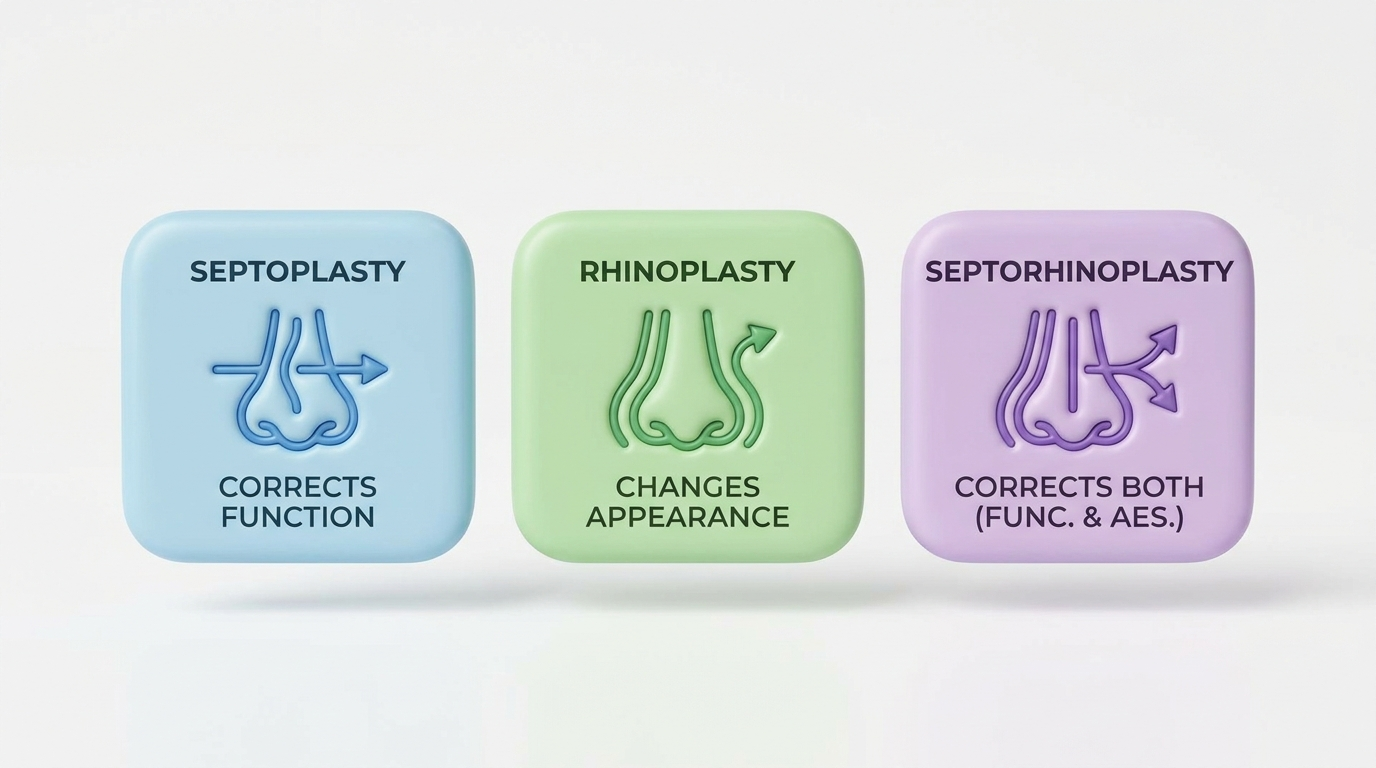
Septoplasty vs. rhinoplasty vs. septorhinoplasty
- Septoplasty: focuses on function (breathing).
- Rhinoplasty: focuses on appearance (cosmetic shape).
- Septorhinoplasty: addresses both breathing and appearance when needed.
In real life, a patient might come in saying, “I’m mainly here to breathe better,” and discover they also have nasal valve narrowing (a functional issue near the nostril opening). That can change which procedure—or combination—makes the most sense. (Procedure purpose overview: Mayo Clinic.)
Bottom line: septoplasty is a functional procedure to improve airflow; cosmetic changes require rhinoplasty or combined septorhinoplasty when appropriate.
Symptoms That May Signal You Need a Septoplasty Evaluation
Common deviated septum symptoms
- Persistent nasal congestion (often worse on one side)
- Mouth breathing, especially at night (sometimes with dry mouth)
- Snoring or poor-quality/unrefreshing sleep
- Frequent nosebleeds (for some people)
- Facial pressure or recurrent sinus infections (sometimes related, sometimes not)
For example, if you can breathe well during the day but feel plugged up every night, the issue may be a mix of structure (septum), tissue swelling (turbinates), and sleep position. That’s why a targeted ENT evaluation can be more useful than guessing based on symptoms alone. For a deeper overview, see our article on deviated septum symptoms.
When symptoms are urgent or need faster evaluation
- Recurrent heavy nosebleeds
- Sudden, severe one-sided blockage with new symptoms
- Nasal obstruction after trauma (where a fracture or other injury could be involved)
General symptom context: Cleveland Clinic.
If one-sided blockage is persistent or you’re mouth breathing at night, consider a focused ENT assessment rather than self-diagnosing.
Causes of a Deviated Septum (and Why It Can Get Worse)
Top causes
- Developmental differences (you may be born with it)
- Injury/trauma (sports, accidents, falls)
- Natural changes over time, where swelling/inflammation or tissue changes make airflow feel more limited than it used to
It’s also common to say, “I’ve always had a little trouble on the left side, but it’s gotten worse recently.” Sometimes the septum hasn’t dramatically changed—yet inflammation, allergies, or turbinate enlargement can make a mild deviation feel like a major blockage.
What else can mimic a deviated septum?
- Allergies and chronic inflammation
- Enlarged turbinates
- Nasal valve collapse (weakness/narrowing near the nostril opening)
- Chronic sinusitis or nasal polyps
This overlap is one reason choosing an experienced evaluator matters. A strong ENT specialist doesn’t just confirm a deviated septum—they look for the full breathing picture, so you don’t end up treating only part of the problem. (General nasal obstruction context: Cleveland Clinic.)
An accurate diagnosis separates structural blockage from treatable swelling—and helps you choose the right next step.
Who Performs Septoplasty? (ENT vs Facial Plastic Surgeon)
The specialists most qualified for septoplasty
- Otolaryngologists (ENTs), who diagnose and treat ear, nose, and throat conditions and frequently handle nasal airway surgery.
- Facial plastic and reconstructive surgeons (often ENT-trained), particularly when septal correction is combined with functional rhinoplasty.
If your main goal is breathing better, many patients start with an ENT consultation. If appearance changes are also part of the plan, or if nasal valve work is anticipated, a surgeon with facial plastic and reconstructive expertise may be a good fit—sometimes in collaboration with a rhinology-focused practice.
Why training and board certification matter
When choosing a surgeon, qualifications and experience should be considered alongside convenience. Look for a board-certified ENT or an appropriately board-certified facial plastic surgeon with an established track record in nasal airway procedures.
You can learn more about ENT board certification and related organizations through the American Board of Otolaryngology–Head and Neck Surgery (ABOHNS). For general guidance on choosing a qualified surgeon for septoplasty, see the American Society of Plastic Surgeons.
Match the surgeon’s training and scope of practice to your goals—functional breathing, appearance, or both.
What Makes a Surgeon a Strong Choice for Septoplasty? (Patient Checklist)
Credentials to verify (non-negotiables)
- Board certification (ENT: ABOHNS; for facial plastic surgery, verify appropriate credentials)
- Hospital privileges and/or use of an accredited surgical facility
- A clear plan for follow-up care, including how after-hours concerns are handled
If you’re not sure how to bring this up, try: “Are you board-certified, and where do you perform surgery?” A good office is used to these questions and should answer them clearly.
Experience and outcomes questions to ask
- How many septoplasties are performed each month or year?
- How is nasal obstruction evaluated (in-office exam, nasal endoscopy, and when imaging is considered)?
- If turbinates or nasal valve collapse are also present, what options are typically discussed?
You can also ask what “success” typically looks like in their practice. Many clinicians describe it in functional terms—less mouth breathing, better tolerance of exercise, and fewer nights spent waking up congested—rather than promising perfection.
Technique and modern trends to look for
- Less invasive or tissue-sparing septoplasty approaches, when appropriate
- Endoscopic septoplasty in select situations (camera-assisted visualization)
- A customized plan for how the septum is adjusted to remove obstruction (commonly by trimming, reshaping, or repositioning cartilage/bone)
General procedure approach: Cleveland Clinic, Mayo Clinic.
For patients interested in newer, less invasive trends, you may also want to explore our article on Balloon Septoplasty with ClearPath. This is a branded technique used by some surgeons in select cases; it is not a universal standard for septal surgery.
Consistency, transparency, and a personalized plan generally matter more than buzzwords or marketing claims.

How to Find an Experienced ENT for a Deviated Septum (Step-by-Step)
Where to start your search
1. Start with your primary care clinician (if you need a referral based on your insurance plan).
2. Look at ENT practices that specifically emphasize nasal airway and breathing evaluations.
3. Consider whether a specialty focus (like rhinology) is relevant to your symptoms.
If you’re unsure about timing, this guide on when to see an ENT for a deviated septum can help you organize your next step.
How to vet reviews the right way
- Focus on patterns, not perfect scores.
- Look for repeated mentions of clear communication, realistic expectations, thoughtful aftercare, and breathing-related outcomes described over time.
A practical tip: reviews that mention the process (“they examined me with a scope, explained options, and didn’t rush”) can be more meaningful than reviews that only rate friendliness.
Red flags to watch for
- Unclear credentials or lack of board certification
- High-pressure sales tactics
- No discussion of risks, alternatives, or combined-procedure possibilities when relevant
Let credentials, communication, and fit guide your choice—then confirm with a thorough, in-person exam.
Septoplasty Treatment Options: Surgery and Non-Surgical Alternatives
Non-surgical options (when appropriate)
- Saline rinses
- Allergy management when allergic rhinitis is contributing
- Nasal steroid sprays (when indicated)
- Nasal dilators/strips for short-term relief in some people
These options may help with inflammation-related obstruction, though they won’t physically straighten the septum. If the wall is blocking the airway, sprays may reduce swelling around it, but they can’t move the wall itself.
Septoplasty (surgical correction)
Septoplasty addresses structural obstruction from a deviated septum. However, it may not fully resolve symptoms if other contributors (like allergies, significant nasal valve collapse, or chronic sinus disease) are also present. (Overview: Cleveland Clinic, Mayo Clinic.)
Septoplasty combined procedures
- Turbinate reduction
- Sinus procedures (when chronic sinusitis is confirmed)
- Functional rhinoplasty techniques (when nasal valve collapse plays a major role)
To learn more about evaluation and options through Sleep and Sinus Centers of Georgia, visit our Deviated Septum Relief page.
Medical therapy can ease inflammation; septoplasty addresses fixed structural blockage when appropriate.

What to Expect Before, During, and After Septoplasty
Your pre-op consultation
- A detailed symptom discussion
- A nasal exam (often with nasal endoscopy)
- Review of medications and medical history
- Goal-setting focused on function (better breathing), not perfection
Many ENTs will also clarify what septoplasty can’t do. For example, if a big part of your congestion is seasonal allergies, you may still need medical management after surgery for the best long-term comfort.
The day of surgery
Septoplasty is commonly performed with general anesthesia, though some cases may use local anesthesia with sedation depending on the plan. Many patients go home the same day, but details vary by individual and facility.
If you’re anxious about anesthesia or recovery, it’s reasonable to ask: “What should I expect the first 24 hours, and who do I call if I’m worried?” A well-organized practice will have a clear plan.
Recovery timeline (patient-friendly)
First week
- Congestion and swelling are common.
- If splints or packing are used, follow-up is scheduled for removal/checks.
Many patients say the most noticeable symptom early on is feeling stuffy—like a head cold—more than severe pain. Your surgeon will give specific instructions for rinses, activity limits, and what to avoid.
Weeks 2–6 and beyond
- Breathing often improves gradually as swelling settles.
- Return to exercise is individualized based on surgeon instructions and healing progress.
General recovery expectations: Cleveland Clinic. For a broader overview, see our nasal surgery recovery timeline and our post Is Septoplasty Right for Your Deviated Septum?
For most people, recovery is primarily about temporary congestion, with airflow improving as swelling resolves.

Lifestyle Tips to Breathe Better While You’re Deciding (or Recovering)
- Use saline rinses safely (use sterile or distilled water; follow product instructions).
- Optimize bedroom air (appropriate humidity, reduce dust/allergen exposure).
- Adjust sleep positioning if nighttime blockage is worse for you.
- Avoid irritants like smoke and strong fragrances when possible.
These are general comfort measures; an individualized plan depends on what’s driving your obstruction. If a clinician suspects allergies are a major contributor, you may get more mileage from consistent medical therapy than from trying everything randomly.
Simple daily changes can support easier breathing while you evaluate options or recover from surgery.
FAQs: Choosing a Septoplasty Surgeon + Septoplasty Basics
How do I verify if my ENT is board-certified?
You can ask the office directly and also review certification resources from the ABOHNS.
Is septoplasty painful?
Many people describe more congestion/pressure than sharp pain, especially early on. Experiences vary, and your surgical team can explain typical comfort strategies used in recovery.
Is septoplasty “minimally invasive”?
Some surgeons use less invasive or tissue-sparing methods and may use endoscopic tools in select cases. The best approach depends on anatomy and goals. (Overview: Mayo Clinic.)
How long does septoplasty last?
Results are often long-lasting, though outcomes vary depending on healing, future nasal injury, and other nasal conditions.
Can septoplasty help snoring or sleep apnea?
Septoplasty may improve nasal airflow, which can help some people breathe more comfortably at night, but it is not a primary treatment for sleep apnea.
Your surgeon can tailor expectations based on your anatomy, goals, and any coexisting nasal or sleep conditions.
Conclusion: Choosing the Right Surgeon for Better Breathing
Finding the right septoplasty surgeon is less about flashy marketing and more about qualifications, airway-focused experience, clear communication, and an evaluation that considers the full nasal breathing picture. In many cases, the right fit is a board-certified ENT (or an appropriately credentialed facial plastic surgeon) who can explain whether septoplasty alone is appropriate—or whether a combined approach makes more sense.
If you’ve had ongoing nasal blockage, mouth breathing at night, or persistent congestion, consider scheduling an evaluation with Sleep and Sinus Centers of Georgia to discuss your options: Deviated Septum Relief.
Ready to take the next step? You can book an appointment with Sleep and Sinus Centers of Georgia here: https://www.sleepandsinuscenters.com/
Choose a surgeon who explains your options clearly, aligns with your goals, and provides a plan for both procedure and aftercare.
Medical disclaimer: This article is for general educational purposes only and is not a substitute for professional medical advice, diagnosis, or treatment. A qualified clinician can evaluate your symptoms and anatomy to recommend the most appropriate options for you.
This article is for educational purposes only and is not medical advice. Please consult a qualified healthcare provider for diagnosis and treatment.
Don’t let allergies slow you down. Schedule a comprehensive ENT and allergy evaluation at Sleep and Sinus Centers of Georgia. We’re here to find your triggers and guide you toward lasting relief.