VOAT vs CPAP: Which Sleep Apnea Treatment Is Right for You?
If you’ve been diagnosed with obstructive sleep apnea (OSA), you may be weighing VOAT vs CPAP—especially if you’re hoping to avoid a nightly mask. CPAP remains the most established, guideline-supported therapy for most adults, while VOAT is a procedure designed to address a specific type of blockage (often at the tongue base). The “right” choice usually depends on your sleep study results, your airway anatomy, and how well you’re able to use CPAP consistently.
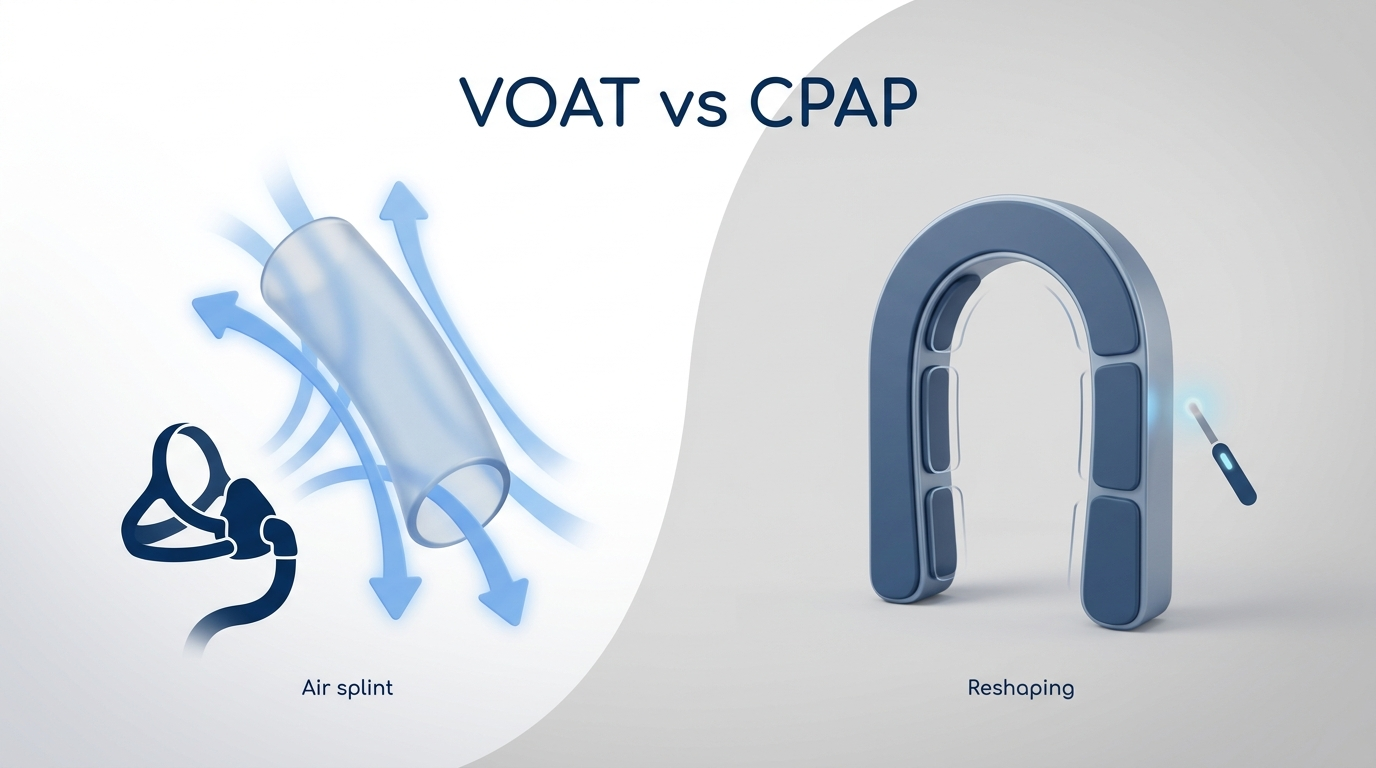
Think of CPAP as an “air splint”: it holds the airway open while you sleep. VOAT, by contrast, aims to create more physical space at the tongue base over time by reducing and stiffening tissue—more like “reshaping the doorway” than holding it open with pressure.
Below is an educational, patient-friendly comparison to help you prepare for a more productive conversation with your sleep specialist.
Quick Answer: VOAT vs CPAP (At a Glance)
- CPAP in one sentence: CPAP (or APAP) is a non-surgical, mask-based therapy that uses air pressure to keep the airway open and is recommended by major sleep-medicine guidelines for adults with OSA. AASM, 2019 • NHLBI, 2022
- VOAT in one sentence (and what it is not): VOAT = Ventral Only Ablation of the Tongue, a tongue-base radiofrequency tissue-reduction procedure intended to create more airway space; it is not an oral appliance. VOAT refers to a ventral tongue-base radiofrequency approach used at our centers; related tongue-base procedures may differ in technique and evidence. If you’re comparing non-CPAP options, you may also like: oral appliance vs CPAP (VOAT is different from both).
- Who typically “wins” for most patients? For most adults, guidelines support CPAP/APAP as first-line; procedural options are individualized. AASM, 2019
Understanding Obstructive Sleep Apnea (OSA)—Symptoms, Causes, and Why Treatment Matters
- Common symptoms of OSA
- Loud snoring, gasping/choking at night, or witnessed pauses in breathing
- Excessive daytime sleepiness, morning headaches, poor concentration
- Mood changes/irritability, or insomnia-like sleep fragmentation
A practical example: many patients don’t realize their sleep is disrupted until they notice “I’m getting 7–8 hours, but I still feel exhausted,” or a bed partner reports pauses in breathing.
- What causes OSA (in plain language)
- Tongue-base obstruction (the tongue relaxing backward)
- Soft palate/uvula collapse
- Nasal blockage or congestion
- Weight changes, alcohol/sedatives, and sleep position (back-sleeping can worsen collapse)
It’s also common for more than one area to contribute. For instance, someone might have mild nasal obstruction plus a tongue-base collapse pattern—meaning a single treatment may help, but a combination may work better.
- Why choosing an effective treatment matters
Untreated OSA is linked to health and safety concerns, including daytime sleepiness and cardiovascular strain. Treatment aims to reduce breathing interruptions and improve oxygen levels and sleep quality—often tracked using sleep study metrics like the AHI (apnea-hypopnea index), which reflects breathing events per hour. For a clear overview, see AHI score and sleep apnea severity.
Note: Effective treatment targets where and how your airway collapses—and what you can realistically use every night.
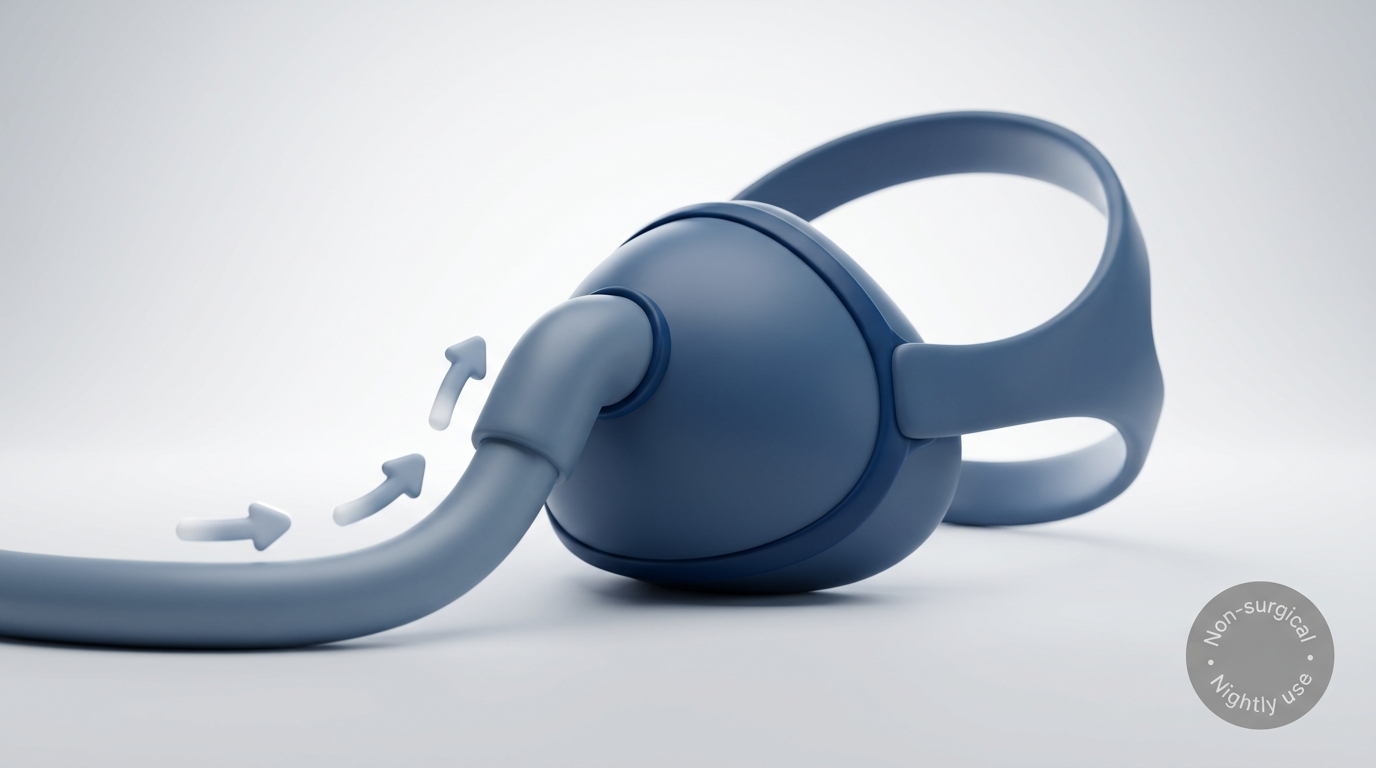
CPAP Explained (How It Works, Benefits, Downsides)
- How CPAP treats sleep apnea
CPAP provides steady (or auto-adjusting) air pressure that “splints” the airway open to prevent collapse—typically used nightly for best results. AASM, 2019
Many clinicians explain it simply: “If we can keep the airway open while you sleep, we can prevent most of the breathing interruptions driving symptoms.” That’s why CPAP is often the first recommendation after an objective diagnosis.
- Benefits of CPAP
- Strong evidence for reducing breathing events and improving symptoms like snoring and sleepiness. AASM, 2019
- Non-surgical and reversible
- Many comfort options (humidification, pressure relief, multiple mask styles). Cleveland Clinic, 2024
A real-life win: a patient who dozed off at stoplights may notice improvement within days to weeks when CPAP is used consistently—because the airway is supported every night it’s worn.
- Common CPAP challenges (and why people stop)
- Mask discomfort/claustrophobia, leaks, skin irritation
- Nasal congestion, dryness, dry mouth
- Travel inconvenience and the “nightly setup” burden
- Adherence is the make-or-break factor—CPAP can be highly effective when used, but harder when it’s not tolerated. NHLBI, 2022 • Cleveland Clinic, 2024
Small fixes can make a big difference. For example, persistent leaks may improve with a different mask shape, careful strap adjustment, or a mask liner. Nasal dryness often improves with heated humidification and saline. If CPAP has felt difficult, you’re not alone—here are common reasons people struggle with CPAP.
Note: If CPAP is fixable with comfort tweaks, it often remains the most predictable way to control OSA quickly.
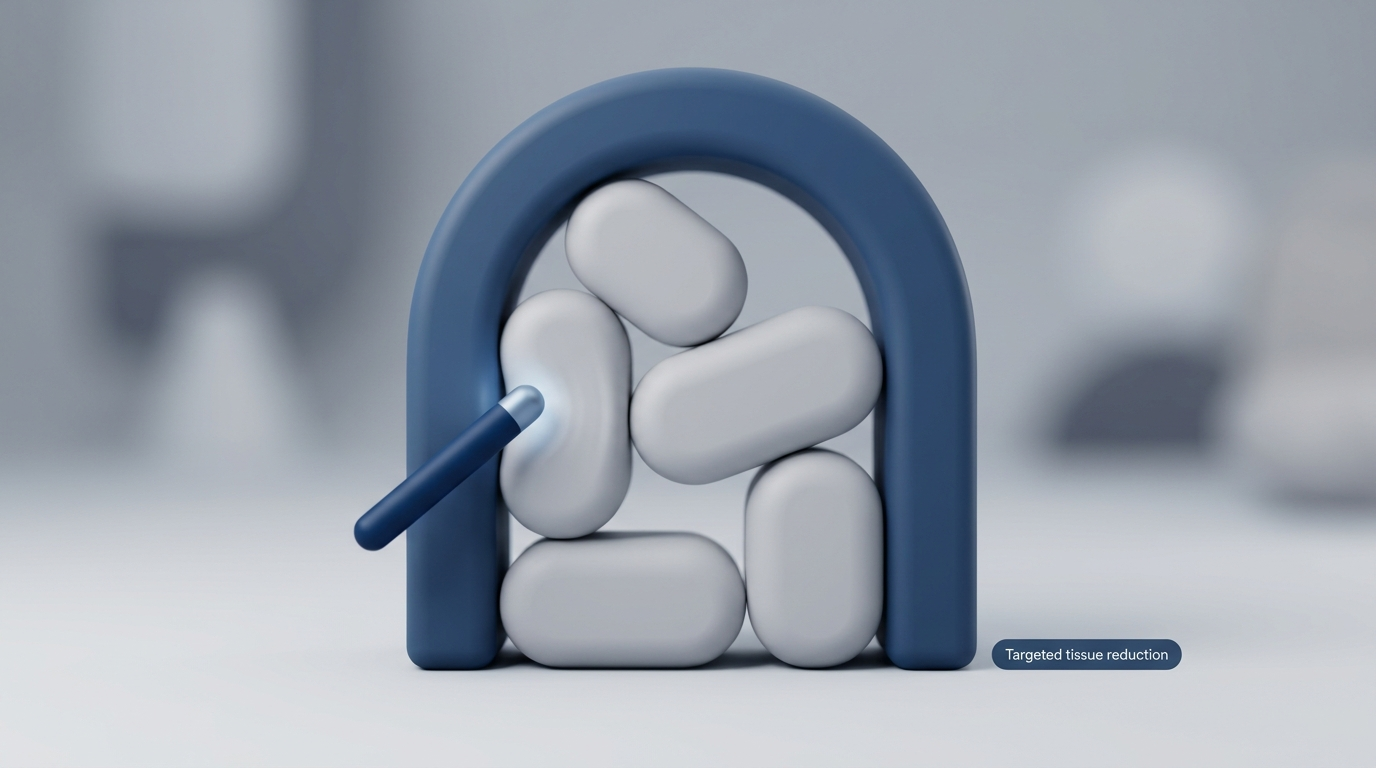
VOAT Explained (What It Treats, What to Expect, Risks)
- What VOAT targets
VOAT is designed for patients in whom the tongue base is a major site of airway obstruction, confirmed through exam and/or airway evaluation. It uses radiofrequency energy to reduce tissue volume and stiffen tissue over time, helping create more space in the airway. AAO-HNS, 2014
If CPAP is like “propping open the airway with air,” VOAT is more like “reducing the crowding” at a specific choke point—when the tongue base is a dominant contributor.
- What a VOAT procedure visit and recovery may look like (high-level)
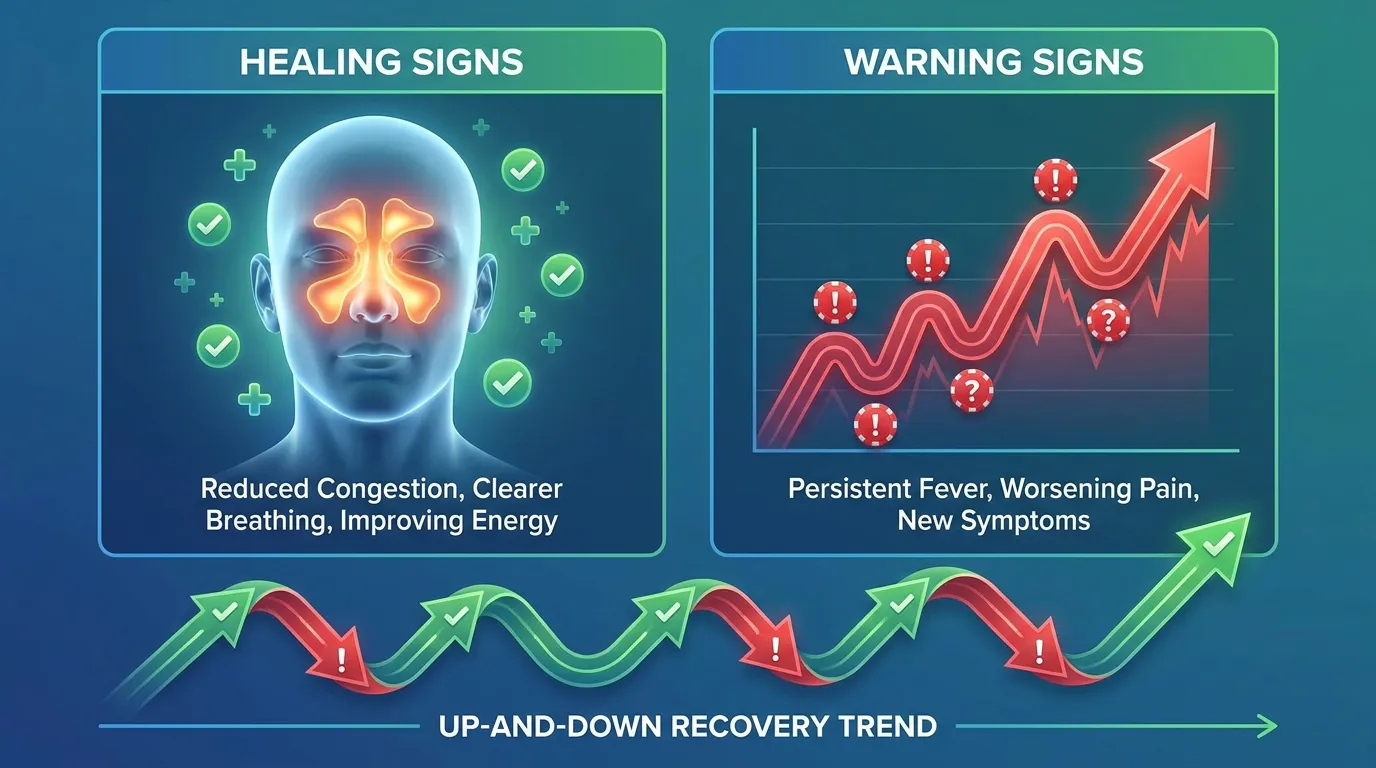
VOAT is typically approached as a procedure rather than nightly equipment use. Many patients should expect a healing period; swelling and soreness can temporarily worsen symptoms before improvement is noticed. In practical terms, some people plan a lighter schedule for a short window after the procedure—because throat/tongue discomfort can affect sleep, eating, and energy temporarily.
- Potential benefits of VOAT
For the right anatomy and OSA profile, VOAT’s main appeal is lifestyle-related: it may reduce reliance on a nightly mask. It may help selected patients—often those with mild-to-moderate OSA and tongue-base obstruction—particularly when CPAP isn’t tolerated. See our overview of non-CPAP options, including VOAT and other therapies.
Broader evidence on tongue-base radiofrequency procedures suggests some patients can see meaningful improvements in quality-of-life and daytime sleepiness measures—especially in mild-to-moderate OSA—though results should not be assumed to match CPAP for every person or every severity level. AAO-HNS, 2014
- Risks and side effects to discuss
Because VOAT is a procedure, it comes with surgical-type risks such as: soreness, swelling, tongue discomfort; taste changes, bleeding, infection; temporary speech or swallowing changes. This risk profile is different from CPAP’s primarily non-surgical side effects. AAO-HNS, 2014
A helpful way to think about it: CPAP side effects are often comfort and tolerance issues, while VOAT risks are more about procedure and healing.
- Evidence limitations (a practical reality check)
In the VOAT vs CPAP conversation, it’s important to know that CPAP has a stronger overall evidence base and guideline support. VOAT-specific outcomes can be variable, and broader data on tongue-base radiofrequency procedures suggest improvements in some patients—but results should not be assumed for everyone (especially severe OSA). AAO-HNS, 2014
Note: VOAT is an anatomy-targeted option for selected patients, while CPAP remains the most predictable therapy across severities when used.
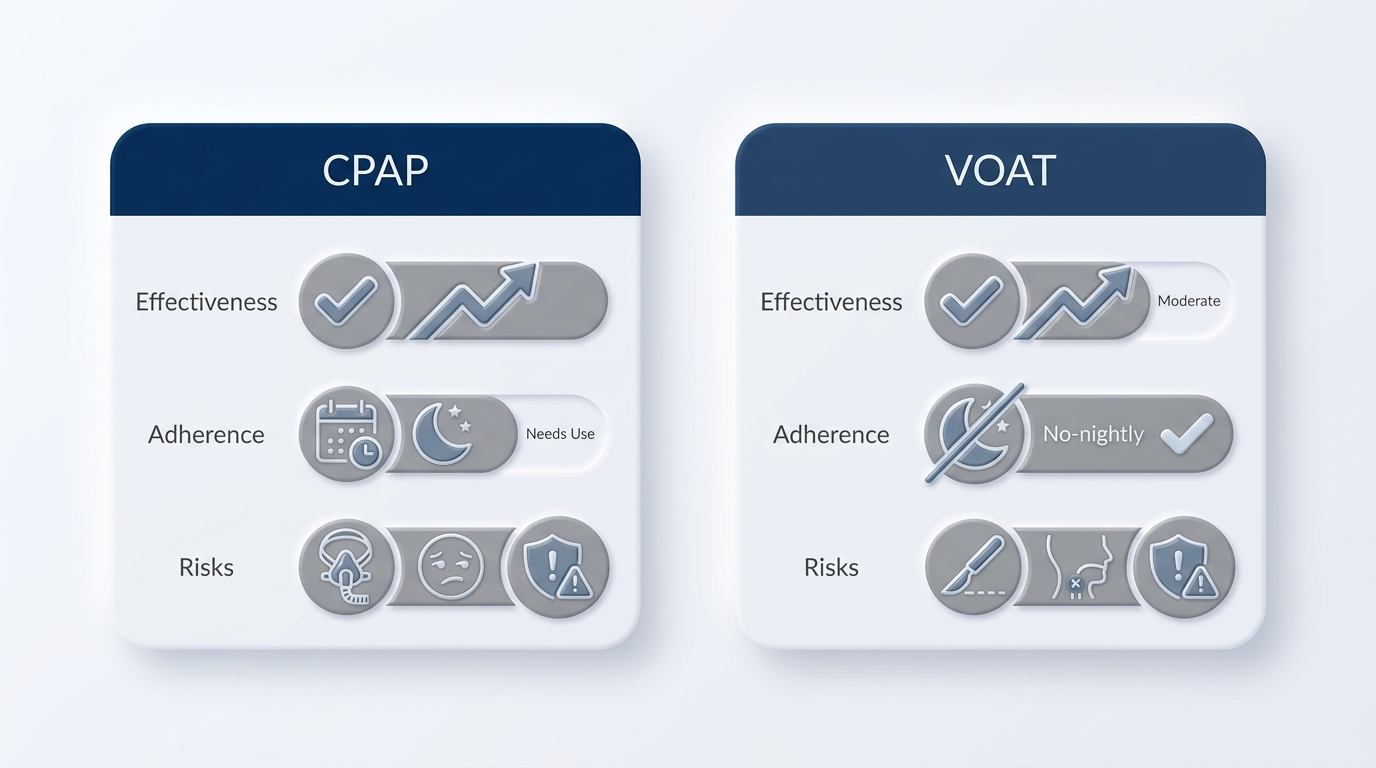
VOAT vs CPAP—Head-to-Head Comparison (Patient Decision Factors)
- Effectiveness (symptoms + sleep study metrics)
- CPAP: consistently reduces breathing interruptions when used correctly. AASM, 2019
- VOAT: may improve airflow in selected anatomy patterns, but results vary and may not match CPAP for every patient—particularly with more severe OSA. AAO-HNS, 2014
A patient-centered framing: some people care most about “How do I feel?” (sleepiness, headaches, energy). Others care about objective targets like AHI and oxygen levels. Your best option may depend on which outcome matters most—and what’s realistically achievable for your anatomy.
- Convenience and adherence
- CPAP’s biggest challenge is consistency—benefits depend on regular use. NHLBI, 2022
- VOAT avoids nightly equipment, but requires a procedure and recovery.
A quick example: a frequent traveler might find CPAP packing and setup frustrating, while someone who prefers non-procedural options may strongly prefer CPAP over an intervention and healing period.
- Safety profile
- CPAP: common issues include dryness, congestion, and skin irritation. Cleveland Clinic, 2024
- VOAT: includes procedural risks such as bleeding/infection and temporary swallow/speech changes. AAO-HNS, 2014
- Cost and insurance considerations (what to note)
- CPAP often includes the device, supplies, and follow-up; insurance may require adherence documentation.
- VOAT may require pre-authorization and medical-necessity documentation; coverage can vary.
A practical next step is verifying benefits and requesting a pre-treatment estimate.
Note: Choose the option you can realistically stick with—because adherence drives outcomes.
Who Is a Better Candidate for CPAP?
- CPAP is usually first-line if…
- You have moderate-to-severe OSA. AASM, 2019
- You want the most established, non-surgical therapy.
- You can tolerate a mask with proper fit, humidification, and troubleshooting support.
- CPAP may be especially important if you have…
- Significant oxygen drops on your sleep study
- Cardiovascular comorbidities (for example, hypertension or arrhythmias)
- A safety-sensitive job or drowsy-driving risk where fast, reliable control matters
One clinician-style takeaway: “If we need a predictable treatment we can adjust quickly, CPAP is hard to beat.” Pressure settings, mask type, humidification, and comfort features can be modified without committing to a procedure.
Note: If predictability and rapid adjustability matter most, CPAP is usually the safer starting point.
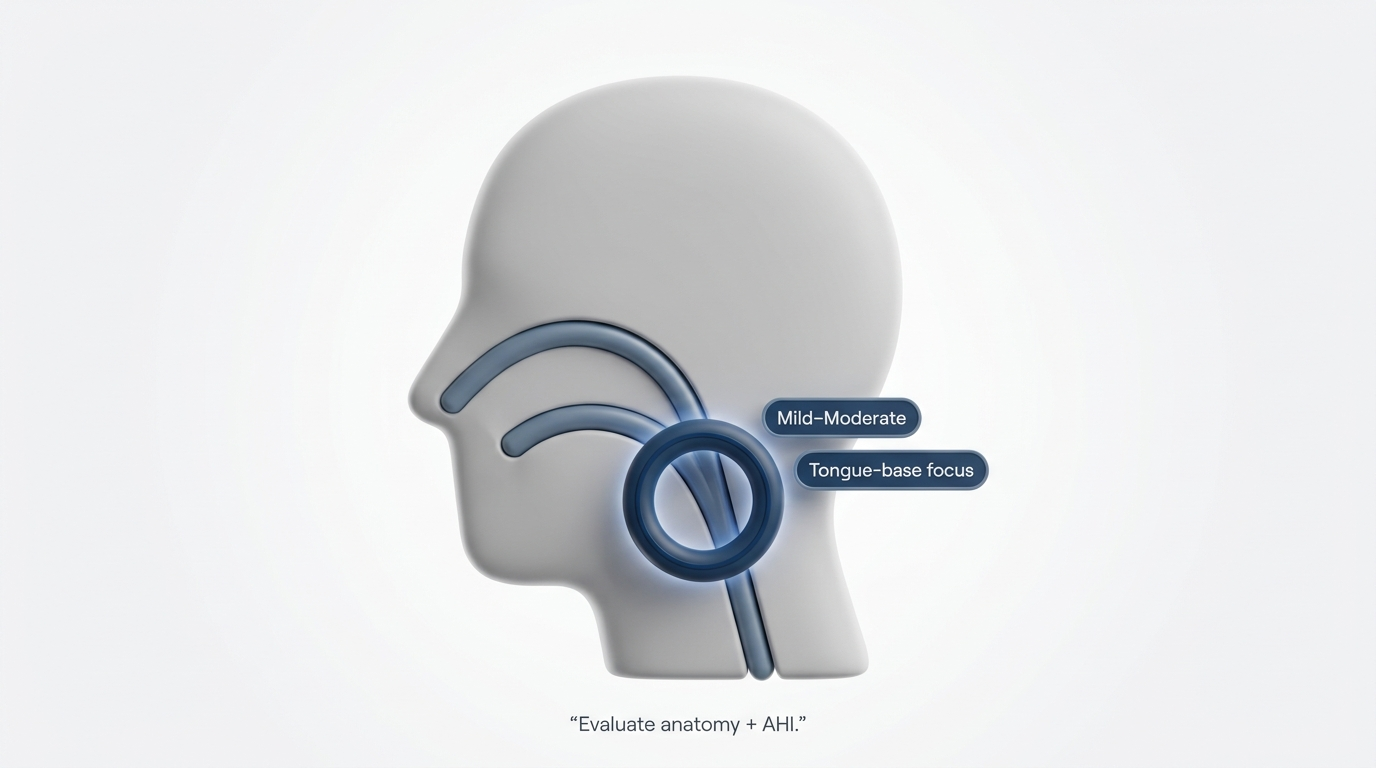
Who Might Consider VOAT (and What Testing Should Show First)?
- VOAT may be considered when…
- OSA is mild-to-moderate and tongue-base obstruction is a major contributor.
- CPAP is not tolerated, not effective due to adherence challenges, or otherwise unsuitable. See our overview of non-CPAP options for context.
- What evaluation helps determine candidacy
- Objective sleep study results (including AHI severity) and oxygen levels
- Airway anatomy exam to identify the dominant collapse site (tongue base vs palate vs nose)
- A goals discussion: symptom improvement, AHI improvement, or both
A useful question to bring to the visit: “Where is my airway actually collapsing?” The more clearly that’s answered, the more targeted (and realistic) the treatment plan can be.
- When VOAT may not be the best choice
- Severe OSA where CPAP (or other advanced options) may be needed first
- Multiple obstruction levels without a strong tongue-base component
- Situations where predictable, immediately adjustable results are the top priority (a CPAP advantage)
Note: VOAT fits best when the tongue base is the main problem and CPAP isn’t a workable long-term plan.
Lifestyle Tips That Help Either Treatment Work Better (and Sometimes Reduce OSA Severity)
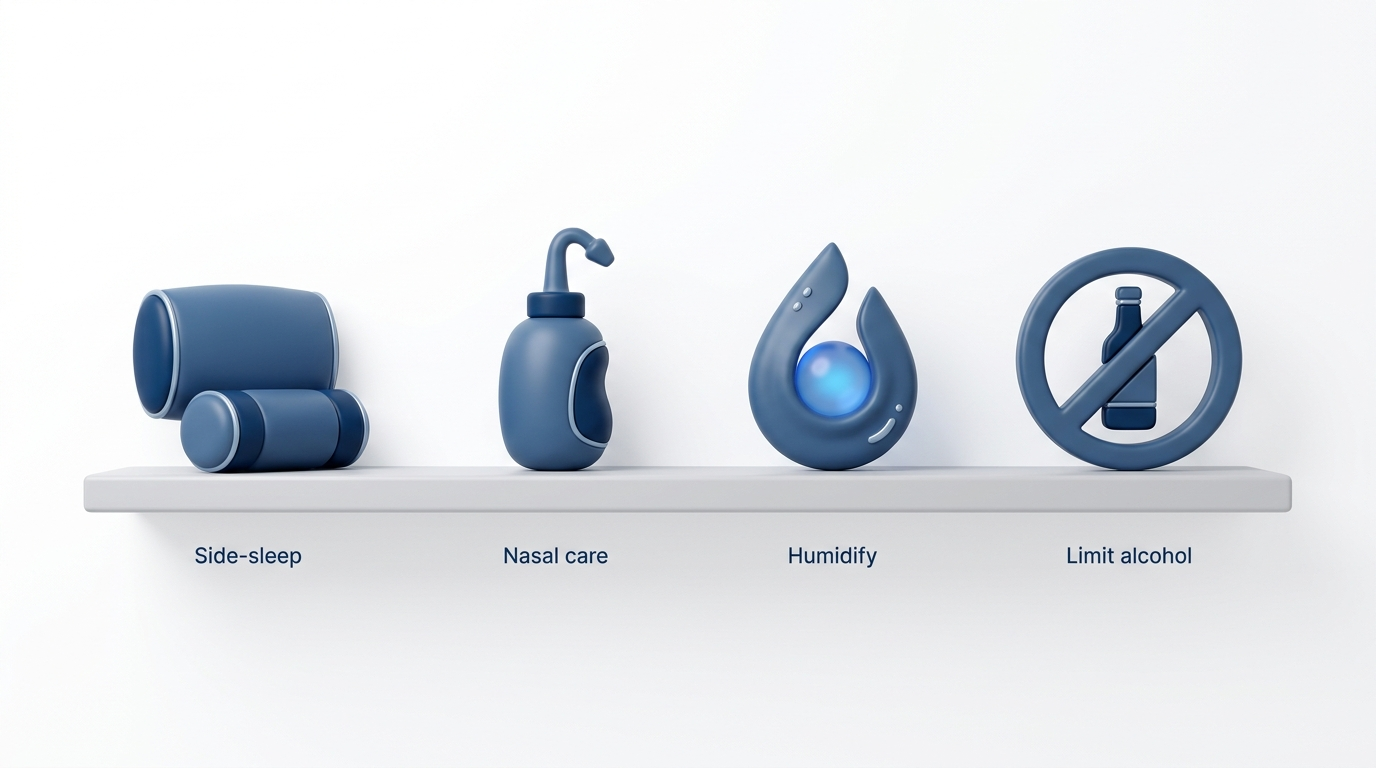
- Sleep-position and nightly habits
- Side-sleeping strategies may help if back-sleeping worsens breathing events
- Avoid alcohol close to bedtime, since it can worsen airway collapse
- Nasal health and congestion control (often improves CPAP tolerance)
- Saline rinses, allergy management, and evaluation for persistent nasal blockage can improve sleep quality and CPAP comfort
- If CPAP feels “impossible,” nasal obstruction may be part of the story
- Weight and overall health
Weight management can reduce OSA severity for some people—typically as a longer-term strategy rather than an immediate fix.
Note: Small nightly habit changes and clear nasal airflow can make any therapy work better.
Treatment Pathways: A Practical “If This, Then That” Guide
- If you’re newly diagnosed with OSA: A common starting point is CPAP/APAP education, mask fitting, and comfort troubleshooting. AASM, 2019
- If you “failed CPAP”: It helps to clarify what failed—pressure intolerance? mask leak? nasal blockage? dry mouth? Many barriers are fixable. If not, alternatives may be explored—including VOAT when tongue-base obstruction is clearly important. Explore CPAP troubleshooting tips here.
- If you want to avoid a mask from day one: Discuss anatomy-based alternatives and procedural options, while keeping expectations realistic about variability and risks. AAO-HNS, 2014
Note: Map the plan to your anatomy, your goals, and your tolerance.
FAQs (Patient-Friendly)
- Is VOAT the same as an oral appliance? No. VOAT is a tongue-base radiofrequency procedure; oral appliances reposition the jaw/tongue during sleep. Learn more: oral appliance vs CPAP.
- Is CPAP still considered the “gold standard”? For many adults with OSA, CPAP/APAP remains the most established treatment and is guideline-recommended after objective diagnosis. AASM, 2019
- What are the most common CPAP side effects? Nasal dryness/congestion, mask discomfort, dry mouth, and skin irritation. Cleveland Clinic, 2024
- What are the risks after VOAT? Soreness/swelling, bleeding/infection, and temporary speech/swallowing changes are among the risks to review with your ENT. AAO-HNS, 2014
- Do I need a follow-up sleep study after treatment? Follow-up testing is often recommended to confirm effectiveness—especially after procedures or major changes in symptoms or weight.
Note: Re-testing shows whether your chosen treatment is truly controlling your OSA.
What to Ask Your Specialist (Checklist)
- Questions to ask about CPAP
- What mask style best fits my breathing pattern and comfort needs?
- Can humidification or nasal treatment improve my tolerance?
- What should my goal AHI be on therapy?
- Questions to ask about VOAT
- Do my exam and sleep results suggest tongue-base obstruction is a main cause?
- What improvement should I realistically expect (symptoms vs AHI)?
- What are my specific risks, and what is the recovery timeline?
- How will we measure success (repeat sleep test, symptom scales, partner report)?
Note: The clearer your goals and anatomy picture, the better your treatment fit.
Conclusion—Choosing What’s Right for You
- Key takeaway: In the VOAT vs CPAP decision, CPAP remains the better-established first-line treatment for most adults with OSA and is supported by clinical guidelines. AASM, 2019. VOAT may help selected patients—especially when tongue-base obstruction is important and CPAP isn’t tolerated—but evidence is more limited, outcomes vary, and there are procedure-related risks. AAO-HNS, 2014
- Next step: If you’re exploring sleep apnea treatment options (including CPAP alternatives), consider scheduling an evaluation at Sleep & Sinus Centers of Georgia to review your sleep study, discuss your goals, and match treatment to your anatomy. Learn more about sleep apnea treatment options. To book an appointment, visit https://www.sleepandsinuscenters.com/ and request a consultation.
Note: The best treatment is the one that controls your OSA and that you can actually use.
Sources
- AASM PAP Therapy Clinical Practice Guideline (2019): https://aasm.org/clinical-guideline-pap-therapy/
- AAO-HNS Position Statement: Submucosal Ablation of the Tongue Base for OSA (2014): https://www.entnet.org/resource/position-statement-submucosal-ablation-of-the-tongue-base-for-osas/
- NHLBI CPAP Overview (2022): https://www.nhlbi.nih.gov/health/cpap
- Cleveland Clinic CPAP Patient Education (2024): https://my.clevelandclinic.org/health/treatments/22043-cpap-machine
Internal Links for Further Reading
- Oral appliance vs CPAP (which is right for you): https://sleepandsinuscenters.com/blog/oral-appliance-vs-cpap-which-is-right-for-you
- AHI score explained (understanding your sleep apnea severity): https://sleepandsinuscenters.com/blog/ahi-score-explained-understanding-your-sleep-apnea-severity
- Common reasons people struggle with CPAP (and fixes): https://sleepandsinuscenters.com/is-your-cpap-machine-getting-in-the-way
- Sleep apnea treatment options at our centers: https://sleepandsinuscenters.com/snoring-sleep-apnea-treatment
- Non-CPAP options overview (including VOAT and more): https://sleepandsinuscenters.com/blog/sleep-apnea-without-cpap-voat-and-genio-treatment-options-20260805121515
Medical Disclaimer
This article is for educational purposes only and is not medical advice. Please consult a qualified healthcare provider for diagnosis and treatment. Diagnosis and treatment should be individualized by a qualified clinician.
Talk with a Georgia ENT
If VOAT or CPAP isn’t the right fit, ask about Genio, our implanted hypoglossal nerve stimulator option — the board-certified ENT team at Sleep and Sinus Centers of Georgia can help you compare candidacy. Learn more about the Genio procedure, or request an appointment.
Don’t let allergies slow you down. Schedule a comprehensive ENT and allergy evaluation at Sleep and Sinus Centers of Georgia. We’re here to find your triggers and guide you toward lasting relief.