Deviated Septum Surgery: Do You Need Septoplasty?
If you’ve been told you have a deviated septum, it’s normal to wonder whether deviated septum surgery is the next step—or whether you can treat symptoms without an operation. The truth is: many people have a “crooked” septum and breathe just fine. Others deal with ongoing blockage, dryness, or nosebleeds that don’t meaningfully improve until the septum is corrected.
This guide breaks down when septoplasty is worth considering, what to try first, what research shows, and what recovery and risks can look like—so you can have a more informed conversation with an ENT.
Quick Answer—Do You Automatically Need Surgery for a Deviated Septum?
When surgery may not be needed: A deviated septum can look significant on exam and still cause minimal (or no) symptoms. In those cases, deviated septum surgery often isn’t necessary. A useful way to think about it: anatomy matters, but how you feel and function matters more.
Mild or occasional nasal congestion also often improves with:
- reducing nasal inflammation
- managing allergies
- optimizing nasal hygiene (like saline)
If you’re exploring symptom relief options first, this page may help: deviated septum relief options: https://sleepandsinuscenters.com/deviated-septum-relief
When septoplasty becomes more relevant: Septoplasty tends to matter most when symptoms are persistent and disruptive—especially when they continue despite appropriate medical therapy (such as nasal steroid sprays, saline, and allergy control). As many clinicians put it, “We treat symptoms, not pictures.” At that point, surgery becomes a reasonable topic for shared decision-making with an ENT, based on anatomy, symptom severity, and your goals (Mayo Clinic, 2023; Cleveland Clinic, n.d.).
Summary: It’s not the CT scan or endoscopy picture alone—it’s your day-to-day breathing and quality of life that guide the decision.
What Is a Deviated Septum (and Why It Can Affect Breathing)?
The septum’s job: Your nasal septum is the wall between the left and right sides of your nose. It helps separate the nasal passages and supports normal airflow.
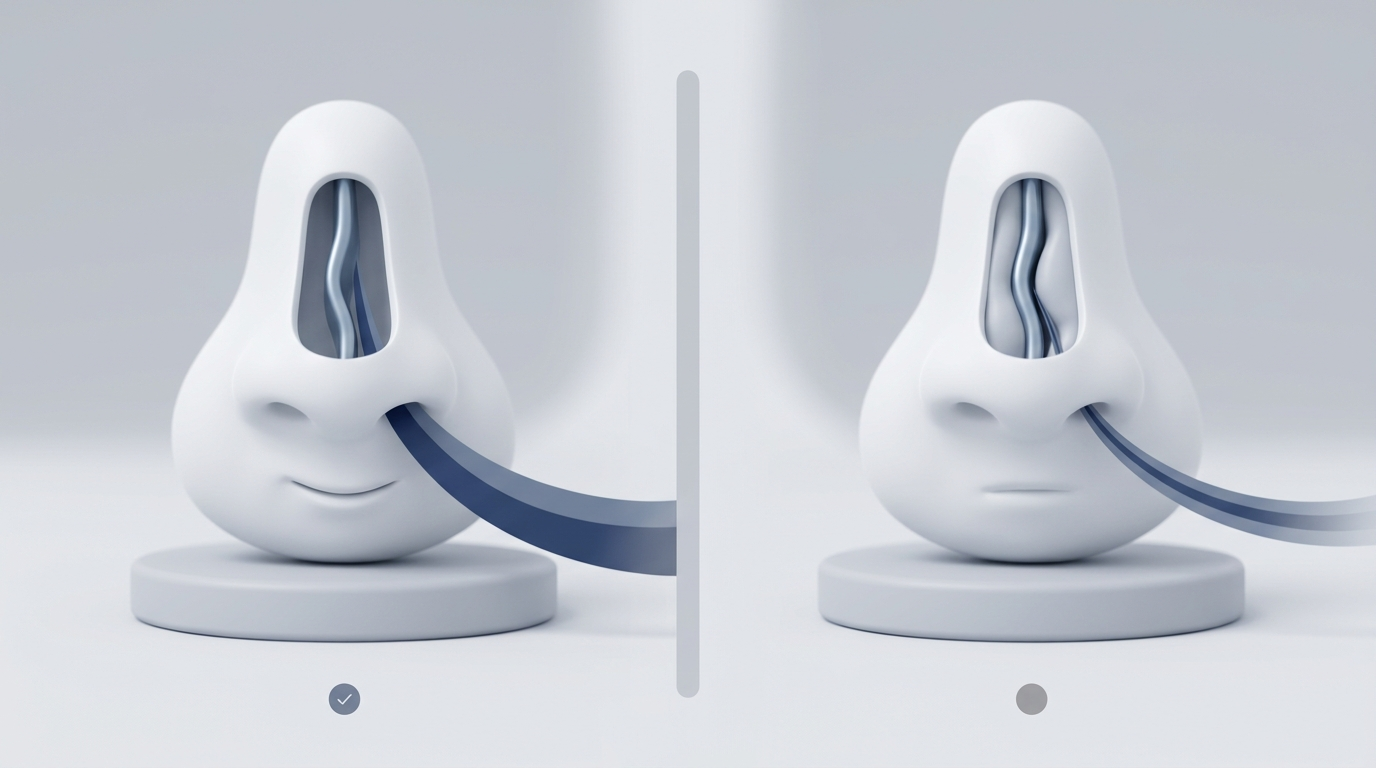
What “deviated” means in real life: “Deviated” simply means the septum is off-center or uneven. This is extremely common—and often harmless. Think of it like a door that’s slightly off its frame: if there’s still plenty of space to swing open, you may not notice a problem at all.
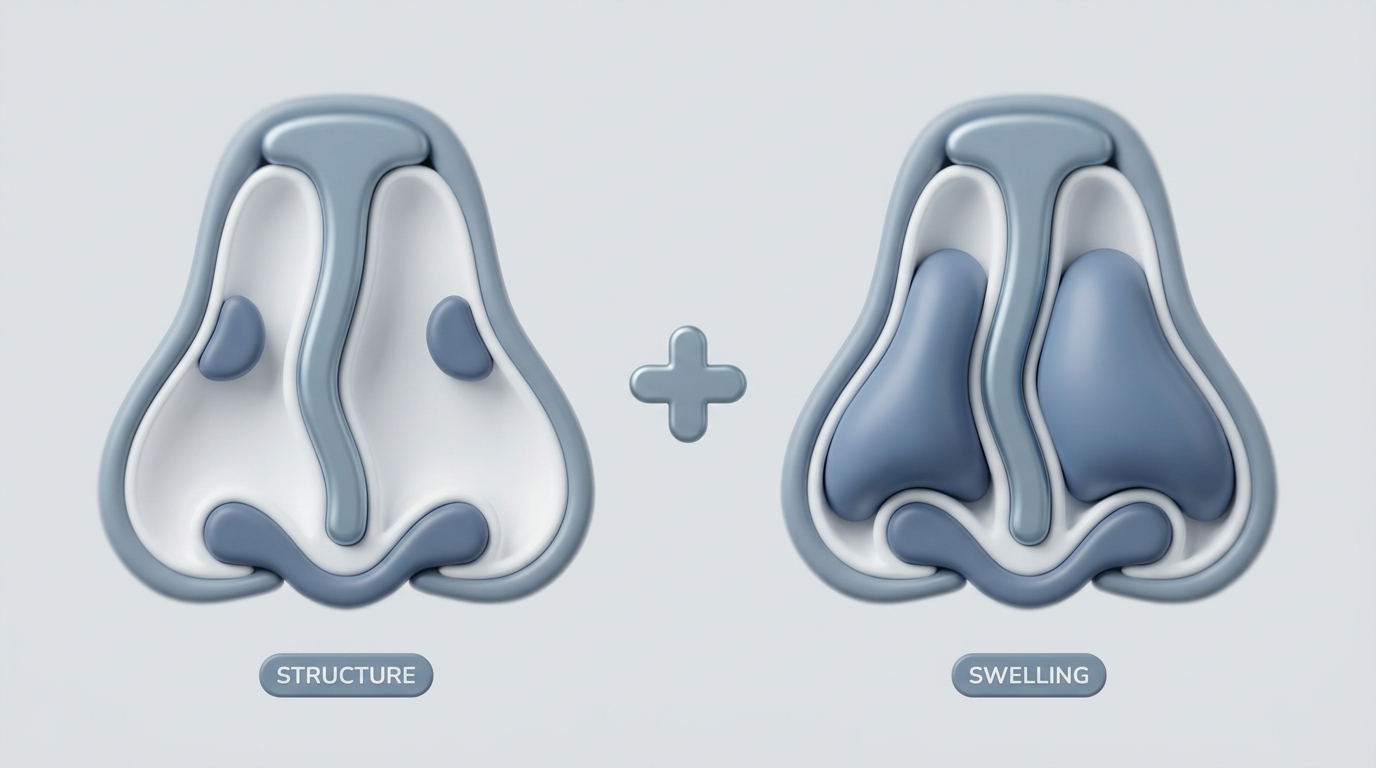
Symptoms usually happen when two things combine:
1. Structural narrowing (the deviation itself and any bony “spurs”)
2. Swelling/inflammation of the lining (from allergies, irritants, infections, or non-allergic rhinitis)
That’s why two people with similar-looking deviations can feel very different day to day.
Summary: A deviated septum becomes a problem mostly when structure plus swelling narrow airflow enough to cause symptoms.
Symptoms of a Deviated Septum (When It’s More Than “Just Congestion”)
Breathing/obstruction symptoms:
- Feeling blocked on one side (or alternating sides)
- Chronic stuffiness that doesn’t fully clear
- Trouble breathing through the nose during exercise
- Mouth breathing (especially at night)
Concrete example: You might notice you can breathe fine sitting upright, but the “blocked side” becomes obvious when you lie down—especially if allergies or irritants are also causing swelling.
Bleeding and irritation symptoms:
- Frequent nosebleeds, often related to dryness/crusting
- Irritation from turbulent airflow or a sharp septal spur
A practical clue: if bleeding tends to happen in dry environments (winter heat, airplane cabins), dryness + airflow turbulence may be contributing.
Sleep and quality-of-life symptoms:
- Trouble sleeping because you can’t breathe comfortably through your nose
- Snoring that’s worse when your nose is blocked (snoring can have multiple causes)
- Feeling less rested due to nighttime nasal obstruction
Symptoms that can overlap with other conditions: Not every “sinus” symptom is caused by a septum. Facial pressure, post-nasal drip, and recurrent congestion can also come from rhinitis or sinusitis—sometimes with a deviated septum, sometimes without. This overlap is one reason ENTs look beyond the septum alone.
Summary: If nasal blockage is frequent, disrupts sleep or activity, or causes recurrent bleeding, it’s worth a focused ENT evaluation.
Causes—Why Septums Deviate
Injury/trauma: Nasal injuries (sports impacts, falls, past fractures) can shift cartilage and bone.
Developmental (born that way): Some septums gradually deviate during growth and only become noticeable later when symptoms develop.
Aging and structural changes: Over time, nasal support tissues can change, and collapse/narrowing can contribute to obstruction alongside any septal deviation. The septum may be one piece of a bigger airflow puzzle.
Summary: Deviations may result from injury, development, or aging—and often coexist with other airflow problems.
How ENTs Diagnose a Deviated Septum (and What Else They Check)
History + symptom scoring: A key part of diagnosis is understanding impact.
- How often are you blocked?
- How severe is it?
- Does it affect sleep, exercise, work, or quality of life?
Patient-reported tools such as the NOSE score are commonly used to measure severity and improvement over time (The BMJ, 2023).
Nasal exam/endoscopy: A detailed nasal exam may look for:
- septal deviation or spurs
- turbinate enlargement
- signs of allergic or non-allergic rhinitis
- polyps or other structural causes of blockage
This matters because two issues can coexist—for example, a deviated septum plus enlarged turbinates—and treating only one may not fully address symptoms.
When imaging (CT) may be used: A CT scan isn’t always needed just to evaluate a deviated septum. Imaging is more commonly considered when sinus disease is suspected or symptoms suggest additional concerns beyond septal deviation.
Summary: ENT evaluation looks at the whole airflow system—septum, turbinates, and lining—not just one structure.
First-Line Treatments (Non-Surgical Options to Try Before Septoplasty)
Important limitation: Nasal sprays and rinses can reduce inflammation and improve airflow—but they can’t physically straighten a deviated septum (Mayo Clinic, 2023).
For a deeper overview, see: fixing a deviated septum without surgery: https://sleepandsinuscenters.com/blog/fixing-a-deviated-septum-without-surgery-non-surgi-20260123191010
Medical therapies that often help:
- Nasal steroid sprays used consistently (technique and regular use matter)
- Saline sprays or rinses to clear mucus/allergens and reduce dryness
- Allergy management (trigger control and medications; testing in some cases)
Research suggests rhinitis/inflammation can meaningfully influence symptoms and outcomes—so it’s not just “the septum” for many patients (The BMJ, 2023).
Lifestyle tips that support medical treatment:
- Use a humidifier during dry seasons (and keep it clean)
- Avoid smoke and strong irritants when possible
- Address indoor allergens (dust, pets, molds)
- Consider gentle nasal moisturization if dryness/crusting is a major issue
Summary: Medical therapy can ease swelling and dryness—even if it can’t straighten cartilage—and is worth optimizing before considering surgery.

When to Consider Septoplasty (Key Decision Points)
The “right” reason: Septoplasty is most often considered when nasal obstruction (or related symptoms like recurrent bleeding) continues despite a reasonable trial of medical therapy—and symptoms interfere with daily life, sleep, or activity (Mayo Clinic, 2023; NHS Sussex, n.d.).
A simple self-check: If you routinely plan workouts, sleep position, travel, or conversations around “how blocked” your nose feels, these patterns are worth bringing up with an ENT.
The “not enough” reason: appearance alone. Septoplasty focuses on function and airflow; cosmetic concerns are a separate discussion.
“Is it the septum or swelling?” If swelling from rhinitis is driving most symptoms, medical therapy may still provide meaningful improvement. If structure is the main cause of narrowing, surgery may offer the most direct relief (The BMJ, 2023).
Summary: Consider septoplasty when symptoms persist despite good medical care—and your ENT agrees structure is a key driver.
What the Research Says—Septoplasty vs Medical Treatment
2023 randomized trial (378 adults): Both groups (septoplasty vs six months of medical therapy with nasal steroid + saline) improved, but the surgery group had greater and sustained improvement in nasal obstruction and quality of life at 12 months (The BMJ, 2023). These results apply to adults with symptomatic deviation and don’t mean surgery is best for everyone.
Importantly, the medical-treatment group still improved—especially when inflammation/rhinitis played a role.
2025 meta-analysis (3 RCTs, 721 patients): Septoplasty showed better symptom scores (e.g., NOSE, SNOT-22) at 6 and 12 months, with caution due to limited trials and variability (Taha et al., 2025).
Patient takeaway: In appropriately selected adults—especially when structural blockage is the main problem—septoplasty tends to outperform medical therapy alone, while inflammation control still matters either way.
Summary: In selected adults with structural blockage, surgery often improves symptoms more than medical therapy alone—yet inflammation care still counts.
What Is Septoplasty? (Procedure Overview)
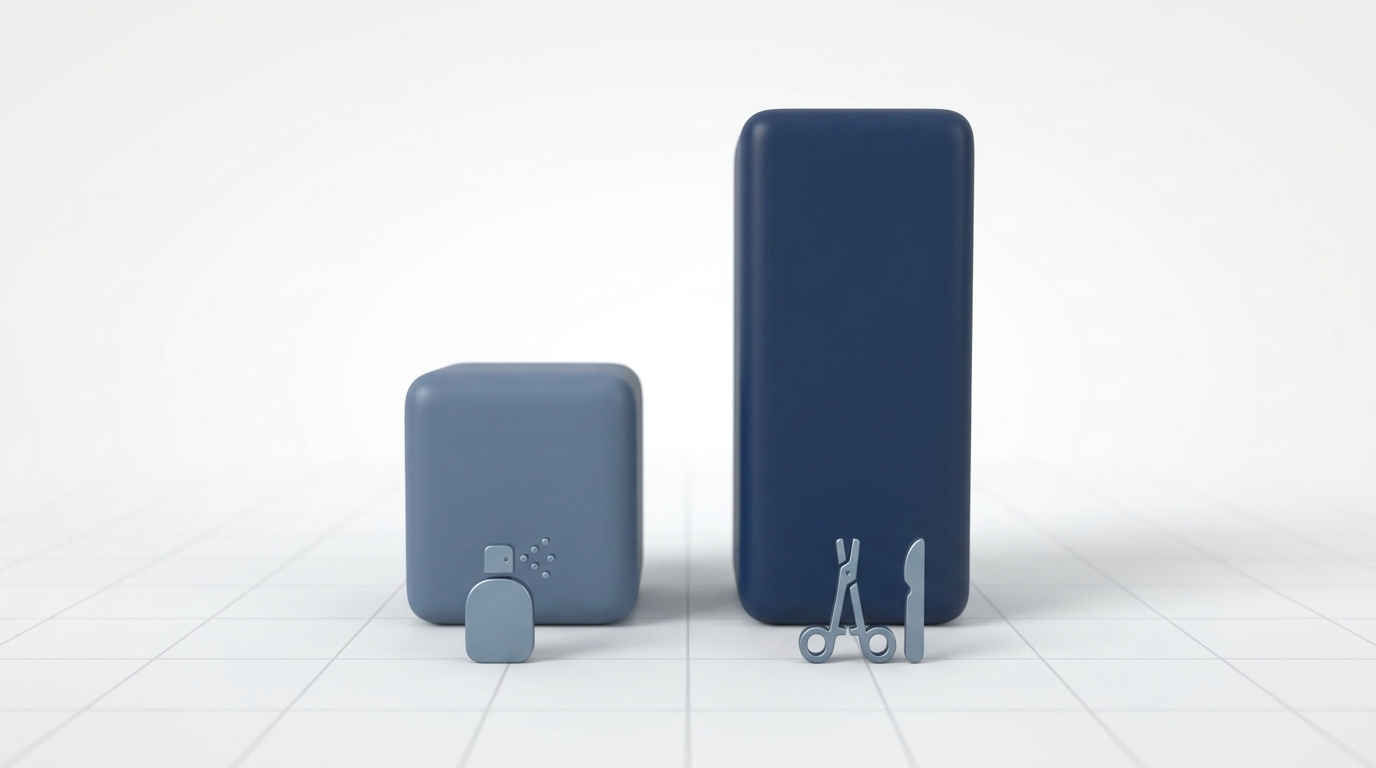
What surgeons do: Reposition and/or remove deviated cartilage and bone that narrow airflow. It’s typically performed through the nostrils, so there’s usually no external scar for a standard septoplasty (Mayo Clinic, 2023; Cleveland Clinic, n.d.).
Outpatient setting + anesthesia: Often an outpatient procedure; anesthesia type varies based on individual factors and approach.
Common “add-on” procedures (as needed):
- Turbinate reduction (if enlarged turbinates contribute to blockage)
- Other structural corrections if multiple areas narrow airflow
Summary: Septoplasty reshapes internal structures to improve airflow, often outpatient and sometimes paired with turbinate reduction.
Septoplasty Risks, Side Effects, and Limitations (Balanced View)
Common/important risks to understand:
- bleeding
- infection
- scarring or adhesions inside the nose
- septal perforation (a hole in the septum)
- numbness or altered sensation
- changes in smell
- persistent symptoms (not everyone gets complete relief)
(Mayo Clinic, 2023; Cleveland Clinic, n.d.; NHS Sussex, n.d.)
Realistic expectations: The goal is better breathing and function, not perfect symmetry. If inflammation is a major contributor, ongoing medical therapy may still help after surgery. If external support or cartilage work is needed, ask whether that could subtly affect appearance; cosmetic change is not the goal of standard septoplasty.
Summary: Aim for meaningful breathing improvement, with a small but real risk of side effects—and remember medical therapy may still help after surgery.
Recovery Timeline—What Patients Can Expect
First 24–72 hours: Common to experience congestion/pressure, drainage/mild bleeding, fatigue, and manageable discomfort per your team’s plan.
Week 1–2: Many people return to normal daily activities within about 1–2 weeks, depending on job/activity level and surgeon guidance (Mayo Clinic, 2023; NHS Sussex, n.d.). Physically demanding work may require a slower ramp-up.
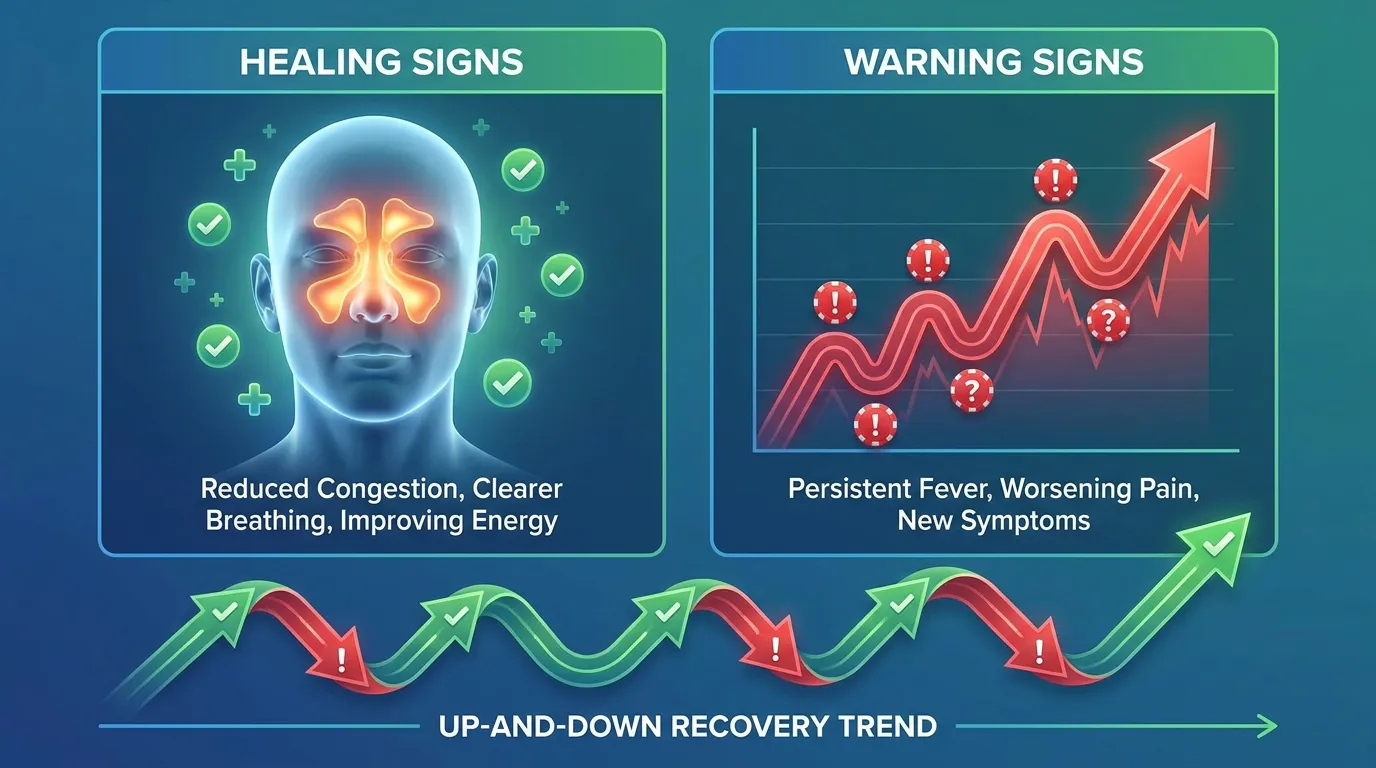
Healing continues for months: Breathing can keep improving as swelling resolves and healing progresses (Mayo Clinic, 2023). Improvement often feels stepwise, not instant—especially if allergies or rhinitis are also being treated.
Home-care essentials (general concepts):
- saline sprays/rinses as directed
- avoid nose-blowing early on
- avoid heavy lifting/strenuous exercise until cleared
- keep follow-ups for checks and gentle cleaning if needed
For a more detailed timeline, see: septoplasty recovery week by week: https://sleepandsinuscenters.com/blog/septoplasty-recovery-week-by-week-complete-timelin-20260123051106
Summary: Expect a short downtime for most routine tasks, with breathing benefits that often build over several weeks to months.

Septoplasty Alternatives (and “Bridge” Options)
If symptoms are mild or intermittent: Continuing medical therapy, allergen control, and nasal hygiene may be enough.
If obstruction is structural but you’re avoiding surgery: Bridge options like nasal strips or internal nasal dilators, plus targeted rhinitis treatment, can offer partial relief without changing septal shape.
If appearance + breathing are both issues: Discuss the difference between septoplasty (function) and procedures that address both airflow and external shape.
Summary: If symptoms are manageable, non-surgical care may suffice; bridge options can help some people without altering anatomy.
FAQs
Can nasal sprays fix a deviated septum? They can reduce swelling and improve airflow, but they can’t straighten the septum itself (Mayo Clinic, 2023).
Does septoplasty change nose shape? Usually not, and it’s not the goal of standard septoplasty; subtle changes are possible depending on anatomy and support work—discuss specifics with your surgeon (Mayo Clinic, 2023).
How long does septoplasty recovery take? Many people feel ready for routine activities in about 1–2 weeks, but internal healing and breathing improvements can continue for months (Mayo Clinic, 2023; NHS Sussex, n.d.).
Is septoplasty worth it? For the right candidate—where structural blockage is the main issue—research shows septoplasty often leads to greater symptom and quality-of-life improvement than medical therapy alone (The BMJ, 2023; Taha et al., 2025).
What are the biggest risks? Commonly discussed risks include bleeding, infection, altered smell/sensation, septal perforation, scarring, and persistent symptoms (Mayo Clinic, 2023; Cleveland Clinic, n.d.).
What should I ask an ENT before deciding? Consider asking: Is my blockage mostly septum, turbinates, or rhinitis? What improvement is realistic in my case? Would turbinate reduction be helpful too? What does my recovery and restriction timeline look like?
Conclusion
You don’t automatically need deviated septum surgery just because the septum is crooked. Septoplasty tends to be most helpful when nasal obstruction or related symptoms persist, affect quality of life, and don’t improve enough with appropriate medical treatment—and when the septum is truly the main source of blockage.
Deviated septum relief options: https://sleepandsinuscenters.com/deviated-septum-relief
Fixing a deviated septum without surgery: https://sleepandsinuscenters.com/blog/fixing-a-deviated-septum-without-surgery-non-surgi-20260123191010
Septoplasty recovery week by week: https://sleepandsinuscenters.com/blog/septoplasty-recovery-week-by-week-complete-timelin-20260123051106
Ready for personalized guidance? Book an appointment: https://www.sleepandsinuscenters.com/
Medical Disclaimer
This article is for educational purposes only and is not medical advice. Please consult a qualified healthcare provider for diagnosis and treatment. Diagnosis and treatment decisions should be made with a qualified clinician (such as an ENT), based on your symptoms, exam findings, and medical history.
References
Mayo Clinic. Septoplasty (2023). https://www.mayoclinic.org/tests-procedures/septoplasty/about/pac-20384670
The BMJ. Septoplasty versus medical management for nasal obstruction in adults with a deviated septum: randomized controlled trial (2023). https://www.bmj.com/content/383/bmj-2023-075445
Taha et al. Systematic review and meta-analysis of randomized controlled trials on septoplasty (2025). https://pubmed.ncbi.nlm.nih.gov/39230606/
NHS University Hospitals Sussex. Septoplasty and septorhinoplasty (n.d.). https://www.uhsussex.nhs.uk/resources/septoplasty-and-septorhinoplasty/
Cleveland Clinic. Septoplasty (n.d.). https://my.clevelandclinic.org/health/treatments/17779-septoplasty
Don’t let allergies slow you down. Schedule a comprehensive ENT and allergy evaluation at Sleep and Sinus Centers of Georgia. We’re here to find your triggers and guide you toward lasting relief.