Sinus Surgery Recovery Setbacks: Healing Signs vs. Warning Signs to Watch
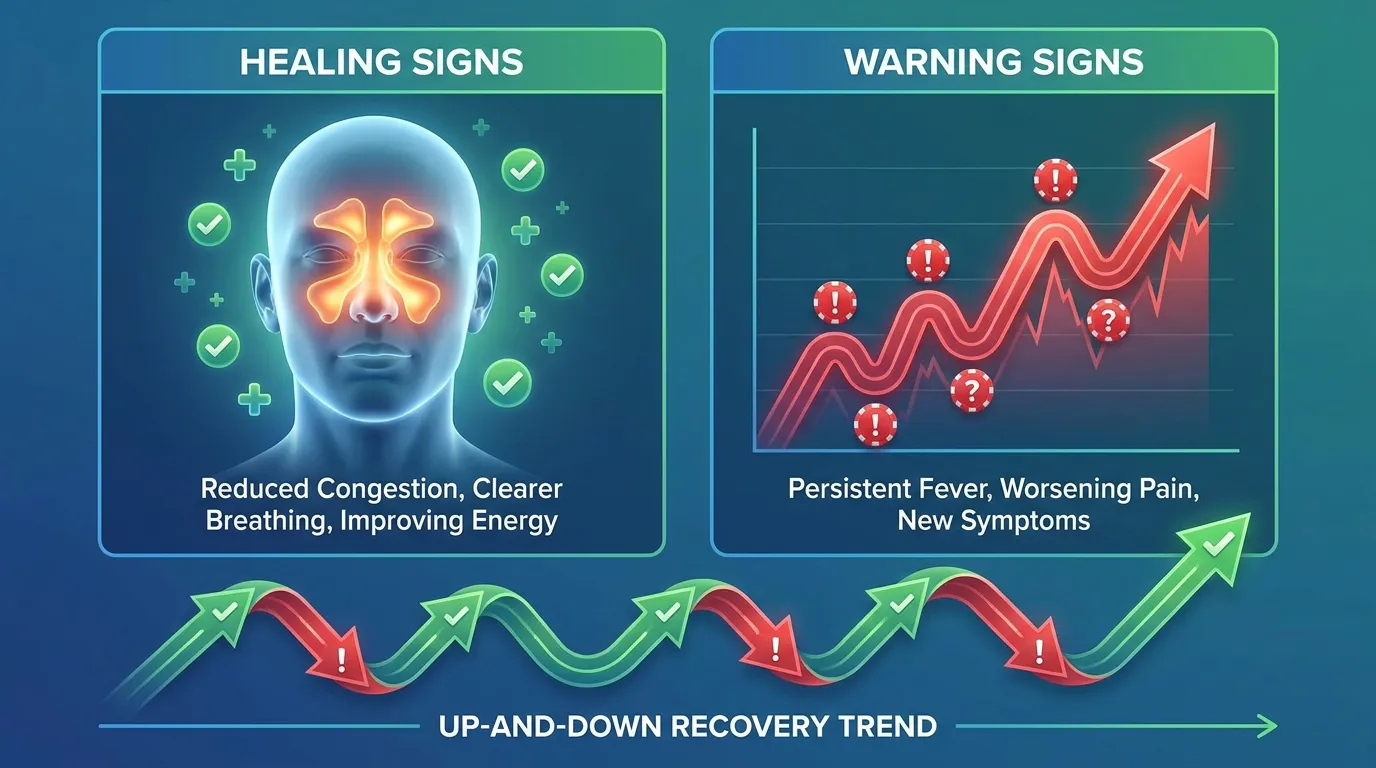
Healing after sinus surgery often feels like “two steps forward, one step back.” Good days and bad days are common in the first few weeks, so sinus surgery recovery setbacks don’t automatically mean something is wrong.
In general, congestion and crusting can last for weeks, and many people notice substantial improvement by about 4–6 weeks, though recovery varies by procedure and patient factors. (Johns Hopkins Medicine; Medtronic)
A helpful way to think about recovery: your nose and sinuses heal from the inside out. Even if you feel better on Tuesday, normal swelling and crusting can make you feel “blocked” again on Wednesday—without anything dangerous happening.
*Short version: Ups and downs are common; the overall trend matters most.*
Quick Take: What’s Normal vs. What’s Not
Most recovery symptoms are uncomfortable—but expected. The key is recognizing patterns that suggest normal healing versus warning signs after sinus surgery that deserve prompt evaluation.
Often normal after surgery (especially early):
- Congestion and “stuffy” breathing
- Crusting/scabs and thicker drainage
- Mild to moderate discomfort or pressure
- Light bleeding/oozing in the early period
Not normal (contact your surgeon promptly):
- Fever above the threshold given by your surgeon; many postoperative instructions use about 101°F (38.3°C)
- Persistent vision changes, eye pain, or swelling around the eye (seek emergency care)
- Constant clear, watery drainage; persistent, watery, clear drainage can have non-dangerous causes, but it can also be a sign of a CSF leak and should be evaluated urgently
- Heavy bleeding or bleeding that won’t slow down
Sources: Johns Hopkins Medicine; Mount Sinai; Cleveland Clinic; Medtronic
- https://www.hopkinsmedicine.org/health/treatment-tests-and-therapies/endoscopic-sinus-surgery
- https://www.mountsinai.org/care/ent/services/nasal-sinus-allergy/after-surgery-care
- https://my.clevelandclinic.org/services/schedule-sinus-surgery
- https://www.medtronic.com/en-us/l/patients/treatments-therapies/sinus-surgery/life-after.html
*When in doubt, call your surgeon—especially during the first few weeks.*
Why “Setbacks” Can Happen During Sinus Surgery Recovery
Healing isn’t linear—symptoms can fluctuate
Even when recovery is going well, symptoms can spike temporarily. Common reasons include:
- Normal swelling that rises and falls
- Mucus changing from watery to thicker as tissues heal
- Crusts loosening (which can briefly increase drainage or minor bleeding)
- Dry indoor air, poor sleep, dehydration, or seasonal irritants
These ups and downs are a common reason patients search for sinus surgery recovery setbacks—because the day-to-day experience doesn’t always “trend better” in a straight line.
A quick mindset shift that helps
Many clinicians describe early recovery as a “swelling and scabbing phase.” During this phase, it’s normal for your nose to behave a bit like a healing scrape on your skin: it can feel tight, dry, and irritated until it re-epithelializes (regrows healthy lining). Inside the nose, that same process can temporarily affect breathing and drainage.
The goal of this guide
This post is designed to help you separate:
- Normal symptoms after sinus surgery (expected healing signs), from
- Complications that deserve prompt or urgent evaluation
If you’re still in the planning stage or want a refresher on the procedure itself, see our overview of endoscopic sinus surgery: https://sleepandsinuscenters.com/blog/endoscopic-sinus-surgery-what-patients-should-know
*Remember: day-to-day swings are common; watch the week-to-week trend.*

Sinus Surgery Recovery Timeline (What Most Patients Experience)
Everyone’s recovery is different, but this general timeline can help you interpret common day-to-day changes. If your surgeon’s instructions differ, follow theirs.
First 24–48 hours
- What you may notice: Congestion/pressure, fatigue, mild bleeding/oozing, discomfort manageable with your surgeon-approved plan
- What it usually means: Acute healing and swelling are expected (Mount Sinai; Johns Hopkins)
Days 3–14
- What you may notice: Persistent congestion, thicker drainage, crusting/scabs, smell/taste changes; brief mild bleeding when crusts loosen
- What it usually means: The swelling and scabbing phase; it may feel “worse before better”
Weeks 3–6
- What you may notice: Gradual breathing improvement, fewer crusts, less frequent drainage
- What it usually means: Many people notice substantial improvement by about 4–6 weeks, depending on the procedure (Johns Hopkins; Medtronic)
*Tip: Focus on gradual progress rather than expecting a perfectly smooth curve.*

Normal Healing Signs (Common and Usually Not Dangerous)
Nasal congestion and “stuffy” breathing
Congestion is one of the most common normal symptoms after sinus surgery. It’s typically driven by swelling and temporary blockage from crusting. Many people notice slow, uneven improvement over several weeks—often with a few “backslide” days.
- You might breathe more freely after a shower or rinse (when crusts soften), then feel blocked again as tissues dry and swell.
- If congestion is your main concern, you may also find this helpful: How long does congestion last after sinus surgery? https://sleepandsinuscenters.com/blog/how-long-does-congestion-last-after-sinus-surgery-20260327011117
Crusting, scabs, and thicker drainage
Crusting is a normal part of healing. As the lining recovers, secretions can thicken and dry, forming scabs—sometimes for weeks. Many “setbacks” are crust-related: airflow can feel worse until crusts soften and clear (often after rinses or shower steam).
- Color alone doesn’t automatically signal infection—context (fever, worsening pain, feeling ill, foul odor) matters more.
Mild to moderate pain/pressure
Some tenderness, pressure, or headache-like discomfort can occur as swelling shifts. Many patients notice pressure changes with sleep position, dryness, or activity level.
- A helpful rule of thumb: gradual easing is more reassuring than pain that steadily escalates—especially if paired with fever or eye symptoms. If you find yourself needing more and more pain control each day, that pattern is worth a call.
Mild bleeding early on
Light bleeding or blood-tinged mucus is often expected early, particularly as crusts loosen. (Mount Sinai) What matters most is the amount and whether it slows down—heavy or persistent bleeding belongs in the warning-sign category.
*Bottom line: If symptoms trend milder over time and match common patterns, they’re usually part of normal healing.*

Recovery Setbacks That Are Often Benign (But Still Worth Mentioning)
A sudden “plugged up” day after feeling better
Rebound swelling, dry air, missed or inconsistent rinsing, irritants/allergens, or poor sleep can all cause a “bad day.” One difficult day doesn’t reset your recovery clock.
Temporary increase in drainage after rinses or a hot shower
Moisture can loosen crusts and briefly increase drainage. That’s often expected (and sometimes helpful). For technique and frequency, see Nasal rinses: how often should you use them? https://sleepandsinuscenters.com/blog/nasal-rinses-how-often-should-you-use-them
Fatigue that lingers
Fatigue can persist due to anesthesia recovery, interrupted sleep, mouth breathing, or overall inflammation. However, extreme fatigue plus fever or a strong “I’m getting sicker” feeling warrants a call.
*Think of “weekly averages,” not hourly scores—this is a coping tip, not a medical rule.*
Warning Signs After Sinus Surgery (When to Call or Seek Emergency Care)
Important: This article is educational and not medical advice. When in doubt, contact your surgeon—especially in the first few weeks.
Fever above your surgeon’s threshold
- Many postoperative instructions use about 101°F (38.3°C).
- If you’re unsure, take and share a documented temperature reading (number and timing).
Vision changes, eye pain, or swelling around the eye
- Blurry or double vision, trouble moving the eye, increasing eye pain/pressure, or new eyelid swelling/redness can be urgent.
- Seek emergency care right away. (Johns Hopkins Medicine)
Constant clear, watery fluid leaking from the nose
- Persistent, watery, clear drainage can have non-dangerous causes, but it can also be a sign of a CSF leak and should be evaluated urgently—especially if it’s one-sided or worse when leaning forward. (Johns Hopkins Medicine)
Heavy bleeding or bleeding that won’t slow down
- Bleeding that is heavy, involves large clots, repeatedly soaks gauze, or doesn’t slow down should be evaluated. (Mount Sinai; Cleveland Clinic)
Bad-smelling discharge, worsening pain, or feeling “sicker instead of better”
- Foul odor, increasing thick drainage with worsening facial pain/pressure, or feeling systemically unwell may suggest infection or trapped secretions needing review.
Severe headache, neck stiffness, confusion, or new neurologic symptoms
- Seek emergency care immediately.
*If a symptom seems sudden, severe, or steadily worsening, err on the side of urgent evaluation.*

Common Causes of Sinus Surgery Recovery Setbacks
Inflammation and swelling (most common)
Inflammation can spike after overexertion, poor sleep, irritant exposure, or allergies—leading to congestion, pressure, and that “setback” feeling.
Infection is one possible cause
Your surgeon can evaluate whether bacteria, fungus, or another issue is involved. Potential clues include fever, foul odor, escalating pain, and feeling systemically unwell. Not all drainage changes equal infection—patterns matter.
Dryness and thick secretions
Dry indoor air, dehydration, and mouth breathing can thicken secretions, worsen crusting, and increase irritation (and sometimes bleeding).
Irritants and exposures that slow healing
Smoke/vaping exposure, dust, strong fragrances, yardwork, and sick contacts can prolong inflammation and trigger symptoms that resemble sinus surgery recovery setbacks.
Medication-related issues
Using medications differently than instructed—or using certain sprays too long—can complicate congestion patterns. Follow your surgeon’s individualized plan.
*Often, “setbacks” reflect temporary inflammation or dryness rather than a serious problem.*
What To Do If You Think You’re Having a Setback (Step-by-Step)
1) First: check the “red flag” list
- Fever above your surgeon’s threshold, vision changes, constant clear watery drainage, or heavy bleeding warrant prompt attention. For vision changes or severe neurologic symptoms, seek emergency care.
- When you call, share specifics (temperature, duration, one-sided vs. both sides, and whether symptoms are trending worse).
2) If symptoms seem “normal but annoying”
Many surgeons recommend supportive basics during recovery, such as:
- Saline rinses as instructed
- Humidified air
- Hydration and rest
- Head elevation during sleep
A simple analogy: think of saline and humidity as “softening the scab” so the inside of the nose can clear gently instead of staying crusted and inflamed. (General guidance: Mount Sinai; Medtronic)
3) When to call even if it’s not an emergency
Consider checking in if:
- Symptoms aren’t improving week over week
- Pain is escalating rather than gradually easing
- New foul odor appears
- Congestion worsens after a period of improvement
- You’re concerned you’re stuck in a cycle of sinus surgery recovery setbacks
*If your progress plateaus or reverses, a quick check-in can get you back on track.*

Treatments Your ENT Might Recommend (Depending on the Cause)
In-office postoperative care (cleaning/debridement if needed)
Follow-up visits matter. Safe removal of crusts (when appropriate) can improve airflow and help healing progress. For many, this feels like a turning point.
Medications (case-by-case)
Depending on your situation, your surgeon may recommend:
- Pain control strategies
- Antibiotics if infection is suspected
- Steroid sprays or rinses when inflammation is significant (only if prescribed)
Imaging or additional evaluation
If symptoms don’t match expected healing, your ENT may consider nasal endoscopy and, in some cases, imaging to assess healing and rule out complications.
*Your care plan is individualized—follow your surgeon’s instructions even if they differ from general advice online.*
Lifestyle Tips to Support Healing and Reduce Setbacks
- Sleep positioning and rest: Head elevation can help with swelling; prioritize sleep.
- Hydration + humidity: Dryness thickens mucus; keep indoor humidity reasonable and keep humidifiers clean.
- Avoid high-risk activities until cleared: Heavy lifting/straining, vigorous exercise, and nose blowing should follow your surgeon’s timeline.
- Reduce irritant exposure: Keep a smoke-free environment and minimize dust/fragrance exposure.
*Small daily habits—sleep, hydration, humidity—often make the biggest difference.*
FAQs (Patient-Friendly)
1) How long does congestion last after sinus surgery?
Congestion often lasts weeks, typically improving gradually and unevenly; many people feel significantly better by about 4–6 weeks, though it varies. (Johns Hopkins; Medtronic) More detail: https://sleepandsinuscenters.com/blog/how-long-does-congestion-last-after-sinus-surgery-20260327011117
2) Is crusting normal weeks after surgery?
Yes—crusting can persist for weeks as tissues heal, especially if the nose feels dry.
3) Is a little bleeding normal? When is it too much?
Light bleeding early can be expected, but heavy bleeding or bleeding that won’t slow down should be evaluated. (Mount Sinai; Cleveland Clinic)
4) What fever is concerning after sinus surgery?
Follow your surgeon’s specific threshold; many postoperative instructions use about 101°F (38.3°C). (Cleveland Clinic; Mount Sinai)
5) What does a CSF leak look like and why is it urgent?
A possible sign is persistent, watery, clear drainage from the nose, sometimes one-sided and worse leaning forward. Because it can overlap with other benign causes, urgent evaluation is important. (Johns Hopkins)
6) Why do I feel worse at night or when I wake up?
Lying flat, dryness, and mucus pooling can make mornings feel more congested.
7) Can allergies cause a recovery “flare”?
Yes. Allergens and irritants can increase swelling and mimic sinus surgery recovery setbacks.
8) When can I return to exercise/work/travel?
This is individualized—follow your surgeon’s plan based on what was done and how your healing is progressing.
9) When should I schedule (or not miss) my post-op visit?
Post-op checks help your surgeon assess healing and address crusting or inflammation early.
10) What should I do if I’m not improving by week 4–6?
A plateau is a good reason to contact your ENT for guidance and an exam to understand what’s driving persistent symptoms.
*Use your care team as a resource—timely check-ins can prevent prolonged setbacks.*
Conclusion: Trust the Trend—and Don’t Ignore Red Flags
A few frustrating days can be part of normal healing, and many sinus surgery recovery setbacks turn out to be temporary swelling or crusting. But fever above your surgeon’s threshold, eye symptoms/vision changes, constant clear watery drainage, heavy bleeding, or severe headache/neurologic symptoms should be treated as urgent or emergency reasons to seek care.
Need reassurance or a post-op check? Book an appointment with Sleep and Sinus Centers of Georgia to review your symptoms and make sure your recovery is on track: https://www.sleepandsinuscenters.com/
*Aim for steady progress, follow your surgeon’s plan, and get help early if red flags appear.*
References
- Johns Hopkins Medicine – Endoscopic Sinus Surgery: https://www.hopkinsmedicine.org/health/treatment-tests-and-therapies/endoscopic-sinus-surgery
- Mount Sinai – After Surgery Care: https://www.mountsinai.org/care/ent/services/nasal-sinus-allergy/after-surgery-care
- Cleveland Clinic – Sinus Surgery: https://my.clevelandclinic.org/services/schedule-sinus-surgery
- Medtronic – Life After Sinus Surgery: https://www.medtronic.com/en-us/l/patients/treatments-therapies/sinus-surgery/life-after.html
- ENT Surgery (AU) – After Sinus Surgery: https://ent-surgery.com.au/nose-and-sinus-surgery/after-sinus-surgery/
- Arizona Sinus Center – Recovering From Sinus Surgery: https://www.az-ent.com/blog/1340938-recovering-from-sinus-surgery-what-to-expect-and-how-to-speed-up-healing/
- Premier Sinus – Guide to Recovery After Septum or Sinus Surgery: https://premiersinus.com/blog/your-guide-to-recovery-after-septum-or-sinus-surgery/
This article is for educational purposes only and is not medical advice. Please consult a qualified healthcare provider for diagnosis and treatment.
Don’t let allergies slow you down. Schedule a comprehensive ENT and allergy evaluation at Sleep and Sinus Centers of Georgia. We’re here to find your triggers and guide you toward lasting relief.