One Nostril Still Blocked After Sinus Surgery: Causes, Recovery, and When to See a Doctor
Feeling like you can’t breathe well through one side of your nose after sinus surgery can be unsettling—especially when the other side seems fine. Many patients describe it as breathing through a straw on one side, or like there’s a soft “plug” that doesn’t clear with gentle blowing or rinsing.
The reassuring news: one-sided blockage is common during healing, particularly after endoscopic sinus surgery (often called FESS). Early recovery is a mix of swelling, drainage, and crusting—none of which always happen evenly on both sides.
For a broader overview of the procedure itself, see our guide: endoscopic sinus surgery (FESS): what to expect https://sleepandsinuscenters.com/blog/endoscopic-sinus-surgery-what-patients-should-know
Quick answer
It’s common for one side of the nose to feel more blocked after sinus surgery due to swelling and discharge/crusting, especially during the first few weeks. Think of it like a healing scrape: as tissue repairs itself, it swells and produces debris that can temporarily narrow the airway. If symptoms are not gradually improving after several weeks, or if they worsen, contact your surgeon to rule out issues such as adhesions (scar bands) or excessive scarring. See post-operative care and recovery guidance: https://www.mountsinai.org/care/ent/services/nasal-sinus-allergy/after-surgery-care and https://www.hopkinsmedicine.org/health/treatment-tests-and-therapies/endoscopic-sinus-surgery
- For a deeper dive on recovery: how long congestion lasts after sinus surgery https://sleepandsinuscenters.com/blog/how-long-does-congestion-last-after-sinus-surgery-20260327011117
- For the normal nasal rhythm: understanding the nasal cycle https://sleepandsinuscenters.com/blog/understanding-the-nasal-cycle-key-effects-and-what-you-need-to-know
- For adhesions: nasal synechiae after surgery https://sleepandsinuscenters.com/blog/nasal-synechiae-after-surgery-causes-symptoms-and-treatment-options
Why one side can feel worse than the other after surgery
Several normal healing patterns can make one side feel stuffier, especially early on.
The nasal cycle (normal alternating congestion)
Even in people who’ve never had surgery, the nose doesn’t always split airflow 50/50. The body naturally alternates which side is more open—a normal rhythm called the nasal cycle. After surgery, inflammation can make this cycle feel more dramatic. You may notice a good side and a bad side that can even switch—especially at night or when you roll from one side to the other. Learn more: understanding the nasal cycle https://sleepandsinuscenters.com/blog/understanding-the-nasal-cycle-key-effects-and-what-you-need-to-know

Swelling isn’t always symmetric
One side may have had more polyp removal, a tighter sinus opening that needed more work, or more baseline inflammation. That can lead to more swelling (edema) on one side—so it feels more blocked.
Crusting or clots can plug one side
Early healing often involves blood-tinged drainage, thicker mucus, and crusting. Dried blood and mucus can temporarily obstruct airflow more on one side than the other until it loosens (often with saline irrigation and post-operative cleanings). Many centers prepare patients by noting that congestion and crusting are expected during healing and that saline care helps clear it.
- Mount Sinai: after-surgery care https://www.mountsinai.org/care/ent/services/nasal-sinus-allergy/after-surgery-care
- Johns Hopkins: endoscopic sinus surgery overview https://www.hopkinsmedicine.org/health/treatment-tests-and-therapies/endoscopic-sinus-surgery
Conclusion: It’s common for one side to lag due to normal cycling, uneven swelling, and crusting during early healing.
Common symptoms after sinus surgery (what’s typical vs. when to call)
Usually typical in the first few weeks
- A blocked feeling (one side or both)
- Blood-tinged drainage that shifts to thicker mucus
- Crusting and a sense of pressure or fullness
- Temporarily reduced smell or taste
A practical example: you might rinse and feel briefly clearer, then feel blocked again an hour later as tissue swells and new mucus forms. This back-and-forth can be part of normal healing.
Educational references commonly describe these symptoms during early recovery:
- Mount Sinai: after-surgery care https://www.mountsinai.org/care/ent/services/nasal-sinus-allergy/after-surgery-care
- Johns Hopkins: endoscopic sinus surgery https://www.hopkinsmedicine.org/health/treatment-tests-and-therapies/endoscopic-sinus-surgery
Symptoms that should prompt earlier contact
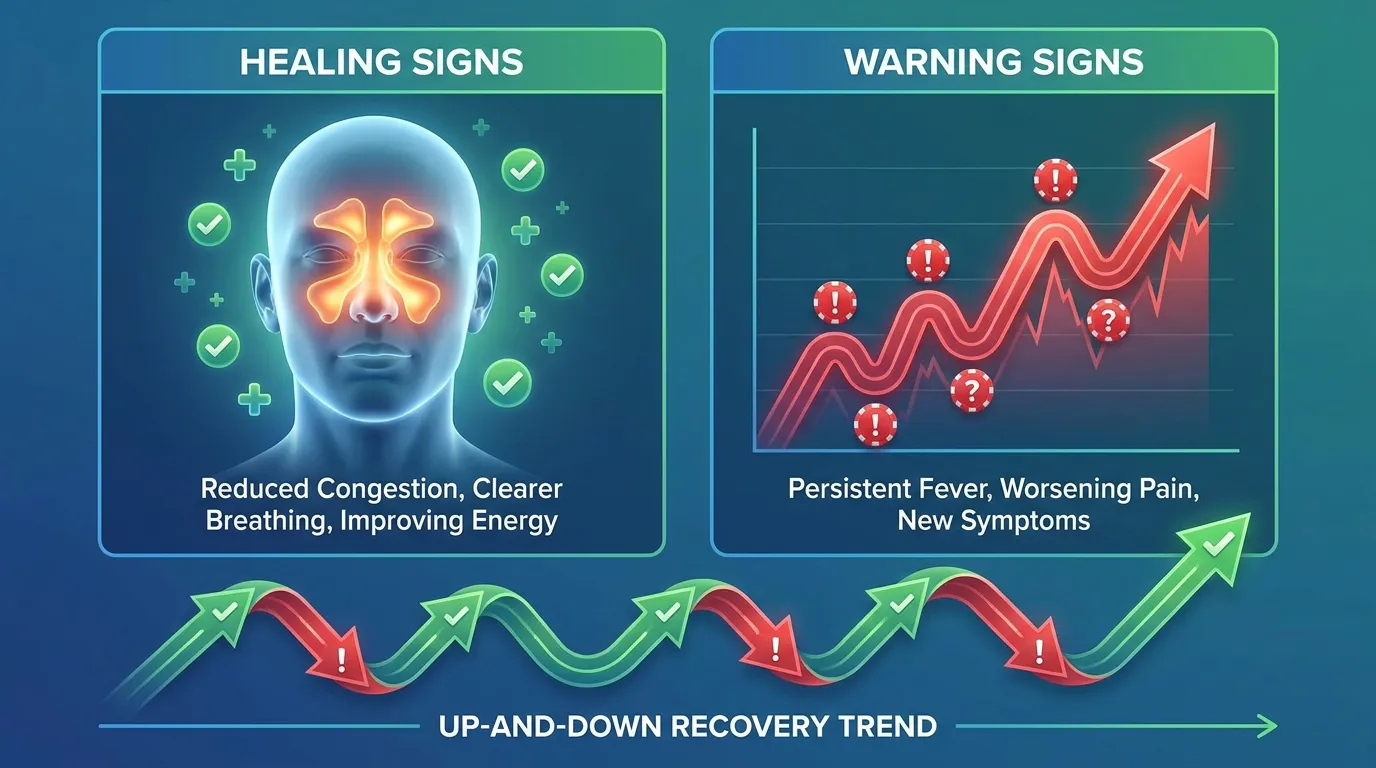
- Persistent fever, worsening facial pain, or foul-smelling discharge
- Heavy bleeding that doesn’t stop with the measures your surgeon recommended
- Rapidly worsening swelling around the eye, vision changes, severe headache, neck stiffness
- Shortness of breath or chest symptoms (seek urgent evaluation)
Always follow the specific post-operative instructions provided by your surgical team, as recommendations vary by procedure and individual factors.
Conclusion: Typical early recovery includes congestion and crusting; new or worsening pain, fever, heavy bleeding, or eye/vision changes should prompt earlier contact.

A general recovery timeline for congestion
Healing isn’t strictly linear—many patients feel worse before better. For more detail, see: How long does congestion last after sinus surgery? https://sleepandsinuscenters.com/blog/how-long-does-congestion-last-after-sinus-surgery-20260327011117
Days 1–7
- Swelling is usually at its peak
- Drainage can be a mix of mucus and old blood
- Nasal breathing may feel significantly blocked (sometimes more on one side)
Weeks 2–3
- Swelling often begins to ease
- Crusting can be more noticeable
- Breathing may fluctuate—some days clearer, other days stuffier
- One side may feel persistently stuck, especially if crusting builds
This can be consistent with crusting or swelling, though only an exam can confirm the cause.
Weeks 3–4
- Many patients notice improved airflow as the nose is cleaned and inflammation eases
- Saline care and follow-up visits often make a bigger difference during this period
- If one side remains blocked with minimal improvement, it may be reasonable to check in
Beyond several weeks
If one side of the nose still feels blocked and isn’t gradually improving, your surgeon may consider an evaluation for adhesions (nasal synechiae), excess scarring, or ongoing inflammation.
- General recovery info: https://www.julianhamann.com/nose-sinuses/recovery-from-nose-and-sinus-surgery
- Additional overview: https://sinussnoringent.sg/recovery-after-sinus-surgery-what-you-need-to-know/
Conclusion: Improvement often unfolds over weeks; if progress stalls or worsens, a follow-up can clarify next steps.

Common causes of one-side blockage after sinus surgery
1) Post-operative swelling (edema)
Swelling narrows the nasal passage—like a temporary pinch point. It can linger because nasal tissue is delicate and reactive. Mount Sinai: after-surgery care and Johns Hopkins: endoscopic sinus surgery
2) Discharge, crusting, or dried blood
Crusting forms when mucus and small amounts of blood dry inside the nose. Even small crusts can feel like a wall, especially in narrow areas.
3) Adhesions (nasal synechiae) or excessive scar tissue
Two healing surfaces can occasionally stick together and form a tissue bridge. This can create a more fixed, one-sided blockage that doesn’t vary much with the nasal cycle. Early follow-ups help because adhesions may be easier to address when identified early. Learn more: nasal synechiae after surgery https://sleepandsinuscenters.com/blog/nasal-synechiae-after-surgery-causes-symptoms-and-treatment-options
4) Inflammation from allergies or infection during recovery
Seasonal allergies can swell the nasal lining even after successful surgery. Infection is less common but important to identify—especially if symptoms shift from typical healing drainage to worsening pain, fever, or foul odor.
5) Structural issues or airway mechanics
Contributors can include a deviated septum, turbinate hypertrophy, or nasal valve narrowing or collapse. An exam can help determine whether anatomy is playing a role.
Conclusion: Swelling, crusting, and the healing process are frequent reasons for one-sided stuffiness; persistent symptoms may need an exam to identify less common causes.

At-home care and lifestyle tips to reduce congestion safely
These are general, educational ideas—use only what your surgeon has approved, since instructions differ by patient and procedure.
Saline rinses (a key habit)
- Use sterile or distilled water (or water that has been boiled and cooled)
- Keep the bottle or device clean
- Use gentle pressure rather than forceful squeezing
If one side feels blocked, gentle, consistent rinsing is usually more helpful than aggressive flushing.
Humidity and hydration
A bedroom humidifier and good hydration can help keep mucus thinner and crusting less stubborn. If steam or warm showers are allowed by your surgeon, they may also ease dryness.
Sleep positioning
- Sleeping with your head slightly elevated may reduce overnight swelling
- Side sleeping can make the down side feel more congested due to normal blood flow and the nasal cycle
Avoid common setbacks
- Avoid smoking or vaping (irritates healing tissue)
- Minimize dusty or chemical exposures when possible
- Avoid nose blowing or heavy straining until your surgeon clears it
Medication do’s and don’ts (high-level)
- Use any prescribed sprays or rinses exactly as directed
- Avoid over-the-counter decongestant sprays unless your surgeon specifically says they’re appropriate; overuse may cause rebound congestion
Conclusion: Gentle saline care, humidity, smart sleep positioning, and avoiding irritants can support healing—always defer to your surgeon’s specific instructions.

Treatments your ENT may recommend if one side stays blocked
Post-operative debridement or cleaning (in-office): a careful in-office cleaning of crusting and debris can improve airflow and comfort while tissues heal.
Managing inflammation: your ENT may consider topical therapies to calm inflammation and may address allergy triggers if they’re contributing to ongoing swelling.
Treating adhesions or scar tissue: adhesions are usually identified with nasal endoscopy. Depending on severity, treatment may involve in-office separation or, less commonly, a revision procedure.
Imaging or endoscopy if symptoms persist: endoscopic exam provides direct information about healing and whether sinus openings are staying open; imaging (like CT) may be used in select situations. Johns Hopkins: endoscopic sinus surgery https://www.hopkinsmedicine.org/health/treatment-tests-and-therapies/endoscopic-sinus-surgery
Conclusion: Persistent blockage often has a fixable cause; a brief in-office evaluation can clarify the best next step.
When to see a doctor
Contact your surgeon within 24–48 hours if:
- Blockage is not improving over the expected recovery period, or symptoms are worsening
- You cannot perform rinses due to complete obstruction
- You suspect severe crusting or a possible adhesion despite consistent rinses
Seek urgent or emergency care if:
- Heavy bleeding or breathing difficulty
- Eye swelling or vision changes
- Severe headache, neck stiffness, confusion, or high fever
Conclusion: When in doubt—especially if symptoms worsen—getting checked is the safest option.
FAQs
Is it normal for only one side of my nose to feel blocked after sinus surgery?
Yes. Swelling and crusting can affect one side more than the other, particularly early in healing. Educational post-operative materials commonly mention this pattern. Mount Sinai: after-surgery care https://www.mountsinai.org/care/ent/services/nasal-sinus-allergy/after-surgery-care
How long can one-sided congestion last after endoscopic sinus surgery?
It varies by person and procedure but often occurs during the first few weeks. If symptoms are not gradually improving after several weeks, or if they worsen, follow up with your surgeon. Johns Hopkins: endoscopic sinus surgery https://www.hopkinsmedicine.org/health/treatment-tests-and-therapies/endoscopic-sinus-surgery and additional overview: https://sinussnoringent.sg/recovery-after-sinus-surgery-what-you-need-to-know/
What does scar tissue or an adhesion feel like?
Often like a persistent, one-sided stuck blockage that doesn’t fluctuate much and doesn’t respond well to rinses. Only an exam can confirm. Learn more: nasal synechiae (adhesions) after surgery https://sleepandsinuscenters.com/blog/nasal-synechiae-after-surgery-causes-symptoms-and-treatment-options
Can I use Afrin (oxymetazoline) after surgery to open the nostril?
Only if your surgeon specifically instructs it. Otherwise, it may irritate healing tissue and may cause rebound congestion.
Why does my breathing seem to switch sides at night?
This is often the nasal cycle, and swelling during recovery can make it more noticeable. Learn more: understanding the nasal cycle https://sleepandsinuscenters.com/blog/understanding-the-nasal-cycle-key-effects-and-what-you-need-to-know
Will I need revision surgery if one side is still blocked?
Not necessarily. Many cases improve with in-office cleaning, inflammation management, or minor treatment for adhesions. Revision is usually considered only if a persistent issue is confirmed.
If you’re concerned that your recovery isn’t progressing—especially if one side feels persistently blocked after several weeks—consider booking an appointment with Sleep and Sinus Centers of Georgia for a professional evaluation: https://www.sleepandsinuscenters.com/
Sources
- https://www.mountsinai.org/care/ent/services/nasal-sinus-allergy/after-surgery-care
- https://www.hopkinsmedicine.org/health/treatment-tests-and-therapies/endoscopic-sinus-surgery
- https://www.julianhamann.com/nose-sinuses/recovery-from-nose-and-sinus-surgery
- https://sinussnoringent.sg/recovery-after-sinus-surgery-what-you-need-to-know/
- http://www.otodocs.com/sinus-surgery/
This article is for educational purposes only and is not medical advice. Please consult a qualified healthcare provider for diagnosis and treatment.
Don’t let allergies slow you down. Schedule a comprehensive ENT and allergy evaluation at Sleep and Sinus Centers of Georgia. We’re here to find your triggers and guide you toward lasting relief.