Tonsil Stones: Causes, Safe Removal, and When to See an ENT
If you’ve noticed stubborn bad breath that won’t quit, a scratchy throat, or a “something stuck back there” feeling, tonsil stones may be the reason. These small deposits are usually harmless—but they can be annoying, recurrent, and surprisingly smelly. (Cleveland Clinic, 2024; UCLA Health, 2025)
In this guide, you’ll learn what they are (also called tonsilloliths), the most common symptoms, the most likely causes, gentler at-home options, prevention tips, and when to see an ENT—along with how specialty care can help at Sleep and Sinus Centers of Georgia. For a deeper overview, see our related post on tonsil stones: https://sleepandsinuscenters.com/blog/tonsil-stones-causes-symptoms-and-effective-removal-tips. (Cleveland Clinic, 2024; UCLA Health, 2025)
*Bottom line: Tonsil stones are common and typically benign, but knowing the basics helps you choose the right next steps.*
What Are Tonsil Stones (Tonsilloliths)?
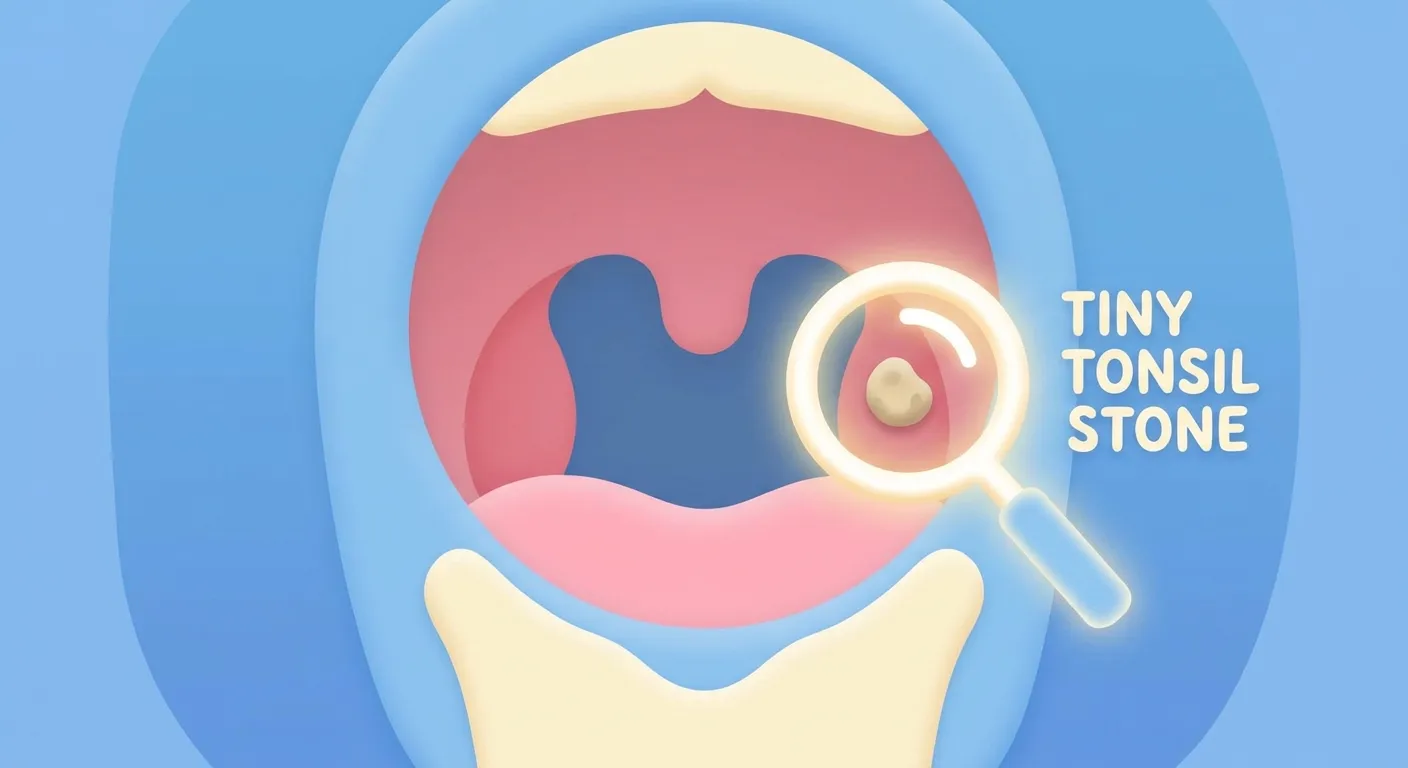
The simple definition: Tonsilloliths are small, hardened lumps that form in the tiny pockets (crypts) of the tonsils. They’re made from trapped debris—food particles, mucus, saliva, and dead cells—mixed with bacteria. Over time, minerals (often calcium) can harden that material into a stone-like deposit. (Cleveland Clinic, 2024; Harvard Health Publishing, 2024)
A helpful way to picture it: tonsil crypts act like little crevices where debris can collect—similar to how lint gathers in a pocket. If that trapped material sits there, it can compact and harden.
Where they form (and why tonsils have crypts): Your tonsils are part of the immune system, and their surface isn’t perfectly smooth. Many people have natural folds and crypts that can trap material. Some simply have deeper crypts, which can make buildup more likely. (Cleveland Clinic, 2024; UCLA Health, 2025)
What tonsil stones can look (and smell) like: Tonsil stones often appear as tiny white or yellow specks. They may look like a crumb stuck in a crevice—or, when larger, a small pebble. Their odor is often what gets the most attention, since bacteria in the trapped debris can produce strong-smelling compounds. (Cleveland Clinic, 2024; Harvard Health Publishing, 2024)
*Key takeaway: Tonsil stones form when trapped debris hardens inside tonsil crypts, and their odor often draws the most notice.*
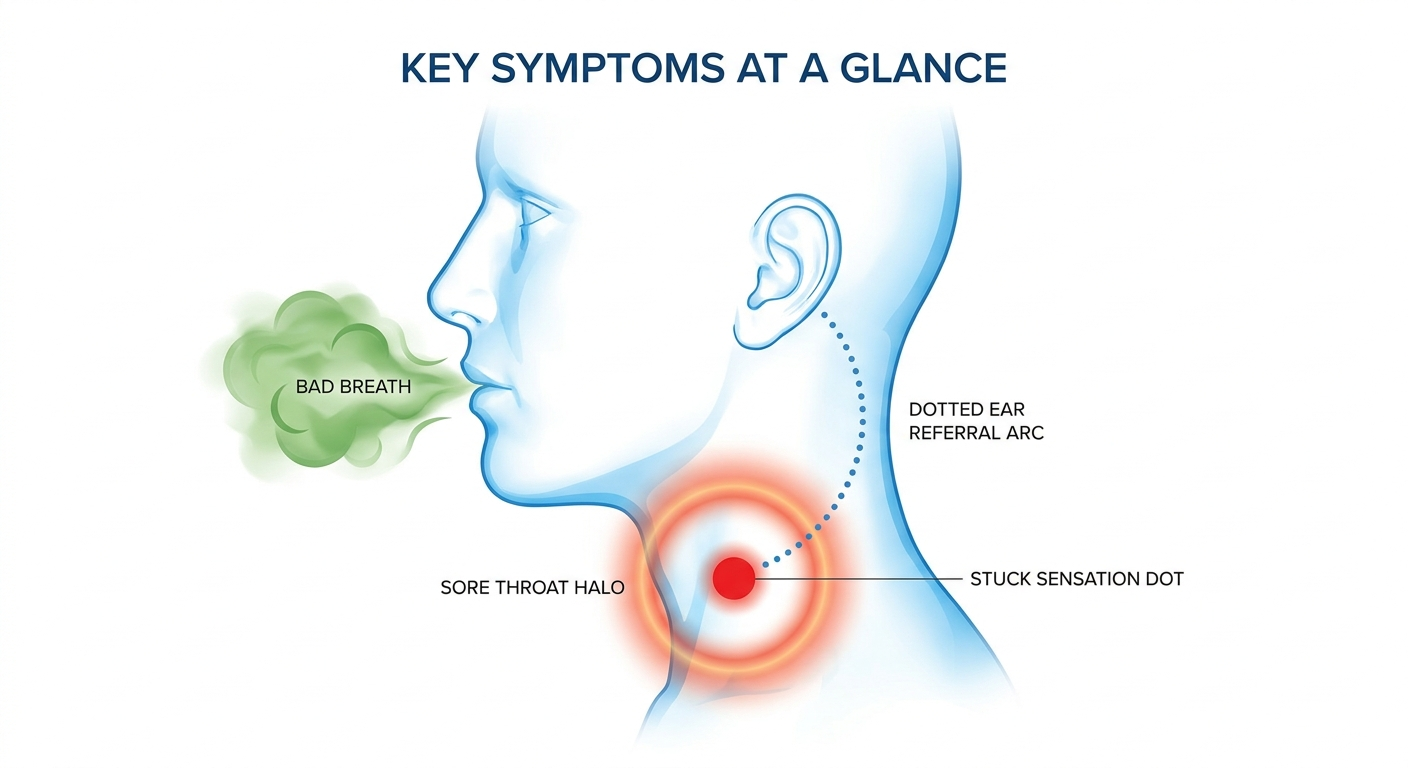
Tonsil Stones Symptoms: What You May Notice
Most common symptoms
- Bad breath (halitosis), sometimes described as “sulfur-like”
- Bad taste (occasionally metallic)
- Visible white or yellow specks on the tonsils
- Sore throat or irritation
- Coughing or frequent throat clearing
- A “something stuck in my throat” sensation
(Cleveland Clinic, 2024; Healthdirect Australia)
One of the most frustrating patterns is bad breath from tonsil stones that lingers despite brushing and flossing—because the source can be deeper in the throat than typical oral hygiene reaches. (Cleveland Clinic, 2024)
Can tonsil stones cause ear pain? Sometimes discomfort can be “referred,” meaning your throat irritation may be felt as ear pressure or ear pain because the throat and ear share nerve pathways. If ear pain is severe, persistent, or comes with other symptoms, it’s important to consider other causes and get evaluated. (Harvard Health Publishing, 2024; Cleveland Clinic, 2024)
When symptoms might not be tonsil stones
- Strep throat or other infections/tonsillitis
- Allergies and post-nasal drip
- Acid reflux (laryngopharyngeal reflux)
- Dental or gum disease
(Harvard Health Publishing, 2024; Healthdirect Australia)
If symptoms are persistent or unclear, an ENT evaluation can help rule out other causes. You can also review common signs in our post on when to see an ENT: https://sleepandsinuscenters.com/blog/when-should-i-see-an-ent.
*If symptoms don’t match what you see—or keep coming back—an ENT can clarify the cause and next steps.*
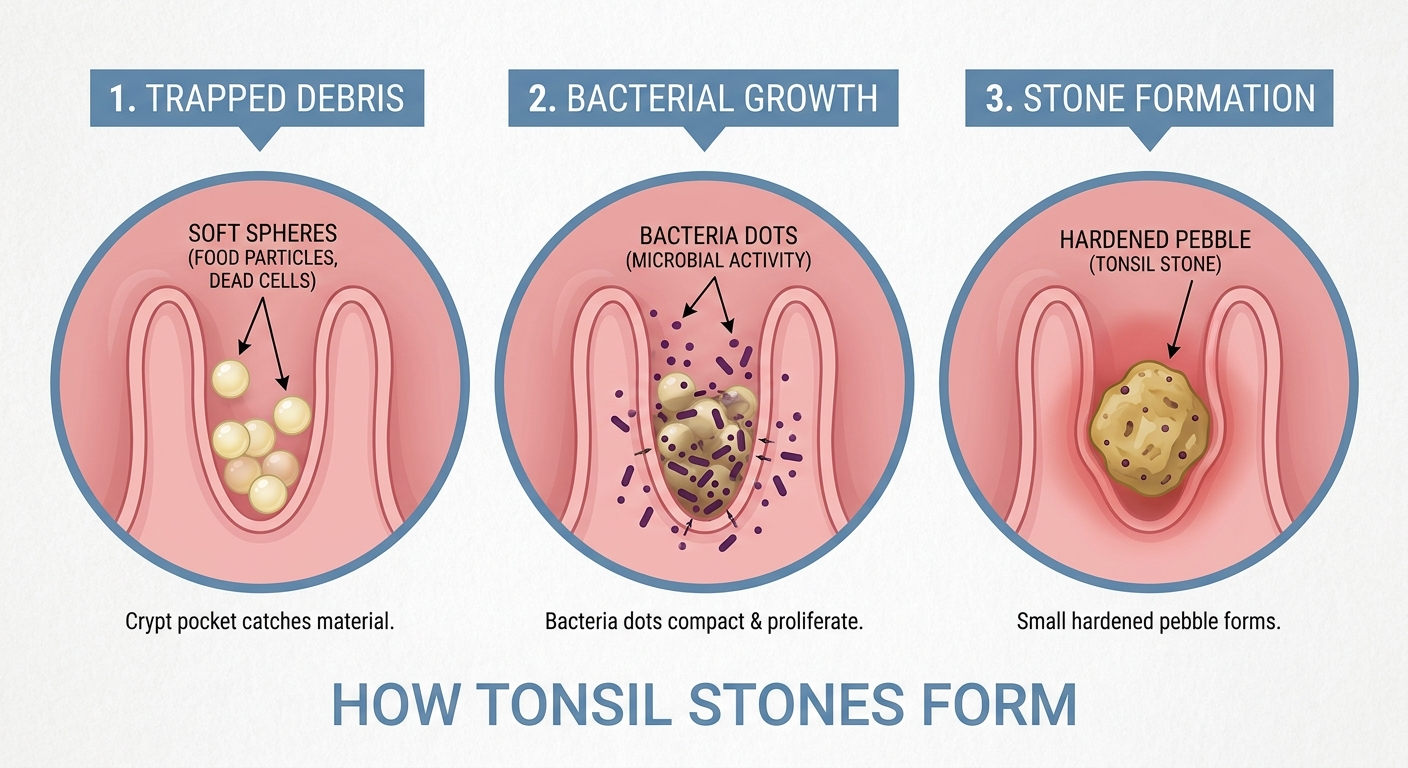
What Causes Tonsil Stones?
The “how they form” process (step-by-step)
1) Debris collects (food particles, mucus, dead cells, saliva) in tonsil crypts.
2) Bacteria grow in the trapped material.
3) The material compacts over time.
4) Minerals such as calcium can harden the deposit.
(Cleveland Clinic, 2024; Harvard Health Publishing, 2024)
Risk factors that make them more likely
- Chronic tonsil inflammation or frequent sore throats
- Post-nasal drip (extra mucus can feed the cycle)
- Dry mouth (from dehydration, mouth breathing, or some medications)
- Smoking/vaping (may irritate tissues and affect oral/throat health)
- Deep tonsil crypts or enlarged tonsils
(Cleveland Clinic, 2024; UCLA Health, 2025; Healthdirect Australia)
*In short, anything that increases throat debris, dryness, or crypt depth can raise the chance of stones forming.*
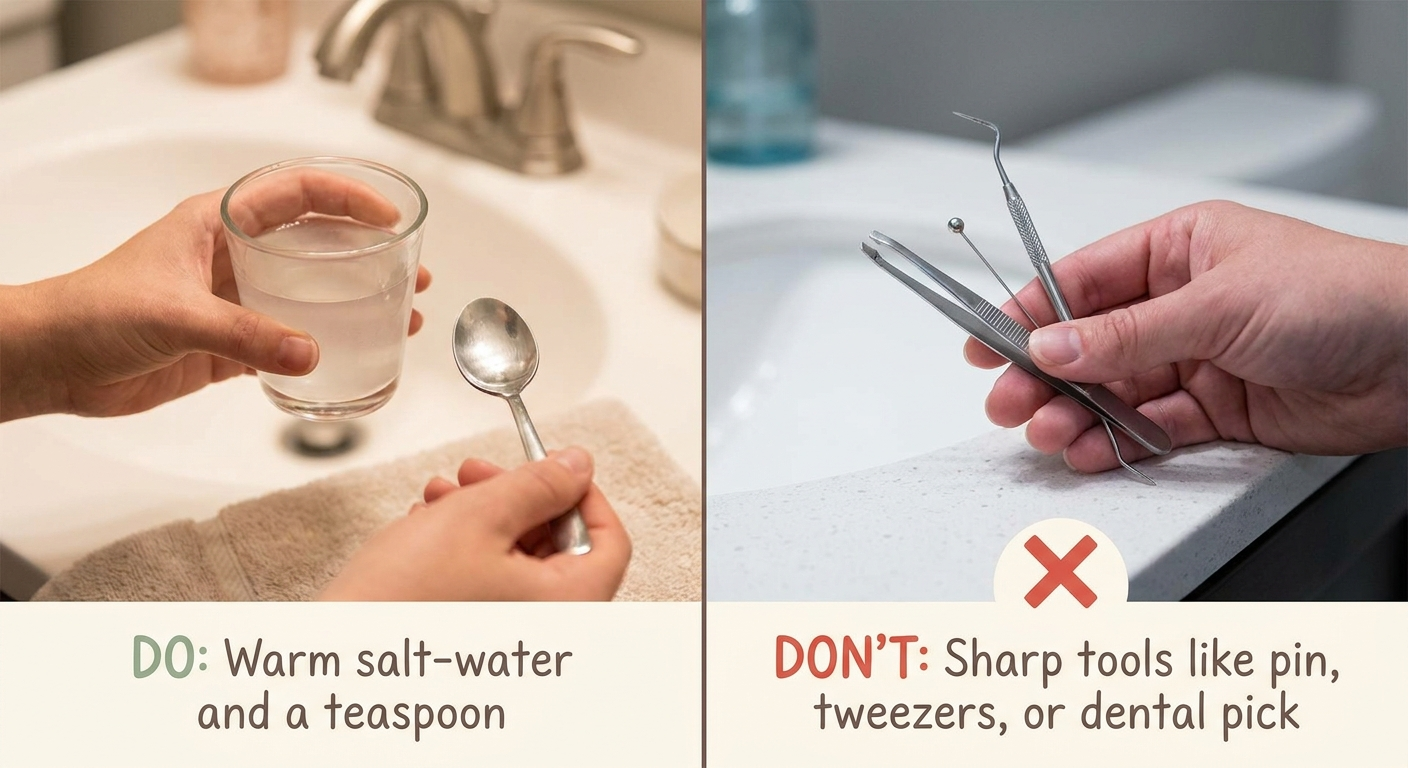
Lower-Risk At-Home Options for Tonsil Stone Relief (What to Try—and What to Avoid)
The goal at home is gentle care: helping stones loosen on their own and reducing irritation—without injuring delicate throat tissue. For a side-by-side comparison of home care and clinic options, see: https://sleepandsinuscenters.com/blog/tonsil-stones-treatment-home-care-remedies-vs-clinic-solutions. (Cleveland Clinic, 2024)
1) Warm salt-water gargles (a common first at-home step): About 1 teaspoon of salt in 8 ounces of warm water. Gargle 15–30 seconds and repeat a few times during flare-ups. May help loosen debris, soothe irritation, and reduce bacteria. (Cleveland Clinic, 2024; Healthdirect Australia)
Tip for comfort: Warm (not hot) water tends to be easier to tolerate, especially if your throat is irritated.
2) Coughing to dislodge stones: If a stone is loose or near the surface, coughing (or eating and swallowing) may help it come out naturally. Avoid aggressive scraping. (Cleveland Clinic, 2024)
3) Water flosser/water pick (use cautiously): If tried, use the lowest pressure, aim gently toward the tonsil area (not deep into a crypt), and stop with pain or bleeding. Keep the device clean. (Cleveland Clinic, 2024; UCLA Health, 2025)
4) Cotton swab (only if visible and easy to reach): Gentle pressure only if a stone is clearly visible and near the surface; stop with pain, gagging, or bleeding. Consider medical evaluation if unsure. (Cleveland Clinic, 2024)
What not to do (important safety warnings)
- Avoid sharp tools (pins, tweezers, dental instruments)
- Don’t force deep removal that can trigger swelling or infection
- Extra caution for bleeding disorders or blood thinners; consider clinician guidance
(UCLA Health, 2025; Healthdirect Australia)
*Gentle approaches are lower risk; stop if you have pain or bleeding, and seek care if problems persist.*

How ENTs Remove Tonsil Stones (Professional Options)
Office evaluation and removal: If stones are large, recurrent, painful, or hard to reach, an ENT can examine the tonsils and confirm the source of symptoms. They may gently remove visible stones or flush/rinse the crypts when appropriate, with the benefit of safety and evaluation for other causes. (UCLA Health, 2025; Cleveland Clinic, 2024)
Treating underlying contributors: Addressing chronic irritation, post-nasal drip, reflux, or nasal obstruction/mouth breathing can reduce recurrence. (UCLA Health, 2025; Healthdirect Australia)
When surgery is considered (for frequent, disruptive recurrence): In selected cases, tonsillectomy may be discussed, weighing recovery, pain, bleeding risk, and time away from work or school. (Cleveland Clinic, 2024; UCLA Health, 2025)
*Professional care can confirm the diagnosis, manage troublesome stones safely, and address underlying contributors when needed.*
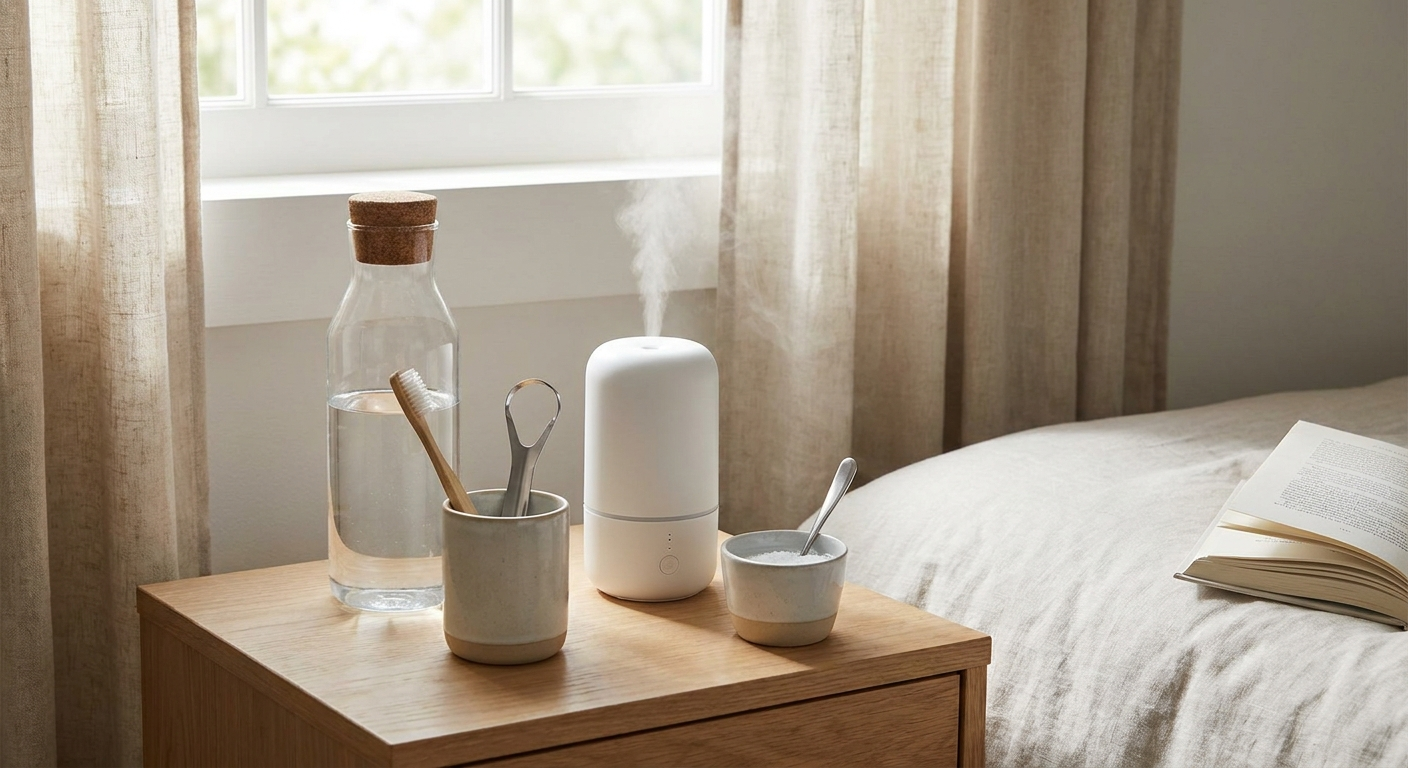
Prevention and Lifestyle Tips to Reduce Recurrence
Daily habits that help: Reduce bacterial load and limit buildup.
- Brush and floss consistently; consider a tongue scraper
- Stay hydrated to reduce dry mouth
- Consider salt-water gargles or a gentle, non-alcohol mouthwash (if tolerated)
(Cleveland Clinic, 2024; Harvard Health Publishing, 2024)
Address dryness and mouth breathing
- Use a humidifier at night if indoor air is dry
- Evaluate nasal congestion or allergies with clinician guidance
(Healthdirect Australia; UCLA Health, 2025)
Manage post-nasal drip triggers: Treat allergies, irritants, or sinus inflammation to reduce mucus and debris. (UCLA Health, 2025)
*Small daily steps—hydration, gentle rinses, and addressing dryness or mucus—can reduce how often stones return for many people.*
FAQs About Tonsil Stones
Are tonsil stones contagious? They aren’t something you catch like a cold; stones form from local trapping in tonsil crypts. (Cleveland Clinic, 2024; Harvard Health Publishing, 2024)
Do tonsil stones mean you have poor hygiene? Not necessarily; anatomy (deeper crypts) or chronic inflammation can play a role. (Harvard Health Publishing, 2024; UCLA Health, 2025)
Can tonsil stones go away on their own? Yes—small ones may fall out during eating, coughing, or gargling. (Cleveland Clinic, 2024)
Why do they cause bad breath? Bacteria in trapped debris can produce strong-smelling sulfur compounds. (Cleveland Clinic, 2024; Harvard Health Publishing, 2024)
What’s the best mouthwash for tonsil stones? There isn’t one single best; some prefer gentle antimicrobial rinses or salt-water gargles. If a mouthwash dries out your mouth (often alcohol-based), it may be less helpful. (Cleveland Clinic, 2024; Healthdirect Australia)
Conclusion: A Simple Plan for Relief (and When to Get Help)
Tonsilloliths form when debris and bacteria get trapped in tonsil crypts and harden over time. Many people manage mild symptoms with lower-risk steps like salt-water gargles, hydration, and addressing post-nasal drip or dryness. If stones are frequent, hard to remove, or linked with persistent halitosis or throat discomfort, consider an evaluation to confirm the cause and discuss options. If you’d like evaluation of persistent symptoms, contact Sleep and Sinus Centers of Georgia: https://www.sleepandsinuscenters.com/.
*Identify the cause, use gentle measures first, and seek ENT care when symptoms persist or escalate.*
When to See an ENT for Tonsil Stones
Clear signs it’s time for a specialist visit
- Home approaches don’t help or stones keep returning
- Stones are large, painful, or difficult to remove
- Persistent bad breath despite good oral hygiene
- Ongoing sore throat, swelling, or a persistent “stuck” sensation
- Unclear symptoms (stones vs. infection, reflux, or another issue)
(UCLA Health, 2025; Cleveland Clinic, 2024; Healthdirect Australia)
Seek urgent care if you have red-flag symptoms
- Trouble breathing or swallowing
- Significant bleeding
- High fever, rapidly worsening pain, or signs of an abscess
- Neck swelling or severe one-sided throat symptoms
(Healthdirect Australia; Cleveland Clinic, 2024)
*If your symptoms are persistent, unclear, or severe, an ENT visit can provide clarity and safer solutions.*
Sources
- Cleveland Clinic. “Tonsil Stones.” (2024) https://my.clevelandclinic.org/health/diseases/21505-tonsil-stones
- UCLA Health. “Tonsil stones usually harmless, may require visit to ENT.” (2025) https://www.uclahealth.org/news/article/tonsil-stones-usually-harmless-may-require-visit-ent
- Harvard Health Publishing. “Ever hear of tonsil stones?” (2024) https://www.health.harvard.edu/blog/ever-hear-of-tonsil-stones-202410213077
- Healthdirect Australia. “Tonsil stones.” https://www.healthdirect.gov.au/tonsil-stones
Medical disclaimer: This article is for informational purposes only and does not provide medical advice, diagnosis, or treatment. If you have persistent symptoms or urgent concerns (like trouble breathing or swallowing), seek prompt medical care.
This article is for educational purposes only and is not medical advice. Please consult a qualified healthcare provider for diagnosis and treatment.
Don’t let allergies slow you down. Schedule a comprehensive ENT and allergy evaluation at Sleep and Sinus Centers of Georgia. We’re here to find your triggers and guide you toward lasting relief.