Positional Snoring: Why You Snore on Your Back and How to Reduce It
If you’ve ever been told, “You only snore when you’re on your back,” you’re not alone. This pattern is often called positional snoring—and for simple positional snoring without apnea symptoms, it’s often more posture‑responsive than other snoring patterns. Many people can meaningfully reduce it with low‑risk adjustments that keep them from settling into the back‑sleeping (supine) position.
Important caveat: back‑only snoring can sometimes be a sign of positional obstructive sleep apnea (OSA), especially when there are breathing pauses, gasping, or significant daytime sleepiness. Think of snoring as a symptom; the key is making sure it’s not a symptom of something more serious.
Below is a clear guide to why snoring on your back happens, how to tell if it’s truly position‑related, what you can try at home, and when it’s time to consider a sleep evaluation.
Quick Take—Why Back Sleeping Triggers Snoring
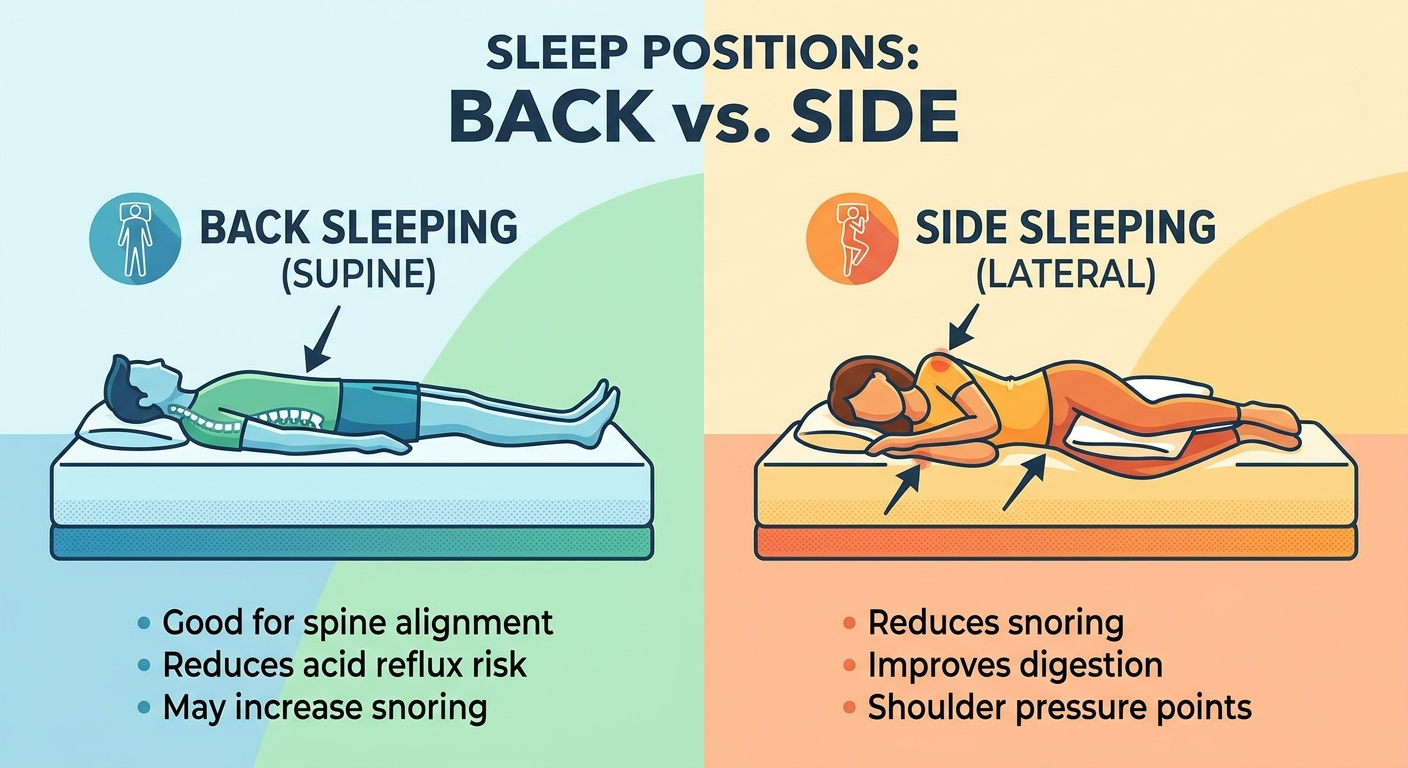
When you sleep on your back (the supine position), gravity pulls the tongue and jaw backward, narrowing the space behind the tongue and increasing airflow resistance. That tighter airway makes soft tissues more likely to vibrate—what you hear as snoring. Side‑sleeping often reduces this airway crowding and collapse.
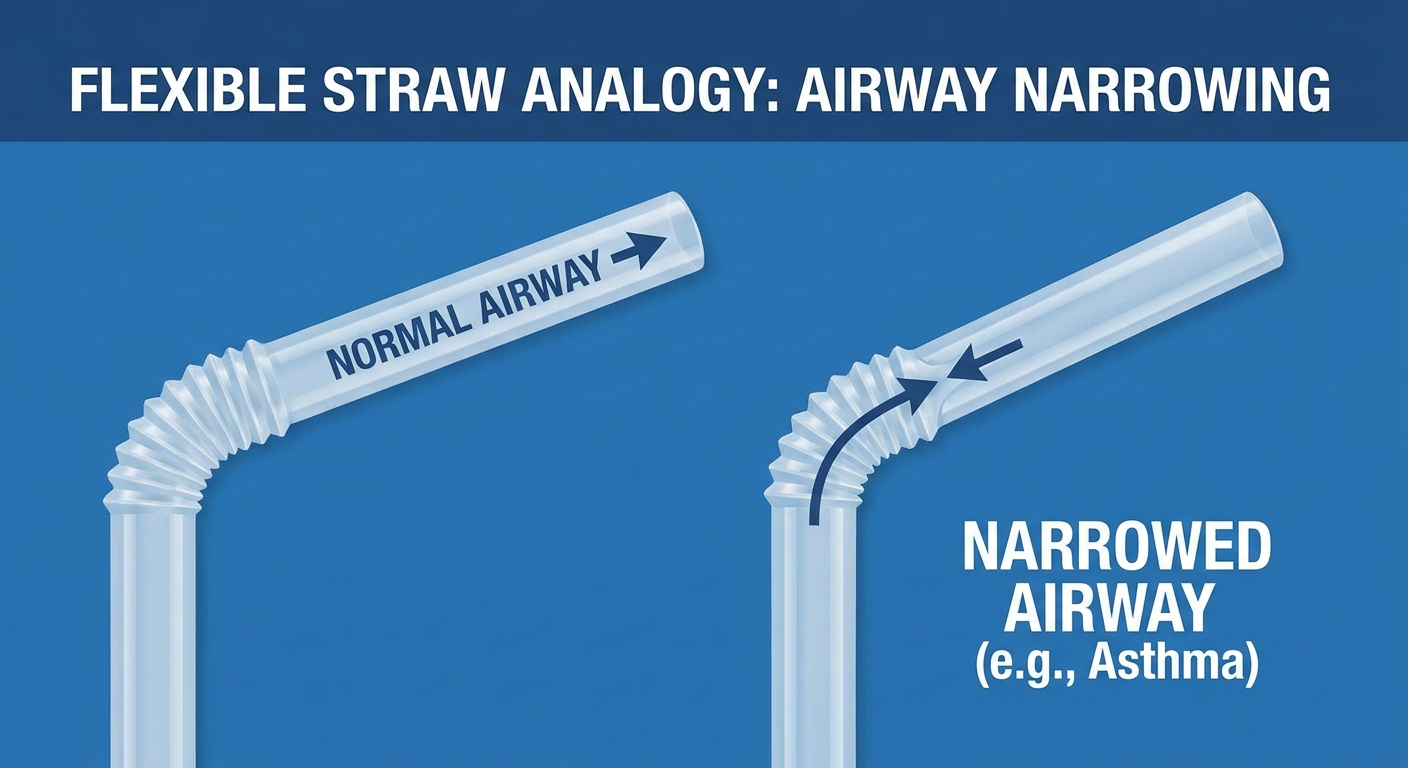
A helpful analogy: imagine breathing through a flexible straw. If the straw is gently pinched or bent, airflow becomes noisier and more turbulent. On your back, your airway can behave a bit like that—narrower, floppier, and easier to rumble.
Important caution: If you also have breathing pauses, gasping/choking, or excessive sleepiness, the issue may be positional OSA rather than “simple” snoring.
In short: on your back, gravity narrows the airway; on your side, it tends to stay more open.
What Is Positional Snoring?
A simple definition
Positional snoring is snoring that is significantly worse—or only happens—when sleeping on the back, and improves when sleeping on the side.
Positional snoring vs “regular” snoring
- Positional: strongly posture‑dependent (often much better on your side)
- Non‑positional: happens in multiple sleep positions
A related condition is positional OSA, where breathing interruptions occur mainly while supine and improve on the side.
In everyday life, this often sounds like: “I’m quiet on my side, but the moment I roll onto my back, the snoring starts.” That’s a classic positional pattern and a reason positional strategies can be a sensible first step—provided apnea red flags aren’t present.
If your snoring reliably appears on your back and settles on your side, position is likely playing a major role.
Why You Snore on Your Back (The Anatomy + Physics)
Gravity pulls the tongue and jaw backward
In the supine position, the tongue base and jaw can shift backward and reduce the retroglossal space (the airway area behind the tongue). This crowding can increase turbulence and vibration. If you tend to breathe through your mouth at night, that can add to the problem: the jaw may drop open more easily, and the airway can become less stable. The result isn’t just louder snoring—it can also mean you wake with a dry mouth or sore throat.
The supine position increases upper‑airway collapsibility
During sleep, the muscles that help keep the airway open naturally relax. When that relaxation combines with supine gravity effects, certain areas can narrow more easily—often around the soft palate and sometimes the epiglottis—which can contribute to supine snoring and, in some people, airway obstruction.
Why side‑sleeping often helps
Side sleeping changes how soft tissues “stack” and how gravity affects the airway. Many people find the airway stays more stable on the side, making side sleeping for snoring a practical first‑line approach. For a deeper position breakdown, see our guide on the best sleeping position to reduce snoring: https://sleepandsinuscenters.com/blog/best-sleeping-position-for-snoring-mild-apnea
When gravity and relaxed airway muscles line up in the supine position, the airway narrows and vibrates more—side‑sleeping counters that effect.
Symptoms: How to Tell If Your Snoring Is Truly Positional
Common signs of positional snoring
- Snoring is loud on your back, quieter or absent on your side
- A partner notices snoring improves when you roll over
- Waking with dry mouth or sore throat (common with snoring and mouth breathing)
A practical clue: if your snoring is predictable—showing up after you drift onto your back—there’s a good chance position is driving it.
Symptoms that raise concern for sleep apnea (not just snoring)
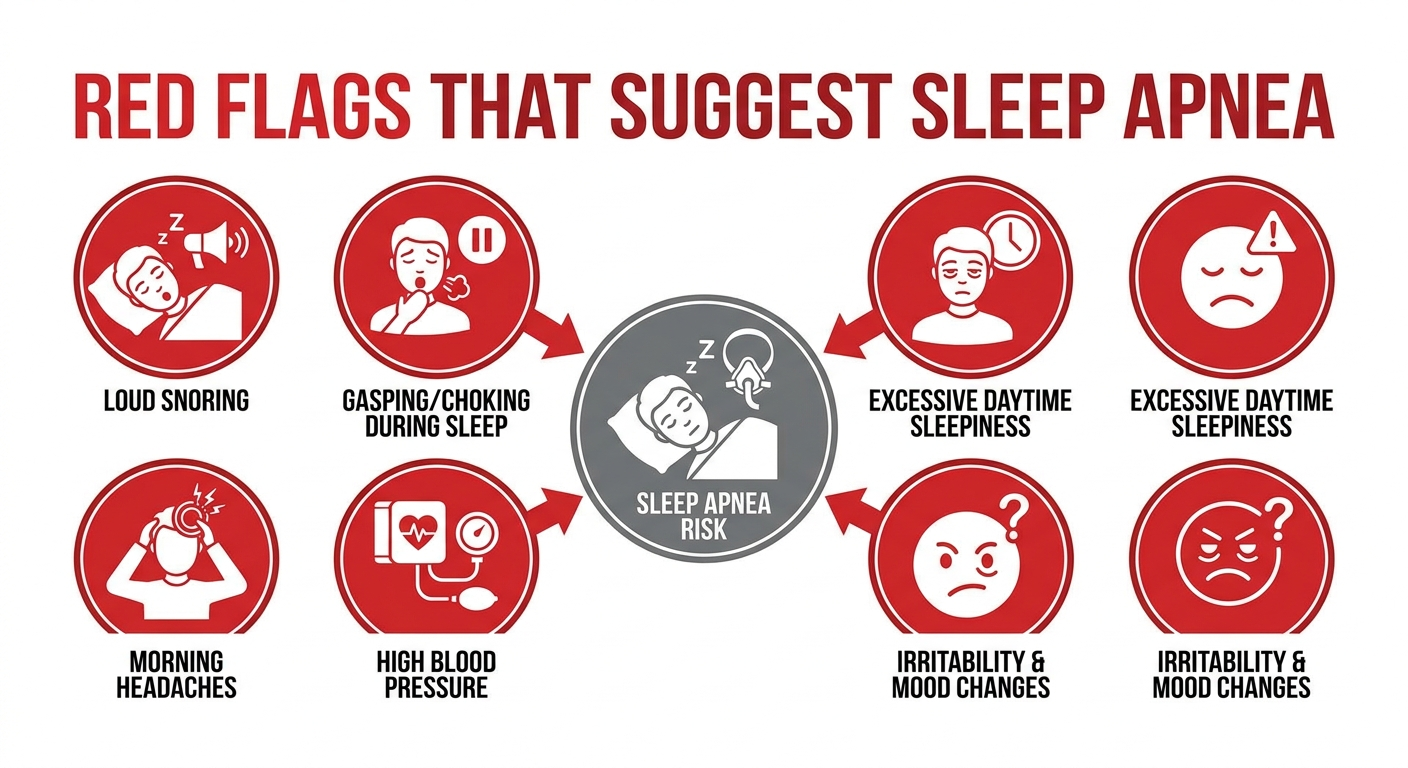
Consider a professional assessment if snoring is paired with:
- Witnessed breathing pauses
- Gasping, choking, or snorting awakenings
- Excessive daytime sleepiness, morning headaches, or concentration issues
These symptoms don’t confirm OSA by themselves, but they’re important signals to take seriously—especially if they’re persistent or worsening.
If loud back‑only snoring is paired with pauses, gasping, or sleepiness, get checked for sleep apnea rather than relying on home strategies.
Causes & Risk Factors That Make Back‑Snoring More Likely
Nasal obstruction and mouth breathing
When nasal airflow is limited, people tend to mouth‑breathe, which can worsen snoring. Common contributors include allergies, congestion, turbinate swelling, and structural issues. If this sounds familiar, read how a deviated septum can contribute to snoring: https://sleepandsinuscenters.com/blog/can-a-deviated-septum-cause-snoring Even modest improvements in nasal breathing can make side‑sleeping easier and reduce nightly airway resistance.
Alcohol and sedatives near bedtime
Alcohol and some sedating medications can relax airway muscles and increase collapsibility—often worsening snoring on your back. Learn more: https://sleepandsinuscenters.com/blog/how-late-night-alcohol-consumption-increases-snoring-risk
Weight and neck circumference
Extra tissue around the neck and throat can narrow the airway and make it more likely to collapse during sleep (especially while supine). Weight is not the only factor—but it can influence how strongly position affects breathing.
Anatomy and airway shape
Some people have airway anatomy that is more prone to vibration or collapse, such as a relatively large tongue, smaller jaw, enlarged tonsils, or a longer soft palate. In these cases, posture can make an already “tight” airway feel even tighter.
Multiple small factors—nose, jaw, tongue, alcohol, and weight—often add up to make supine snoring more likely and side‑sleeping more helpful.
Could It Be Positional Obstructive Sleep Apnea (OSA)?
What “positional OSA” means
Positional OSA is a pattern where breathing interruptions are more frequent when sleeping on the back and improve when sleeping on the side.
Why it matters
OSA is more than snoring—it can fragment sleep and is associated with longer‑term health risks. That’s why it’s important not to assume all positional snoring is harmless.
When to get assessed
If you have red flags like witnessed pauses, gasping, or significant sleepiness, a clinician may recommend testing such as a home sleep apnea test or an overnight sleep study. After testing, you may hear about your AHI score and sleep apnea severity: https://sleepandsinuscenters.com/blog/ahi-score-explained-understanding-your-sleep-apnea-severity
If positional snoring comes with apnea‑type symptoms, testing is the right next step.
How to Check It at Home (Patient‑Friendly Tracking)
The “position test” for 1–2 weeks
Compare nights when you prioritize side‑sleeping versus your normal routine. Use partner observations, snore recordings, or simple bedside notes about your final sleep position.
What to track
- Snoring intensity (loud/medium/quiet)
- Number of awakenings
- Morning symptoms (dry mouth, sore throat, headache)
- Daytime energy and sleepiness
What not to rely on
Apps and wearables may help spot patterns, but they cannot diagnose OSA and can give false reassurance. If you’re weighing next steps, see how accurate home sleep apnea tests are compared with consumer tools: https://sleepandsinuscenters.com/blog/home-sleep-test-accuracy-how-reliable-are-at-home-sleep-tests Consider privacy when using bedroom audio/video, and remember: home tracking can show patterns but cannot rule out sleep apnea.
Use home tracking to see patterns, not to diagnose or exclude sleep apnea.
Strategies People Often Try to Reduce Back‑Only Snoring
Important note before you start
These strategies are general, low‑risk ideas people commonly try for simple positional snoring. They do not replace an evaluation if you have red‑flag symptoms (pauses, gasping/choking, or significant daytime sleepiness). Do not use positional tactics alone if you have signs of sleep apnea—get evaluated first.
Strategy 1 — Train side‑sleeping (the foundation)
For many people with positional snoring, simply staying off the back reduces snoring because it improves airway stability. If you need a starter goal, aim to fall asleep on your side and return to your side if you wake up at night. Consistency matters more than perfection.
Strategy 2 — Use pillow setups that reduce rolling onto your back
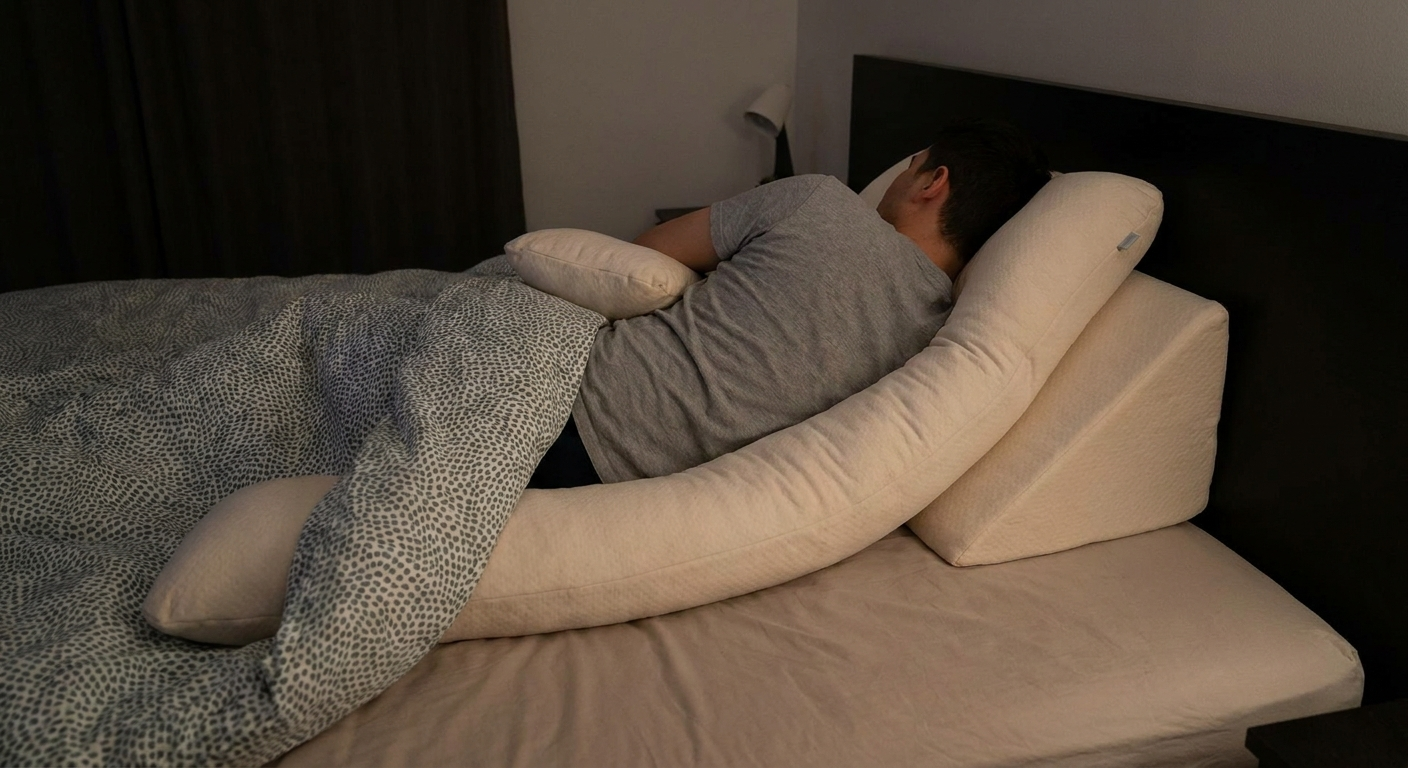
- Body pillow: hugging it and placing it between the knees can make side‑sleeping more comfortable.
- Back‑barrier pillows: placing pillows behind your back can discourage rolling supine.
- Wedge pillow: elevation may help some people, but for truly position‑dependent snoring, avoiding the supine position is often the key.
Strategy 3 — Consider positional therapy devices if snoring is truly position‑dependent
If pillow strategies aren’t enough, positional therapy aims to keep you from staying supine:
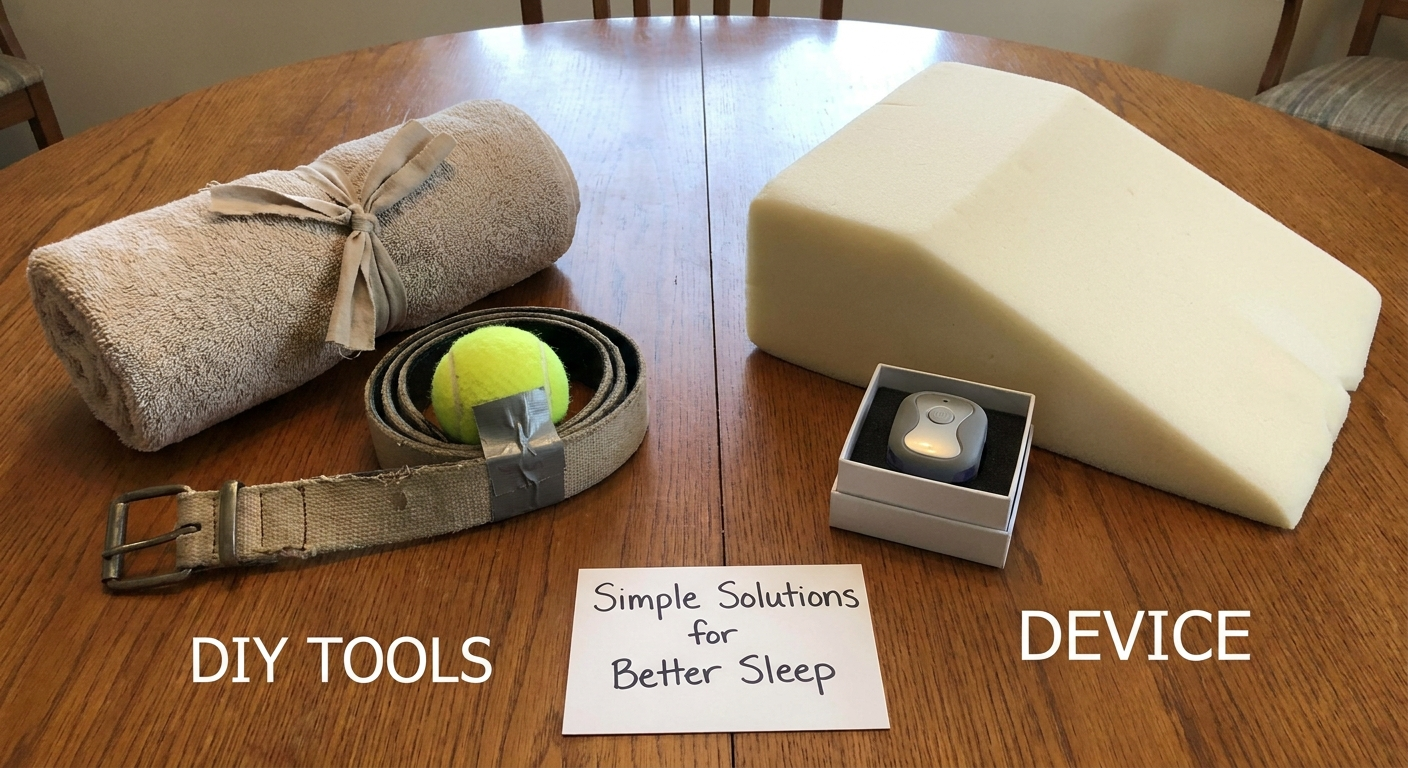
- Tennis ball technique (DIY): a tennis ball in a pocket sewn onto the back of a sleep shirt can make back‑sleeping uncomfortable. Do not rely on this alone if you have apnea symptoms.
- Vibration alarms/positional trainers: these detect supine positioning and prompt you to shift. Evidence suggests positional therapy may reduce supine‑related events in selected patients with positional OSA under clinician guidance; it is not a universal OSA treatment. Learn more: https://sleepandsinuscenters.com/blog/positional-therapy-devices-complete-overview-for-effective-sleep-apnea-treatment
Strategy 4 — Improve nasal breathing (supportive fixes)
If nasal blockage contributes:
- Address allergy triggers and congestion when applicable
- Consider nasal strips or dilators (helpful for some people with nasal valve narrowing)
- Reduce bedroom irritants and consider humidity support if dryness is an issue
These options may reduce resistance for some people but do not correct all causes of obstruction.
Strategy 5 — Lifestyle adjustments that make positional snoring easier to control
- Avoid alcohol close to bedtime (when applicable)
- Work toward weight goals if recommended by your clinician
- Keep a consistent sleep schedule to reduce sleep fragmentation
Strategy 6 — If testing shows OSA, treat the apnea (not just the snoring)
If an evaluation confirms OSA, treatment may include CPAP/APAP, an oral appliance, or ENT‑guided options depending on anatomy and severity. The key is matching therapy to the cause—not only reducing noise. If you’re ready to explore next steps, start here: https://sleepandsinuscenters.com/snoring-sleep-apnea-treatment
Side‑sleep training and gentle positional tools can substantially reduce back‑only snoring for many people, but evaluation and targeted therapy matter if apnea is in the picture.
A Practical 2‑Week Self‑Monitoring Plan
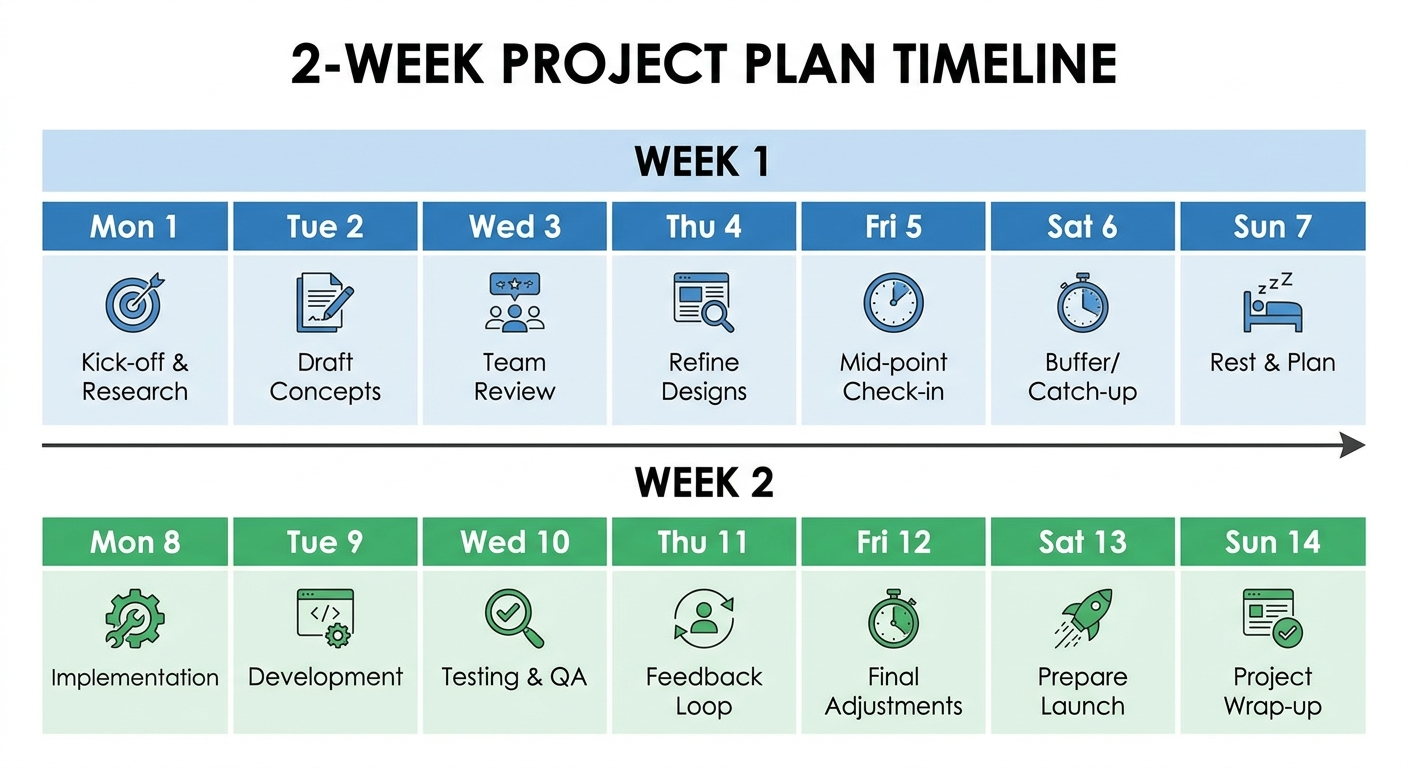
Nights 1–3: Environment + baseline data
- Track snoring and sleep position
- Note morning symptoms and daytime energy
Nights 4–10: Side‑sleep training + body pillow
- Choose one consistent method (body pillow or back‑barrier pillows)
- Keep tracking changes
Nights 11–14: Add a positional device if needed
- If you still wake up supine, consider a positional trainer or the tennis ball technique
Decision point
- If snoring improves greatly: continue the routine and monitor
- If snoring persists or red flags appear: schedule an evaluation to rule out OSA
Use this plan to learn what helps you stay off your back; let red‑flag symptoms or limited improvement guide you to a formal sleep evaluation.
FAQs About Positional Snoring
“Why do I only snore on my back but not my side?”
Because supine gravity and reduced muscle tone during sleep narrow the upper airway more on your back, increasing vibration and collapse.
“Is positional snoring harmless?”
It can be, but it may also reflect positional OSA—especially if there are pauses, gasping, or daytime sleepiness.
“Does elevating my head stop snoring?”
Sometimes it helps, but many people with true positional snoring improve most by avoiding supine sleep rather than relying on elevation alone.
“Do tennis balls or vibration devices actually work?”
They can help keep you off your back, and research supports positional therapy for positional OSA under clinician guidance. Comfort and consistency are often the limiting factors.
“When should I see a doctor about snoring?”
If snoring is frequent and disruptive, or if it’s paired with choking/gasping, witnessed breathing pauses, or excessive sleepiness.
When to Seek Medical Care
Reasons to seek prompt evaluation
- Witnessed apnea events (breathing pauses)
- Choking or gasping during sleep
- Significant daytime sleepiness, especially if there’s any drowsy driving risk
What evaluation may include
- Symptom screening and physical exam
- A home sleep apnea test or overnight sleep study, when appropriate
For context on testing options and limitations, see: https://sleepandsinuscenters.com/blog/home-sleep-test-accuracy-how-reliable-are-at-home-sleep-tests
If in doubt—especially with pauses, gasping, or sleepiness—err on the side of getting evaluated.
Conclusion: The Bottom Line on Positional Snoring
Positional snoring happens because back‑sleeping increases airway narrowing and collapsibility; side‑sleeping and positional strategies often help by keeping the airway more stable. But if symptoms suggest sleep apnea—like breathing pauses, gasping, or significant sleepiness—self‑treating the snoring alone isn’t enough, and a proper assessment is worth prioritizing. If you’d like guidance on the next step, Sleep and Sinus Centers of Georgia offers snoring and sleep apnea evaluation and treatment: https://sleepandsinuscenters.com/snoring-sleep-apnea-treatment You can also book an appointment through https://www.sleepandsinuscenters.com/ and ask about the best option for your symptoms (positional strategies, testing, or a full sleep evaluation).
For many people, staying off the back is a powerful lever—use it wisely, and don’t ignore possible signs of sleep apnea.
Medical disclaimer
This article is for educational purposes only and is not medical advice. Please consult a qualified healthcare provider for diagnosis and treatment. If you have symptoms suggestive of sleep apnea—especially breathing pauses, gasping/choking, or excessive daytime sleepiness—seek care from a qualified healthcare professional.
References
1. Mayo Clinic News Network. “What is the best sleeping position?” (2023). https://newsnetwork.mayoclinic.org/discussion/mayo-clinic-minute-what-is-the-best-sleeping-position/
2. Landry et al. “A review of supine position related obstructive sleep apnea” (2023). https://pubmed.ncbi.nlm.nih.gov/37722317/
3. Cochrane Review. “Positional therapy for obstructive sleep apnoea” (2019). https://pmc.ncbi.nlm.nih.gov/articles/PMC6491901/
4. American Academy of Sleep Medicine (AASM). “Obstructive Sleep Apnea Screening Health Advisory” (2019). https://aasm.org/advocacy/position-statements/sleep-apnea-screening-health-advisory/
5. NHS. “Snoring.” https://www.nhs.uk/symptoms/snoring/
Don’t let allergies slow you down. Schedule a comprehensive ENT and allergy evaluation at Sleep and Sinus Centers of Georgia. We’re here to find your triggers and guide you toward lasting relief.