OTC Hearing Aids vs Prescription Hearing Aids: Key Differences Explained
Many adults notice they struggle to follow conversations in a busy restaurant, miss punchlines at family gatherings, or turn the TV louder than others prefer, yet they put off getting help because of cost and hassle. On October 17, 2022, the FDA created a new category of over-the-counter (OTC) hearing aids to make devices more accessible. Both OTC and prescription hearing aids rely on similar amplification technology—microphones, a processor, and a speaker—yet they differ sharply in how you obtain them, how they are fitted, the support you receive, and who they suit best. This trade-off between lower price and professional service is the heart of the decision. Think of it like choosing drugstore reading glasses versus a full eye exam and custom lenses: one is quick and affordable for milder needs, the other is tailored and supported. When certain warning signs appear, a professional evaluation remains essential. Below we compare the two options so you can better understand which path may fit your situation. For more on professional testing, see our guide to audiograms (https://sleepandsinuscenters.com/blog/audiogram-basics-explained-a-patients-guide-to-hearing-tests). Age-related changes are a common reason people consider these devices; learn more in our article on age-related hearing loss (https://sleepandsinuscenters.com/blog/age-related-hearing-loss-causes-symptoms-and-treat-20260902041812).
What Are Over-the-Counter (OTC) Hearing Aids?
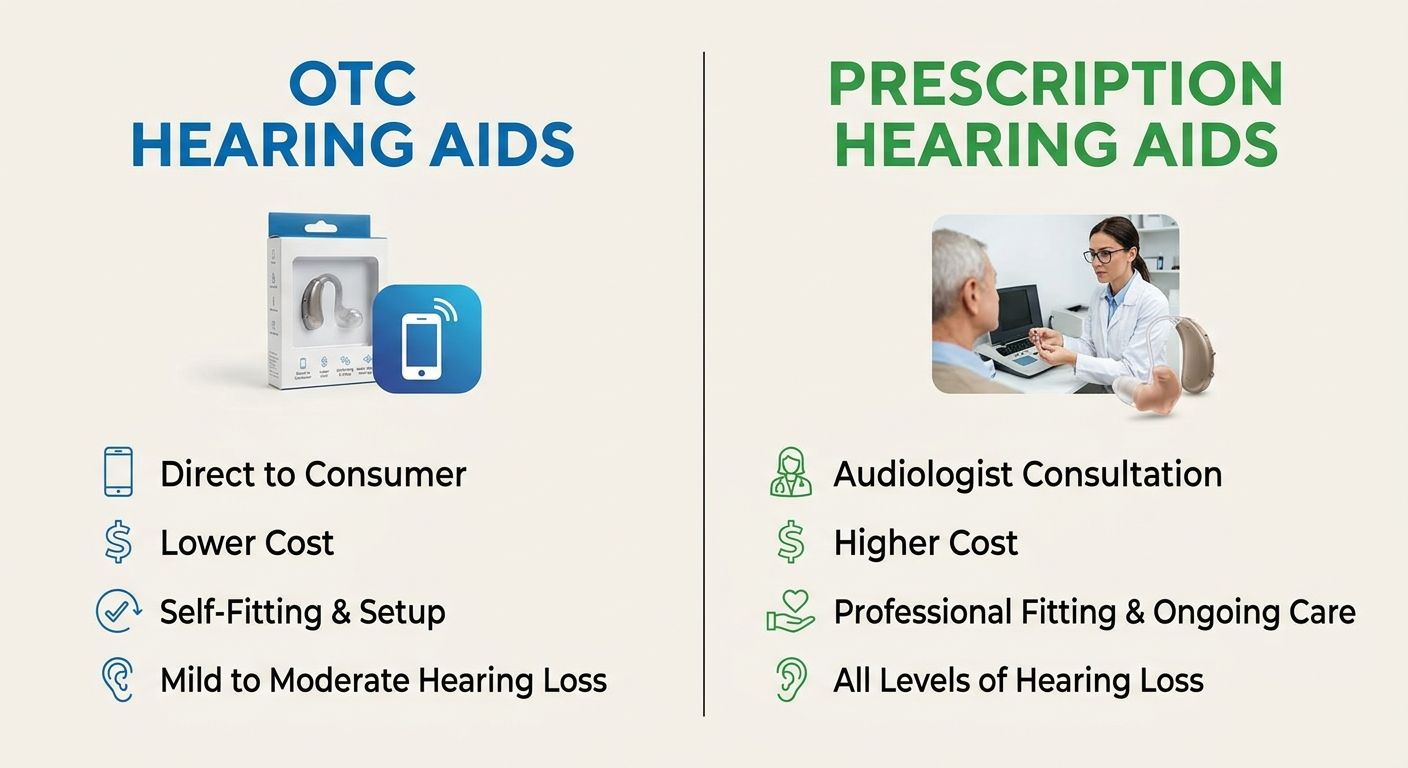
The FDA defines OTC hearing aids as air-conduction devices intended for adults 18 and older who perceive they have mild-to-moderate hearing loss. They can be purchased in stores or online without a medical exam, prescription, or fitting by a licensed professional. This category was created to expand affordable access for people who might otherwise delay care for years.
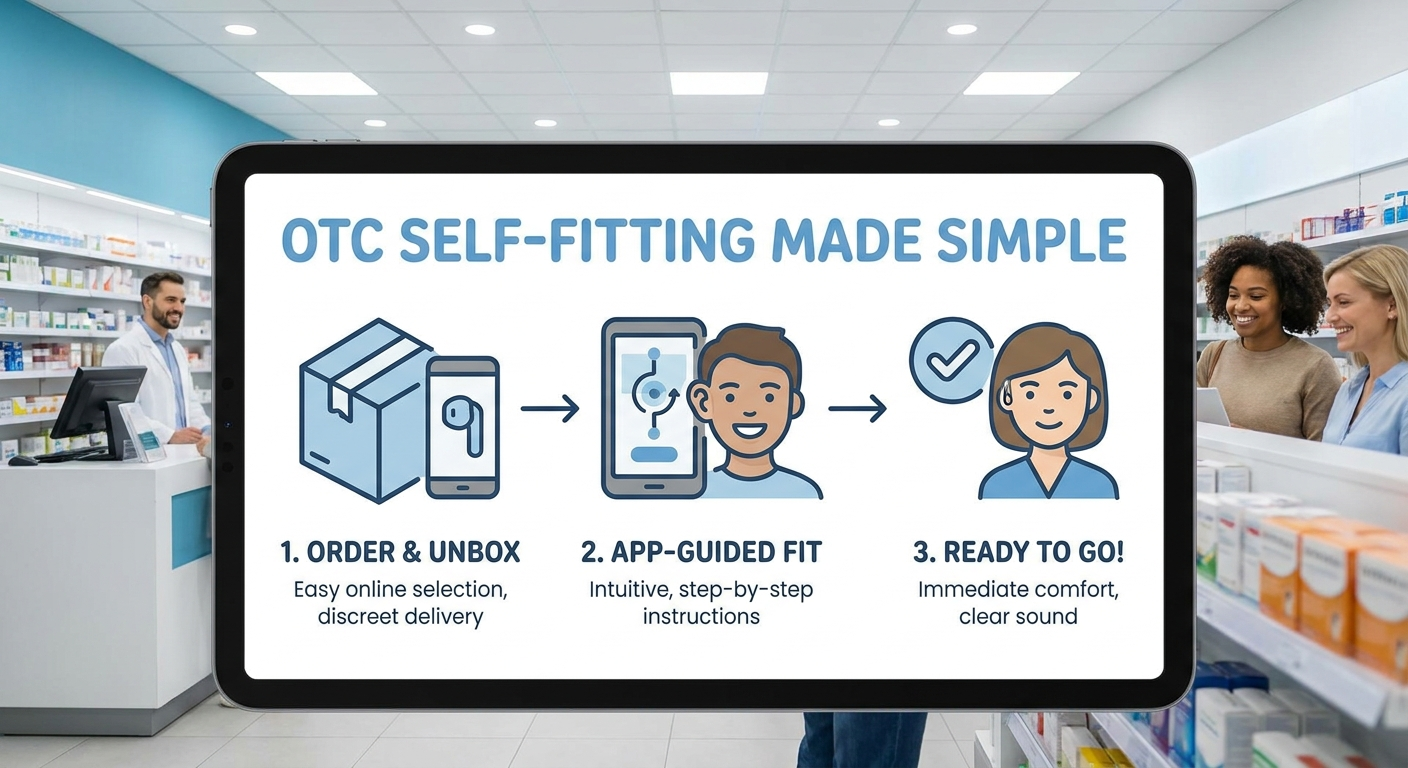
Most OTC models are self-fitted using smartphone apps, preset programs, or simple volume and tone controls. They use the same basic amplification components as other hearing aids and are designed for perceived mild-to-moderate loss without professional programming. A user might open an app, run a quick hearing check, and tweak bass or treble until speech feels clearer—convenient, yet less individualized than a clinician’s work.
OTC hearing aids provide a convenient, lower-cost entry point for adults with milder self-perceived hearing concerns.
What Are Prescription Hearing Aids?
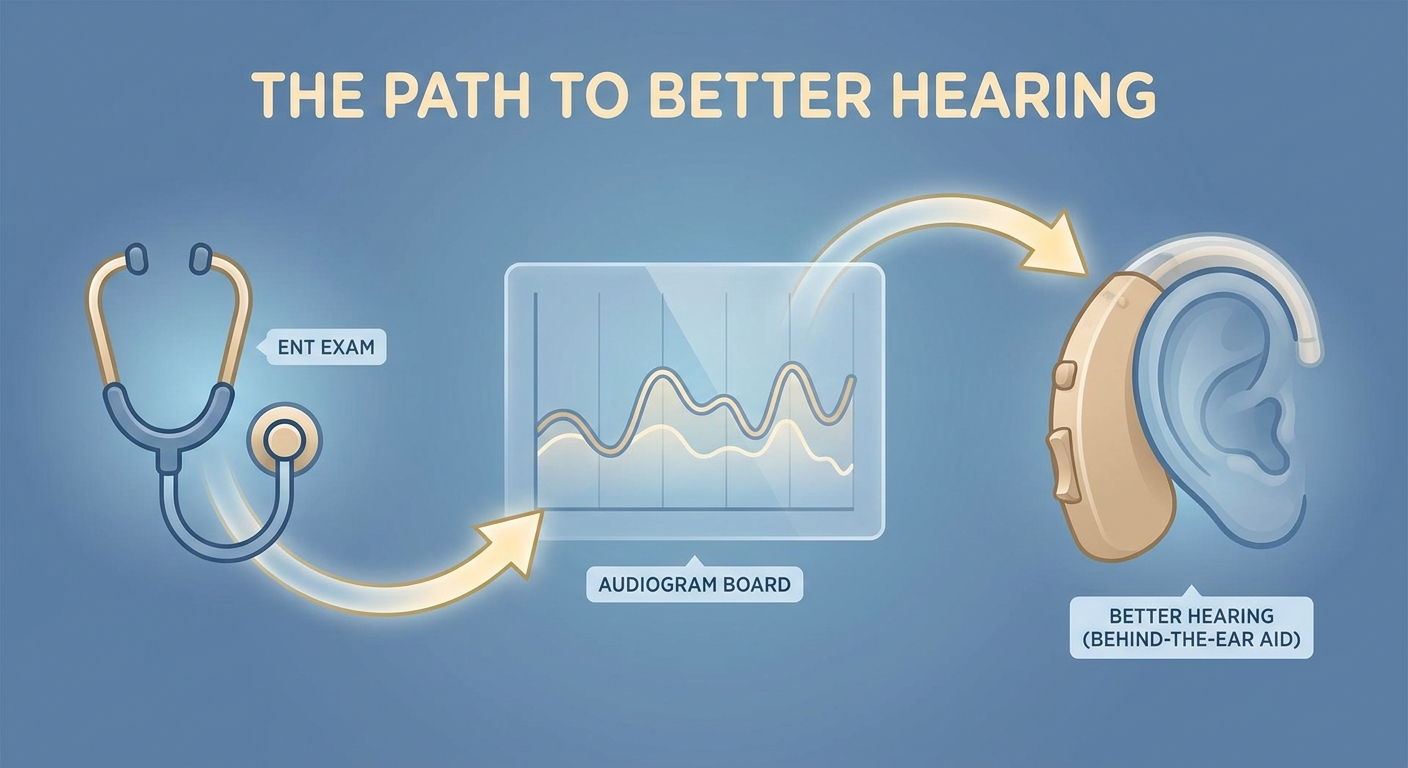
Prescription hearing aids are obtained only through licensed hearing-care professionals. The process typically includes a hearing test (https://sleepandsinuscenters.com/blog/audiogram-basics-explained-a-patients-guide-to-hearing-tests), custom programming matched to an individual’s audiogram, verification with real-ear measurement, and ongoing follow-up visits. This personalized approach aims to match the device closely to the user’s unique hearing profile, with follow-up appointments to fine-tune settings as the wearer adapts to new sounds.
These devices may be appropriate for children and adults and for every degree of hearing loss, from mild to profound. They remain the option when loss is more significant or when medical evaluation is needed, and can address complex cases such as hearing that differs greatly between ears.
Prescription hearing aids offer customized fitting and support suitable for any age or degree of loss.

Key Differences Between OTC and Prescription Hearing Aids
Understanding OTC hearing aids vs prescription hearing aids comes down to regulation, precision, cost, and support.
Regulation and access: OTC devices are available without an exam or prescription to adults 18+ with perceived mild-to-moderate loss. Prescription devices require a licensed professional and can serve any age or degree of loss.
Fitting and precision: Prescription hearing aids are programmed using a hearing test and often verified with real-ear measurement, which checks performance at the eardrum. OTC aids are self-fitted via apps or presets and are generally less precisely tailored (Consumer Reports, Johns Hopkins, Interacoustics).
Cost comparison: OTC hearing aids typically range from about $100 to $2,700 per pair. Prescription hearing aids generally cost $1,500 to more than $7,000 per pair, with a reported median around $2,592 after insurance in one Consumer Reports survey. The lower OTC price does not include professional services.
Technology: Both categories use microphones, amplification, and speakers. The main distinction is how well output is matched to the person’s specific hearing loss: professionally programmed and verified versus self-adjusted.
Ongoing support: Prescription devices usually come with counseling, adjustments, and follow-up appointments. OTC users typically handle setup, troubleshooting, and later changes themselves.
The decision hinges on balancing affordability and convenience against the precision and support of professional care.

Who Should (and Should Not) Use OTC Hearing Aids
Ideal candidates: Adults 18 and older who believe they have mild-to-moderate hearing loss and want a lower-cost, no-appointment option may consider OTC devices as a first step. Someone who mainly misses words in restaurants or needs the TV a bit louder often fits this group.
Who should avoid them: OTC hearing aids are not intended for children under 18, people with severe or profound loss, or anyone with red-flag symptoms. These situations call for evaluation by a physician or licensed hearing professional (FDA, Johns Hopkins). Severe loss needs more power and precision than self-fitting typically provides.
Professional evaluation remains important to confirm whether OTC devices match your specific hearing needs.

Signs You May Need Hearing Help (Symptoms)
Common signs of mild-to-moderate hearing loss include trouble following conversation in noisy restaurants, frequently asking others to repeat themselves, turning the television volume higher than others prefer, difficulty on the phone, or feeling exhausted after social events due to straining to hear.
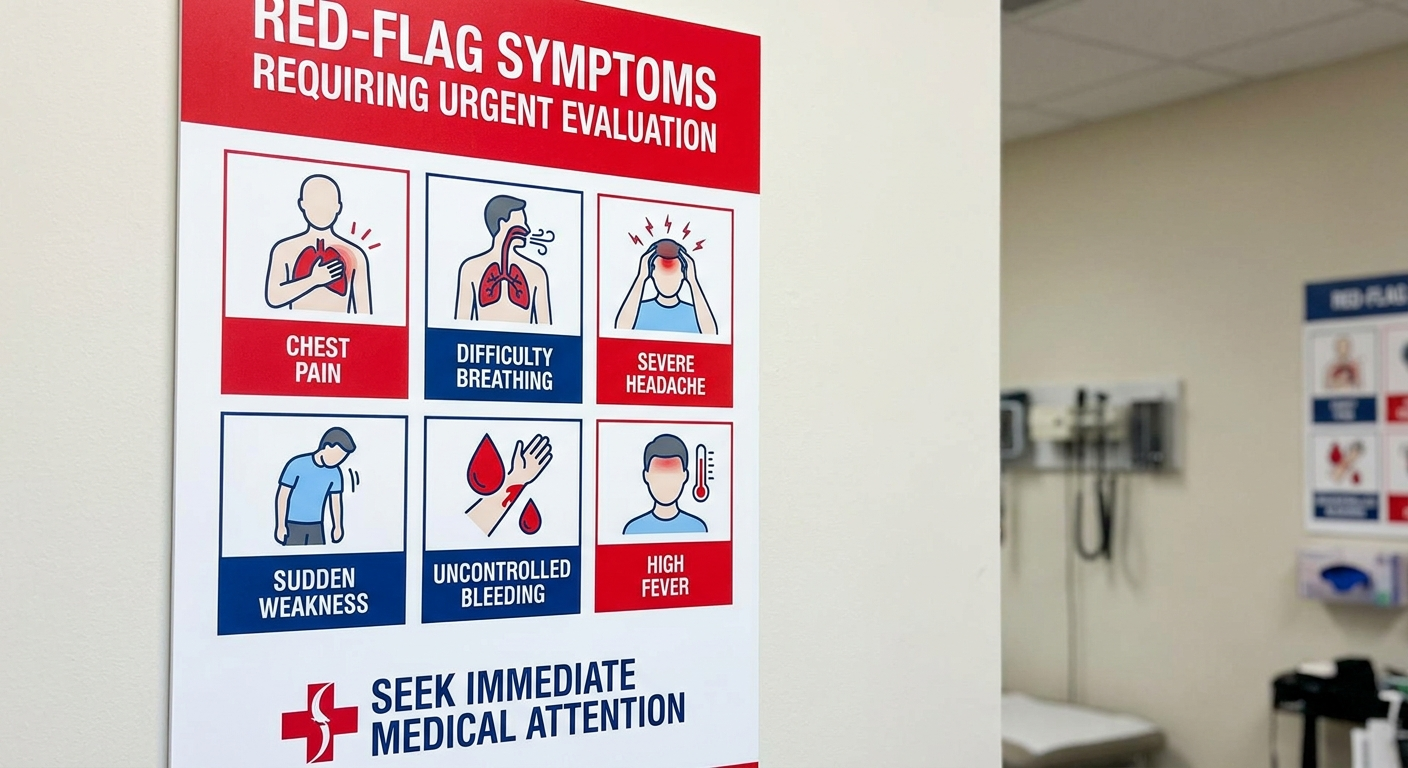
Red-flag symptoms requiring medical evaluation include sudden hearing change, hearing loss in only one ear, vertigo, fluid or blood from the ear, or significant earwax. Allergies or fluid in the ears can also affect hearing; see whether allergies can cause hearing loss at https://sleepandsinuscenters.com/blog/can-allergies-cause-hearing-loss.
Early recognition of symptoms, particularly red flags, helps guide the right next step for your hearing health.
Underlying Causes of Hearing Loss
Hearing changes can stem from age-related inner-ear changes, long-term noise exposure, ear infections or fluid, allergies, or other ear-nose-and-throat factors. Age-related hearing loss is especially common among those considering OTC options (learn more at https://sleepandsinuscenters.com/blog/age-related-hearing-loss-causes-symptoms-and-treat-20260902041812). Noise from years of concerts, power tools, or loud workplaces often adds up gradually.
Identifying underlying causes through evaluation supports more effective treatment choices.
Treatment Options and How to Choose
When OTC may be a first step: For an adult with perceived mild-to-moderate loss and no red-flag symptoms, an OTC device may offer a lower-cost way to try amplification. When loss is more significant, symptoms are unclear, or precise fitting is desired, prescription hearing aids plus professional care are generally more appropriate.
The value of a comprehensive hearing evaluation: A hearing test that produces an audiogram, along with a medical check for treatable causes such as wax, infection, or fluid, provides a clearer picture before any device is chosen. See audiogram basics at https://sleepandsinuscenters.com/blog/audiogram-basics-explained-a-patients-guide-to-hearing-tests.
Lifestyle and self-care tips: Protect remaining hearing by limiting loud noise, using communication strategies (facing the speaker, reducing background noise), and scheduling regular check-ins as hearing needs change. Captions and turn-taking during conversation can complement either type of aid.
A thorough evaluation combined with appropriate devices and daily strategies often leads to the best communication outcomes.
Frequently Asked Questions
Are OTC hearing aids as good as prescription ones? They use similar core technology, but prescription devices are custom-programmed and verified for the individual, while OTC devices are self-fitted and less precisely matched. For many with milder loss, OTC can still bring welcome improvement.
Do I still need a hearing test? A test is not required to buy OTC devices, yet it remains the most accurate way to confirm the degree and type of loss and to rule out medical issues.
Can OTC aids help with severe hearing loss? No. They are intended only for perceived mild-to-moderate loss. Severe or profound loss requires professionally fitted prescription devices.
What if I have sinus, allergy, or ear-fluid issues affecting hearing? These conditions can temporarily or permanently change hearing and should be evaluated medically rather than addressed solely with an OTC device. See allergies and hearing: https://sleepandsinuscenters.com/blog/can-allergies-cause-hearing-loss.
How do I know if my symptoms need an ENT or audiologist first? Red-flag symptoms—sudden change, one-sided loss, vertigo, drainage, or significant wax—warrant prompt professional evaluation.
Next Steps: Get a Professional Opinion
If you have red-flag symptoms, uncertainty about the degree of your hearing loss, or simply want a thorough assessment, a professional evaluation is the safest next step. Sleep & Sinus Centers of Georgia provides comprehensive otolaryngology and hearing-related care, including testing and discussion of both OTC and prescription options. Schedule an appointment at https://sleepandsinuscenters.com/appointments or learn more about comprehensive care at https://sleepandsinuscenters.com/comprehensive-otolaryngology-care. Visit https://www.sleepandsinuscenters.com/ to get started.
This article is for educational purposes only and is not medical advice. Please consult a qualified healthcare provider for diagnosis and treatment.
Don’t let allergies slow you down. Schedule a comprehensive ENT and allergy evaluation at Sleep and Sinus Centers of Georgia. We’re here to find your triggers and guide you toward lasting relief.