Sinusitis vs Flu: Key Symptoms, Differences, and Treatment Options
Congestion, cough, headache, and fatigue can show up with both the flu and a sinus infection—so it’s easy to feel unsure about what’s actually going on. One day you feel “just stuffy,” and the next you’re wondering whether you need antivirals, antibiotics, or simply more time and rest.
Symptom pattern, timeline, and severity can help distinguish sinusitis from flu, but symptoms can overlap and a healthcare provider may still be needed for an accurate diagnosis. If you’re feeling very ill or symptoms escalate quickly, it’s also important to know the red flags that warrant urgent evaluation (CDC; Cleveland Clinic).
- CDC flu symptoms: https://www.cdc.gov/flu/signs-symptoms/index.html
- Cleveland Clinic sinusitis overview: https://my.clevelandclinic.org/health/diseases/17701-sinusitis
Bottom line: Use these clues as a guide, but don’t hesitate to seek care if you’re unsure or getting worse.
Quick Answer: Is It More Likely Sinusitis or the Flu?
Think “systemic vs localized.” A simple way to compare sinusitis vs flu is to ask: Does this feel like a whole-body illness—or mostly a nose-and-face issue?
- Flu (influenza) tends to be systemic: sudden onset, fever, chills, body aches, and marked fatigue are common (CDC).
- Sinusitis tends to be more localized to the head and nose: facial pressure, nasal blockage, thick drainage, and postnasal drip are common (Cleveland Clinic).
A practical analogy: flu often feels like your entire body’s “energy battery” drops all at once, while sinusitis often feels like pressure and drainage are “trapped” behind your cheeks, eyes, or forehead.
Then check the timeline.
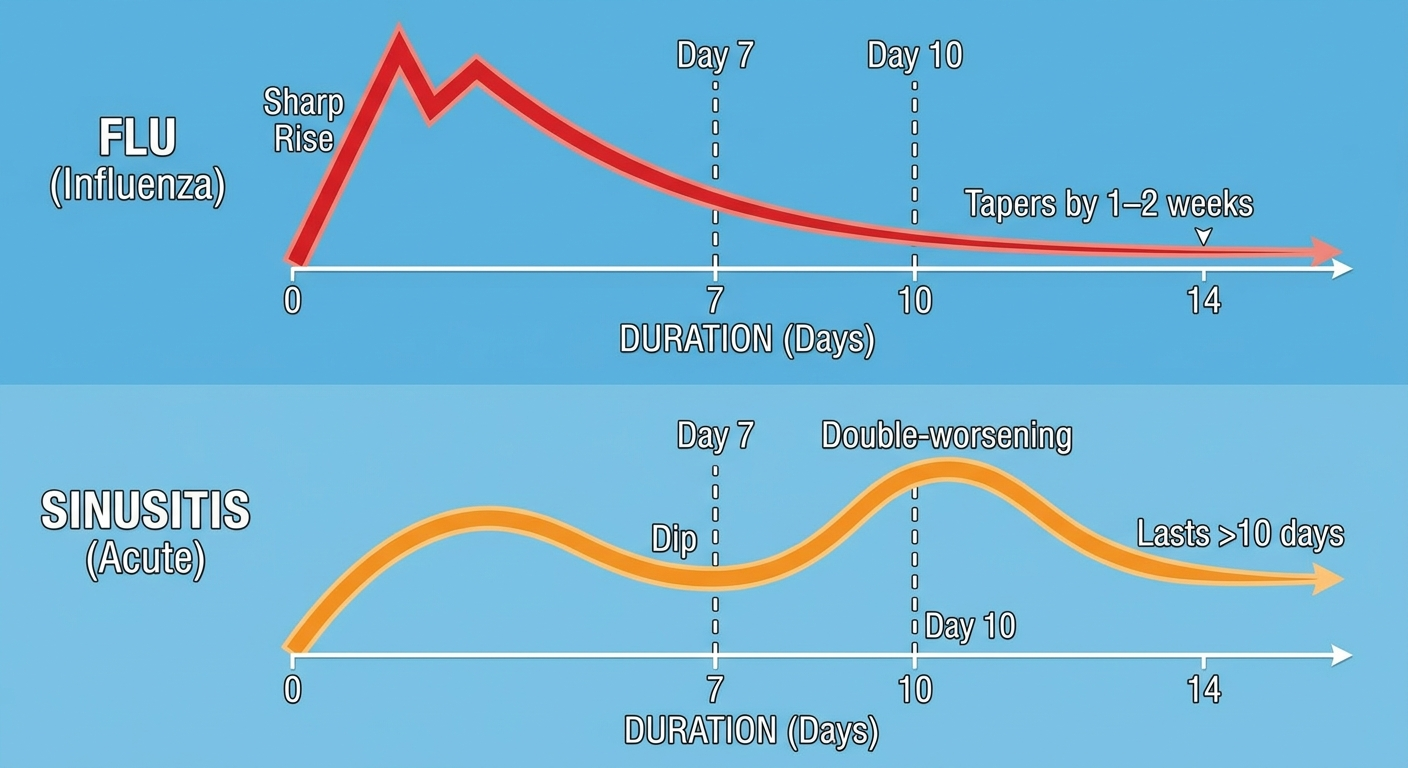
- Flu often improves over about 1–2 weeks, though fatigue can linger (CDC).
- Acute rhinosinusitis (acute sinusitis) often follows a cold and may last 7–10 days if viral; a bacterial pattern is more likely if symptoms last more than 10 days without improvement or worsen after initial improvement (“double-worsening”) (Cleveland Clinic).
Concrete example: If you had a typical cold for several days, started to feel better around day 6–7, and then developed worse facial pressure and thicker drainage around day 9–10, that “dip-then-spike” pattern is a classic clue for acute bacterial rhinosinusitis (Cleveland Clinic).
Quick clue: Flu hits fast and system-wide; sinusitis usually builds around the nose and face and may linger or double-worsen.
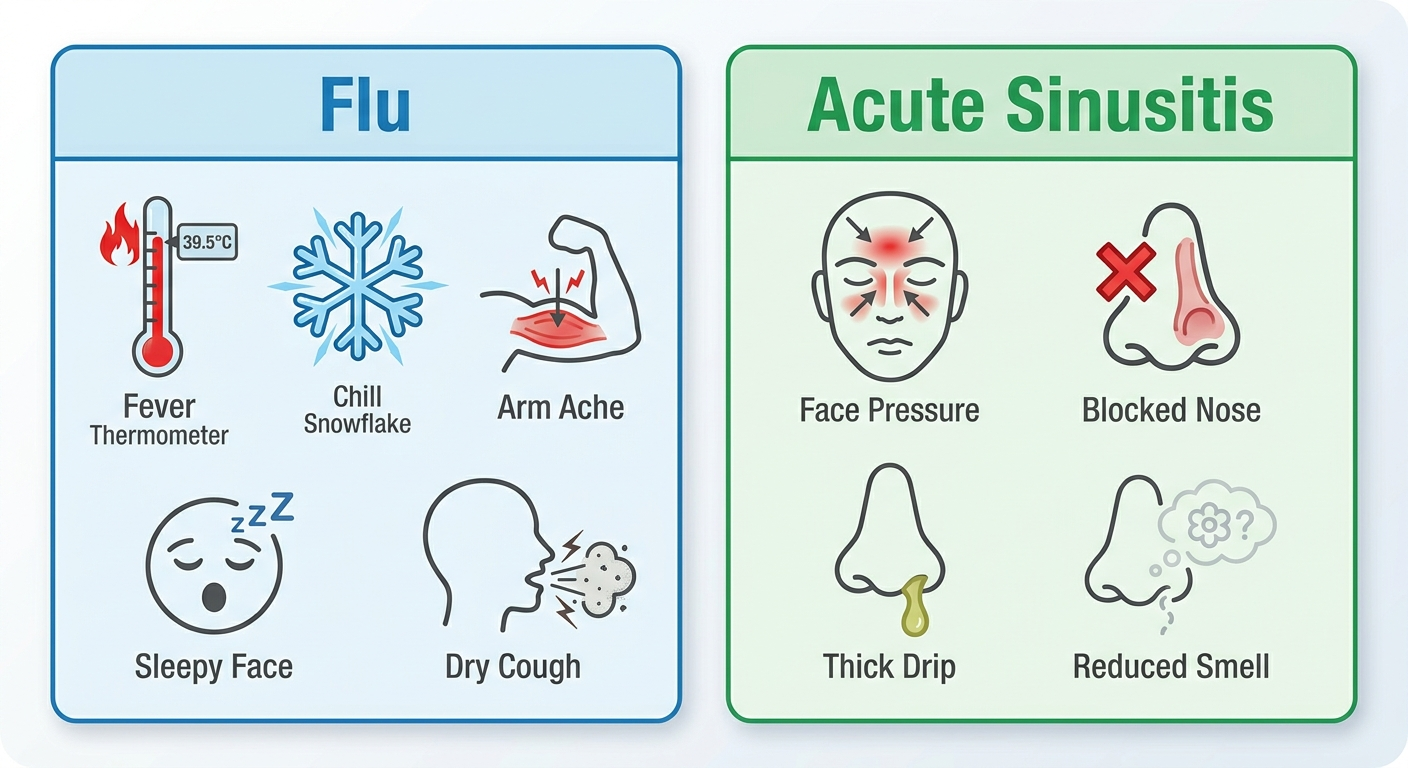
Sinusitis vs Flu: Side-by-Side Comparison (No Jargon)
More consistent with flu (influenza)
- Cause: Influenza virus (A or B) (CDC)
- Onset: Sudden
- Fever: Common; can be higher
- Body aches/chills: Common
- Fatigue: Prominent
- Cough: Common, often dry
- Nasal discharge: Can occur but not the defining feature
- Typical duration: About 1–2 weeks (CDC)
- First-line approach: Supportive care; antivirals for some people when started early
More consistent with acute sinusitis (acute rhinosinusitis)
- Cause: Inflammation of sinus lining; viral is most common, bacterial less common (Cleveland Clinic)
- Onset: Often after a cold/viral illness
- Fever: Less common in uncomplicated cases; may be low-grade
- Facial pain/pressure: Common (forehead/cheeks/between the eyes)
- Nasal congestion/blockage: Common
- Thick drainage/postnasal drip: Common
- Typical duration: Viral ARS ~7–10 days; bacterial pattern suspected if >10 days without improvement or double-worsening (Cleveland Clinic)
- First-line approach: Saline rinses, intranasal steroid sprays; antibiotics only if a bacterial pattern is suspected
Use the overall pattern—not one symptom—to guide next steps.
What Is the Flu (Influenza)?
What causes the flu? The flu is caused by influenza viruses (commonly types A and B). It spreads through respiratory droplets and smaller airborne particles when someone coughs, sneezes, or talks, and via contaminated hands/surfaces followed by touching the face (CDC). That’s why layered prevention—vaccination, staying home when ill, and hand hygiene—helps reduce spread (CDC).
Common flu symptoms (CDC)
- Fever (not always, but common)
- Chills
- Body or muscle aches
- Marked fatigue/weakness
- Headache
- Cough (often dry)
- Sore throat
- Runny or stuffy nose (can occur—especially in kids—but systemic symptoms are usually the biggest clue)
A helpful gut-check: many people with flu say the fatigue is out of proportion to their congestion.
How long does flu last? Symptoms often improve in about 1–2 weeks, though some people feel low energy longer (CDC). If your illness hit suddenly with fever, aches, and deep fatigue, flu is more likely.
What Is Sinusitis?
What “sinusitis” means: Sinusitis means inflammation of the tissue lining the sinuses (air-filled spaces behind the forehead, cheeks, and eyes). It commonly follows a viral upper respiratory infection, when swelling and mucus interfere with normal drainage (Cleveland Clinic). Clinicians may describe sinusitis as acute (short-term) or chronic (longer-lasting or recurring). For a deeper breakdown, see our guide to acute vs chronic sinusitis: https://sleepandsinuscenters.com/blog/acute-vs-chronic-sinusitis-key-differences-and-treatment-options
Common sinusitis symptoms (Cleveland Clinic)
- Facial pain/pressure (cheeks, forehead, between the eyes)
- Nasal congestion/blockage
- Thick nasal drainage and/or postnasal drip
- Reduced smell and taste
- Tooth pain or ear pressure (in some people)
- Cough that can feel worse at night (often from postnasal drip)
Real-life example: a sinusitis cough often ramps up when you lie down because drainage can irritate the throat overnight—so you may wake up coughing or with a sore throat that improves as you’re up and moving. For a fuller checklist of sinus problem symptoms, explore: https://sleepandsinuscenters.com/symptoms-of-sinus-problems
How long does sinusitis last?
- Viral acute rhinosinusitis (most cases) often improves within ~7–10 days.
- Clues that symptoms may fit a bacterial pattern include lasting >10 days without improvement, being unusually severe, or worsening after you started to feel better (double-worsening) (Cleveland Clinic).
Sinusitis is commonly viral and self-limited; bacteria are suspected when symptoms persist or double-worsen.
Why They Get Confused (And the Overlap Symptoms)
Symptoms both can share. When people compare sinus infection vs flu symptoms, the overlap can be frustrating. Both can involve: stuffy/runny nose, cough, headache, fatigue, and sore throat (sometimes from irritation or drainage).
This overlap is exactly why pattern recognition matters. If you’re also trying to separate sinus issues from a routine cold, this may help: https://sleepandsinuscenters.com/blog/sinus-infection-vs-cold-how-to-tell-the-difference
The symptoms that help separate them
- More likely flu: sudden onset + fever + chills + body aches + significant fatigue (CDC)
- More likely sinusitis: facial pressure/pain + thick drainage/postnasal drip + symptoms that drag on beyond the typical cold window (Cleveland Clinic)
Flu tends to be sudden and systemic; sinusitis is more localized and may linger.
Causes and How One Can Lead to the Other
Flu causes: A primary viral infection caused by influenza (CDC).
Sinusitis causes
- Viral infections (very common)
- Bacterial infections (less common)
- Allergies
- Irritants (like smoke)
- Structural issues (such as a deviated septum or nasal polyps), which can interfere with drainage (Cleveland Clinic)
Can the flu turn into a sinus infection? Yes. A viral illness like the flu can inflame and swell the nasal passages and sinus openings. When mucus doesn’t drain well, a secondary sinus infection can occasionally develop (Cleveland Clinic; ENT Memphis). Viral swelling can set the stage for a secondary bacterial sinus infection—especially when drainage is blocked.
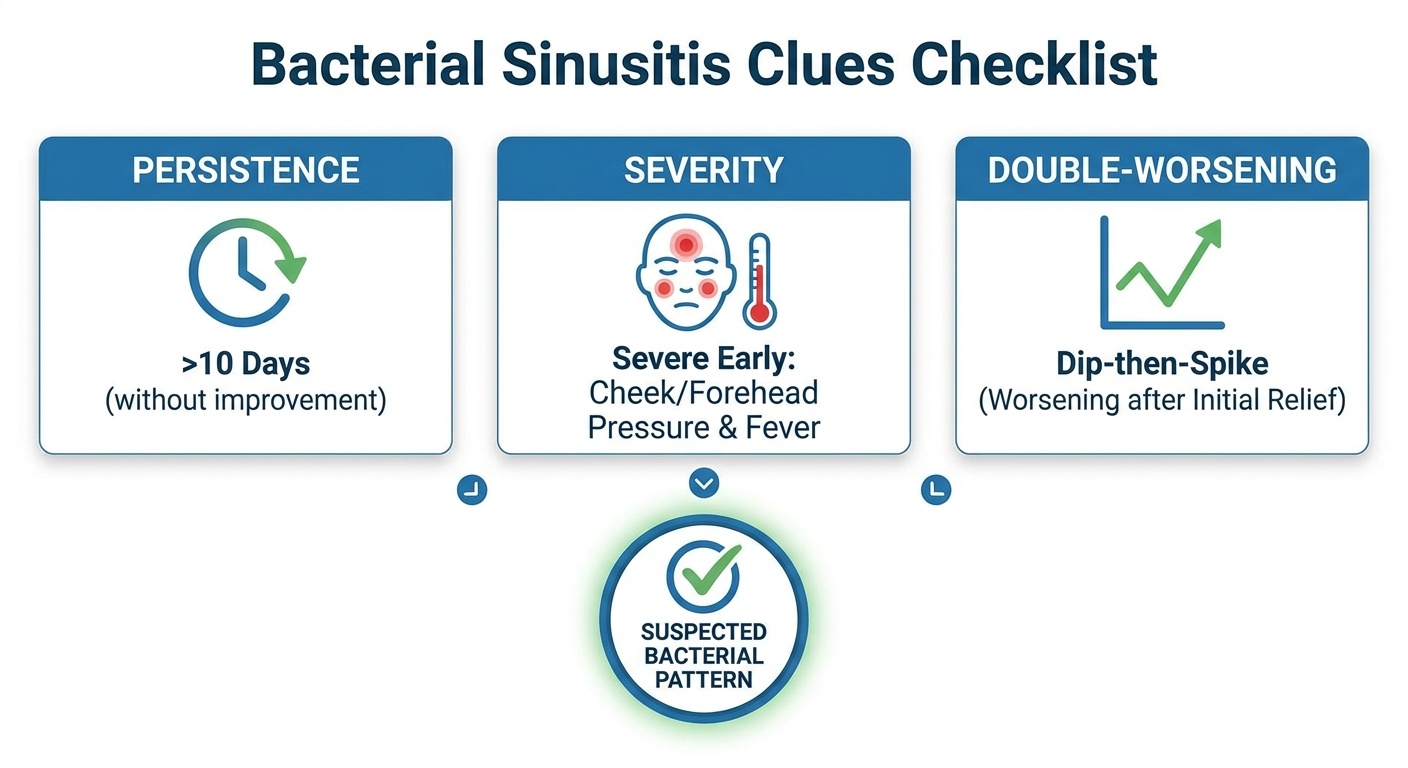
When to Suspect Bacterial Sinusitis (And When Antibiotics Might Help)
Key clinical patterns patients can recognize. Most sinus infections are viral. Clinicians may suspect a bacterial pattern when symptoms (Cleveland Clinic; IDSA):
- Last more than 10 days with little or no improvement
- Are severe (e.g., significant facial pain/pressure and high fever) early in the course
- Show double-worsening after initial improvement
Why color of mucus alone isn’t enough: Thick yellow or green mucus can happen in viral infections too—so color alone doesn’t reliably distinguish viral from bacterial illness and should not guide antibiotic use (CDC Antibiotic Use; Cleveland Clinic).
Antibiotic overview (high-level): When bacterial sinusitis is suspected, a clinician may prescribe amoxicillin-clavulanate if appropriate, based on guideline recommendations and individual factors (IDSA). Antibiotics don’t treat the flu and don’t help viral sinusitis, and unnecessary use can cause side effects and contribute to antibiotic resistance (CDC; IDSA).
- Viral vs bacterial sinus infections: https://sleepandsinuscenters.com/blog/viral-vs-bacterial-sinus-infections-key-differences
- When antibiotics are (and aren’t) needed: https://sleepandsinuscenters.com/blog/do-i-always-need-antibiotics-for-a-sinus-infection
Antibiotics are reserved for patterns suggesting bacterial disease—not for viral sinusitis or the flu.
Treatment Options for the Flu
Home care basics (what helps most people)
- Rest and hydration
- Comfort measures (humidified air, throat lozenges as directed)
- Fever/ache reducers as labeled; use extra caution for children—ask a clinician when unsure (CDC)
- Stay home while contagious to protect others (CDC)
Antiviral medications (when they’re used): Some people—especially those at higher risk of complications—may be offered antiviral medications, which work best when started early (ideally within 48 hours of symptom onset). A clinician can help determine whether that’s appropriate (CDC).
What to avoid: Antibiotics don’t treat influenza unless a bacterial complication is diagnosed (CDC). Most flu care is supportive; antivirals help some patients when started early.
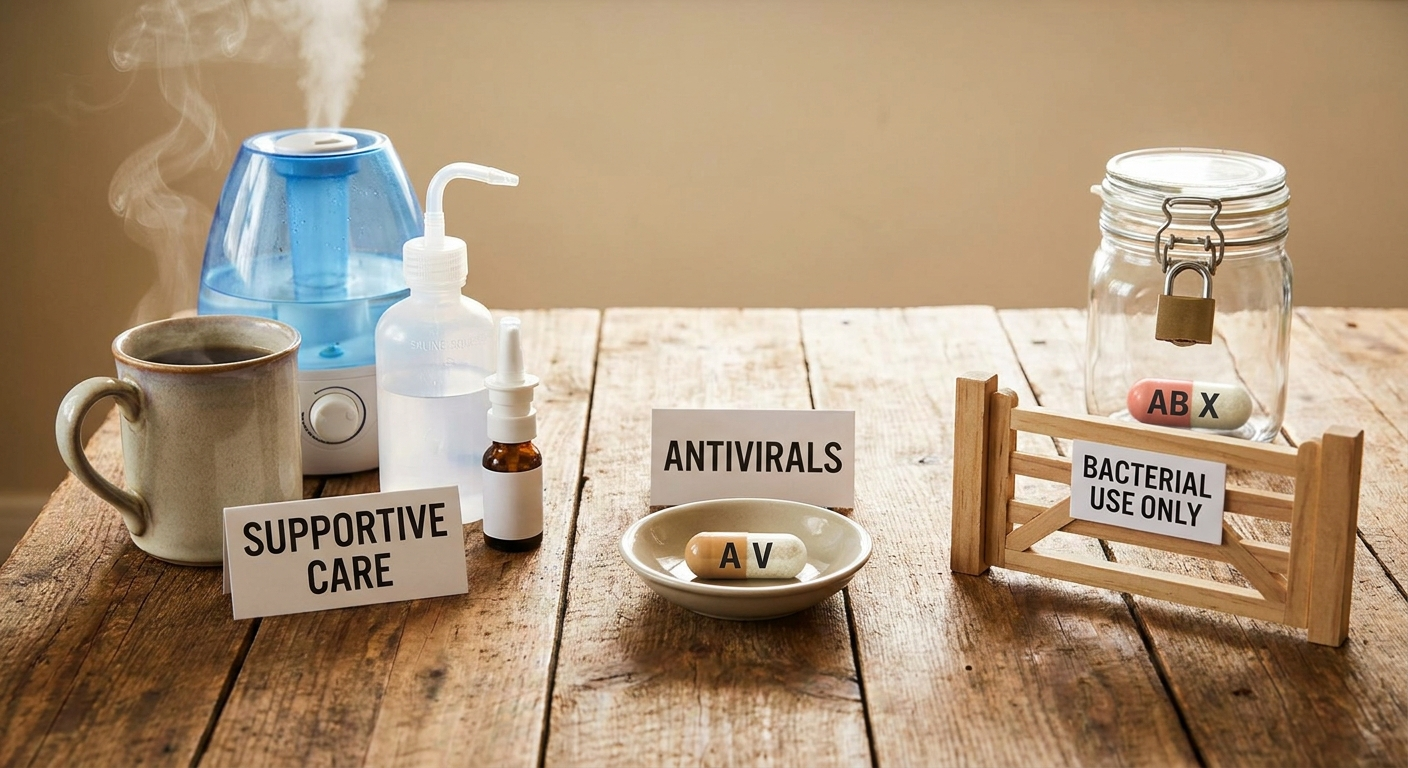
Treatment Options for Sinusitis
First-line symptom relief (often enough for viral sinusitis). Many cases improve with time and symptom relief. Common approaches include:
- Saline irrigation/rinses
- Intranasal steroid sprays (for inflammation; suitability varies by person)
- Over-the-counter pain relief options (as labeled)
- Hydration and humidified air
Helpful how-tos for rinses:
- How often to use nasal rinses: https://sleepandsinuscenters.com/blog/nasal-rinses-how-often-should-you-use-them
- Neti pot water safety (use distilled/sterile/previously boiled water): https://sleepandsinuscenters.com/blog/neti-pot-water-safety-why-boiled-or-distilled-water-is-essential-a906d
If symptoms suggest bacterial sinusitis: If a bacterial pattern is suspected, a clinician may consider antibiotics such as amoxicillin-clavulanate and provide instructions tailored to your situation (Cleveland Clinic; IDSA).
When recurring or persistent symptoms need ENT evaluation: Recurring sinus infections, ongoing congestion, or suspected structural blockage (like polyps or a deviated septum) may benefit from evaluation by an ENT specialist to look for underlying causes (Cleveland Clinic). Supportive care helps most viral cases; see a clinician if symptoms persist, double-worsen, or keep coming back.
When to See a Doctor (and When to Seek Urgent Care)
See a clinician soon if
- Flu-like illness occurs in someone with higher-risk health conditions (or pregnancy)
- Symptoms are severe, you’re unsure if you need antivirals, or you’re worsening after initial improvement (CDC)
- Sinus symptoms persist more than 10 days, are very painful, or fit a double-worsening pattern (Cleveland Clinic)
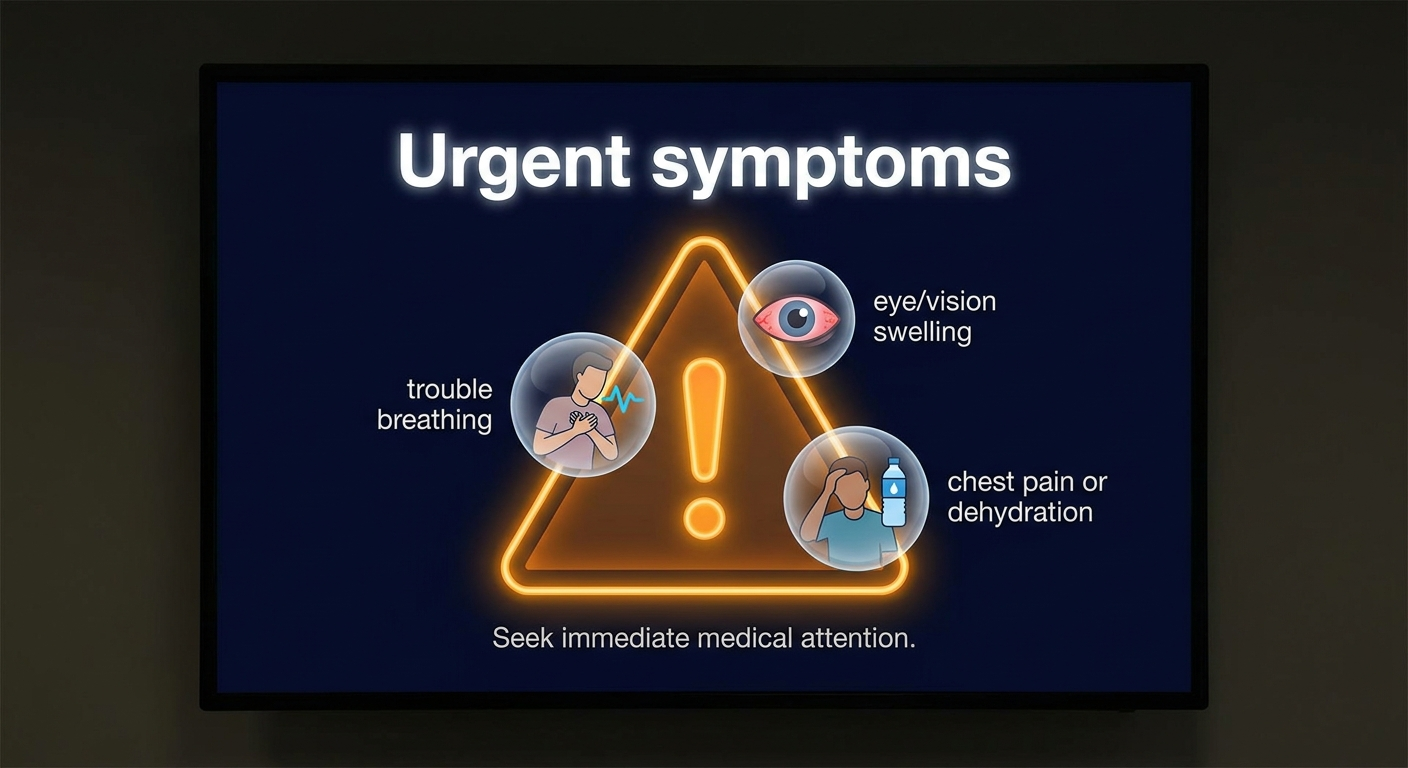
Seek urgent/emergency care if
- Trouble breathing, chest pain, confusion, or signs of dehydration (CDC)
- Swelling around the eyes, vision changes, severe headache, or neck stiffness (possible sinus complications) (Cleveland Clinic)
- Very high fever or rapidly worsening symptoms
Escalating or severe symptoms merit prompt medical evaluation.
Lifestyle Tips to Recover Faster and Prevent Future Illness
Prevention for flu
- Annual flu vaccination
- Hand hygiene
- Avoiding close contact when sick
- Masking in higher-risk settings when respiratory viruses are circulating (CDC)
Prevention for sinusitis flare-ups
- Manage allergies when relevant
- Avoid smoke/irritants
- Maintain hydration and consider humidification during dry months
- Gentle saline routines during colds (as tolerated) (Cleveland Clinic)
Don’t ignore nasal blockage: Ongoing nasal obstruction can contribute to sinus problems over time. If congestion feels chronic or one-sided, it may be worth getting evaluated to look for contributing factors (Cleveland Clinic). Small daily habits—plus early attention to persistent blockage—can reduce future flare-ups.
FAQs (Optimized for Featured Snippets)
Can I have sinusitis and the flu at the same time? Yes. Sinusitis can occur during or after a viral illness like flu, and symptoms can overlap—especially congestion, cough, and fatigue (CDC; Cleveland Clinic).
Does a fever mean it’s the flu and not sinusitis? Not always. Fever is more typical with flu, especially when paired with body aches and marked fatigue. Sinusitis can include fever, but it’s less common in uncomplicated cases (CDC; Cleveland Clinic).
How can I tell if my sinus infection is bacterial? Clues include symptoms lasting more than 10 days without improvement, severe symptoms early, or double-worsening. Diagnosis is based on the overall pattern and exam (Cleveland Clinic; IDSA).
Will antibiotics help if I have thick green mucus? Not necessarily. Mucus color alone doesn’t prove bacterial infection and should not guide antibiotic use. Antibiotics are typically reserved for patterns that suggest bacterial sinusitis (CDC; Cleveland Clinic).
What’s the fastest way to feel better? It depends. Flu typically improves with rest, fluids, and sometimes antivirals early for select patients. Sinusitis often improves with time plus supportive care like saline rinses and intranasal steroid sprays (when appropriate); antibiotics are reserved for suspected bacterial cases (CDC; Cleveland Clinic).
When should I see an ENT instead of urgent care or primary care? Consider ENT evaluation for recurrent sinus infections, chronic symptoms, suspected structural blockage, or possible complications—while urgent care is more appropriate for severe or rapidly escalating symptoms (Cleveland Clinic). If symptoms are severe, persistent, or recurrent, involve a healthcare professional.
Key Takeaways (Short Summary)
- Flu is often sudden and systemic (fever, chills, body aches), with many people improving within 1–2 weeks—a key clue when weighing sinusitis vs flu (CDC).
- Acute sinusitis is often localized (facial pressure, thick drainage) and commonly follows a cold; a bacterial pattern is suspected if symptoms last >10 days without improvement or double-worsen (Cleveland Clinic).
- Sinusitis can develop after a viral illness when swelling blocks drainage (Cleveland Clinic; ENT Memphis).
- Treatments differ: flu care is supportive (and sometimes antivirals early), while suspected bacterial sinusitis may involve antibiotics such as amoxicillin-clavulanate when clinically appropriate (CDC; IDSA; Cleveland Clinic).
Call to Action (Sleep and Sinus Centers of Georgia)
If your symptoms are lingering, worsening, or repeatedly returning—and you’re not sure whether you’re dealing with flu, sinusitis, or both—Sleep and Sinus Centers of Georgia can help evaluate what’s driving your symptoms and discuss appropriate next steps.
Ready to get answers? Book an appointment here: https://sleepandsinuscenters.com/appointments
Medical Disclaimer
This article is for general educational purposes and isn’t a substitute for personalized medical advice, diagnosis, or treatment. If you have severe symptoms, rapidly worsening illness, or concerns about complications, seek urgent medical care.
Citation List
- CDC (2024). Flu Symptoms. https://www.cdc.gov/flu/signs-symptoms/index.html
- CDC (2024). Antibiotic Use: Sinus Infection (Sinusitis). https://www.cdc.gov/antibiotic-use/community/for-patients/common-illnesses/sinus-infection.html
- Cleveland Clinic (2024). Sinusitis. https://my.clevelandclinic.org/health/diseases/17701-sinusitis
- IDSA. Acute Bacterial Rhinosinusitis in Children and Adults—Clinical Practice Guideline. https://www.idsociety.org/practice-guideline/acute-bacterial-rhinosinusitis-in-children-and-adults/
- ENT Memphis. Flu, COVID-19, or Sinusitis: How to Tell the Difference and When It’s Time to See a Specialist. https://www.entmemphis.com/flu-covid-19-or-sinusitis-how-to-tell-the-difference-and-when-its-time-to-see-a-specialist/
“This article is for educational purposes only and is not medical advice. Please consult a qualified healthcare provider for diagnosis and treatment.”
Don’t let allergies slow you down. Schedule a comprehensive ENT and allergy evaluation at Sleep and Sinus Centers of Georgia. We’re here to find your triggers and guide you toward lasting relief.