Snoring in Babies: What’s Normal, What’s Not, and When to See a Doctor
Hearing your baby make unexpected sounds during sleep can be unsettling—especially at 2 a.m., when every little snuffle seems amplified. The good news is that occasional, soft snoring can be normal, particularly when your baby is congested. But loud, frequent, or persistent snoring—especially when it comes with other symptoms—deserves medical attention.
A helpful way to think about it: a baby’s airway is small, so a little swelling or mucus can make airflow sound “big.” It’s like blowing air through a narrow straw—even a tiny change in the opening can change the sound a lot.
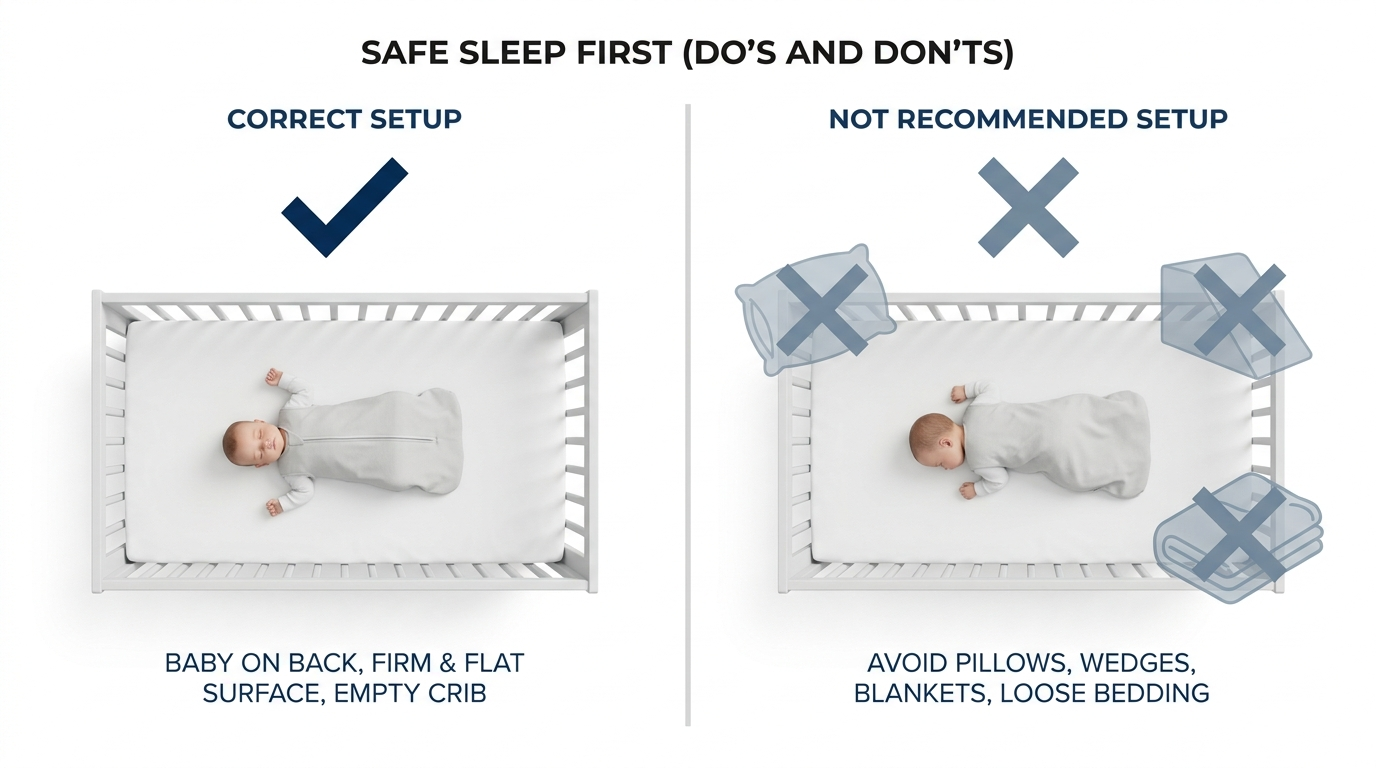
One important safety note up front: snoring is not a reason to add pillows, wedges, inclined sleepers, or to switch to stomach sleeping. Safe sleep guidance remains flat, firm, and on the back.
Medical disclaimer: This article is for general education and is not a substitute for medical advice. If you’re worried about your baby’s breathing, trust your instincts and contact your pediatrician. Call emergency services right away if your baby shows emergency warning signs (listed below).
Is Snoring in Babies Normal?
When soft, occasional snoring may be benign
Many parents notice baby snoring now and then—often when the nose is congested from a cold, mild irritation, or temporary stuffiness. In these cases, the sound is usually quiet, infrequent, and short-lived (for example, a couple of nights during a cold).
Soft snoring may be more likely during:
- Nasal congestion (colds, temporary stuffiness)
- Head position changes while your baby is on their back (for example, head turned to one side); always place babies on their backs on a flat, firm surface
If your baby is otherwise acting like themselves—feeding well, waking normally, and breathing comfortably—mild, temporary snoring is often less concerning.
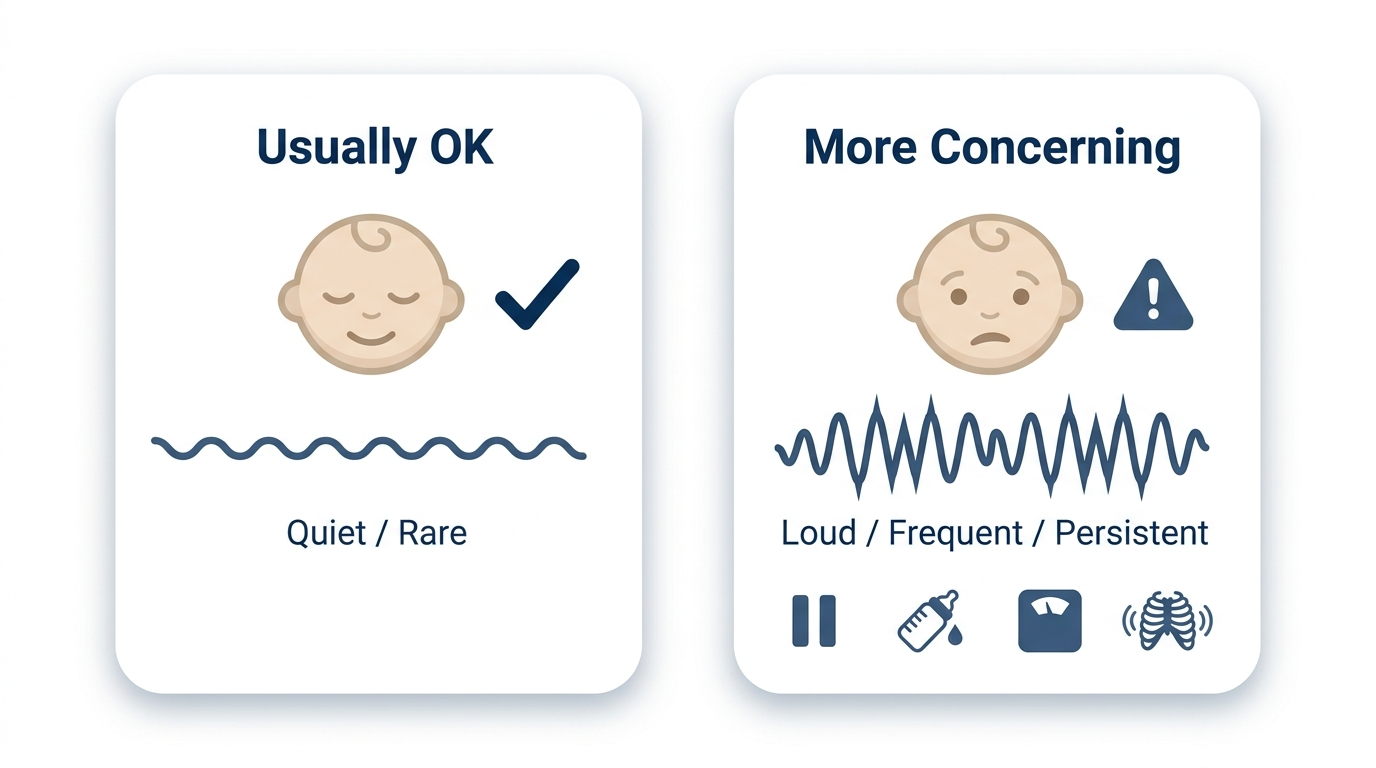
Quick checklist: “Usually OK” vs. “More concerning”
- Usually OK: quiet/rare, baby feeds well, normal color, normal breathing effort
- More concerning: loud, frequent, or persistent; or paired with symptoms like pauses, gasping, poor feeding, or poor growth
Note: This checklist is not a diagnostic tool—when in doubt, call your pediatrician.
Why babies can sound noisy even when they’re healthy
Infants have very small airways, so even mild congestion can sound dramatic. Some newborns also have periodic breathing, where breathing briefly becomes irregular during sleep; this can be normal in young infants.
What matters most is the overall pattern. Occasional irregularity without distress can be normal. Repeated pauses with signs of struggle, color change, or poor feeding is not.
Bottom line: Temporary, soft snoring during a cold can be normal; patterns that are loud, persistent, or paired with other symptoms should be checked.
Snoring vs. Other Noisy Breathing (Important Differences)
Not all noisy sleep is snoring. Distinguishing the sound can help you describe what you’re hearing to your pediatrician—and can help your clinician decide what to check first.
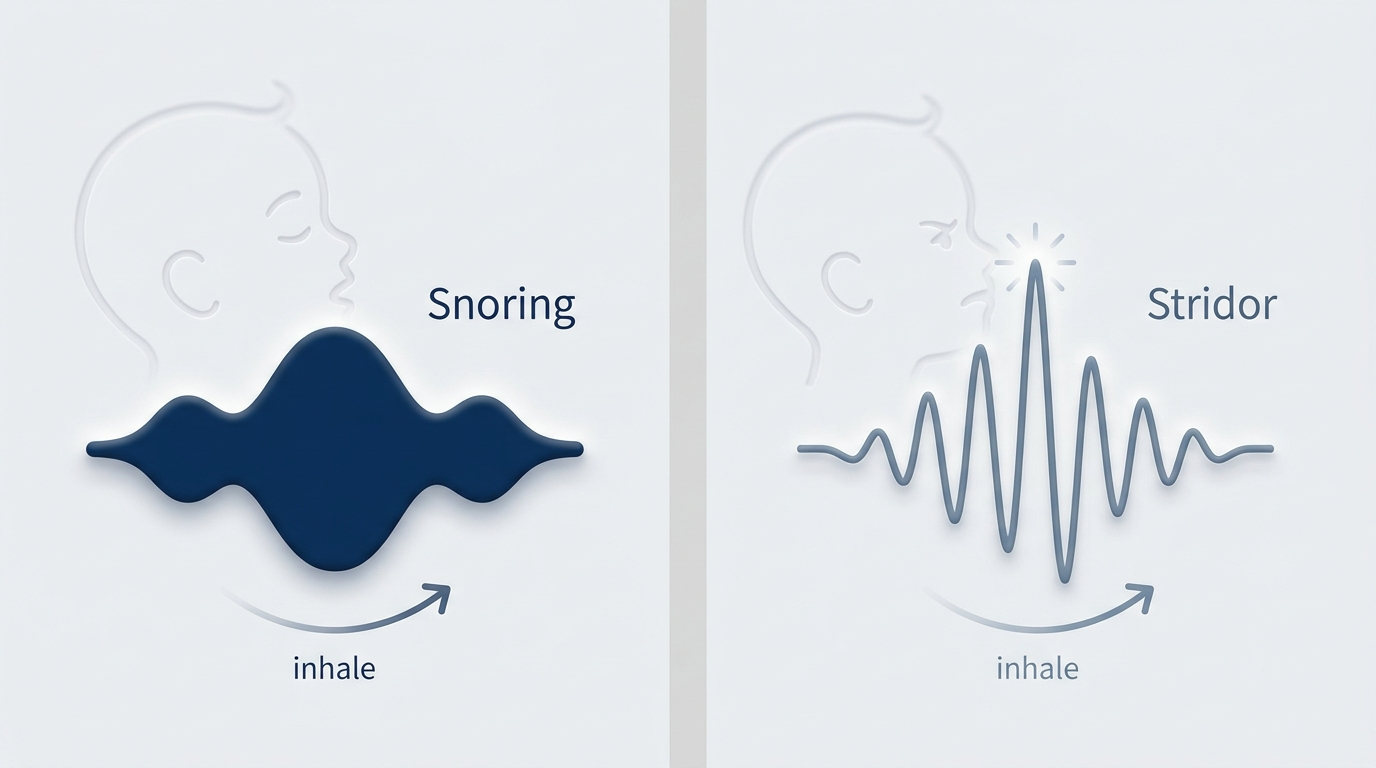
Snoring (vibration noise)
Snoring is typically a lower-pitched, rumbling sound caused by vibration from airflow through the upper airway. Parents often describe it as a soft “motor” or gentle “purr” that happens mainly on inhale.
Stridor (high-pitched squeak/whistle) may not be “snoring”
If the sound is high-pitched, more like a squeak, whistle, or musical noise, it may be stridor—and that difference matters. Stridor can suggest partial upper-airway narrowing and should be evaluated when persistent or when paired with symptoms.
One common cause in infants is laryngomalacia, which often improves with time, but still warrants attention if breathing or feeding is affected. For example, if noisy breathing gets noticeably worse during feeding or your baby seems to work hard to finish a bottle, that’s worth mentioning.
When “no snoring” doesn’t mean “no breathing problem”
It’s also possible for infants to have sleep-related breathing issues without obvious snoring. In some cases, sleep apnea shows up more as disturbed sleep, breathing pauses, or poor growth than noise alone.
A practical takeaway: sound is only one clue. How your baby breathes, eats, sleeps, and grows matters just as much.
Key point: Describe what you hear (low rumble vs. high-pitched squeak), but focus on how your baby is breathing, feeding, and growing.
Common Causes of Snoring in Babies (and What They Might Mean)
If you’re noticing snoring in babies, it may help to think in two broad categories: common/temporary causes vs. causes that are more likely to need evaluation.
Common, short-term causes
These are often temporary and related to a blocked or irritated nose and throat:
- Nasal congestion from colds/viral illness
- Dry air that irritates the nasal passages
- Temporary swelling in the nose/throat during illness
In day-to-day life, this might look like: your baby catches a cold, sounds “snorty” at night for a few days, then the noise fades as congestion improves.
Causes that are more likely to need medical evaluation
Some patterns of snoring or noisy breathing suggest possible airway narrowing that shouldn’t be ignored:
- Obstructive sleep apnea (OSA) or airway obstruction (can occur even without classic snoring)
- Upper-airway narrowing with stridor concerns (including laryngomalacia), especially if feeding or breathing is affected
- Other structural or airway factors that may need assessment when symptoms persist
A clinician may phrase it like this: “I’m less focused on the noise itself and more focused on whether your baby is moving air comfortably.” That’s why the symptom checklist below is so important.
If the noise is short-lived during a cold, it often passes; if it’s loud, frequent, or affects breathing/feeding, get it checked.
Symptoms to Watch For (What’s Concerning)
When parents ask “is baby snoring normal?”, the most helpful next question is: What else is happening with sleep, breathing, and feeding?
Signs that suggest possible obstructive sleep apnea or airway obstruction
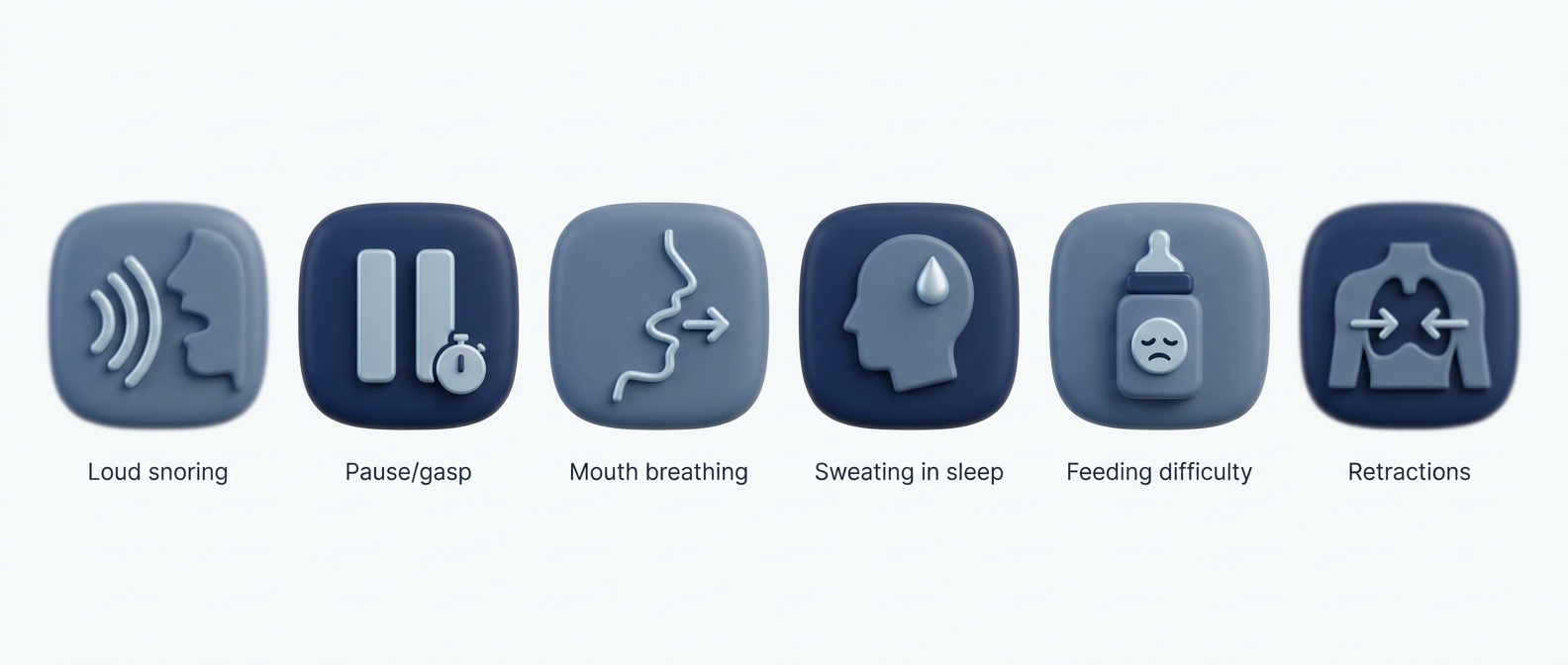
Consider contacting your pediatrician if you notice one or more of the following baby sleep apnea signs or breathing concerns:
- Loud, frequent, or persistent snoring
- Pauses in breathing, gasping, or choking
- Restless sleep or unusual sleep disturbance
- Mouth breathing during sleep
- Sweating during sleep
- Feeding problems or tiring out while feeding
- Poor weight gain
- Retractions (skin pulling in around ribs/neck) or increased work of breathing
If you’re seeing multiple symptoms together, it’s a good reason to check in with your child’s clinician.
What “retractions” can look like (a quick visual description)
Retractions can look like the skin pulling in between the ribs, under the ribcage, or at the base of the neck as your baby breathes in. This suggests increased work of breathing and should be taken seriously—especially if it’s new or worsening.
A note on periodic breathing vs. apnea
Some newborns have brief irregular breathing patterns that can be normal. However, repeated breathing pauses plus color change or distress are not normal and should be treated as urgent.
If you’re unsure, it can help to write down what you’re seeing: How long does the pause last? Does your baby resume breathing easily? Are they pink and comfortable or struggling?
Trust patterns over a single moment: clusters of symptoms, distress, or color change should prompt a call to your pediatrician.
When to See a Doctor vs. When It’s an Emergency
Knowing when to see a doctor for baby snoring can reduce anxiety and help you act quickly when it matters.
Call your pediatrician (same day/soon) if:
- Snoring is new and persistent, getting louder, or happens most nights
- Any OSA-type symptoms appear (restless sleep, mouth breathing, sweating, poor growth)
- You suspect stridor (high-pitched sound), especially if feeding or breathing is affected
If you’re unsure whether symptoms warrant specialty evaluation, Sleep & Sinus Centers of Georgia also offers guidance on when to see an ENT for breathing or sleep concerns: https://sleepandsinuscenters.com/when-should-i-see-an-ent
Seek emergency care (call 911 or go to ER) if your baby has:
Emergency Signs (high priority):
- A breathing pause that seems prolonged—especially over about 10–20 seconds—or any pause with color change (blue/gray/pale), limpness, or distress
- Gasping/choking with trouble breathing
- Nasal flaring, chest retractions, or severe breathing effort
- Blue, gray, or very pale skin/lips
- Difficulty waking the baby or unusual unresponsiveness
If something looks or feels “off,” it’s always appropriate to seek urgent help—especially with breathing concerns. Remember, color change or signs of struggle matter more than a stopwatch.
When in doubt, err on the side of calling your pediatrician or seeking urgent care—especially for breathing or color changes.
What Parents Can Do at Home (Supportive, Pediatrician-Guided Comfort Measures)
If noisy breathing in infants seems related to mild congestion, there are comfort measures that are commonly suggested—always ask your pediatrician first and keep safe sleep front and center.
Congestion relief that’s generally considered baby-safe (confirm age guidance with your pediatrician)
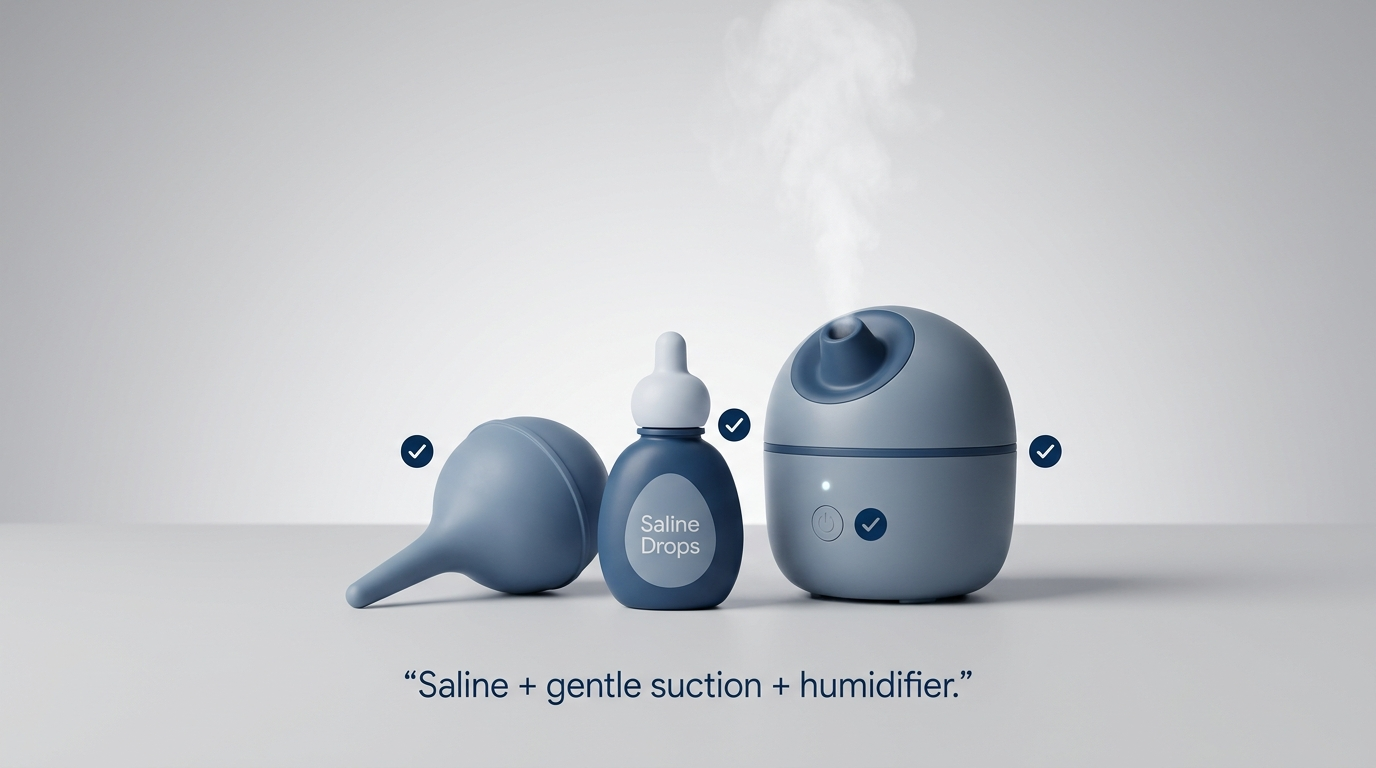
- Saline drops/spray and gentle suctioning for a stuffy nose (often most helpful before feeds and sleep); use gentle technique and avoid over-suctioning—stop if the nose becomes irritated or bleeds
- Cool-mist humidifier to reduce dryness and irritation
- Maintain normal feeding for age to support hydration; do not give water to young infants unless your pediatrician advises
A practical tip many parents find useful: suctioning right before a feeding can reduce “stop-and-start” feeding when a stuffy nose makes it harder to breathe while eating.
What NOT to do (safe sleep comes first)
- No pillows, wedges, inclined sleepers, or positioning devices to “fix” snoring
- Do not place baby on their stomach or side to reduce noise—back sleeping is safest
- Avoid unapproved over-the-counter medications for infants unless directed by a clinician
Safe sleep reminder (quick checklist)
- Back to sleep, every sleep
- Firm, flat, non-inclined sleep surface
- No loose bedding or soft objects in the sleep area
Use simple, gentle congestion care with your pediatrician’s guidance—and never compromise safe sleep to reduce noise.
How Doctors Evaluate Snoring or Noisy Breathing in Infants
If snoring is persistent or symptoms suggest breathing difficulty, your child’s clinician may take a step-by-step approach.
What to expect at the visit
Evaluation often includes:
- History: onset, frequency, illness/congestion, feeding, growth, sleep behaviors
- Physical exam: nose, throat, breathing effort, weight gain
Practical tip: parents are often able to help by recording a short video of the sound/breathing pattern at home (especially if it doesn’t happen reliably in the office). Aim for 15–30 seconds that captures:
- The sound itself
- Your baby’s chest/neck movement (work of breathing)
- Whether the sound is on inhale, exhale, or both
Possible next steps (depending on symptoms)
Depending on findings, referrals may include:
- Pediatric ENT for airway/noisy breathing or stridor concerns
- Sleep specialist if sleep apnea is suspected
A sleep study may be discussed when clinically indicated (not every baby with snoring needs one).
For families looking to understand next steps for persistent snoring and sleep-disordered breathing, you can also review our snoring and sleep apnea treatment options: https://sleepandsinuscenters.com/snoring-sleep-apnea-treatment
Evaluation focuses on comfort and safety first; not every noisy sleeper needs testing, but persistent or worrisome patterns deserve a closer look.
Treatment Options (What Happens If Something More Than “Normal Snoring” Is Found)
Treatment depends on the cause—so the goal is to identify why the sound is happening, not just stop the sound.
If it’s congestion/temporary inflammation
When temporary swelling or congestion is the driver, management often focuses on supportive care (such as saline, humidification, and monitoring) while the illness resolves. A reasonable “watch and track” approach (with your pediatrician’s guidance) may include noting whether snoring fades as nasal symptoms improve.
If obstructive sleep apnea is suspected/diagnosed
Management depends on the cause and severity and may include monitoring, targeted medical therapies, or—only if indicated—procedural or surgical options in children. Also, keep in mind: OSA can occur even without snoring, so symptom patterns matter as much as noise. For general background on approaches, see: https://sleepandsinuscenters.com/snoring-sleep-apnea-treatment
If stridor/laryngomalacia is suspected
Many cases are monitored over time, but feeding difficulty, choking, retractions, poor growth, or sleep-related pauses are reasons to pursue evaluation and possible treatment.
If you’re reading about persistent snoring and wondering how it compares in older kids, this related overview may help (infants differ from older children, but the “persistent nightly symptoms” concept is similar): https://sleepandsinuscenters.com/blog/child-snoring-every-night-is-it-normal-or-a-sleep
Treat the cause, not just the sound—many babies improve with time and supportive care, while persistent or symptomatic cases benefit from targeted evaluation.
FAQs
1) Is it normal for my baby to snore when they have a cold?
Often yes—temporary, soft snoring can happen with congestion. If it becomes loud, persistent, or comes with breathing pauses or feeding trouble, contact your pediatrician.
2) Can a baby have sleep apnea without snoring?
Yes. Some infants with OSA may have disturbed sleep, breathing pauses, gasping, sweating, or poor growth rather than obvious snoring.
3) What does stridor sound like compared to snoring?
Stridor is often high-pitched (squeak/whistle) and can suggest upper-airway narrowing. Snoring is typically a lower-pitched rumbling sound caused by vibration from airflow.
4) How long is “too long” for a breathing pause?
A pause that seems prolonged—especially over about 10–20 seconds—or any pause with color change (blue/gray/pale), limpness, or distress is urgent and requires emergency evaluation.
5) Should I elevate my baby’s mattress to help snoring?
No. Avoid pillows, wedges, inclined sleepers, and positioning devices. Follow safe sleep recommendations: place babies on their backs on a firm, flat, non-inclined surface with no loose bedding.
6) When will my baby outgrow snoring?
Many temporary causes of snoring resolve as congestion or irritation improves. But persistent loud snoring or snoring accompanied by breathing pauses, feeding problems, or poor growth should be evaluated.
Conclusion
Many families notice snoring in babies from time to time—especially during congestion—and it’s often temporary. Still, persistent loud snoring, unusual sleep disturbance, feeding difficulty, or breathing pauses are signals to discuss with your pediatrician. Trust your instincts, and seek urgent care right away for emergency warning signs like prolonged pauses or color change.
If your child has ongoing snoring or sleep-breathing concerns, Sleep & Sinus Centers of Georgia can help with evaluation and next steps—schedule an appointment: https://sleepandsinuscenters.com/appointments
References
1. American Academy of Pediatrics (AAP). Diagnosis and Management of Childhood Obstructive Sleep Apnea Syndrome (2012). https://publications.aap.org/pediatrics/article/130/3/576/30284/Diagnosis-and-Management-of-Childhood-Obstructive
2. Mayo Clinic. Pediatric obstructive sleep apnea—Symptoms and causes (2024). https://www.mayoclinic.org/diseases-conditions/pediatric-sleep-apnea/symptoms-causes/syc-20376196
3. HealthyChildren.org (AAP). Stridor & Laryngomalacia (2022). https://www.healthychildren.org/English/health-issues/conditions/ear-nose-throat/Pages/laryngomalacia-and-stridor-is-my-babys-noisy-breathing-serious.aspx
4. Cleveland Clinic. Periodic Breathing in Newborns (2025). https://my.clevelandclinic.org/health/articles/periodic-breathing
5. Sleep Foundation. Baby Snoring: Causes, When to Worry, and How to Help (2026). https://www.sleepfoundation.org/baby-sleep/baby-snoring
6. AAP. Sleep-Related Infant Deaths: Updated 2022 Recommendations for Reducing Infant Deaths in the Sleep Environment (2022). https://publications.aap.org/pediatrics/article/150/1/e2022057990/188304/Sleep-Related-Infant-Deaths-Updated-2022
This article is for educational purposes only and is not medical advice. Please consult a qualified healthcare provider for diagnosis and treatment.
Don’t let allergies slow you down. Schedule a comprehensive ENT and allergy evaluation at Sleep and Sinus Centers of Georgia. We’re here to find your triggers and guide you toward lasting relief.