
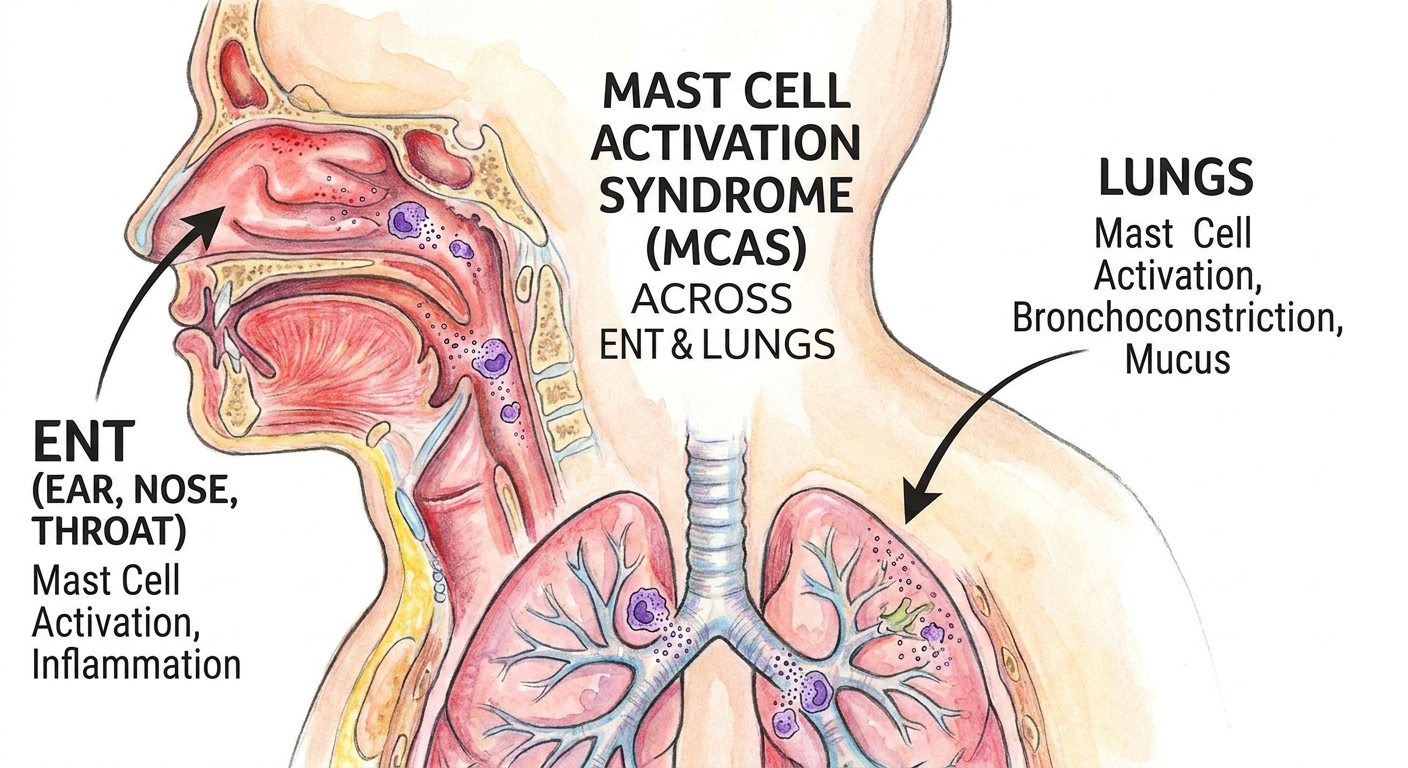
Mast Cell Activation Syndrome (MCAS) and ENT Symptoms: Causes, Signs, and Treatment
Mast Cell Activation Syndrome can be associated with symptoms that feel very ENT-focused—like congestion, throat tightness, ear pressure, or wheezing. The challenge is that these complaints are also extremely common in non-MCAS conditions. This guide explains MCAS-related ENT symptoms, what else can mimic them, how MCAS is commonly evaluated, and what treatment approaches clinicians may consider as part of coordinated care.
A simple way to think about it: ENT symptoms can be part of MCAS, but they’re rarely “proof” by themselves. The goal is to connect the dots between pattern of symptoms, objective testing, and response to treatment—while still checking for the more common (and often very treatable) ENT causes. [1][4]
- MCAS can cause upper-airway and breathing symptoms (nose/throat/lungs), but these symptoms are not specific to MCAS. [1]
- Many specialists use criteria that generally include recurrent, severe, episodic symptoms in two or more organ systems, objective mediator elevation during events, and improvement with mast-cell–targeted therapy. Diagnostic approaches can vary; confirmation is made by a qualified clinician. [1][4]
- Throat swelling, stridor, or rapidly worsening breathing can signal anaphylaxis—follow your emergency action plan and seek urgent/emergency care. [2]
- Response to therapy supports the diagnosis only in the context of the full criteria; it is not specific to MCAS by itself. [1][4]
Bottom line: ENT symptoms can occur in MCAS, but careful evaluation is essential to avoid missing more common—and often highly treatable—causes.
What Are Mast Cells—and What Is MCAS?
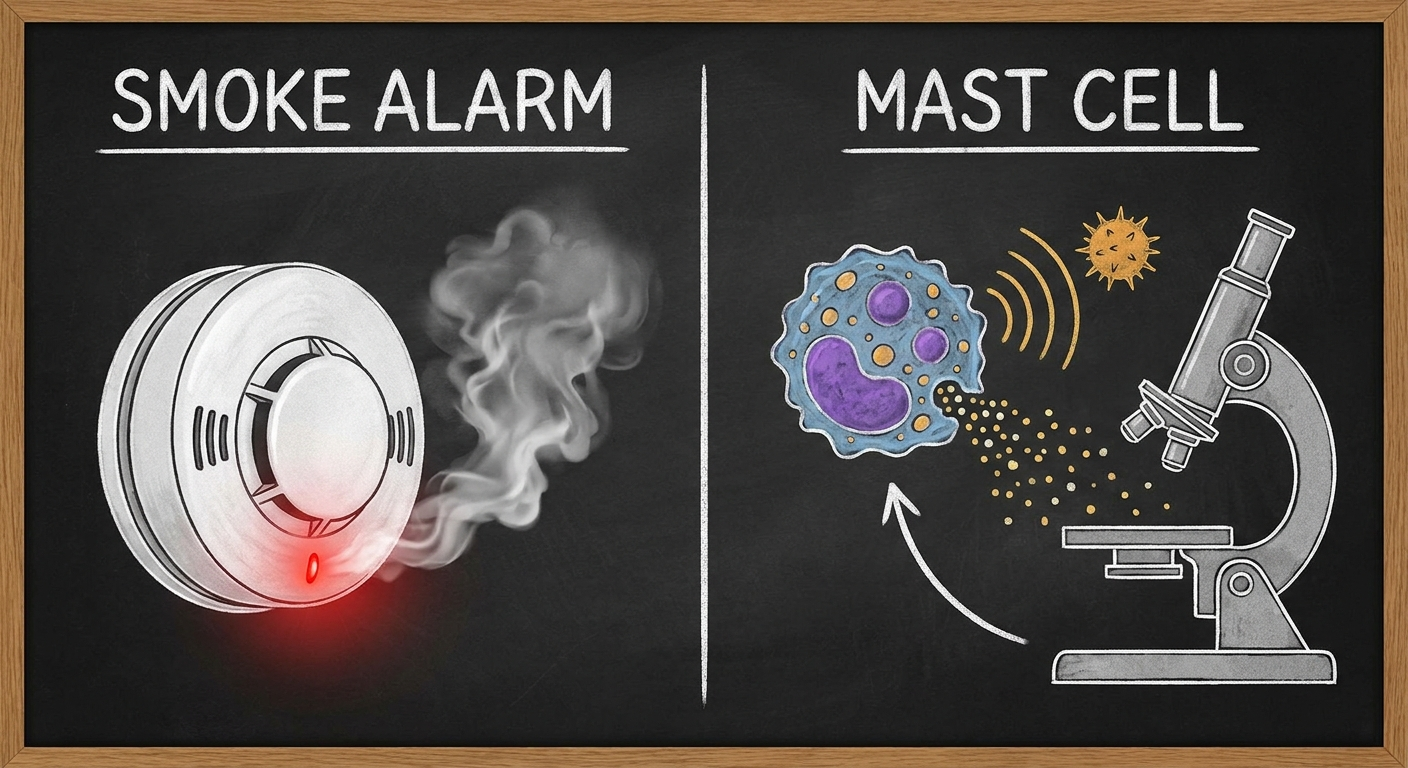
Mast cells are immune cells that live throughout the body, especially near surfaces that interact with the environment—like the skin and the linings of the nose, throat, and lungs. When they sense a threat, they release chemical “messengers” (mediators) that help drive inflammation and defense.
One helpful analogy: mast cells act a bit like smoke alarms. When they activate appropriately, they help protect you. In MCAS, the “alarm” may go off too easily or too strongly, releasing mediators such as histamine, leukotrienes, prostaglandins, and sometimes tryptase. [1][4]
Because mediators travel and act in multiple places, MCAS is often discussed as a multisystem condition—even if your most noticeable symptoms feel ENT-related. [1][4]
People often mix up:
- MCAS: recurrent episodes of mast cell activation that can involve multiple systems and may not be tied to one consistent trigger. [1][4]
- “Classic” allergies: often involve IgE-mediated reactions to specific triggers (like pollen or pet dander), and testing may show a clear pattern.
- Clonal mast cell disorders/mastocytosis: a different category involving abnormal mast cell growth or genetics, evaluated with a different diagnostic pathway. [1][4]
Because symptoms overlap, evaluation often includes ruling out more common causes—for example, testing for environmental allergies with allergy testing when rhinitis-like symptoms are a major issue: https://sleepandsinuscenters.com/allergy-testing
Key idea: MCAS is a multisystem process; if your symptoms are mainly in the nose or throat, it’s still important to check for common ENT conditions first.
How MCAS Can Affect the Nose, Throat, Ears, and Breathing
Mast cells are abundant along mucosal surfaces, including the nasal lining, throat, and bronchial tree. When mediators are released, they can contribute to:
- tissue swelling (edema)
- excess mucus and drainage
- itching/irritation
- airway narrowing in the upper or lower airway
That’s why MCAS-related ENT symptoms can include congestion, throat tightness, voice changes, and wheeze during flares. [1][4]
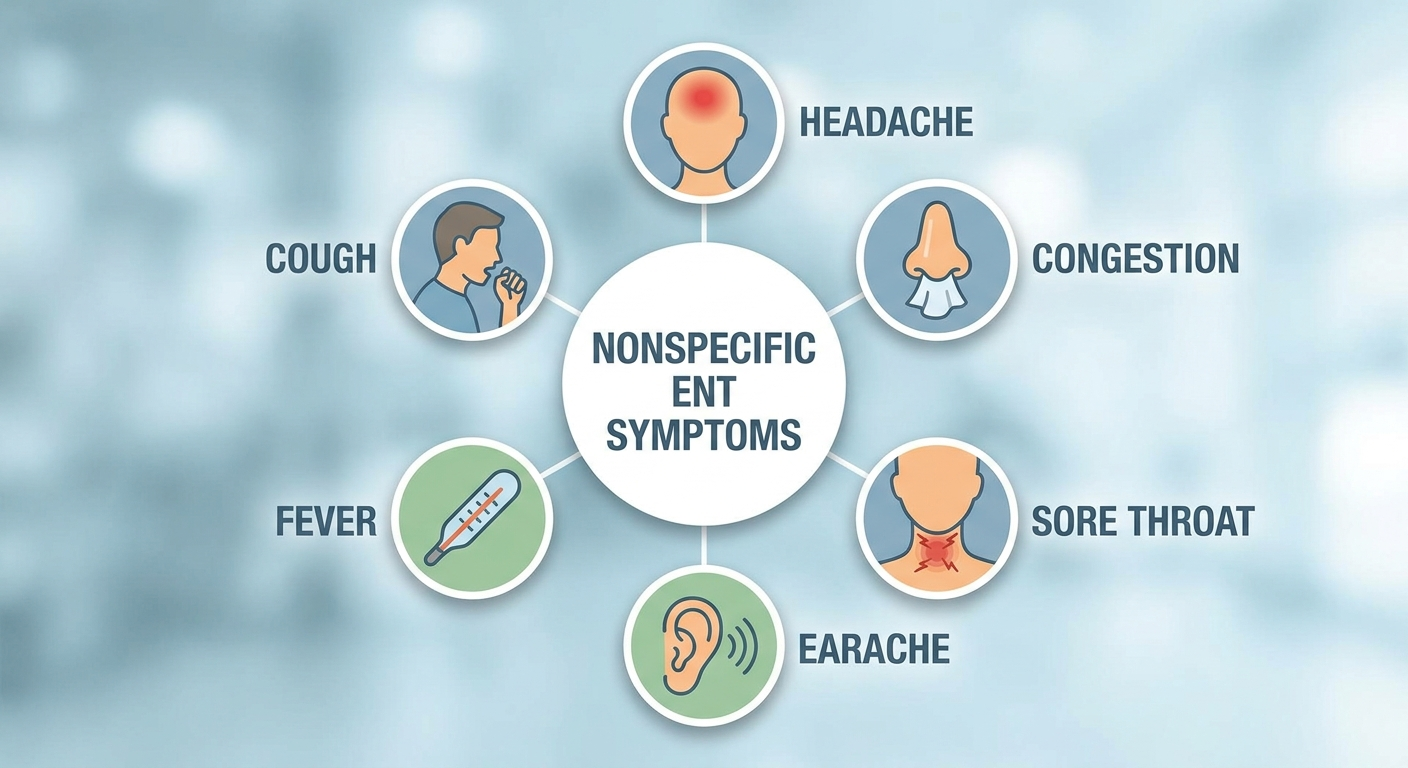
Important caveat: ENT complaints are common in the general population. Reviews emphasize that many ear, nose, and throat symptoms reported by patients are nonspecific and cannot confirm MCAS by themselves. [3][4] Clinicians therefore look for a broader MCAS pattern: episodic symptoms, multisystem involvement, objective evidence of mediator release, and improvement with appropriately targeted therapy interpreted in context. [1][4]
Takeaway: ENT symptoms can be part of MCAS, but they aren’t diagnostic on their own.
MCAS-Related ENT & Respiratory Symptoms (What Patients May Notice)
Below is a patient-friendly overview of ENT symptoms sometimes reported in MCAS—plus other common explanations that may need to be considered.
- Nasal congestion or stuffiness: “blocked nose,” mouth breathing, worse at night. Also consider: allergic rhinitis, nonallergic rhinitis, turbinate swelling.
- Sneezing, nasal itching. Also consider: seasonal allergies, irritant exposure.
- Runny nose (rhinorrhea), postnasal drip. Also consider: viral illness, nonallergic rhinitis, gustatory rhinitis.
- Sinus pressure sensations. Also consider: chronic sinusitis, migraine, nasal inflammation.
- Throat irritation or frequent throat clearing. Also consider: reflux/LPR, dryness, postnasal drip, infection.
- Throat tightness or swelling sensations. Also consider: reflux/LPR, anxiety/panic episodes, allergic reactions; severe/progressive symptoms need urgent evaluation.
- Ear fullness or pressure. Also consider: Eustachian tube dysfunction, nasal inflammation.
- Wheezing/shortness of breath or chest tightness. Also consider: asthma, infections, irritant exposure, vocal cord-related breathing disorders.
Nose and sinus symptoms: Commonly described MCAS nose symptoms include congestion, sneezing, itching, and runny nose—often in flares. Some patients also report MCAS sinus congestion or pressure, though “sinus pressure” does not always mean a sinus infection. [1] For persistent, day-to-day symptoms, it may be helpful to review options for treating chronic rhinitis, since chronic rhinitis (allergic or nonallergic) overlaps heavily with what many people suspect is MCAS: https://sleepandsinuscenters.com/treating-chronic-rhinitis
Throat, mouth, and voice symptoms: Throat symptoms can range from irritation to a sensation of swelling or tightness. Reviews describe oral burning/irritation and throat complaints as possible but nonspecific findings. [3] Clinically, some patients describe a “globus” feeling (a lump-in-the-throat sensation) that comes and goes with flares. During severe episodes, upper-airway swelling (sometimes discussed as laryngeal edema) may occur, which is why escalation symptoms should be taken seriously. [2]
Ear-related symptoms: Ear fullness/pressure, tinnitus, or hearing changes have been reported in the MCAS literature, but these findings are nonspecific and deserve a structured evaluation to rule out more common ENT causes. [3] A practical framing is: “Ear pressure often reflects what’s happening in the nose.” If nasal lining swelling is driving Eustachian tube dysfunction, treating the nasal component may help—even if MCAS is also part of the bigger picture.
Lower airway and breathing symptoms: MCAS can involve respiratory symptoms such as chest tightness, cough, and wheezing during episodes—reflecting mediator effects on the lower airway. [1][4] Because wheezing can also indicate asthma or other airway conditions, objective testing may be important.
Short version: Many MCAS-like ENT symptoms are shared with common ENT conditions; a careful workup helps sort out what’s actually driving them.
When ENT Symptoms Could Be an Emergency (Don’t Wait)
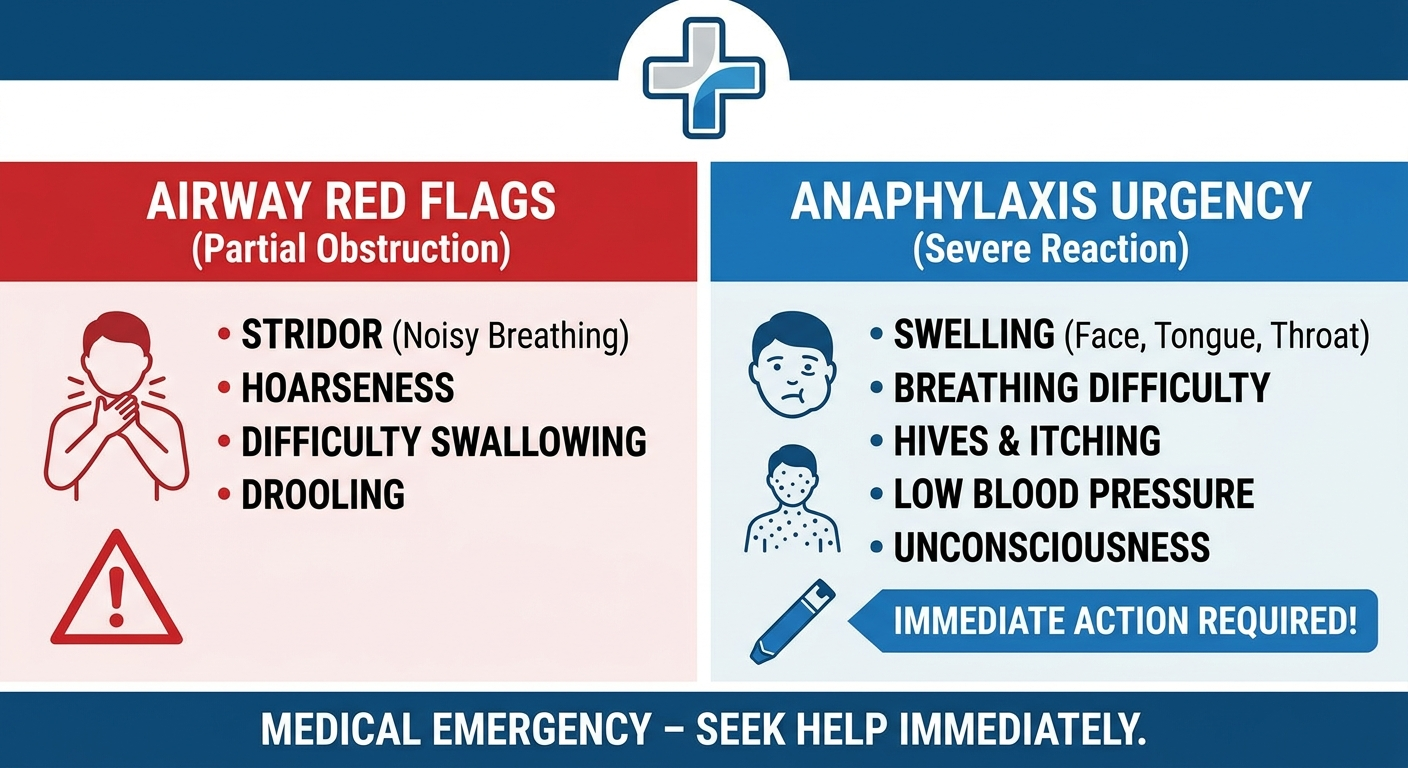
Red flags for possible anaphylaxis. Upper-airway and breathing symptoms can become urgent if they suggest significant airway narrowing or a systemic reaction. Red flags include: [2]
- Throat swelling that is progressing
- Stridor (a high-pitched, noisy breathing sound—often on inhalation)
- Rapidly worsening trouble breathing, faintness, widespread hives, vomiting, or symptoms consistent with a sudden drop in blood pressure
What to do. Educationally, the key point is that suspected anaphylaxis is treated as a medical emergency. People who have been prescribed epinephrine are typically instructed to use it for symptoms consistent with anaphylaxis and then seek emergency care. [2]
If in doubt about severe throat or breathing symptoms, treat it as an emergency and seek care immediately.
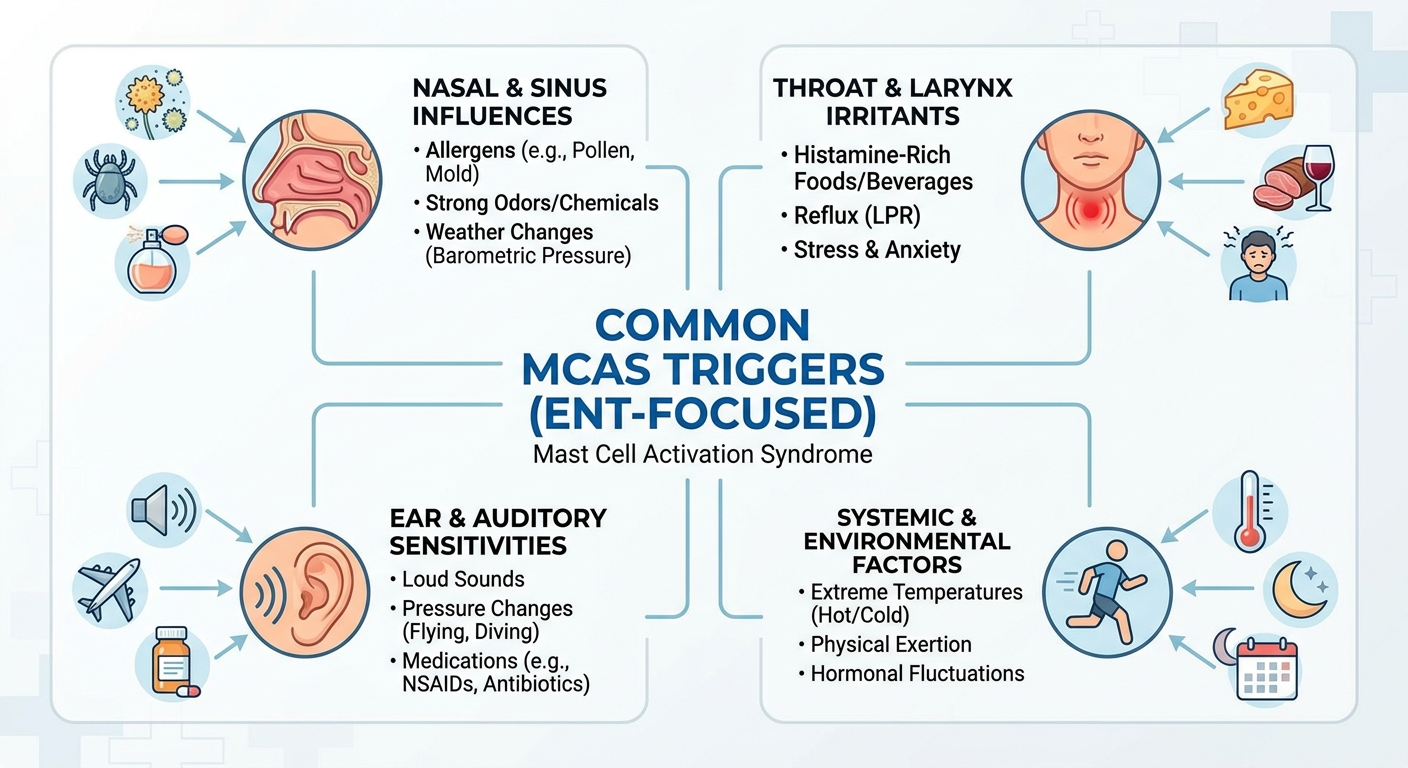
Common Triggers That May Set Off MCAS Episodes (Including ENT Flares)
Triggers vary widely, and some people identify patterns while others do not. Common categories discussed in reviews include: [4]
Environmental and inhaled triggers:
- Temperature shifts (heat/cold), humidity changes
- Strong odors/fragrances, smoke, air pollution
- Pollen/mold exposure (which may also represent true allergy, not MCAS)
Food, alcohol, and medications (high-level overview):
- Alcohol can be a trigger for some individuals
- Medications (including NSAIDs in susceptible people) may worsen symptoms for some
Physical/physiologic triggers:
- Stress, infections, exertion, and hormonal shifts [4]
A brief, real-world example of tracking: someone might notice throat tightness and flushing after a hot shower (temperature shift), or nasal congestion and wheeze after exposure to fragrance at work (inhaled irritant). A diary doesn’t diagnose MCAS, but it can make patterns clearer for you and your clinicians. [1][4]
Practical tip: Track patterns, but let your clinicians interpret what those patterns mean.
Why “MCAS Sinus Symptoms” Often Turn Out to Be Something Else
A common storyline is “I have facial pressure, congestion, and postnasal drip—so it must be MCAS.” Sometimes MCAS is part of the picture, but many other diagnoses are more common and treatable.
Conditions that can mimic MCAS in ENT and breathing symptoms:
- Allergic rhinitis or nonallergic rhinitis
- Chronic rhinosinusitis (with or without polyps)
- Reflux-related throat irritation (LPR/GERD)
- Asthma or vocal cord–related breathing conditions
- Respiratory infections
- Medication effects (for example, rebound congestion from frequent decongestant spray use)
- Hereditary alpha tryptasemia (a genetic trait that can affect tryptase levels and sometimes symptom burden—interpreted by specialists)
- Clonal mast cell disorders [1][4]
If symptoms sound “sinus-related” and keep recurring, learning about chronic sinusitis can clarify what actually defines sinusitis (and what doesn’t), and why proper evaluation matters: https://sleepandsinuscenters.com/chronic-sinusitis
Don’t assume “sinus symptoms = MCAS”; a precise ENT diagnosis often changes the treatment plan for the better.
How MCAS Is Diagnosed (What “Confirmation” Usually Requires)
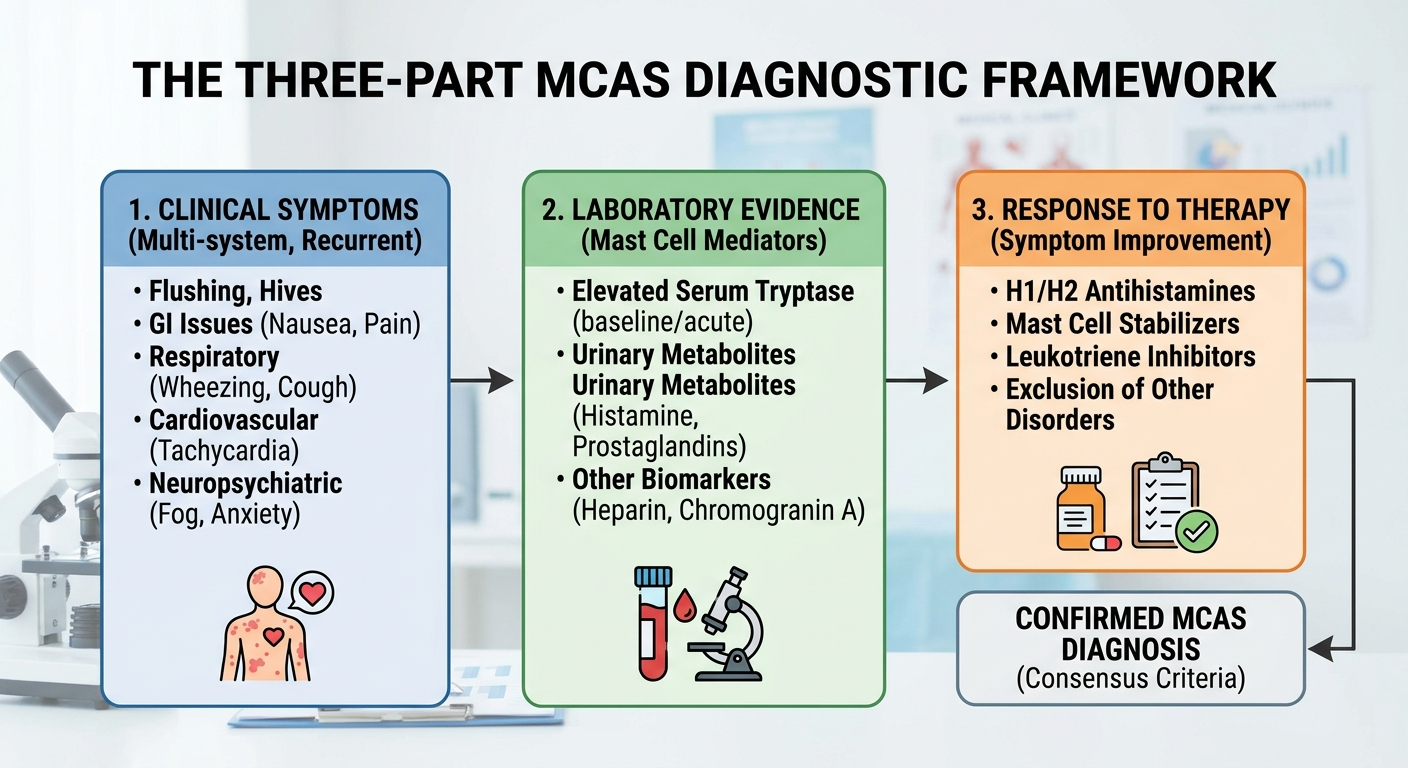
Many specialists rely on a three-part approach to evaluate MCAS: [1][4]
1. Recurrent, severe, episodic symptoms involving two or more organ systems (for example, skin + GI, or cardiovascular + respiratory)
2. Objective evidence of mediator release during an event
3. Improvement with mast-cell–targeted treatment, interpreted alongside the first two criteria
These criteria are applied and interpreted by clinicians; this article cannot confirm or rule out MCAS. Response to therapy is supportive only when considered with the full clinical picture, since many therapies (for example, antihistamines) can help non-MCAS conditions as well. [1][4]
Lab testing basics (patient-friendly). A key issue with MCAS testing is timing. Mediator levels can be transient, so clinicians often aim to capture labs during or soon after a flare. Different practices may evaluate different mediators based on symptoms and availability. [4] Patients often find it helpful to ask: “If I flare again, what should I do first—lab draw, medications, or both?” Having a plan in advance can prevent missed testing windows.
The tryptase event criterion (commonly referenced). One commonly referenced criterion uses the “tryptase 20% + 2” rule: an event tryptase is considered significantly elevated if it exceeds event tryptase > (baseline × 1.2) + 2 ng/mL. [4] For example, if someone’s baseline tryptase is 5 ng/mL, an event level would generally need to exceed (5 × 1.2) + 2 = 8 ng/mL to meet that specific threshold. Importantly, tryptase does not rise in every patient or every episode—so clinicians interpret results within the full clinical picture. [4]
ENT’s role in the workup can be useful to:
- assess nasal inflammation directly (and consider endoscopy or imaging when appropriate)
- evaluate for chronic sinusitis or nasal polyps when symptoms suggest them
- consider hearing testing if hearing changes are present
When MCAS-related ENT symptoms are suspected, many patients benefit from coordinated care—ENT for local upper-airway evaluation and allergy/immunology for multisystem assessment. [1][4] For allergy-focused concerns, see our testing overview: https://sleepandsinuscenters.com/allergy-testing
Diagnosis is a clinician-driven process that weighs symptom patterns, test timing, and response to care—not any single symptom or test result.
Treatment Options for MCAS With ENT/Respiratory Symptoms
Management is individualized and typically guided by a clinician familiar with mast cell disorders. The goals are to reduce triggers, decrease mediator effects, and address overlapping ENT diagnoses. [1][4]
Step 1 — Trigger identification and avoidance
- Track exposures (fragrances, smoke, temperature shifts)
- Track foods/alcohol
- Track infections, stress, or exertion patterns [1]
Step 2 — Medication strategies commonly used (under clinician guidance)
- H1 antihistamines and H2 antihistamines
- leukotriene modifiers
- mast cell stabilizers
- for selected patients and phenotypes, add-on therapies such as omalizumab [1][4]
This is an overview of therapies specialists may consider—not a recommendation to start, stop, or combine any medication without medical supervision.
Step 3 — ENT-directed symptom relief (supportive care)
- saline rinses/sprays for nasal irritation and mucus (when appropriate)
- targeted treatment of rhinitis or sinusitis when diagnosed
- reflux evaluation when chronic throat symptoms persist (globus, throat clearing, hoarseness)
Because severe swelling or breathing compromise can overlap with anaphylaxis risk, emergency planning is an important topic in MCAS care—especially for anyone with a history of severe episodes. [2]
Think layered care: manage triggers, consider appropriate medications with your clinician, and address local ENT conditions that may be amplifying symptoms.
Lifestyle Tips to Reduce ENT Flares (Patient-Friendly)
Build a “low-trigger” routine
- Minimize sudden temperature changes when feasible
- Stay aware of dry-air triggers; some people do better with balanced indoor humidity
Reduce irritant exposure
- Choose fragrance-free personal care and cleaning products when possible
- Keep a smoke-free environment
Prepare for predictable exposures
- Plan for travel (hotel fragrances, new detergents)
- Anticipate seasonal exposures (pollen/mold)
- Consider workplace irritants (cleaners, perfumes, dust)
Discuss any major lifestyle or environmental changes with your clinician—especially if you have a history of severe reactions.
Small environmental changes can make day-to-day symptoms more manageable, but they’re not a substitute for individualized medical care.
FAQs
Q: Can MCAS cause chronic sinusitis?
A: MCAS may contribute to rhinitis-like inflammation and congestion, but chronic sinusitis has specific diagnostic criteria and many causes. The two can coexist, which is why an ENT evaluation can be helpful. [1][3]
Q: Is nasal congestion enough to diagnose MCAS?
A: No. Nasal congestion and other ENT symptoms are nonspecific. Many specialists use criteria that generally include recurrent, severe, episodic symptoms in two or more organ systems, objective evidence of mediator release during an event, and improvement with mast-cell–targeted treatment—interpreted together by a clinician. [1][4]
Q: What does stridor mean and why is it serious?
A: Stridor is a high-pitched, noisy breathing sound that can indicate significant upper-airway narrowing. Because it may occur in serious reactions (including anaphylaxis), it’s treated as an emergency symptom. [2]
Q: What tests confirm MCAS?
A: There isn’t a single “yes/no” test. Confirmation usually combines clinical criteria with event-related mediator testing (often including tryptase) and evaluation of response to appropriately targeted treatment. [1][4]
Q: Who should manage suspected MCAS—ENT or allergist?
A: Often both. Allergy/immunology commonly leads MCAS evaluation, while ENT helps assess nasal, sinus, throat, and ear symptoms—and rule out common alternative explanations.
If you’re unsure where to start, coordinated care between ENT and allergy/immunology can save time and clarify next steps.
When to See a Doctor (and Which Specialist)
See an ENT if you have:
- persistent nasal blockage, recurrent “sinus infections,” or ongoing facial pressure
- ear fullness, tinnitus, or hearing changes
- chronic throat symptoms (throat clearing, hoarseness, globus sensation)
See allergy/immunology if you have:
- recurrent episodes affecting multiple systems (for example, skin + GI + breathing)
- a history concerning for anaphylaxis
- unexplained mediator elevations or suspected mast cell disorder [1][4]
Sleep and Sinus Centers of Georgia can help evaluate persistent ENT symptoms and coordinate next steps when MCAS is part of the differential.
Conclusion
MCAS-related ENT symptoms—like congestion, throat tightness, ear pressure, and wheezing—can be real, disruptive, and sometimes alarming. But they’re also shared by many common (and often treatable) ENT conditions. A careful, evidence-based approach—looking at multisystem patterns, event-related lab evidence, and response to therapy—helps clarify whether MCAS is truly the driver. And because severe throat or breathing symptoms can be emergency signs, prompt evaluation is essential when red flags appear. [2]
Ready for answers about persistent nasal, sinus, ear, or throat symptoms? Book an appointment with an ENT at Sleep and Sinus Centers of Georgia: https://www.sleepandsinuscenters.com/
This article is for educational purposes only and is not medical advice. Please consult a qualified healthcare provider for diagnosis and treatment.
If you think you may be having anaphylaxis or severe breathing/throat symptoms, follow your emergency plan and seek emergency care. [2]
Citations
[1] American Academy of Allergy, Asthma & Immunology (AAAAI). Mast Cell Activation Syndrome (MCAS). https://www.aaaai.org/conditions-treatments/related-conditions/mcas
[2] AAAAI. Anaphylaxis Symptoms, Diagnosis, Treatment & Management. https://www.aaaai.org/conditions-treatments/allergies/anaphylaxis
[3] Mihele et al. Mast Cell Activation Syndrome Update—A Dermatological Perspective. 2023. https://pmc.ncbi.nlm.nih.gov/articles/PMC10381535/
[4] Özdemir et al. Mast Cell Activation Syndrome: An Up-to-Date Review of Literature. 2024. https://pmc.ncbi.nlm.nih.gov/articles/PMC11212760/
Don’t let allergies slow you down. Schedule a comprehensive ENT and allergy evaluation at Sleep and Sinus Centers of Georgia. We’re here to find your triggers and guide you toward lasting relief.