Chronic Allergy Symptoms and Sleep Deprivation: Causes, Effects, and Relief Tips
If your allergies never seem to stop, your sleep may be paying the price. Chronic allergies—especially allergic rhinitis—are strongly associated with poorer sleep quality, taking longer to fall asleep, and higher rates of sleep disorders. Research links chronic allergy symptoms and sleep deprivation through congestion, inflammation, and repeated nighttime awakenings. (PLOS ONE, 2020: https://journals.plos.org/plosone/article?id=10.1371/journal.pone.0228533; Sleep Foundation, 2026: https://www.sleepfoundation.org/allergies-and-sleep)
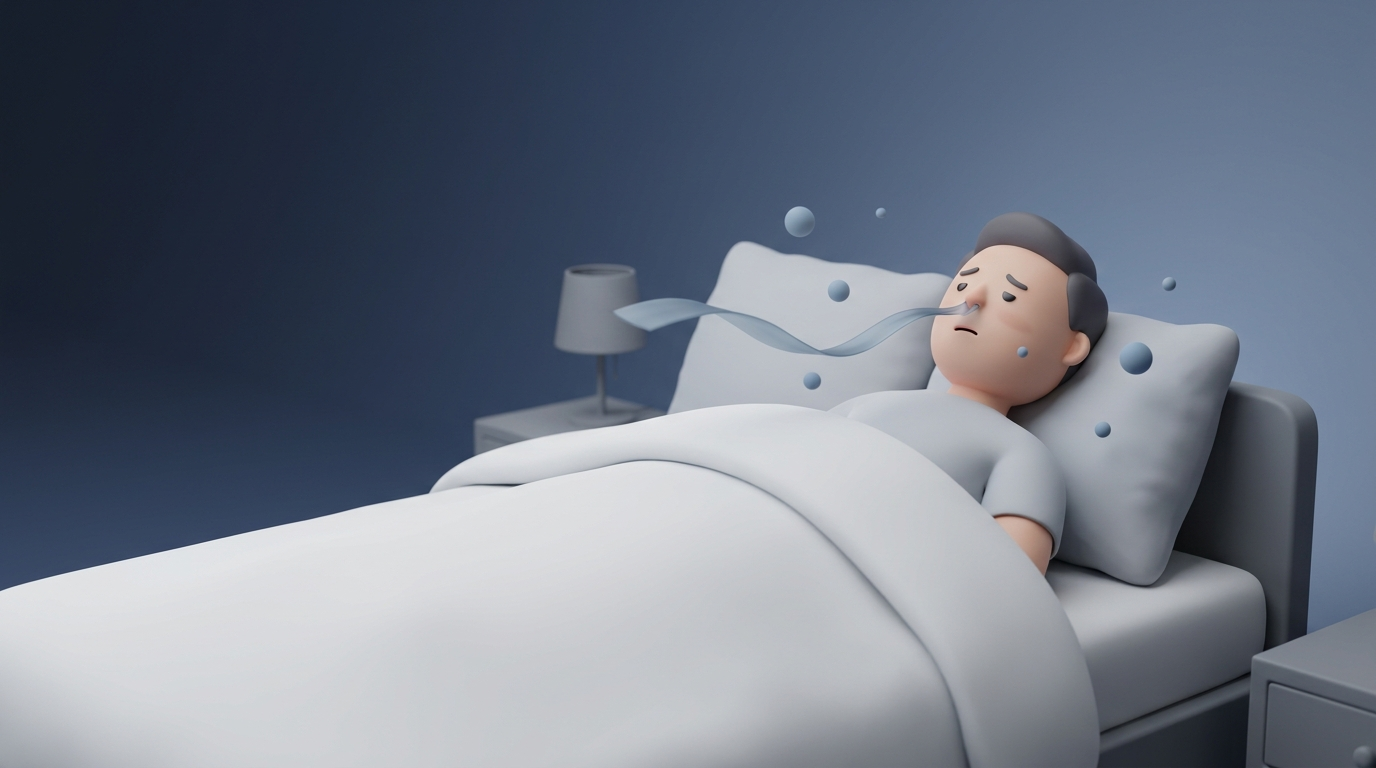
Think of it like trying to sleep while breathing through a narrow straw: even if you do fall asleep, your body may keep “checking” your breathing and nudging you into lighter sleep. Over time, that adds up—more fatigue, more frustration, and sometimes more snoring.
This guide covers the symptoms to watch for, why it happens, how it can affect your health, and practical, low-risk steps that may support allergy relief for better sleep.
Table of contents
- What Counts as “Chronic Allergies” (and Why They’re So Disruptive at Night)
- Symptoms: How to Tell If Allergies Are Stealing Your Sleep
- Causes: The Mechanisms Linking Chronic Allergies to Poor Sleep
- Allergies and Sleep Disorders: What the Research Shows
- Effects of Ongoing Sleep Deprivation (Why It Matters to Treat Both)
- Relief Tips You Can Try Tonight (Practical, Low-Risk Steps)
- Medical Treatments That Can Improve Sleep by Treating the Allergy Source
- If Snoring or Sleep Apnea Is Part of the Problem
- When to See a Doctor (and Which Type)
- FAQs
What Counts as “Chronic Allergies” (and Why They’re So Disruptive at Night)
Allergic rhinitis (hay fever) vs. other chronic allergy patterns: “Chronic allergies” usually means symptoms that show up most days for weeks or months at a time. The most common pattern is allergic rhinitis, often called hay fever. For a quick explanation, see: https://sleepandsinuscenters.com/blog/what-is-allergic-rhinitis-hay-fever
Chronic symptoms may be: - Seasonal (for example, pollen peaks in spring/fall) - Perennial (year-round) (often tied to indoor triggers)
Common triggers include: - Pollen - Dust mites - Pet dander - Mold
A common “chronic” scenario looks like this: spring pollen starts the symptoms, then indoor triggers (dust, dander, or mold) keep them going even after the season changes.
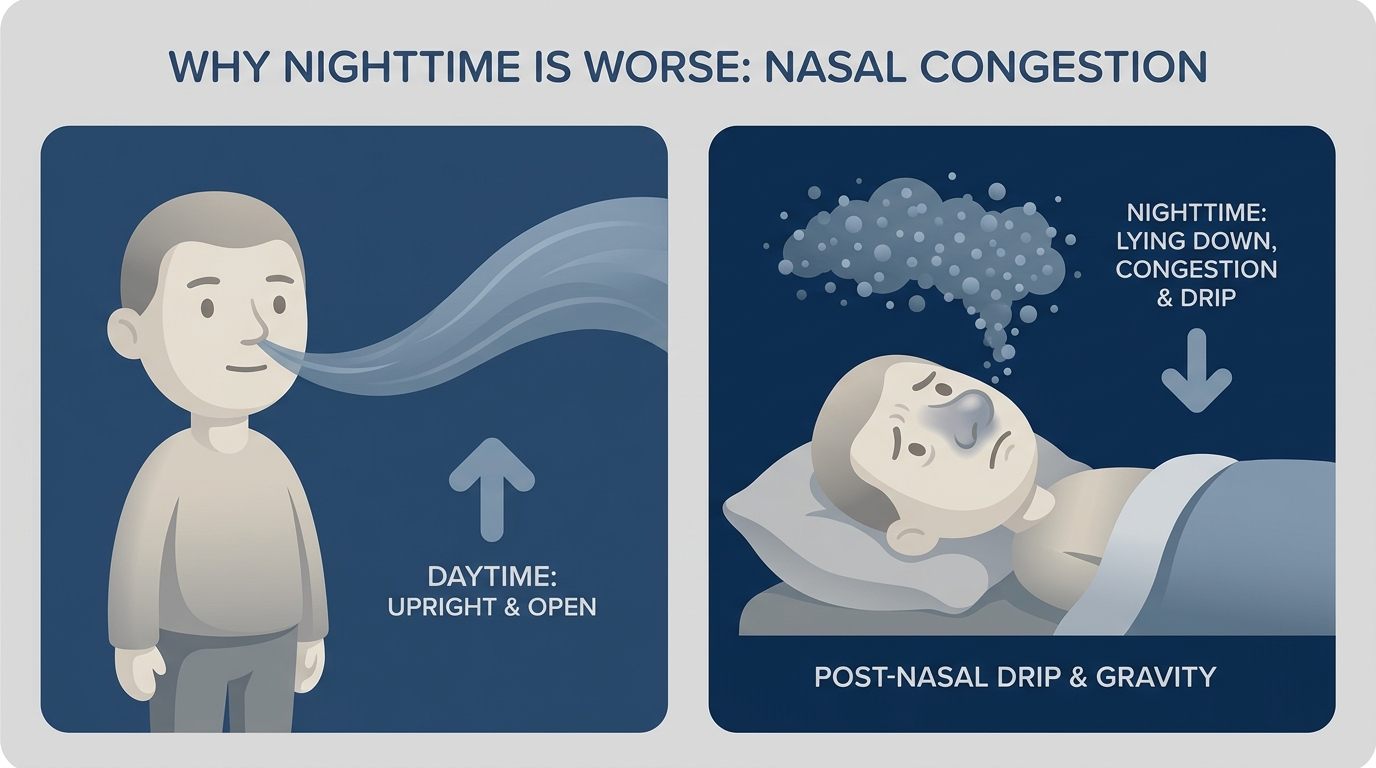
Why nighttime is often worse: Many people notice nasal congestion at night even when daytime symptoms feel manageable. A few common reasons: - Lying down can increase the sensation of congestion and post-nasal drip. - Bedroom exposure may be higher than you think (bedding, carpet, upholstered furniture, or pets in sleeping areas). - Indoor air (humidity, dust, and mold) can compound symptoms overnight. Read more: https://sleepandsinuscenters.com/blog/why-allergies-get-worse-at-night-causes-and-relief-tips (Sleep Foundation, 2026: https://www.sleepfoundation.org/allergies-and-sleep)
In short, even “mild” allergies can intensify at night because bedrooms concentrate exposure and lying down worsens congestion.
Symptoms: How to Tell If Allergies Are Stealing Your Sleep
When chronic allergy symptoms and sleep deprivation occur together, it’s not always obvious which came first. These symptom clusters can help you connect the dots—especially if your nights are “long,” but not restful.
Nighttime symptoms: - Stuffy nose and mouth breathing - Post-nasal drip or a “tickle” in the throat - Coughing or throat clearing at night - Itchy nose/eyes that wake you up - Restless sleep or frequent awakenings
These issues can also contribute to snoring from allergies, especially when congestion forces mouth breathing. Many people describe: “I fall asleep fine, but I keep waking up because I can’t breathe through my nose.”
Sleep-deprivation symptoms the next day: - Persistent daytime sleepiness from allergies - Brain fog, irritability, low energy - Sometimes, morning headaches
To measure sleepiness, try the Epworth Sleepiness Scale: https://sleepandsinuscenters.com/blog/epworth-sleepiness-scale-a-complete-guide-to-understanding-daytime-sleepiness
Red flags that suggest a sleep disorder (not “just allergies”): - Loud snoring most nights - Waking up gasping or choking - Witnessed pauses in breathing - Falling asleep easily during quiet daytime activities
These can overlap with allergies and sleep apnea. Sources: Sleep Foundation, 2026: https://www.sleepfoundation.org/allergies-and-sleep; ResMed, 2024: https://www.resmed.com/en-us/sleep-health/blog/allergies-and-sleep-apnea-how-are-they-connected/ Related overview: https://sleepandsinuscenters.com/snoring-sleep-apnea-treatment
If nighttime nasal blockage and daytime grogginess travel together, allergies may be undermining your sleep.

Causes: The Mechanisms Linking Chronic Allergies to Poor Sleep
Understanding the “why” behind chronic allergy symptoms and sleep deprivation can make it easier to choose the right next steps—and avoid treating the wrong problem.
Nasal congestion → harder breathing → fragmented sleep: When your nose is blocked, your body has to work harder to move air—especially during sleep. This can lead to: - Longer sleep latency (taking longer to fall asleep) - More micro-awakenings (brief arousals you may not remember) - Lighter, less restorative sleep overall
Upper airway inflammation and swelling: Allergic inflammation can narrow the nasal and upper airway, which may contribute to: - Snoring - More disrupted breathing during sleep - Less comfortable sleep if you already have sleep-disordered breathing
The allergy–sleep deprivation cycle: - Poor sleep may lower your tolerance for symptoms and make discomfort feel more intense. - Ongoing nighttime congestion keeps sleep disrupted, reinforcing the cycle. (PLOS ONE, 2020: https://journals.plos.org/plosone/article?id=10.1371/journal.pone.0228533; PMC/NCBI, 2022: https://pmc.ncbi.nlm.nih.gov/articles/PMC8941730/)
Bottom line: inflamed, narrowed nasal passages make sleep lighter and choppier—often without obvious awakenings.

Allergies and Sleep Disorders: What the Research Shows
Allergic rhinitis and sleep disturbance: Studies link allergic rhinitis with poorer sleep quality and longer time to fall asleep. (PLOS ONE, 2020) Related reading: https://sleepandsinuscenters.com/blog/chronic-allergic-rhinitis-and-its-impact-on-sleep-quality
Increased risk of snoring and obstructive sleep apnea (OSA): Chronic congestion plus airway inflammation can increase breathing resistance at night. This may: - Increase snoring - Worsen existing OSA - Make PAP therapy less comfortable if nasal breathing is difficult (PMC/NCBI, 2022; ResMed, 2024)
Association with insomnia and daytime sleepiness: - Difficulty falling asleep because you can’t breathe comfortably - Repeated awakenings from congestion, coughing, or itching - Feeling unrefreshed after “enough” hours in bed (Sleep Foundation, 2026; PLOS ONE, 2020; PMC/NCBI, 2022)
Takeaway: treating rhinitis can reduce snoring risk and uncover hidden sleep disorders.
Effects of Ongoing Sleep Deprivation (Why It Matters to Treat Both)
Short-term effects: - Mood changes, irritability, stress sensitivity - Reduced concentration and memory - Lower productivity and quality of life
Longer-term risks (when disruption is frequent): - More persistent insomnia patterns - Compounded risk if undiagnosed OSA is present (PLOS ONE, 2020; Sleep Foundation, 2026)
Put simply, neglected sleep loss from allergies chips away at mood, cognition, and long-term health.
Relief Tips You Can Try Tonight (Practical, Low-Risk Steps)
These steps are not a substitute for medical care, but many people find they support allergy relief for better sleep, especially when used consistently. (Sleep Foundation, 2026)
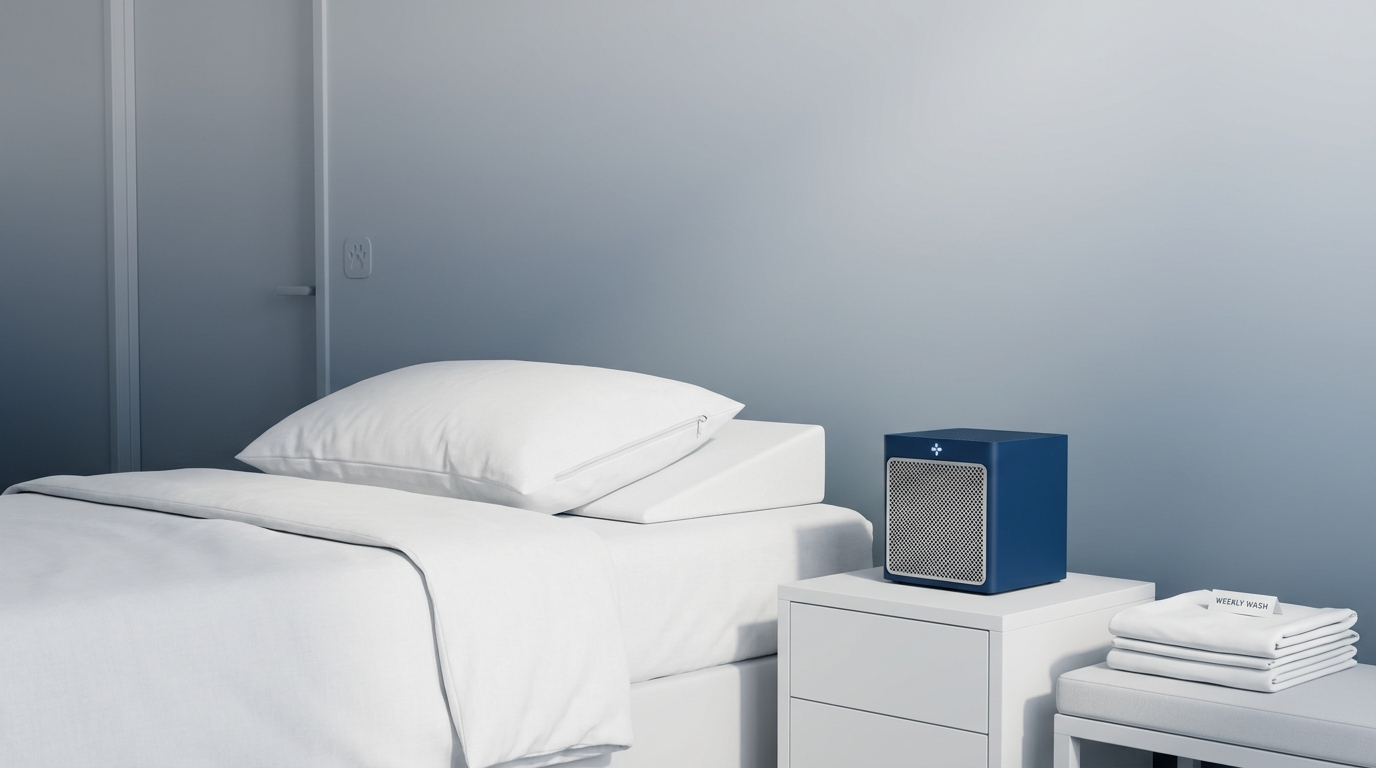
Bedroom allergen control (high-impact for many): - Wash bedding weekly in hot water (as fabric allows) - Consider allergen covers for pillows and mattresses - Keep pets out of the bedroom (or at least off the bed) - Reduce dust collectors (extra pillows, heavy drapes, clutter) - Consider HEPA filtration if indoor triggers are suspected
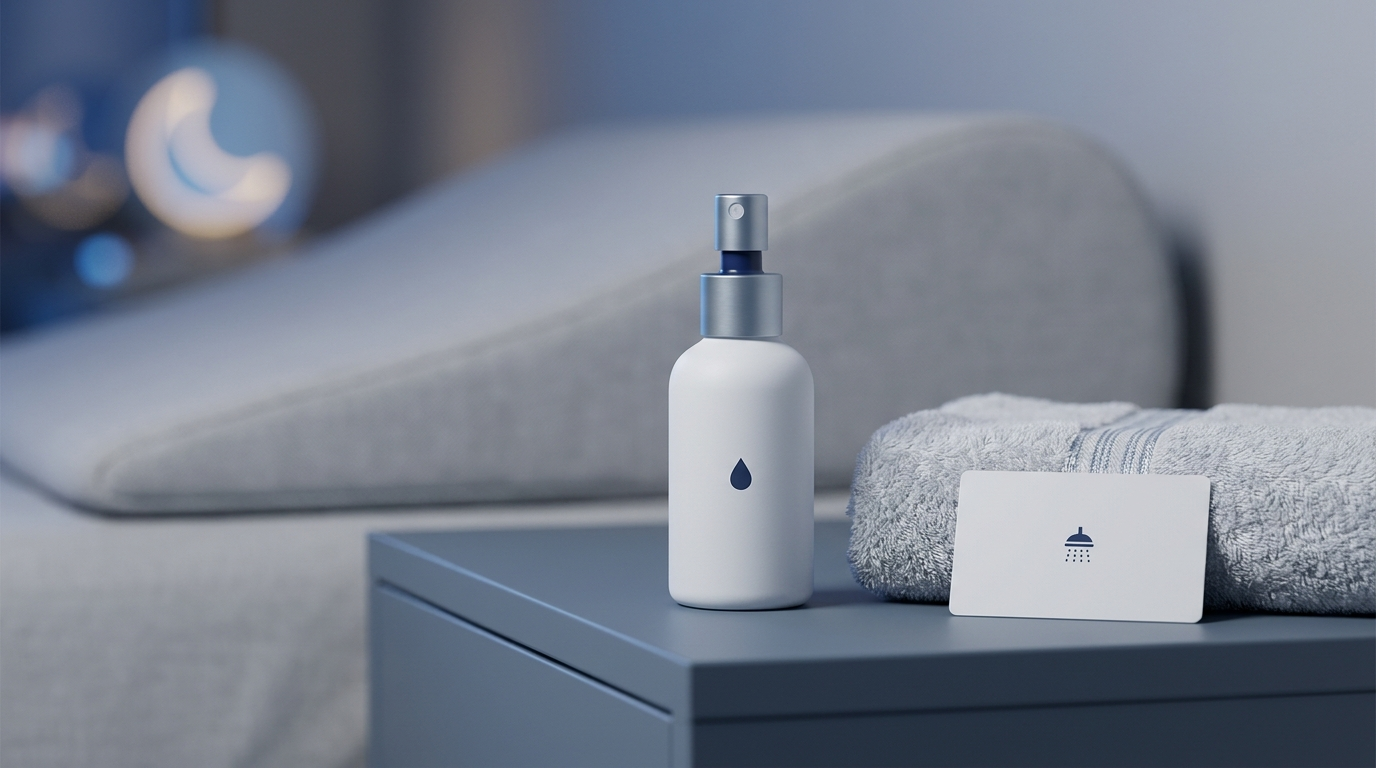
Reduce nighttime nasal congestion: - Saline rinse or saline spray before bed (if tolerated) - Shower and change clothes in the evening during high pollen days - Slightly elevate your head to reduce congestion and post-nasal drip sensation
Timing strategies: Some people notice symptom differences based on when they take medication (product-dependent). Learn more: https://sleepandsinuscenters.com/blog/best-times-to-take-allergy-medicine-morning-vs-night
Simple 1–2 week diary: - Night symptoms? - Sleep latency? - Awakenings? - Next-day energy? Use this Allergy + Sleep Symptom Tracker: Day / Evening exposure / Nasal congestion (0–10) / Awakenings (#) / Snoring noted? / Morning energy (0–10)
Small, consistent environmental and nasal care steps can noticeably improve sleep within days to weeks.
Medical Treatments That Can Improve Sleep by Treating the Allergy Source
This section is educational—treatment choices depend on your history, other conditions, and the exact cause of symptoms.
First-line options commonly used for allergic rhinitis: - Intranasal corticosteroid sprays (often most effective with consistent use) - Non-drowsy antihistamines (individual response varies) - Leukotriene modifiers (selected patients) - Short-term decongestants (risk of side effects and rebound with certain nasal sprays)
When allergy testing changes the game: If symptoms are frequent, confusing, or not responding, testing can clarify triggers and guide care. Learn more: https://sleepandsinuscenters.com/allergy-testing
Immunotherapy for long-term control: Allergy shots or sublingual options may reduce sensitivity over time and lower symptom burden. (Sleep Foundation, 2026; PMC/NCBI, 2022)
The right treatment mix targets your triggers, eases nasal resistance, and protects your sleep.
If Snoring or Sleep Apnea Is Part of the Problem
How to tell when snoring needs evaluation: Concerning signs include - Daytime sleepiness - Morning headaches - Witnessed apneas or gasping - High blood pressure or cardiometabolic risks
Why untreated nasal blockage can worsen OSA risk and sleep quality: Nasal obstruction can increase upper-airway resistance, worsening fragmentation and, in OSA, breathing disruptions. (PMC/NCBI, 2022; ResMed, 2024)
Treatment pathways (overview): - Sleep testing (home vs. lab) - CPAP/APAP, oral appliance therapy, positional therapy - ENT evaluation if nasal obstruction is significant Related services: https://sleepandsinuscenters.com/snoring-sleep-apnea-treatment
If congestion, snoring, and fatigue cluster together, test for sleep apnea rather than guessing.
When to See a Doctor (and Which Type)
Make an appointment if you have: - Allergy symptoms most days for weeks/months - Persistent insomnia despite basic sleep hygiene - Regular snoring or suspected apnea - Concerns about overuse of decongestants or rebound congestion
Who can help: - ENT or sleep specialist for nasal obstruction and sleep-disordered breathing - Allergist for testing and immunotherapy planning
If symptoms steal sleep more than a few nights a week, it’s time to get evaluated.
FAQs
Q: Can allergies really cause insomnia? A: Yes. Congestion, itching, and inflammation can delay sleep onset and fragment sleep. (Sleep Foundation, 2026: https://www.sleepfoundation.org/allergies-and-sleep)
Q: Can chronic allergies cause sleep apnea? A: They can increase risk by contributing to nasal obstruction and upper-airway inflammation, and may worsen existing OSA. (ResMed, 2024: https://www.resmed.com/en-us/sleep-health/blog/allergies-and-sleep-apnea-how-are-they-connected/)
Q: Why do I feel tired even after 8 hours if I have allergies? A: You may spend enough time in bed, but sleep quality can be poor due to micro-awakenings and breathing disruption. (PLOS ONE, 2020; PMC/NCBI, 2022: https://pmc.ncbi.nlm.nih.gov/articles/PMC8941730/)
Q: What’s the fastest safe way to sleep with a blocked nose? A: Many people start with saline spray/rinse (if tolerated), an evening shower during high pollen days, reducing bedroom allergens, and slight head elevation. Seek evaluation if symptoms are severe or paired with breathing red flags. (Sleep Foundation, 2026)
Q: When should I consider allergy testing? A: If symptoms are frequent, affect sleep/quality of life, or don’t respond to a reasonable plan. Learn more: https://sleepandsinuscenters.com/allergy-testing
Address the nose at night, and your sleep often follows.
Conclusion + Next Steps
When allergies become constant, chronic allergy symptoms and sleep deprivation can turn into a self-reinforcing cycle—congestion disrupts sleep, and poor sleep makes symptoms harder to handle. The good news is that improving nighttime breathing and addressing triggers often improves sleep quality, energy, and overall well-being.
If you’re dealing with persistent insomnia, loud snoring, or possible apnea—especially alongside chronic congestion—consider scheduling an evaluation so both allergy and sleep contributors can be assessed together.
Ready to get answers? Book an appointment with Sleep and Sinus Centers of Georgia: https://www.sleepandsinuscenters.com/
Medical disclaimer: This article is for educational purposes only and does not replace personalized medical advice, diagnosis, or treatment. If you have severe symptoms or breathing concerns, seek care from a qualified clinician.
Don’t let allergies slow you down. Schedule a comprehensive ENT and allergy evaluation at Sleep and Sinus Centers of Georgia. We’re here to find your triggers and guide you toward lasting relief.