Eosinophilic Esophagitis (EoE) Throat Symptoms: Causes, Signs, and Treatment
Throat sensations can be unsettling—especially when they show up during meals. While eosinophilic esophagitis (EoE) is a condition of the esophagus (the tube carrying food to the stomach), some people experience throat sensations that make it feel like the problem is “higher up.” This guide explains EoE throat symptoms, what else commonly happens with EoE, how it’s diagnosed, and what treatments are used to control inflammation and reduce complications.
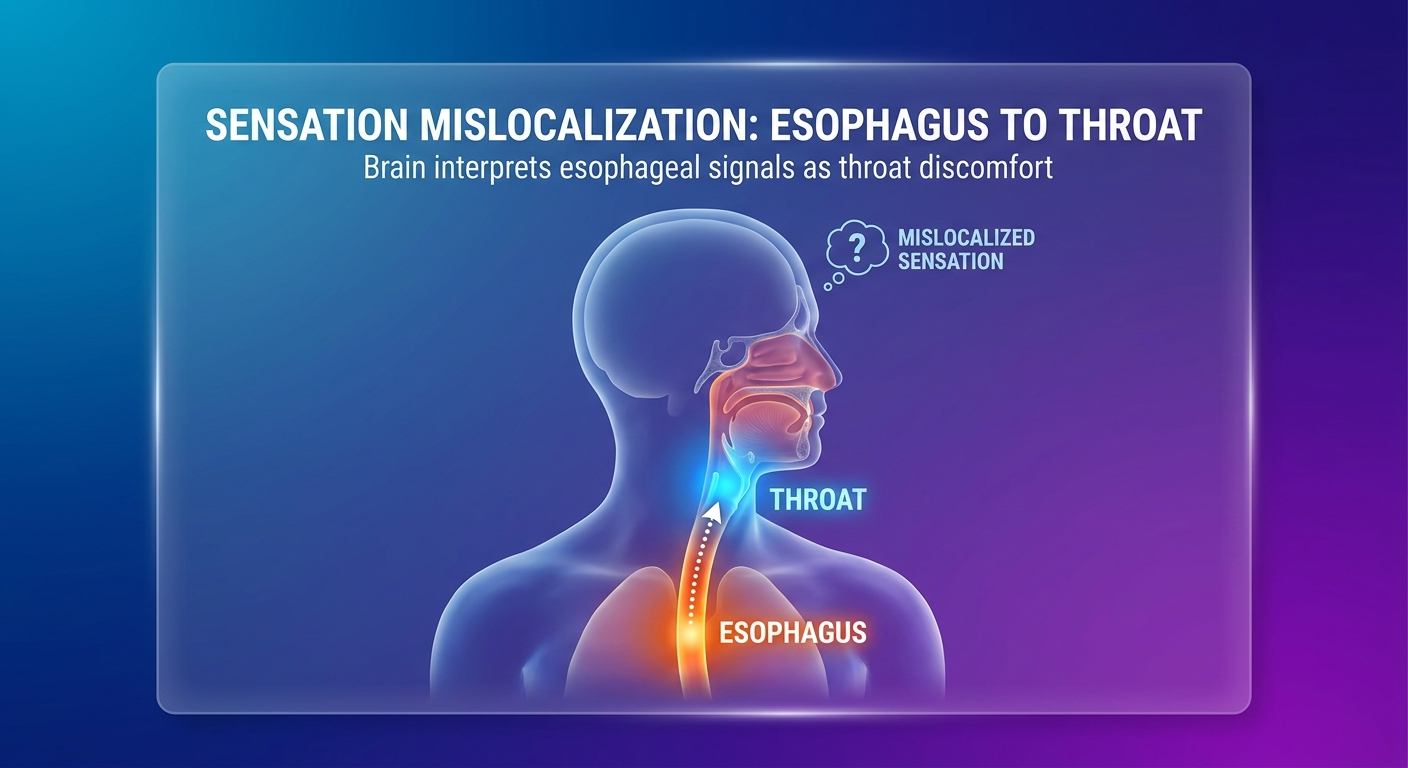
A useful way to think about EoE: the inflammation is in the “food tube,” but the sensation map your brain uses doesn’t always pinpoint the exact spot—so discomfort can be felt in the neck/throat even when the issue is in the upper esophagus.
Quick take: can EoE cause throat symptoms?
Yes—EoE can produce sensations that are perceived in the throat. EoE is inflammation inside the esophagus, but the upper esophagus sits just behind the throat, and irritation there can be felt as:
- Globus sensation (a lump in the throat)
- A lump-in-throat feeling after eating
- An itchy or scratchy feeling while eating
- A sense of “tightness” when swallowing
However, the most classic EoE clues in teens and adults are difficulty swallowing (dysphagia) and food sticking in the throat or chest—especially with dry, dense foods like bread or meat. These sensations are nonspecific and have many causes; EoE is only one possibility.
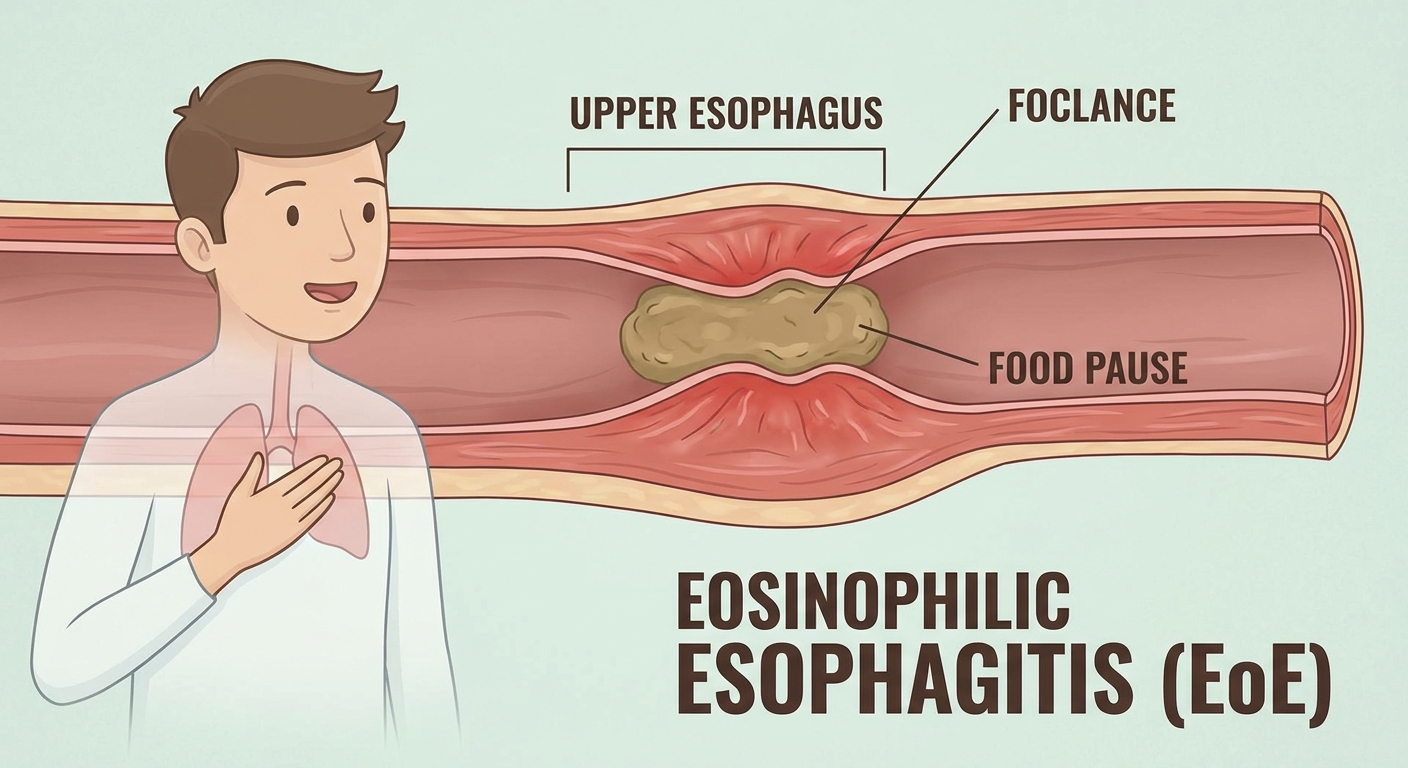
A common patient description is: “It feels like food pauses right at the base of my throat.” Clinically, that “pause” is often the upper esophagus rather than the throat itself.
What is eosinophilic esophagitis (EoE)?
EoE is a chronic, immune-mediated condition where a type of white blood cell called an eosinophil builds up in the lining of the esophagus. Over time, this can cause swelling, sensitivity, and (in some people) scarring or narrowing. EoE is often associated with allergic conditions—like asthma, eczema, or seasonal allergies—but it can also occur without a strong allergy history.
Why EoE can “feel” like a throat problem
Even though EoE affects the esophagus, symptoms aren’t always felt exactly where the inflammation is. The upper esophagus can trigger sensations that feel like they’re in the throat—especially during swallowing. EoE symptoms also overlap with reflux-related throat irritation and ENT conditions, which is why people often search for EoE throat symptoms when the main complaint feels like a “stuck” sensation in the neck.
If you want a deeper dive into globus and its many causes, see our related guide on globus sensation (lump in throat): https://sleepandsinuscenters.com/blog/globus-sensation-explained-causes-symptoms-and-treatment-guide.
EoE is inflammation in the esophagus that can be perceived as throat discomfort, but symptoms alone don’t reveal the exact source.
EoE throat symptoms (what people commonly notice)
Common throat-related complaints people report include:
- Globus sensation (lump in throat)
- Lump-in-throat feeling after eating
- Itchy or scratchy throat while eating
- Throat “tightness” during swallowing
- A need to clear the throat or cough during meals (sometimes)
Important context: These sensations are nonspecific and occur in many conditions (reflux, post-nasal drip, muscle tension, and others). EoE is only one possibility.
Globus sensation (lump in the throat)
Globus sensation is the feeling that something is stuck in the throat—even when you’re just swallowing saliva. It may come and go, and some people notice it more during or after meals. Because globus has many possible causes, EoE is just one item on a longer list. Learn more: https://sleepandsinuscenters.com/blog/globus-sensation-explained-causes-symptoms-and-treatment-guide.
Itchy throat while eating
Some people describe EoE as an irritation or itchy throat while eating, especially with certain foods or textures. A scratchy feeling with dry chicken or crusty bread may show up repeatedly, while softer foods go down more easily. This can be confusing because “itching” also happens with immediate (IgE-mediated) food allergy reactions. A helpful distinction: classic immediate allergy symptoms often appear quickly and may include hives, lip/tongue swelling, wheezing, or rapid-onset vomiting. EoE is usually more chronic and pattern-based—with swallowing problems that may build over time. It’s also possible to have both EoE and IgE-mediated food allergies, which is one reason evaluation can be multi-step.
Throat discomfort vs. true swallowing trouble
People often say “my throat feels tight,” but clinically the issue may be esophageal dysphagia (trouble moving food down the esophagus). A simple self-check some people find useful:
- If food feels stuck behind the breastbone, it leans esophageal.
- If it feels stuck at the neck, it could be throat-related—or still esophageal, especially if it happens with solid foods.
This does not diagnose the cause; only a medical evaluation can. Also, the location of sensation is unreliable and does not confirm or exclude EoE.
Throat sensations can be part of EoE, but they are nonspecific and should not be used to self-diagnose.
More typical EoE symptoms (often the bigger clue)
Even when throat sensations are present, the most telling pattern is usually related to swallowing and food passage—particularly with solids.
Dysphagia (dominant symptom in teens/adults)
EoE-related dysphagia often shows up as trouble swallowing solid foods. People may:
- Chew excessively
- Take very small bites
- Eat slowly compared with others
- Avoid certain textures
Some patients don’t label this as “difficulty swallowing” at first—they describe it as being a “picky eater,” needing extra water with meals, or avoiding restaurants because eating feels stressful. For a broader explanation of swallowing symptoms and workup concepts, read our guide on difficulty swallowing (dysphagia): https://sleepandsinuscenters.com/blog/what-is-difficulty-swallowing-dysphagia.

Food sticking (and food impaction)
A common description is “food sticking in throat” (or chest), especially with:
- Bread, rice, chicken, steak
- Dry or dense foods
Sometimes food becomes fully stuck—this is called a food impaction and can require urgent endoscopic removal. Recurrent “sticking” is a warning sign that may reflect inflammation and/or narrowing that needs targeted therapy.
Reflux-like symptoms that don’t fully respond to typical reflux care
Heartburn or regurgitation can occur in EoE, and EoE and GERD can also coexist. If you’re trying to sort out reflux-related throat symptoms, this comparison may help: https://sleepandsinuscenters.com/blog/lpr-vs-gerd-throat-symptoms-key-differences-and-treatment-guide.
Chest/upper abdominal pain, nausea, vomiting
Some people experience pain, nausea, or vomiting—symptoms that can affect daily routine and quality of life. In real life, these can look like “mystery” stomach episodes that come and go, especially when swallowing symptoms are subtle or minimized.
“Hidden” symptoms that delay diagnosis
EoE can be masked by coping strategies, such as:
- Skipping dry meats or crusty bread
- Cutting food into tiny pieces
- Using extra sauces to help food go down
- Drinking a lot of liquid to “push” food through
These adaptations can make symptoms seem mild—until an episode of significant sticking occurs.
Patterns of solid-food dysphagia and food “sticking” are often the strongest clinical clues for EoE.
What causes EoE (and why symptoms flare)
Immune/allergic inflammation (the core mechanism)
EoE is driven by immune signaling that recruits eosinophils into the esophageal lining. Ongoing inflammation can make the esophagus more reactive and less flexible—like skin that’s repeatedly irritated and becomes more sensitive over time.
Food triggers (common, but individualized)
Many people with EoE have food triggers, but they vary from person to person. Common categories include dairy, wheat, egg, soy/legumes, nuts, and seafood. Importantly, symptoms don’t always happen immediately after eating a trigger food—so the pattern can be hard to spot without a structured plan. If allergy evaluation is part of your care plan, learn more about testing options here: https://sleepandsinuscenters.com/allergy-testing.
Environmental allergens and comorbid atopy
Seasonal allergies, asthma, or eczema can raise suspicion for EoE, but they do not confirm it. Some people notice seasonal worsening, which can add to the “Is this reflux? allergies? something else?” confusion.
Why inflammation can become scarring over time
Untreated inflammation may lead to tissue remodeling, rings, and narrowing. This is when EoE strictures may develop—making food-sticking episodes more frequent and more severe. That’s why treatment focuses on controlling inflammation, not only “managing symptoms.”
EoE reflects chronic immune-driven inflammation; controlling that inflammation helps prevent scarring and narrowing over time.
How EoE is diagnosed (why a scope + biopsy matters)
EoE symptoms are nonspecific—testing is required
Because symptoms overlap with reflux, anxiety-related globus, infections, and motility disorders, EoE can’t be diagnosed by symptoms alone.
Current diagnostic criteria
Diagnosis generally requires both:
- Symptoms of esophageal dysfunction, and
- Biopsy evidence consistent with EoE—commonly referenced as “EoE diagnosis biopsy 15 eosinophils” (at least 15 eosinophils per high-power field on esophageal biopsy)
Other causes of esophageal eosinophilia must also be considered and excluded as appropriate.
What to expect from endoscopy (EGD)
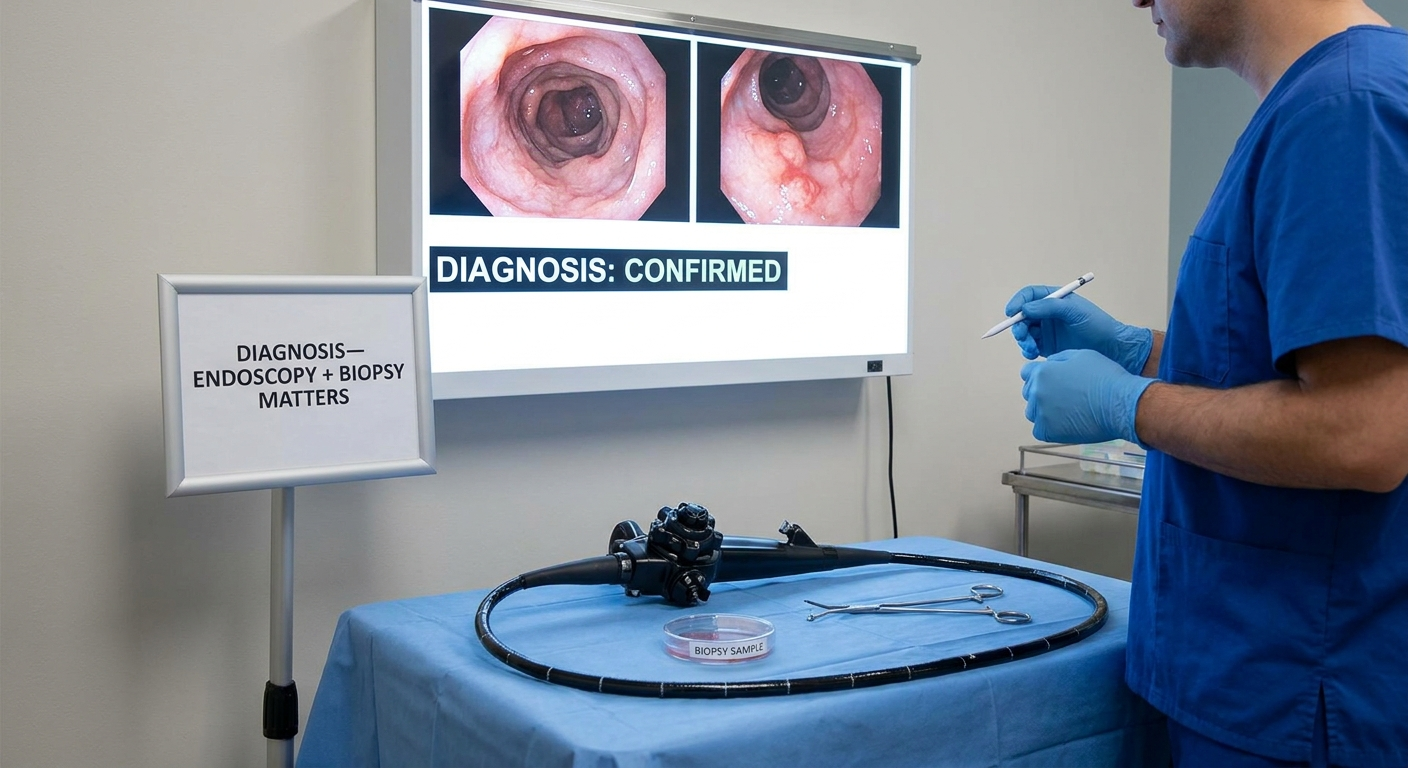
During an EGD, the esophageal lining may show rings, furrows, white plaques/exudates, or narrowing—but visual findings alone are not enough. Multiple biopsies are typically taken because EoE can be patchy. It’s possible to have significant symptoms with subtle-looking tissue (and vice versa), which is why biopsy results matter so much.
Only endoscopy with biopsy can confirm EoE and separate it from look-alike conditions.

Treatment options for EoE (relief + inflammation control)
The overall goals are to improve swallowing and comfort, reduce eosinophilic inflammation, prevent complications (like strictures and impactions), and maintain good nutrition.
Option 1 — Proton pump inhibitors (PPIs)
PPIs can help some people with EoE. Their benefit may involve both acid control and anti-inflammatory effects in the esophagus. Response varies; decisions are individualized and often rechecked with endoscopy and biopsy.
Option 2 — Swallowed topical steroids
A common approach is swallowed steroid treatment (topical corticosteroids used in a way that coats the esophagus rather than acting like an inhaler for the lungs). Examples include swallowed fluticasone or budesonide formulations. A known risk is yeast overgrowth in the mouth (thrush), so technique and mouth care matter (based on clinician instructions).
Option 3 — Food elimination diets (with nutrition support)
An elimination diet for EoE can reduce inflammation for some patients, especially when done in a structured way (often step-up, starting with fewer eliminated foods). Reintroduction is typically planned to identify triggers while protecting nutrition. Because over-restricting can create nutritional gaps, many people benefit from professional nutrition guidance during this process.
Option 4 — Biologic therapy (for selected patients)
Biologic medications may be considered in moderate-to-severe EoE, in refractory disease, or when other approaches are not workable.
Option 5 — Esophageal dilation (when narrowing/strictures are present)
If narrowing or strictures are present, dilation can improve the mechanical passage of food. It does not treat inflammation, so it’s often paired with medical therapy.
Monitoring: symptoms aren’t the whole story
Symptoms can improve even when inflammation persists, which is why follow-up evaluation is sometimes recommended. This is also one reason EoE throat sensations can be misleading—sensations may fade while the underlying process continues.
Treatment focuses on both symptom relief and inflammation control, with plans tailored and rechecked over time.
Lifestyle tips for EoE-related throat and swallowing symptoms
These patient-friendly strategies are commonly discussed for comfort and safety during meals:
Eating strategies to reduce “sticking” episodes
- Take smaller bites and chew thoroughly.
- Slow down, especially with dry foods.
- Use sauces or broths to reduce friction with dense textures.
- Avoid relying on water to force stuck food down; if food will not pass, do not ignore it—seek care rather than repeatedly forcing liquids.
Trigger tracking without over-restriction
A simple log can be helpful: food + texture + speed of eating + symptoms. Try to avoid broad, long-term self-elimination without guidance, since nutrition quality matters.
Reflux-smart habits (helpful for overlap symptoms)
If reflux symptoms overlap, common measures include earlier dinners and minimizing late-night eating. If reflux is a major concern, comparing patterns can help: https://sleepandsinuscenters.com/blog/lpr-vs-gerd-throat-symptoms-key-differences-and-treatment-guide.
When throat symptoms might be “something else”
Persistent throat symptoms can also relate to post-nasal drip/allergies, voice strain, infections, or reflux patterns—so evaluation may look beyond one diagnosis.
Simple meal strategies can improve comfort, but persistent or severe symptoms still need medical evaluation.
When to seek urgent care
Possible food impaction (emergency)
In general, urgent evaluation is appropriate if food feels completely stuck and there is:
- Inability to swallow saliva or drooling
- Severe chest pain
- Repeated retching/gagging
- Inability to keep liquids down
Concerning symptoms that deserve prompt medical review
- Unintentional weight loss
- Progressive dysphagia (worsening over weeks to months)
- Signs of dehydration or poor intake
If food is stuck or swallowing is worsening, seek prompt care—do not wait for symptoms to pass on their own.
FAQs about EoE throat symptoms
Q: Can EoE feel like a lump in my throat?
A: Yes. Globus sensation can be part of the symptom picture, but it’s not specific to EoE. Diagnosis still requires endoscopy and biopsy.
Q: Is EoE the same as acid reflux (GERD)?
A: No. They can overlap, but EoE is defined by eosinophilic inflammation on biopsy (often summarized as “EoE diagnosis biopsy 15 eosinophils”), while GERD is not.
Q: If my throat itches while eating, is that EoE or a food allergy?
A: It can be either—and sometimes both. Immediate allergy reactions tend to be rapid and may include skin or breathing symptoms, while EoE is typically chronic and linked to swallowing dysfunction.
Q: Do symptoms always match what the biopsy shows?
A: Not always. Some people feel better before inflammation fully resolves, which is why monitoring may involve more than symptom tracking alone.
Q: Can EoE go away?
A: Many patients achieve good control or remission with the right plan, but long-term management is often needed to reduce flares and prevent complications like EoE strictures or food impaction.
Related reading from Sleep and Sinus Centers of Georgia
- Globus sensation (lump in throat): https://sleepandsinuscenters.com/blog/globus-sensation-explained-causes-symptoms-and-treatment-guide
- Difficulty swallowing (dysphagia): https://sleepandsinuscenters.com/blog/what-is-difficulty-swallowing-dysphagia
- LPR vs GERD throat symptoms: https://sleepandsinuscenters.com/blog/lpr-vs-gerd-throat-symptoms-key-differences-and-treatment-guide
- Allergy testing: https://sleepandsinuscenters.com/allergy-testing
Conclusion / next steps
EoE throat symptoms—like a lump sensation or itching while eating—can occur, but the biggest clues are usually EoE dysphagia, repeated food sticking, and patterns of food avoidance or “workarounds” at meals. Because symptoms overlap with reflux and other throat conditions, confirmation typically depends on endoscopy with biopsy.
If you’re trying to make sense of persistent throat or swallowing symptoms, Sleep and Sinus Centers of Georgia can help coordinate evaluation and guide next steps. To book an appointment, visit https://www.sleepandsinuscenters.com/.
Sources
- American College of Gastroenterology (ACG) Clinical Guideline: Diagnosis and Management of Eosinophilic Esophagitis. The American Journal of Gastroenterology. 2023.
- AGA/AAAAI/ACAAI Joint Task Force Clinical Guidelines for the Management of Eosinophilic Esophagitis. 2020.
This article is for educational purposes only and is not medical advice. Please consult a qualified healthcare provider for diagnosis and treatment.
If you have urgent symptoms (such as suspected food impaction), seek emergency care.
Don’t let allergies slow you down. Schedule a comprehensive ENT and allergy evaluation at Sleep and Sinus Centers of Georgia. We’re here to find your triggers and guide you toward lasting relief.