Symptoms of Nasal Polyps: Common Signs, Causes, and When to See a Doctor
Introduction — Why Symptoms of Nasal Polyps Are Easy to Miss
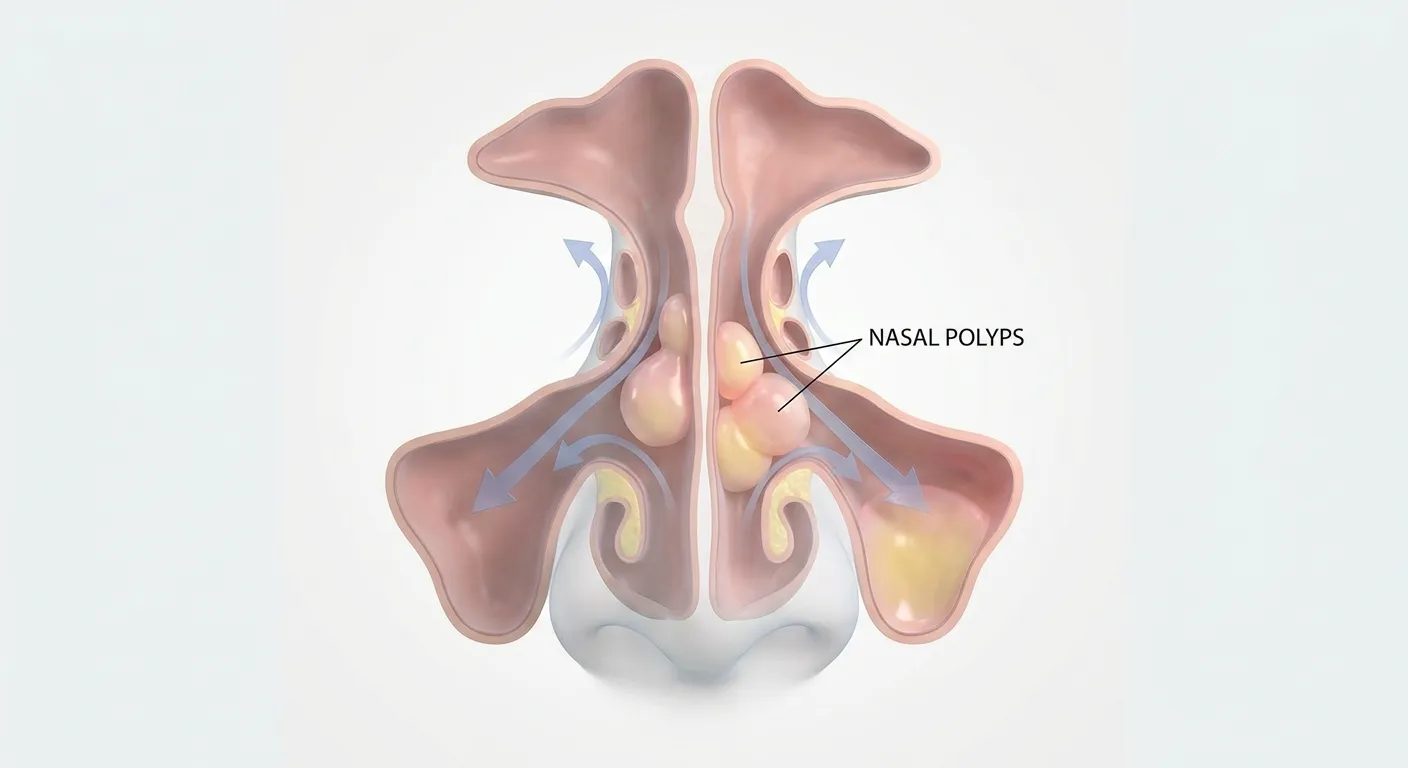
Nasal polyps (sometimes called “sinus polyps”) are noncancerous growths that can form in the lining of the nasal passages and near the openings of the sinuses. When they enlarge, they can block airflow and interfere with normal drainage—often causing symptoms that resemble allergies or chronic sinusitis.
That overlap is a big reason symptoms of nasal polyps can be easy to dismiss. Many people assume they’re dealing with “just a lingering cold,” seasonal allergies, or another routine sinus infection—especially when symptoms build gradually.
Major medical references, including Mayo Clinic, describe nasal polyps as closely tied to ongoing inflammation and commonly associated with long-lasting congestion, reduced smell, and recurring sinus issues. Source: https://www.mayoclinic.org/diseases-conditions/nasal-polyps/symptoms-causes/syc-20351888
If your “allergies” never fully clear, nasal polyps could be part of the picture.
What Are Nasal Polyps?
Where they form and what they do
Polyps can develop in the nasal cavity or near the openings of the sinuses, where they may obstruct the narrow pathways that ventilate and drain the sinuses. Think of the sinuses draining through small channels—polyps can act like a soft plug that narrows those exits.
When drainage is impaired, mucus can build up—contributing to chronic nasal congestion, pressure, and recurrent inflammation. Overview: https://my.clevelandclinic.org/health/diseases/15250-nasal-polyps
For a deeper explainer, see our guide on what nasal polyps are: https://sleepandsinuscenters.com/blog/what-are-nasal-polyps
Are nasal polyps cancerous?
Nasal polyps are typically benign (noncancerous). Still, symptoms that are unusual, persistent, or mainly on one side deserve evaluation, since not every nasal blockage is a polyp.
Most blockages aren’t dangerous, but persistent or one-sided symptoms should be checked.

Symptoms of Nasal Polyps — The Most Common Signs
Many people experience a slow build: mild stuffiness turns into “always stuffed up,” and smell gradually fades. You might also notice more mouth breathing at night, or that usual allergy medications don’t fully help.
Below is a skimmable checklist of common symptoms of nasal polyps.
Symptom checklist (quick scan)
- Ongoing nasal blockage or trouble breathing through your nose
- Runny nose and postnasal drip
- Loss of smell, with reduced taste perception
- Facial pressure or a sense of fullness (this can also occur with other sinus conditions)
- Recurrent or lingering sinus symptoms/inflammation, sometimes with infections
- Less common symptoms include nosebleeds, bad breath, fatigue, and poor sleep
(References: Mayo Clinic and Cleveland Clinic links above.)

Nasal obstruction and chronic congestion (most common)
A persistent, “blocked” nose is often the top complaint. Polyps take up space and can physically restrict airflow, leading to:
- Difficulty breathing through the nose
- Mouth breathing, especially at night
- Snoring or fragmented sleep due to obstruction
In clinic, a common report is: “I can breathe through my nose sometimes—but it’s never consistently clear.” Both Mayo Clinic and Cleveland Clinic describe congestion and obstruction as hallmark symptoms. (Sources: Mayo Clinic; Cleveland Clinic.)
Runny nose and postnasal drip
Some people notice constant drainage rather than a dry blockage. Postnasal drip often feels like mucus collecting in the throat—like you need to swallow or clear your throat repeatedly. It can trigger:
- Frequent throat clearing
- Hoarseness
- Cough, often worse at night or when lying down
For more detail, read our article on postnasal drip causes and treatments: https://sleepandsinuscenters.com/blog/post-nasal-drip-causes-symptoms-and-effective-treatments
(Sources: Mayo Clinic; Cleveland Clinic.)

Loss of smell (anosmia) and reduced taste
A reduced or absent sense of smell is a common “signature” complaint. Because flavor perception depends heavily on smell, loss of smell frequently leads to reduced taste perception.
A practical example: you may still detect “sweet” or “salty,” but foods seem flat because aromatics (coffee, garlic, citrus, smoke) aren’t coming through. If foods seem bland or you can’t detect odors well, it may be more than seasonal allergies. (Sources: Mayo Clinic; Cleveland Clinic.)
Facial pressure, headaches, and “fullness”
When sinus openings are blocked, pressure may build and create a heavy or full sensation in the face. Some people describe:
- Pressure around the cheeks, eyes, or forehead
- Headache-like discomfort that may occur, often related to pressure or sinus inflammation
While many conditions can cause facial pressure, it’s commonly discussed in overviews of nasal polyps due to impaired drainage. (Sources: Cleveland Clinic; Mayo Clinic.)
Recurrent or lingering sinus problems
Polyps can contribute to a cycle of obstruction → poor drainage → inflammation, which may increase the likelihood of symptoms that:
- Keep coming back
- Improve temporarily, then return
- Feel like chronic sinus issues rather than a short illness
If it feels like you’re always “almost better,” but never fully clear, it’s worth getting evaluated. (Sources: Mayo Clinic; Cleveland Clinic.)
Less common symptoms
Less typical (but possible) features include:
- Occasional nosebleeds
- Bad breath
- Fatigue or poor sleep quality related to chronic mouth breathing
(Symptom profile/complications discussed by Mayo Clinic.)
Long-lasting congestion plus smell loss are among the strongest clues for nasal polyps.
Symptoms That Suggest a Complication (or a Different Problem)
Red-flag symptoms — seek urgent care
Some symptoms should be evaluated promptly because they can indicate a serious infection or complication (not necessarily polyps). Seek urgent medical care for:
- High fever
- Severe swelling around the eyes or forehead
- Vision changes
- Severe headache, stiff neck, or confusion
When it might not be polyps
Consider an evaluation if symptoms are:
- One-sided only
- Rapidly worsening
- Associated with frequent bleeding or a visible or growing mass
These patterns don’t confirm a specific diagnosis, but they are good reasons to get checked.
If something feels new, severe, or one-sided, don’t wait to get care.
What Causes Nasal Polyps?
Chronic inflammation is the common pathway
Most reputable medical overviews describe polyps as being strongly associated with ongoing inflammation in the nasal and sinus lining. In other words, polyps are often a downstream effect of tissue that stays irritated and swollen over time. (Sources: Mayo Clinic; Cleveland Clinic.)
Common conditions linked to nasal polyps
Nasal polyps are often seen alongside:
- Chronic rhinosinusitis (chronic sinusitis)
- Allergic rhinitis (allergies)
- Asthma
- Aspirin sensitivity / AERD (aspirin-exacerbated respiratory disease) in some individuals
The Asthma and Allergy Foundation of America (AAFA) also notes the connection between nasal polyps and asthma-related inflammation. Source: https://aafa.org/asthma/asthma-triggers-causes/health-conditions-that-trigger-asthma/nasal-polyps/
If chronic sinus inflammation is a recurring theme for you, you may also find this helpful: https://sleepandsinuscenters.com/chronic-sinusitis
Risk factors that can make symptoms worse
Factors that may intensify inflammation and symptoms include:
- Environmental irritants (smoke, strong fragrances, pollutants)
- Poorly controlled allergies or asthma
- Recurrent infections
- Family history (in some cases)
(Reference: Mayo Clinic overview.)
Addressing the sources of inflammation is central to long-term relief.
Nasal Polyps vs. Sinus Infection vs. Allergies (Quick Comparison)
Similarities
All three can cause:
- Congestion
- Drainage
- Facial pressure
- Fatigue and sleep disruption
Clues that point more toward nasal polyps
Symptoms that can lean toward polyps (especially if they persist) include:
- Long-lasting congestion
- Reduced smell
- Recurrent or chronic symptoms that don’t fully clear
Quick comparison highlights
- Allergies: Often seasonal or trigger-related; discharge often clear; smell may be reduced during flares; fever is uncommon.
- Sinus infection: Often days to weeks; discharge can be thicker; smell can be reduced; fever is possible.
- Nasal polyps: Often weeks to months; discharge can vary; reduced smell is common; fever is not typical.
A clinician can help differentiate these using your symptom timeline, response to medications, an exam, and sometimes nasal endoscopy or imaging.
Persistent symptoms over weeks to months—especially with reduced smell—lean toward nasal polyps.

When to See a Doctor for Symptoms of Nasal Polyps
Time-based guidance (patient-friendly)
If symptoms persist for more than 10–12 weeks, or keep returning despite reasonable over-the-counter measures, it’s worth a medical evaluation. (Sources: Mayo Clinic; Cleveland Clinic.)
Symptom-based guidance
Consider an evaluation if you have:
- Persistent nasal blockage
- Noticeable loss of smell, with reduced taste perception
- Repeated sinus problems or infections
- Asthma that feels harder to control (AAFA discusses the overlap between nasal polyps and asthma)
Who to see
Many people start with primary care, but ongoing or complex symptoms often benefit from evaluation by an ENT (otolaryngologist). For a deeper overview, see our guide on when you should see an ENT: https://sleepandsinuscenters.com/blog/when-should-i-see-an-ent
If symptoms are chronic, don’t wait—an evaluation can clarify next steps.
How Nasal Polyps Are Diagnosed
Medical history and symptom pattern
Clinicians commonly ask about:
- How long symptoms have been present
- Whether smell has changed
- Frequency of sinus infections or flares
- Allergy/asthma history and triggers
A typical clinician question is, “Is this something that comes and goes—or has it become your new normal?” That timeline can be very telling.
Nasal exam and nasal endoscopy
A nasal exam may be followed by nasal endoscopy, which allows a clearer look inside the nasal cavity and sinus drainage pathways. If you’re curious what to expect, read what a nasal endoscopy is (and if it’s painful): https://sleepandsinuscenters.com/blog/what-is-nasal-endoscopy----and-is-it-painful
Imaging (CT scan) when needed
A CT scan may be used to understand sinus anatomy and the extent of blockage—especially in long-standing symptoms or when planning next steps. (Discussed in Mayo Clinic and Cleveland Clinic overviews.)
Allergy evaluation (when appropriate)
If allergies appear to be a major driver, allergy testing or a treatment plan targeting triggers may be part of the workup.
Diagnosis usually combines your history with a targeted exam—and, when needed, endoscopy or imaging.
Treatment Options for Nasal Polyps (What Actually Helps)
Treatment is individualized, and the goal is to reduce inflammation, improve drainage, and relieve obstruction. Many plans focus on both short-term relief and long-term prevention, since polyps can recur if inflammation remains active.

First-line medical treatments
Common first steps include:
- Nasal corticosteroid sprays to reduce inflammation and help shrink polyps
- Saline rinses to improve mucus clearance and reduce irritation
(Sources: Mayo Clinic; Cleveland Clinic.)
Short-term medications (for flares or severe symptoms)
In selected situations, oral corticosteroids may be used for a limited time to calm severe inflammation. Because side effects are possible, these decisions are personalized. (Sources: Mayo Clinic; Cleveland Clinic.)
Treating underlying drivers
Long-term control often improves when contributors are addressed, such as:
- Allergy management (environmental control and medications when appropriate)
- Asthma optimization (AAFA notes the relationship between nasal polyps and asthma)
When procedures or surgery are considered
If polyps are large, symptoms are severe, or medications aren’t enough, a clinician may discuss procedural options, including endoscopic sinus surgery to remove polyps and improve sinus drainage. (Sources: Mayo Clinic; Cleveland Clinic.)
If you’re exploring non-surgical options, you can also read: https://sleepandsinuscenters.com/blog/can-nasal-polyps-be-removed-without-surgery-non-su-20260315111159
Reducing inflammation is the foundation; procedures are considered when symptoms remain significant.
Lifestyle Tips to Help Manage Symptoms (Alongside Medical Care)
Daily habits that reduce congestion and irritation
- Saline rinses (use sterile/distilled or previously boiled water; keep devices clean)
- Stay well hydrated
- Consider a humidifier if indoor air is dry (clean it regularly)
- Avoid smoke and strong fragrances when possible
(General symptom-management themes align with Mayo Clinic/Cleveland Clinic guidance.)
Allergy-proofing basics (if allergies contribute)
- Reduce bedroom dust (wash bedding, consider allergen covers)
- HEPA filtration if helpful
- Keep windows closed during high pollen days
Sleep tips when you can’t breathe through your nose
- Elevate your head slightly
- Side sleeping may reduce snoring for some people
- Address mouth breathing patterns by tackling congestion and triggers
Small daily steps can make medical treatment work better—and feel better.
FAQs About Symptoms of Nasal Polyps
What do nasal polyps feel like? Many people describe feeling constantly congested, like airflow is restricted, along with pressure and reduced smell—especially when lying down.
Can nasal polyps cause loss of taste? Yes. Because taste depends heavily on smell, loss of smell often leads to reduced taste perception. (Sources: Mayo Clinic; Cleveland Clinic.)
Do nasal polyps cause headaches? They can contribute to headache-like discomfort by increasing pressure when drainage is blocked. (Sources: Cleveland Clinic; Mayo Clinic.)
Can nasal polyps go away on their own? Symptoms may improve with treatment, but polyps can recur if underlying inflammation isn’t controlled. (Sources: Mayo Clinic; Cleveland Clinic.)
Are nasal polyps linked to asthma? Yes—polyps and asthma often occur together, and nasal inflammation and congestion can make breathing through the nose more difficult. (Source: AAFA.)
When is surgery necessary? Surgery may be considered when symptoms remain significant despite medical therapy or when blockage is substantial. (Sources: Mayo Clinic; Cleveland Clinic.)
Conclusion — Takeaway Checklist and Next Step
Common symptoms of nasal polyps include chronic nasal congestion, runny nose or postnasal drip, loss of smell with reduced taste perception, facial pressure, and recurring sinus problems. (Sources: Mayo Clinic; Cleveland Clinic.)
If symptoms are persistent, disruptive to sleep or breathing, or keep coming back, an evaluation can help clarify what’s driving them and which treatments fit best.
Next step (CTA): If you’re ready for answers, book an appointment with Sleep and Sinus Centers of Georgia to discuss your symptoms and next steps: https://www.sleepandsinuscenters.com/
To learn more about specialty care, review our guide on when you should see an ENT: https://sleepandsinuscenters.com/blog/when-should-i-see-an-ent
Early evaluation can shorten the path to relief.
Medical disclaimer: This article is for informational purposes only and does not replace professional medical advice, diagnosis, or treatment. If you have severe or worsening symptoms, seek prompt medical care.
This article is for educational purposes only and is not medical advice. Please consult a qualified healthcare provider for diagnosis and treatment.
Sources
- Mayo Clinic — Nasal polyps overview: https://www.mayoclinic.org/diseases-conditions/nasal-polyps/symptoms-causes/syc-20351888
- Cleveland Clinic — Nasal polyps: https://my.clevelandclinic.org/health/diseases/15250-nasal-polyps
- AAFA — Nasal polyps and asthma: https://aafa.org/asthma/asthma-triggers-causes/health-conditions-that-trigger-asthma/nasal-polyps/
Don’t let allergies slow you down. Schedule a comprehensive ENT and allergy evaluation at Sleep and Sinus Centers of Georgia. We’re here to find your triggers and guide you toward lasting relief.