Sinus Infection vs Tooth Pain: How to Tell the Difference
Upper tooth pain can be surprisingly confusing. One day it feels like you need a filling; the next day you’re congested and your cheeks feel “full.” If you’re trying to sort out sinus infection vs tooth pain, this guide breaks down the most common patterns, why they happen, and what next steps typically make sense—without guessing or self-treating blindly.
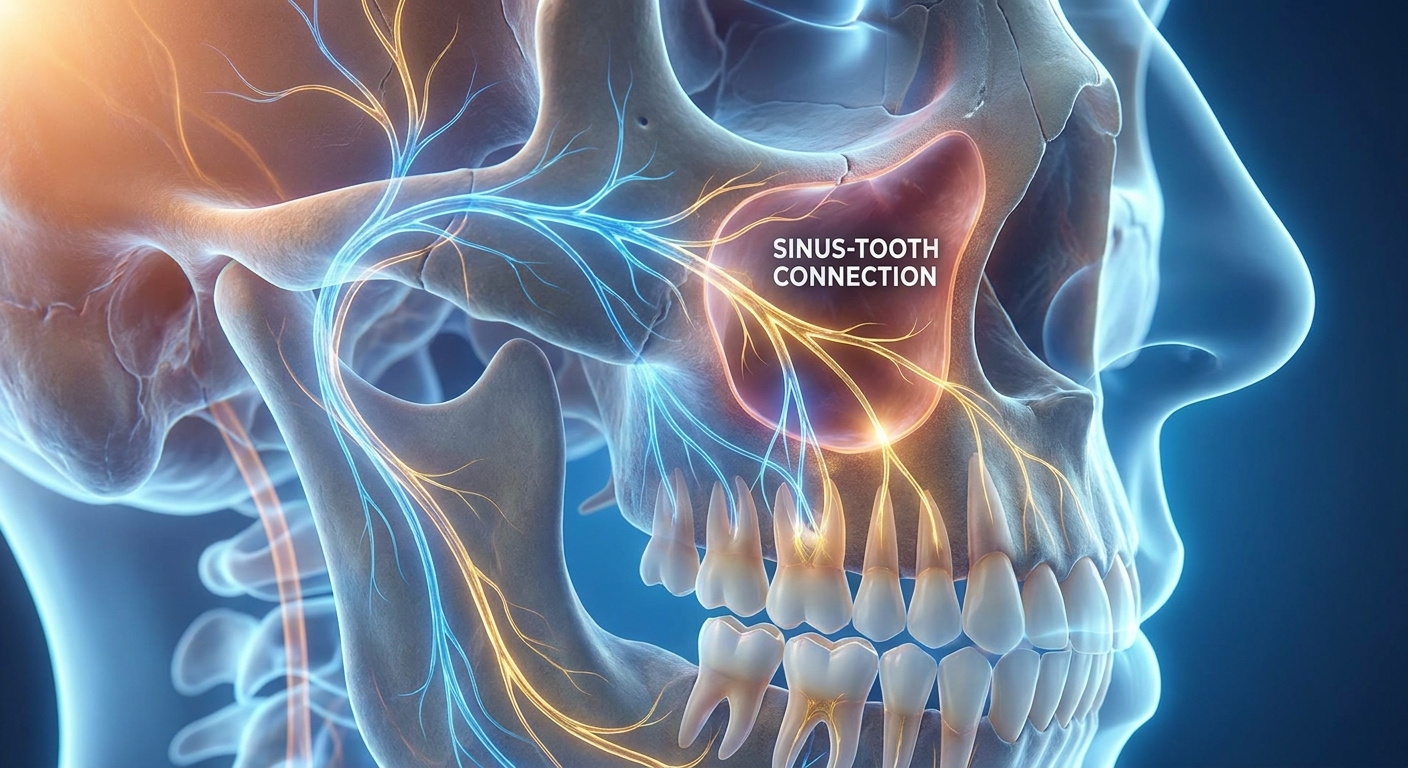
Think of it like a “wiring” problem: the nerves that serve your upper teeth and the area around your maxillary sinuses are close neighbors. When one area is inflamed, your brain can misread the signal and report pain somewhere else. That’s why sinus pressure can masquerade as a toothache—and why a real tooth infection can occasionally keep sinus symptoms going.
Medical disclaimer: This article is for general education and is not a diagnosis or a substitute for professional care. If you have severe pain, swelling, fever, or symptoms that are worsening, seek prompt medical or dental evaluation.
Quick Answer (for people in pain right now)
If you’re hurting, the fastest way to narrow it down is to look for pattern plus triggers: Is it one tooth or several? Do you have nasal symptoms? Does chewing reliably set it off?
Signs it’s more likely sinus-related
- Pain in multiple upper back teeth (upper molars)
- Nasal congestion, postnasal drip, thick discharge
- Sinus pressure/headache or facial fullness (cheeks/under eyes)
- Pain that feels worse when bending forward, lying down, or changing positions
A concrete example: you lean forward to tie your shoes and the pressure in your cheeks spikes—then several upper molars start throbbing at once. That “position-change” clue is commonly reported with sinus pressure. Why this happens: the roots of the upper molars sit close to the maxillary sinuses, and inflammation or pressure in that space can irritate nearby nerves and mimic a toothache.
For a deeper explanation, see: Can sinus problems cause tooth pain? https://sleepandsinuscenters.com/blog/can-sinus-problems-cause-tooth-pain
Signs it’s more likely a tooth problem
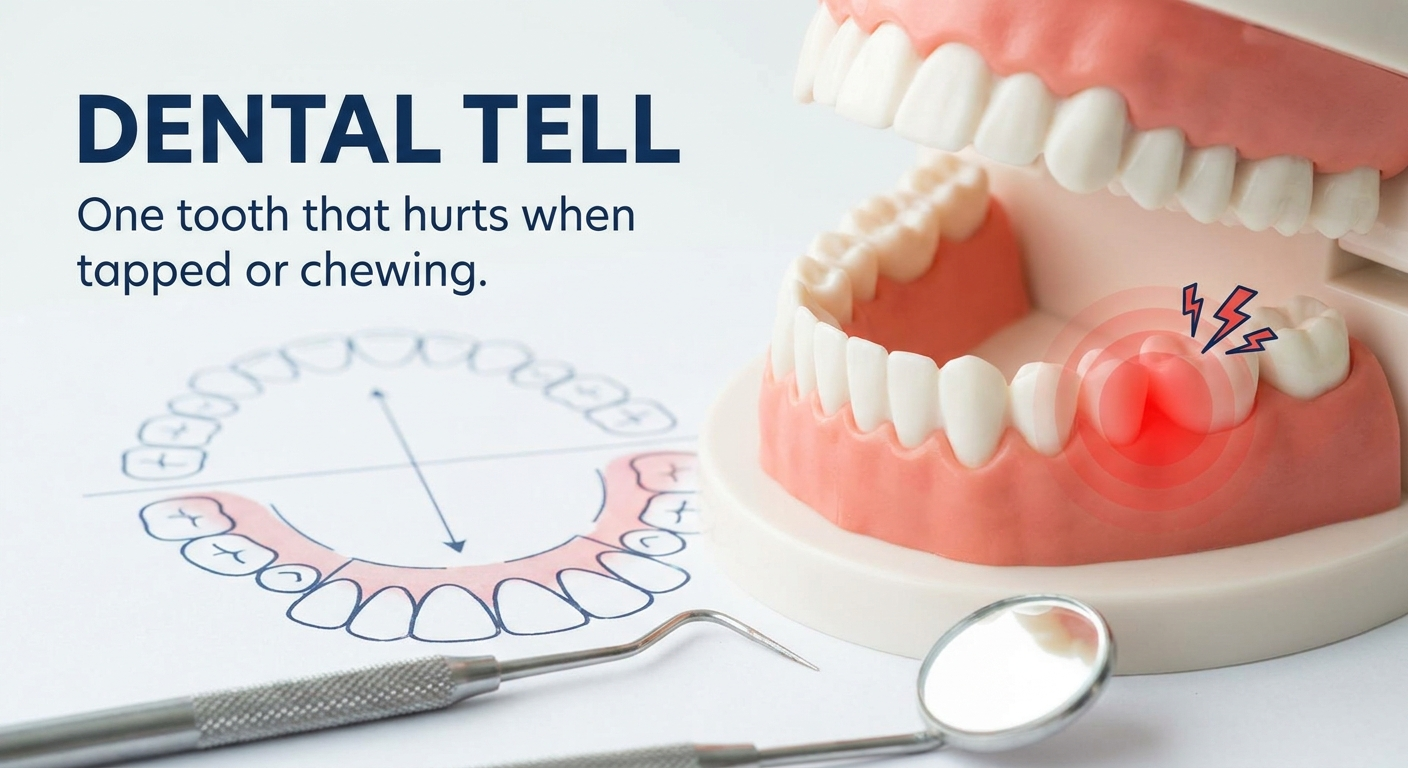
- Pain in one specific tooth
- Pain when biting or chewing
- Tooth sensitive to hot or cold, especially if the sensitivity lingers
- Pain when tapping the tooth, swollen or red gums, bad taste, drainage or pus
A typical dental pattern is: “It’s that one tooth—and every time I bite down on a certain side, I get a sharp jolt.” In particular, infections like a tooth abscess typically don’t permanently resolve without dental treatment that addresses the source.
Summary: If position changes and nasal symptoms drive the pain, sinuses are more likely; if one tooth “lights up” with chewing or tapping, think dental and get evaluated.

Why Sinus Infections Can Feel Like Tooth Pain
The anatomy connection (maxillary sinus and upper molars)
Your maxillary sinuses sit behind your cheeks, above the upper teeth. In some people, the roots of the upper molars are very close to the sinus floor. When the sinus lining becomes inflamed and swollen, pressure changes can irritate nerves in the area—so the brain interprets it as tooth pain even when the tooth itself isn’t the primary problem.
A helpful analogy: if you’ve ever had “ear pain” during a throat infection, you’ve experienced referred pain—one irritated area creating discomfort that seems to come from a nearby structure.
For a more detailed maxillary sinus overview, see: Maxillary sinusitis symptoms and treatment https://sleepandsinuscenters.com/blog/maxillary-sinusitis-symptoms-causes-and-effective-20260119212006
Common scenarios
- After a cold or viral illness: congestion develops, then upper “tooth” pressure follows
- Seasonal allergies: inflammation and blocked drainage can create facial or tooth discomfort
- Recurring sinusitis: intermittent aching in the upper teeth that comes and goes with sinus flare-ups
Summary: Because the maxillary sinus and upper molar roots share tight real estate, sinus lining inflammation can feel just like a toothache.

Symptoms Comparison (sinus infection vs dental tooth pain)
Sinus infection symptoms that often accompany tooth pain
- Nasal congestion or blockage
- Thick nasal drainage (can look yellow or green)
- Postnasal drip or cough
- Pressure around cheeks, eyes, or forehead
- Headache that may feel worse when bending forward
One practical tip: notice whether your “toothache” eases as your nose clears. If a hot shower or saline rinse reduces pressure and the tooth pain fades, that leans sinus-related (though it’s not definitive).
Dental symptoms that point to a tooth source
- Localized pain (one tooth “lights up”)
- Gum swelling or tenderness, or bleeding near that tooth
- Pain with chewing or tapping the tooth
- Bad breath or a foul taste
- Fever can occur with significant infection
A common tell is lingering sensitivity: cold water hits one tooth and the ache hangs on, instead of fading quickly. That persistent nerve-type sensitivity is more consistent with a tooth issue than simple sinus pressure.
At-a-glance differences
- Pain location: multiple upper molars is more sinus; one tooth is more dental
- Nasal symptoms: congestion, drainage, and facial pressure favor sinus; usually absent with isolated dental pain
- Tapping or chewing: commonly reproduces dental pain; less typical with sinus pressure alone
- Time course: sinus-related pain often eases as nasal symptoms improve over about 7–10 days; dental infections often persist or worsen without treatment
Summary: Broad, pressure-like pain plus nasal symptoms leans sinus; sharp, reproducible pain in a single tooth leans dental.

Causes—what’s actually going on?
Causes of sinus-related tooth pain
- Viral upper respiratory infections (most common)
- Bacterial sinus infection (less common; may be more likely when symptoms persist or worsen rather than gradually improve)
- Allergic rhinitis that contributes to sinus inflammation
Sinus symptoms often build, peak, and then gradually ease; tooth pressure that fades along with congestion aligns with sinus inflammation.
Causes of true dental tooth pain
- Tooth decay or cavities that reach deeper tooth layers
- A cracked tooth
- Gum disease
- Tooth abscess (infection near the tooth root)
Dental pain tends to be “mechanical”: pressure (biting) or direct contact (tapping) reliably reproduces it.
Important overlap—dental infection can cause sinusitis (odontogenic sinusitis)
Sometimes the direction is reversed: an upper tooth problem can spread into the maxillary sinus and contribute to persistent or recurrent sinus symptoms. This odontogenic sinusitis may show more one-sided symptoms (for example, primarily one-sided drainage or congestion) and may not improve until the dental source is treated. This is one reason trial-and-error antibiotics for recurring symptoms can disappoint—if the driver is dental, the sinus won’t fully settle until the tooth source is addressed.
Summary: Sinus pressure can mimic a toothache, but an upper tooth infection can also drive stubborn, often one-sided sinus issues.

Symptom questions to bring to your visit
Questions to ask yourself
- Is it one tooth or many upper teeth?
- Do I also have congestion, postnasal drip, or facial pressure?
- Does the pain get worse when I bend forward or change positions?
- Does chewing trigger a sharp pain in one spot?
If helpful, jot down which teeth hurt, what time of day it’s worst, and whether over-the-counter pain relief changes the pain. Clear details help dentists and ENT clinicians narrow the cause faster.
What not to do
- Don’t take leftover antibiotics (they may be inappropriate and can delay proper care)
- Don’t ignore swelling of the gums or face
- Don’t delay evaluation if symptoms suggest an abscess or spreading infection
Summary: Clear notes about location, triggers, and timing can speed diagnosis—avoid leftover antibiotics and don’t ignore swelling.
When to See a Dentist vs When to See an ENT or Doctor
See a dentist urgently if you have
- Gum swelling, pus or drainage, or a bad taste
- Severe pain in one tooth
- Pain with tapping or biting
- Fever plus dental symptoms
See an ENT or medical clinician if you have
- Tooth pain plus significant congestion or facial pressure
- Symptoms lasting more than about 7–10 days, or worsening after initial improvement
- Recurrent or chronic sinus symptoms
If you’re unsure about the right specialty, see: When should I see an ENT? https://sleepandsinuscenters.com/blog/when-should-i-see-an-ent
Seek emergency care now for red-flag symptoms
- High fever or severe headache
- Facial swelling, eye swelling, or eye pain
- Confusion or stiff neck
- Rapidly worsening symptoms
Summary: One-tooth pain with swelling points to dental care now; multi-tooth pressure with congestion beyond a week points to medical or ENT evaluation.
Diagnosis—what clinicians may do
Dental evaluation
- Exam of teeth and gums
- A percussion (“tapping”) test
- Dental X-rays to check for deeper infection or abscess
If the dentist can reproduce pain by tapping or biting pressure on a specific tooth, that often carries more weight than generalized aching.
ENT or medical evaluation
- Symptom review and nasal exam
- Assessment of whether the pattern fits a short-lived viral illness versus something more persistent
- For recurrent or non-improving cases, imaging or nasal endoscopy may be considered
If odontogenic sinusitis is suspected
When a tooth source may be driving sinus symptoms, coordinated care between dental providers and ENT is often central to diagnosis and treatment, because addressing the tooth source may be necessary for lasting improvement.
Summary: Targeted exams and, when needed, imaging help distinguish sinus-driven pain from a true dental source.
Treatments (sinus-related vs dental-related)
If it’s sinus inflammation (typical viral sinus infection)
Supportive care while symptoms run their course may include:
- Rest and hydration
- Saline irrigation or saline spray
- Warm compresses
- Over-the-counter pain relief as appropriate for you
- Short-term decongestants only if appropriate for your health history; ask a pharmacist or clinician if unsure
Many people start to improve within about 7–10 days. For OTC options and when to escalate, see: Best OTC medicine for sinus infection (and when to see a doctor) https://sleepandsinuscenters.com/blog/best-otc-medicine-for-sinus-infection-when-to-see-a-doctor
When antibiotics may be considered
Antibiotics are not routinely needed for every sinus infection; they’re typically considered when symptoms strongly suggest bacterial infection (for example, symptoms that persist or worsen rather than improve).
If it’s a tooth abscess or dental infection
Dental infections often require procedures (such as drainage or definitive treatment of the tooth) because that addresses the source. Antibiotics may be used in some situations, but they’re generally not a substitute for dental treatment when an abscess is present.
Treatment for odontogenic sinusitis (when a tooth causes sinusitis)
- Treating the tooth problem (source control)
- Sinus-directed treatment guided by the clinical situation
- In selected cases, targeted antibiotics and/or ENT procedures
Summary: Sinus flares often improve with supportive care; dental infections usually need dental procedures because source control is key.
Lifestyle Tips to Reduce Sinus-Related Tooth Pain
Positioning and sleep
- Sleeping with your head slightly elevated may reduce pressure for some people.
- If bending forward worsens pain, slower position changes may be more comfortable.
Hydration and humidity
- Fluids and humidified air may help keep mucus thinner.
- If using a humidifier, clean it regularly to avoid blowing irritants into the air.
Allergy control (if relevant)
If symptoms are frequent or seasonal, identifying triggers and discussing preventive strategies with a clinician can reduce the cycle of inflammation that contributes to sinus pressure.
Summary: Small changes—elevation, hydration, clean humidity, and allergy control—can lower pressure on sensitive sinus-tooth pathways.
FAQs (patient-friendly)
Can a sinus infection cause tooth pain in only one tooth?
It can, but one-tooth pain is generally more suspicious for a dental cause. Also, persistent one-sided sinus symptoms can raise the possibility of odontogenic sinusitis.
How long should sinus tooth pain last?
If it’s tied to sinus inflammation, it often improves as sinus symptoms improve—commonly within 7–10 days. If it persists, worsens, or keeps recurring, an evaluation can help clarify the cause.
Will a tooth abscess go away on its own?
It may fluctuate, but it typically does not resolve permanently without treatment that addresses the tooth, and it can spread.
What if I have both tooth pain and sinus symptoms?
It could still be sinus-related, dental-related, or both. In some cases, an upper tooth infection contributes to ongoing sinus problems (odontogenic sinusitis).
What’s the safest first step if I’m unsure?
Educationally speaking: if there’s swollen gums, severe one-tooth pain, or pain with tapping or biting, starting with a dentist is often reasonable. If symptoms are mainly congestion and pressure with multiple upper teeth hurting—especially beyond 7–10 days—medical or ENT evaluation can be helpful.
Conclusion and next step
Key takeaway
- Multiple upper teeth plus congestion or pressure that worsens with position changes is more consistent with sinus-related pain.
- One tooth with gum swelling or pain on chewing or tapping is more consistent with a dental cause and deserves prompt evaluation.
Call to action
If your symptoms are severe, persistent, or keep coming back, a focused evaluation can save time and prevent weeks of trial-and-error. If you’re dealing with ongoing sinus pressure, congestion, or recurring sinus issues, Sleep and Sinus Centers of Georgia can help you understand what’s driving your symptoms and what treatment options may fit your situation.
To take the next step, book an appointment here: https://www.sleepandsinuscenters.com/
References
1. University of Cincinnati Health (2024). How to Tell if Tooth Pain Is Caused by a Sinus Infection. http://uc.edu/news/articles/2024/11/how-to-tell-if-tooth-pain-is-caused-by-sinus-infection.html
2. Mayo Clinic. Tooth Abscess: Symptoms and Causes. http://mayoclinic.org/diseases-conditions/tooth-abscess/symptoms-causes/syc-20350901
3. Odontogenic Sinusitis: From Diagnosis to Treatment Possibilities—A Narrative Review of Recent Data. (PMC9319441) http://pmc.ncbi.nlm.nih.gov/articles/PMC9319441
4. Review of odontogenic maxillary sinusitis. (PMC10834456) http://pmc.ncbi.nlm.nih.gov/articles/PMC10834456
5. MDPI (2025). Review on odontogenic sinusitis treatment and antimicrobial therapy. https://mdpi.com/1648-9144/61/12/2175
This article is for educational purposes only and is not medical advice. Please consult a qualified healthcare provider for diagnosis and treatment.
Don’t let allergies slow you down. Schedule a comprehensive ENT and allergy evaluation at Sleep and Sinus Centers of Georgia. We’re here to find your triggers and guide you toward lasting relief.