Pregnancy and Allergy Medications: Safe Antihistamines and Treatment Options
Introduction — Allergies in Pregnancy Are Common (and Treatable)
Pregnancy can change allergy symptoms in unpredictable ways—some people notice improvement, while others feel more congested or sneezy than usual. The goal is simple: relieve symptoms while minimizing medication exposure whenever possible.
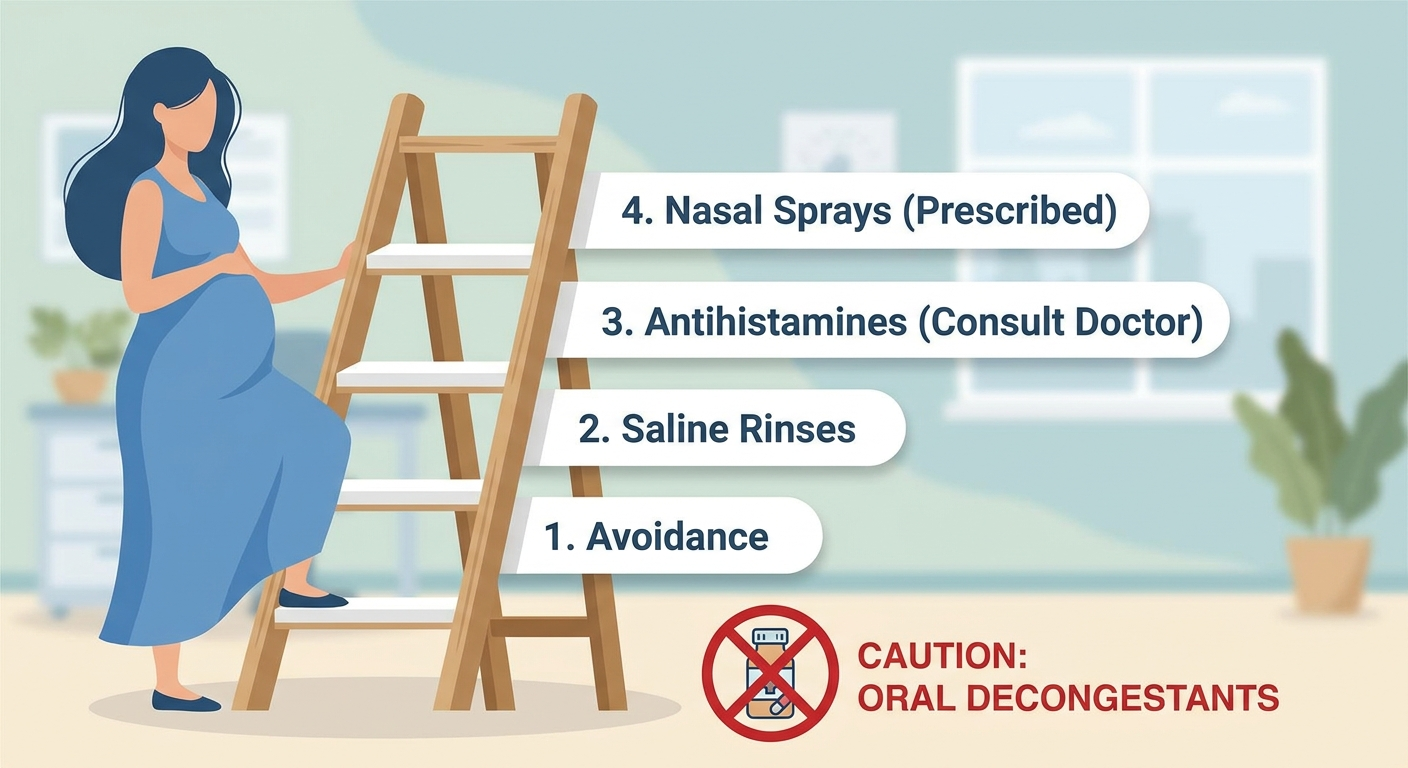
Because pregnancy health histories vary, it’s important to confirm any plan with your OB/midwife—especially if you have high blood pressure, thyroid disease, asthma, or pregnancy complications. A helpful way to think about this is a “ladder”: start with the lowest-risk steps (avoidance + saline), then add medication only if symptoms are disrupting sleep, work, or daily life.
Medical disclaimer: This article is educational and not a substitute for personal medical advice. Always follow your prenatal clinician’s guidance.
Resources like Mayo Clinic and MotherToBaby emphasize a careful, stepwise approach and highlight commonly used options for allergy medicine during pregnancy.
Sources: Mayo Clinic (2023) and MotherToBaby: https://www.mayoclinic.org/healthy-lifestyle/pregnancy-week-by-week/expert-answers/allergy-medications/faq-20058122 | https://mothertobaby.org/pregnancy-breastfeeding-exposures/allergies/
*Bottom line: most people can find relief by starting low-risk and layering only what’s needed, with guidance from their prenatal team.*
Allergy Symptoms During Pregnancy (What Patients Usually Notice)
Common respiratory/nasal symptoms
- Sneezing, itchy nose, runny nose
- Stuffy nose/congestion
- Post-nasal drip, frequent throat clearing, or cough related to drainage
- Sinus pressure (sometimes)
A common pattern patients describe is: “I feel okay mid-day, but the minute I lie down, I can’t breathe through my nose.” Nighttime congestion matters because poor sleep can make the next day feel harder—especially in pregnancy.
Eye symptoms
- Itchy, watery, red eyes
When symptoms might not be allergies
Some symptoms suggest a different cause (like a viral illness or another condition). Educational “red flags” to take seriously include:
- Fever, body aches, or a severe sore throat
- Symptoms that rapidly worsen
- Facial swelling, severe headache, or vision changes
If you’re unsure, a good rule of thumb is this: allergies tend to be itchy/sneezy and fluctuate with exposure, while infections more often come with fever, significant fatigue, or a clear “sick” feeling.
*If symptoms don’t fit the usual “itchy/sneezy” pattern—or you feel sick—check in with your clinician.*
What Causes Allergies (and Why They Can Feel Worse in Pregnancy)
Common triggers
- Pollen (seasonal allergies)
- Dust mites
- Pet dander
- Mold
- Irritants that mimic allergy flares: smoke, strong fragrances, and pollution
Why pregnancy can change symptoms
Pregnancy hormones and increased blood volume can contribute to nasal swelling and congestion. This can overlap with pregnancy rhinitis, which can feel like allergies even without a specific trigger. In real life, it can be both: seasonal pollen on top of pregnancy-related nasal swelling—like “adding traffic to an already busy road.”
For a practical day-to-day step, many people find it helpful to check today’s Georgia pollen levels to time outdoor activities (for example: a quick walk after rain instead of on a high-pollen afternoon).
Internal link: https://sleepandsinuscenters.com/georgia-pollen-tracker
Sources: https://acaai.org/allergies/allergies-101/who-gets-allergies/pregnancy-and-allergy/ | https://www.aaaai.org/tools-for-the-public/conditions-library/asthma/asthma%2C-allergies-and-pregnancy-ttr
*Knowing your triggers—and that pregnancy itself can add congestion—helps you pick the simplest next step first.*
Step 1 — Start With Non-Drug Relief (Often Enough for Mild Symptoms)
Trigger avoidance (the “big wins”)
- Keep windows closed on high-pollen days and use A/C if available
- Shower and change clothes after being outside
- Dust-mite controls: wash bedding weekly in hot water, consider allergen covers
- If pet dander is a trigger, keep pets out of the bedroom when possible
Small, consistent changes tend to beat big one-time clean-ups. For example, changing pillowcases mid-week during peak pollen can be a surprisingly “high return” habit.
Saline-based treatments (first-line for many)
- Saline nasal spray can moisturize and gently clear irritants
- Saline irrigation/rinses can be useful for thicker mucus and post-nasal drip
If you use rinses, technique and water safety matter.
Internal link: Neti pot safety tips (water + technique): https://sleepandsinuscenters.com/blog/neti-pot-safety-tips-essential-steps-for-safe-nasal-irrigation
Comfort measures that can reduce medication needs
- HEPA air filtration (especially in the bedroom)
- Nasal strips at night
- Elevating your head while sleeping to improve drainage
Sources: https://mothertobaby.org/pregnancy-breastfeeding-exposures/allergies/ | https://www.mayoclinic.org/healthy-lifestyle/pregnancy-week-by-week/expert-answers/allergy-medications/faq-20058122
*Many pregnant patients get meaningful relief with avoidance plus saline—often without needing pills.*

Step 2 — When Medication Is Needed: A “Least Amount, Most Helpful” Strategy
General medication principles in pregnancy
When symptoms are affecting sleep, work, or daily functioning, some medications may be reasonable to discuss with your prenatal team. Educational guidelines commonly suggest:
- Prefer single-ingredient products (less exposure to unnecessary meds)
- Use the lowest effective dose for the shortest time
- Avoid “multi-symptom” cold products unless specifically recommended
One clinician-style way to frame it is: “Treat the symptom that’s actually bothering you.” If it’s itching and sneezing, you likely don’t need a multi-symptom combo that also includes a decongestant.
If you’re trying to decide what category you even need, this explainer can help clarify the role of each type:
Internal link: Decongestant vs. antihistamine: what’s the difference? https://sleepandsinuscenters.com/blog/decongestant-vs-antihistamine-when-to-use-each-for-allergy-relief
Source: https://www.aafp.org/afp/2023/1000/otc-medications-pregnancy
*Aim for the fewest medicines at the lowest effective dose—and only when symptoms truly disrupt your day or sleep.*
Pregnancy-Safer Antihistamines (Oral): What’s Commonly Discussed
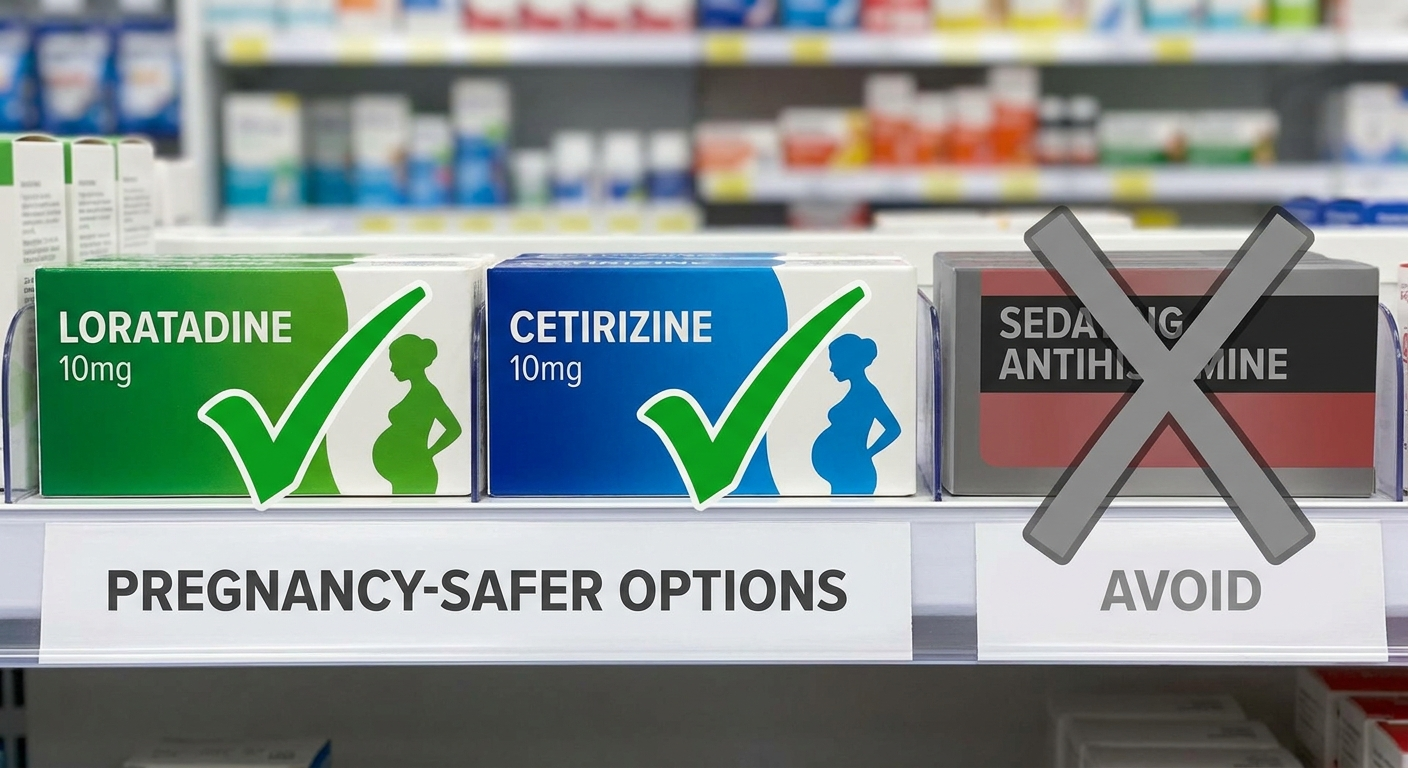
Many people searching for pregnancy safe antihistamines are really looking for options with reassuring pregnancy data and a long track record of use. Two non-drowsy choices are frequently cited in many pregnancy references.
Frequently cited non-drowsy options in many references
1. Loratadine (Claritin)
2. Cetirizine (Zyrtec)
Why they’re commonly discussed: they’re generally less sedating than older antihistamines and have reassuring data. MotherToBaby notes that studies have not shown an increased risk of birth defects with loratadine or cetirizine. Cetirizine has substantial published pregnancy experience (e.g., more than 1,300 exposed pregnancies reported), per MotherToBaby.
This is why you’ll often see searches like Claritin pregnancy and Zyrtec pregnancy—they’re commonly discussed options when allergy medicine during pregnancy is needed.
Sources: https://mothertobaby.org/fact-sheets/loratadine-pregnancy/ | https://mothertobaby.org/fact-sheets/cetirizine/ | https://mothertobaby.org/pregnancy-breastfeeding-exposures/allergies/
Longer-established alternatives (may cause sedation)
- Chlorpheniramine
- Diphenhydramine (Benadryl)
These have long histories of use, but they can cause drowsiness and side effects like dry mouth or constipation—often a bigger downside during the day (and sometimes during pregnancy, when fatigue or constipation may already be an issue).
Sources: https://www.mayoclinic.org/healthy-lifestyle/pregnancy-week-by-week/expert-answers/allergy-medications/faq-20058122 | https://www.aafp.org/afp/2023/1000/otc-medications-pregnancy
Practical tips for choosing one
Educationally, the “best” option often depends on when symptoms hit:
- If staying alert matters (driving/work), non-drowsy options may be easier to live with.
- If nighttime symptoms are the main issue, some people ask their prenatal team whether a more sedating option makes sense.
(Again, individual factors matter—especially other medications, blood pressure concerns, and pregnancy-related nausea or constipation.)
*Choose an antihistamine by matching it to your biggest symptom—and confirm with your prenatal clinician.*
Nasal Steroid Sprays for Allergic Rhinitis (Often Reduce Need for Oral Meds)
For many people, a nasal steroid spray pregnancy question comes up when congestion becomes persistent. Intranasal corticosteroids can help control inflammation in the nose and may reduce the need for oral medication.
When they’re most helpful
- Moderate/persistent congestion, sneezing, and runny nose
- Symptoms most days of the week
- Sleep disruption from nasal blockage
Commonly referenced option
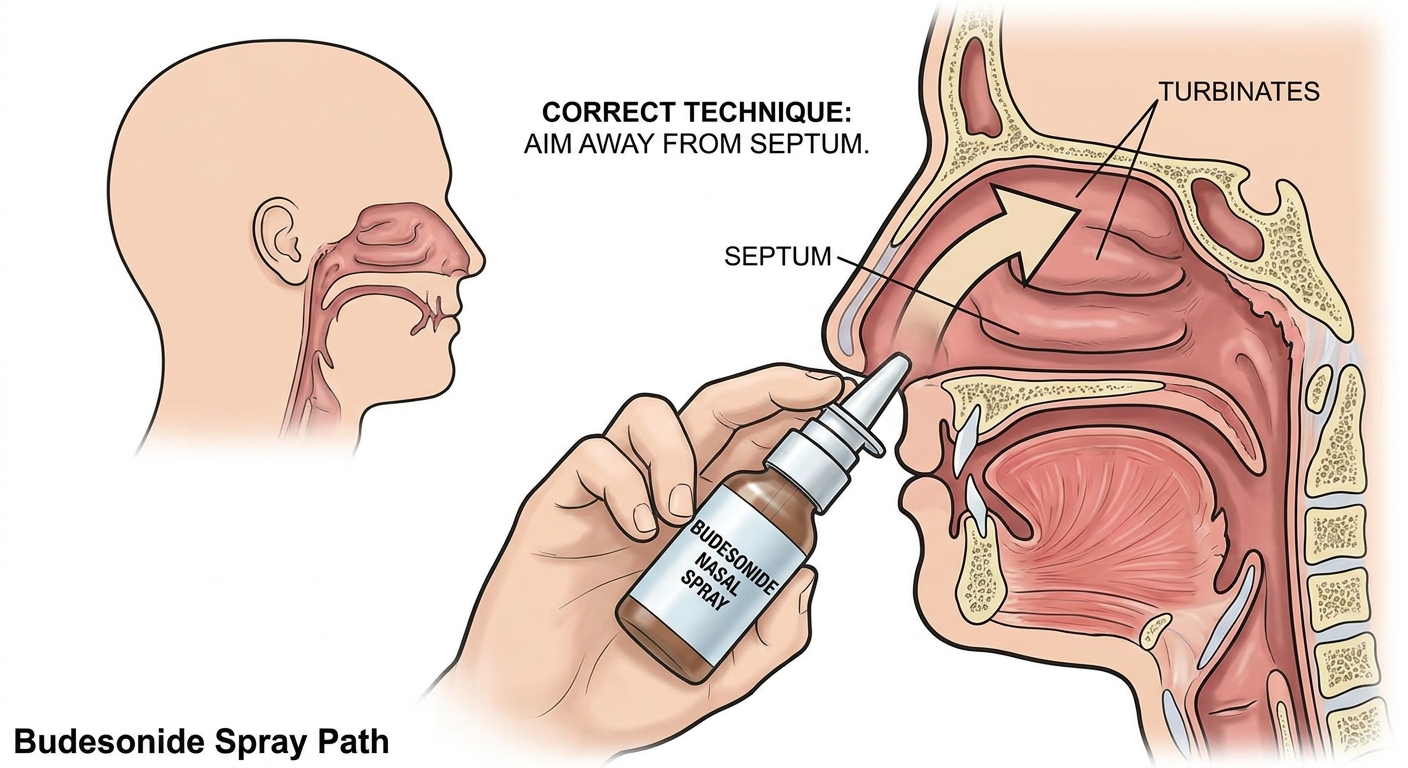
- Budesonide nasal spray is frequently cited as a preferred option in many pregnancy references due to the amount of study and clinical experience.
Other commonly accepted options (per clinical guidance)
- Fluticasone
- Mometasone
How to use correctly (patient-friendly mini-guide)
- Aim slightly outward (away from the middle cartilage/septum)
- Use consistently as directed; maximum benefit may take a few days
Many patients expect instant relief and get discouraged. A helpful expectation is: decongestant sprays can feel immediate, while steroid sprays are more like “training” the inflammation down over several days.
Sources: https://www.mayoclinic.org/healthy-lifestyle/pregnancy-week-by-week/expert-answers/allergy-medications/faq-20058122 | https://mothertobaby.org/pregnancy-breastfeeding-exposures/allergies/
*If congestion is daily or disrupts sleep, a correctly used nasal steroid spray may be a good discussion to have with your OB/midwife.*
Decongestants in Pregnancy: Use Extra Caution (and Don’t Self-Start)
Decongestants can feel tempting when you can’t breathe through your nose—but they deserve extra caution in pregnancy.
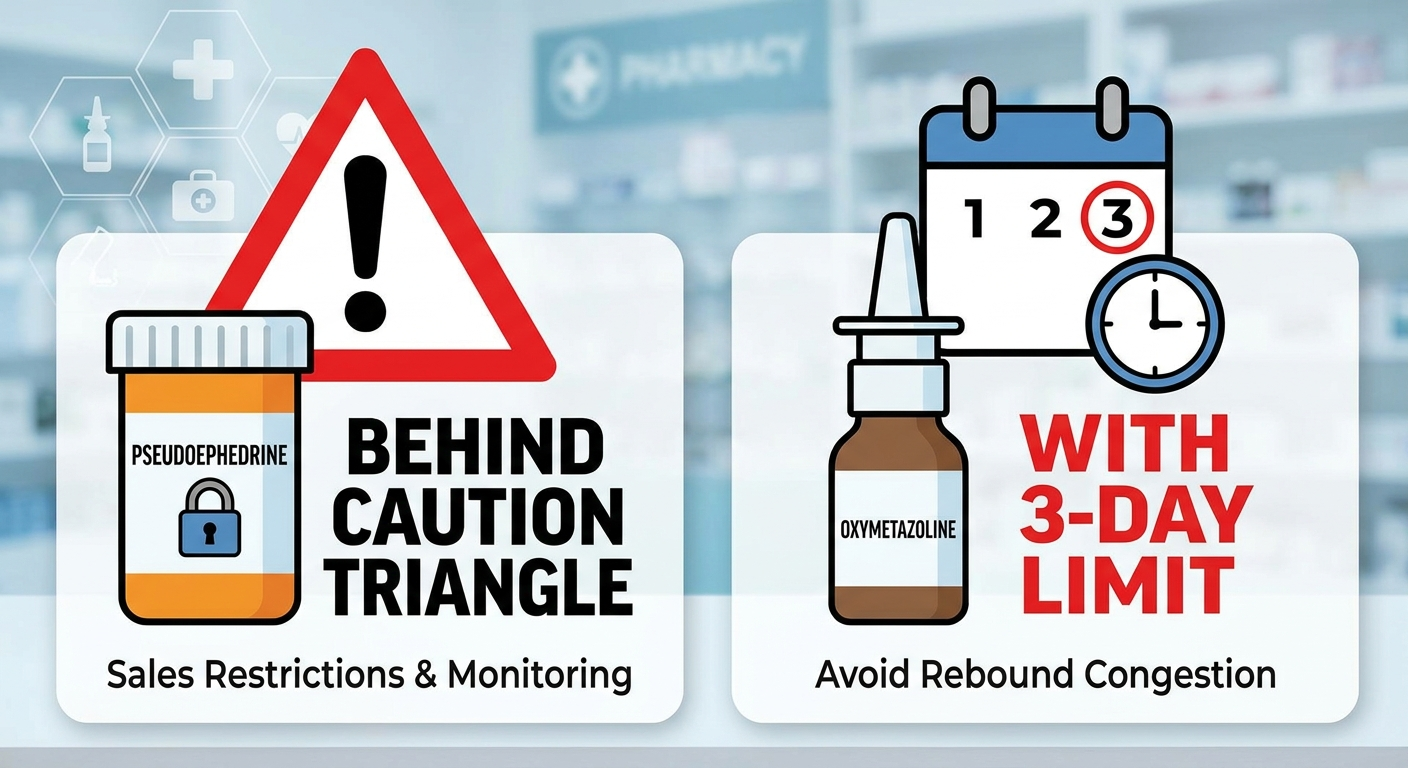
Oral decongestants (pseudoephedrine) — trimester-specific warning
Mayo Clinic notes that ACOG does not recommend pseudoephedrine in the first 3 months, and some studies report small increases in specific birth defects. If it’s considered later in pregnancy, it’s typically something to discuss with a prenatal care team—especially with high blood pressure or preeclampsia risk.
This is why Sudafed pregnancy searches often lead to “ask your OB first” guidance.
Sources: https://www.mayoclinic.org/healthy-lifestyle/pregnancy-week-by-week/expert-answers/allergy-medications/faq-20058122 | https://www.aafp.org/afp/2023/1000/otc-medications-pregnancy
Topical nasal decongestant sprays (oxymetazoline/Afrin-type)
These can provide quick relief, but common guidance warns against overuse:
- Limit to intermittent use
- Avoid using more than 3 consecutive days to reduce the risk of rebound congestion (rhinitis medicamentosa)
Optional internal link (rebound congestion): https://sleepandsinuscenters.com/blog/afrin-rebound-how-long-does-nasal-congestion-last-after-use
Source: https://www.aafp.org/afp/2023/1000/otc-medications-pregnancy
*Because risks vary by person and trimester, decongestants should be used only with your prenatal clinician’s OK.*
Allergy Shots (Immunotherapy) During Pregnancy
If you’re already on allergy shots
Guidance from allergy organizations notes that many patients can continue allergy shots at a stable maintenance dose if they’re tolerating them well, because the main concern is avoiding reactions.
What’s usually postponed
- Starting immunotherapy during pregnancy
- Increasing the dose during pregnancy (often delayed until after delivery)
If you’re curious about the typical process, this overview can help you understand the timeline.
Internal link: https://sleepandsinuscenters.com/blog/allergy-shots-timeline-what-to-expect-during-allergy-immunotherapy
Sources: https://acaai.org/allergies/allergies-101/who-gets-allergies/pregnancy-and-allergy/ | https://www.aaaai.org/tools-for-the-public/conditions-library/asthma/asthma%2C-allergies-and-pregnancy-ttr
*Maintenance can often continue; new starts and dose increases are typically delayed until after delivery.*
Treatment Plans by Symptom Type (Quick “Choose Your Path”)
These are common educational starting points—not personalized recommendations. Confirm any medication with your prenatal clinician.
If your main issue is sneezing/itching/runny nose
- Start: avoidance + saline
- Next: an oral antihistamine (loratadine or cetirizine are commonly discussed in many pregnancy references)
Sources: MotherToBaby; Mayo Clinic
https://mothertobaby.org/pregnancy-breastfeeding-exposures/allergies/ | https://www.mayoclinic.org/healthy-lifestyle/pregnancy-week-by-week/expert-answers/allergy-medications/faq-20058122
If your main issue is daily congestion
- Start: saline rinse + environmental steps
- Next: intranasal corticosteroid (budesonide is frequently cited; fluticasone/mometasone are also commonly referenced)
If you’re miserable for a short period (e.g., peak pollen day)
- Consider discussing short-term add-ons with your prenatal team, particularly before using decongestants
If symptoms are persistent or unclear, allergy testing can be a helpful next step.
Internal link: https://sleepandsinuscenters.com/allergy-testing
*Match treatment to your dominant symptom—and keep it stepwise and simple.*
When to Call Your OB, Allergist, or ENT (Safety/Red Flags)
Call promptly if you have
- Wheezing, shortness of breath, or asthma flare symptoms
- Facial swelling, hives, or signs of a severe allergic reaction
- Fever, severe sinus pain, or symptoms lasting >10 days with worsening
- High blood pressure feelings or palpitations after any decongestant
Consider specialty evaluation if
- Symptoms persist despite stepwise treatment
- You’re unsure if it’s allergies vs recurrent infections
- You want to consider immunotherapy after delivery
If symptoms are persistent or unclear, allergy testing can be a helpful next step.
Internal link: https://sleepandsinuscenters.com/allergy-testing
*Don’t wait on red flags—your prenatal clinician or an allergy/ENT specialist can help you sort it out safely.*
FAQs (Patient-Friendly, SEO-Optimized)
“What allergy medicine is safe during pregnancy?”
Many references recommend starting with non-drug measures first. If medication is needed, pregnancy safe antihistamines that are commonly discussed include loratadine and cetirizine, while older antihistamines (chlorpheniramine or diphenhydramine) have long experience but are more sedating.
Sources: MotherToBaby; Mayo Clinic.
“Can I take Claritin (loratadine) while pregnant?”
MotherToBaby notes that available studies have not shown an increased chance of birth defects with loratadine.
Source: https://mothertobaby.org/fact-sheets/loratadine-pregnancy/
“Can I take Zyrtec (cetirizine) while pregnant?”
MotherToBaby reports substantial pregnancy experience, including more than 1,300 exposed pregnancies, without an increased birth-defect risk signal.
Source: https://mothertobaby.org/fact-sheets/cetirizine/
“Is Benadryl safe in pregnancy?”
Diphenhydramine is widely used historically, but drowsiness is a common limitation.
Sources: Mayo Clinic; AAFP.
“What nasal spray can I use while pregnant?”
Saline is often a first step. For allergic rhinitis, budesonide is frequently cited in pregnancy guidance, and fluticasone/mometasone are often discussed as acceptable options.
Sources: Mayo Clinic; MotherToBaby.
“Can I take Sudafed while pregnant?”
Pseudoephedrine is not recommended in the first trimester per ACOG guidance cited by Mayo Clinic. Later use should be discussed with a prenatal care team, particularly if blood pressure is a concern.
Sources: Mayo Clinic; AAFP.
“Can I keep getting allergy shots while pregnant?”
Often yes—if you’re already on a stable maintenance dose and tolerating it. Starting or increasing doses is usually postponed.
Sources: ACAAI; AAAAI.
*When in doubt, bring your exact product name and ingredient list to your prenatal visit for a quick safety check.*
Lifestyle Tips to Reduce Allergy Flares Throughout Pregnancy
Bedroom focus (sleep-friendly allergy control)
- Shower before bed during high pollen seasons
- HEPA filtration in the bedroom
- Wash bedding weekly and reduce dust “reservoirs” (extra pillows, heavy fabric clutter)
Outside-the-home tips
- Sunglasses/hats outdoors during peak pollen
- Consider masking during yard work if pollen is a trigger
- Keep car windows up; replace cabin air filters as needed
For questions about ongoing nasal blockage, sinus pressure, or snoring/sleep disruption, our team can help assess if it’s allergies alone or overlapping sinus/sleep issues. Book an appointment: https://www.sleepandsinuscenters.com/
*Small, consistent environmental steps can meaningfully lower symptom “pressure” throughout pregnancy.*

Conclusion — Relief Is Possible with a Stepwise, Pregnancy-Safe Plan
These steps are educational starting points—not personal medical advice. Confirm any medication with your prenatal clinician.
1) Avoid triggers + saline
2) Add commonly discussed oral antihistamines if needed (loratadine/cetirizine)
3) Use nasal steroid sprays for persistent symptoms (budesonide is frequently cited; fluticasone/mometasone are also commonly referenced)
4) Decongestants = extra caution and clinician approval (especially in the first trimester)
5) Continue allergy shots only if already stable; avoid starting/increasing during pregnancy
If you’re trying to narrow down your options, remember the goal isn’t “more medication”—it’s the least amount that meaningfully helps, guided by your prenatal care team and your symptoms.
If symptoms are lingering, confusing, or affecting sleep, you don’t have to guess your way through it. You can book an appointment with Sleep & Sinus Centers to discuss evaluation and treatment options (including testing when appropriate): https://www.sleepandsinuscenters.com/
*Relief is realistic—most patients do well with a simple, stepwise plan tailored with their prenatal clinician.*
References
MotherToBaby — Allergies: https://mothertobaby.org/pregnancy-breastfeeding-exposures/allergies/
MotherToBaby — Loratadine: https://mothertobaby.org/fact-sheets/loratadine-pregnancy/
MotherToBaby — Cetirizine: https://mothertobaby.org/fact-sheets/cetirizine/
Mayo Clinic (2023) — Allergy meds & pregnancy: https://www.mayoclinic.org/healthy-lifestyle/pregnancy-week-by-week/expert-answers/allergy-medications/faq-20058122
ACAAI — Pregnancy and allergies: https://acaai.org/allergies/allergies-101/who-gets-allergies/pregnancy-and-allergy/
AAAAI — Asthma, allergies & pregnancy: https://www.aaaai.org/tools-for-the-public/conditions-library/asthma/asthma%2C-allergies-and-pregnancy-ttr
American Family Physician (2023) — OTC medications in pregnancy: https://www.aafp.org/afp/2023/1000/otc-medications-pregnancy
NCBI Bookshelf (MotherToBaby/related): https://www.ncbi.nlm.nih.gov/books/NBK582924/
This article is for educational purposes only and is not medical advice. Please consult a qualified healthcare provider for diagnosis and treatment.
Don’t let allergies slow you down. Schedule a comprehensive ENT and allergy evaluation at Sleep and Sinus Centers of Georgia. We’re here to find your triggers and guide you toward lasting relief.