Sinus Infection From a Tooth: Dental–Maxillary Connection and Symptoms
A sinus infection from a tooth can occur when inflammation or infection around an upper tooth root extends into the maxillary sinus (the air space behind your cheek). Because a dental source can keep “feeding” sinus inflammation, treating only the sinus side may not fully resolve the issue if the dental problem remains. One of the most useful clues is one-sided (unilateral) sinus symptoms. [1–3]
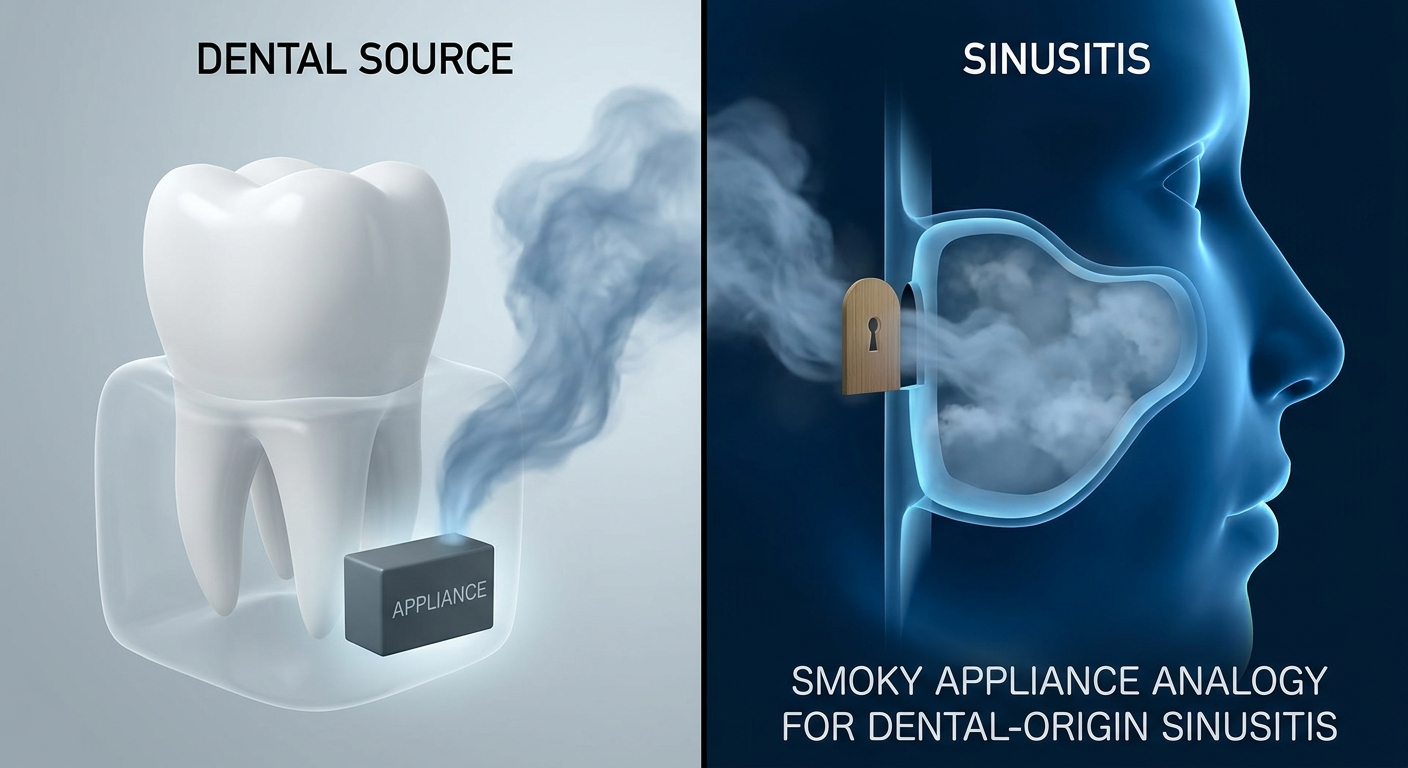
A simple way to picture it: if the sinus is a room and an infected tooth is a smoky appliance next door, opening windows (sinus medications) may clear the air temporarily—but the smoke returns until the appliance is fixed (source control at the tooth).
Below is a patient-friendly guide to why this happens, how it’s typically diagnosed (often with CT/CBCT), and how dental and ENT care are coordinated.
Why a Sinus Infection Can Start From a Tooth
The roots of some upper teeth sit very close to the floor of the maxillary sinus. In some people, that dividing bone is thin; inflammation near a root tip can irritate the sinus lining right next door. If bacteria and inflammation develop around a tooth root or after a dental procedure, they can extend into the sinus—resulting in odontogenic (dental-origin) sinusitis. [1–3]
Sinus-focused treatments may help in the short term, but relief is often incomplete if a dental source remains. [1–3]
Bottom line: Lasting improvement usually requires finding and addressing any dental trigger that’s keeping the sinus inflamed.
What Is Odontogenic Maxillary Sinusitis (OMS)?
Odontogenic maxillary sinusitis (OMS) is inflammation and/or infection in the maxillary sinus that begins with a dental problem—not from a cold, seasonal allergies, or typical viral sinusitis. [1–3] Because the starting point is different, the care plan often needs to address both the tooth source and the sinus environment.
OMS can resemble “regular sinusitis,” especially early on. Many people don’t feel obvious tooth pain, and sinus symptoms (pressure, congestion, drainage) can dominate. Reviews note that antibiotics alone are often incomplete when a dental source or a mouth–sinus connection remains. [1–3]
Bottom line: OMS starts in the teeth or gums, so treating the dental driver is central to success.

The Dental–Maxillary Connection (Anatomy Made Simple)
Teeth most often involved: upper molars, then premolars; occasionally other upper teeth. [2,3]
Pathways infection can take:
- Periapical (root tip) infection
- Severe periodontal (gum) disease
- Oroantral communication after extraction that persists as an oroantral fistula
- Procedure-related changes (implants, sinus lifts) [1–3]
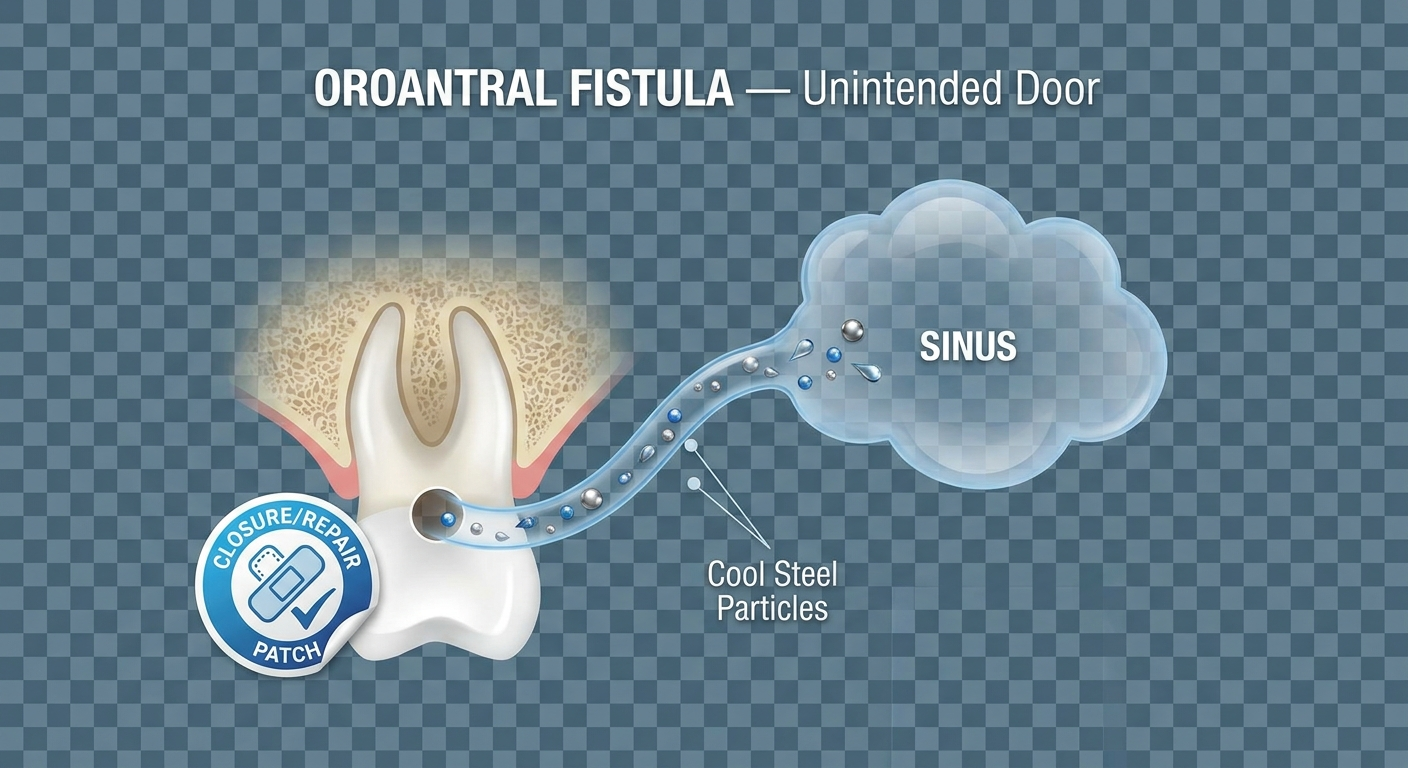
An oroantral fistula functions like an unintended “door” between the mouth and the sinus. If it stays open, bacteria and fluids can keep entering the sinus and prolong inflammation.
Bottom line: Upper back teeth share a thin boundary with the maxillary sinus—so tooth and sinus problems can directly affect each other.
Common Dental Causes and Pathways
- Tooth abscess (periapical infection): Infection can collect around the root; when that root sits near the sinus, inflammation can extend upward. Clues may include tenderness to bite or tap, swelling, or a gum “pimple” (drainage tract). [5]
- Severe periodontal (gum) disease: Deep pockets and bone loss can spread bacteria beyond tooth-supporting tissues, sometimes contributing to OMS—especially near upper molars. [2,3]
- Oroantral fistula after extraction: An upper molar extraction can occasionally leave a persistent opening between the mouth and sinus, allowing ongoing contamination. [1–3]
- Implants and sinus lifts: Less common, but procedures near the sinus can occasionally disrupt the lining or introduce inflammation, particularly if pre-existing disease is present. This does not mean implants commonly cause sinusitis; timing and one-sided symptoms after such procedures just merit thoughtful evaluation. [2,3]
- Root canal complications or failed endodontic treatment: A prior root canal can leave or later develop persistent infection near the root tip; if adjacent to the sinus, symptoms may mimic chronic unilateral sinusitis. [2,3]
Bottom line: Different dental problems can “seed” the sinus, so your dental history matters when sinus symptoms persist on one side.
Symptoms: Clues That Point to a Dental Source
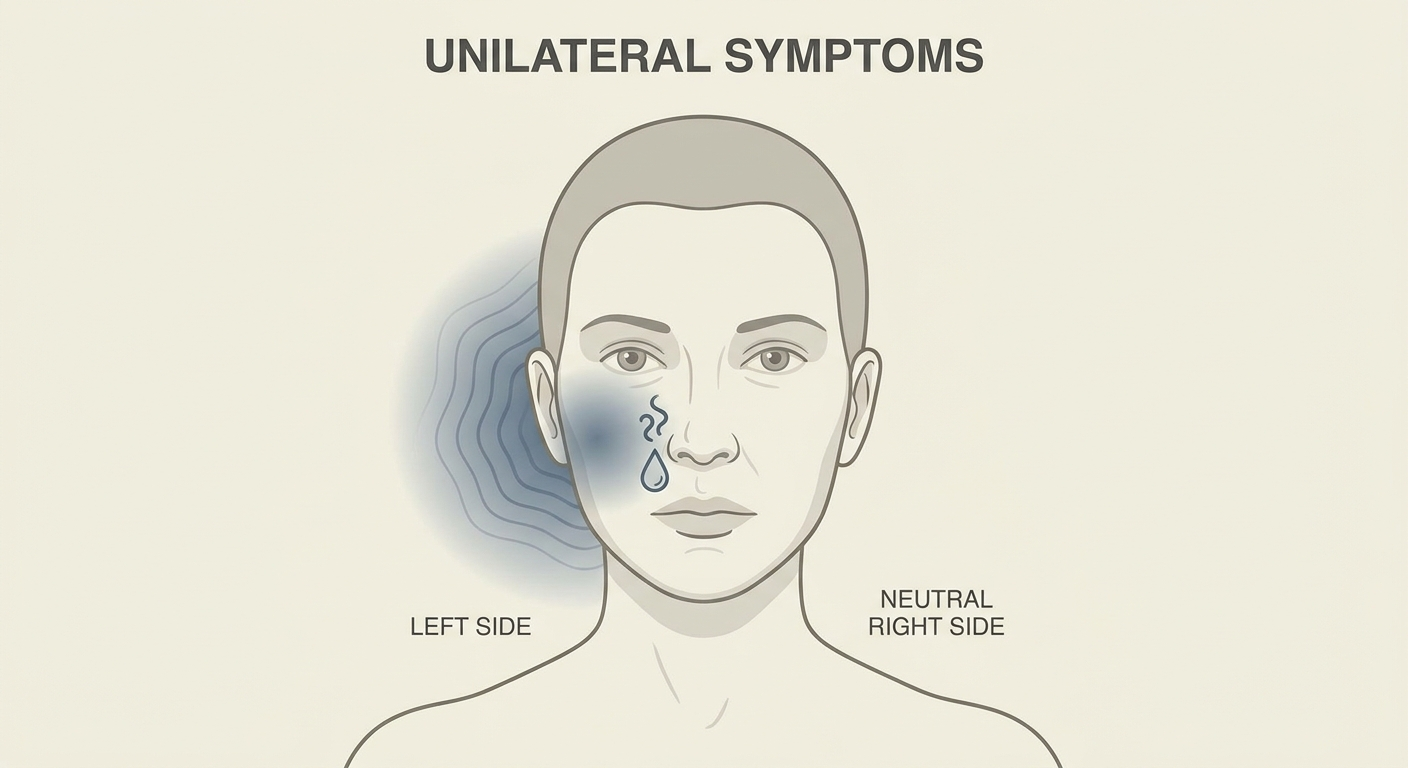
Typical OMS features are often more pronounced on one side (unilateral). Common patterns include:
- One-sided nasal congestion or cheek pressure/fullness [1–3]
- Thick or purulent drainage, often worse on the same side [1–3]
- Foul smell or bad taste
- Sometimes tooth tenderness to bite or tap, gum swelling, or recent dental work on that side [1–3,5]
For a broader look at unilateral patterns, see: One-Sided Sinus Infection: Causes, Symptoms, and Treatment.
To understand the overlap in the other direction, see: Can Sinus Problems Cause Tooth Pain?
Important caution: unilateral sinus symptoms are a clue, not a diagnosis. Other causes of one-sided disease exist (for example, polyps, fungal ball, foreign body, and, rarely, tumors), which is why exam and imaging matter.
Bottom line: One-sided foul drainage and cheek pressure—especially with same-side dental history—should prompt evaluation of both tooth and sinus.
Diagnosis: How Dental and ENT Teams Confirm the Source
- ENT evaluation: nasal exam and sometimes nasal endoscopy to assess drainage, swelling, and blockage patterns. [1–3]
- Dental evaluation: tooth vitality testing, gum assessment, percussion/biting tenderness, and review of dental history and procedures. [1–3]
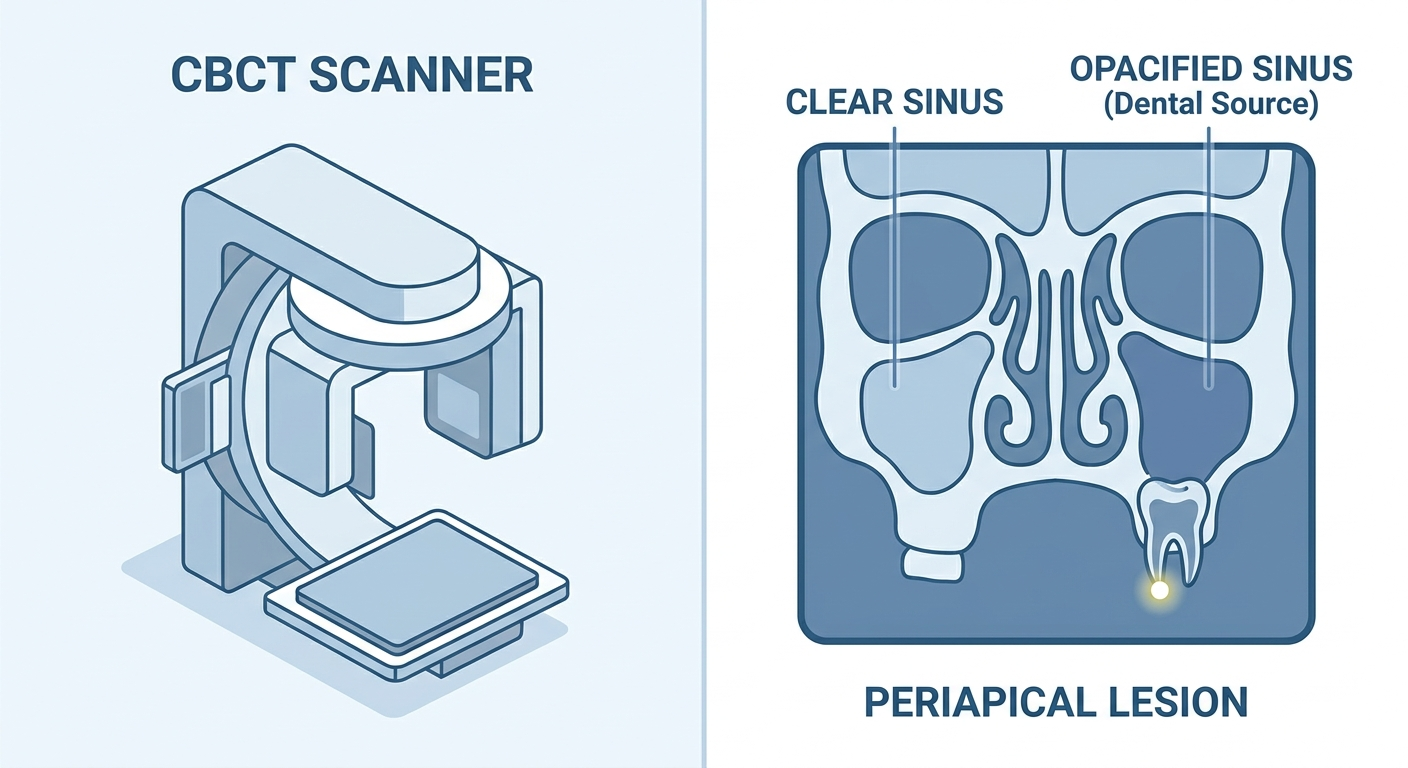
CT or CBCT imaging is often the turning point:
- Shows unilateral maxillary sinus opacification
- Identifies periapical lesions near tooth roots
- Can reveal an oroantral fistula or other anatomy that impairs drainage [1–3]
Standard dental X‑rays can miss disease near the sinus floor that CT/CBCT can reveal. To see how ENT clinicians use imaging, visit: Sinus CT Scan: What It Shows and How It Helps Diagnose Sinus Issues.
Examples of questions patients sometimes ask about imaging:
- Which scan best shows both tooth roots and the sinus?
- What findings suggest a dental source versus non-dental sinusitis?
- How will these results change my plan?
Bottom line: Coordinated dental and ENT exams plus CT/CBCT imaging commonly clarify whether a tooth is driving one-sided sinusitis.
Treatment: What Commonly Helps for a Sinus Infection From a Tooth
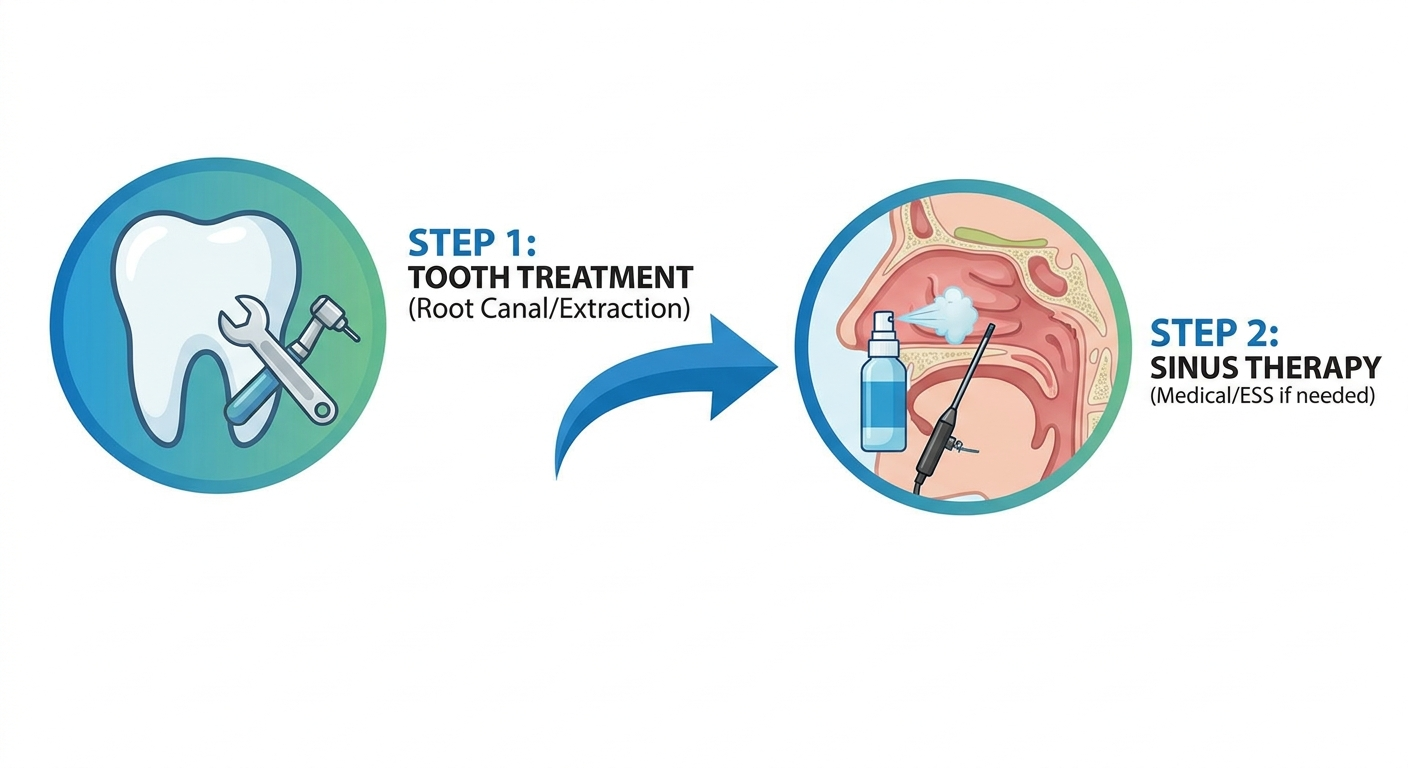
Step 1 — Dental source control (foundation of care):
- Root canal treatment or retreatment when the tooth is restorable
- Extraction when a tooth cannot be predictably saved
- Periodontal therapy if gum disease is the driver
- Closure/repair of an oroantral fistula if present [1–3]
Antibiotics may reduce bacterial load and symptoms but are often incomplete when an infected tooth, foreign material, or a persistent fistula continues to seed the sinus. [1–3]
Step 2 — Sinus-directed care (when appropriate):
- Saline irrigation and supportive measures
- Topical nasal therapies to reduce inflammation when indicated
- Culture-directed antibiotics in selected cases [1–4]
- Endoscopic sinus surgery (ESS) to restore drainage/ventilation when symptoms and imaging show persistent blockage or chronic inflammation despite appropriate dental management. For an overview, see: Endoscopic Sinus Surgery (ESS): What Patients Should Know. [1–4]
Coordinated care and outcomes: Multidisciplinary management is emphasized in consensus recommendations. In one retrospective analysis, concurrent dental treatment plus ESS achieved 96.4% complete remission versus 73.9% without dental treatment in that study population (observational data; results vary by patient). [4]
Bottom line: Treat the tooth source first; add sinus-directed care if inflammation or blockage persists—often with the dental and ENT teams working together.
What You Can Do at Home (While You Arrange Care)
General comfort measures people sometimes use while arranging professional evaluation—not a treatment plan:
- Saline nasal rinses (use safe water sources and clean devices)
- Warm compresses for cheek pressure
- Hydration and humidified air
- Over-the-counter pain relief if appropriate for you (ask a clinician or pharmacist if unsure)
What to avoid: delaying professional evaluation when symptoms are one-sided and recurring, or relying on repeated “just-in-case” antibiotic courses without assessing a possible dental source. [1–3]
Bottom line: Simple comfort steps may ease symptoms, but they don’t replace dental and ENT assessment when a tooth-related cause is possible.
When to Seek Urgent or Emergency Care
Red flags that may need same-day attention include:
- Rapidly worsening facial swelling
- Fever with significant facial pain
- Vision changes, eye swelling, or eye pain
- Difficulty breathing or swallowing [1,5]
Although uncommon, infections can spread to deeper facial spaces or areas around the eye. That’s why red-flag symptoms matter.
Bottom line: If severe or rapidly worsening symptoms occur, seek urgent care first—don’t wait for a routine appointment.
Prevention: Lowering Your Risk
Dental prevention basics:
- Regular dental examinations and cleanings
- Early treatment of cavities and tooth infections
- Periodontal care to control gum disease
After extractions, implants, or sinus lifts: Follow post-procedure instructions closely. If new one-sided congestion, persistent foul drainage, or unusual “air/fluid passage” sensations appear after upper-tooth procedures, bring these symptoms to your dentist and/or ENT so they can determine whether they’re related. [1–3]
Bottom line: Routine dental care and prompt attention to new one-sided symptoms after upper-tooth work can reduce the risk of dental–sinus problems.
FAQs
1) Can a tooth infection really cause a sinus infection? Yes. Upper molars (and sometimes premolars) sit close to the maxillary sinus, allowing infection to spread in some cases. [2,3]
2) What are the most common symptoms of OMS? Often unilateral sinusitis with foul odor/bad taste, purulent drainage, and same-side cheek pressure—sometimes with dental findings on that side. [1–3]
3) Will antibiotics cure a sinus infection from a tooth? They can help symptoms temporarily, but relief is frequently incomplete if the dental source or a fistula remains. [1–3]
4) Do I need a CT scan or CBCT? CT or CBCT is commonly used because standard dental X‑rays can miss important details near the sinus floor. [1–3]
5) Do I need a root canal or extraction? It depends on whether the tooth is restorable and where the infection is located. A dentist or endodontist can determine the best option. [1–3]
6) When is endoscopic sinus surgery needed? When symptoms and imaging suggest persistent blockage or chronic inflammation despite appropriate dental source control and medical therapy. [1–4]
7) Can sinusitis cause tooth pain even without a tooth problem? Yes—sinus pressure can refer pain to upper teeth. Learn more: Can Sinus Problems Cause Tooth Pain?
8) How long does recovery take after treating the tooth source? Timelines vary. Some people improve over days to weeks, while others need additional sinus-directed care if inflammation or blockage persists. [1–3]
Book an appointment (next step)
If you have persistent one-sided sinus symptoms, a foul smell/bad taste, or sinus issues that keep returning—especially with same-side dental history—consider scheduling an evaluation so both dental and sinus contributors can be assessed. You can book an appointment here: https://www.sleepandsinuscenters.com/
If you develop urgent red-flag symptoms (for example, rapidly worsening swelling, fever with severe facial pain, vision changes, or trouble breathing or swallowing), seek emergency care first.
Medical disclaimer
This article is for educational purposes only and is not medical advice. Please consult a qualified healthcare provider for diagnosis and treatment.
This article is for general educational purposes and is not a substitute for professional medical or dental advice, diagnosis, or treatment. If you have severe or worsening symptoms—especially facial swelling, fever, or trouble breathing or swallowing—seek urgent medical care.
References
1. Expert Consensus on Odontogenic Maxillary Sinusitis Multidisciplinary Treatment. International Journal of Oral Science (2024). https://pmc.ncbi.nlm.nih.gov/articles/PMC10834456/
2. Odontogenic Sinusitis: From Diagnosis to Treatment Possibilities—A Narrative Review of Recent Data (2022). https://pmc.ncbi.nlm.nih.gov/articles/PMC9319441/
3. Navigating the Treatment Landscape of Odontogenic Sinusitis: Current Trends and Future Directions (2025). https://pmc.ncbi.nlm.nih.gov/articles/PMC12734476/
4. Clinical and Radiological Analysis of Odontogenic Sinusitis: A Retrospective Study (2025). https://pmc.ncbi.nlm.nih.gov/articles/PMC12027895/
5. Mayo Clinic — Tooth abscess: Symptoms & causes. https://www.mayoclinic.org/diseases-conditions/tooth-abscess/symptoms-causes/syc-20350901
Don’t let allergies slow you down. Schedule a comprehensive ENT and allergy evaluation at Sleep and Sinus Centers of Georgia. We’re here to find your triggers and guide you toward lasting relief.