Sinuplasty Recovery: Timeline, Tips, and What to Expect
Searching for sinuplasty recovery usually comes down to one question: How long until I feel like myself again? Balloon sinuplasty is minimally invasive, so many people feel noticeably better relatively quickly. In general, patients often return to normal daily activities in 1–2 days (as cleared by their surgeon), are back to usual routines within about a week, and continue mucosal healing as the sinus lining stabilizes over roughly 1–2 months. Recovery varies based on individual anatomy, inflammation, and your surgeon’s protocol.
Below is a patient-friendly guide to typical healing milestones, common symptoms, and simple habits that can support a smoother experience—without replacing the personalized instructions you receive from your surgeon.
What Is Sinuplasty (and Why Sinuplasty Recovery Is Usually Faster Than Sinus Surgery)?
Balloon sinuplasty widens natural sinus drainage pathways by briefly inflating a small balloon, typically without cutting out or removing tissue. In contrast, some traditional sinus surgeries may involve more tissue work; more extensive procedures can be associated with more swelling and longer downtime for some patients, though recovery depends on the exact procedure and individual factors. A helpful way to think about it: balloon sinuplasty is often like gently widening a narrow doorway so airflow and drainage can move through more easily. When less tissue is disturbed, many patients experience less discomfort and a quicker return to routine. For a clear overview, visit: https://sleepandsinuscenters.com/balloon-sinuplasty
Who Typically Gets Balloon Sinuplasty?
Balloon sinuplasty may be considered for people with chronic or recurrent sinusitis symptoms that don’t improve enough with medical management such as rinses, medications, and trigger control. It is especially relevant for those stuck in a cycle of congestion, facial pressure, and frequent flare-ups that interfere with sleep, exercise, and day-to-day comfort. In short, the procedure aims to restore better drainage and airflow when standard therapies haven’t provided sufficient relief.

Common Symptoms After Balloon Sinuplasty (What’s Normal)
First 24–48 hours: many patients notice nasal congestion or stuffiness, mild pressure or discomfort, light blood-tinged drainage if noted as expected by the care team, and evening fatigue. This often feels similar to a brief head cold. A quiet first evening, hydration, and head elevation are commonly recommended. Think pressure and congestion, not severe pain, while following your surgeon’s plan.
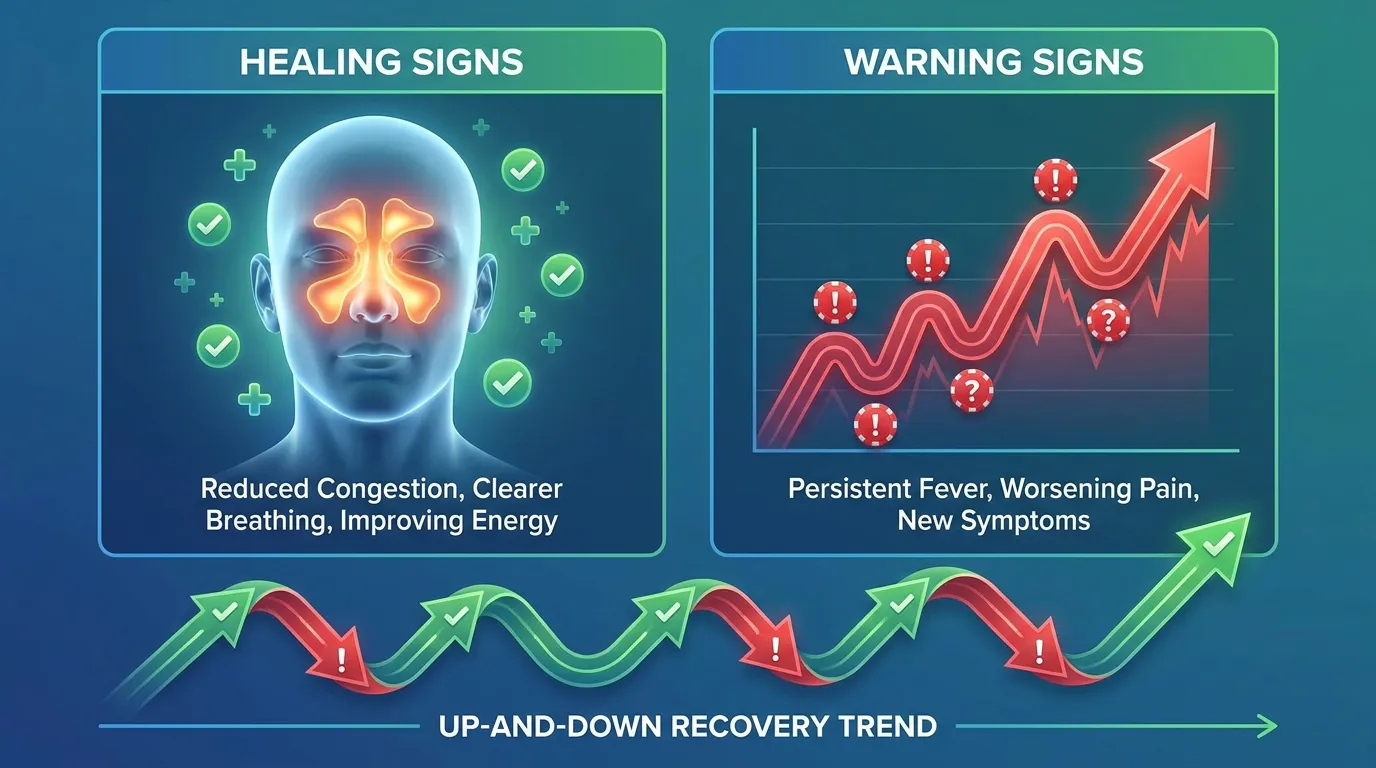
Over the first week: congestion usually starts to ease, breathing may feel more open, and sleep or airflow can improve even before everything feels fully settled. Feeling better quickly does not mean healing is complete; mucosal recovery continues gradually, and on-and-off stuffiness—especially at night or in dry air—is common as swelling resolves. Gradual, uneven improvement over days is a reassuring sign of normal healing.
Not typical (call your ENT): heavy bleeding that doesn’t slow, fever or chills, worsening pain or swelling, severe headache, stiff neck, confusion, vision changes, or shortness of breath. When in doubt, call your surgeon’s office, especially if symptoms are escalating rather than improving.

Sinuplasty Recovery Timeline (Day-by-Day / Week-by-Week)
Everyone heals at their own pace; always defer to your specific post-op instructions.
Day 0 (procedure day): you may notice congestion or pressure and tiredness and will likely want a quiet evening; rest, hydrate, and keep your head elevated as you relax.
Days 1–2: ongoing congestion and mild tenderness are common; many resume normal daily activities in 1–2 days if approved. Avoid nose blowing for 24–48 hours, or as directed by your surgeon.
Days 3–7: breathing often starts to feel clearer and energy improves; many return to work or school quickly, and more vigorous activity may be resumed around a week with individual clearance.
Weeks 2–8: you may feel normal, but mucosal healing and remodeling are still occurring; continue your aftercare plan as directed, as symptoms often keep refining over this period. Early comfort often returns in days; deeper mucosal healing continues over weeks.
Planning Tip: Align Your Schedule With Quiet Days
Keep the first 24–48 hours lighter if possible: avoid a big presentation the next day, arrange help with small children for one evening, and stock up on saline supplies ahead of time. A small buffer makes it easier to rest if congestion or fatigue lingers initially.

Saline Rinses or Sprays
Saline care is often central to aftercare because it can gently clear mucus, reduce crusting, and support a healthy healing environment. Discuss specifics with your care team: whether to use sprays, rinses, or both; when to start; safe water guidance (use distilled, sterile, or previously boiled then cooled water for rinses); and device hygiene (clean and air-dry bottles or neti devices regularly). General guidance: https://sleepandsinuscenters.com/blog/nasal-rinses-how-often-should-you-use-them
Avoid Nasal Pressure
Pressure can irritate tender tissues early on. Avoid blowing your nose for 24–48 hours or longer if your surgeon prefers, and if you sneeze, do so with your mouth open to reduce pressure. Early on, aim to calm swelling rather than force airflow.

Sleep Positioning and Home Environment
Small comfort tweaks help: elevate your head (especially the first night or two), stay well hydrated to keep mucus thinner, use humidified air in dry environments, and avoid smoke and strong irritants. These adjustments can noticeably reduce that fullness feeling.
Activity and Exercise
Light walking is a reasonable restart if you feel up to it. More intense workouts should wait until you’re feeling steady and your surgeon clears you, often around a week depending on your situation. If eager to resume training, try a staged approach—short walk, gentle workout, then gradual return to baseline—while watching for increased pressure or bleeding.

What to Avoid After Balloon Sinuplasty (Do’s and Don’ts)
Nose blowing and popping ears: a common guideline is to avoid nose blowing for 24–48 hours, but follow your surgeon’s instructions; similarly, avoid forcefully equalizing ear pressure early on. Avoiding early pressure helps protect healing tissues.
Irritants and triggers: during the first week, minimize smoking or vaping exposure (including secondhand smoke), strong fragrances and harsh cleaning chemicals, dusty environments, and heavy outdoor exposure during peak pollen days if allergies are a factor. Reducing irritants lowers inflammatory background noise while you heal.
Travel and pressure changes: if concerned about flying or other pressure shifts, ask your ENT office for personalized timing—especially if pressure changes usually trigger sinus pain. A quick call can prevent discomfort and worry.
Causes of a Longer-Than-Expected Recovery (and What It Might Mean)
Normal variation: swelling and inflammation do not follow the same schedule for everyone. Some feel dramatically better in days; others improve more gradually. Track the trend—better week over week is reassuring.
Under-treated contributors: lingering symptoms can stem from allergies, irritant exposure (smoke, dust, workplace triggers), or baseline anatomy and inflammation differences. Background on chronic sinus inflammation: https://sleepandsinuscenters.com/chronic-sinusitis
When to worry: differentiate slow improvement from worsening symptoms. If pain, bleeding, fever, or vision-related symptoms intensify, contact your provider promptly. Overview: https://sleepandsinuscenters.com/blog/balloon-sinuplasty-complications-risks-side-effect
Treatment and Aftercare Plan (What Your ENT Might Recommend)
Saline care plan: your surgeon may outline whether to use sprays, rinses, or both, when to start, and how often to use them during the first one to two weeks; small technique adjustments can improve comfort and effectiveness.
Pain relief options: many patients describe discomfort as mild; if you need pain relief, ask which options are appropriate for you, especially if you have other medical conditions or take other medications.
Follow-up visits: even if you feel better quickly, follow-ups confirm that healing is on track and allow your team to tailor long-term prevention strategies.
Lifestyle Tips to Protect Your Results Long-Term
Keep inflammation down: manage allergies with a plan you and your provider agree on, reduce smoke and irritant exposure, and stay consistent during peak seasonal changes.
Daily sinus-friendly habits: prioritize steady hydration, consider humidifier use in dry months, and continue saline care if recommended. Think of balloon sinuplasty as opening the pathway, and daily habits as what keeps it calm and clear.
FAQs About Sinuplasty Recovery
How long does recovery take? Many people return to normal daily activities in 1–2 days and to fuller routines in about a week, while mucosal healing can continue for 1–2 months, with individual variation. Is congestion normal? Yes—congestion and mild discomfort are common in the first 24–48 hours and sometimes several days depending on swelling. When can I blow my nose? Often 24–48 hours, but your surgeon’s instructions are final. When can I go back to work or exercise? Many return to work quickly; more vigorous activity is often possible within about a week with individual clearance and depending on job demands. When should I call my ENT? Call for heavy bleeding, fever, worsening pain or swelling, severe headache, vision changes, stiff neck, or breathing problems, or any escalation rather than gradual improvement.
Conclusion: A Realistic, Reassuring View of Sinuplasty Recovery
For most patients, comfort and routine often return within days, while deeper healing continues over weeks. Focus on gentle habits (especially saline care), avoid early pressure, and keep follow-up appointments to support the best possible outcome as your sinuses stabilize. For individualized guidance or tailored recovery instructions, book an appointment with Sleep & Sinus Centers of Georgia at https://www.sleepandsinuscenters.com/
References (Sources Used)
1. Cleveland Clinic, Balloon Sinuplasty: https://my.clevelandclinic.org/health/treatments/21977-balloon-sinuplasty; 2. ENT of Georgia South, What Is the Balloon Sinuplasty Recovery Time?: https://entgasouth.com/blog/what-is-the-balloon-sinuplasty-recovery-time; 3. Texas Sinus & Snoring, Post-Balloon Sinuplasty Recovery: https://texassinusandsnoring.com/blog/post-balloon-sinuplasty-recovery/
This article is for educational purposes only and is not medical advice. Please consult a qualified healthcare provider for diagnosis and treatment.
Don’t let allergies slow you down. Schedule a comprehensive ENT and allergy evaluation at Sleep and Sinus Centers of Georgia. We’re here to find your triggers and guide you toward lasting relief.