Septorhinoplasty Surgery Video: Step-by-Step Procedure Guide
Watching a septorhinoplasty surgery video can be reassuring—especially if you’re researching what actually happens in the operating room and why certain steps matter for breathing and appearance. A well-made, educational video can also help you ask better questions at your consult, because you’ll recognize the “big moments” (like septal straightening, grafting, and splinting) and what they’re meant to accomplish.
Medical note: This article explains common steps shown in educational surgical videos and is not a DIY surgical guide. Surgical planning and technique vary by anatomy and surgeon.
Quick Takeaways (For Patients)
- Septorhinoplasty often combines functional goals (better airflow) with cosmetic goals (shape and symmetry) in one operation.
- Educational videos often compare closed vs open rhinoplasty approaches—both can be appropriate depending on your anatomy and goals.
- A high-quality septorhinoplasty surgery video is often structured, labeled, and focused on anatomy and decision-making rather than sensational content.
- Recovery is measured in weeks to months: congestion and swelling early on, with slower refinement over time.
- Contact your surgeon promptly if you have concerning symptoms (for example, heavy bleeding, fever, or worsening pain that doesn’t seem typical for your stage of recovery).
- If you’re ready to discuss your own breathing concerns and goals, it can help to book an appointment so your anatomy can be evaluated in person.
What Is Septorhinoplasty (And Why It’s Often Both Functional and Cosmetic)
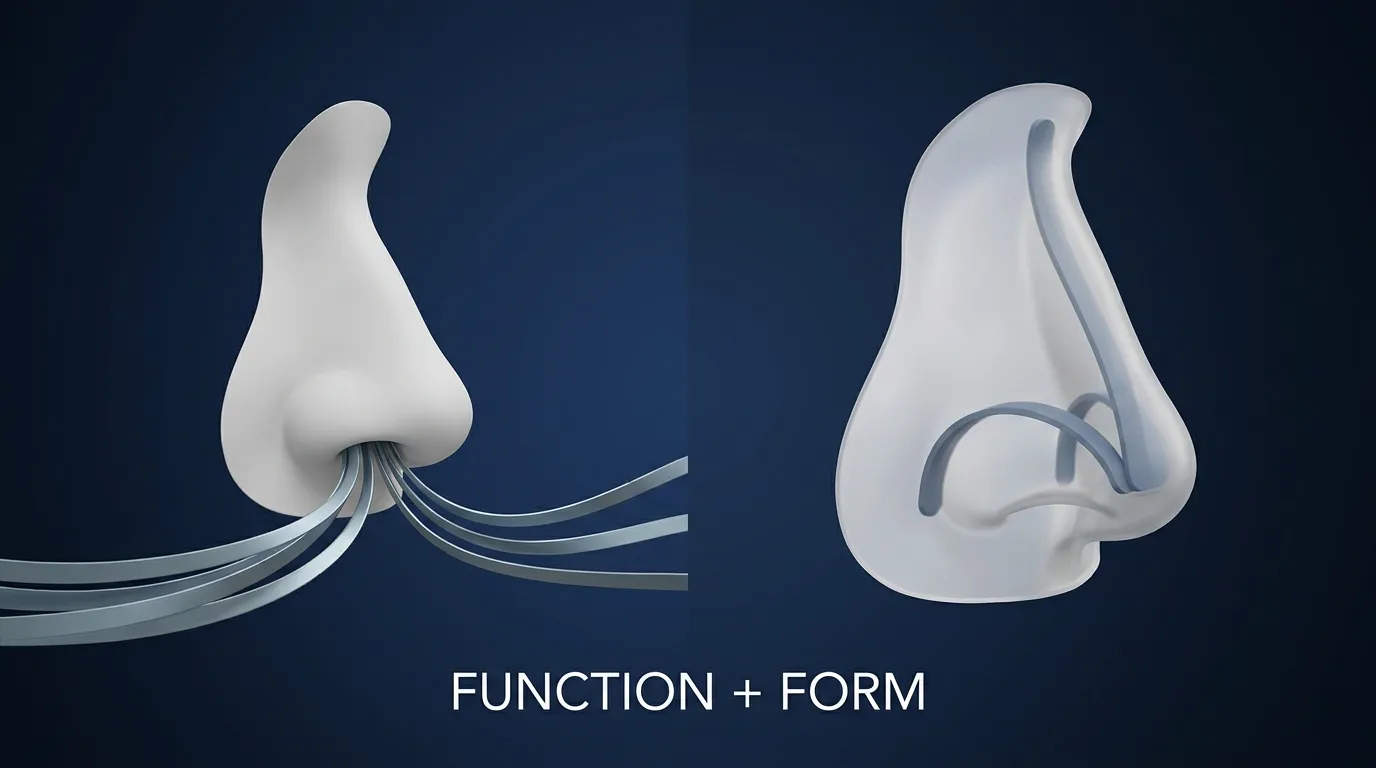
Septorhinoplasty is often easiest to understand as “inside + outside” nose surgery: the internal structures affect airflow, and the external framework affects both appearance and long-term stability. In many educational reviews, the emphasis is that function and form are linked—improving breathing sometimes requires strengthening support, not just “making space.” [3]
Septoplasty vs Rhinoplasty vs Septorhinoplasty
- Septoplasty: straightens or repairs the septum (the internal divider between nostrils) to improve airflow. Think of the septum like the central wall in a hallway—if it bows into the passage, airflow narrows.
- Rhinoplasty: reshapes the outside of the nose for appearance and/or structural support.
- Septorhinoplasty: combines both—often to improve breathing and, when desired, refine appearance in a single plan. Educational reviews commonly describe these combined functional + aesthetic goals. [3]
If you’re trying to understand whether you need valve support work in addition to septum straightening, this overview can help: functional rhinoplasty vs septoplasty.
Common Functional Goals (Breathing)
- Correct a septal deviation (a common driver of nasal obstruction)
- Improve nasal valve support (internal/external valve collapse)
- Reduce obstruction that doesn’t respond to appropriate medical therapy
Common Aesthetic Goals (Appearance)
- Smoothing or refining a bridge contour (including dorsal hump reduction in select cases)
- Tip reshaping and/or added tip support
- Improving symmetry (within the limits of real anatomy and healing)
Bottom line: Form and function are linked—plans that support the nose’s framework often help breathing and appearance work together over time.
Symptoms That May Lead Patients to Consider Septorhinoplasty
Some patients start with breathing complaints and later realize the external shape has shifted after injury. Others do the reverse—researching cosmetic rhinoplasty and discovering their obstruction is structural. A consult helps connect symptoms to anatomy.
Breathing / Functional Symptoms
- Ongoing nasal blockage on one side—or both
- Mouth breathing at night or poor sleep quality
- Difficulty exercising due to limited nasal airflow
- Congestion that persists despite reasonable medical management
Appearance or Structural Concerns (Often After Injury or Prior Surgery)
- A crooked nose after trauma
- Visible asymmetry or a bump that bothers you
- Tip droop or visible collapse when breathing in
When nasal obstruction may be urgent: After significant trauma, sudden nasal shape change, breathing trouble, or persistent/heavy nosebleeds should be evaluated urgently.
If your symptoms are long-standing or worsening despite good medical care, an in-person exam can clarify whether structural issues are part of the problem.
What Causes Nasal Obstruction That Septorhinoplasty Can Fix?
Nasal blockage isn’t one single problem—videos often highlight that multiple structures can “stack up” to create obstruction. You’ll frequently hear surgeons describe restoring a stable framework so the airway stays open, not just immediately after surgery but long-term. [3]
Internal Structural Causes
- Deviated septum (one of the most common reasons people research deviated septum surgery)
- Septal spurs (localized bony/cartilage protrusions)
- Narrowing after prior fracture
For a deeper look at symptoms and next steps, see: deviated septum relief.

External/Support Causes (Nasal Valve Problems)
Even with a straight septum, some people still struggle to breathe because the “framework” that keeps the nasal airway open is weak or narrow—especially at the internal nasal valve. Supporting this area is a core concept in functional rhinoplasty education. [3]
A helpful analogy: if the nasal valves are like the entrance of a tent, the “poles” (cartilage support) must be strong enough to resist inward collapse when you inhale.
Other Conditions That May Mimic “Needs Surgery”
- Allergic rhinitis or non-allergic (chronic) rhinitis
- Sinus inflammation/infection
- Turbinate enlargement (sometimes treated medically, sometimes with a reduction procedure)
Accurate diagnosis matters—treatment should match the true cause of obstruction, not just the symptoms.

Where to Watch High-Quality Septorhinoplasty Surgery Videos (And Why Source Matters)
If you’re searching for a septorhinoplasty surgery video, the source matters. Patient-facing platforms can be inconsistent, while journal and society resources are more likely to be educational and standardized. In higher-quality videos, the camera work is steady, the anatomy is labeled, and the narration explains why a step is chosen—rather than simply showing instruments.
Peer-Reviewed Medical Journal Video Libraries
Examples of reputable surgical video hubs include:
- A journal-hosted open septorhinoplasty video demonstration [1]
- Peer-reviewed plastic surgery video collections [2]
Professional Societies That Promote Standards & Education
Society education pages and meeting content often emphasize safety, training, and technique standards:
- ISAPS (International Society of Aesthetic Plastic Surgery) [5]
- ISRS (International Society of Rhinoplasty Surgeons) via AAFPRS [6]
Why “board-certified / society-curated” video sources can be safer for patients
- Clear anatomy labeling and step organization
- Fewer misleading claims
- More emphasis on decision-making (the “why”), not just dramatic footage
Choose sources that explain both what is being done and why—context is key for learning.
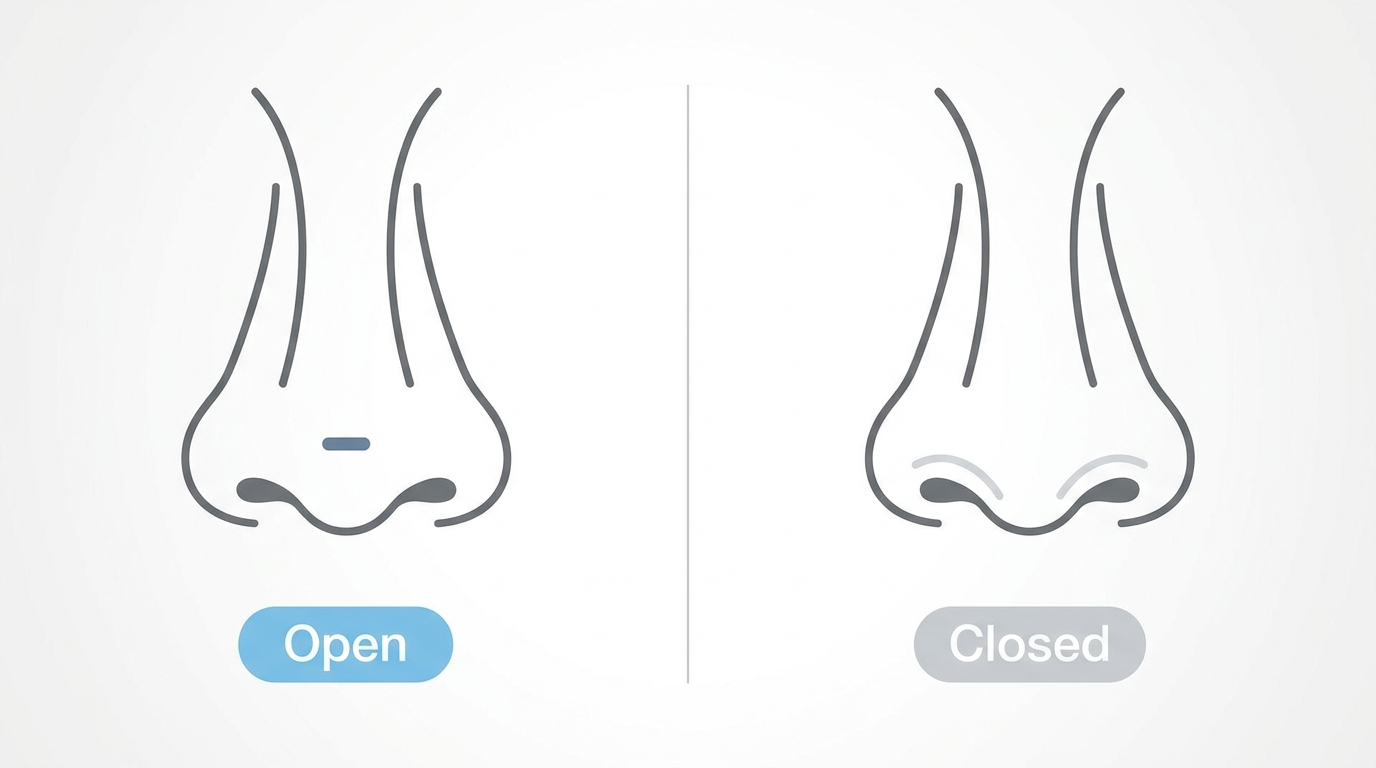
Open vs Closed Septorhinoplasty—What You’ll See in Videos
A common theme in any septorhinoplasty surgery video is the approach: open vs closed. Many videos will show the approach early, then return to it later when discussing closure and scarring.
Open Approach (External “Columellar” Incision)
- A small incision is made on the columella (the strip of skin between the nostrils), plus internal incisions.
- The skin is lifted to improve visibility and precision when working on the nasal framework.
- Often chosen for complex reconstruction, significant tip work, or revision cases. Education resources frequently describe visibility advantages with the open approach. [1][3]
Closed Approach (Incisions Inside the Nostrils)
- Incisions are inside the nostrils only (no external columellar incision).
- May be appropriate when planned changes are more limited or when a surgeon can achieve goals without full exposure. Patient education commonly highlights this difference in scarring and access. [4]
Which approach is “better”?
Neither is universally “better.” The right choice depends on anatomy, goals (breathing and/or cosmetic), revision history, and surgeon experience—so it’s best viewed as a tailored decision rather than a one-size-fits-all rule. [4]
The best approach is the one that safely meets your goals in your surgeon’s experienced hands.
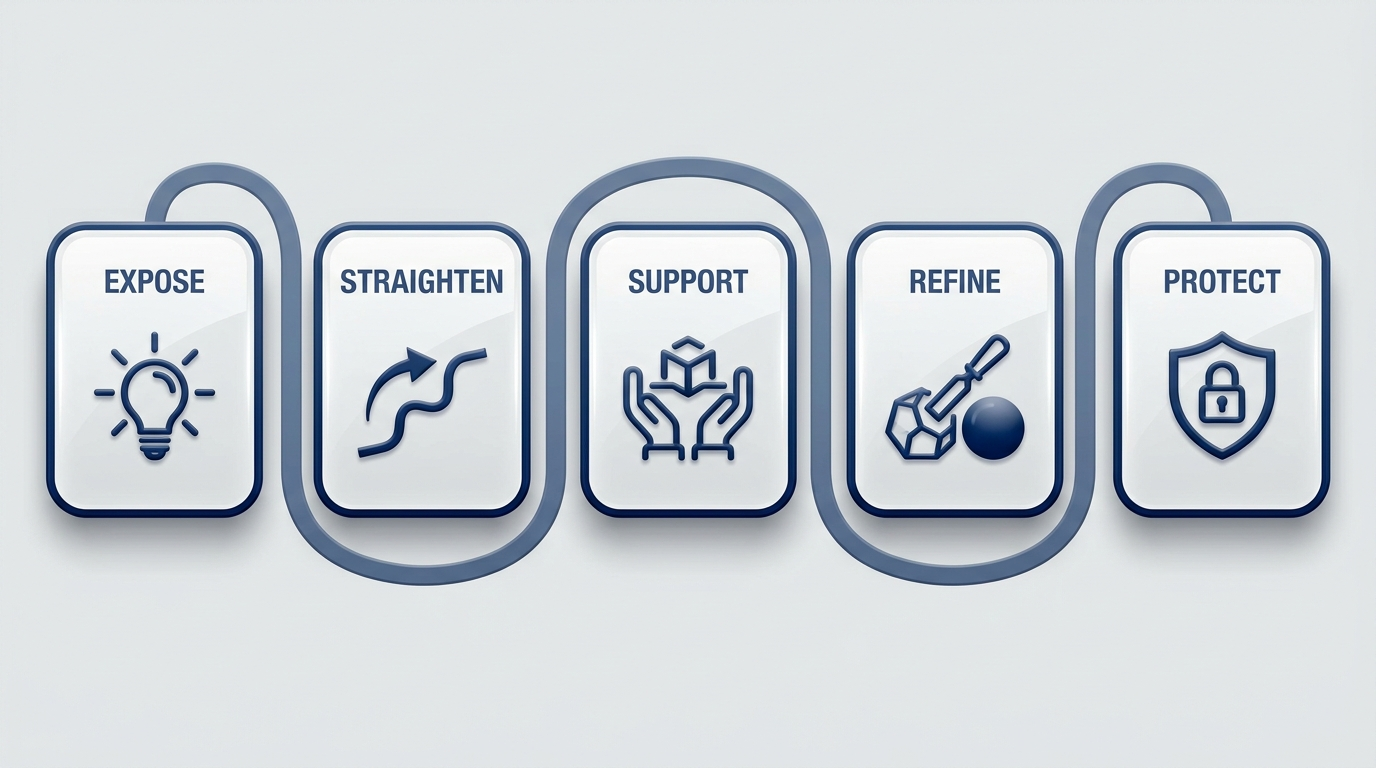
Septorhinoplasty Surgery Video—Step-by-Step Procedure Walkthrough (Patient-Friendly)
Below is a high-level septorhinoplasty procedure step by step outline—focused on what’s happening and why, not “how to do it.” In educational videos, steps may be rearranged based on the specific problem being corrected, but the themes are consistent: exposure, straightening, support, refinement, and protection during healing. [3]
Step 1 — Pre-Op Planning You Don’t See on Camera (But Matters Most)
Before a single incision, planning typically includes:
- Breathing assessment and nasal exam (sometimes nasal endoscopy)
- Photo analysis and agreement on realistic functional + cosmetic goals
- Discussion of graft material needs (often septal cartilage; sometimes ear or rib in complex cases) [3]
A practical example: a patient may say, “My main goal is to breathe better at night, but I’d also like the bridge to look smoother.” The plan should address both—if appropriate—without overpromising symmetry or “perfection.” For related context, see functional rhinoplasty vs septoplasty.
Step 2 — Anesthesia and Sterile Prep (What Videos Usually Show First)
Many septorhinoplasty procedures are done under general anesthesia, though anesthesia type varies by case and surgeon. Videos often show:
- Sterile preparation and draping
- Local anesthetic injections with medication to reduce bleeding and swelling
Step 3 — Incisions (Open or Closed)
In an open septorhinoplasty video, you’ll usually see:
- A small columellar incision plus internal incisions, then careful elevation of soft tissue. [1]
In a closed approach:
- Internal incisions only, with work performed through those openings. [4]
Step 4 — Septoplasty Portion (Improving the Airway)
This is the internal “airflow” component:
- The surgeon corrects deviated cartilage and/or bone
- A key goal is improving airflow while preserving support, so the nose remains stable long-term [3]
In teaching videos, you’ll often see the surgeon protect a stable “support zone” while correcting what’s blocking airflow—because removing too much support can create new breathing issues later.
Step 5 — Structural Support & Grafting (Functional Rhinoplasty Component)
Many educational videos emphasize that breathing is not only about the septum—it’s also about support:
- Grafts may reinforce the nasal valves and stabilize the bridge or tip
- The purpose is to help the airway stay open during healing and over time [3]
Step 6 — Aesthetic Refinements (If Part of the Plan)
If cosmetic changes are planned, a septorhinoplasty surgery video may show:
- Bridge contour adjustments (refining profile and smoothness)
- Tip shaping and support changes
- Symmetry refinements (often subtle, always anatomy-dependent)
A clinician teaching point you’ll often see implied: small, controlled adjustments can be safer than aggressive changes—especially when breathing support is also being rebuilt. [3]
Step 7 — Closure, Splints, and Dressings
To protect the new structure early on, surgeons may use:
- Sutures to close incisions
- Internal splints (in some cases)
- External cast/splinting to support the nose as swelling begins
Think “expose, straighten, support, refine, protect”—that’s the common arc you’ll see across credible surgical videos.

What Recovery Looks Like After Septorhinoplasty (Timeline Expectations)
Healing is a process—more like a gradual curve than a single finish line. For a detailed guide, see our septorhinoplasty recovery timeline.
First Week (Most Noticeable Swelling/Stuffiness)
- Congestion is common from swelling and internal healing
- Bruising under the eyes may occur
- Splint/cast removal timing varies by surgeon and technique
Many patients describe the first week as feeling “stuffy” rather than “painful,” like having a significant cold plus tenderness.
Weeks 2–6 (Breathing Often Improves Gradually)
- Swelling continues to decrease
- For many patients, breathing improves gradually but may fluctuate day to day as tissues heal
Months 3–12 (Refinement Phase)
- Tip swelling can last longer than bridge swelling
- Final contour and “settling” may take many months
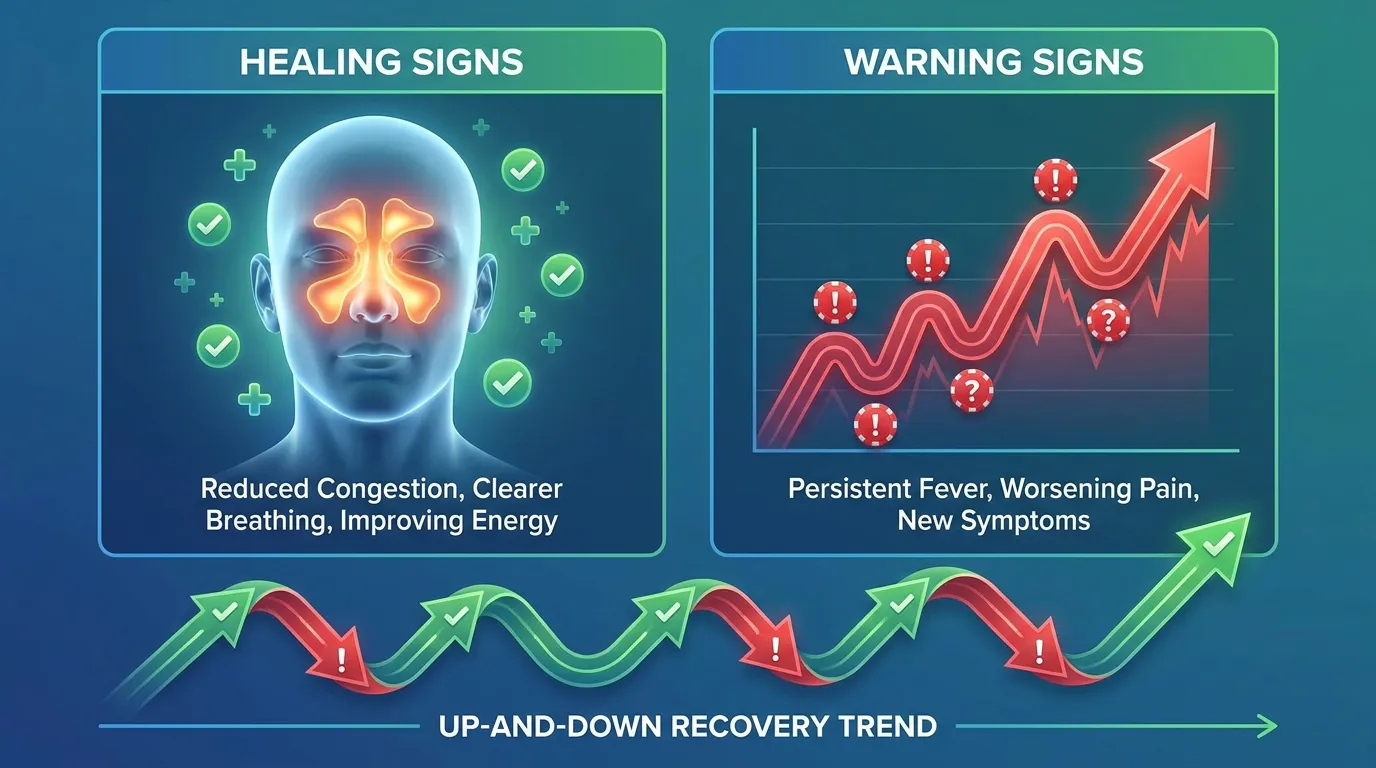
Patient tip: Healing is not linear—good days and bad days can be normal during septorhinoplasty recovery.
Expect progress in stages—comfort and airflow usually trend better over time, even if day-to-day changes feel uneven.
Risks, Side Effects, and Complications to Understand (Not to Fear)
A trustworthy video (and a trustworthy consult) doesn’t pretend surgery is risk-free—it puts risks in context and explains how surgeons reduce them.
Common, Usually Temporary Effects
- Swelling, bruising, congestion
- Numbness or altered sensation
- Mild bleeding or drainage early on
Less Common Risks (Discuss With Your Surgeon)
- Infection
- Septal perforation
- Persistent nasal obstruction or valve weakness
- Need for revision surgery
- Cosmetic dissatisfaction or residual asymmetry
- Scarring concerns (open approach scars are typically small, but scarring varies) [4]
Good planning and careful technique aim to minimize risks, but informed consent means knowing the possibilities.
Alternatives and Complementary Treatments (When Surgery Isn’t the First Step)
Medical Management Options
Depending on the cause, non-surgical management may include:
- Allergy treatment plans
- Nasal steroid sprays (when appropriate)
- Saline irrigation routines
Other Procedures Sometimes Considered
- Turbinate reduction (when turbinate hypertrophy is a major contributor)
- Septoplasty alone (when appearance and external support are not concerns)
If you’re also comparing financial considerations as you research options, you may find this helpful: septorhinoplasty cost guide.
Right treatment, right timing—start with accurate diagnosis and stepwise care.
Lifestyle Tips for Best Outcomes (Before and After Surgery)
Pre-Op Tips
- Avoid nicotine as directed (it can affect circulation and healing)
- Review medications and supplements that may increase bleeding risk
- Plan time off work and help at home for the first several days
Post-Op Tips
- Sleep with your head elevated
- Avoid heavy lifting and contact sports until cleared
- Don’t blow your nose until your surgeon says it’s safe
- Attend follow-ups (cleaning and aftercare instructions vary)
Preparation, gentle recovery habits, and follow-up care help protect your results.
FAQs
“Is septorhinoplasty painful?”
Many patients describe more pressure and congestion than sharp pain, especially in the first week. Discomfort levels vary, and your surgical team typically plans pain control and aftercare around your needs.
“How long until I can breathe normally again?”
For many patients, breathing improves gradually over weeks as swelling goes down. It’s common for airflow to fluctuate during healing—especially early on.
“Will I have a visible scar with open septorhinoplasty?”
In the open approach, there is a small incision on the columella, but it’s typically designed to be subtle once healed. Closed approaches avoid that external incision, using internal incisions only. [4]
“What’s the difference between septorhinoplasty and septoplasty?”
Septoplasty focuses on straightening the septum for airflow. Septorhinoplasty combines septal correction with external reshaping and/or structural support to address both breathing mechanics and appearance when needed. [3]
“Can septorhinoplasty fix snoring or sleep problems?”
It can help if nasal obstruction is a contributor, but snoring and sleep apnea often have multiple causes beyond the nose. An evaluation can help clarify what’s most likely driving symptoms.
“How do I choose a surgeon?”
Look for appropriate board certification, substantial rhinoplasty/septorhinoplasty experience, a thorough functional evaluation (not just cosmetic planning), and a clear discussion of options and limitations. Society education and standards resources can also be a useful credibility signal. [5][6]
Clear goals, realistic expectations, and an experienced, communicative surgeon are key ingredients for a good plan.
When to Book a Consultation
Consider an evaluation if:
- You have chronic nasal obstruction despite appropriate medical therapy
- You have breathing symptoms plus visible deviation after injury
- You suspect nasal valve collapse (nostrils pull inward when you inhale)
- You want both functional improvement and cosmetic refinement
If you’re ready to discuss options at Sleep and Sinus Centers of Georgia, you can book an appointment here: schedule a consultation.
References
1. Open septorhinoplasty video (Journal of Laryngology & Otology): https://www.jlo.co.uk/video/open-septorhinoplasty/
2. Plastic and Reconstructive Surgery video collections: https://journals.lww.com/plasreconsurg/pages/video.aspx?autoPlay=false&v=127
3. Educational review (PMC): https://pmc.ncbi.nlm.nih.gov/articles/PMC7276476/
4. Patient education on closed vs open differences: https://ohns.ucsf.edu/facialplastics/closed-vs-open-rhinoplasty-differences-know
5. ISAPS: https://www.isaps.org/
6. International Society of Rhinoplasty Surgeons (ISRS) via AAFPRS: https://www.aafprs.org/isrs
This article is for educational purposes only and is not medical advice. Please consult a qualified healthcare provider for diagnosis and treatment.
Don’t let allergies slow you down. Schedule a comprehensive ENT and allergy evaluation at Sleep and Sinus Centers of Georgia. We’re here to find your triggers and guide you toward lasting relief.