
Septoplasty Risks: Common Complications, Side Effects, and Recovery Tips
Breathing through your nose shouldn’t feel like a constant struggle. If a deviated septum is blocking airflow, septoplasty can be an effective way to improve nasal breathing for appropriately selected patients—especially when septal deviation is the main cause of obstruction—but it’s still surgery. Understanding septoplasty risks helps you make a confident, informed decision (or recover more smoothly if you’ve already had the procedure).
What Is Septoplasty (and Why It’s Done)?
Quick definition (in plain language)
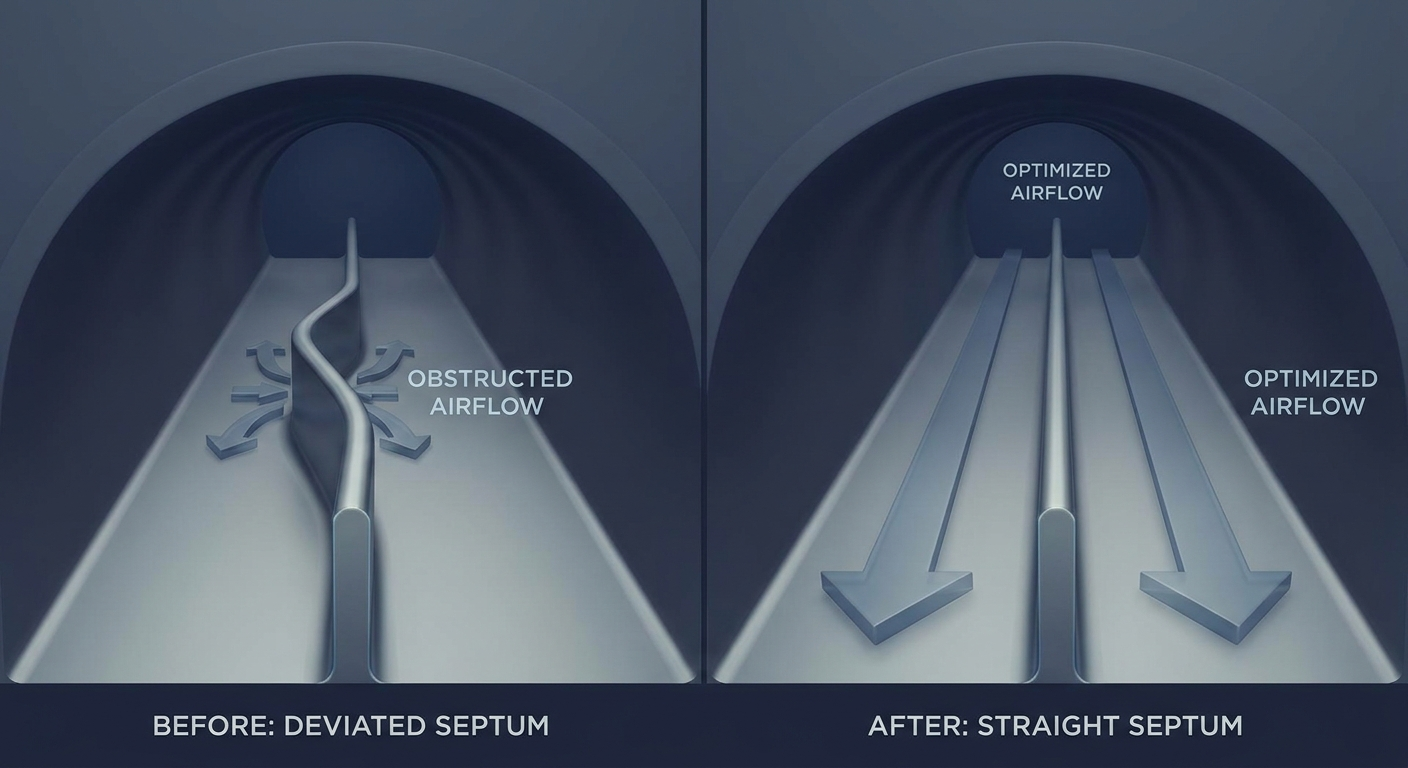
Septoplasty is a procedure to straighten the nasal septum—the wall of cartilage and bone that divides the nose into left and right sides—so air can pass through more easily. (Mayo Clinic; ASPS)
A helpful analogy: if the septum is like the “divider” in a two-lane tunnel, a deviation can narrow one lane so much that traffic (airflow) backs up. Septoplasty aims to re-center that divider and reopen the space.
Symptoms a deviated septum can contribute to
- Ongoing nasal blockage on one or both sides
- Mouth breathing, snoring, or poor sleep
- Recurrent nasal pressure or congestion that may feel sinus-like
- Difficulty breathing through the nose during exercise
For a broader overview, see our guide to deviated septum relief options: https://sleepandsinuscenters.com/deviated-septum-relief.
Septoplasty vs. related procedures
- Septoplasty vs turbinate reduction: Turbinates help warm and filter air. If they’re enlarged, turbinate reduction may be done with septoplasty to improve airflow.
- Septoplasty vs rhinoplasty: Septoplasty focuses on function (breathing), while rhinoplasty is typically aimed at appearance, though procedures can sometimes be combined. (ASPS)
— In short: septoplasty straightens the nasal divider to help air move more freely—for the right patients. —
Understanding Risk: How Common Are Septoplasty Complications?
Why “risk” varies from person to person
Septoplasty complications aren’t “one-size-fits-all.” Risks can vary based on:
- Your anatomy and the severity/location of the deviation
- Allergies or chronic inflammation (rhinitis)
- Smoking/vaping and irritant exposure
- Bleeding tendencies and medications/supplements
- Surgical technique and whether additional procedures are done at the same time
Two people can have the same surgery name on paper but very different noses, healing environments, and add-on procedures—so their risk profiles can differ.
Common vs. rare complications (setting expectations)
It helps to think in categories:
1) Immediate postoperative issues (first hours to 1–2 weeks), like septoplasty bleeding, infection, or swelling-related blockage
2) Structural or sensory risks, like septal hematoma, septal perforation, or smell changes after septoplasty
3) Functional outcome risks, like symptoms that don’t improve as much as expected (sometimes leading to revision septoplasty)
A clinician-style way of framing it: most issues are either healing-related (temporary swelling/crusting) or structure-related (something changes in the tissue/shape). Knowing which bucket a symptom fits can make follow-up conversations clearer.
A note on evidence
Complication rates can look different across studies because researchers may define “complication” differently and follow patients for different lengths of time. Systematic reviews highlight this variability in septoplasty outcomes and reported issues. (ScienceDirect systematic review)
— Bottom line: risk varies by your anatomy, health, and the exact procedure performed. —
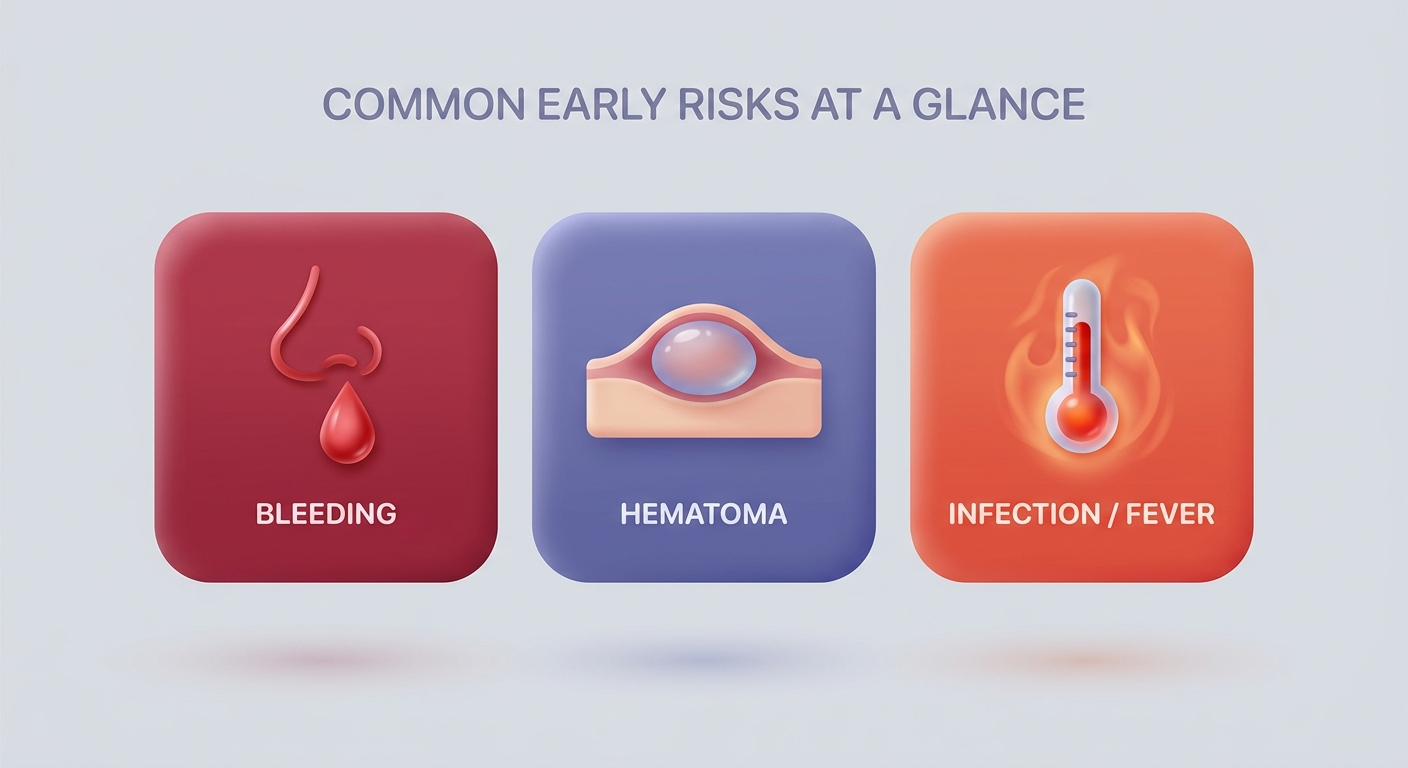
Most Common Immediate (Early) Septoplasty Risks
These are issues patients are most likely to notice early—often within the first 1–2 weeks.
Bleeding (one of the most common early issues)
Some light oozing or spotting can be expected after nasal surgery, especially early on. (Mayo Clinic; ASPS) Many patients describe it as a mild nosebleed that comes and goes, particularly in the first couple of days.
Concerns tend to be higher when bleeding is:
- Heavy or persistent
- Associated with large clots
- Leading to repeated swallowing of blood or nausea
Common triggers discussed in post-op instructions often include strenuous activity too soon, nose blowing, or using medications/supplements that affect bleeding. If you’re unsure whether something you take matters, ask—“over-the-counter” doesn’t always mean “bleeding-neutral.”
Septal hematoma (blood trapped in the septum)
A septal hematoma is when blood collects between the septal lining and the cartilage/bone. It matters because, if unrecognized, it can interfere with healing and the health of septal cartilage. (Ochsner Journal; Mayo Clinic)
Symptoms patients may notice include:
- Rapidly worsening nasal blockage (often more sudden than typical congestion)
- Increasing pressure/pain
- Swelling inside the nose
A simple way to think about it: swelling after surgery is expected, but a hematoma can feel like a faster “ballooning” or a sudden shift in how blocked you are. Evaluation is typically prompt, and treatment may involve drainage and close follow-up when needed.
Infection
Infection is a known surgical risk. (Mayo Clinic; ASPS) Symptoms that can raise concern include:
- Fever
- Worsening pain (instead of gradual improvement)
- Foul-smelling drainage
- Increasing redness or swelling
ENT teams often remind patients that the trend matters: some discomfort is normal, but the overall direction should be slowly better—not sharply worse. This is one reason follow-up visits matter—early changes can be identified and managed before they become bigger setbacks.
— Most early symptoms are temporary; call sooner if the trend is getting worse, not better. —
Structural Risks (Nose Changes) and What They Can Look Like
Septal perforation (a hole in the septum)
A septal perforation is an opening that develops in the septum. Possible symptoms include:
- Whistling when breathing
- Crusting and dryness
- Recurrent nosebleeds
Why it can happen (simplified): healing problems, infection, tissue injury, or complications such as an untreated hematoma can contribute. (Mayo Clinic; systematic review context)
Management may include moisturizing measures (saline, ointments), a septal button in some cases, or surgical repair in select situations depending on size and symptoms. Some perforations are found because of symptoms; others may be discovered during follow-up exams.
Changes in nose shape (cosmetic/structural change)
Septoplasty is designed to improve function. Subtle changes in external appearance are uncommon but possible. (Mayo Clinic; ASPS)
If you notice changes early on, remember that swelling can temporarily distort appearance. Follow-up visits are the best time to discuss what you’re seeing and what is expected during healing, especially if something looks progressively different rather than gradually improving.
— Structural changes are uncommon, but follow-ups help catch and manage them early. —
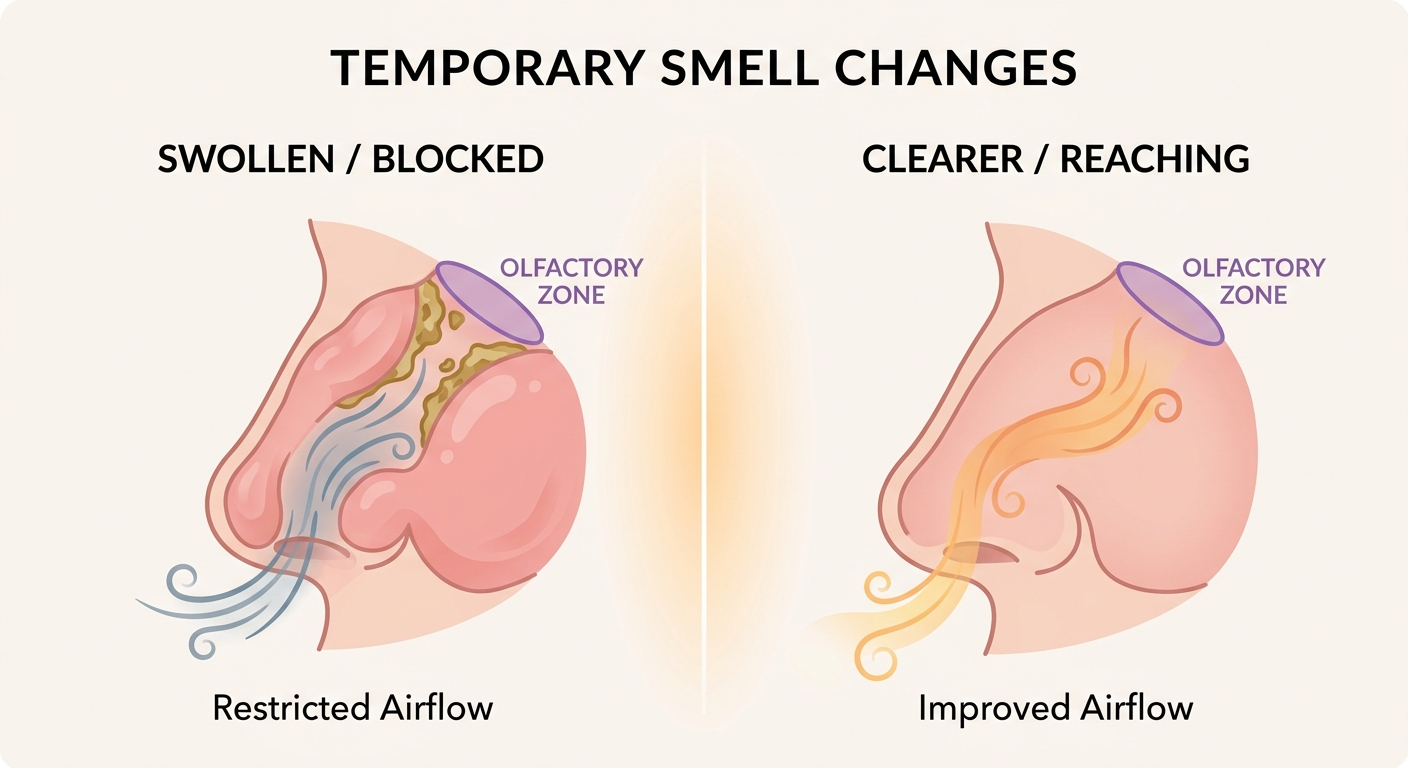
Sensory Side Effects (Smell Changes, Numbness) — Usually Temporary, Sometimes Not
Decreased or altered sense of smell
Smell changes after septoplasty can occur, commonly due to swelling, crusting, and temporary inflammation during healing. Many patients improve as the inside of the nose settles and clears. Persistent or worsening loss of smell should be evaluated. (Mayo Clinic)
A practical example: if your nose is swollen and crusted, odor molecules can’t reach the smell receptors as effectively—so the issue may be airflow access rather than permanent smell damage.
Temporary numbness in the nose, upper gums, or teeth
Some people notice temporary numbness or pins and needles in areas such as the upper lip, upper gums, or front teeth. This can happen when local nerves are irritated by swelling or surgical manipulation and often improves gradually with recovery. (Mayo Clinic)
If you’ve ever had dental work and felt temporary tingling afterward, the concept is similar: irritated nerves can take time to settle, even when healing is otherwise normal.
— Most sensory changes improve as swelling resolves; persistent changes warrant evaluation. —
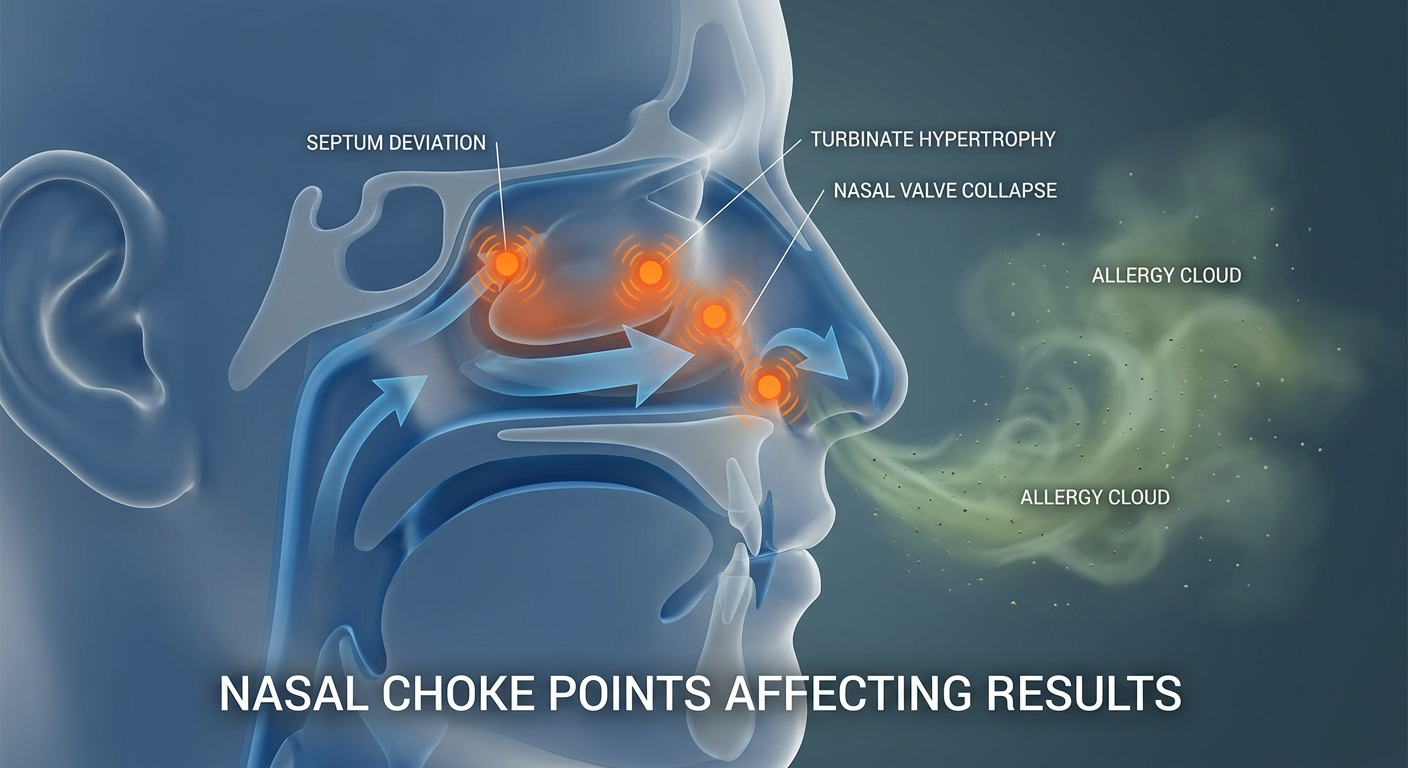
Functional Outcome Risks: When Symptoms Don’t Improve (or Return)
Persistent nasal obstruction after septoplasty
One of the more frustrating septoplasty side effects is realizing breathing isn’t as improved as expected—or symptoms return after initial improvement. (Mayo Clinic) Reasons this can happen include:
- Residual septal deviation
- Turbinate enlargement not fully addressed
- Nasal valve collapse (the “framework” of the nasal airway)
- Allergies/chronic rhinitis
- Scar tissue or internal adhesions
Think of nasal obstruction as more than one choke point. Septoplasty addresses the septum, but airflow can still be limited by inflammation, turbinate size, or the nasal valve area. Re-evaluation may include a detailed nasal exam (sometimes endoscopy), discussion of inflammation control, and occasionally imaging. Outcomes can vary across studies and patient groups. (Systematic review context)
Revision septoplasty (needing another procedure)
Revision septoplasty may be considered when symptoms persist after adequate healing time or when structural issues remain. (Mayo Clinic; ASPS) Risk can be lowered by confirming the true cause(s) of obstruction—because not all nasal blockage is only the septum.
— If breathing doesn’t improve enough, a focused re-evaluation can pinpoint the remaining bottleneck. —
General Surgical & Anesthesia Risks (Not Unique to Septoplasty)
Anesthesia-related risks
Like many procedures, septoplasty can involve sedation or general anesthesia. Anesthesia risks can include medication reactions and, rarely, breathing or heart-related complications; pre-op screening and a careful medication/history review are designed to reduce these risks. (Mayo Clinic)
If you’re anxious about anesthesia, a practical step is to bring a written medication/supplement list and ask, What should I stop, and when? That question alone can prevent confusion in the days leading up to surgery.
— Pre-op screening and clear medication lists reduce anesthesia risk. —

Septoplasty Recovery Tips to Lower Complication Risk
These tips are general education—your surgeon’s plan comes first.
The first 24–72 hours (focus: bleeding + swelling control)
- Head elevation (including during sleep) to reduce swelling
- Cold compresses if approved by your surgeon
- Take medications exactly as directed
- Hydration and gentle foods if your throat feels sore after anesthesia
A concrete tip: set up a recovery station (extra pillows, saline if recommended, tissues, water) so you’re not bending and lifting repeatedly—two things that can increase pressure and discomfort early on.
The first 1–2 weeks (protect healing tissue)
- Avoid nose blowing
- Avoid heavy lifting/straining and vigorous exercise
- Avoid bending over for long periods
Also ask your surgeon which medications and supplements can affect bleeding risk (including common anti-inflammatories). If you need pain control, follow your surgeon’s guidance.
Nasal care (saline + gentle hygiene)
If your surgeon recommends saline sprays or rinses, they may help reduce crusting and improve comfort during healing. If rinses are used, standard safety guidance is to use sterile/distilled water (or previously boiled and cooled water) to lower infection risk.
— Small daily habits—elevation, saline, activity limits—make a big difference in healing. —
Warning Signs After Septoplasty—When to Call Your Surgeon or Seek Urgent Care
While most septoplasty risks are uncommon or manageable, it helps to know what should trigger faster contact.
Call urgently for possible bleeding/hematoma
- Heavy bleeding that doesn’t slow
- Rapid swelling, worsening blockage, or increasing pain/pressure
Call for possible infection
- Fever
- Worsening redness/swelling
- Foul drainage or feeling significantly worse instead of gradually better
Breathing concerns
- Shortness of breath, chest pain, or severe dizziness should be treated as urgent—seek prompt evaluation. (Mayo Clinic)
— When in doubt, call—early attention prevents small issues from becoming big ones. —
Treatments If a Complication Happens (What Patients Can Expect)
How bleeding is managed
Depending on severity, management may include home-care steps your surgeon reviews, an in-office exam, and sometimes packing or cautery when indicated. (Mayo Clinic; ASPS)
How infection is managed
Treatment may involve antibiotics, possible culture in select cases, and follow-up checks to confirm improvement. (Mayo Clinic; ASPS)
How structural issues are managed
- Septal perforation: moisturizing care, ointments/saline, septal button, or surgical repair in select cases
- Scar tissue/adhesions: may be addressed during follow-up visits, occasionally with in-office care depending on the situation (Ochsner Journal)
— Most complications are manageable, especially when addressed promptly. —
Lifestyle Factors That Can Improve Healing and Outcomes
Smoking/vaping and irritant exposure
Smoke and irritants can increase inflammation and dryness, which may make recovery less comfortable and potentially slow healing.
Sleep positioning for congestion and swelling
Head elevation during sleep is commonly used to reduce swelling and congestion early on.
Allergy and rhinitis control
Allergies and chronic rhinitis can mimic (or contribute to) obstruction even after the septum is corrected. Staying consistent with an approved plan can help symptoms not stick around. (Mayo Clinic; systematic review context)
— Support your nose from the outside in: avoid irritants, sleep smart, and control inflammation. —
FAQs About Septoplasty Risks and Side Effects
How risky is septoplasty overall?
Septoplasty is generally considered safe, but like any surgery, it carries risks. Recognized risks include bleeding, infection, septal hematoma, septal perforation, and temporary sensory changes. (Mayo Clinic; ASPS)
Is it normal to have congestion after septoplasty?
Yes—congestion is common early due to swelling, crusting, and healing tissue. Follow-up care helps ensure healing is on track.
Can septoplasty change the shape of my nose?
It can, but it’s not the goal of the procedure and isn’t common. Swelling can also temporarily change appearance. (Mayo Clinic)
Can septoplasty affect smell permanently?
Smell changes are often temporary and related to swelling or crusting, but persistent changes deserve evaluation. (Mayo Clinic)
What if I still can’t breathe well months later?
It may be due to residual deviation, turbinates, nasal valve issues, allergies/rhinitis, or scarring. Outcomes vary, and a focused re-evaluation can clarify next steps. (Mayo Clinic; systematic review context)
When is a septal perforation an emergency?
A perforation alone is not always an emergency, but heavy bleeding, severe pain, or worsening symptoms should be evaluated urgently.
— If a symptom surprises you or lasts longer than expected, ask your surgeon. —
Conclusion — How to Weigh Benefits vs. Septoplasty Risks
Most patients heal well, but being aware of septoplasty complications helps you spot issues early and set realistic expectations about swelling, recovery, and results. If you’re considering surgery, a helpful pre-op conversation includes:
- Which risks are most relevant to your health history?
- What symptoms should trigger a call?
- What’s the plan if breathing doesn’t improve as expected?
If nasal obstruction is affecting your sleep or quality of life, Sleep and Sinus Centers of Georgia can help you get a clear diagnosis and discuss treatment options, including whether septoplasty—or another approach—fits your situation. To take the next step, book an appointment at https://www.sleepandsinuscenters.com/.
Sources
- Mayo Clinic — Septoplasty overview and risks: https://www.mayoclinic.org/tests-procedures/septoplasty/about/pac-20384670
- American Society of Plastic Surgeons (ASPS) — Septoplasty safety: https://www.plasticsurgery.org/reconstructive-procedures/septoplasty/safety
- Ochsner Journal — Clinical discussion on septoplasty outcomes/complications: https://www.ochsnerjournal.org/content/19/4/353
- ScienceDirect — Systematic review context on outcomes/complications variability: https://www.sciencedirect.com/science/article/pii/S019607092300025X
This article is for educational purposes only and is not medical advice. Please consult a qualified healthcare provider for diagnosis and treatment.
Don’t let allergies slow you down. Schedule a comprehensive ENT and allergy evaluation at Sleep and Sinus Centers of Georgia. We’re here to find your triggers and guide you toward lasting relief.