Shellfish Allergy Symptoms and Anaphylaxis: Causes, Risks, and Treatment
Shellfish allergy is one of the most common food allergies in adults—and it usually lasts a lifetime. What makes it especially important is how unpredictable reactions can be: some people experience mild stomach upset or a few hives, while others can develop life-threatening anaphylaxis.
In this guide, you’ll learn how to recognize shellfish allergy symptoms and anaphylaxis, why shrimp allergy is so common, how diagnosis works (including why tests can be confusing), and what long-term management typically includes—especially around restaurants and food labeling.
A commonly cited estimate is that about 2% of people in the U.S. report a shellfish allergy, and it usually persists for life. (ACAAI; FARE)
Educational note: This article is for general information, not personal medical advice. If you’re concerned about a reaction or risk, an allergist can help you clarify triggers and create a plan.
What Counts as “Shellfish” (and Why Fish Is Different)

Two main shellfish groups
- Crustaceans (more common cause of reactions): shrimp, crab, lobster, crawfish (ACAAI; FARE)
- Mollusks: clams, mussels, oysters, scallops, squid, octopus (FARE)
This distinction often comes up when patients ask about crustacean allergy vs mollusk allergy. Some people react to one group but not the other, and an allergist can help sort this out.
A concrete example: someone may react strongly to shrimp and crab (both crustaceans) but tolerate scallops (a mollusk)—or the reverse. Because cross-contact is common in seafood kitchens, it’s also possible to “react to scallops” when the real issue was shared equipment.
Shellfish allergy vs fish allergy
Shellfish allergy is different from finned fish allergy (such as salmon, tuna, or cod). Being allergic to shellfish does not automatically mean you’re allergic to fish, and vice versa. (ACAAI)
If you want a quick primer on how allergic reactions work overall, Sleep and Sinus Centers of Georgia has a helpful overview: https://sleepandsinuscenters.com/what-are-allergies
- Takeaway: Different shellfish groups matter clinically, and fish allergy is a separate issue.
Shellfish Allergy Symptoms (Mild to Severe)
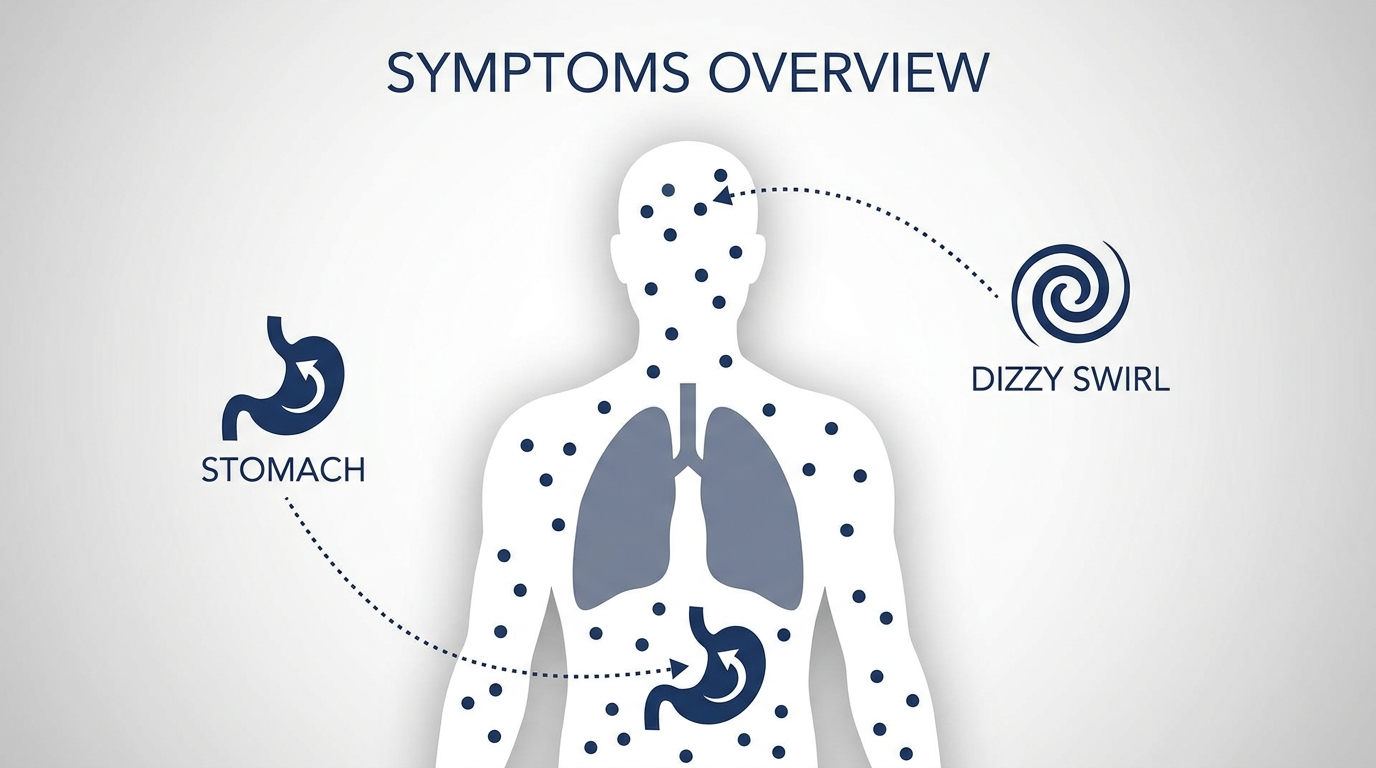
Shellfish allergy symptoms may begin within minutes to a couple of hours after eating. Timing can vary based on the person, the amount eaten, and other factors.
One reason symptoms get missed is that early signs can look ordinary (a few itchy spots, a queasy stomach). Many first reactions are described as “I thought it was food poisoning—until the hives showed up.”
Skin symptoms
- Hives (urticaria)
- Itching
- Flushing
- Swelling (angioedema)—often lips, face, eyelids (ACAAI; FARE)
Gastrointestinal symptoms
- Nausea or vomiting
- Abdominal cramps
- Diarrhea (FARE)
Respiratory symptoms
- Runny nose, sneezing
- Cough, wheeze, chest tightness
- Shortness of breath (ACAAI)
Cardiovascular/neurologic symptoms
- Dizziness or fainting
- Weak pulse / low blood pressure
- A sudden feeling of doom in severe reactions (Whyte et al., 2022)
If someone becomes pale, clammy, confused, or collapses, treat it as an emergency.
- Takeaway: Symptoms can involve skin, gut, lungs, and circulation—watch the timing after exposure and seek help early.
Anaphylaxis: How to Recognize a Medical Emergency
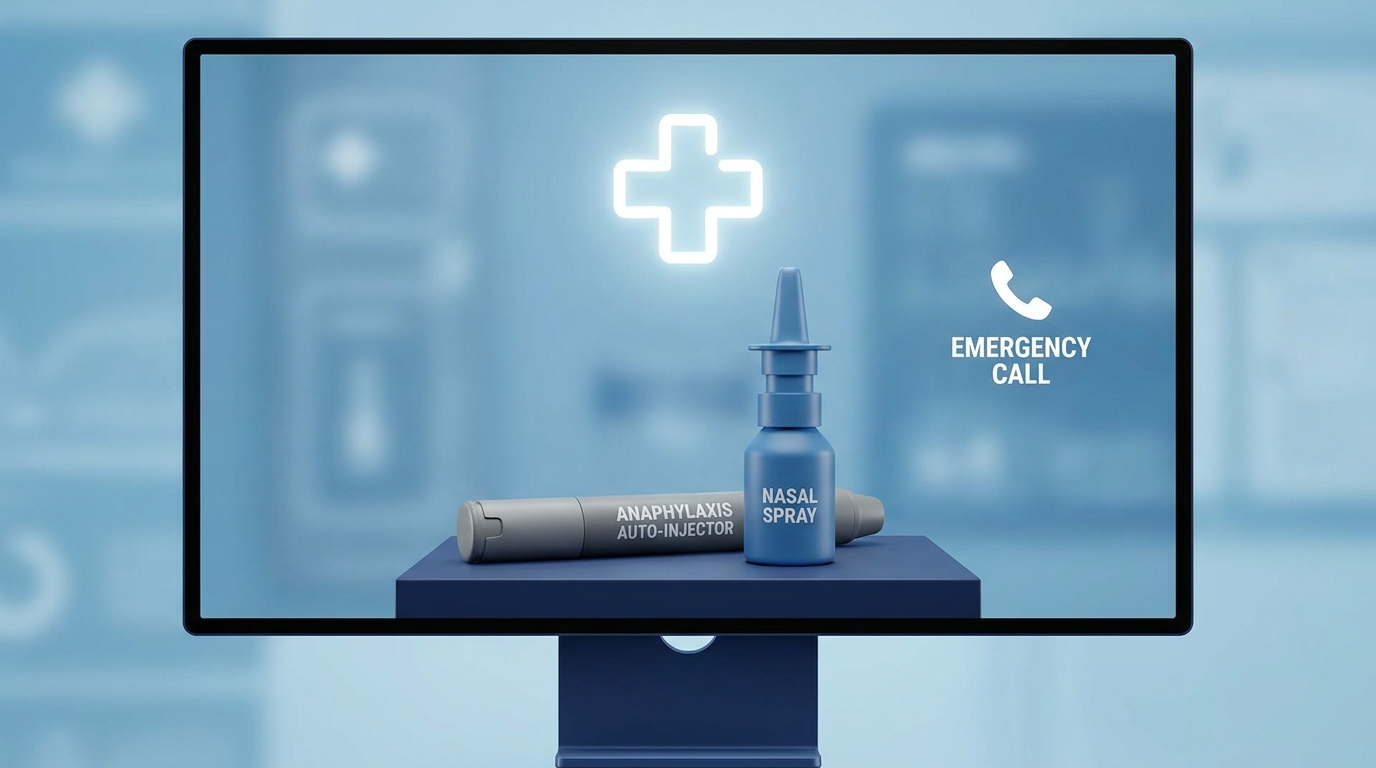
Anaphylaxis is a fast, severe allergic reaction that can involve multiple body systems and can become fatal without prompt treatment. (Whyte et al., 2022)
A practical rule: if symptoms are spreading beyond one body area (for example, hives plus vomiting, or throat tightness plus dizziness), think about anaphylaxis and emergency treatment.
Common warning signs (easy checklist)
- Trouble breathing, wheezing, repetitive cough
- Throat tightness, hoarse voice, trouble swallowing
- Swelling of the tongue or throat
- Widespread hives plus significant vomiting/diarrhea
- Lightheadedness, fainting, pale/clammy skin (Whyte et al., 2022; ACAAI)
How often is anaphylaxis seen in seafood-allergy evaluations?
In a 2024 UK–U.S. analysis of patients evaluated for seafood allergy, anaphylaxis was diagnosed in 22.9% of U.S. patients and 15.1% of UK patients. (Nakonechna et al., 2024)
What to do immediately (general principles)
- Epinephrine right away is the first-line treatment (Whyte et al., 2022)
- Call emergency services and seek urgent evaluation, because symptoms can recur
- Some people are advised to have access to two doses if symptoms persist or return (Whyte et al., 2022; ACAAI)
Follow your clinician’s personalized action plan and the instructions of local emergency services. To learn about an FDA-approved epinephrine option, see: https://sleepandsinuscenters.com/patient-resources/neffy-epinephrine-nasal-spray
- Takeaway: Anaphylaxis is a medical emergency—use epinephrine first-line per your action plan and call emergency services promptly.
What Causes Shellfish Allergy (and Why Reactions Can Be Unpredictable)
The immune system’s role
Most true shellfish allergy is IgE-mediated. The immune system misidentifies a shellfish protein as harmful and releases chemicals like histamine, which produce symptoms. (ACAAI)
Shrimp and tropomyosin (major allergen)
Shrimp allergy is especially common; a major allergen is tropomyosin—a muscle protein found in many shellfish, particularly crustaceans. (FARE; Nakonechna et al., 2024)
Cross-reactivity with dust mites and cockroaches
Tropomyosin proteins also exist in dust mites and cockroaches, so some positive tests reflect cross-reactivity rather than true clinical shellfish allergy. (Nakonechna et al., 2024)
Why severity can vary
- Amount eaten
- Preparation method
- Co-factors (exercise, alcohol near the time of eating)
- Asthma control
- Cross-contact from shared equipment (ACAAI; FARE)
- Takeaway: Tropomyosin drives many reactions, tests can cross-react, and severity varies with dose, co-factors, and cross-contact.
Risk Factors for Severe Reactions
Higher-risk situations
- Prior anaphylaxis to shellfish
- Asthma, especially if not well-controlled (ACAAI)
- Delayed recognition or delayed use of emergency medication
High-risk environments
- Seafood restaurants with shared grills, fryers, or steaming/boiling pots
- Buffets and sushi counters with mixed handling (FARE)
- Takeaway: Past anaphylaxis, uncontrolled asthma, and cross-contact in seafood-heavy kitchens can raise risk.
How Shellfish Allergy Is Diagnosed (Why You Need More Than a Positive Test)
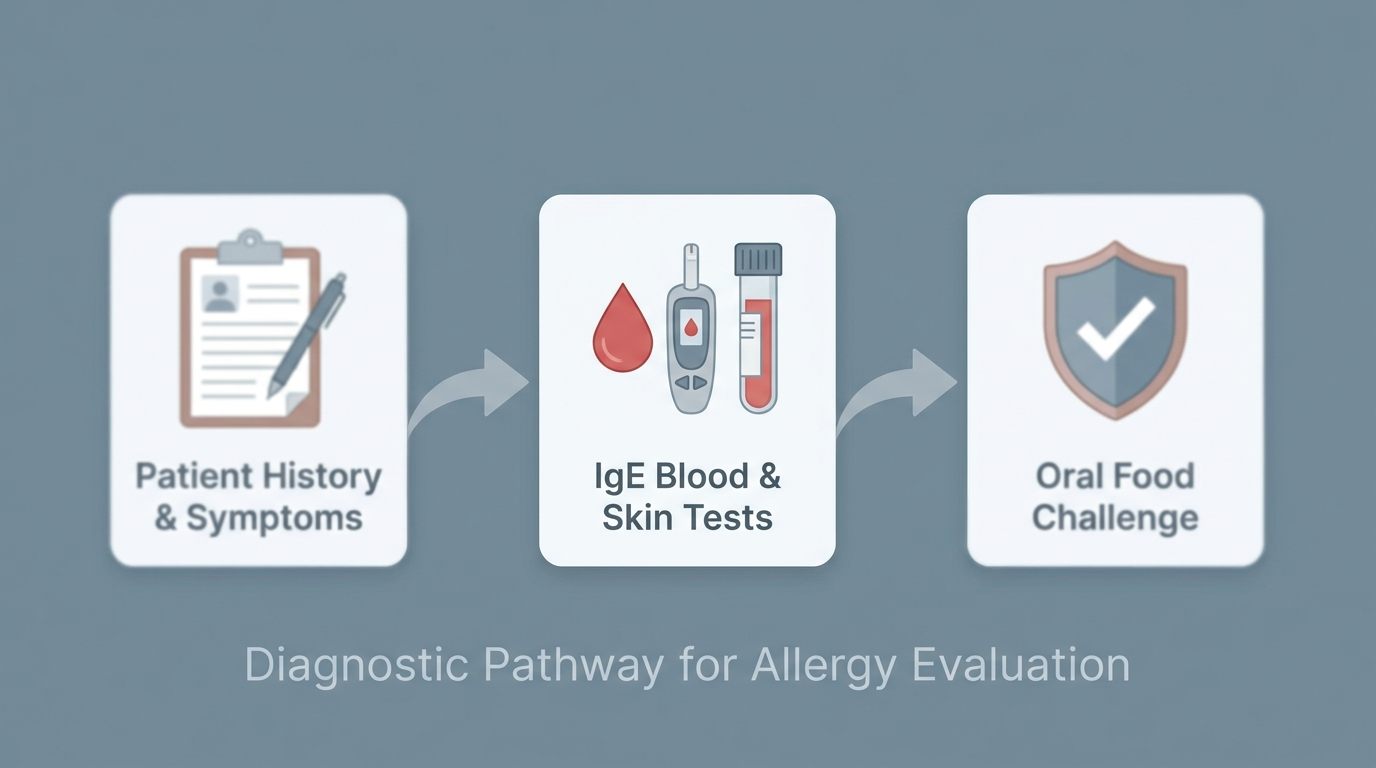
Step 1 — Clinical history is the foundation
A detailed history helps an allergist interpret everything else: what you ate, how much, timing, symptoms, whether treatment was needed, and whether it happened again. (ACAAI)
Step 2 — Targeted testing (skin prick or blood IgE)
Tests help estimate the likelihood of allergy but do not prove you’ll react and do not predict severity. (ACAAI; Nakonechna et al., 2024)
Step 3 — Oral Food Challenge (gold standard when appropriate)
When history and testing don’t give a clear answer, a supervised oral food challenge may be recommended. Do not attempt this at home. (ACAAI; Nakonechna et al., 2024)
Newer molecular (component) testing
Component testing may refine understanding of risk and cross-reactivity but is clinician-guided. (Frontiers in Allergy, 2025)
If you’re considering an evaluation, learn more about allergy testing: https://sleepandsinuscenters.com/allergy-testing
- Takeaway: Diagnosis relies on history plus targeted testing; supervised oral challenge is the gold standard when appropriate.
Treatment: What Helps Mild Symptoms vs What Saves Lives
Mild symptoms (limited hives/itching only)
For isolated mild symptoms, some people are given an antihistamine plan by their clinician. Antihistamines are not a substitute for epinephrine during anaphylaxis. (Whyte et al., 2022)
Anaphylaxis treatment = epinephrine first-line
Across modern guidelines, epinephrine for anaphylaxis (typically intramuscular) is the standard first-line treatment; delays are linked with worse outcomes. (Whyte et al., 2022)
After epinephrine
Emergency evaluation is typically recommended because symptoms can recur (biphasic reactions). (Whyte et al., 2022)
- Takeaway: Antihistamines may ease itching, but epinephrine is the first-line, time-sensitive treatment for anaphylaxis.
Long-Term Management: Avoidance + Cross-Contact Prevention
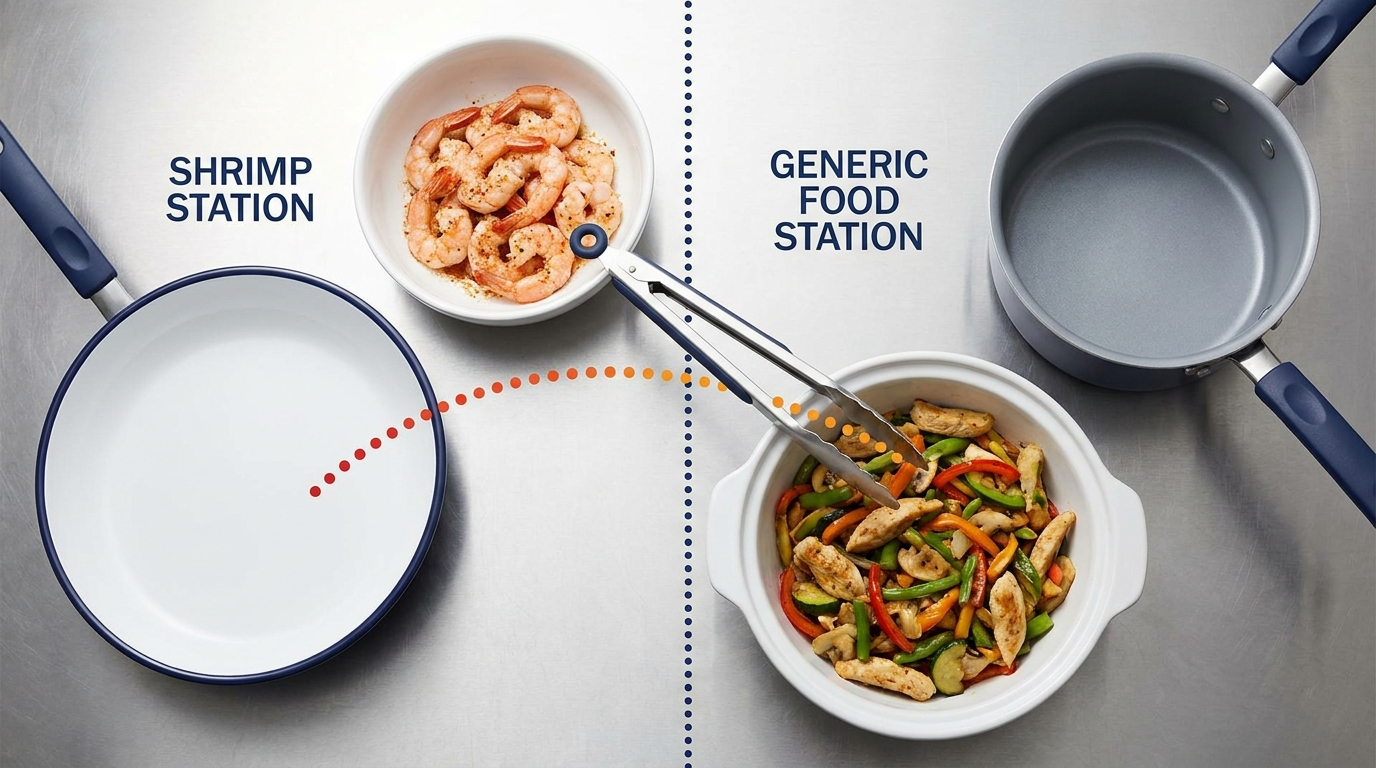
Avoid the shellfish you’re allergic to (and clarify crustacean vs mollusk)
Many patients react to crustaceans (with shrimp being a common trigger), but the exact avoidance plan depends on the individual and evaluation results. (ACAAI; FARE)
Prevent cross-contact at home
- Separate utensils/cutting boards; wash cookware carefully
- Be cautious with shared oils, grills, and boil/steam pots
- Watch for shared sponges or prep surfaces that can transfer residue
Eating out safely (scripts + practical tips)
- Clearly state it’s an allergy (not a preference)
- Ask about shared fryers/grills and how foods are prepared
- Be cautious with seafood broths, sauces, seafood flavoring, and mixed dishes unless verified (FARE)
A simple script: “I have a shellfish allergy. Can you tell me whether anything I’m ordering is cooked on shared equipment with shrimp, crab, or lobster?”
Packaged food labels (U.S. reality check)
- Crustacean shellfish must be declared on packaged-food labels as a major allergen.
- Mollusks are not federally required to be labeled as major allergens, so extra vigilance may be needed. (FDA Food Allergens Q&A, Edition 5)
- Takeaway: Avoid the specific shellfish you’re allergic to and reduce cross-contact risk at home, in restaurants, and when reading labels.
Emergency Preparedness Plan (What to Carry and Teach Others)
Carry epinephrine and know how to use it
Many patients with a confirmed food allergy are advised to keep epinephrine accessible and to understand device instructions; some are advised to have two doses. (Whyte et al., 2022; ACAAI)
Written action plan
- Which symptoms mean use epinephrine now
- Who to call and where medication is stored
- Copies for school/work/travel (FARE; ACAAI)
Medical ID and communication tips
Some people choose a medical alert ID and practice quick, clear phrases friends or coworkers can follow if the person is having trouble speaking.
- Takeaway: Keep epinephrine accessible, carry a written action plan, and make sure people around you know what to do.
Emerging Research (Hopeful, But Not a Replacement for Standard Care)
Molecular/component testing (refining diagnosis)
Component testing may improve precision in distinguishing true allergy from cross-reactivity (including dust mites), but it remains a clinician-guided tool. (Frontiers in Allergy, 2025)
Shrimp oral immunotherapy (OIT)
Early studies of shrimp OIT suggest potential for desensitization in specialized settings. It’s not routine care yet; avoidance and emergency readiness remain the foundation. (Frontiers in Allergy, 2025; ACAAI)
- Takeaway: New tools are promising, but they complement—not replace—standard diagnosis, avoidance, and emergency preparedness.
FAQs (Quick Answers Patients Look For)
Can I suddenly develop a shellfish allergy as an adult?
Yes. Shellfish is among the most common adult food allergies and often persists. (FARE; ACAAI)
Is a positive shrimp IgE blood test enough to diagnose me?
Not by itself. Testing supports the overall picture, but history matters—and sensitization can reflect tropomyosin similarity with dust mites/cockroaches. (Nakonechna et al., 2024; ACAAI)
If I only had mild symptoms once, am I safe next time?
Not necessarily. Reactions can be unpredictable and may become more severe. (ACAAI; FARE)
Do antihistamines stop anaphylaxis?
No. Epinephrine is first-line treatment; antihistamines can’t replace it. (Whyte et al., 2022)
Do I need to avoid iodine or CT contrast if I’m allergic to shellfish?
Shellfish allergy is a reaction to proteins (like tropomyosin), not iodine. Questions about contrast should be discussed with your clinician. (ACAAI)
When to See an Allergist (and What to Expect)
Reasons to book an evaluation
Consider an allergy evaluation after any reaction following shellfish exposure—especially breathing symptoms, throat/tongue swelling, fainting, or repeated vomiting. (ACAAI)
What an allergist may do
Review your history, perform targeted testing, discuss avoidance strategies (including crustacean vs mollusk), address cross-contact risk, and provide training around emergency medication. Oral food challenge may be discussed when appropriate. (ACAAI; Nakonechna et al., 2024)
Explore next steps for testing: https://sleepandsinuscenters.com/allergy-testing
Book an appointment: https://www.sleepandsinuscenters.com/
- Takeaway: An allergist can clarify your triggers, personalize testing, and help you build a clear safety plan.
Conclusion (Key Takeaways)
- Shellfish allergy is common, often lifelong, and reactions can range from mild to severe. (ACAAI; FARE)
- Understanding shellfish allergy symptoms and anaphylaxis is essential because severe reactions can progress quickly and unpredictably.
- Diagnosis is most accurate when it combines history with targeted testing; tests alone don’t predict severity, and oral food challenge is the definitive test when indicated. (Nakonechna et al., 2024; ACAAI)
- Epinephrine is the first-line treatment for anaphylaxis; avoidance and cross-contact prevention remain core long-term strategies. (Whyte et al., 2022)
References
- Nakonechna et al. “Fish and shellfish allergy: Presentation and management differences in the UK and US,” 2024. https://pmc.ncbi.nlm.nih.gov/articles/PMC11381858/
- American College of Allergy, Asthma & Immunology (ACAAI). “Shellfish Allergy.” https://acaai.org/allergies/allergic-conditions/food/shellfish/
- Food Allergy Research & Education (FARE). “Shellfish Allergy.” https://www.foodallergy.org/living-food-allergy/food-allergy-essentials/common-allergens/shellfish
- Whyte et al. “Emergency treatment of anaphylaxis: concise clinical guidance,” 2022. https://pmc.ncbi.nlm.nih.gov/articles/PMC9345203/
- U.S. Food & Drug Administration (FDA). “Questions and Answers Regarding Food Allergens,” Edition 5. https://www.fda.gov/media/117410/download
- Frontiers in Allergy (2025). Shellfish allergy diagnostics/therapeutics review. https://www.frontiersin.org/journals/allergy/articles/10.3389/falgy.2025.1458131/full
This article is for educational purposes only and is not medical advice. Please consult a qualified healthcare provider for diagnosis and treatment.
Don’t let allergies slow you down. Schedule a comprehensive ENT and allergy evaluation at Sleep and Sinus Centers of Georgia. We’re here to find your triggers and guide you toward lasting relief.