Why Childhood Allergies Disappear or Persist: Causes and What to Expect
Parents often ask why childhood allergies disappear or persist—especially when symptoms seem to change from year to year. The reassuring news is that many children do develop tolerance to certain allergens over time. But some allergies last longer, and some children “trade” one allergic condition for another as they grow.
One helpful way to think about it: the immune system is like a smoke alarm. In some kids, it gradually learns that a certain protein (like milk) isn’t “smoke,” and it stops blaring. In others, the alarm stays extra sensitive—especially with allergens that tend to be more persistent. (Lee et al., 2024; Berin et al., 2019)
Quick Summary: What Parents Should Know
- Many childhood allergies improve as the immune system develops tolerance, but the timeline varies by child and allergen. (Lee et al., 2024)
- Milk, egg, soy, and wheat are more often outgrown; peanut, tree nut, fish, and shellfish are more likely to persist. (Lee et al., 2024)
- Risk factors linked with persistence include higher allergen-specific IgE levels, larger skin-test reactions, severe eczema, multiple allergies, and a history of more severe reactions in some cases. (Lee et al., 2024; Berin et al., 2019)
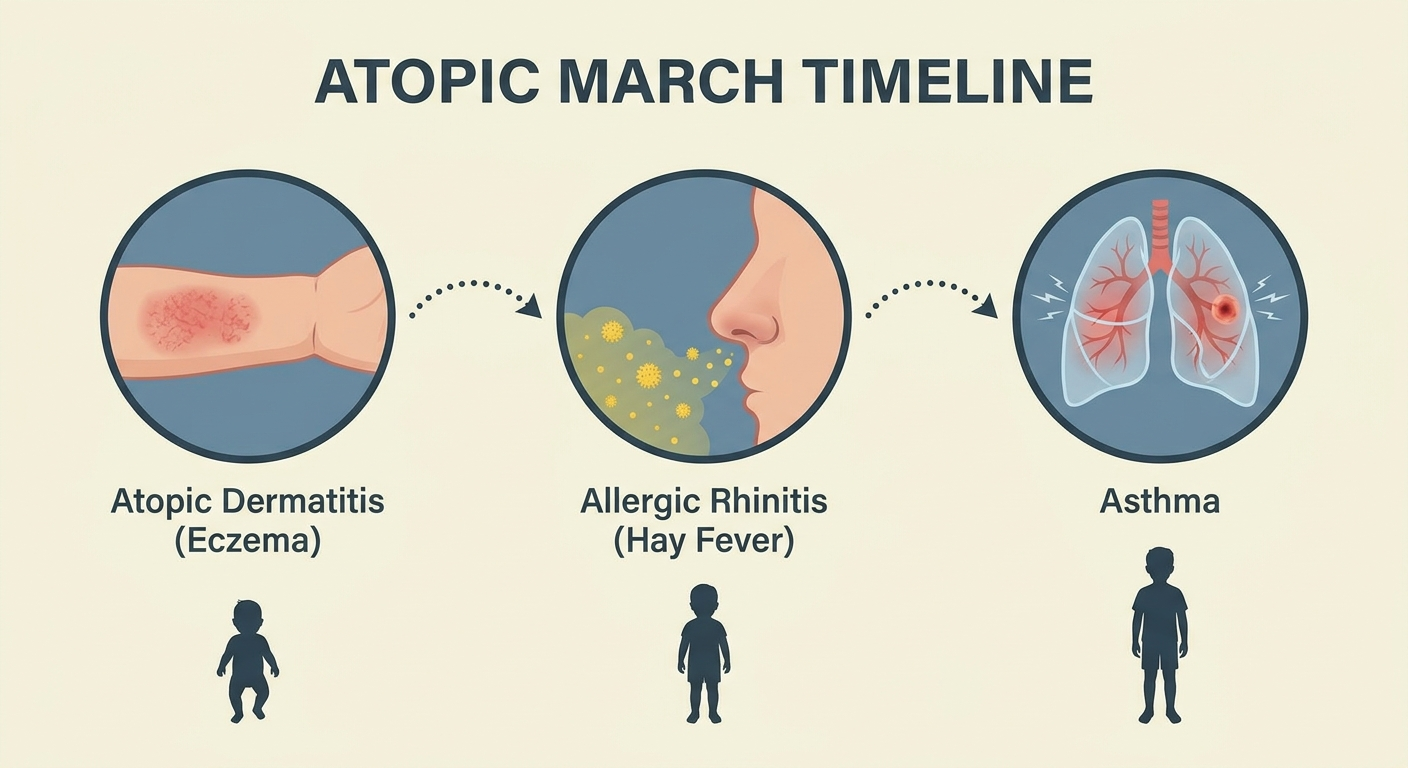
- Allergic disease can “change shape” over time (often eczema → allergic rhinitis → asthma), known as the atopic march. (Bantz et al., 2014)
Clinical note (patient-friendly): If a food caused allergic reactions in the past, reintroducing it should be discussed with a clinician first. Some children can still react even after a long symptom-free period. (Lee et al., 2024)
What Counts as an “Allergy” vs. an Intolerance?
Understanding the difference helps families know what’s urgent, what testing can help, and what “outgrowing” really means.
Allergy: an immune reaction (often IgE-mediated).
- A true allergy involves the immune system reacting to a specific trigger. Many classic food allergies are IgE-mediated, meaning symptoms can occur quickly—often within minutes to 2 hours—and may include hives, swelling, wheeze, or vomiting. (NHS inform)
- Example: a child eats scrambled egg and develops hives and lip swelling within 20 minutes. That timing pattern often fits an IgE-mediated reaction and deserves medical guidance.
Intolerance: not primarily immune-driven.
- Intolerances can cause uncomfortable symptoms but aren’t typically driven by the same immune mechanisms and don’t carry the same anaphylaxis risk. A common example is lactose intolerance. (NHS inform)
- In real life, the symptoms can overlap (like stomach pain), which is why history and clinician-guided evaluation matter.
Non-IgE reactions exist too.
- Some childhood food reactions are non-IgE mediated (for example, certain delayed gastrointestinal syndromes). These follow different timelines and testing approaches than classic IgE-mediated allergies and should be assessed by a clinician.
In short: a true “outgrown” allergy means loss of clinical reactivity, not just fewer symptoms after avoiding the food.
Common Childhood Allergy Symptoms (Food, Skin, and Airway)
Children’s symptoms can involve multiple body systems, and patterns can change as kids grow.
Food allergy symptoms
- Hives; itching
- Facial/lip swelling
- Vomiting or diarrhea
- Coughing, wheezing, throat tightness
Anaphylaxis warning signs (emergency): trouble breathing, faintness or collapse, repetitive vomiting, or widespread hives plus breathing symptoms. Anaphylaxis can occur without hives—treat breathing or circulation symptoms after exposure as urgent.
Skin allergy patterns
- Eczema flares
- Itchy rashes
- Chronic dry, irritated skin
Eczema often overlaps with food and environmental allergy risk and is tied to the atopic march pathway. (Bantz et al., 2014)
Nasal or seasonal symptoms (allergic rhinitis)
- Sneezing, congestion, runny nose
- Itchy nose or eyes, post-nasal drip
- Sleep disruption and trouble focusing at school
Learn more about chronic rhinitis options for kids: https://sleepandsinuscenters.com/treating-chronic-rhinitis (NHS, Allergic rhinitis)
In short: if symptoms affect breathing, circulation, or repeated vomiting after exposure, treat it as urgent.
Why Some Childhood Allergies Disappear (Immune Tolerance—In Plain English)
A big reason allergies disappear or persist is whether the immune system learns that a particular protein is not dangerous.
The immune system “learns” the trigger isn’t dangerous
- In some children, time plus immune development leads to a calmer, more regulated response to that specific allergen—what many people call “outgrowing” the allergy. (Lee et al., 2024)
What research suggests is happening under the hood
- More immune “braking” via regulatory T-cells and signals like IL-10
- Shifts in antibody patterns (often discussed as changes in IgE/IgG4 balance)
- Possible influence from the gut microbiome and innate immune signaling (Berin et al., 2019)
These immune shifts don’t happen on the same schedule for every child or every allergen, which is why two kids with “egg allergy” can have very different trajectories.
In short: tolerance develops when the immune “alarm” dials down its overreaction to a specific allergen.

Which Allergies Are Most Often Outgrown—and Which Commonly Persist?
Because families often ask why allergies disappear or persist, it helps to start with the allergen itself.
More likely to be outgrown (often starts in infancy)
- Milk
- Egg
- Soy
- Wheat
These commonly begin early in life and often resolve during childhood or school-age—though not always. (Lee et al., 2024)
A clearer example: a child who reacted to regular milk early on may later tolerate baked milk products first, then (under medical guidance) progress toward less-baked and regular dairy if appropriate.
More likely to persist into teen or adult years
- Peanut
- Tree nuts
- Fish
- Shellfish (Lee et al., 2024)
Important nuance: what “outgrown” really means
- A child may stop having obvious symptoms but still show sensitization on testing. “Outgrown” means no reaction during a supervised oral food challenge, not just a negative blood or skin test or a lack of recent exposures. (Lee et al., 2024)
In short: the specific allergen strongly shapes the odds and timing of outgrowing.
Why Some Childhood Allergies Persist: Key Risk Factors
When families want to know why allergies disappear or persist, clinicians often look at how strong and broad the child’s sensitization is, plus whether other allergic conditions are present.
Stronger sensitization signals
- Higher allergen-specific IgE levels
- Larger skin-prick test reactions
- Reactivity to multiple allergen “parts” (components)
- Lower reaction threshold (reacting to tiny amounts) (Berin et al., 2019; Lee et al., 2024)
Coexisting allergic conditions
- Severe or early-onset eczema
- Asthma
- Allergic rhinitis
- Multiple food or environmental allergies (Lee et al., 2024)
Past reaction severity may matter
- A history of more severe reactions is associated with persistence in some studies, though it is not a perfect predictor. (Lee et al., 2024)
In short: stronger or broader sensitization and coexisting atopic conditions are linked with persistence, but no single test predicts the future.
The “Atopic March”: When an Allergy Seems to Disappear but Allergic Disease Continues
A child may “lose” one type of allergy symptom and later develop another—one reason it can feel confusing to track progress.
Typical progression pattern
- A common pathway described in research is: infant eczema → childhood allergic rhinitis → asthma later. Not all children follow this sequence, but it’s a well-recognized trend. (Bantz et al., 2014)
What this means for parents
- If your child’s food reactions improve but they develop chronic congestion or seasonal sneezing, it may reflect the atopic march rather than a brand-new, unrelated issue. (Bantz et al., 2014; NHS, Allergic rhinitis)
In short: the “target organ” can change (skin → nose → lungs) even if the underlying allergic tendency remains.
Causes: Why Allergies Develop in the First Place (Short, Clear Overview)
- Genetics plus environment: Family history of atopy raises risk, but environmental exposures also matter.
- Skin barrier and eczema connection: Inflamed or disrupted skin can make sensitization more likely, which helps explain the strong link between eczema and later allergic disease. (Lee et al., 2024)
- Immune development and exposure timing: Allergies can begin or resolve at different life stages; the immune system can still change over time. (Lee et al., 2024)
In short: allergies reflect a mix of genetics, environment, and immune development—plus the integrity of the skin barrier.

Testing & Monitoring: How Doctors Tell If an Allergy Is Gone—or Still There
Testing can clarify status, but it’s important to know what tests can—and cannot—conclude.
What tests can and cannot tell you
- Skin-prick testing: suggests sensitization, but sensitization doesn’t always equal a clinical allergy.
- Blood tests (specific IgE): trending downward can be encouraging, but it’s not definitive by itself. (Lee et al., 2024)
Learn more about allergy testing for children (skin vs blood tests): https://sleepandsinuscenters.com/allergy-testing
Primer on what allergies are and how the immune system reacts: https://sleepandsinuscenters.com/what-are-allergies
In short: tests guide decisions, but a carefully supervised food challenge is the proof of tolerance.

The Role of Oral Food Challenges (When Appropriate)
When a clinician believes tolerance may be developing, a supervised oral food challenge in a medical setting is often the clearest way to confirm whether the allergy has resolved. (Lee et al., 2024)
Challenges are planned, gradual, and monitored, with emergency medications available. Families should not trial allergens at home without guidance.
How Often Should Kids Be Re-Evaluated? (A Practical Checklist)
- Symptoms have been absent for a sustained period
- Specific IgE levels or skin tests are trending down
- The allergen is one that is more commonly outgrown (milk, egg, soy, wheat)
- There’s interest in diet expansion, school planning, or updating emergency plans
- New conditions suggest atopic march progression (rhinitis or asthma symptoms)
In short: re-evaluate when risk appears lower, symptoms are quiet, and the potential benefit of expanding the diet or updating plans is high.
Treatment Options: What Helps While You’re Waiting to See if It’s Outgrown
Avoidance plus safety planning (core approach)
- Label reading, reducing cross-contact risk, and having school or daycare plans that match the child’s history and clinician guidance.
- Clarify with school: expected symptoms, available medication, and when to call emergency services.
Medications for symptom control (non-food or environmental allergies)
- For allergic rhinitis, common options may include antihistamines, nasal steroid sprays, or eye drops depending on age and situation. (NHS, Allergic rhinitis)
Emergency treatment for severe reactions
- Some children at higher risk may be prescribed epinephrine auto-injectors and a written action plan. The details should be personalized and reviewed periodically.
Immunotherapy (for environmental allergies)
- For ongoing environmental allergies (like pollen or dust mites), immunotherapy may reduce symptoms for some patients over time. Allergy drops vs. allergy shots: https://sleepandsinuscenters.com/allergy-drops-vs-allergy-shots
- When immunotherapy may be worth considering: https://sleepandsinuscenters.com/blog/immunotherapy-for-allergies-is-it-worth-it
In short: combine avoidance, symptom control, and emergency readiness while you and your clinician reassess over time.

Lifestyle Tips: Lowering Allergy Burden at Home (Practical, Parent-Friendly)
Reduce common indoor triggers
- Dust mites: mattress and pillow encasements, regular hot-water bedding washes when appropriate, humidity control
- Pets: consider pet-free zones, consistent cleaning routines, and filtration strategies
- Mold or moisture: ventilate bathrooms, fix leaks promptly, and address damp areas
A room-by-room guide: allergy-proof your child’s bedroom
https://sleepandsinuscenters.com/blog/complete-guide-to-allergy-proofing-your-childs-room
When symptoms flare: day-to-day coping
- Rinse with saline (age-appropriate)
- Shower and change clothes after outdoor play on high-pollen days
Track patterns to share with your clinician
- Keep a simple diary: exposure, foods, timing, symptoms, medications, response
In short: small, consistent environmental steps can lighten symptom load—especially in peak seasons.
What to Expect by Age (A Simple Timeline Framework)
Infancy–toddler years
- Eczema and early food allergies often appear first. (Bantz et al., 2014; Lee et al., 2024)
School age
- Many children who will outgrow milk, egg, soy, or wheat allergies do so around this time—though some continue longer. (Lee et al., 2024)
Teen years and adulthood
- Peanut, tree nut, and seafood allergies are more likely to persist, and respiratory allergies can become more prominent. (Lee et al., 2024)
In short: early-life food allergies may improve by school age, while nut or seafood allergies often persist into the teen years.
When to See a Specialist (and When It’s Urgent)
Schedule an evaluation if
- Symptoms are frequent or disrupt sleep or school
- Multiple suspected triggers exist (eczema plus wheeze plus congestion together)
- You’re considering retesting or discussing possible food reintroduction
Seek emergency care immediately if
- Breathing trouble, fainting or collapse, severe swelling, or repetitive vomiting occurs after exposure (possible anaphylaxis)
In short: don’t wait on frequent, disruptive, or multi-system symptoms—specialist input can prevent emergencies and guide next steps.
FAQs
Q: Can a child’s allergy come back after it disappears? A: Yes. Symptoms can recur in some situations. That’s why clinicians emphasize confirmation and follow-up rather than assuming an allergy is gone based only on time or lack of recent reactions. (Lee et al., 2024)
Q: Why is my child’s “milk allergy” gone but they now have constant sneezing? A: This can fit the atopic march pattern, where eczema or food allergy risk early in life shifts toward allergic rhinitis later. (Bantz et al., 2014; NHS, Allergic rhinitis)
Q: Do higher IgE levels always mean my child will never outgrow the allergy? A: Not always. Higher IgE can be associated with persistence, but it isn’t destiny. Trends over time plus real-world reaction history are often more informative than a single number. (Lee et al., 2024; Berin et al., 2019)
Q: Is it safe to try a small amount of the allergen at home to see what happens? A: In general, no. If tolerance is suspected, a clinician may recommend a supervised oral food challenge in a medical setting. (Lee et al., 2024)
Q: What’s the difference between seasonal allergies and a cold in kids? A: Colds often include fever and body aches and improve in about a week, while allergies commonly cause itching or sneezing and can persist for weeks during a season. See: https://sleepandsinuscenters.com/blog/allergies-vs-colds-in-toddlers-key-differences-and-symptoms-explained
Conclusion: Reassurance + Next Step
Understanding why childhood allergies disappear or persist usually comes down to a few themes: the specific allergen involved, the strength of sensitization, and whether a child has related conditions like eczema, allergic rhinitis, or asthma. (Lee et al., 2024; Berin et al., 2019)
If your family is navigating changing symptoms, the most helpful next step is often a structured follow-up plan—using history, appropriate testing, and (when indicated) supervised challenges to confirm childhood allergy tolerance safely over time. Book an appointment with Sleep and Sinus Centers of Georgia: https://www.sleepandsinuscenters.com/
Medical Disclaimer
This article is for educational purposes only and is not medical advice. Please consult a qualified healthcare provider for diagnosis and treatment. If you think your child may be having a severe allergic reaction (anaphylaxis), seek emergency care immediately.
References
- Lee et al. (2024). The Natural History and Risk Factors for the Development of Food Allergies in Children and Adults. https://pmc.ncbi.nlm.nih.gov/articles/PMC10960768/
- Berin et al. (2019). Mechanisms that Define Transient versus Persistent Food Allergy. https://pmc.ncbi.nlm.nih.gov/articles/PMC6374775/
- Bantz et al. (2014). The Atopic March: Progression from Atopic Dermatitis to Allergic Rhinitis and Asthma. https://pmc.ncbi.nlm.nih.gov/articles/PMC4240310/
- NHS inform. Allergies. https://www.nhsinform.scot/illnesses-and-conditions/immune-system/allergies/
- NHS. Allergic rhinitis. https://www.nhs.uk/conditions/allergic-rhinitis/
Don’t let allergies slow you down. Schedule a comprehensive ENT and allergy evaluation at Sleep and Sinus Centers of Georgia. We’re here to find your triggers and guide you toward lasting relief.