Septoplasty Recovery: What It Feels Like and a Patient Guide to Healing
If you’re preparing for surgery (or you’re in the middle of healing), it helps to know what “normal” can feel like—because early healing can be surprisingly congested even when the procedure was successful. Septoplasty recovery is often less like flipping a switch and more like weather slowly clearing after a storm: you may get brief “breaks” of easier breathing, followed by swelling or crusting that makes you feel blocked again.
Below is a patient-friendly guide to septoplasty recovery, including common sensations, a realistic timeline, and practical aftercare topics to discuss with your surgeon. (Cleveland Clinic, 2025: https://my.clevelandclinic.org/health/treatments/17779-septoplasty; Mayo Clinic, 2023: https://www.mayoclinic.org/tests-procedures/septoplasty/about/pac-20384670)
Quick Take: What Septoplasty Recovery Usually Feels Like (Realistic Expectations)
Most people describe recovery in phases rather than a straight line:
- Days 1–3: strong “stuffy nose” feeling with pressure and swelling; mouth breathing is common. Swelling often peaks in the first 72 hours for many patients. (Cleveland Clinic, 2025; Mayo Clinic, 2023)
- After packing or splint removal, if used: brief discomfort/pressure is common, and some people notice an immediate sense of improved openness afterward. (Cleveland Clinic, 2025)
- Weeks 2–3: crusting often becomes a prominent issue for many patients—dry, stuck material can make airflow feel blocked again. (NIH/PMC, 2013: https://pmc.ncbi.nlm.nih.gov/articles/PMC3738793/; NIH/PMC, 2015: https://pmc.ncbi.nlm.nih.gov/articles/PMC4720469/)
- Months 3–6: for some patients, deeper tissues continue to settle over months, and breathing may keep improving gradually. (Mayo Clinic, 2023; NIH/PMC, 2013; NIH/PMC, 2015)
A simple way to frame expectations: septoplasty can improve the “hardware” (structure), but the “software” (swelling, lining irritation, mucus and crusting) needs time to reboot.
What Is Septoplasty, and What Does Healing Involve?
What the surgery changes (septum + airflow)
A septoplasty is a functional nasal procedure that straightens the septum and improves airflow. The septum is the “wall” of cartilage and bone dividing the left and right nasal passages. The goal is to reduce obstruction caused by a deviated septum.
If you’re still exploring options, see our overview of deviated septum relief options: https://sleepandsinuscenters.com/deviated-septum-relief
Why recovery can feel “blocked” even after a successful surgery
It’s normal for early healing to mimic the original problem. Immediately after surgery, the inside lining of the nose (mucosa) can be swollen and irritated, and airflow may be limited by internal dressings, splints or packing, and clots/crusts. This is a common reason patients wonder what septoplasty recovery feels like when they expected instant relief. (Mayo Clinic, 2023; Cleveland Clinic, 2025)
One clinician-style way patients often hear it explained is: “We improved the pathway, but the lining still has to calm down.” In other words, the structure may be straighter right away, but your nose can temporarily behave like it has a bad cold.
Bottom line: structure can be corrected quickly, while the lining calms down gradually.

Septoplasty Recovery Timeline (What It Feels Like Day-by-Day & Week-by-Week)
Note: Timelines vary depending on whether you also had turbinate work, sinus surgery, packing/splints, and your individual healing pattern. Use this as a general septoplasty recovery timeline, not a promise.
The first 24 hours (Day 0–1)
- Common sensations: facial/nasal pressure, a “stuffed” nose, light oozing/drainage, and fatigue from anesthesia. (Mayo Clinic, 2023)
- Breathing: many people mostly breathe through the mouth at this stage.
- In the background: swelling is building, and the nose is reacting to surgical manipulation.
A practical example: patients often describe the first night as “sleeping with a plugged nose and a dry throat,” especially if they wake up often to sip water.

Days 2–3 (the “72-hour peak”)
This is often the hardest window of recovery. Congestion and swelling frequently peak within the first 72 hours for many patients. (Cleveland Clinic, 2025)
- Pain/pressure: often mild to moderate and managed with the plan your surgeon provides. (Mayo Clinic, 2023)
- Why pressure happens: the nose and surrounding tissues can feel full due to swelling and inflammation—similar to a heavy head cold sensation.
Many patients describe it as “wearing a tight clothespin feeling” or “sinus pressure without the sinus infection.” It’s also common to feel emotionally impatient here—because you can’t yet “test” the breathing improvement you had surgery for.
For more detail, read our related post on septoplasty pain level and what to expect: https://sleepandsinuscenters.com/blog/septoplasty-pain-level-and-recovery-what-to-expect-20260124121132
Days 4–7 (the “still congested, but improving” week)
Many people notice small wins—less pressure, slightly better comfort, and fewer drainage episodes. Sleep may still be disrupted because congestion and mouth breathing can dry the throat.
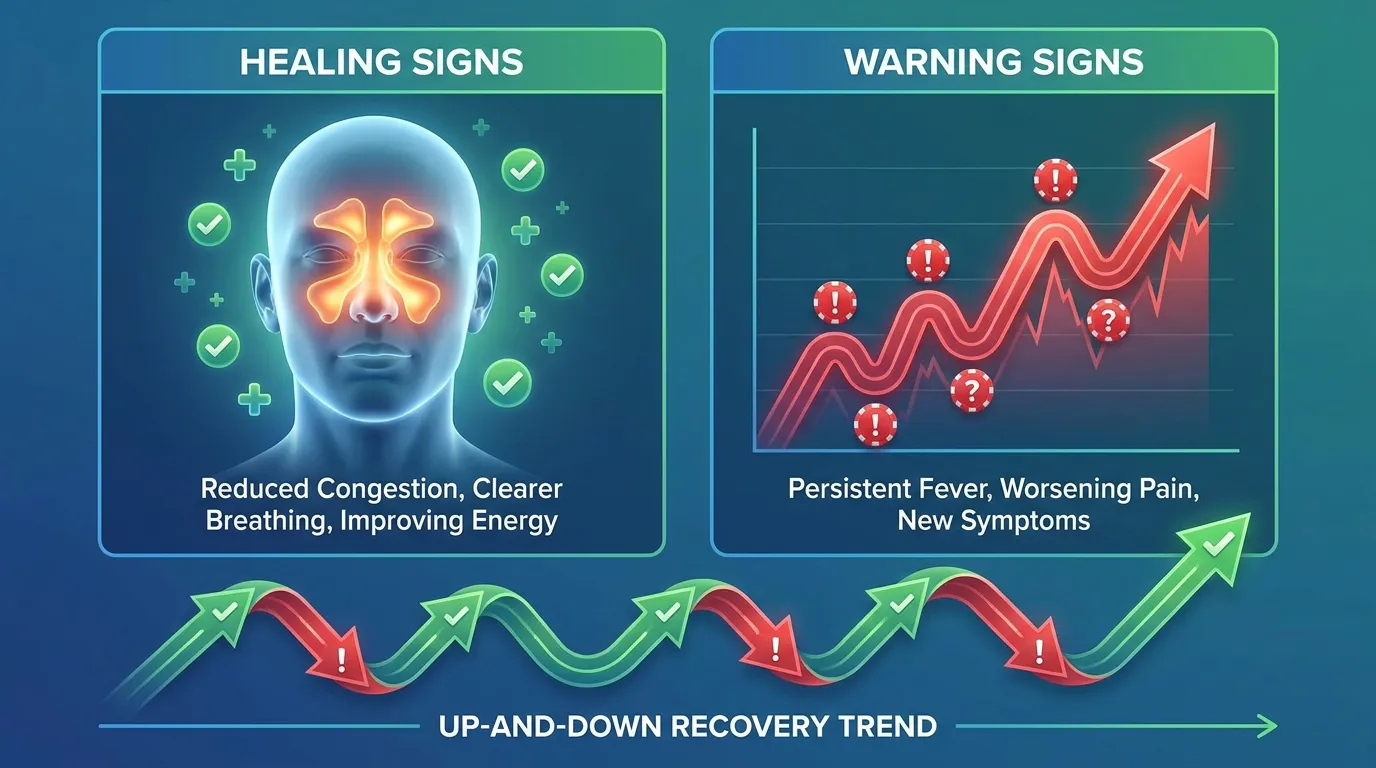
A typical pattern is “better in the afternoon, worse at night.” That up-and-down feeling can be normal as swelling shifts and the nasal lining continues to heal.

Packing or splint removal day (if used)
- Worry is common: the idea of removal can cause anxiety, especially if you don’t know what it will feel like.
- What it can feel like: temporary pressure and brief discomfort.
- What often happens next: some patients notice a sense of improved openness afterward, though swelling and internal healing can still limit airflow. (Cleveland Clinic, 2025)
Some describe removal as “unpleasant but quick,” followed by a drop in that “plugged” sensation. Others feel sore afterward for a short time—especially if they were very swollen—but still report more space for airflow. A “better but not perfect” feeling is typical while the lining continues to recover.
Week 2 (transition into the crusting phase)
As swelling slowly improves, nasal crusting after septoplasty can become a main reason airflow feels inconsistent. Healing surfaces can dry out and form crusts/scabs that temporarily narrow the nasal passages. (NIH/PMC, 2013; NIH/PMC, 2015)
A helpful mental model: swelling is like “puffy tissue taking up space,” while crusting is more like “debris on the runway.”

Weeks 2–3 (crusting peak)
This is a common frustration point: people may feel “blocked again,” even though the septum is straighter. Crusting and thicker discharge often become more noticeable around this time. (NIH/PMC, 2013; NIH/PMC, 2015)
Patients sometimes describe this phase as feeling like “dried concrete” inside the nose—dry, stubborn, and not something you can (or should) force out. This is why surgeons often emphasize moisture and gentle cleansing rather than picking or aggressive blowing.
What often helps (guided by your surgeon): saline sprays/rinses, humidity, and sometimes in-office cleanings if recommended.
Weeks 4–6 (noticeable breathing gains)
Many patients often report more consistent breathing improvements within this window, even though day-to-day fluctuations can still happen. (Mayo Clinic, 2023; Cleveland Clinic, 2025)
If one side still feels tighter at times, it may reflect uneven swelling or the normal “nasal cycle” (alternating congestion between sides). If it’s persistent or worsening, it’s worth bringing up at follow-up.
Months 2–3 (back to most routines—but still healing)
Most routines are often back on the table, but you may still notice tenderness, dryness, or intermittent congestion—especially with allergies, irritants, or heavy activity.
Some patients say this phase feels “mostly normal until allergy season hits,” which is a reminder that your nasal lining can remain reactive while it fully settles.
Months 3–6 (full internal stabilization)
Even after you feel “fine,” internal tissues can continue to remodel and stabilize for months. Full settling is commonly described in the 3–6 month range, and for some patients, breathing may keep improving gradually. (Mayo Clinic, 2023; NIH/PMC, 2013; NIH/PMC, 2015)
If you want a deeper walkthrough, see septoplasty recovery week by week: https://sleepandsinuscenters.com/blog/septoplasty-recovery-week-by-week-complete-timeline-20260123051106
Your exact timeline may differ; steady trends matter more than any single day.
Common Septoplasty Recovery Symptoms (What’s Normal vs What’s Not)
Normal/expected symptoms
These are commonly reported during healing (severity varies person to person):
- Congestion/obstruction sensation (especially early) (Cleveland Clinic, 2025)
- Facial/nasal pressure (Mayo Clinic, 2023)
- Mild bleeding/oozing in the early period (Mayo Clinic, 2023)
- Crusting and thicker discharge, especially around weeks 2–3 (NIH/PMC, 2013; NIH/PMC, 2015)
- Reduced smell/taste temporarily, usually from swelling limiting airflow to smell receptors
Mouth breathing side effects (often overlooked)
When you can’t comfortably breathe through your nose, mouth breathing may lead to dry mouth, sore throat, and bad breath. Hydration, humidity, and gentle oral care are often used for comfort while the nose is swollen.
A concrete example: many patients wake up with their tongue “stuck” to the roof of the mouth or a scratchy throat, even if the nose itself isn’t very painful. If that’s you, it doesn’t automatically mean something is wrong—it usually means you’re still in the swollen, mouth-breathing stage.
When symptoms should start improving (simple benchmarks)
A helpful way to think about septoplasty healing stages is by checkpoints:
- ~72 hours: swelling often at its worst for many patients (Cleveland Clinic, 2025)
- 1–2 weeks: swelling slowly improves; crusting may increase
- 4–6 weeks: breathing often feels more consistently improved (Mayo Clinic, 2023; Cleveland Clinic, 2025)
- 3–6 months: longer-term settling/normalization continues (Mayo Clinic, 2023; NIH/PMC, 2013; NIH/PMC, 2015)
Many fluctuations are normal; contact your care team if something feels off or unexpectedly severe.
Why Recovery Feels the Way It Does (Causes Behind the Sensations)
- Swelling/inflammation: the main reason you feel “stuffed up,” even if the structure is improved (Mayo Clinic, 2023)
- Packing/splints/internal dressings: can restrict airflow and add pressure until they’re removed (Cleveland Clinic, 2025)
- Crusting: healing tissue can dry and form crusts that temporarily narrow airflow (NIH/PMC, 2013; NIH/PMC, 2015)
- Remodeling over months: cartilage and soft tissue continue to settle, which is why the “final result” can take time (Mayo Clinic, 2023; NIH/PMC, 2013)
A straighter septum helps, and as the lining heals, airflow typically becomes smoother.

Treatments & Aftercare That Help You Heal (Patient-Friendly Checklist)
This section is educational—your surgeon’s instructions come first. In general, septoplasty aftercare often focuses on comfort, moisture, and protecting healing tissue.
Pain and pressure management
Common categories patients ask about include:
- Acetaminophen vs. anti-inflammatory options (some surgeons restrict NSAIDs early—follow your instructions)
- Prescription medication if needed (Mayo Clinic, 2023)
- Head elevation and (if allowed) cool compresses to reduce swelling
A practical tip many people appreciate: set up your “recovery zone” before surgery—extra pillows, tissues/gauze if provided, and a water bottle within reach—so you’re not repeatedly getting up while dizzy or sore.
Saline rinses/sprays (how they help and when to start)
Saline is commonly used to:
- Moisturize healing tissues
- Loosen crusts
- Improve comfort during the crusting phase (Cleveland Clinic, 2025)
If your surgeon recommends nasal rinses, use safe water practices (distilled/sterile, or boiled then cooled). CDC guidance: https://www.cdc.gov/naegleria/prevention/sinus-rinsing.html
Step-by-step help: how to do a saline rinse after septoplasty: https://sleepandsinuscenters.com/blog/how-to-do-a-saline-rinse-after-septoplasty-step-by-20260326011446
Humidification and moisture strategies
Many patients find it easier to rest with:
- A bedroom humidifier
- Shower steam for comfort
- Moisturizing products (only if approved by your surgeon)
If your home air is dry, humidification can be the difference between crusting that feels “manageable” and crusting that feels stuck and irritating.
Managing mouth breathing, dry mouth, and bad breath
Common comfort strategies include:
- Frequent sips of water
- Sugar-free lozenges or gum (if appropriate for you)
- Gentle oral hygiene support
If you’re unable to stay hydrated or throat symptoms are worsening, it’s reasonable to contact your care team.
Sleep positioning for easier breathing
Elevation often helps reduce swelling and post-nasal drainage. Many patients use extra pillows or a wedge pillow for the first several nights.
If you’re a side-sleeper, ask your surgeon whether there’s a preferred side early on—some people find one position noticeably easier as swelling shifts.
Activity restrictions (protect healing tissue)
Many surgeons advise avoiding heavy lifting/straining and nose blowing until you’re cleared, because these can increase bleeding and swelling risk. (Cleveland Clinic, 2025; Mayo Clinic, 2023)
For a focused guide, see when you can blow your nose after septoplasty: https://sleepandsinuscenters.com/blog/when-can-i-blow-my-nose-after-septoplasty-safe-tim-20260325041106
Follow-up visits and debridement/clean-outs (if recommended)
Some patients may benefit from in-office cleaning during the crusting phase to remove debris that blocks airflow and to support healing—if their surgeon recommends it. (NIH/PMC, 2013; Cleveland Clinic, 2025)
If you’ve ever tried to rinse and thought, “Nothing is moving,” that can be a sign you need guidance (or a planned clean-out)—not a sign you should push harder at home.
Follow your surgeon’s plan first; moisture, elevation, and patience do most of the heavy lifting.
What to Avoid During Septoplasty Recovery (To Reduce Setbacks)
- Don’t pick crusts or force airflow. This can restart bleeding and prolong inflammation.
- Avoid smoke/vaping and strong irritants (fragrance, heavy dust), which can worsen swelling and dryness.
- Travel/altitude changes: some people feel more dryness/pressure when flying; ask your surgeon what timing is appropriate for your case.
Another common “avoid”: don’t judge the outcome based on a single day. A great breathing day followed by a crusty day can still be normal healing.
Protect the repair now to protect the result later.
Red Flags: When to Call Your Surgeon or Seek Urgent Care
Call your ENT promptly for
- Pain that’s worsening or not controlled as expected
- Fever or foul-smelling drainage (infection concern)
- Persistent heavy bleeding (Mayo Clinic, 2023; Cleveland Clinic, 2025)
Seek urgent/emergency care for
- Significant trouble breathing
- Chest pain, severe dizziness/fainting, or signs of a severe allergic reaction
When in doubt, reach out early.
Lifestyle Tips to Support Healing (Patient-Friendly)
- Hydration + nutrition: protein and nutrient-dense foods can support tissue repair—soups, yogurt, eggs, smoothies, and soft foods are common early choices.
- Home setup checklist: humidifier, saline supplies (if recommended), extra pillows, soft foods, lip balm.
- Return to work/school: many people with desk jobs return sooner than those with physically demanding work; timing varies. (Cleveland Clinic, 2025)
If you can, plan for the first few days like you would for a bad cold: lighter schedule, easy meals, and a bit of extra rest so you’re not forced to “push through” peak swelling.
Set yourself up for comfort early, then ease back into routines as symptoms settle.
FAQs About Septoplasty Recovery
How long does septoplasty recovery take?
Many people feel meaningful improvement within weeks, but internal healing and settling can continue for 3–6 months. (Mayo Clinic, 2023; Cleveland Clinic, 2025; NIH/PMC, 2013; NIH/PMC, 2015)
What does septoplasty recovery feel like?
Often: congestion and pressure early → possible relief after packing or splint removal, if used → a crusting-heavy phase → gradually more stable breathing.
If you want a quick “real life” snapshot, many patients summarize it as: “Week 1 feels swollen, week 2–3 feels crusty, and week 4+ starts to feel worth it.”
Is it normal to feel more blocked in week 2 or 3?
It can be. Crusting and dryness can temporarily narrow airflow even as swelling improves. (NIH/PMC, 2013; NIH/PMC, 2015)
When can I breathe after septoplasty?
Many patients can breathe through the nose at least partially early on, but it often fluctuates. Breathing tends to improve as swelling decreases and crusting is managed. (Cleveland Clinic, 2025)
When can I blow my nose / exercise / wear glasses?
These vary based on whether you had splints, turbinate work, or additional procedures. Follow your surgeon’s timeline. (Mayo Clinic, 2023; Cleveland Clinic, 2025)
Will my nose shape change after septoplasty?
Septoplasty is designed to improve function (airflow). Any appearance change is usually not the goal and depends on anatomy and surgical details. (Mayo Clinic, 2023) Related: does septoplasty change nose shape? https://sleepandsinuscenters.com/blog/does-septoplasty-change-nose-shape-what-to-expect-20260613041036
Why is one nostril still blocked after surgery?
Common reasons include the normal nasal cycle, uneven swelling, crusting, or turbinate-related inflammation. If it persists or worsens, it’s a good topic for follow-up. Read more: one nostril still blocked after septoplasty: https://sleepandsinuscenters.com/blog/one-nostril-blocked-after-septoplasty-causes-recov-20260326181414
Conclusion: The Goal Is Better Breathing—But Healing Comes in Phases
For many patients, the most intense part of septoplasty recovery is the first 72 hours. (Cleveland Clinic, 2025) Weeks 2–3 can bring a frustrating crusting phase. (NIH/PMC, 2013; NIH/PMC, 2015) And while many people feel better within weeks, internal tissues may continue to settle for up to 6 months, with some patients noticing gradual improvements as healing completes. (Mayo Clinic, 2023)
If you’d like help deciding whether septoplasty (or another approach) fits your symptoms, you can explore our educational resources—including deviated septum relief options: https://sleepandsinuscenters.com/deviated-septum-relief—and book an appointment with Sleep and Sinus Centers of Georgia here: https://www.sleepandsinuscenters.com/
Medical disclaimer: This article is for general education and doesn’t replace personalized medical advice. Always follow your surgeon’s post-op instructions and contact your care team with questions or concerning symptoms.
This article is for educational purposes only and is not medical advice. Please consult a qualified healthcare provider for diagnosis and treatment.
Don’t let allergies slow you down. Schedule a comprehensive ENT and allergy evaluation at Sleep and Sinus Centers of Georgia. We’re here to find your triggers and guide you toward lasting relief.