Septoplasty Meaning: What Septoplasty Surgery Is and Why It’s Done
If you’re looking up the septoplasty meaning, you may be dealing with symptoms that don’t feel minor—like trouble breathing through your nose, constant congestion, or facial pressure that never fully clears. Septoplasty is a common ENT procedure designed to improve nasal airflow when a structural issue (often a deviated septum) is blocking the nasal passages. (NCBI StatPearls, 2022)
A helpful way to picture it: your nose is like a hallway with two lanes. If the divider wall (the septum) shifts into one lane, airflow gets crowded—especially when swelling from allergies or irritation narrows the space even more.
Septoplasty can improve breathing for many patients, though results vary. The nose may continue to settle for about 3–6 months, though some patients take longer. (StatPearls; ASPS; Healthline)
Septoplasty Meaning (Simple Definition)
What septoplasty is: In medical terms, septoplasty is a surgical procedure that corrects a deviated septum—the wall of cartilage and bone that separates your left and right nasal passages. During surgery, the septum is straightened and repositioned to reduce nasal obstruction and improve airflow. (NCBI StatPearls, 2022)
Many patients describe the goal in plain language as: “Make the inside of my nose less blocked.” Clinicians often frame it similarly—improving the internal pathway for air rather than changing the outside appearance.
What septoplasty is not: Septoplasty is not primarily a cosmetic nose job. Cosmetic reshaping of the nose is called rhinoplasty. That said, septoplasty can be combined with cosmetic or other functional procedures when appropriate (sometimes called septorhinoplasty). (StatPearls; ASPS) If your main concern is appearance, share that during your consult so you and your surgeon are aligned on goals.
What Is a Deviated Septum?
What the septum does: The septum is the internal divider between your nostrils. It helps support nasal structure and guides airflow through each nasal passage. Think of it like the center beam in a tent: even a small shift can change the shape and space around it—sometimes enough to affect comfort, especially when tissues are inflamed.
What “deviated” means: A septum is “deviated” when it’s off-center or crooked. This can narrow one side of the nose (or both in different areas), making breathing feel restricted—often more noticeable on one side. Some people notice it most at night or during exercise.
How common is it? Many people have some degree of septal deviation. Surgery is generally considered when symptoms are significant, persistent, and clearly linked to structural blockage. (StatPearls; Healthline) To explore symptoms and non-surgical options, see: https://sleepandsinuscenters.com/deviated-septum-relief

Symptoms That May Point to a Deviated Septum (and When Septoplasty Might Help)
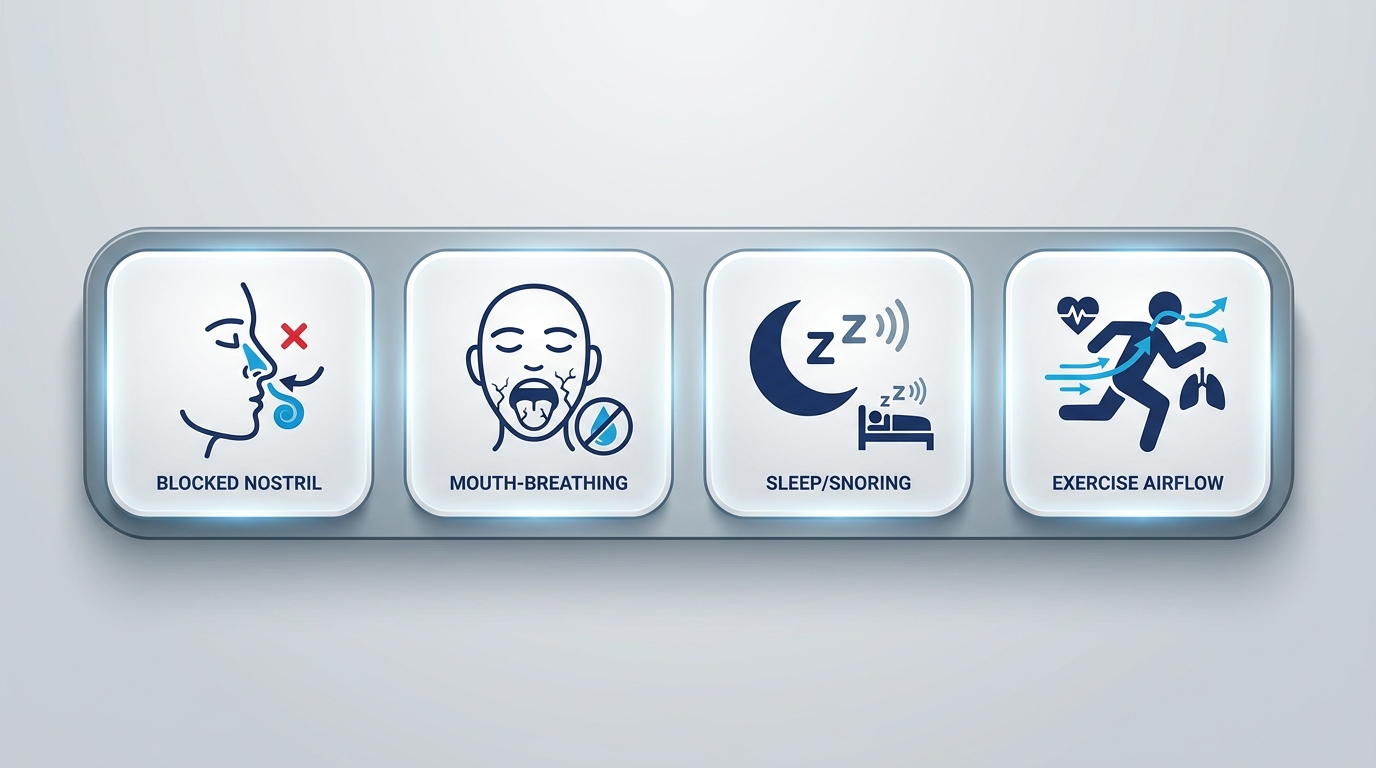
Breathing and congestion symptoms commonly include:
- Ongoing nasal obstruction, often worse on one side
- Chronic congestion that doesn’t match a typical cold pattern
- Feeling like you can’t get enough air through the nose during exercise or sleep
A concrete example: if you default to mouth breathing during workouts—or wake with a dry mouth when you’re not sick—that can be a clue that nasal airflow is limited.
Pain, pressure, and related symptoms may include facial pressure or rhinitis-like symptoms that feel better when airflow improves. Septoplasty does not treat the underlying allergy or rhinitis. (StatPearls; Healthline)
Sleep and quality-of-life impacts can include mouth breathing at night, poor sleep quality, and snoring (often multifactorial).
What Causes a Deviated Septum?
Common causes include developmental differences, injury or trauma (sports, falls, accidents), and normal growth changes that gradually shift nasal structures. (Healthline; StatPearls) Many people don’t recall a specific injury—this is common and doesn’t change evaluation.
Why symptoms can worsen over time: structural narrowing plus inflammation (from allergies, irritants, chronic nasal/sinus conditions) can combine to feel like constant blockage—the structure is the fixed narrowing; inflammation is the temporary narrowing.
Why Septoplasty Is Done (The Main Goals)
Primary objective: improve airflow by straightening the septum so air can move more freely. (StatPearls, 2022; ASPS) Many surgeons describe it as restoring a more open, balanced airway so your nose can filter, warm, and humidify air effectively.
Potential benefits may include less day-to-day blockage, improved breathing during sleep and activity, and reduced facial pressure/pain in some cases. Septoplasty does not treat allergies or rhinitis themselves. (StatPearls; Healthline)
When septoplasty is recommended: typically when structural obstruction significantly affects daily function and persists despite appropriate medical therapy. (StatPearls; Healthline)

Who Performs Septoplasty?
ENT vs plastic surgeon: Septoplasty is commonly performed by an ENT when the main goal is function; plastic surgeons may perform it especially when cosmetic changes are planned at the same time. (StatPearls; ASPS)
How to choose: consider experience evaluating the full nasal airway, clear explanation of realistic goals/risks/recovery, and a plan that accounts for other contributors (turbinates, nasal valve). Ask: “What else could be contributing to my blockage besides my septum?”
Septoplasty vs. Other Treatments (What Are Your Options?)
Non-surgical treatments may include saline irrigation, allergy management, and nasal steroid sprays when inflammation contributes. These do not straighten cartilage or bone but can reduce swelling and clarify what’s structural vs inflammatory. (Healthline; StatPearls)
Procedures that may be combined: turbinate reduction, sinus procedures, cosmetic rhinoplasty—because a straight septum alone isn’t always the whole story. (StatPearls; ASPS)
When surgery is discussed: when obstruction is clearly structural and persists despite appropriate medical therapy.
What Happens During Septoplasty Surgery? (Step-by-Step Overview)
Before surgery: review of symptoms and history, nasal exam and sometimes endoscopy; imaging in select cases; discussion of anesthesia, plan, and aftercare. (StatPearls; Healthline)
The procedure: typically performed inside the nose with no external scar; lining is lifted, deviated cartilage and/or bone is reshaped or repositioned, and support is restored to reduce restriction. (StatPearls; Healthline) More on our approach: https://sleepandsinuscenters.com/blog/deviated-septum-surgery-at-sleep-sinus-centers-of-georgia
After surgery: may include nasal splints/packing, brief recovery or observation. Many describe the first sensation as congested and tight rather than sharp pain. (StatPearls; Healthline; Acibadem International)

Septoplasty Recovery Timeline (What to Expect)
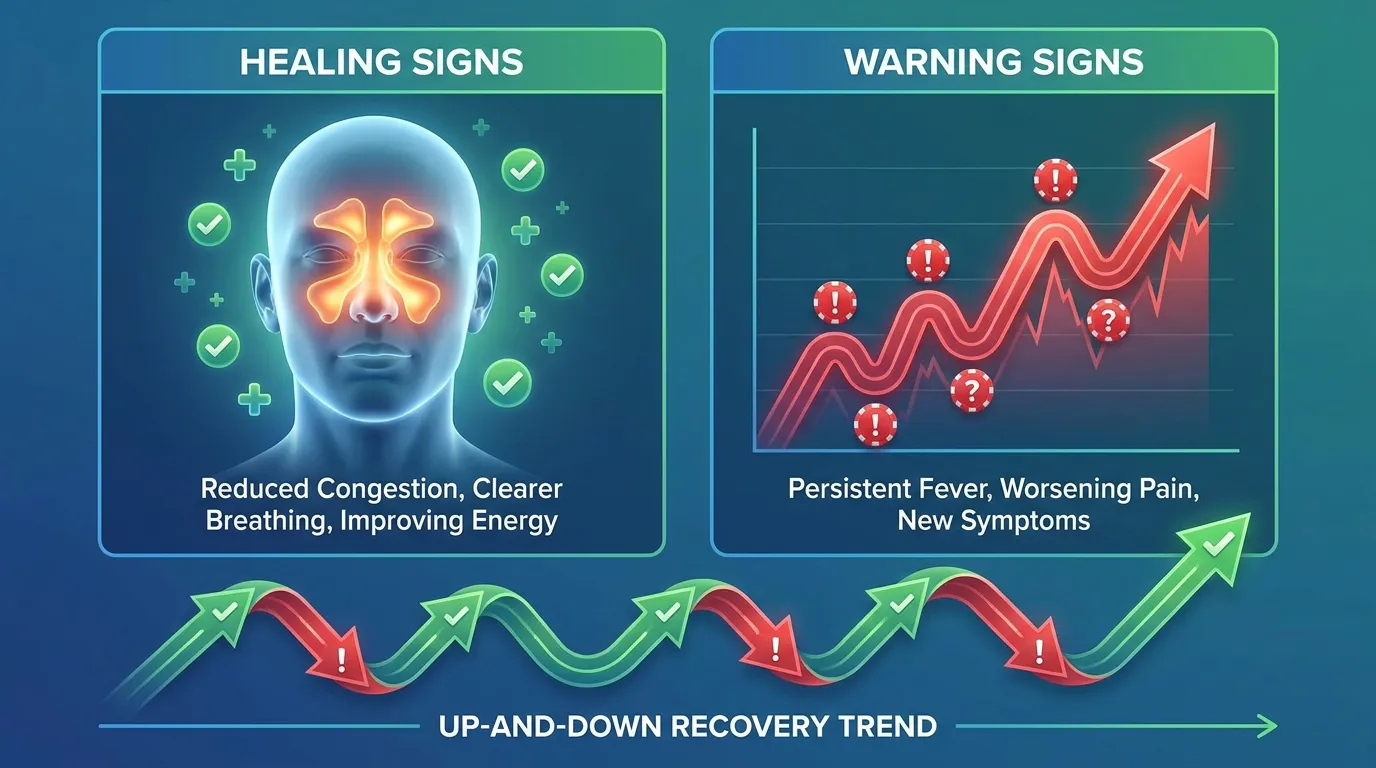
The first week: congestion from swelling, mild bleeding or drainage, and crusting. Follow-ups may include gentle cleaning and splint removal. Plan for downtime—breathing can feel worse before it feels better due to swelling.
Weeks 2–6: many notice improvement within weeks; energy and comfort return gradually. It’s common to have variable days—some clear, some stuffy—as healing continues.
Months 3–6: deeper healing and tissue settling continue for about 3–6 months (sometimes longer). (StatPearls; ASPS; Healthline) Detailed guide: https://sleepandsinuscenters.com/blog/septoplasty-recovery-week-by-week-complete-timeline-20260123051106
Tips that support healing: saline rinses if recommended, avoiding irritation early on per your surgeon’s instructions, and attending follow-ups to address crusting/dryness/blockage. How-to for rinses: https://sleepandsinuscenters.com/blog/how-to-do-a-saline-rinse-after-septoplasty-step-by-20260326011446

Risks and Possible Complications (Balanced, Reassuring, Clear)
Common/expected side effects: temporary congestion and swelling, tenderness or pressure, mild bleeding and crusting. (StatPearls; Healthline)
Less common risks: infection, septal perforation, persistent obstruction or dissatisfaction, need for revision, dryness or changes in sensation. (StatPearls; Healthline) Discuss how your surgeon minimizes these and plans follow-up.
When to contact urgently: heavy bleeding that won’t stop, high fever, worsening severe pain, or significant swelling/breathing difficulty. (StatPearls; Healthline)
Results: How Long Does Septoplasty Last?
Long-term stability: many patients experience durable improvement in nasal airflow and obstruction symptoms. (ASPS; StatPearls)
Why some still feel blocked: swelling may not be fully resolved early on; allergies or chronic rhinitis may persist; turbinate enlargement or nasal valve issues may contribute. (ASPS; StatPearls; Healthline) Remember that internal healing can lag behind how you feel day to day.
Lifestyle Tips to Breathe Better (Before and After Septoplasty)
Reduce inflammation triggers: limit smoke and strong scents; address allergy triggers when relevant. (Healthline)
Sleep positioning and nighttime relief: head elevation can help; humidification may ease dryness for some. (Healthline; Acibadem International)
Nasal hygiene basics: safe, consistent saline hygiene (when appropriate) can reduce crusting and support comfort. (Healthline; Acibadem International)
FAQs About Septoplasty Meaning & Surgery
What is the meaning of septoplasty in medical terms? Surgical correction of a deviated septum to improve airflow and reduce obstruction. (StatPearls)
Is septoplasty painful? Most describe pressure and congestion more than sharp pain; pain-control approaches vary. (Healthline)
How long until I can breathe normally again? Many notice improvement within weeks; full internal settling can take 3–6 months, sometimes longer. (StatPearls; ASPS)
Will septoplasty change the shape of my nose? It isn’t intended to change appearance, though subtle changes can occur depending on anatomy and technique.
Can septoplasty fix snoring or sleep apnea? It may improve nasal airflow, but snoring and sleep apnea often have multiple causes.
Is septoplasty permanent? Results are often long-lasting; outcomes depend on anatomy, healing, and ongoing conditions like allergies. (ASPS; StatPearls)
When to See an ENT About Possible Septoplasty
Consider an evaluation if you have persistent one-sided blockage, chronic congestion affecting sleep or exercise, or facial pressure plus obstruction that doesn’t improve with appropriate medical care.
What to bring: a symptom timeline, medication list (including sprays), allergy history, and prior imaging results if available.
Schedule an Evaluation at Sleep & Sinus Centers of Georgia
If nasal obstruction is affecting your sleep, workouts, or daily comfort, an evaluation can help clarify what’s driving the problem. Not all congestion comes from a septum issue—and not every deviated septum needs surgery—but a personalized airway assessment can identify the most appropriate next step.
Book an appointment: https://www.sleepandsinuscenters.com/
References
NCBI StatPearls (2022). Septoplasty. https://www.ncbi.nlm.nih.gov/books/NBK567718/
American Society of Plastic Surgeons (ASPS). Septoplasty results. https://www.plasticsurgery.org/reconstructive-procedures/septoplasty/results
Healthline. Septoplasty overview. https://www.healthline.com/health/septoplasty
Acibadem International. Septoplasty info. https://acibademinternational.com/septoplasty/
This article is for educational purposes only and is not medical advice. Please consult a qualified healthcare provider for diagnosis and treatment.
Don’t let allergies slow you down. Schedule a comprehensive ENT and allergy evaluation at Sleep and Sinus Centers of Georgia. We’re here to find your triggers and guide you toward lasting relief.