Septoplasty Incision: Types, Healing Timeline, and Aftercare Tips
Introduction — What a “Septoplasty Incision” Really Means
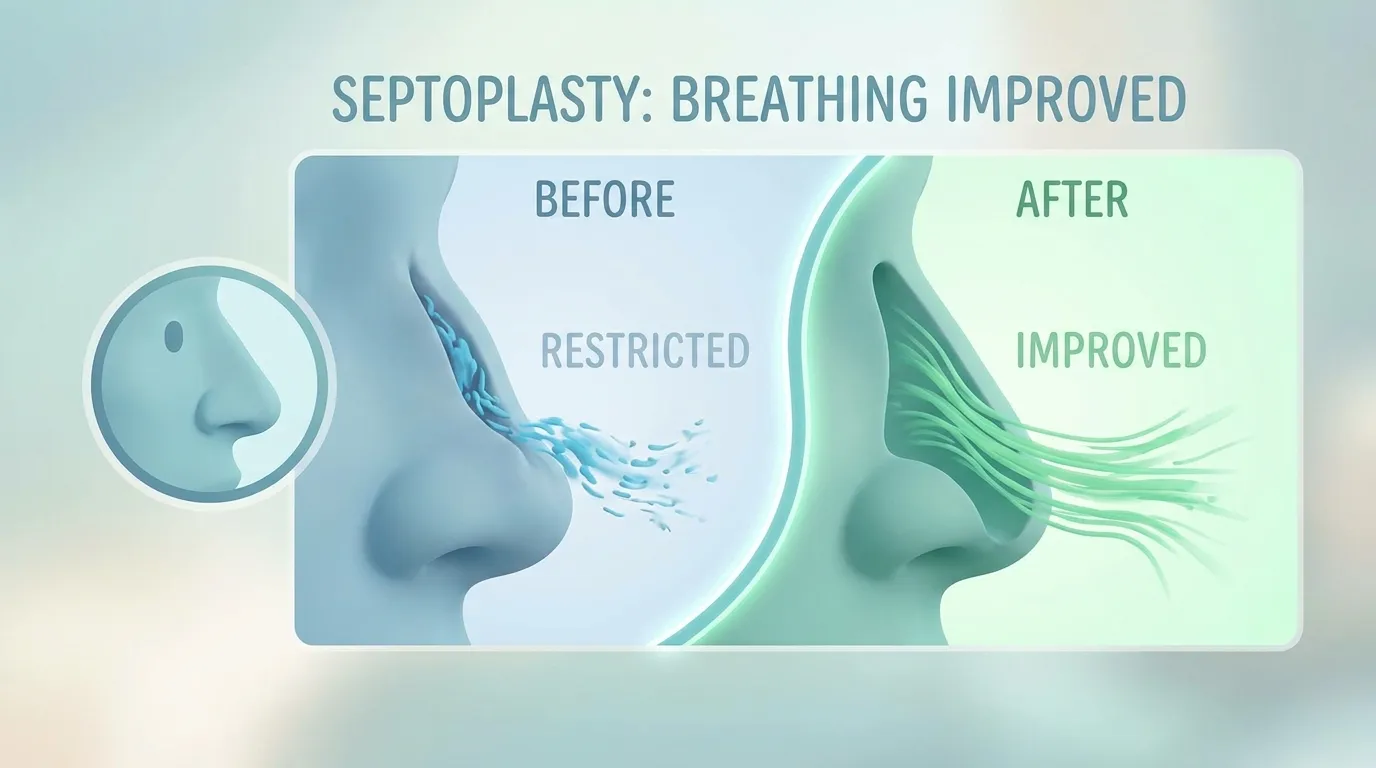
Septoplasty is a common procedure used to straighten the nasal septum (the wall of cartilage and bone that separates the nostrils) to improve airflow and reduce blockage from a deviated septum. In plain terms: it’s deviated septum surgery focused on function—helping you breathe better. For an overview of why septoplasty is performed and what it involves, see the Mayo Clinic’s septoplasty guide: https://www.mayoclinic.org/tests-procedures/septoplasty/about/pac-20384670
When people hear “incision,” they often picture a visible cut on the outside of the nose. A helpful analogy: think of the septum as the “divider wall” between two rooms. In many septoplasty cases, the surgeon accesses that divider from inside the rooms—not by cutting through the front door.
In many septoplasty cases, the incision is internal, so there is typically no visible scar; however, some complex or combined procedures may involve an external incision.
If you’re still sorting out whether a deviated septum is the likely cause of your symptoms, this guide to deviated septum relief options is a helpful place to start: https://sleepandsinuscenters.com/deviated-septum-relief
In this post, you’ll learn:
- The most common septoplasty incision types (internal vs. external)
- What “Killian” and “hemitransfixion” incisions mean
- A realistic septoplasty healing timeline
- Practical, patient-friendly septoplasty aftercare tips that help protect healing tissue
*Bottom line: Septoplasty incisions are usually inside the nostrils, but the exact approach depends on your anatomy and goals.*
Signs You Might Need Septoplasty (Symptoms)
Common symptoms linked to a deviated septum
Deviation can range from mild to severe. When it’s causing meaningful airflow obstruction, symptoms often include:
- Ongoing nasal blockage (often worse on one side)
- Mouth breathing, nighttime congestion, or waking up dry-mouthed
- Snoring or disrupted sleep
- Frequent nosebleeds in some people (note: nosebleeds are not specific to septal deviation and can have many causes, including dryness and medications)
- Facial pressure or headaches (these can overlap with sinus or allergy issues—so evaluation matters)
A concrete example: some people feel fine during the day, but notice that once they lie down, one side “closes off” and they can’t comfortably breathe through their nose. Others realize it when exercising—one nostril seems to do all the work, and the other never quite opens up.
When symptoms suggest it’s time to see an ENT
Many people try medications and environmental changes first. It may be time to consider an ENT evaluation when symptoms:
- Persist for months despite medical treatment
- Affect sleep, exercise, or comfort using CPAP
- Seem tied to recurrent sinus infections plus blockage concerns
Mayo Clinic notes septoplasty is typically considered when a deviated septum causes symptoms that don’t improve with other approaches. Source: https://www.mayoclinic.org/tests-procedures/septoplasty/about/pac-20384670
*If persistent nasal blockage affects daily life or sleep despite treatment, an ENT assessment can clarify whether structure, swelling, or both are involved.*
What Causes a Deviated Septum?
The most common causes
A deviated septum is very common, and it can develop from:
- Natural growth and development: Many people are born with some degree of deviation or develop it as the face grows.
- Trauma: Sports injuries, falls, or prior nasal fractures can shift septal cartilage and bone.
- Prior nasal surgery or gradual structural change: Scar tissue or changes over time can alter internal support.
Not everyone remembers a single “big” injury. Sometimes it’s a smaller hit years ago, or subtle changes during growth, that leave the septum more like a slightly bent bookshelf divider than a straight wall.
Why “deviation” can feel worse at night
Even when the septum’s shape is constant, symptoms can fluctuate. Many people notice obstruction more at night because:
- The normal nasal cycle alternates congestion between sides.
- Lying down can increase nasal tissue swelling, making a narrow passage feel even tighter.
This is why someone might say, “My nose switches sides,” or “I’m always blocked when I’m trying to sleep”—even though the septum itself hasn’t changed hour to hour.
*Symptoms can ebb and flow over a day, but the underlying septal shape is constant—evaluation helps pinpoint what’s structural vs. swelling-related.*
Septoplasty Incision Types (Internal vs. External)

Many septoplasties are performed as closed procedures, meaning the cuts are made inside the nose to avoid external scarring. This is widely described in surgical references, including NCBI/StatPearls and the American Society of Plastic Surgeons (ASPS). Sources: https://www.ncbi.nlm.nih.gov/books/NBK567718/ and https://plasticsurgery.org/reconstructive-procedures/septoplasty/procedure
Closed (internal) septoplasty incisions — the most common approach
In a closed approach, the surgeon makes an incision in the nasal lining (mucosa), gently lifts tissue to access the underlying cartilage/bone, then reshapes or repositions structures to improve airflow. Because the septoplasty incision is internal, there’s usually no visible mark afterward. Sources: https://www.ncbi.nlm.nih.gov/books/NBK567718/ and https://plasticsurgery.org/reconstructive-procedures/septoplasty/procedure
Patients often describe the early recovery sensation as “congestion, like a bad cold,” rather than “my nose feels cut.” That distinction is part of why internal incisions can sound scarier than they usually are in practice.
External (open) incision across the columella — when it’s used
In some situations, surgeons use an “open” approach that includes a small columellar incision (across the strip of tissue between the nostrils). This is more common when:
- Septal deviation is complex
- A revision procedure is needed
- Septoplasty is combined with rhinoplasty (often called septorhinoplasty)
While the external incision is designed to heal discreetly, it is a visible incision (even if typically subtle). Sources: https://www.ncbi.nlm.nih.gov/books/NBK567718/ and https://plasticsurgery.org/reconstructive-procedures/septoplasty/procedure
What instruments are used to make the incision?
In standard technique descriptions, septoplasty incisions are commonly made with a #15 surgical blade, though tool choice can vary by surgeon preference. Source: https://www.ncbi.nlm.nih.gov/books/NBK567718/
*In short: internal (closed) incisions are common and avoid visible scarring; complex or combined cases may use a small external incision for better access.*
Killian vs Hemitransfixion Incisions

Killian incision (internal)
A Killian incision is a vertical cut placed more posteriorly (farther back) over the quadrangular cartilage. Surgeons may select it when they need solid access to correct deviation without working as far forward near the nasal tip. Source: https://www.ncbi.nlm.nih.gov/books/NBK567718/
Hemitransfixion incision (internal)
A hemitransfixion incision is also vertical, but it’s positioned more anteriorly (toward the front) through the membranous septum. This can be useful when better access is needed toward the front of the septum. Source: https://www.ncbi.nlm.nih.gov/books/NBK567718/
How your surgeon chooses the incision
The choice is less about “better vs. worse” and more about where the deviation is and what needs to be reached safely. A clinician might explain it like this: “We pick the incision that gives the best access to the part of the septum that’s causing obstruction—while keeping tissue handling as gentle as possible.” That planning is one reason your pre-op exam matters: it helps confirm whether the problem is mostly septum-related, swelling-related, or a combination.
What Happens After the Incision? (What Patients Typically Experience)
Immediately after surgery (same day)
Right after deviated septum surgery, it’s common to experience:
- Nasal stuffiness or congestion (often feels like a “stopped up” nose)
- Mild bleeding or oozing
- Discomfort that many people describe as pressure rather than sharp pain (experiences vary)
A practical expectation: you may breathe worse for a short period before you breathe better. That’s usually swelling and crusting doing what swelling and crusting do—not a sign the surgery “didn’t work.”
*Early on, congestion and pressure are normal; comfort often improves as swelling and any splints are addressed at follow-up.*
Packing vs. Splints vs. No Packing

Not everyone has nasal packing. Depending on the technique and bleeding risk, a surgeon may use internal supports such as splints. Comfort can differ depending on whether these supports are used and how much swelling is present. Mayo Clinic’s recovery guidance discusses common post-op expectations and follow-up needs: https://www.mayoclinic.org/tests-procedures/septoplasty/about/pac-20384670
If splints are placed, some patients say the main discomfort is the “blocked” feeling—not pain. Others feel notable relief once splints come out (timing and use vary by surgeon and situation).
Septoplasty Healing Timeline (Incision + Internal Tissue)

Healing is often “fast on the outside, slower on the inside.” An internal lining incision may look fine early while deeper swelling and remodeling continue. For a deeper breakdown, see: https://sleepandsinuscenters.com/blog/septoplasty-recovery-week-by-week-complete-timeline-20260123051106
Days 1–3 (early recovery)
- Swelling and congestion often peak
- Light bleeding and crusting are common
- Many people focus on rest, head elevation, and gentle care
Days 4–7 (first week)
- Breathing may still feel blocked due to swelling and crusting
- A follow-up visit often occurs around this time (timing varies)
- If splints are used, their removal can make airflow feel noticeably better
Weeks 2–4 (improving airflow)
- Many patients notice steady breathing improvement
- The internal tissues continue strengthening
- Crusting often decreases as directed nasal moisture routines continue
1–3 months (deeper healing)
- Residual swelling continues to resolve
- Breathing benefits may become more consistent—especially at night
3–12 months (final settling for some patients)
- Subtle internal healing and remodeling can continue for months
*Think “weeks for comfort, months for fine-tuning”—internal healing continues well after you feel back to normal.*
Aftercare Tips to Protect the Septoplasty Incision and Heal Faster

Good septoplasty aftercare is largely about protecting delicate internal lining while swelling calms down and tissues re-stabilize.
The do’s (best practices)
- Use saline spray/rinses exactly as instructed to help manage dryness and crusting. Step-by-step: https://sleepandsinuscenters.com/blog/how-to-do-a-saline-rinse-after-septoplasty-step-by-20260326011446
- Sleep with your head elevated for the first several nights (helps swelling for many people).
- Keep follow-up appointments, since cleaning or debridement may be recommended in some cases.
Follow only the post-op routine provided by your surgeon; many surgeons advise moisture, rest, and gentle care to limit crusting and protect the lining. General recovery guidance: https://www.mayoclinic.org/tests-procedures/septoplasty/about/pac-20384670
The don’ts (common mistakes)
- Avoid nose blowing until you’re cleared. When it’s safe: https://sleepandsinuscenters.com/blog/when-can-i-blow-my-nose-after-septoplasty-safe-tim-20260325041106
- Avoid heavy lifting/straining early on (pressure spikes can trigger bleeding).
- Don’t pick crusts, which can disrupt the healing septoplasty incision and restart bleeding.
If you’re dealing with stubborn crusting, the safest “upgrade” is usually more moisture, not more force.
Comfort and lifestyle tips
- Consider a humidifier if indoor air is dry.
- Stay hydrated to support comfortable nasal moisture.
- Use only the pain relief plan recommended by your surgical team (avoid adding new meds or supplements without guidance).
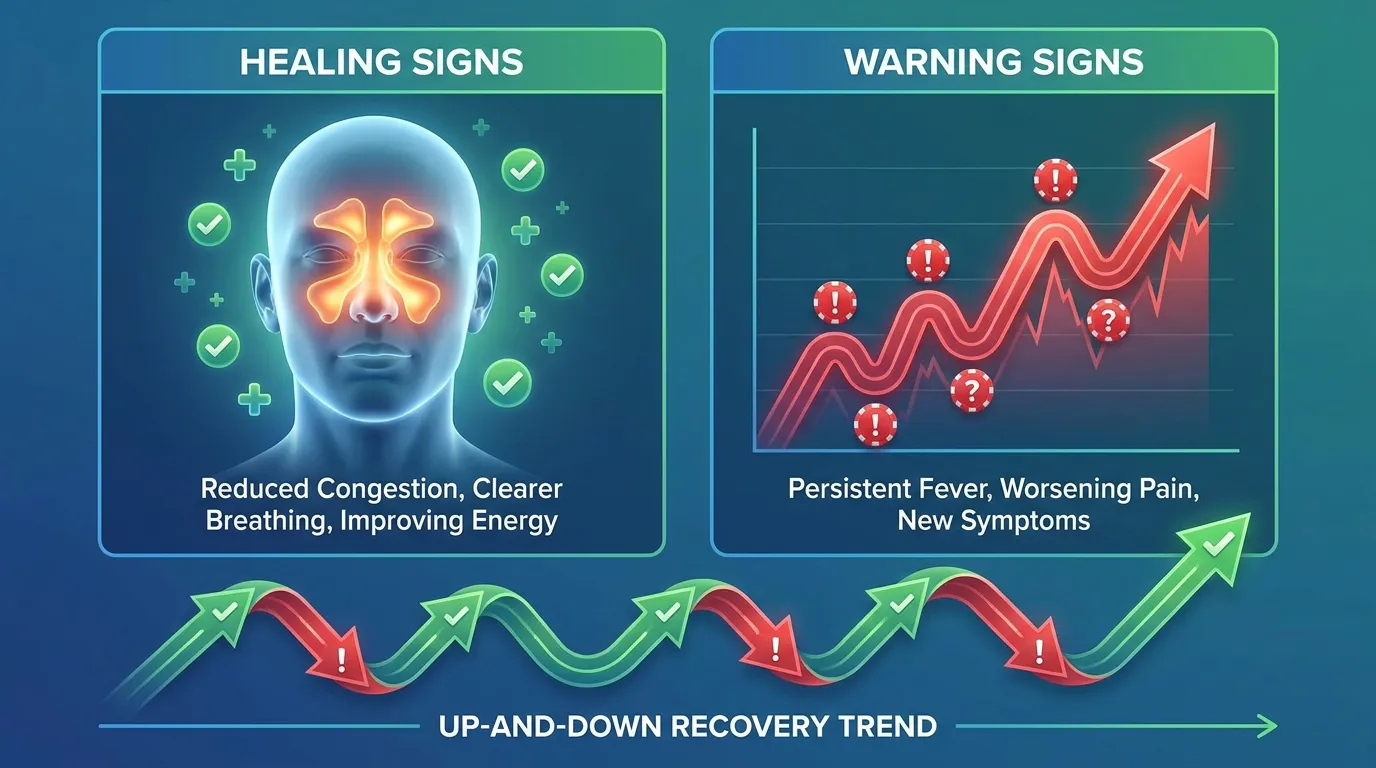
When to call your surgeon urgently
- Heavy bleeding that won’t slow
- Fever, worsening pain, or foul-smelling drainage
- Sudden severe swelling, severe headache, or vision changes (rare, but urgent)
Sources: https://www.mayoclinic.org/tests-procedures/septoplasty/about/pac-20384670 and https://www.ncbi.nlm.nih.gov/books/NBK567718/
*Protect the lining, keep things moist, and avoid pressure or picking—these small habits support uneventful healing.*
Treatments and Alternatives (Where Septoplasty Fits In)
Non-surgical treatments often tried first
When symptoms are mild—or when inflammation is a big contributor—common non-surgical options include:
- Saline sprays/rinses
- Steroid nasal sprays (often used when allergies/inflammation play a role)
- Allergy evaluation and treatment when relevant
- Nasal strips/dilators (may offer short-term nighttime help for some people)
These approaches can be especially useful when the issue is “a narrow hallway plus swollen walls.” If swelling is the main driver, medication may help a lot. If the “hallway frame” (structure) is the driver, medication may help somewhat—but not fully.
When septoplasty is the recommended treatment
Septoplasty is typically considered when a structural blockage is confirmed on exam and symptoms persist despite appropriate medical therapy. Sources: https://www.mayoclinic.org/tests-procedures/septoplasty/about/pac-20384670 and https://plasticsurgery.org/reconstructive-procedures/septoplasty/procedure
*Medical therapy targets swelling; septoplasty targets structure—your exam helps determine which matters most for you.*
FAQs About Septoplasty Incisions
Will I have a scar after septoplasty?
Usually not. The most common septoplasty incision is internal (a closed approach), which typically avoids visible scarring; however, some complex or combined procedures use a small external incision. Sources: https://www.ncbi.nlm.nih.gov/books/NBK567718/ and https://plasticsurgery.org/reconstructive-procedures/septoplasty/procedure
What’s the difference between a Killian incision and a hemitransfixion incision?
Both are vertical incisions made inside the nose, but they differ in location. A Killian incision is generally more posterior, while a hemitransfixion incision is more anterior—chosen based on where access is needed. Source: https://www.ncbi.nlm.nih.gov/books/NBK567718/
Why would someone need an external columellar incision?
A columellar incision is generally reserved for more complex anatomy, revision cases, or when septoplasty is combined with rhinoplasty (open approach). Sources: https://www.ncbi.nlm.nih.gov/books/NBK567718/ and https://plasticsurgery.org/reconstructive-procedures/septoplasty/procedure
How long does the incision take to heal?
Surface healing can happen relatively quickly, but internal healing and swelling often improve gradually over weeks to months—so the full septoplasty healing timeline is longer than many people expect. Source: https://www.mayoclinic.org/tests-procedures/septoplasty/about/pac-20384670
Is septoplasty painful?
Many patients report congestion and pressure more than severe pain, but experiences vary based on anatomy, technique, and individual sensitivity.
*In general, internal incisions minimize visible scarring; healing of deeper tissues simply takes longer than most people expect.*
Conclusion — What to Remember About Septoplasty Incisions
In many cases, a septoplasty incision is made inside the nose as part of a closed septoplasty, which typically means no visible scar. The exact incision type—such as a Killian incision or hemitransfixion incision—depends on anatomy and the access needed. In select cases, an external columellar incision may be used for complex corrections or combined septorhinoplasty.
Just as important as the incision choice is what happens afterward: consistent, careful septoplasty aftercare (especially saline moisture routines and temporary activity limits) can make recovery smoother and more comfortable.
If ongoing nasal obstruction is affecting sleep or quality of life, you can book an appointment with Sleep and Sinus Centers of Georgia to discuss what may be driving your symptoms and which options fit your situation: https://www.sleepandsinuscenters.com/
This article is for educational purposes only and is not medical advice. Please consult a qualified healthcare provider for diagnosis and treatment.
Sources and further reading
- Mayo Clinic: Septoplasty overview — https://www.mayoclinic.org/tests-procedures/septoplasty/about/pac-20384670
- NCBI/StatPearls: Septoplasty — https://www.ncbi.nlm.nih.gov/books/NBK567718/
- American Society of Plastic Surgeons (ASPS): Septoplasty — https://plasticsurgery.org/reconstructive-procedures/septoplasty/procedure
- Sleep and Sinus Centers of Georgia: Deviated septum relief options — https://sleepandsinuscenters.com/deviated-septum-relief
- Sleep and Sinus Centers of Georgia: Septoplasty recovery week-by-week — https://sleepandsinuscenters.com/blog/septoplasty-recovery-week-by-week-complete-timeline-20260123051106
- Sleep and Sinus Centers of Georgia: How to do a saline rinse after septoplasty — https://sleepandsinuscenters.com/blog/how-to-do-a-saline-rinse-after-septoplasty-step-by-20260326011446
- Sleep and Sinus Centers of Georgia: When can I blow my nose after septoplasty? — https://sleepandsinuscenters.com/blog/when-can-i-blow-my-nose-after-septoplasty-safe-tim-20260325041106
Don’t let allergies slow you down. Schedule a comprehensive ENT and allergy evaluation at Sleep and Sinus Centers of Georgia. We’re here to find your triggers and guide you toward lasting relief.