Septoplasty and Turbinate Reduction Recovery Timeline: What to Expect Week by Week
If you’re planning surgery (or you’re already in the early healing days), it helps to know what’s typical—especially because nasal breathing can feel worse before it feels better. This septoplasty and turbinate reduction recovery timeline breaks down common milestones week by week, including congestion, dryness, sleep changes, and when many people return to work and exercise. (Many patients actually have turbinate reduction, not a full turbinectomy—more on that below.)
Educational only: healing varies by person and surgical technique, so use this as a general guide and defer to your surgeon’s specific instructions.
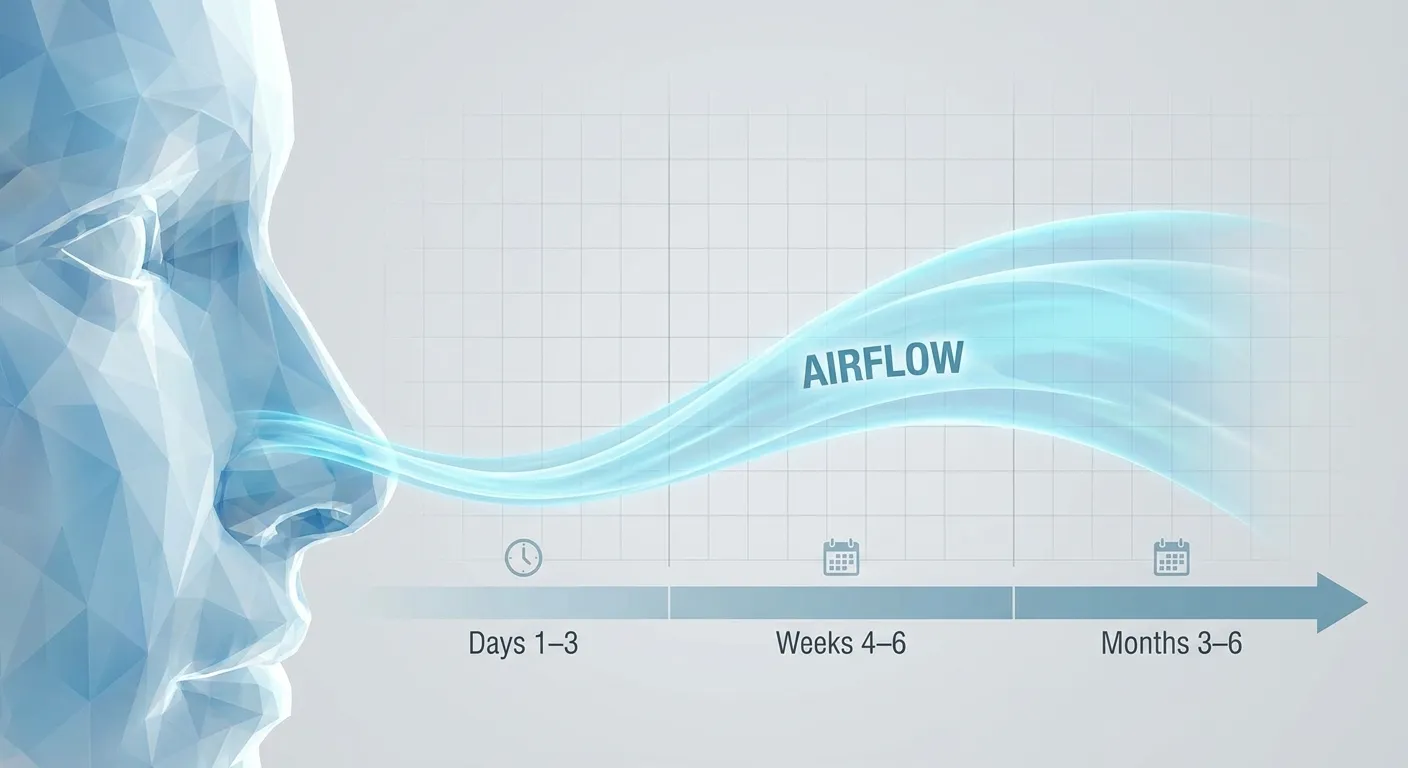
Quick Snapshot—Recovery Milestones at a Glance
The “big picture” timeline
- Days 1–3: Peak swelling and congestion; mild bleeding/oozing can happen. Peak congestion often occurs in the first 3 days, though timing varies.
- By ~1 week: Many people may be able to resume light activities and return to non-strenuous work, depending on surgeon guidance and recovery progress.
- Weeks 2–4: Congestion often shifts from “pressure/fullness” to dryness and crusting.
- Weeks 4–6: Many people begin to notice breathing feels easier, though morning dryness/stuffiness may linger.
- 3–6 months: Internal healing and tissue remodeling typically continue and settle across this period.
If you’ve been searching for a clear nasal surgery congestion timeline, these milestones are the “map.” Think of recovery like a road project: even after the “big” work is done, the final smoothing and settling takes time—and there can be short detours (good days and frustrating days) along the way. In short: expect congestion first, then dryness, with steadier breathing by weeks 4–6.
What Septoplasty and Turbinate Reduction Actually Fix
Septoplasty in plain language
Septoplasty repositions or straightens a deviated septum (the wall between the nostrils) to improve airflow. If you’re looking for a deeper overview of what a deviated septum is and why fixing it can help, see: https://sleepandsinuscenters.com/deviated-septum-relief
A useful way to picture it: if the septum is angled like a partially closed door, airflow gets “pinched.” Septoplasty aims to move that door closer to center so air can pass more freely.
“Turbinectomy” vs turbinate reduction (why the term can be confusing)
“Turbinectomy” is sometimes used loosely, but many procedures are better described as turbinate reduction—reshaping or partially reducing turbinate tissue rather than removing it entirely. Turbinates help warm, filter, and humidify the air you breathe, so most approaches aim to reduce blockage while preserving function. For a plain-language explainer, see: https://sleepandsinuscenters.com/blog/everything-you-need-to-know-about-turbinate-reduction
Why surgeons often combine them
When both a deviated septum and enlarged turbinates contribute to obstruction, combining procedures may improve breathing outcomes—which is why the septoplasty and turbinate reduction recovery timeline often reflects healing from both procedures at once. Bottom line: straightening the septum and reducing enlarged turbinates can improve airflow when both contribute to blockage.
Normal Symptoms After Surgery (and Why They Happen)
Congestion and “blocked nose” (very common)
Early on, congestion is usually driven by swelling and internal healing. If you have splints, packing, or internal scabbing, that can add to the “fully blocked” feeling. In many septoplasty recovery week by week stories, this is the most surprising part—breathing can feel worse at first.
Clinicians often hear versions of: “I thought I’d wake up breathing better.” In reality, the first phase is like having a sprained ankle: the fix may be done, but the swelling still has to calm down.
Mild bleeding or pink drainage
Light oozing, pink drainage, or occasional small clots can happen as the lining heals—especially in the first few days. Because bleeding questions are common, this overview can help you understand what’s typical vs. what may need a check-in: https://sleepandsinuscenters.com/blog/nosebleeds-after-septoplasty-causes-symptoms-and-w-20260325111316
Nasal dryness, scabs, crusting
As swelling gradually decreases, many people notice a shift: less “pressure congestion,” more dryness and crusting—often in weeks 2–4. This is a frequent complaint in turbinate reduction recovery, and it can feel especially noticeable in the morning or in dry indoor air. A helpful explainer on the difference is: https://sleepandsinuscenters.com/blog/nasal-dryness-vs-congestion-key-differences-and-effective-treatments
A simple analogy: swelling is like a puffy sponge taking up space; crusting is more like a healing scab that temporarily narrows the airway until it softens and clears (gently).
Reduced smell/taste, fatigue, sleep disruption
Smell and taste can be temporarily reduced by swelling and congestion. Sleep may be lighter (mouth breathing, dryness, and position changes are common), and fatigue is a frequent short-term side effect of recovery.
It’s also normal for your energy to lag behind your “pain level.” Even if discomfort is mild, your body is still directing resources to healing. In short: early swelling drives congestion; later healing often feels dry and crusted.
Week-by-Week Septoplasty + Turbinate Reduction Recovery Timeline (What to Expect)
Important context: healing can differ based on technique, whether splints/packing are used, allergies, smoking exposure, reflux, and how much turbinate tissue was reduced.
Post-op: hours 0–24
Common experiences
- Grogginess, mild nausea (sometimes), and fatigue
- Sore throat from anesthesia
- Nasal stuffiness and light drainage
Typical priorities
- Rest and hydration
- Head elevation (to reduce swelling and drainage)
- Taking medications exactly as prescribed
Often restricted early on
- Nose blowing
- Heavy bending/straining
- High heat exposure (long hot showers/saunas), depending on instructions
If you’re a “doer,” treat recovery like a job for this first day: your main tasks are rest, fluids, and following the post-op plan.
Days 1–3 (Peak Swelling and Congestion)
This is the “peak” window in the septoplasty and turbinate reduction recovery timeline for swelling and the boxed-in, can’t-breathe feeling.
What you’ll likely feel
- The most intense congestion and pressure
- More mouth breathing (dry mouth and throat)
- Poor sleep quality
What many people find supportive
- Humidified air and gentle moisture strategies your surgeon approves
- Continued rest and head elevation
When to be extra alert
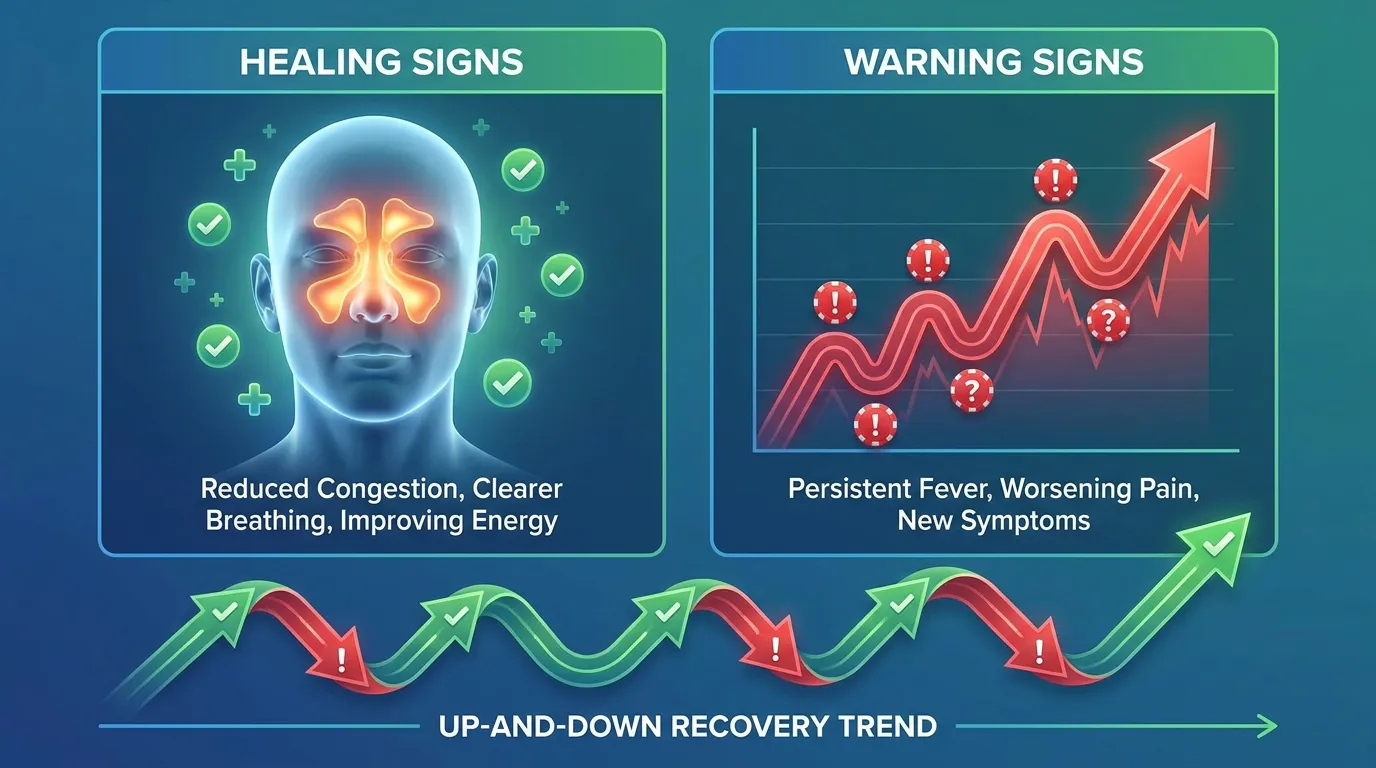
If bleeding becomes heavy or persistent, or symptoms feel sharply worse instead of gradually variable, that’s typically a reason to contact your surgical team.
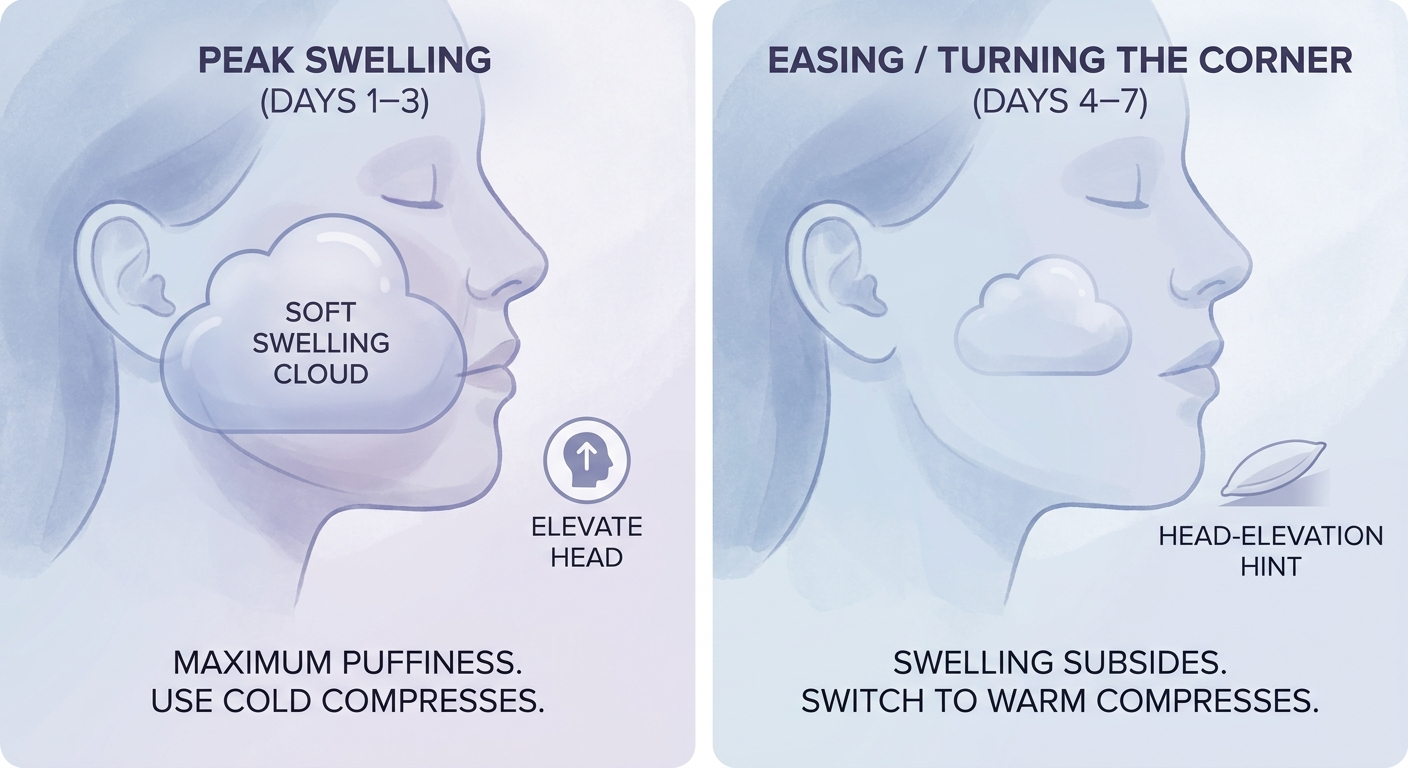
Days 4–7 (Turning the Corner)
Many people feel a subtle shift here—still congested, but less “peaked.”
What changes
- Swelling may begin easing, though congestion often remains significant
- Energy may improve enough for light household activity
Follow-up timing
A post-op visit is commonly scheduled around this period, and some surgeons remove splints during this window (timing varies).
Activity
Light walking is often the first “return to movement,” while heavy lifting and straining are commonly postponed.
A concrete example: a short walk around the house or a gentle stroll outside may feel fine, but carrying heavy groceries or a hard gym session is usually still a “not yet.”
Week 2 (Less Pressure, More Crusting)
If you expected a straight line of improvement, week 2 can be confusing.
What you may notice
- Congestion shifts from “packed/full” to dry and crusted
- Mucus may be thicker; small clots can appear intermittently
- One side may feel clearer than the other
This is a classic point in the nasal surgery congestion timeline when people start asking about nasal dryness after turbinate surgery—even if they didn’t feel very dry in week 1.

Weeks 3–4 (Dryness Phase + Gradual Airflow Gains)
This period is often about slow, noticeable change rather than sudden relief.
What’s common
- Morning stuffiness and dryness
- Uneven improvement (right vs. left side)
- Fewer “pressure” days, more “dry/crusted” sensations
Why it happens
Internal tissues are still remodeling. Swelling patterns can shift, and crusting can temporarily narrow airflow even as deeper swelling improves.
What to avoid
Picking or forcefully removing scabs can trigger bleeding and prolong irritation, which is why clinicians often emphasize gentle approaches and moisture support.
Weeks 4–6 (Noticeably Easier Breathing)
For many patients, this is the most encouraging window in the septoplasty and turbinate reduction recovery timeline.
Typical milestone
- Many people begin to notice breathing feels easier and more consistent
- Dryness may still be present—especially in the morning
Exercise question: “When can I exercise after septoplasty?”
This is one of the most common concerns. While light activity is often resumed earlier, many surgeons restrict strenuous exercise and heavy lifting for about 4–6 weeks, but exact timing depends on your surgeon’s instructions and your healing.
Months 2–3 (Steady Improvement, Fewer “Bad Days”)
What to expect
- Less crusting overall
- More stable airflow
- If you have allergies or chronic rhinitis, you may still get flare-ups—treating inflammation can matter for long-term comfort.
A common patient observation here is: “I stopped thinking about my nose as much.” That’s often a sign you’re trending toward your baseline.
Months 3–6 (Remodeling and Settling)
By this stage, many people reach their “settled” outcome.
What this means
- Internal healing and tissue remodeling have largely matured
- Breathing results tend to feel more predictable day to day
This longer runway is why a septoplasty recovery week by week guide often continues into the month-by-month phase. Overall: progress is gradual and non-linear; follow your surgeon’s plan and pace.

Treatments and Home Care That Usually Support Healing
Saline sprays and saline rinses (a cornerstone for many)
Moisture and gentle rinsing are commonly used to loosen crusts and reduce irritation when approved by your surgeon. For a step-by-step walkthrough, see: https://sleepandsinuscenters.com/blog/how-to-do-a-saline-rinse-after-septoplasty-step-by-20260326011446
Pain control (what’s typically used)
Post-op discomfort is often managed with acetaminophen and/or prescribed medications. Some surgeons restrict NSAIDs for a period due to bleeding risk—follow your specific instructions.
Managing dryness
Common comfort supports include:
- Bedroom humidification
- Hydration
- Surgeon-approved nasal moisturizers (often gels or ointments)
Medications you might be prescribed
Depending on your case, prescriptions may include antibiotics, topical ointments, or steroid sprays/rinses. These choices vary widely based on findings and technique. Key point: gentle moisture plus adherence to your surgeon’s regimen supports smoother healing.
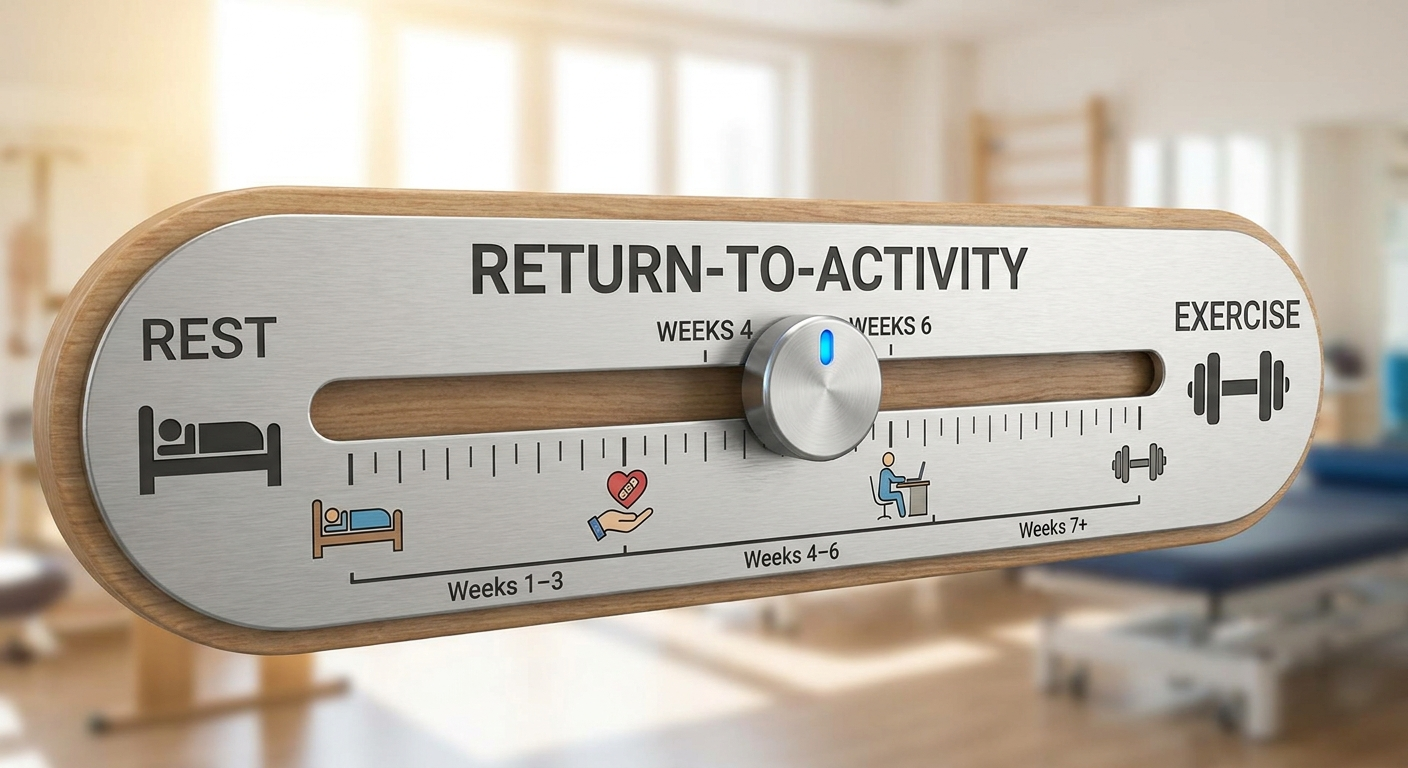
Lifestyle and Activity Tips (Return to Work, Sleep, and Exercise)
Returning to work/school
Many people return to desk work within about a week, especially if pain is controlled and sleep is improving. Jobs with dust exposure, heavy lifting, or significant physical strain may require more time. If possible, consider a lighter first day back—shorter hours, fewer meetings, or more breaks—since fatigue can sneak up even when you feel improved.
Exercise and lifting rules (why restrictions last longer than you expect)
Even if you feel “okay,” nasal tissues can still be vulnerable to bleeding and swelling. That’s why guidance commonly separates:
- Light activity (often earlier)
- Strenuous exercise/heavy lifting (often delayed up to 4–6 weeks, depending on surgeon guidance)
Sleep tips for easier breathing at night
Many people sleep better with:
- Head elevation
- A humidifier in dry climates or heated/air-conditioned rooms
- A comfortable side-lying position (as tolerated)
Tip: pace your return to work and exercise to minimize bleeding and setbacks.

When to Call Your Surgeon (Red Flags)
Seek urgent guidance if you experience:
- Heavy bleeding that doesn’t slow with recommended measures
- Fever, worsening facial pain/swelling, or foul-smelling drainage
- Severe headache, vision changes, neck stiffness, confusion
- Sudden one-sided worsening after initial improvement
When in doubt, call—early evaluation helps prevent complications.
FAQs (Patient-Friendly, SEO-Focused)
“When will I be able to breathe normally again?”
Many people notice clearer breathing by weeks 4–6, with continued remodeling and settling over 3–6 months.
“Is it normal to feel more congested before I feel better?”
Yes. Peak congestion commonly occurs days 1–3 in this septoplasty and turbinate reduction recovery timeline, though timing varies.
“Why did my congestion change into dryness?”
A shift toward dryness/crusting is common around weeks 2–4, as swelling changes and healing progresses.
“When can I work out again?”
Light movement is often resumed earlier, but strenuous exercise/heavy lifting is commonly restricted for up to 6 weeks. Clearance timing is individualized—ask your surgeon for specifics.
“Can one nostril feel better before the other?”
Yes. Swelling and healing can be uneven side to side.
“When can I blow my nose?”
Timing varies by surgeon and technique. For an educational overview of common timelines and why they matter, see: https://sleepandsinuscenters.com/blog/when-can-i-blow-my-nose-after-septoplasty-safe-tim-20260325041106
“What if I still have morning stuffiness at 6 weeks?”
Mild morning dryness/stuffiness can linger even when overall airflow is much better, especially with allergies or dry indoor air.
“Do turbinates grow back?”
Depending on the technique used and whether underlying inflammation is controlled, turbinate tissue can remain enlarged or symptoms can recur. Learn more here: https://sleepandsinuscenters.com/blog/can-turbinates-grow-back-after-turbinate-reduction-20260126191309
Remember: timelines are averages; your surgeon’s guidance prevails for your specific case.
Related Conditions That Can Affect Recovery (Causes of Lingering Symptoms)
Allergies or chronic rhinitis
Inflammation can prolong swelling and congestion, which may blur progress during turbinate reduction recovery.
Reflux (LPR/GERD), smoke exposure, very dry indoor air
These irritants can aggravate nasal lining sensitivity and make dryness or congestion feel worse during healing. Managing allergies and irritants can improve recovery comfort and outcomes.
Next Steps (When to Get Personalized Guidance)
If you’re preparing for surgery—or you’re worried your recovery isn’t tracking with the typical septoplasty and turbinate reduction recovery timeline—ask your ENT for a personalized plan (rinses, follow-up schedule, and a clear return-to-exercise timeline based on your specific procedure).
If you would like a professional evaluation to review symptoms, recovery expectations, and next steps, you can book an appointment here: https://sleepandsinuscenters.com/appointments
A personalized plan from your ENT is the safest route to a good result.
References
1. Mayo Clinic. Septoplasty. (2023) https://www.mayoclinic.org/tests-procedures/septoplasty/about/pac-20384670
2. Cleveland Clinic. Septoplasty. (2025) https://my.clevelandclinic.org/health/treatments/17779-septoplasty
3. Sleep and Sinus Centers of Georgia. Septoplasty Recovery Week by Week (Complete Timeline). (2026) https://sleepandsinuscenters.com/blog/septoplasty-recovery-week-by-week-complete-timelin-20260123051106
4. Becker ENT & Allergy. Recovery After Septoplasty. https://www.beckerentandallergy.com/blog/recovery-after-septoplasty
5. ENT of Georgia South. A Guide to Resuming Normal Activities After Septoplasty. https://entgasouth.com/blog/a-guide-resuming-normal-activities-after-septoplasty
6. PreferredMD Health Library. Septoplasty/Turbinate Reduction. https://preferredmd.com/health_library/septoplasty_turbinate_reduction
This article is for educational purposes only and is not medical advice. Please consult a qualified healthcare provider for diagnosis and treatment.
Don’t let allergies slow you down. Schedule a comprehensive ENT and allergy evaluation at Sleep and Sinus Centers of Georgia. We’re here to find your triggers and guide you toward lasting relief.