Septal Spur Headaches: Symptoms, Causes, and Treatment for Facial Pain
Introduction — When a “Nose Problem” Causes a Headache
Most people think of headaches as a “brain” issue—migraine, stress, poor sleep, dehydration. But in some cases, a structural issue inside the nose can contribute to facial pain.
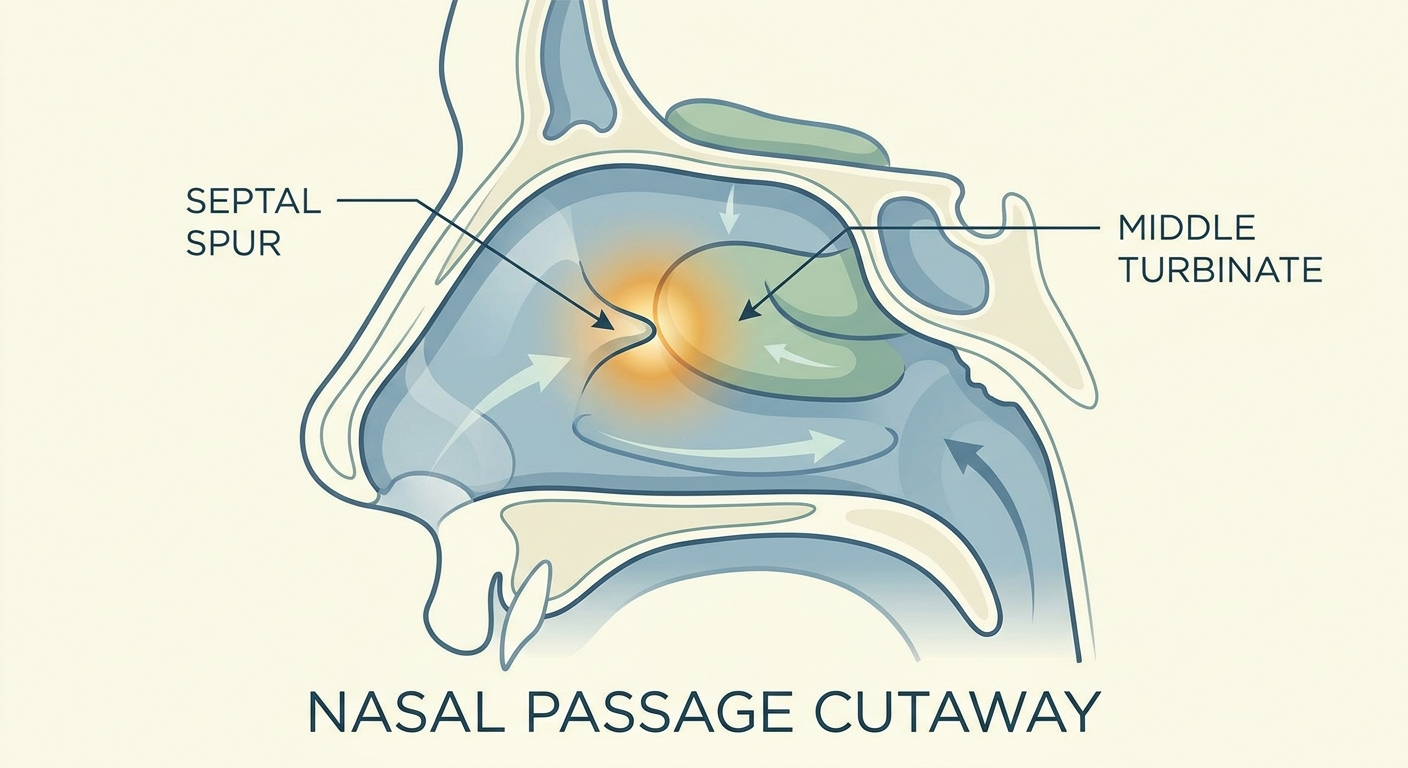
One possible culprit is a septal spur: a small, sharp bony or cartilaginous projection off the nasal septum (the wall between the nostrils). When that spur presses on nearby nasal tissue, it may trigger a specific type of pain often discussed as a rhinogenic contact-point headache—listed in the International Classification of Headache Disorders (ICHD-3) Appendix (A11.5.3) under “Headache attributed to disorder of the nasal mucosa, turbinates, or septum.” Because it appears in the Appendix, evidence remains limited and causality is debated; diagnosis is clinical and exclusion-based, not automatic from anatomy alone. [1]
A key takeaway before going further: a septal spur seen on CT is not proof that it’s causing your symptoms. Many people have spurs or deviations and never develop pain. Diagnosis depends on matching anatomy to symptoms and excluding more common headache conditions.
If you’d like a broader primer on this topic, see our overview of rhinogenic contact-point headache: https://sleepandsinuscenters.com/blog/contact-point-headache-in-nose-causes-symptoms-treatment
In short, imaging can show structure, but only your pattern of symptoms and a careful workup can show cause.
What Is a Septal Spur (and How Is It Different From a Deviated Septum)?
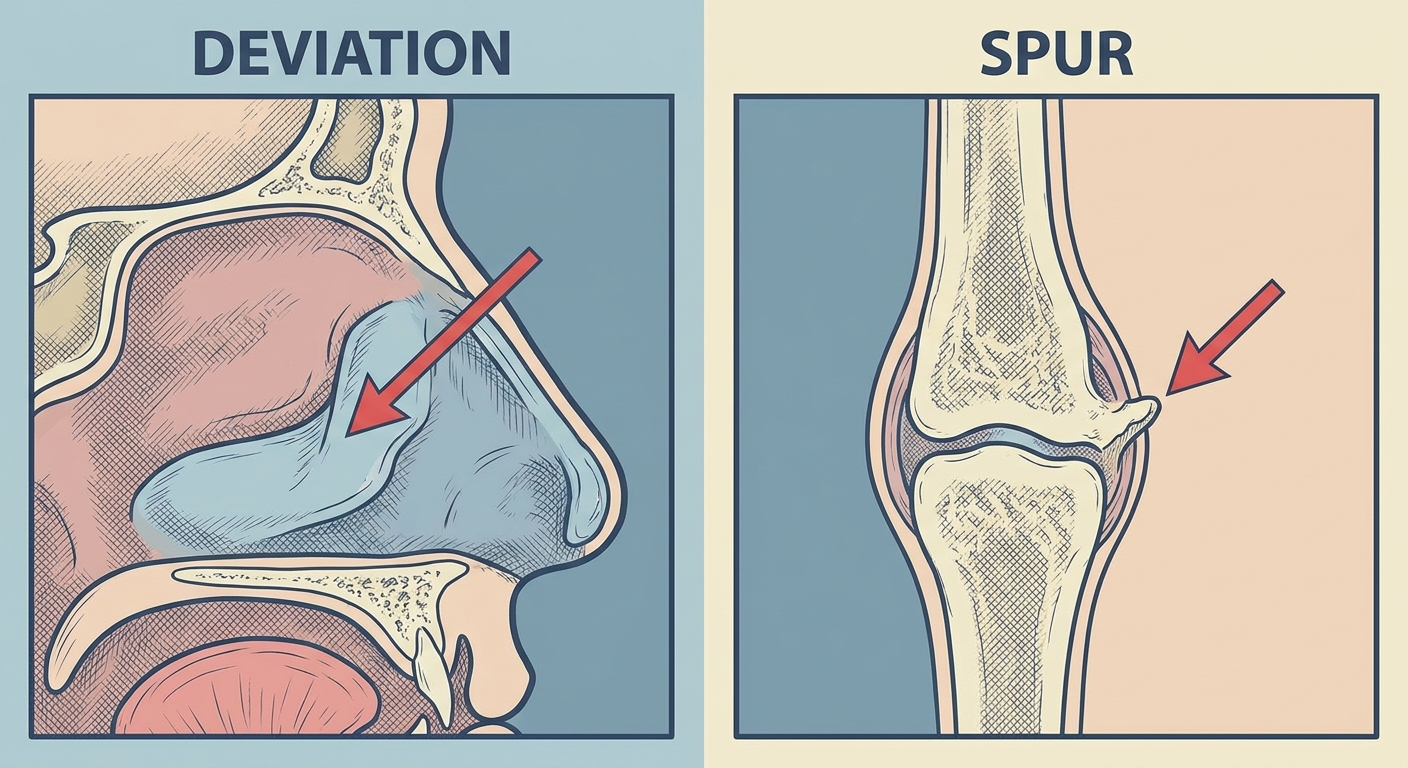
Septal spur vs. septal deviation
A deviated septum is a broader shift or curve of the septum to one side. A septal spur is more like a localized ridge or point that sticks out—sometimes occurring along with a deviation.
Importantly, deviations and spurs are common findings, and many people are asymptomatic. [5] That’s why “it showed up on imaging” isn’t enough to diagnose a septal spur headache. A helpful way to think about it: imaging can show the shape, but symptoms tell you whether that shape is actually causing friction.
For readers exploring structural causes of blockage and treatment approaches, review our page on deviated septum treatment options: https://sleepandsinuscenters.com/deviated-septum-relief
Where septal spurs typically press (the “contact point”)
- The turbinate (often the middle turbinate)
- The lateral nasal wall
Why does contact matter? Nasal lining (mucosa) is richly innervated, and mechanical pressure may provoke pain signals—even without infection. The proposed mechanism is not fully proven in all patients, but many clinicians use a practical description: “If two sensitive surfaces keep touching, the nose can ‘complain’ as pain.”
A septal spur matters most when it actually touches another sensitive surface and lines up with your symptoms.
Can a Septal Spur Really Cause Headaches or Facial Pain?
The concept of “rhinogenic contact-point headache”
In a rhinogenic contact-point headache, pain is thought to be triggered by mechanical contact inside the nose, not necessarily by sinus infection or chronic inflammation. [1] In other words: the issue can be structural and sensory rather than infectious, and the proposed mechanism may not apply to every patient.
This is why some people with recurring “sinus headaches” have normal sinus imaging—because the pain driver may not be sinusitis at all. It also explains why antibiotics often don’t help when the underlying issue is contact and nerve signaling rather than infection.
How pressure in the nose can be “felt” in the face/head
When sensitive nasal tissue is stimulated, pain can be perceived in nearby facial regions through shared sensory pathways, producing referred pain. Depending on location and individual sensitivity, symptoms may resemble migraine (throbbing, one-sided pressure, behind-the-eye discomfort).
Similarity doesn’t mean it’s the same condition—this distinction matters because migraine treatment and nasal treatment are not interchangeable. A practical analogy: two different “wiring problems” can turn on the same warning light.
Nasal contact can mimic migraine-like pain patterns, but the right diagnosis determines the right treatment.

Septal Spur Headache Symptoms (What Patients Commonly Notice)
Facial pain and headache patterns
A suspected septal spur headache may feel like pressure or pain in areas such as:
- Between the eyes or at the bridge of the nose
- Forehead
- Cheeks
- Around or behind one eye
Some people report symptoms mainly on one side (often corresponding to the contact point), while others notice bilateral discomfort. Symptoms can be intermittent (flare-ups) or more frequent, sometimes described as “a dull pressure that keeps coming back.”
A few real-world examples (how patients describe it)
- “It feels like pressure behind one eye, but my sinus CT was ‘clear.’”
- “My headache worsens when my nose is congested, then improves when swelling goes down.”
- “It’s not a sharp lightning pain—more like a constant push in the bridge of my nose.”
These descriptions aren’t diagnostic on their own, but they can help guide evaluation.
Nose symptoms that may happen alongside pain
Nasal symptoms may be present—but not always. Examples include:
- Nasal obstruction, sometimes worse on one side
- Congestion or post-nasal drip (may or may not occur)
- Pain that seems to worsen during periods of nasal swelling (allergy seasons, irritant exposure, colds)
A common pattern is “bad nose days = worse face pressure,” which is one reason ENTs pay close attention to timing and triggers.
Symptoms that suggest it may not be a septal spur headache
Facial pain can have many causes. Features that often point away from a purely nasal contact-point source include:
- Strong migraine patterns that persist even when nasal symptoms are minimal
- Dental sources of pain
- TMJ-related jaw pain or clicking
- Neuralgia-like pain (brief “electric” jolts)
Because overlap is common, an ENT headache evaluation often focuses on ruling out these other causes before attributing pain to a contact point.
Pay attention to one-sidedness, congestion-linked flares, and “clear” sinus imaging—these details help your clinician sort causes faster.
Causes & Triggers — Why the Pain Comes and Goes
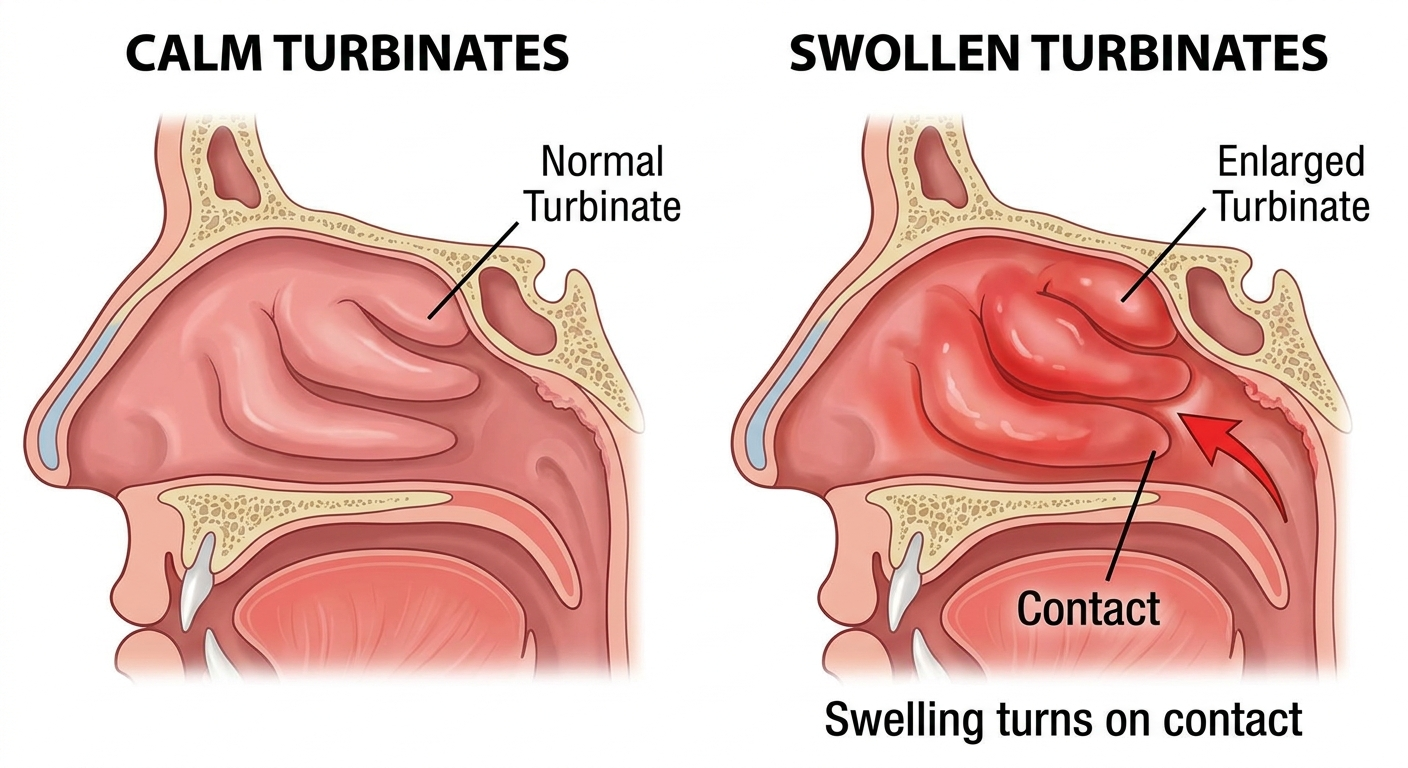
The “contact point” can vary with swelling
Contact points aren’t always constant. Turbinates can swell and shrink based on:
- Allergies
- Viral illnesses
- Irritants (smoke, strong fragrances)
- Dry air
When swelling increases, the likelihood or intensity of contact can rise—potentially making symptoms feel cyclical. Some patients notice flares at predictable times of year, which can be a useful clue (even though it doesn’t “prove” contact-point headache).
Structural contributors often seen with spurs
ENTs often see septal spurs alongside:
- Deviated septum
- Turbinate enlargement
The combination can increase the chance that a sensitive area gets pressed or pinched. Think of it as reduced “clearance” inside the nasal passage—less room means swelling has a bigger impact.
Why “sinus infection” is often blamed incorrectly
Many people label recurring facial pressure as a “sinus infection,” but contact-point headache is typically non-inflammatory. [1] True bacterial sinusitis more often includes signs like significant purulent drainage, fever, and objective sinus findings on imaging—whereas contact-point pain may occur even without those markers.
If you’re trying to sort out this confusion, our guide on migraine vs. sinus headache can help clarify typical patterns: https://sleepandsinuscenters.com/blog/migraine-vs-sinus-headache-key-differences-and-symptoms-explained
Swelling can “turn on” a susceptible contact point, which is why flare-ups often track with allergy seasons or irritants.
Diagnosis — How ENTs Confirm (or Rule Out) a Septal Spur Headache
Step 1 — Rule out more common causes first (critical)
Because facial pain is multifactorial, ENT evaluation typically considers:
- Migraine and other primary headache disorders
- Chronic rhinosinusitis or recurrent infections
- Dental pain
- TMJ disorders and other facial pain syndromes
This matters because procedures like septoplasty for headaches tend to help only when the diagnosis is correct. A systematic review and meta-analysis reported benefit in surgical series but also highlighted variability in diagnostic methods and follow-up—reinforcing the need for careful patient selection. [2] Surgery is not first-line for undifferentiated facial pain/headache.
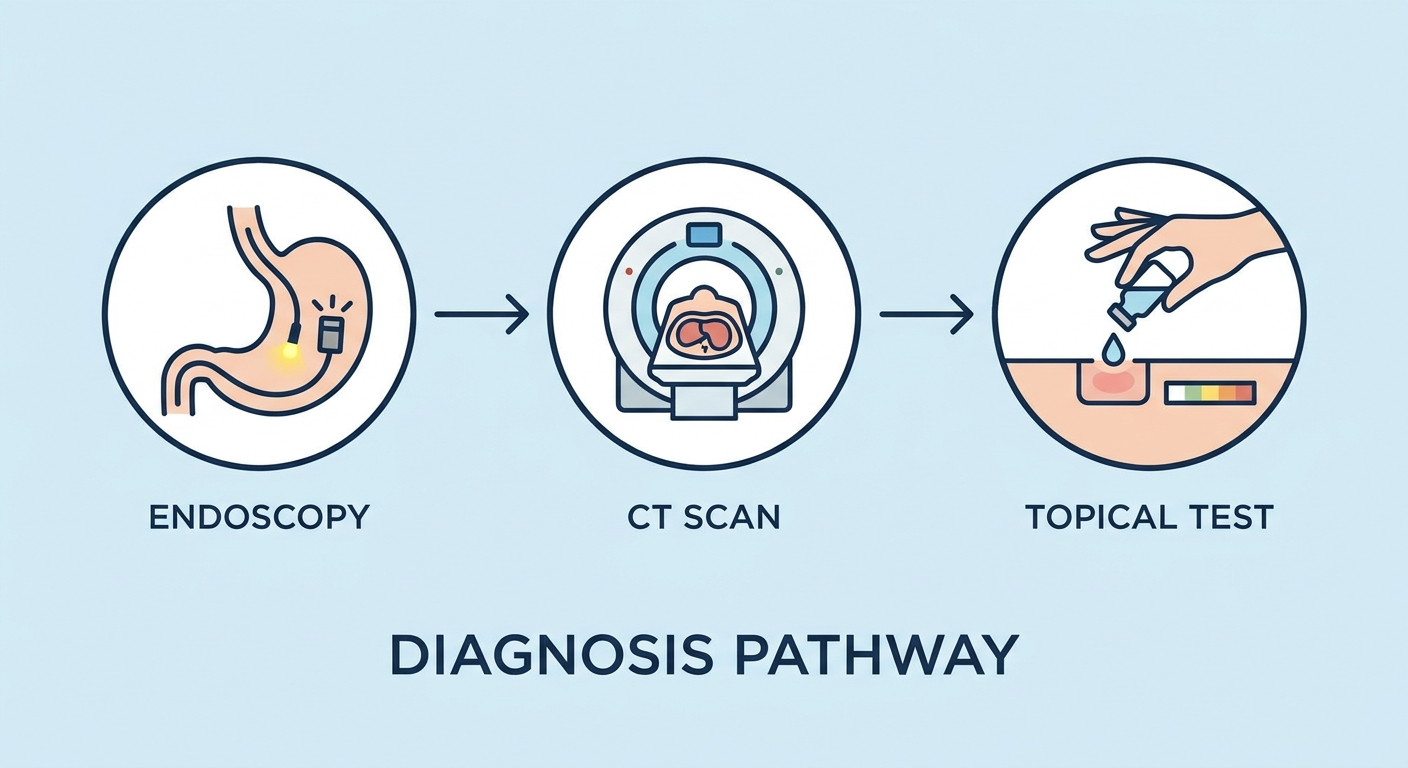
Step 2 — Nasal endoscopy exam
A nasal endoscopy helps an ENT directly evaluate:
- The septal spur
- Whether tissue contact appears likely
- Signs of inflammation, polyps, or infection that may change the plan
If you’re wondering what the exam is like, see: https://sleepandsinuscenters.com/blog/what-is-nasal-endoscopy----and-is-it-painful
Step 3 — CT scan (when needed)
A CT scan can clarify anatomy and potential contact points. However, the nuance is crucial: CT evidence of a spur does not prove it causes pain. [1,2] Imaging is best interpreted alongside symptom patterns and exam findings—especially because incidental septal findings are common. [5]
Step 4 — The topical anesthetic (lidocaine) ± decongestant test
A commonly discussed tool is a topical anesthetic test:
- Medication is applied to the suspected contact point
- Temporary improvement in pain supports (but does not prove) that the contact point contributes to symptoms
Relief is short-lived—this is a diagnostic clue, not a cure. [1]
Diagnosis is pattern-based and exclusion-first; tests support the story but rarely tell it alone.

Treatment Options for Septal Spur Headaches (From Least to Most Invasive)
When observation is reasonable
If episodes are mild or infrequent—or if migraine seems more likely—observation and continued evaluation may be appropriate. Not every septal spur needs treatment, and not every facial pain pattern points back to the nose.
Medical treatments (helpful when swelling is part of the problem)
When mucosal swelling contributes to nasal contact-point pain, non-surgical options may be used to support comfort, such as:
- Saline sprays or rinses
- Allergy management when relevant
- Nasal steroid sprays when inflammation is present (as determined by a clinician)
These are educational examples, not personalized recommendations. The goal is often to reduce swelling so the contact happens less often or less intensely.
Procedures and surgery for confirmed contact-point pain
When evaluation suggests a true contact-point driver—especially with supportive findings such as a positive anesthetic test—procedures may be considered, including endoscopic septal spur removal or septoplasty.
Evidence suggests improvement can occur in selected patients, but outcomes depend heavily on diagnosis quality and patient selection. [2] A prospective study found septoplasty improved certain sinus-like (sinonasal) headache patterns but did not improve migraine, emphasizing that migraine-like symptoms aren’t automatically nasal in origin. [3] A positive lidocaine test is supportive, not definitive.
Who may not improve with septal surgery
Surgery is less likely to help when:
- Migraine is the primary diagnosis (even if nasal symptoms also exist) [3]
- Facial pain doesn’t correlate with a clear nasal contact point [3]
Start conservatively, match treatment to the proven cause, and reserve surgery for carefully selected cases.
What to Expect If Septoplasty/Spur Removal Is Recommended
Pre-op checklist (patient-friendly)
Common planning topics include:
- Clarifying goals (breathing improvement vs. facial pain reduction)
- Reviewing medications and allergies
- Discussing bleeding risk and healing expectations
It can also help to ask your clinician what outcome would count as “success” for you—fewer headache days, lower intensity, improved airflow, or all of the above.
Recovery basics (high-level, non-prescriptive)
Many people experience temporary congestion and swelling early on. Follow-up visits are important so healing can be checked and the nasal cavity can be evaluated as recovery progresses.
Risks and limitations (balanced and clear)
Any nasal surgery has potential risks such as bleeding, infection, scarring, or persistent symptoms. And in the specific context of septal spur headache, there is always the possibility that pain persists if the true cause is unrelated (or mixed). [2]
Clear goals, realistic expectations, and close follow-up drive better satisfaction after septal procedures.
Lifestyle Tips to Reduce Nasal Contact Irritation (Supportive Care)
Reduce swelling triggers
Reducing exposure to common irritants may help decrease mucosal swelling and sensitivity:
- Smoke
- Strong fragrances
- Dry, dusty environments (when avoidable)
Even small changes—like avoiding a heavily fragranced room during a flare—can help some people interpret patterns more clearly.
Keep nasal lining comfortable
Supportive habits that some people find helpful include hydration and humidified air during dry seasons. If using saline rinses, proper water safety is important.
Track patterns to help diagnosis
A simple diary can be surprisingly useful:
- Timing and duration
- One-sided vs. both-sided symptoms
- Congestion level
- Suspected triggers
- What provided relief (or didn’t)
This can strengthen an ENT headache evaluation by tying symptoms to nasal cycles.
Reducing triggers and tracking patterns can lessen flares and speed an accurate diagnosis.
When to See an ENT (and When It’s More Urgent)
Make an ENT appointment if
Consider evaluation if:
- Facial pain/headaches persist alongside nasal obstruction
- Symptoms seem linked to congestion cycles or one-sided blockage
- “Sinus headache” workups keep coming back negative
At Sleep and Sinus Centers of Georgia, evaluation commonly focuses on distinguishing migraine, sinus disease, and true nasal contact-point pain so treatment matches the actual cause. To get answers tailored to your symptoms, you can book an appointment here: https://www.sleepandsinuscenters.com/
Seek urgent evaluation if
More urgent assessment is typically warranted for red flags such as:
- Vision changes
- Significant swelling around the eye
- Neurologic symptoms
- High fever with severe facial pain
- Sudden “worst-ever” headache
- Neck stiffness, confusion, or fainting
Don’t wait on red flags—seek urgent care; otherwise, an ENT visit can help sort out next steps.
FAQs
Can a septal spur cause migraines?
A septal spur can mimic migraine-like symptoms, but migraine is a separate disorder. Septoplasty generally does not improve true migraine if migraine is the primary cause. [3] A spur does not cause migraine disease, though both can coexist.
Is a septal spur on CT enough to diagnose septal spur headaches?
No. CT shows anatomy, but symptom correlation and sometimes a positive topical anesthetic test provide stronger evidence than imaging alone. [1,2] That’s why septal spur headache diagnosis requires more than a scan.
What is the lidocaine (topical anesthetic) test and why does it matter?
It’s a short in-office test where anesthetic is applied at a suspected contact point. Temporary relief suggests that nasal contact may be contributing to pain, consistent with ICHD-3 Appendix diagnostic framing. [1]
Will septoplasty always fix facial pain?
No. Best results are reported in carefully selected patients with confirmed contact-point headache, and published studies note variability in diagnosis and follow-up. [2] Septoplasty for headaches is most appropriate when a contact point is clearly linked to symptoms.
Can a septal spur cause ear symptoms too?
Less commonly, referred symptoms like ear pain (otalgia) have been described in association with nasal contact points, but this requires careful evaluation to exclude more common ear and jaw causes. [4]
A precise diagnosis—not a single scan—shapes the best plan and the best odds of success.
Conclusion — The Right Diagnosis Comes Before the Right Treatment
Septal spurs are common—and most don’t cause pain. When they do, the condition is usually discussed as rhinogenic contact-point headache, where internal nasal contact may trigger referred facial pain. But because imaging findings are easy to over-interpret, the most important step is a structured evaluation that rules out migraine and other facial pain sources first.
If your symptoms sound consistent with a septal spur headache—especially when paired with one-sided obstruction or congestion-linked flare-ups—an ENT evaluation can help determine whether the spur is an incidental finding or a meaningful contributor, and whether conservative care or septoplasty is more appropriate.
Right problem, right solution—start with the most accurate diagnosis you can get.
References
1. International Headache Society. ICHD-3 Appendix A11.5.3: Headache attributed to disorder of the nasal mucosa, turbinates or septum. https://ichd-3.org/appendix/a11-headache-or-facial-pain-attributed-to-disorder-of-the-cranium-neck-eyes-ears-nose-sinuses-teeth-mouth-or-other-facial-or-cervical-structure/a11-5-headache-attributed-to-disorder-of-the-nose-or-paranasal-sinuses/a11-5-3-headache-attributed-to-disorder-of-the-nasal-mucosa-turbinates-or-septum/
2. Maniaci et al. Endoscopic surgical treatment for rhinogenic contact point headache: systematic review and meta-analysis (2021). https://pmc.ncbi.nlm.nih.gov/articles/PMC7936872/
3. Feroz et al. A longitudinal prospective study of septoplasty impact on headache and allergic rhinitis (2023). https://pmc.ncbi.nlm.nih.gov/articles/PMC10676068/
4. Perić et al. Nasal septal spur associated with rhinogenic contact point otalgia and tinnitus (2018). https://pmc.ncbi.nlm.nih.gov/articles/PMC6391278/
5. Cleveland Clinic. Deviated Septum: Symptoms, Causes & Treatment. https://my.clevelandclinic.org/health/diseases/16924-deviated-septum
This article is for educational purposes only and is not medical advice. Please consult a qualified healthcare provider for diagnosis and treatment.
Don’t let allergies slow you down. Schedule a comprehensive ENT and allergy evaluation at Sleep and Sinus Centers of Georgia. We’re here to find your triggers and guide you toward lasting relief.