Rhinoplasty for Deviated Septum: Improve Breathing and Nose Appearance
Introduction — When breathing problems and nose shape are connected
If you’ve ever felt like you can’t get a full breath through your nose and you’ve noticed your nose looks crooked or uneven in photos, those concerns may be related. The same internal structures that affect airflow can also influence how straight (or symmetrical) the nose appears from the outside.
One simple way to picture it: the nose is like a tent. The fabric you see (the outside shape) depends on the poles and supports underneath (the septum, cartilage, and bone). If an internal support is shifted or twisted, the outside can tilt, too.
That’s why some people don’t need “just cosmetic rhinoplasty” or “just septoplasty.” In many cases, the most effective approach is septorhinoplasty—a procedure that combines septoplasty and rhinoplasty in one surgery to address function (breathing) and appearance (shape/symmetry) together. Septorhinoplasty is widely described as a combined operation intended to support both airflow and the look of the nose.¹
At Sleep and Sinus Centers of Georgia, this functional and aesthetic connection is a common reason patients ask about rhinoplasty for deviated septum—especially when nasal obstruction and a crooked nose show up together.
If breathing and alignment concerns overlap, a combined plan may be considered after a thorough evaluation.

What is a deviated septum?
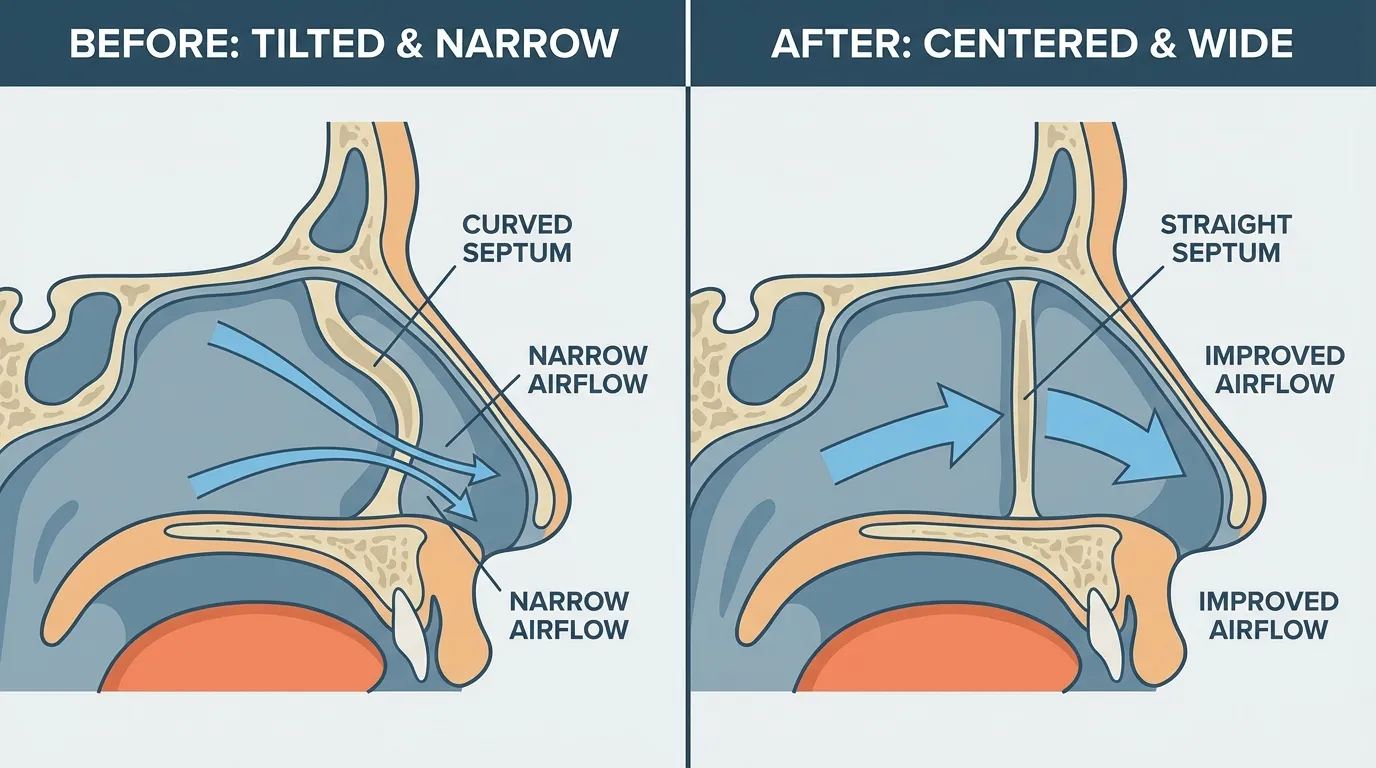
The septum explained (simple anatomy): The nasal septum is the internal wall that divides your nose into left and right sides. Ideally, it sits near the center. When it’s off to one side—a deviated septum—it can narrow one (or both) nasal passages and reduce airflow.
Another analogy: imagine a hallway split down the middle by a wall. If that wall shifts toward one side, one “lane” becomes cramped. Airflow behaves similarly—less space can mean more resistance and that “stuffy” feeling even when you’re not sick.
Common symptoms of a deviated septum (breathing + daily-life impact):
- Chronic nasal congestion (often worse on one side)
- Mouth breathing (especially at night)
- Snoring or changes in sleep quality
- Frequent nosebleeds or nasal dryness
- Facial pressure (sometimes)
- Reduced exercise tolerance due to limited airflow
Patient tip: Many people assume their “always stuffy” nose is allergies—when it can be structural. A clue is when the blockage is consistently worse on the same side, or when nasal sprays help only a little.
Learn more about deviated septum treatment options: https://sleepandsinuscenters.com/deviated-septum-relief
When symptoms are consistent and one-sided, a structural cause—like septal deviation—may be part of the picture.
What causes a deviated septum (and why the outside of the nose can look crooked too)
Common causes:
- Injury/trauma, such as sports impacts, falls, or accidents
- Natural growth and development (some septums shift as the face matures)
- Prior nasal surgery (in some cases)
Sometimes the cause is obvious (a specific injury). Other times it’s gradual—patients may not notice until adulthood when breathing demands increase, sleep quality changes, or a “crooked” appearance becomes more noticeable in certain angles or lighting.
How internal deviation can create external asymmetry: When the septum is significantly off-center, it can influence the surrounding nasal framework—cartilage, bone, and support structures. Over time, that internal “push or pull” can contribute to a crooked nose or visible asymmetry.
Medical literature notes an association between internal septal deviation and external nasal deviation, and septal correction may be an important part of straightening the nose.² This is one reason rhinoplasty for deviated septum often involves more than surface reshaping—it may require internal structural correction to support a straighter, stable result.
A clinician might summarize it like this: “If the foundation is bent, the façade may not stay straight for long.” That’s why planning often starts inside the nose, not just on the bridge.
Addressing internal support can be key to achieving a more balanced external appearance.

Rhinoplasty vs. septoplasty vs. septorhinoplasty — what’s the difference?
These terms are often used together, but they’re not interchangeable. Not sure which procedure addresses breathing vs. appearance? This breakdown can help: https://sleepandsinuscenters.com/blog/septoplasty-vs-rhinoplasty-key-differences-benefit-20260124020915
Septoplasty (function-first): A septoplasty focuses on straightening or repositioning the septum to improve airflow. It’s considered deviated septum surgery and is primarily intended to reduce nasal obstruction. In many cases, it creates minimal or no visible change to the outside of the nose. It may make the nose look straighter in some cases, but that’s not the goal and changes are usually subtle.
Rhinoplasty (appearance-focused, sometimes functional too): A rhinoplasty reshapes the nose by adjusting bone and/or cartilage. Some rhinoplasties are cosmetic, while others are functional and also support breathing—particularly when the nasal valves need reinforcement.
Think of the nasal valves like the narrowest part of a doorway. Even a small collapse or weakness there can make airflow feel restricted. In those cases, reshaping isn’t just about looks—it’s about support.
Septorhinoplasty (combined “one-surgery” approach): A septorhinoplasty combines septoplasty and rhinoplasty in a single operation. This approach is often considered when structural problems affect both breathing and appearance—such as a deviated septum plus a crooked nasal bridge. Health resources commonly describe septorhinoplasty as a combined procedure intended to address function and appearance together.¹
Your surgical plan depends on your anatomy, goals, and whether concerns are functional, aesthetic, or both.

Why combining surgeries can matter (function + aesthetics)
Simultaneous correction: aim to improve breathing and appearance:
- Airway narrowing from septal deviation (function)
- Visible crookedness, asymmetry, or contour concerns (appearance)
This is the practical advantage of rhinoplasty for deviated septum when both issues are present: you’re not choosing between breathing and appearance. Septorhinoplasty is commonly used to address both nasal airway function and aesthetics in one surgery.¹
A common patient scenario is someone who says, “I don’t want a new nose—I just want it to look more balanced, and I want to breathe comfortably.” That’s often the goal: improvement that still looks like you.
Structural support: the septum often “holds up” the final shape. A straighter, more stable septum can make it easier to achieve (and maintain) better alignment externally. Research discussing crooked noses emphasizes that septal correction may be pivotal to successfully addressing external nasal deviation.²
Streamlined timeline compared with two separate surgeries:
- One anesthesia event
- One primary healing period
- Fewer separate appointments than staging the procedures
Educational surgical resources note that combining procedures may reduce the need for two separate recovery periods and can simplify the overall treatment timeline.³
For the right candidate, a combined approach can simplify care while targeting both airflow and symmetry.
Who is a good candidate for rhinoplasty for deviated septum (septorhinoplasty)?
Signs you may benefit from a combined approach:
- Breathing obstruction plus visible deviation/crookedness
- Prior trauma with both functional and cosmetic concerns
- Ongoing nasal blockage not fully explained by allergies alone
Who may need a different plan first:
- Uncontrolled allergies or chronic sinus inflammation
- Smoking (which can impair healing)
- Medical conditions that change surgical/anesthesia risk (evaluated individually)
In some cases, getting inflammation under better control first helps clarify how much obstruction is structural versus swelling-related—so surgical planning is more precise.
Good candidacy is about matching the procedure to your anatomy, symptoms, and goals.

How ENT surgeons evaluate your breathing and nose shape
What happens at the consultation may include:
- Symptom history (sleep, exercise tolerance, snoring, one-sided blockage)
- External nasal exam (alignment, symmetry, skin thickness, support)
- Internal nasal exam (septum position, swelling, valve area)
- Sometimes nasal endoscopy and/or imaging, if needed
This helps determine whether symptoms are mainly structural (like a deviated septum), inflammatory (like allergies), or a mix of both.
Setting realistic goals (function and appearance) focuses on aligning expectations, such as:
- What “better breathing” means for you (daytime comfort vs. sleep vs. exercise)
- What aesthetic changes matter most (straightness, balance, profile, tip refinement)
- What changes are anatomically stable and safe long-term
It can help to bring a short list of “must-haves” and “nice-to-haves.” That kind of clarity makes the plan more patient-specific.
Clear goals and realistic expectations help guide a safe, effective plan.
Septorhinoplasty procedure overview (patient-friendly)
What the surgeon may address internally (function):
- Straightening the septum to improve airflow
- Addressing other contributors to blockage, such as enlarged turbinates, when appropriate
Many patients are surprised to learn how much swelling alone can contribute to blockage. That’s why a surgical plan often considers both the structure (septum) and the surrounding soft tissues (like enlarged turbinate tissue) that may narrow the airway.
What the surgeon may address externally (appearance):
- Straightening nasal bones
- Correcting asymmetry and contour irregularities
- Refining the nose while maintaining structural support
The internal work often supports the external result—and the external corrections often need internal stability to last. Studies report improvement in both nasal obstruction and external appearance after septorhinoplasty.⁴
Internal stability and external shape usually work hand in hand for lasting results.

Recovery and results — what to expect
Typical recovery timeline (high-level):
- First week: swelling, congestion, and often a splint/cast if used
- Weeks 2–6: breathing often improves as swelling decreases (with some day-to-day fluctuation)
- Months 3–12: continued refinement of shape and ongoing healing
More details: https://sleepandsinuscenters.com/blog/post-septorhinoplasty-recovery-timeline-tips-and-w-20260326112301
When breathing improves vs. when appearance improves: Breathing frequently improves earlier than the final appearance settles—but it’s common for airflow to vary during the swelling phase. Aesthetic changes also evolve gradually, especially in the nasal tip area.
A patient might notice, “I breathe better, but my nose still looks puffy.” That can be completely normal early on—breathing and appearance don’t always finish healing on the same schedule.
Helpful post-op tips (lifestyle + comfort):
- Sleeping with the head elevated early on
- Using saline sprays/rinses if recommended
- Avoiding nose blowing until cleared
- Avoiding heavy lifting and contact sports during the restriction window
- Using sun protection while bruising/swelling resolves
Recovery unfolds in phases—early airflow gains often arrive before final cosmetic refinement.
Risks and complications (clear, non-alarming)
Common, expected temporary effects:
- Swelling, bruising, congestion
- Mild bleeding/oozing early on
- Temporary numbness around the tip or upper lip
Less common but important risks to discuss:
- Infection or bleeding requiring treatment
- Persistent obstruction or need for revision
- Cosmetic dissatisfaction or residual asymmetry
- Scar tissue that affects airflow
Ask how often these issues occur in the surgeon’s experience and how they’re managed. The goal isn’t to be alarmed—it’s to be informed and prepared.
Understanding risks and how they’re managed is part of informed consent.
Alternatives and complementary treatments (when surgery isn’t the first step)
Medical treatments that may help symptoms (if inflammation is a factor):
- Allergy management (as appropriate)
- Saline irrigation
- Reducing exposure to irritants/triggers
Non-surgical aids (temporary relief):
- Nasal dilators/strips for sleep or exercise (benefit varies)
- Humidification to reduce dryness
When septoplasty alone may be enough: If breathing is the main issue and there’s no meaningful cosmetic concern, septoplasty alone may be sufficient. If appearance is also a concern, rhinoplasty for deviated septum may be discussed as a combined plan.
Non-surgical care may reduce symptoms, while structural surgery targets the underlying anatomy.
Cost and insurance basics (what patients usually ask)
Is it considered functional, cosmetic, or both? Coverage often depends on what portion of surgery is considered medically necessary:
- The septoplasty portion is often functional (aimed at improving airflow)
- The rhinoplasty portion may be considered cosmetic unless it’s required for functional correction or structural stability
Tips for navigating coverage: Insurance typically relies on documentation. Common examples include notes about breathing symptoms and prior medical management attempts. Practical guide: https://sleepandsinuscenters.com/blog/will-insurance-cover-a-nose-job-for-a-deviated-sep-20260405041118
Clear documentation and a medically focused plan can help determine what’s covered.
FAQs (SEO-friendly)
Can rhinoplasty fix a deviated septum?
Rhinoplasty reshapes the outside framework, but septal deviation is internal. Many patients need septoplasty and rhinoplasty combined (septorhinoplasty) to address both breathing and appearance.
Will septoplasty change the shape of my nose?
Septoplasty is primarily functional and often does not significantly change external appearance, though subtle changes can occur. If changing the look of the nose is a goal, a combined approach is usually the more direct conversation.
Is septorhinoplasty more painful than septoplasty alone?
Experiences vary. Many people describe pressure and congestion more than sharp pain, and discomfort is typically managed with a post-op plan.
How long until I can breathe normally through my nose again?
Breathing often improves gradually over several weeks as swelling decreases, though it can fluctuate during healing.
Will my nose look “perfectly straight” after surgery?
The goal is meaningful improvement in alignment and balance. Natural facial asymmetries are common, and “perfectly straight” isn’t always realistic or necessary for a noticeable improvement.
What if I also have allergies?
Allergies can still cause congestion even after structural correction. Many people do best when both structure and inflammation are addressed.
Conclusion — Getting back to comfortable breathing and a balanced look
When nasal obstruction and a crooked nose share the same structural cause, rhinoplasty for deviated septum can be about more than appearance. Septorhinoplasty offers a single-surgery option to support airflow and reshape the nose with stability in mind—because internal support often plays a major role in long-term alignment.
If you’re considering functional rhinoplasty or wondering whether your breathing and appearance concerns are connected, the next step is a focused evaluation. To discuss options and find out whether septoplasty, rhinoplasty, or septorhinoplasty fits your goals, book an appointment with Sleep and Sinus Centers of Georgia: https://www.sleepandsinuscenters.com/
Thoughtful planning can align better breathing with a balanced, natural-looking result.
Medical disclaimer: This article is for educational purposes only and does not replace personalized medical advice. A qualified clinician can evaluate your anatomy, symptoms, and goals to recommend the safest plan.
This article is for educational purposes only and is not medical advice. Please consult a qualified healthcare provider for diagnosis and treatment.
Sources
1. https://www.healthdirect.gov.au/surgery/septorhinoplasty
2. https://pmc.ncbi.nlm.nih.gov/articles/PMC3709526/
3. https://www.aentassociates.com/4-benefits-of-combining-septoplasty-with-rhinoplasty/
4. https://pmc.ncbi.nlm.nih.gov/articles/PMC7276476/
Don’t let allergies slow you down. Schedule a comprehensive ENT and allergy evaluation at Sleep and Sinus Centers of Georgia. We’re here to find your triggers and guide you toward lasting relief.