Morning Headaches and Sleep Apnea: Causes, Symptoms, and Treatment Options
Introduction — Why You Might Wake Up With a Headache
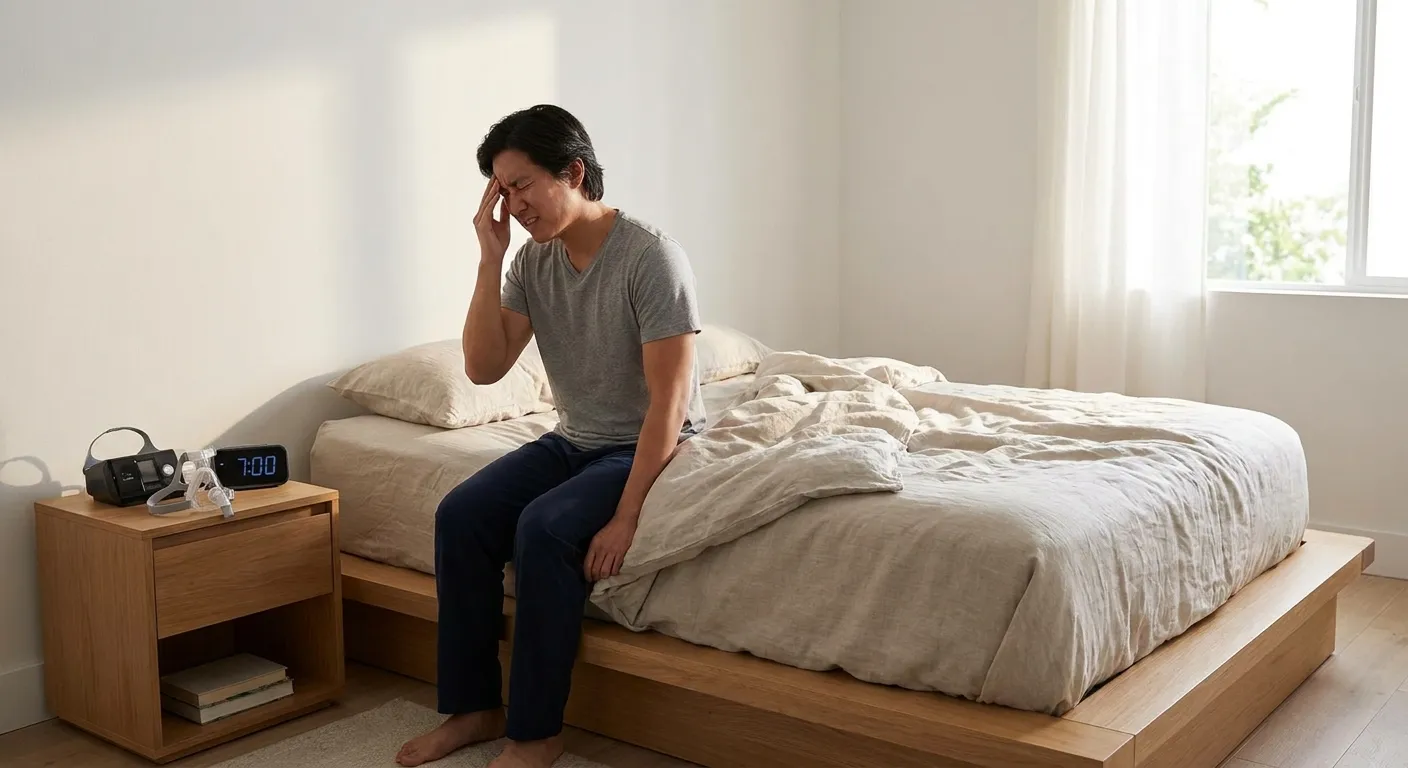
Headaches are common, but waking up with a headache can feel especially puzzling—particularly when you went to bed feeling “fine.” In many cases, the difference is what happened during sleep: breathing disruptions, fragmented sleep, or subtle physiologic changes you don’t remember the next day.
It also helps to know that a morning headache is nonspecific. That means it can show up for many reasons—sleep quality, stress, medications, sinus congestion, dehydration, or blood pressure changes. The most useful approach is to look at the whole symptom picture, not the headache alone: snoring, witnessed pauses in breathing, daytime sleepiness, dry mouth, and more.
Research recognizes morning headaches as a symptom seen in obstructive sleep apnea (OSA), but estimates vary widely depending on the group studied. Clinic samples have reported rates around ~29%, and some OSA cohorts have reported >50% before treatment. Across the literature, reported ranges span roughly ~15% to 74%. (Spałka et al., 2020; Seo et al., 2023)
Medical note: This article is for general education and is not a substitute for personal medical advice, diagnosis, or treatment.
Summary: Morning headaches are common and can have many causes; looking at your full sleep and breathing pattern offers the best clues.
What Is Obstructive Sleep Apnea (OSA)?
OSA in plain language
Obstructive sleep apnea (OSA) happens when the upper airway repeatedly narrows or collapses during sleep. Think of the throat as a soft, flexible “air tunnel.” When the surrounding tissues relax at night, that tunnel can partly or fully pinch closed—like a straw that collapses when you sip too hard.
These repeated breathing interruptions can reduce airflow, lower oxygen levels, raise carbon dioxide levels, and trigger brief “micro-awakenings.” Many people don’t fully wake up or remember these arousals, but the body still experiences the stress of repeated starts-and-stops.
Common OSA symptoms (beyond headaches)
- Loud snoring
- Gasping or choking during sleep
- Witnessed pauses in breathing (often noticed by a partner)
- Unrefreshing sleep and daytime sleepiness
- Morning dry mouth or sore throat
- Frequent nighttime urination (nocturia)
- Trouble concentrating or feeling “foggy”
For a deeper overview of how breathing pauses present and which symptoms cluster, see: Sleep apnea causes morning headaches—key symptoms and solutions:
https://sleepandsinuscenters.com/blog/sleep-apnea-causes-morning-headaches-key-symptoms-and-solutions
Why OSA often goes undiagnosed
Many obstructive sleep apnea symptoms occur during sleep, so it’s easy to miss the pattern. A common scenario is: “I thought I was just stressed,” or “I assumed everyone feels this tired.” Morning headaches can be labeled as “tension,” while the underlying issue—broken, low-quality sleep—continues.
If you sleep alone, there may also be no one to report snoring, choking, or breathing pauses.
Summary: OSA is common, often missed, and its clues frequently show up at night when you’re unaware.

Are Morning Headaches a Symptom of Sleep Apnea?
How common are morning headaches in OSA?
Studies consistently show an association between OSA and morning headaches, but the exact percentage varies:
- Sleep clinic samples around ~29% in some reports
- Some OSA cohorts reporting >50% before treatment
- Overall literature ranges roughly ~15% to 74%
Why the big spread? Researchers may use different definitions of “morning headache,” include different populations (general community vs. sleep clinic), and study people with different OSA severity and other health conditions. (Spałka et al., 2020; Seo et al., 2023)
“Sleep apnoea headache” as a defined diagnosis
Headache specialists also recognize a specific category called “sleep apnoea headache” in the International Classification of Headache Disorders (ICHD-3). In patient-friendly terms, it describes headaches that:
- Occur on awakening
- Are linked with a sleep apnea diagnosis
- Often improve when sleep apnea is treated effectively
(ICHD-3, 2018)
Note: ICHD-3 uses the spelling “apnoea” for the diagnostic term; elsewhere in this article we use the U.S. spelling “apnea.”
Summary: Morning headaches can be associated with sleep apnea, and a formal ICHD-3 category describes this awakening-headache pattern.
What Do Sleep Apnea–Related Morning Headaches Feel Like?
Typical features patients report
A headache related to sleep-disordered breathing is often described as:
- Timing: starts upon waking or soon after
- Duration: tends to improve as the morning goes on
- Quality/location: pressure-like, tight, or generalized (this can vary)
A real-world example: someone wakes with a dull “band-like” pressure across the forehead, feels better after an hour, and notices the pattern is worse after nights with heavier snoring or alcohol.
This pattern doesn’t rule in—or rule out—other headache types. Overlap is common.
Symptoms that raise suspicion for OSA as a cause
Concern for a sleep apnea–related cause tends to rise when headaches happen alongside:
- Loud snoring
- Witnessed breathing pauses
- Waking up gasping or choking
- Significant daytime sleepiness or unplanned dozing
When the headache pattern suggests another cause
Some patterns may point elsewhere, such as:
- Migraine-like features (nausea, light sensitivity, one-sided throbbing)
- Sinus/infection clues (fever, thick drainage, facial pain that worsens with infection flares)
- Neurologic red flags (sudden severe headache, confusion, weakness, fainting), which warrant urgent evaluation
Summary: Awakening headaches plus snoring, witnessed apneas, or daytime sleepiness raise suspicion for OSA, but other headache causes should still be considered.

Why Sleep Apnea Can Cause Morning Headaches (Mechanisms)
These are leading hypotheses; researchers are still working out the exact “why” for every person.
Intermittent low oxygen (hypoxemia)
During apneas and hypopneas, oxygen levels can dip repeatedly overnight. Those fluctuations may contribute to physiologic stress responses that can be felt as head pain upon waking—especially after many cycles across the night.
Carbon dioxide buildup (hypercapnia) and blood vessel changes
When airflow is reduced, carbon dioxide can rise. Higher carbon dioxide is associated with cerebral vasodilation (blood vessel widening in the brain), which may contribute to a morning headache. This is also why ICHD-3 places “sleep apnoea headache” under headache attributed to hypoxia and/or hypercapnia. (ICHD-3, 2018)
Sleep fragmentation (micro-awakenings)
Even if you don’t remember waking up, repeated arousals can reduce restorative sleep. Poor sleep can lower pain thresholds and increase headache vulnerability.
Why some people with OSA get headaches and others don’t
Not everyone with OSA gets headaches. Differences in oxygen patterns, sleep fragmentation, OSA severity, medications, mood, blood pressure, and co-existing headache disorders likely all play a role. (Spałka et al., 2020; Seo et al., 2023)
Summary: Several factors—oxygen and carbon dioxide changes, plus fragmented sleep—may help explain awakening headaches in some people with OSA.

Morning Headaches + Daytime Sleepiness: A Common Pair
The sleepiness connection
Research has found that morning headaches often correlate with daytime sleepiness, including higher scores on tools like the Epworth Sleepiness Scale—suggesting shared pathways related to sleep disruption. (Spałka et al., 2020; Seo et al., 2023)
For details on what the Epworth Sleepiness Scale measures, see:
https://sleepandsinuscenters.com/blog/epworth-sleepiness-scale-a-complete-guide-to-understanding-daytime-sleepiness
Practical “self-check” prompts (patient-friendly)
- Do you nod off while reading, watching TV, or sitting quietly?
- Do you rely on caffeine just to feel functional?
- Do you sleep 7–9 hours but still feel worn out?
Summary: Morning headaches and daytime sleepiness often travel together when sleep is disrupted.
Other Common Causes of Morning Headaches (Important Differential Diagnosis)
Sleep-related and airway-related
Several non-OSA factors can contribute to morning head pain:
- Insomnia or poor sleep quality
- Teeth grinding (bruxism) or TMJ strain
- Nasal congestion/allergies affecting sleep
Medical causes clinicians often screen for
Clinicians may consider:
- High blood pressure (including morning spikes)
- Depression/anxiety affecting sleep
- Alcohol-related headaches
- Dehydration
- Medication overuse headaches
Why this matters
Because morning headaches are common and nonspecific, the goal is usually to assess for sleep apnea and look for other contributors that may be treated alongside sleep-disordered breathing.
Summary: A full workup looks for sleep apnea and other common contributors so treatment can target the whole picture.
How Doctors Evaluate Morning Headaches for Possible Sleep Apnea
History questions you can expect
An evaluation often includes questions about:
- Snoring, witnessed apneas, choking/gasping
- Sleep schedule and insomnia symptoms
- Headache timing, frequency, and duration
- Alcohol, sedatives, caffeine timing
- Blood pressure history and other medical conditions
Screening tools and what they mean
Clinicians may use brief questionnaires such as:
- STOP-BANG (risk-based screening)
- Epworth Sleepiness Scale (measures daytime sleepiness severity)
Testing options
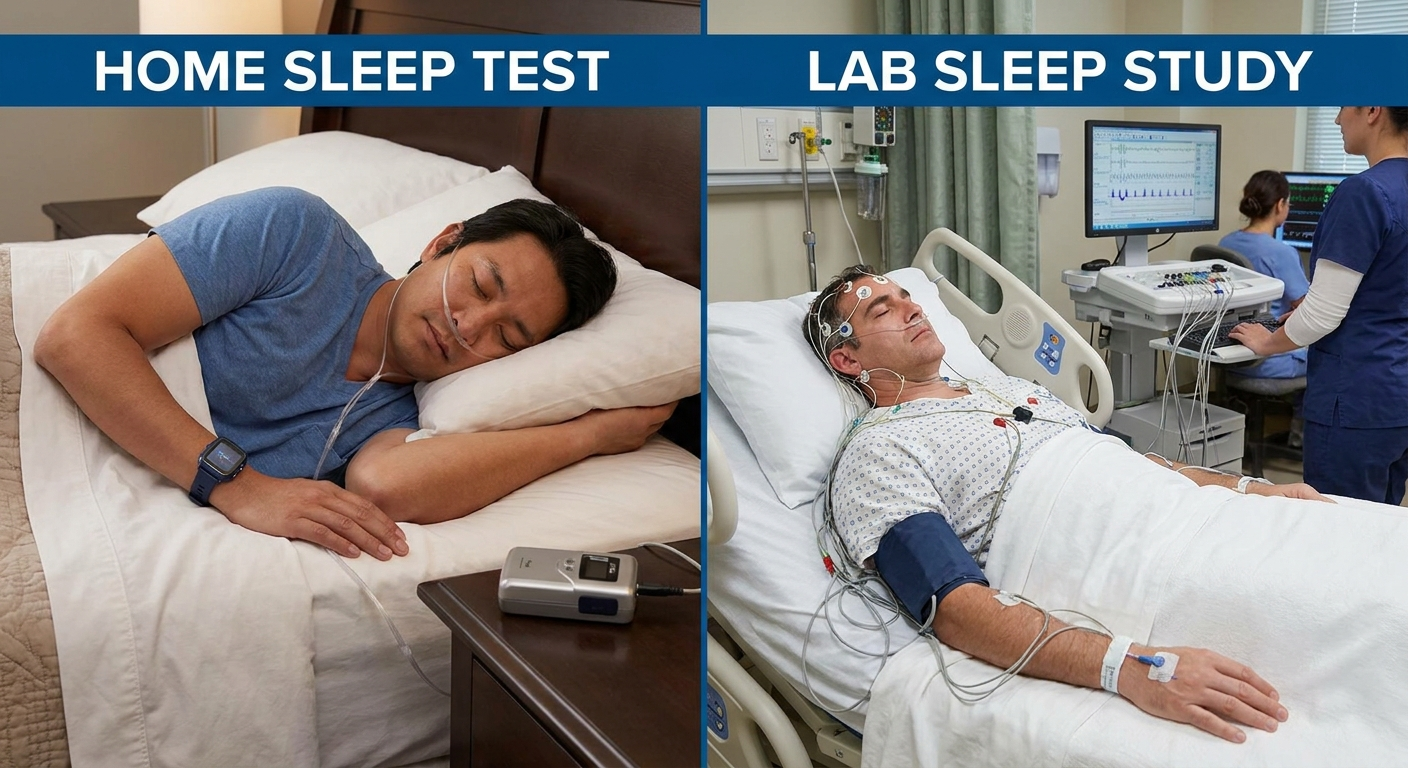
Testing may include a home sleep apnea test (for certain patients) or an in-lab polysomnography study (more comprehensive). For a patient-friendly comparison, see:
https://sleepandsinuscenters.com/blog/home-sleep-test-vs-lab-study-which-sleep-test-is-best-for-you
You can also explore how an at-home option works here:
https://sleepandsinuscenters.com/blog/home-sleep-apnea-test-accurate-at-home-screening-for-sleep-apnea
Summary: A focused history, brief screeners, and sleep testing help clarify whether OSA is part of your morning-headache pattern.
Treatment Options — What Actually Helps (And Why)
Positive airway pressure (PAP/CPAP) therapy
PAP therapy (often called CPAP) works by gently delivering pressurized air through a mask to help keep the airway open during sleep—essentially “splinting” the airway so it can’t collapse as easily.
Many people report a reduction in morning headaches with effective PAP therapy. In one cohort, morning headache prevalence decreased from 53.4% to 16.4% after PAP—suggesting improvement is common, though not always complete. (Spałka et al., 2020; Seo et al., 2023)
Some people experience headache, facial pressure, or discomfort when starting CPAP, often related to mask fit, pressure settings, air dryness, or congestion—issues that are frequently manageable with comfort optimization (mask adjustments, humidification, or addressing nasal blockage).
A patient-friendly overview is also available here:
https://www.sleepfoundation.org/sleep-apnea/sleep-apnea-headaches
Oral appliance therapy (mandibular advancement devices)
For selected patients—often mild to moderate OSA or those who cannot tolerate PAP—an oral appliance can help by positioning the lower jaw forward to support airflow. Follow-up testing is commonly used to confirm effectiveness.
Positional therapy (side-sleeping strategies)
Some people have positional OSA, meaning breathing events are worse when sleeping on the back. Positional therapy can include pillows, wearable devices, or behavior strategies that encourage side sleeping.
Weight management and lifestyle-based OSA improvement
Weight changes can influence airway anatomy and OSA severity. When appropriate for the individual, gradual, sustained lifestyle changes may meaningfully reduce OSA burden over time.
To understand how severity is measured and why symptoms don’t always match a single number, see:
https://sleepandsinuscenters.com/blog/ahi-score-explained-understanding-your-sleep-apnea-severity
Treat nasal obstruction to improve sleep and CPAP comfort
Nasal congestion can worsen sleep quality and make PAP harder to tolerate. Addressing allergies, chronic congestion, or structural issues may help both breathing and comfort. If CPAP feels difficult due to congestion, see:
https://sleepandsinuscenters.com/blog/blocked-nose-during-cpap-ent-strategies
Surgical options (selected cases)
Surgery may be considered in specific situations, particularly when anatomy is a major contributor or other therapies haven’t worked. Outcomes vary: surgery may reduce severity, but some people still need PAP therapy or an oral appliance afterward.
Headache-specific treatment (supportive, not the only focus)
If sleep apnea is contributing to the headaches, treating the sleep-disordered breathing is often an important step. Clinicians may also discuss headache-management strategies to reduce frequency and avoid medication-overuse cycles.
Summary: Effective OSA treatment—often PAP—may reduce morning headaches, with additional options tailored to anatomy, preferences, and comfort.

Lifestyle Tips to Reduce Morning Headaches While You Pursue Answers
Sleep habits that reduce headache risk
- Keep a consistent sleep and wake time when possible
- Build a wind-down routine and limit late-night screens
- Address insomnia symptoms if they’re present
Reduce OSA triggers at night
- Avoid alcohol close to bedtime, since it can worsen airway collapse and sleep quality (learn more about alcohol and sleep apnea—what’s the risk?):
https://sleepandsinuscenters.com/blog/alcohol-and-sleep-apnea-what-aos-the-risk
- Review sedating medications with a clinician
- Consider side sleeping and, when recommended, gentle head-of-bed elevation
Headache hygiene basics
- Hydration (especially if you wake with a dry mouth)
- Watch caffeine timing to avoid sleep disruption
- Track patterns: headache frequency, severity, sleep quality, and snoring reports
Summary: Small, steady habit changes can lower headache risk and support better sleep while you evaluate for OSA.
When to See a Doctor (and When to Seek Urgent Care)
Make an appointment if:
- Morning headaches happen repeatedly (for example, weekly or more)
- You also snore, have witnessed apneas, or significant daytime sleepiness
- A bed partner reports choking or gasping episodes
If you’re ready to get clarity, you can book an appointment with Sleep & Sinus Centers to discuss symptoms and testing options:
https://www.sleepandsinuscenters.com/
Seek urgent evaluation if:
- A sudden “worst headache,” fainting, confusion, new weakness, or other neurologic symptoms occur
- Headache occurs with chest pain, severe shortness of breath, or symptoms of very high blood pressure
Summary: Persistent awakening headaches—especially with snoring or sleepiness—warrant a sleep-focused evaluation; severe or sudden changes need urgent care.
FAQs
Can sleep apnea cause headaches even if I don’t snore?
Yes. Snoring is common but not required. Other obstructive sleep apnea symptoms and sleep testing are what clarify risk.
Do morning headaches mean I definitely have sleep apnea?
No. Morning headaches can be associated with sleep apnea, but they are nonspecific and can have multiple causes.
How long does it take for CPAP to help morning headaches?
Some people notice improvement quickly, while others need mask or pressure adjustments, humidity changes, or treatment of nasal congestion. Research shows many improve with effective PAP therapy, but not everyone has complete resolution. (Spałka et al., 2020; Seo et al., 2023)
What’s the difference between a sinus headache and a sleep apnea headache?
Sinus-related pain often comes with nasal symptoms (congestion, thick discharge), facial pressure, and sometimes fever—often fluctuating with infections or allergy flares. A sleep apnea headache often occurs on awakening and may improve later in the morning.
If my sleep study is “mild,” can it still cause headaches?
Possibly. Symptoms don’t always match AHI severity perfectly, and factors like oxygen drops, sleep fragmentation, and co-existing headache conditions can influence how you feel.
Conclusion — The Next Best Step if You Wake Up With Headaches
Morning headaches are reported in people with OSA and may improve with effective PAP therapy. Although the exact mechanism (hypoxemia, hypercapnia-related blood vessel changes, sleep fragmentation, or a mix) isn’t fully settled, evaluating for OSA can be helpful—especially when symptoms like snoring, witnessed apneas, or daytime sleepiness are present.
If you suspect your morning headaches may be associated with sleep apnea, the next step is a structured sleep evaluation and a discussion of testing options. At the same time, clinicians often look for other contributors (like congestion, bruxism, blood pressure, or medication effects) so treatment targets the whole picture.
References
- Spałka J. et al. (2020). Brain Sciences. https://pmc.ncbi.nlm.nih.gov/articles/PMC7016602/
- Seo M.Y. et al. (2023). Scientific Reports. https://www.nature.com/articles/s41598-023-34896-0
- Sleep Foundation. Sleep apnea headaches. https://www.sleepfoundation.org/sleep-apnea/sleep-apnea-headaches
- International Classification of Headache Disorders, 3rd edition (ICHD-3) (2018): Sleep apnoea headache.
https://ichd-3.org/10-headache-attributed-to-disorder-of-homoeostasis/10-1-headache-attributed-to-hypoxia-andor-hypercapnia/10-1-4-sleep-apnoea-headache/
This article is for educational purposes only and is not medical advice. Please consult a qualified healthcare provider for diagnosis and treatment.
Don’t let allergies slow you down. Schedule a comprehensive ENT and allergy evaluation at Sleep and Sinus Centers of Georgia. We’re here to find your triggers and guide you toward lasting relief.