Does Septoplasty Change Nose Shape? What to Expect After Surgery
If you’re considering septoplasty for breathing issues, it’s normal to wonder: does septoplasty change nose shape—or in other words, will septoplasty change my nose appearance? The short version is reassuring for most patients, but the details matter, especially during the healing phase.
Below is a clear, patient-friendly breakdown of what septoplasty does (and doesn’t do), why your nose can look different early on, and when a procedure can influence the outside of the nose.
The quick answer (and why it can look different at first)
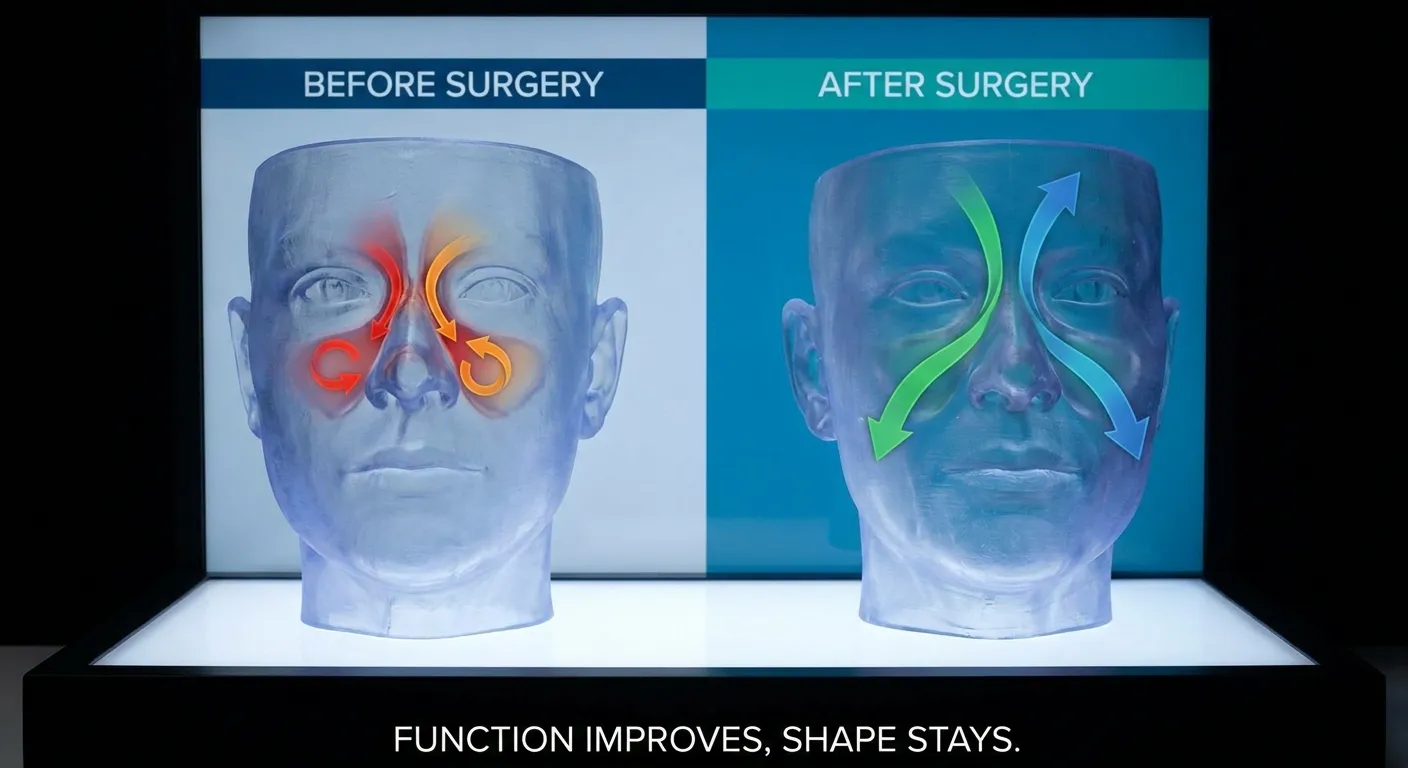
Key takeaway: Septoplasty is mainly an internal, functional surgery to straighten the nasal septum and, in standard cases, most patients should not expect a permanent change in their nose’s outer shape.
So why do some people feel like their nose looks different right after surgery? Think of it like a sprained ankle: the structure isn’t permanently different, but swelling can temporarily change the way it looks and feels.
- Swelling can make the nose look wider or slightly uneven
- Bruising around the nose/under the eyes can change the overall look
- Splints or tape (if used) can alter how the nose sits or appears
- Temporary asymmetry during healing is common—one side may swell more than the other
This is why early mirror checks can be misleading. In many cases, what you’re seeing is normal postoperative change—not a lasting shift in nasal structure.
Bottom line: Early changes are usually swelling and positioning, not permanent shape changes.

What septoplasty actually fixes (simple anatomy)
What is the nasal septum? The nasal septum is the wall of cartilage and bone that divides your nose into left and right air passages. When it’s deviated (shifted off-center), it can narrow one side of the nose and disrupt airflow—sometimes significantly.
Septoplasty focuses on improving function by straightening and stabilizing this internal divider. A helpful analogy: the septum is like the divider in a hallway—if it bows into the walkway, it doesn’t change the building’s exterior, but it can make getting through the hallway harder.
Septum vs the outside of the nose (what patients can see)
- The outside appearance of your nose is influenced mostly by structures other than the septum, including the nasal bones (upper portion/bridge)
- The upper and lower lateral cartilages (middle and tip regions)
- Tip support structures that shape projection and definition
In a standard septoplasty, the surgeon works inside the nose, typically beneath the mucosal lining, to correct the septum without intentionally changing the outer contours. For deeper background on septal structure and how septal work can relate to nasal support, see Saharia et al. in the citations.
In standard cases, septoplasty targets internal airflow—not external aesthetics.
Symptoms and causes that lead people to septoplasty
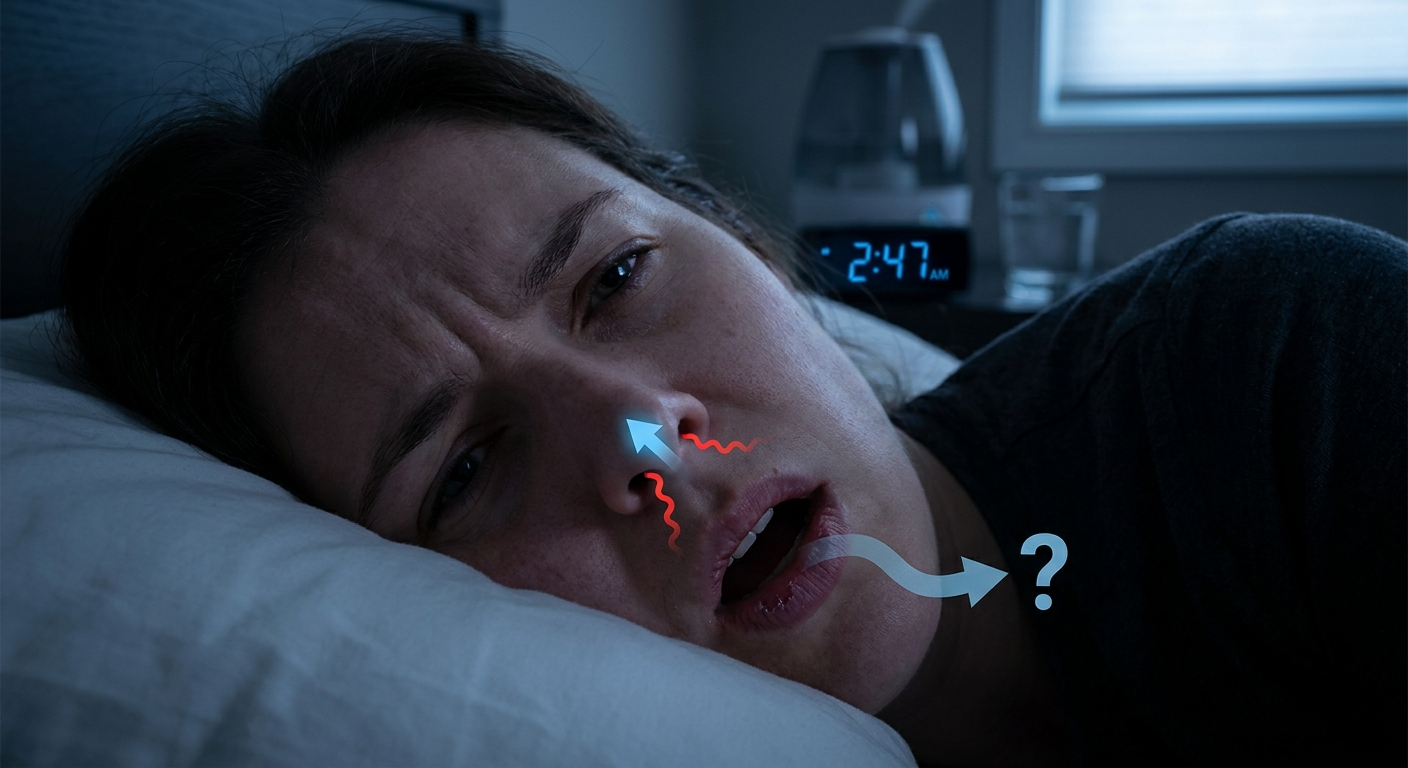
Many patients who pursue deviated septum surgery do so because daily breathing feels harder than it should—especially during exercise, at night, or when allergies flare.
Common symptoms of a deviated septum
- One-sided nasal blockage, sometimes alternating sides due to the normal nasal cycle
- Trouble breathing through the nose (often worse with colds or allergies)
- Mouth breathing, snoring, or sleep disruption
- Nosebleeds or nasal dryness
- Facial pressure (in some people)
A concrete example: some patients report they can breathe okay during the day but feel much more blocked when they lie down—then notice they’re waking up with a dry mouth from mouth breathing.
If you’re exploring next steps, this overview of deviated septum surgery can help you understand how evaluation and treatment typically work at Sleep & Sinus Centers of Georgia: https://sleepandsinuscenters.com/blog/deviated-septum-surgery-at-sleep-sinus-centers-of-georgia
Common causes
- Injury/trauma (sports, falls, accidents)
- Congenital (you were born with it)
- Normal growth changes over time
Important note: Not all nasal obstruction is caused by a deviated septum. Turbinate enlargement, allergies/inflammation, and nasal valve collapse can also contribute—sometimes in combination.
An accurate diagnosis matters because multiple factors—not just the septum—can affect airflow.
So… does septoplasty change nose shape?
In most cases, no—your outside shape usually stays the same. For the majority of patients in standard cases, the practical answer is usually no. The procedure is designed to correct airflow internally while keeping external contours stable.
When people say “my nose didn’t change,” they typically mean their profile, tip shape, bridge, and nostril appearance all look essentially the same once healing is complete.
If you’d like to see examples of what patients commonly notice during healing (and what tends to settle back down), you may find this helpful: https://sleepandsinuscenters.com/blog/septoplasty-before-and-after-real-patient-stories-20260123121310
Expectation setting: Most patients heal back to a look that’s very close to their pre-op baseline.
When septoplasty can change appearance (important exceptions)
While uncommon, there are scenarios where septal surgery may influence the outside shape—usually when the septum’s role as a support beam becomes part of the repair.
Appearance changes may be more likely when:
- Extensive septal cartilage work is required (more complex reconstruction)
- Key support areas are modified to correct severe deviation
- The deviation is significant enough to require stronger structural stabilization
- It’s a revision case or combined airway reconstruction
Medical literature describes how septal surgery can affect nasal structure in select situations—particularly when the procedure goes beyond a straightforward internal straightening and involves broader structural support considerations. See citation #1.
If your case is complex, ask your surgeon how support work could affect appearance.
Temporary “shape changes” that aren’t permanent
Even when your long-term shape won’t change, it can look different for a while because:
- Swelling patterns can be uneven
- The tip and bridge can appear subtly different for weeks
- Post-op congestion changes how the nose sits and how you perceive your face
- Lighting/angles can exaggerate puffiness
As clinicians often tell patients: Expect it to feel stuffy before it feels better. That stuffy phase can also make you think the outside looks different—especially in close-up selfies or harsh bathroom lighting.
Short-term puffiness is common and typically fades as healing progresses.

Septoplasty vs rhinoplasty vs septorhinoplasty (which one changes shape?)
Septoplasty (function-first)
- Goal: improve breathing by correcting internal blockage
- Cosmetic change: not the goal, and usually minimal/none in standard cases
Rhinoplasty (appearance-first)
- Goal: reshape the nose externally (bridge, tip, symmetry, size)
- May be cosmetic, functional, or both
Septorhinoplasty (combined function + form)
A septorhinoplasty combines internal breathing improvement with intentional cosmetic reshaping. This may be the better fit if your goals include better airflow and a straighter-looking nose, refined tip, hump reduction, or other appearance changes.
For a deeper comparison, see: https://sleepandsinuscenters.com/blog/septoplasty-vs-rhinoplasty-key-differences-benefit-20260124020915
Match the procedure to your goals: function alone (septoplasty) vs function plus form (septorhinoplasty).

What to expect after septoplasty (recovery + appearance timeline)
Healing varies, but most patients move through a predictable pattern. For a more detailed walkthrough, read: https://sleepandsinuscenters.com/blog/septoplasty-recovery-week-by-week-complete-timeline-20260123051106
Right after surgery (Day 0–2)
- Congestion/pressure is common
- Mild bleeding or oozing may occur
- Internal splints/packing may be used (varies by surgeon and case)
- Externally: your nose often looks fairly normal, though puffy is possible
A common scenario: you may look mostly the same from the front, but feel very congested—almost like a bad cold—because internal swelling and crusting are doing the blocking.
Week 1
- Follow-up may include splint removal (if placed) and gentle internal cleaning (varies)
- Breathing may still feel blocked due to swelling and crusting
- You may still wonder, will septoplasty change my nose appearance?—this is an especially common week for that concern because swelling is still prominent
Weeks 2–6
- Airflow gradually improves
- Swelling continues to decrease
- Many patients return to normal routines on their surgeon’s timeline
Months 2–3 and beyond (final healing)
- Breathing often continues to stabilize
- Internal tissues remodel; dryness/crusting usually improves
- For most people, the external appearance usually settles back close to the pre-op baseline
Recovery is a process: function improves first, and appearance typically follows.
Possible risks or complications that could affect appearance (rare but real)
No surgery is risk-free. Most complications are uncommon, but it’s helpful to understand the categories.
Functional complications
- Persistent obstruction (from swelling, scar tissue, or residual deviation)
- Septal perforation
- Infection or bleeding (uncommon)
Appearance-related complications (uncommon)
- Subtle contour change due to altered support
- Tip/bridge support issues in cases requiring extensive structural work
These risks vary based on anatomy, surgical complexity, and healing factors. Citation #1 discusses septal support concepts that help explain why appearance can change in select cases.
Discuss your individual risk profile with your surgeon before surgery.
Treatment options if you’re congested—but not sure about surgery
If you’re early in the process, evaluation often includes sorting out why you’re blocked. That’s important because a septum problem is sometimes only one piece of the puzzle.
Non-surgical treatments (depending on cause)
- Saline irrigation
- Intranasal steroid sprays (for inflammation)
- Allergy management (avoidance, medications, and testing when appropriate)
- External nasal strips or internal dilators (temporary support)
Procedures commonly combined with septoplasty for better breathing
- Turbinate reduction (when turbinate hypertrophy contributes to obstruction)
Less invasive/other approaches (case-dependent)
Some practices offer less invasive options for select anatomy and symptom patterns; eligibility depends on exam findings.
A thorough exam helps target the right mix of therapies for your symptoms.

Lifestyle tips for smoother healing and better breathing after surgery
Do’s
- Use saline sprays/rinses as directed
- Sleep with your head elevated early on
- Stay hydrated; consider a humidifier if your environment is dry
- Follow activity restrictions—especially avoiding nose trauma
Don’ts
- Don’t blow your nose until you’re cleared to do so
- Avoid heavy lifting/straining early
- Avoid smoking/vaping (irritation and slower healing)
Good aftercare supports better breathing and calmer healing.
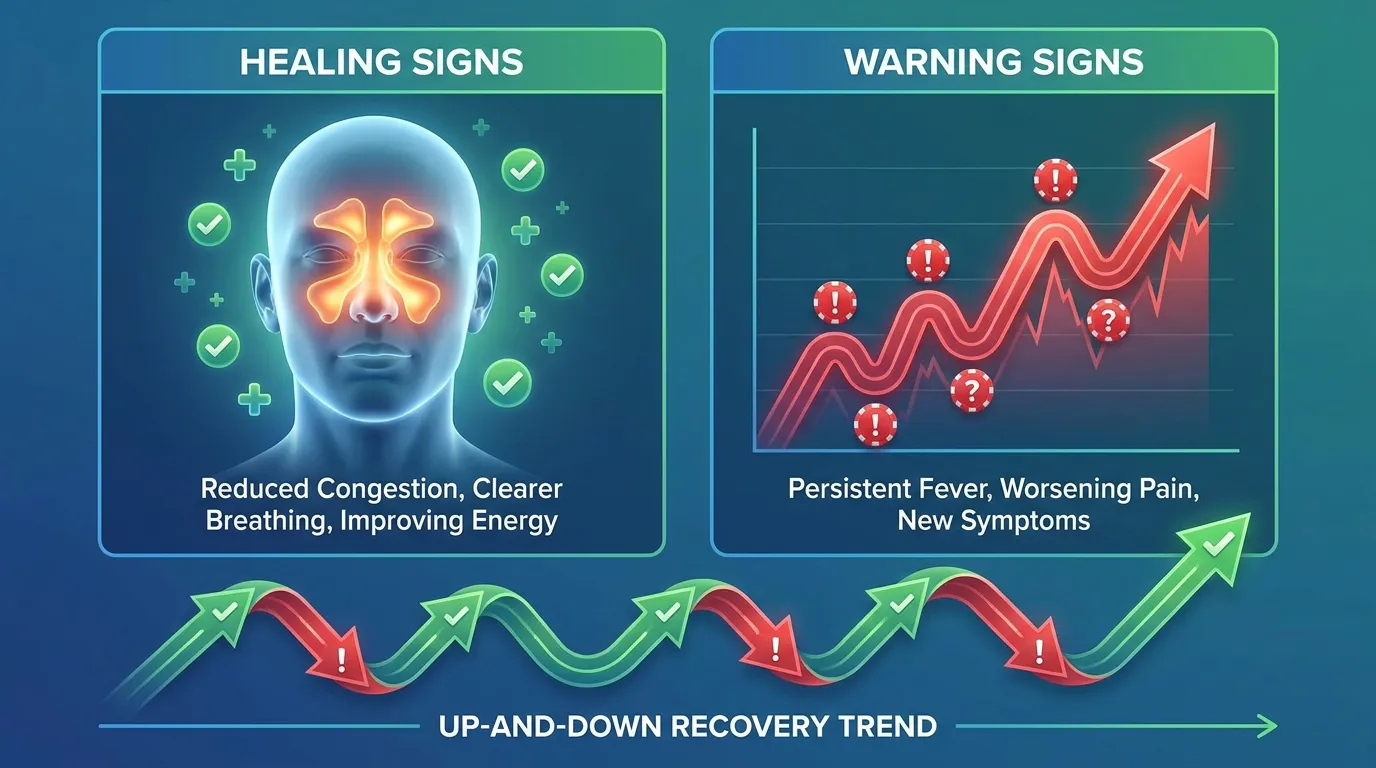
When to call your surgeon (red flags)
Educational guidance is helpful, but urgent symptoms should always be addressed promptly. Contact your surgical team if you notice:
- Heavy bleeding that won’t stop
- Fever, worsening pain, or foul-smelling drainage
- Severe swelling/redness
- Vision changes
- Shortness of breath or chest pain (seek emergency care)
When in doubt, call—timely communication prevents small issues from becoming big ones.
FAQs
Will my nose look different after septoplasty?
Often temporarily, due to swelling and congestion. Long term, most patients return to an appearance close to their baseline.
Can septoplasty make my nose smaller or straighter?
Septoplasty is not designed to make the nose smaller. Some patients perceive subtle differences after healing due to reduced swelling or better internal alignment, but visible reshaping typically requires rhinoplasty or septorhinoplasty.
Why does my nose look wider after surgery?
Swelling can create a wider or puffier appearance early on—especially in the first couple of weeks.
How long does swelling last after septoplasty?
Noticeable swelling often improves over weeks, with continued subtle healing over a few months.
If I want cosmetic changes, can I have rhinoplasty later?
Yes. Cosmetic reshaping can be discussed either as a combined plan (septorhinoplasty) or staged later. Timing depends on healing and goals.
Does insurance cover septoplasty vs rhinoplasty?
Septoplasty is often covered when done for documented functional obstruction. Cosmetic rhinoplasty is often not covered. Coverage depends on your plan and medical criteria.
Can septoplasty fix a crooked-looking nose?
Sometimes internal straightening helps, but a visibly crooked nose often involves external structures that may require rhinoplasty/septorhinoplasty for cosmetic correction.
What if breathing is still blocked weeks after surgery?
Some obstruction can persist during healing from swelling/crusting, but persistent symptoms should be reviewed with your surgeon.
Is septoplasty the same as turbinate reduction?
No. They target different structures, but they’re sometimes performed together to improve airflow.
Is septorhinoplasty more expensive or a longer recovery?
Often, yes—because it combines functional repair with cosmetic restructuring. Recovery experience varies based on the extent of work performed.
If your goals include both breathing and cosmetic changes, ask whether a combined approach makes sense for you.
Conclusion: Setting expectations (and the right next step)
If you’re still asking, does septoplasty change nose shape, the best expectation for most patients is: septoplasty is primarily functional and usually does not change the outside of the nose—even though swelling can make it look different at first.
If you want your nose to look different, that’s a great topic to bring up during a consultation, because a septorhinoplasty (not septoplasty alone) is typically the procedure designed to address both breathing and cosmetic goals.
Ready for personalized guidance? Book an appointment at Sleep & Sinus Centers of Georgia to discuss your symptoms, anatomy, and the right treatment plan: https://www.sleepandsinuscenters.com/
Clear goals and clear expectations lead to happier outcomes.
Citations
1. Saharia et al. Septal surgery concepts and structural considerations. PubMed Central (PMC). https://pmc.ncbi.nlm.nih.gov/articles/PMC3738767/
2. MedlinePlus (U.S. National Library of Medicine). Deviated septum repair (septoplasty) overview. https://medlineplus.gov/ency/article/003014.htm
3. NHS (UK). Septoplasty information and recovery expectations. https://www.nhs.uk/conditions/septoplasty/
4. Gold Coast Plastic Surgery. Rhinoplasty vs septoplasty overview. https://goldcoastplasticsurgery.com.au/blog/rhinoplasty-vs-septoplasty/
5. Dr. Gandolfi. Does septoplasty change your nose shape? https://www.drgandolfi.com/blog/does-septoplasty-change-your-nose-shape/
6. Nizar Hamadeh. Does septoplasty change nose shape? https://nizarhamadeh.com/does-septoplasty-change-nose-shape/
7. San Diego Face. Septoplasty vs rhinoplasty differences. https://www.sandiegoface.com/need-septoplasty-rhinoplasty-whats-difference/
This article is for educational purposes only and is not medical advice. Please consult a qualified healthcare provider for diagnosis and treatment.
Medical disclaimer: This article is for educational purposes only and does not replace medical advice, diagnosis, or treatment. Always follow your surgeon’s instructions and consult a qualified clinician about your specific situation.
Don’t let allergies slow you down. Schedule a comprehensive ENT and allergy evaluation at Sleep and Sinus Centers of Georgia. We’re here to find your triggers and guide you toward lasting relief.