Diabetes and Sinus Infections: Symptoms, Causes, and Treatment Options
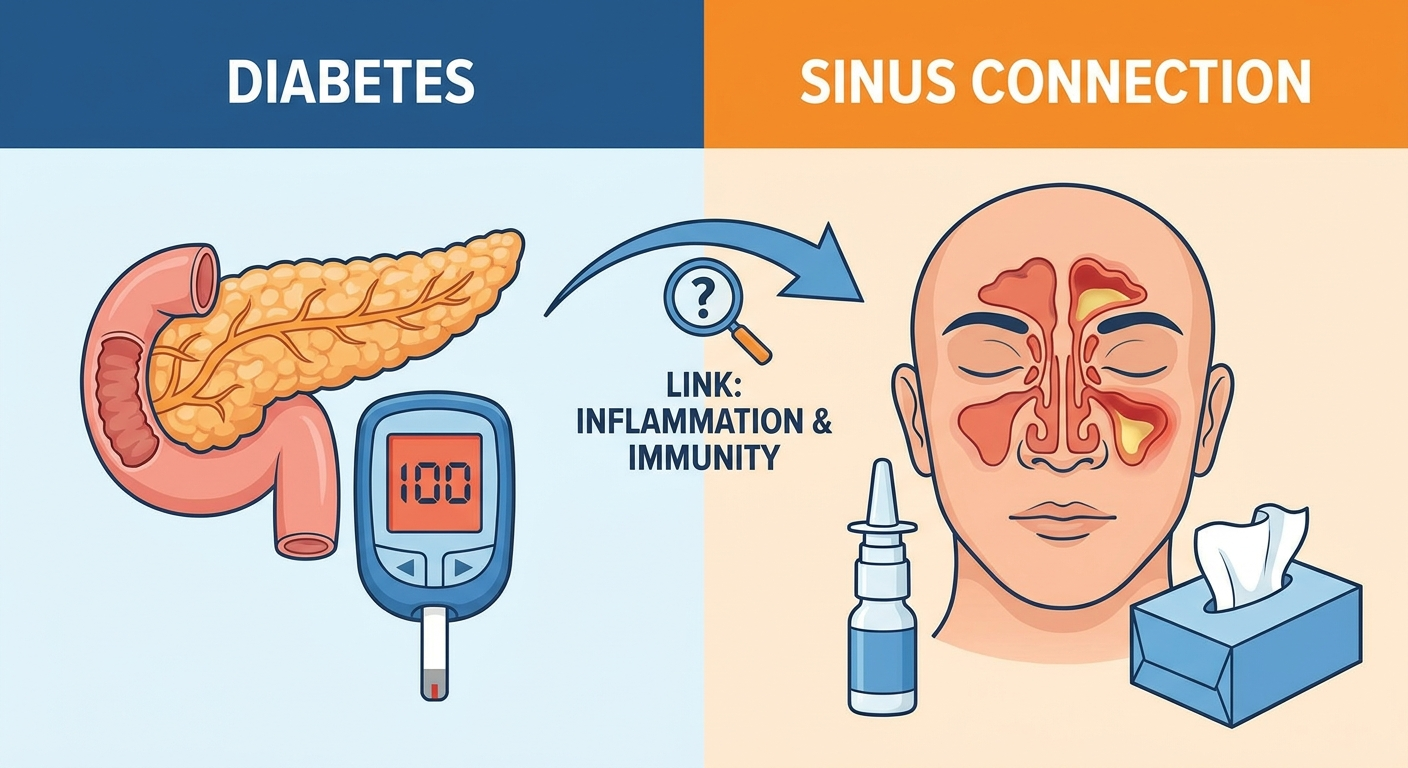
Introduction — Can Diabetes Make Sinus Infections Worse?
Having diabetes doesn’t automatically mean you’ll get more sinus infections. But when blood sugar is poorly controlled, the body’s ability to fight infection and heal can be affected—so sinus problems may feel more severe, last longer, or carry a higher risk of complications in certain situations.
A practical way to think about it: if your immune system is the “cleanup crew,” high glucose can make the crew slower to arrive and less efficient once it’s there. That doesn’t mean every cold turns into a crisis—it just means you and your clinician may take persistent symptoms more seriously.
This guide explains the practical “why” behind the connection between diabetes and sinus infections, how to recognize typical symptoms versus concerning ones, what causes sinus infections in the first place, and what treatment and prevention usually look like. It’s educational (not individualized medical advice), and it includes clear warning signs that should prompt urgent evaluation.
In short: diabetes can raise the stakes when sinus symptoms don’t follow the usual script, so earlier check-ins can be helpful.
Quick Overview — The Diabetes–Sinus Connection
What changes with diabetes (and what doesn’t)
Most everyday sinus infections begin the same way in people with and without diabetes—often as a viral cold. Diabetes does not guarantee that routine acute sinus infections will be more frequent. However, research suggests that when diabetes is present—especially if glucose levels are not well controlled—sinus infections may be more persistent or severe in some patients.
Why that matters: immune function, inflammation control, and tissue healing can all be impacted by elevated blood glucose, which can make it harder for the body to clear infection and recover efficiently. In real life, this can look like congestion that drags on, facial pressure that doesn’t let up, or symptoms that rebound after seeming to improve.
Clinician-style summary: It’s not that diabetes guarantees sinusitis—it’s that it can raise the stakes when symptoms aren’t following the usual script.
The patterns most linked to diabetes
At a population level, diabetes has been linked most strongly to a specific chronic sinus pattern: chronic rhinosinusitis with nasal polyps (CRSwNP). In one large Korean study of 34,670 adults, diabetes was associated with CRS with nasal polyps, but not strongly associated with CRS without nasal polyps. The same study also found more prolonged smell loss among diabetic patients who had chronic rhinosinusitis. This is an observational association (not cause-and-effect), and findings may differ by population.
Bottom line: diabetes may not change how often you catch a cold—but it can influence how stubborn or complicated sinus symptoms become, especially with chronic inflammation patterns.
Symptoms — What a Sinus Infection Feels Like (With Diabetes in Mind)
Common acute sinusitis symptoms (viral or bacterial)
Common features include nasal congestion or stuffiness; facial pressure or fullness; thick nasal drainage (clear, yellow, or green); post-nasal drip and cough; fatigue; reduced smell and taste. Color alone doesn’t prove bacteria; many viral infections produce yellow/green mucus. The overall timeline—how symptoms behave across days—often matters more.
A simple timeline that often helps
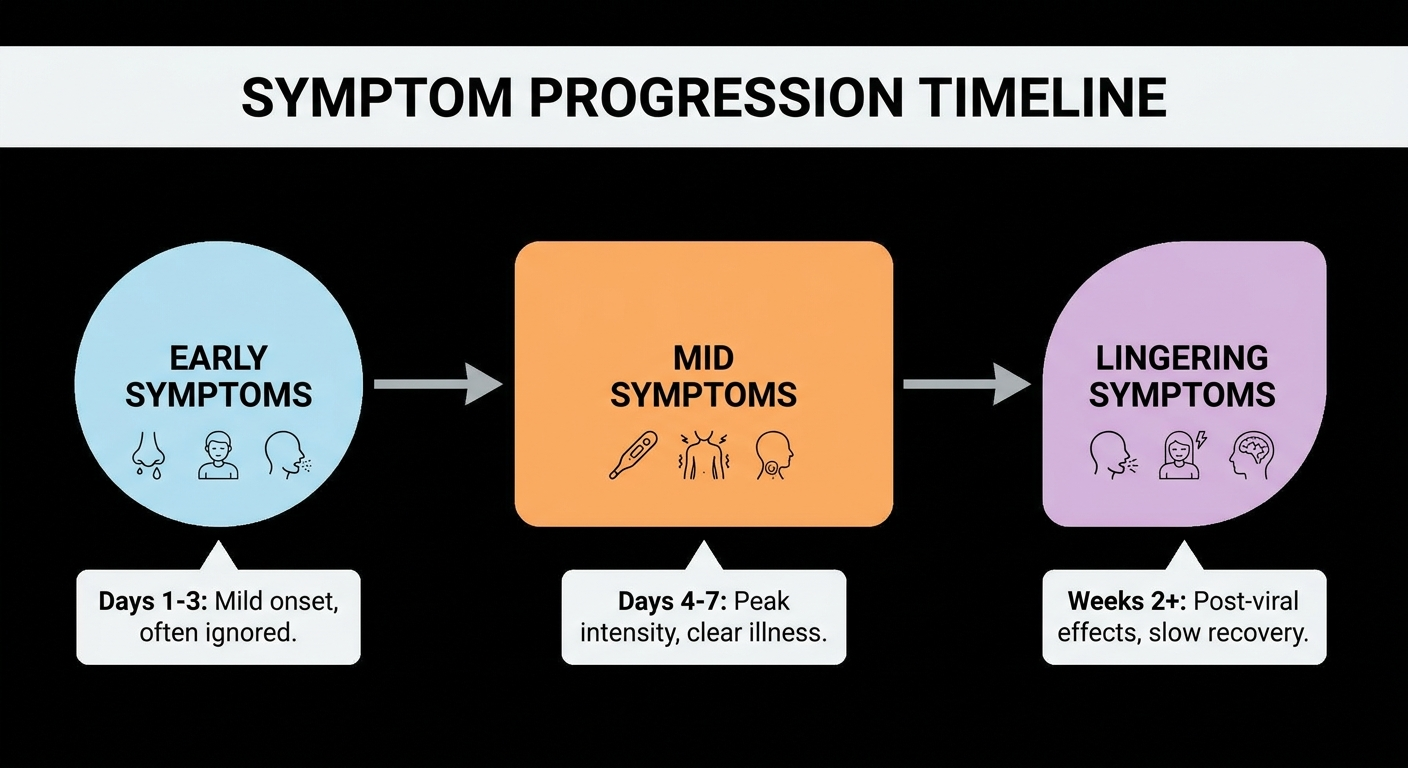
Many clinicians think about acute sinus symptoms like this (not a strict rule): early symptoms behave like a cold; as swelling builds, drainage gets harder; then symptoms either gradually improve—or they don’t. If you’re tracking symptoms at home, jotting down a short daily note (sleep, fever, facial pain, congestion level) can make your visit more efficient and accurate.
Signs symptoms may be lingering or more complicated
Concerning patterns include symptoms that don’t improve as expected or worsen after initially improving (double-worsening); more intense facial pain/pressure than typical; persistent fever or severe headache (especially with other concerning symptoms). With diabetes, earlier follow-up can be helpful when symptoms are unusually severe or stubborn (for example, feeling worse on day 9–10 than on day 4).
If symptoms feel atypical for you—more severe, longer, or rebounding—looping in a clinician earlier is often a prudent step.
Causes — Why Sinus Infections Happen (and What Diabetes Influences)
Most “sinus infections” start as viruses
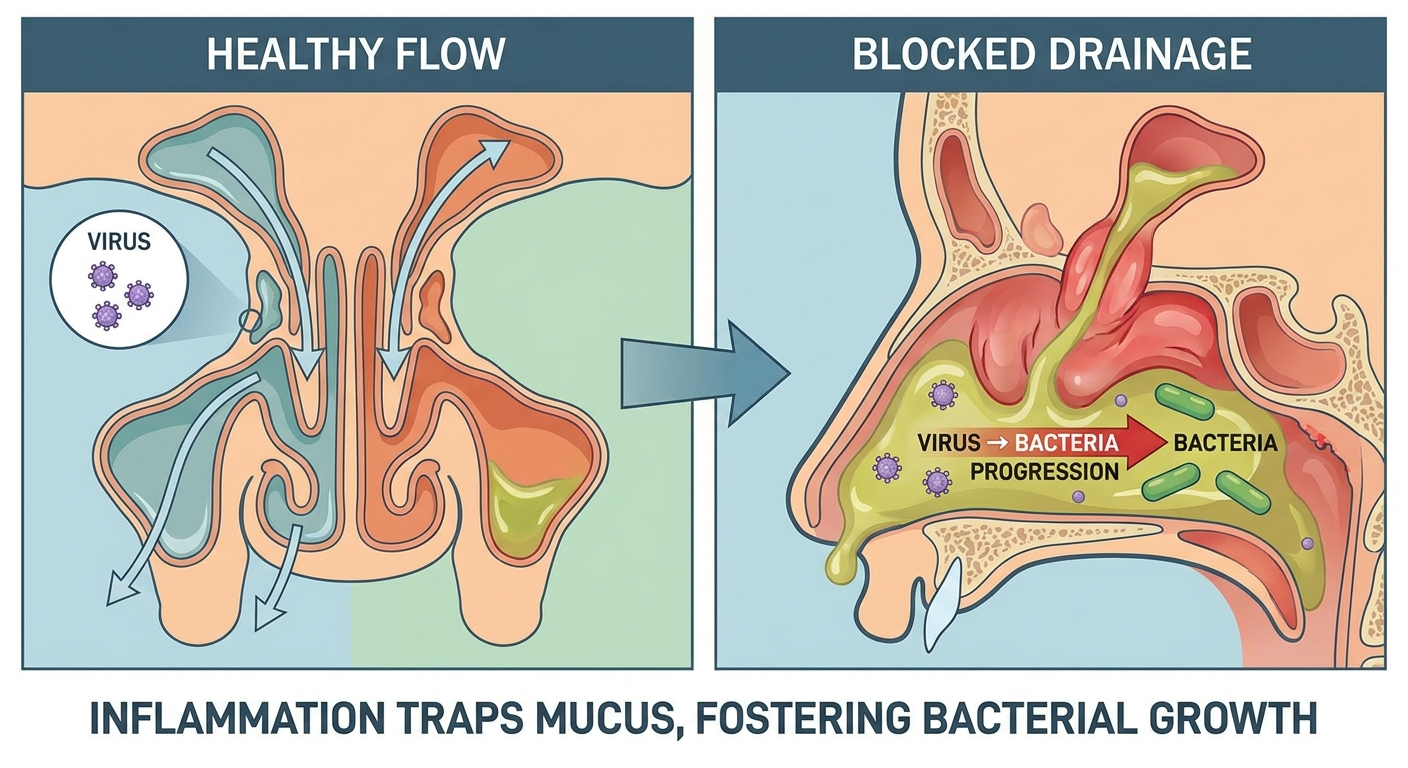
Most acute cases start with a viral upper respiratory infection. The virus triggers inflammation inside the nose and sinuses; swelling narrows drainage pathways; mucus becomes trapped—creating the familiar pressure and congestion. Think of sinuses as small rooms with tiny doorways for ventilation and drainage: when the door frames swell, the doors don’t open well, airflow drops, and fluid gets stuck.
When bacteria become more likely
Bacteria are more likely when inflammation and poor drainage persist. Trapped mucus can become a favorable environment for bacterial overgrowth, leading to acute bacterial rhinosinusitis in a subset of cases. This is why decisions are based on symptom duration, severity, and progression rather than a single sign.
Chronic rhinosinusitis and nasal polyps (CRSwNP)
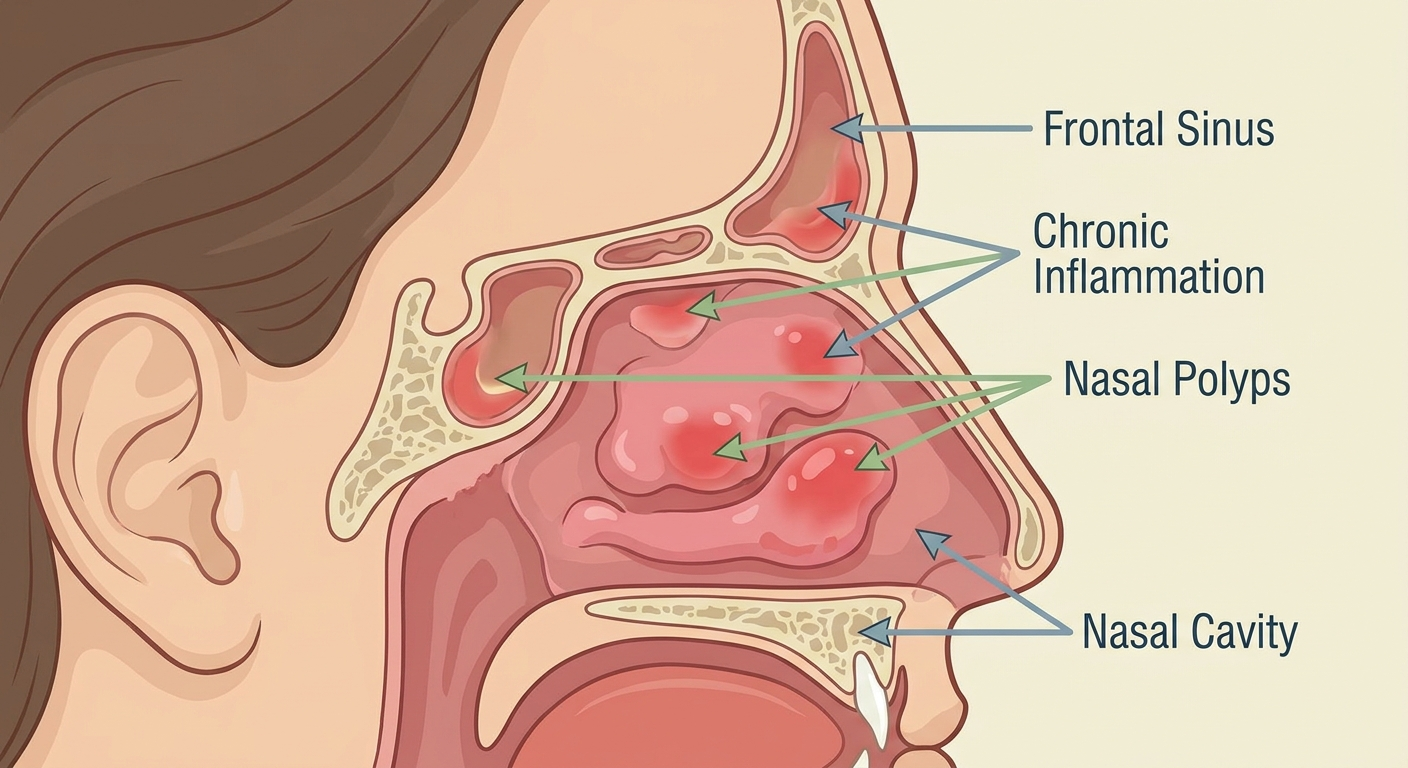
Chronic rhinosinusitis (CRS) is defined by sinus symptoms lasting more than 12 weeks, driven by ongoing inflammation rather than a single short-lived virus. Some people with CRS develop nasal polyps—soft, noncancerous growths that worsen blockage, contribute to smell loss, and increase recurrence. Diabetes has been linked most strongly with CRS with nasal polyps in observational data, which helps explain why discussions often include chronic inflammation patterns.
Rare but serious: invasive fungal sinusitis (mucormycosis)
Uncontrolled diabetes is a major risk factor for mucormycosis, a rare but life-threatening invasive fungal infection involving the sinuses that can spread quickly. This is not the typical sinus infection most people experience—but it’s why clinicians take certain red-flag symptoms very seriously in diabetic patients.
Most sinus infections are viral and short-lived; diabetes mainly matters when recovery stalls—or when rare red-flag complications are possible.
Red Flags — When a Person With Diabetes Should Seek Urgent Care
Emergency warning signs (possible invasive fungal disease or severe complication)
Seek urgent/emergency evaluation for unusual, fast-developing symptoms: unilateral (one-sided) facial swelling; severe headache with significant facial/sinus pain; fever with rapidly worsening symptoms; eye-related symptoms such as double vision, trouble moving the eye, bulging eye (proptosis), or vision changes. These can signal serious complications, including invasive fungal disease—rapid evaluation is safer than waiting.

Non-emergency but prompt evaluation (same week or sooner)
Consider timely medical review when symptoms aren’t improving or worsen after 7–10 days; symptoms are severe or hard to control; there are frequent recurrences; or symptoms last longer than 12 weeks (possible chronic rhinosinusitis). If every cold turns into weeks of congestion or you keep losing smell, an ENT visit can clarify CRS, polyps, allergies, or other drivers. Learn more: https://sleepandsinuscenters.com/chronic-sinusitis
Don’t ignore fast changes, one-sided swelling, or eye symptoms—those are “go now” signs rather than “watch and wait.”
Diagnosis — What to Expect at a Visit
History and physical exam
Clinicians focus on symptom timeline and progression; prior antibiotic use and response; allergy history and triggers; current medications (including nasal sprays); diabetes history and recent glucose control; any eye symptoms, facial numbness, or neurologic symptoms. Practical tip: bring a short list of current diabetes meds and recent glucose trends (or CGM summary) to guide monitoring.
When testing or imaging is considered
Many acute sinus infections are diagnosed clinically (history and exam). When symptoms are severe, recurrent, or persistent, options can include nasal endoscopy (often with an ENT), cultures in selected cases, and CT imaging—especially when chronic disease or polyps are suspected.
How invasive fungal sinusitis is confirmed
When invasive fungal sinusitis is suspected, evaluation is urgent and typically involves specialist assessment. Diagnosis may require tissue sampling for histopathology and/or culture. Speed of diagnosis and treatment is critical and differs from routine sinusitis workups.
Expect a careful history first; testing is added when symptoms are severe, persistent, recurrent, or atypical.
Treatment — Supportive Care, Medications, and When It Escalates
First-line symptom relief for most acute rhinosinusitis
Many cases improve with comfort and drainage measures: rest and hydration; warm compresses or steam as tolerated; saline irrigation (using safe water and correct technique per instructions or clinician guidance); intranasal corticosteroids in some cases to reduce inflammation. If you’ve never tried saline irrigation, think gentle rinse, not forceful flushing; technique and water safety matter. Overview: https://sleepandsinuscenters.com/blog/acute-rhinosinusitis-symptoms-causes-and-treatment-options

Antibiotics — when they’re used (and when they’re not)
Antibiotics are not automatic, since many sinus infections are viral. They’re typically reserved for patterns suggestive of bacterial infection (based on duration, severity, and progression) or when risk factors justify closer management. Read more: https://sleepandsinuscenters.com/blog/do-i-always-need-antibiotics-for-a-sinus-infection
Diabetes-specific considerations for treatment and follow-up
With diabetes, follow-up can matter more when symptoms are severe, persistent, or not responding as expected. Some reviews note that acute bacterial sinusitis in diabetic patients can be more severe and persistent in select cases, occasionally requiring escalated treatment (such as IV antibiotics or drainage) based on clinician judgment. This is individualized, not routine.
Chronic rhinosinusitis (especially with nasal polyps)
For CRS, foundational therapy often includes consistent saline irrigation and intranasal steroid therapy, with next steps tailored to severity and subtype (including polyp management). When symptoms persist beyond 12 weeks or recur frequently, an ENT evaluation can clarify CRS (with or without polyps) and targeted therapies. Learn more: https://sleepandsinuscenters.com/chronic-sinusitis
Suspected mucormycosis (invasive fungal sinusitis)
Suspected mucormycosis is a medical emergency. Treatment typically involves prompt antifungal therapy and often surgical management, so rapid evaluation is essential when red flags are present.
Most acute sinus infections are managed with comfort-focused care; antibiotics and escalation are reserved for select, well-justified situations.
Lifestyle & Prevention Tips (Patient-Friendly and Practical)
Blood sugar control as prevention
While diabetes doesn’t cause most sinus infections, stable glucose supports immune function and healing and may lower the chance of severe or complicated infections. Coordinate sick-day plans with your diabetes care team. If glucose runs higher during infections, that’s common—and a reason to treat lingering sinus symptoms as a real health issue.
Reduce triggers that inflame the nose and sinuses
Inflammation makes drainage harder and can prolong symptoms. Helpful steps: identify and manage allergies when relevant; avoid smoke and strong irritants; maintain comfortable indoor humidity; reduce dust exposure when possible.
Daily sinus-care habits (simple routine)
During allergy seasons or when prone to congestion, some benefit from steady habits: correct, consistent saline rinses; intranasal steroids as prescribed with good technique; prioritizing sleep and hydration; noticing early changes (especially if symptoms tend to escalate). Small consistency beats occasional big efforts.
Steady glucose control and simple, consistent sinus-care habits can support healing and reduce flares over time.
FAQs
Does diabetes cause sinus infections?
Diabetes doesn’t directly cause sinus infections. Most acute infections begin as viral illnesses. However, diabetes—particularly when not well controlled—may affect severity, persistence, and complication risk in certain situations.
Are sinus infections more dangerous if you have diabetes?
Most are still routine. The major concern is that uncontrolled diabetes increases risk for rare but severe complications like invasive fungal sinusitis (mucormycosis). Knowing the red flags is important.
What symptoms are most concerning in diabetics?
Unilateral facial swelling; severe headache with sinus pain; fever with rapid worsening; or eye/vision symptoms (double vision, difficulty moving the eye, bulging eye, vision changes) are especially concerning.
Do diabetics always need antibiotics for a sinus infection?
No. Antibiotics depend on the likelihood of bacterial infection. Supportive care is commonly used first for typical acute cases.
Why do I keep losing my sense of smell?
Smell loss can come from inflammation and blockage. With chronic rhinosinusitis—especially with nasal polyps—smell loss may be more persistent, and research suggests it can be more prolonged in diabetic patients who have CRS.
When should I see an ENT?
Consider ENT evaluation for recurrent infections, symptoms lasting more than 12 weeks, suspected nasal polyps, severe or persistent symptoms, or any red-flag signs. For chronic sinus issues: https://sleepandsinuscenters.com/chronic-sinusitis
Conclusion — Key Takeaways and When to Get Help
The relationship between diabetes and sinus infections is usually less about catching more colds and more about what happens when inflammation or infection doesn’t resolve normally.
Key takeaways: diabetes is most consistently associated (observationally) with chronic rhinosinusitis with nasal polyps and more prolonged smell loss in people who have CRS; most acute sinusitis starts viral and is managed with supportive care first, with antibiotics used selectively for bacterial patterns; uncontrolled diabetes increases risk of rare, dangerous invasive fungal complications that require urgent evaluation and treatment.
If symptoms are persistent, worsening, recurrent, or unusual—especially with one-sided facial swelling or eye/vision changes—prompt medical assessment is important.
Need help sorting out whether this is a routine sinus infection, chronic sinusitis, or nasal polyps? Book with Sleep and Sinus Centers of Georgia: https://www.sleepandsinuscenters.com/
If your sinus symptoms aren’t following the usual course—or you notice red flags—don’t wait to get expert help.
This article is for educational purposes only and is not medical advice. Please consult a qualified healthcare provider for diagnosis and treatment.
References
[1] Centers for Disease Control and Prevention (CDC). Clinical Overview of Mucormycosis. https://www.cdc.gov/mucormycosis/hcp/clinical-overview/index.html
[2] Nam et al. Association between diabetes mellitus and chronic rhinosinusitis with nasal polyps. Clinical Otolaryngology (2022). https://pubmed.ncbi.nlm.nih.gov/34725914/
[3] Passali et al. The Diabetic Nose: A Narrative Review of Rhinologic Involvement in Diabetes. https://pmc.ncbi.nlm.nih.gov/articles/PMC12842062/
[4] StatPearls. Acute Sinusitis. https://www.ncbi.nlm.nih.gov/books/NBK547701/
Don’t let allergies slow you down. Schedule a comprehensive ENT and allergy evaluation at Sleep and Sinus Centers of Georgia. We’re here to find your triggers and guide you toward lasting relief.