Deviated Septum Surgery Benefits: Is Septoplasty Worth It?
If you’ve been dealing with stubborn nasal blockage—especially on one side—you’ve probably wondered whether surgery is the next step. For many people with confirmed structural blockage, the question isn’t “Does septoplasty work?” as much as “Is septoplasty worth it for me?” The answer depends on what’s causing your symptoms, what you’ve tried so far, and what you expect the procedure to accomplish.
Below is a clear, patient-friendly guide to deviated septum surgery benefits, realistic outcomes (including sleep-related goals), recovery, risks, and candidacy—so you can make an informed decision.
Quick Answer — When Septoplasty Is “Worth It” (and When It Isn’t)
Worth it if nasal obstruction is affecting daily life
- Breathing through your nose is difficult most days or nights
- Chronic congestion that feels worse on one side
- Trouble exercising, sleeping, or tolerating CPAP due to nasal blockage
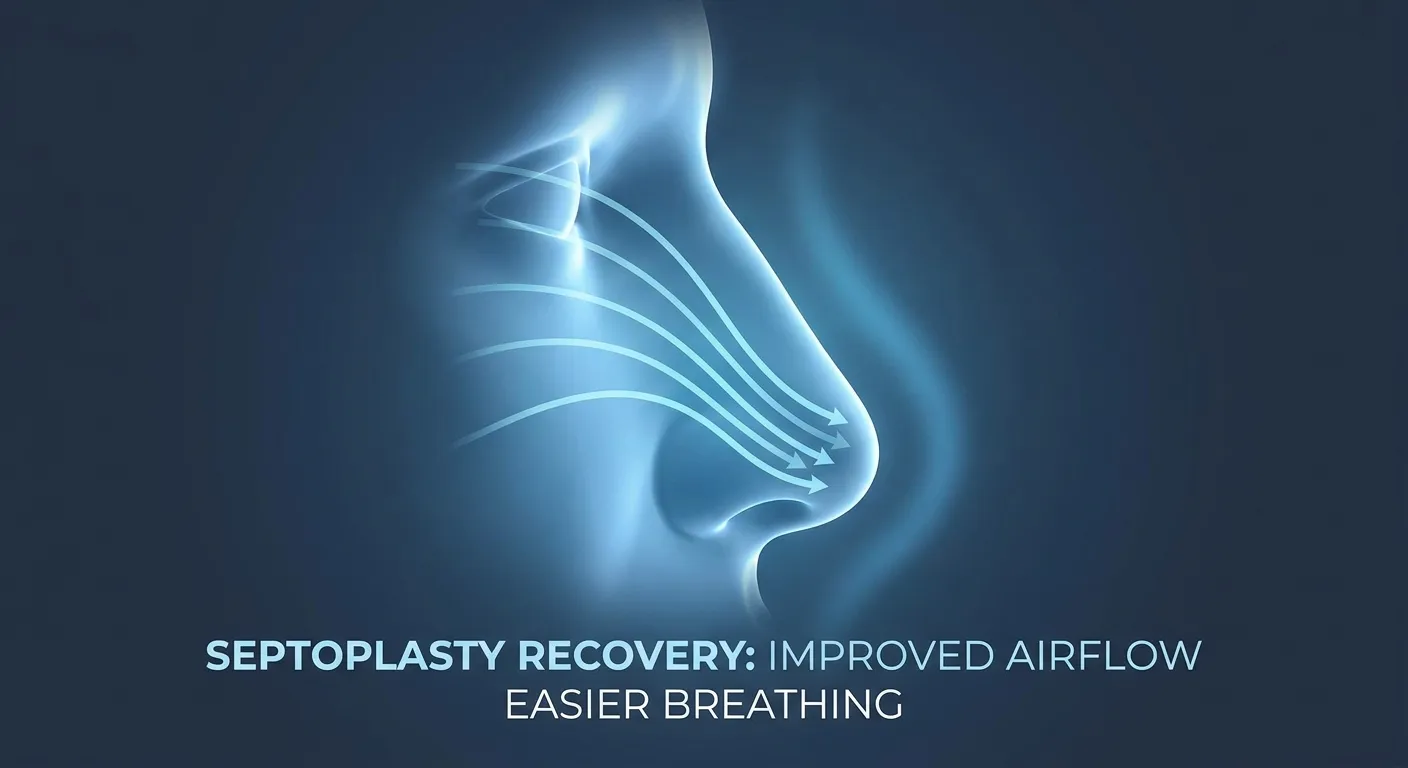
Septoplasty is designed to improve airflow by correcting the septum’s position (Mayo Clinic, 2023). When structural obstruction is the true problem, improving airflow can be a major quality-of-life upgrade.
A practical example: if you can breathe “okay” during the day but feel forced to mouth-breathe at night (or you wake up with a dry mouth and scratchy throat), improved nasal airflow can make sleep feel less effortful—even if nothing else about your routine changes.
Not a guaranteed fix for snoring or sleep apnea
It’s important to set expectations: septoplasty may improve nasal airflow and sometimes help with CPAP comfort, but it is not a standalone treatment for obstructive sleep apnea (OSA). Some people notice improvement in snoring—especially if nasal blockage is a major contributor—but results vary depending on other factors (throat anatomy, sleep position, weight, alcohol, or untreated OSA). A clinician might put it this way: “Septoplasty helps the nose breathe better. Snoring and apnea often involve more than the nose.”
Bottom line: septoplasty may be a reasonable option when structural nasal blockage meaningfully limits daily life and medical therapy hasn’t been enough.

What Is a Deviated Septum?
Simple explanation of the septum (with an easy analogy)
Your nasal septum is the wall of cartilage and bone that divides your nose into left and right airways. If that wall is shifted off-center—like a doorway that’s been installed crooked—one side can become narrower, reducing airflow.
Another way to picture it: imagine two lanes of traffic. If a divider drifts into one lane, cars can still pass, but congestion builds quickly—especially when traffic increases at night, during exercise, or with allergies.
Deviated Septum vs. Turbinate Swelling vs. Nasal Valve Collapse (Why It Matters)
Not all nasal blockage is caused by a deviated septum. Other common contributors include:
- Turbinate enlargement (swollen tissue inside the nose that helps filter and humidify air)
- Nasal valve collapse (weakness/narrowing in the nasal sidewall area)
Many patients have more than one cause of obstruction, which is why a thorough ENT evaluation matters (Cleveland Clinic, 2025). This is also why two people can have the same deviation on paper but very different symptoms—and very different surgical plans.
Understanding whether blockage is structural, inflammatory, or both helps target the right treatment.

Symptoms — How to Tell If a Deviated Septum Might Be Causing Your Breathing Problems
Common symptoms
- Persistent nasal obstruction (often worse on one side)
- Mouth breathing (especially at night)
- Frequent nosebleeds or dryness
- Facial pressure or headaches (sometimes)
- A stuffy nose that never clears or reduced smell
A classic pattern is predictability: one side feels chronically tighter, and sprays may help a little but never fully open the door.
Sleep-related symptoms that can overlap (but aren’t specific)
- Snoring
- Poor sleep quality or waking up tired
- CPAP intolerance due to nasal blockage
(Cleveland Clinic, 2025)
Concrete example: some CPAP users can tolerate the pressure fine, but their nose feels like a pinched straw, causing leaks, dryness, or the urge to remove the mask. In those cases, improving nasal airflow may make CPAP feel more doable—even if CPAP is still needed.
Patterns and predictability often point to structure; variability often points to inflammation.
Causes — Why Septum Deviation Happens
Injury/trauma: A septum can shift after injuries such as sports impacts, falls, or car accidents. Sometimes the injury is obvious; other times, it’s an old event you barely remember.
Congenital or developmental: Some people are born with a deviation, or it becomes more noticeable as the face grows. It can also be found incidentally—until symptoms ramp up later.
Aging and compounding issues: A mild deviation can feel much worse if allergies, chronic rhinitis, or turbinate enlargement develop over time. The septum may be the fixed narrowing, while inflammation acts like a volume knob that turns symptoms up and down.
Small anatomical shifts can feel big when inflammation piles on.
Diagnosis — What an ENT Exam Usually Includes
In-office evaluation
- Symptom history (daytime and nighttime)
- Nasal exam, sometimes with nasal endoscopy for a closer internal look
Because the goal is matching anatomy to symptoms, your clinician may ask targeted questions like: Is one side always worse? Does it change when you lie down? Does allergy season make it dramatically worse?
When imaging is used (CT is not always required)
A CT scan may be used when sinus disease is suspected or when imaging is helpful for surgical planning, but it is not always required. Many deviated septums can be diagnosed without CT.
A focused ENT exam links what you feel to what’s actually narrow.
Treatment Options Before Surgery (and When They’re Enough)
Medical management (non-surgical)
- Saline rinses
- Intranasal steroid sprays (when allergies/inflammation contribute)
- Allergy evaluation and targeted treatment
Medical therapy is especially important when symptoms swing a lot—some good days, some bad days—because that pattern can signal inflammation layered on top of anatomy.
Lifestyle/at-home tips for easier nasal breathing
- Use a humidifier if your air is dry
- Avoid overusing decongestant sprays (rebound congestion can make blockage worse)
If you’d like a structured overview of options, see deviated septum relief for common non-surgical and surgical paths: https://sleepandsinuscenters.com/deviated-septum-relief
If symptoms improve substantially with medical therapy, surgery may not be necessary right now.
What Is Septoplasty? (Patient-Friendly Step-by-Step)
What the surgeon actually does
Septoplasty is a procedure to straighten or reposition the septum by adjusting or removing small portions of cartilage and bone. Incisions are typically inside the nose, so most patients do not have a visible external scar (Mayo Clinic, 2023).
Many patients find it reassuring to hear the realistic aim: the surgeon isn’t chasing perfectly straight—they’re creating more usable airway space where you need it.
Septoplasty vs. septoplasty with turbinate reduction
If the turbinates are also enlarged, your surgeon may recommend treating them during the same procedure. This can matter because a straight septum alone won’t fully solve blockage if swollen turbinates continue narrowing the airway.
Anesthesia and setting
Septoplasty is commonly performed as an outpatient procedure (Cleveland Clinic, 2025), meaning you typically go home the same day.
The aim is a more usable airway—not a perfectly straight line.

Key Benefits — What Septoplasty Can Improve (and What It Usually Doesn’t)
Primary benefit: improved nasal airflow and daily breathing
The most consistent deviated septum surgery benefits are improved airflow and less day-to-day blockage. For many patients, this is the reason septoplasty may be worth considering—it targets the mechanical problem that sprays and rinses can’t fully correct (Mayo Clinic, 2023; Cleveland Clinic, 2025).
A concrete daily life win: patients often describe not having to think about breathing through their nose all day—especially during conversations, workouts, and sleep.
Secondary benefits some patients notice
- Less mouth breathing and dryness
- Improved exercise tolerance
- Better comfort using CPAP (for those who need it)
These are usually downstream effects of easier nasal airflow—not separate guarantees.
Septoplasty for snoring — realistic expectations
Septoplasty for snoring can help when nasal blockage is a major driver, but snoring often involves vibration in the throat and soft tissues—so nasal surgery isn’t a dependable one-and-done snoring solution.
Septoplasty for sleep apnea — what the evidence suggests
Septoplasty may improve nasal airflow and sometimes help with CPAP comfort, but it is not a standalone treatment for obstructive sleep apnea.
Expect easier nasal airflow; don’t expect a guaranteed fix for snoring or sleep apnea.

Septoplasty Success Rate & Satisfaction — What the Numbers Really Mean
Patient satisfaction is generally high, but varies by study and patient selection
Reported satisfaction and success rates vary widely depending on the study, the definition of success, and patient selection. Some individual studies have reported high satisfaction at one year (for example, around 88% in a 2018 publication), while other summaries show broader ranges (roughly 43%–85%) depending on definitions and follow-up time.
A practical takeaway: the apparent success rate is strongly influenced by whether nasal obstruction is clearly documented—and whether all contributors (like turbinates or nasal valve issues) are recognized.
Why some people are disappointed even if the septum is fixed
- Unrecognized nasal valve collapse
- Turbinate hypertrophy not addressed
- Allergies or chronic rhinitis still driving congestion
- Expecting a snoring/sleep apnea cure rather than improved nasal breathing
This is why it’s helpful to evaluate the nose as a system, not just the septum.
Outcomes are best when all airflow bottlenecks—not just the septum—are addressed.
Risks & Complications (Clear, Calm, and Honest)
Common/known risks
All surgeries have risks. With septoplasty, known risks include:
- Bleeding
- Swelling, crusting, temporary congestion
- Infection
Reported infection-related complication rates vary across studies and definitions; the exact risk for an individual patient is usually much lower than the upper end of published ranges (PMC/NIH, 2025).
Rare but serious complications (reassurance + when to seek urgent care)
Serious complications are uncommon. Very rare central nervous system infections, such as meningitis, have been described in the medical literature (PMC/NIH, 2025).
When to call your surgeon right away
- High fever
- Worsening one-sided pain or swelling
- Severe headache or neck stiffness
- Heavy bleeding
Complications are uncommon, and your surgeon will review what applies to you personally.
Recovery Timeline — What to Expect After Septoplasty
First 24–72 hours
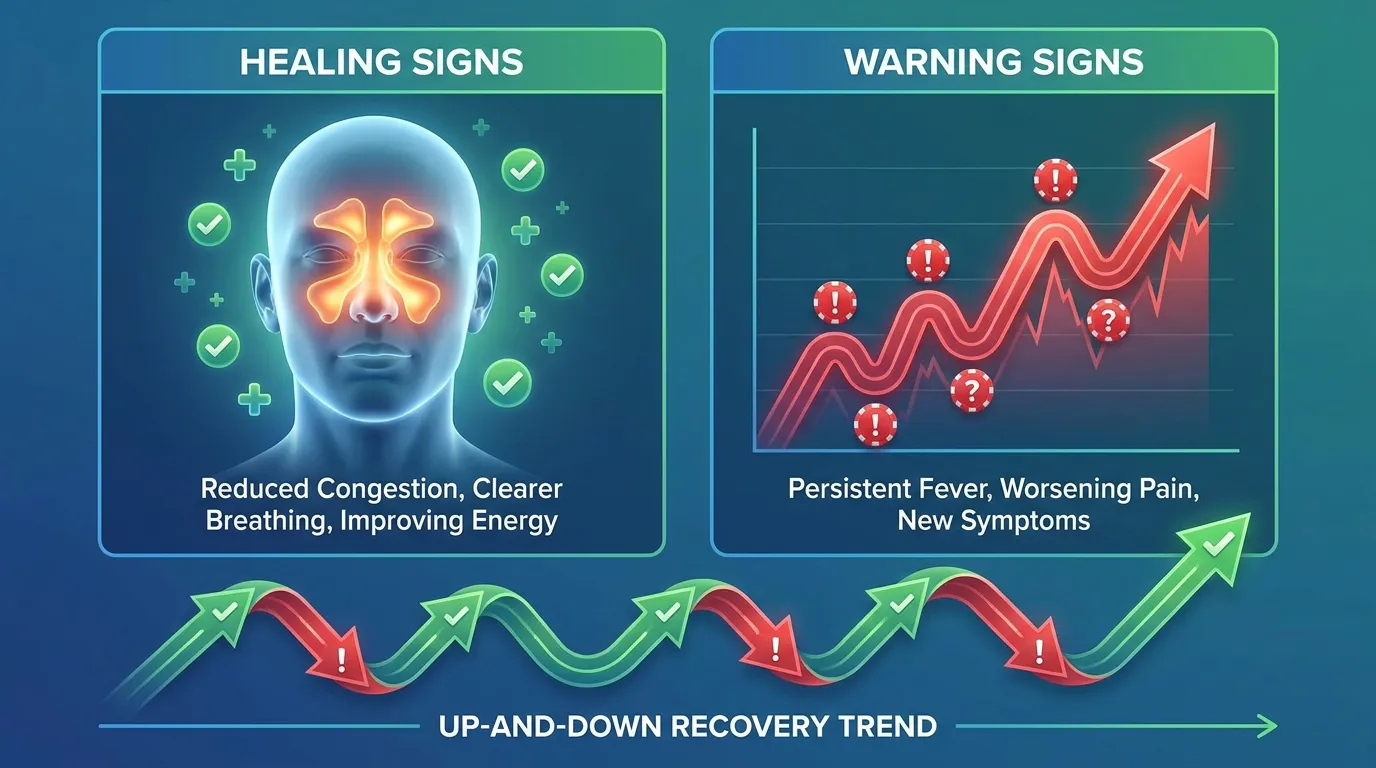
Many patients experience congestion, fatigue, and mild bleeding/oozing. It can feel counterintuitive, but it’s common to feel more blocked right after surgery before things start opening up.
First 1–2 weeks
Swelling and crusting usually improve gradually. Follow-up visits and nasal care may be recommended, depending on technique and healing.
When breathing feels fully improved
Many people notice meaningful improvement within weeks, but healing can continue for months (Cleveland Clinic, 2025). This gradual improvement is one reason it can help to set expectations in advance when deciding if septoplasty is worth it for your timeline and lifestyle.
Improvement is real but gradual—plan for steady gains over weeks to months.

Cost & Insurance — Is Septoplasty Covered?
When insurance is more likely to cover it
Coverage is more likely when there is documented nasal obstruction that affects function or health, rather than a purely cosmetic goal.
What patients should ask their clinic
- Prior authorization requirements
- Deductible and co-insurance estimates
- Surgeon, anesthesia, and facility fees
- Whether costs differ between a hospital vs. outpatient surgery center
Clarity on coverage and fees up front prevents surprises later.
Who Is a Good Candidate for Septoplasty?
Signs you may benefit most
- Significant obstruction confirmed on exam
- Persistent symptoms despite reasonable medical therapy
- CPAP use complicated by nasal blockage
Reasons to pause and re-evaluate
- The main goal is cosmetic change (septoplasty isn’t rhinoplasty)
- The main complaint is snoring without nasal obstruction symptoms
- Untreated allergies/rhinitis appear to be the primary driver
For a deeper candidacy checklist, read: https://sleepandsinuscenters.com/blog/is-septoplasty-right-for-your-deviated-septum
Good candidates have documented obstruction, persistent symptoms, and realistic goals.
Lifestyle Tips to Maximize Results (Before + After Surgery)
Before surgery: reduce inflammation so your baseline is clear
- Treat allergies consistently (if diagnosed)
- Avoid overusing decongestant sprays
After surgery: protect healing and improve comfort
- Use saline rinses if recommended
- Avoid nose blowing too early (follow your surgeon’s instructions)
- Sleep with your head elevated initially if advised
Small habits before and after surgery can boost comfort and results.
FAQs About Deviated Septum Surgery Benefits (Septoplasty)
Will septoplasty fix my snoring?
Sometimes—but it depends on whether nasal blockage is a key contributor. Many people snore for reasons unrelated to the septum, so septoplasty isn’t a reliable standalone snoring cure.
Can septoplasty cure sleep apnea?
Usually no. Septoplasty may improve nasal airflow and sometimes help with CPAP comfort, but it is not a standalone treatment for obstructive sleep apnea.
What’s the success rate of septoplasty?
Reported satisfaction and success vary widely by study, definitions, and patient selection. Some individual studies report high satisfaction around one year, but ranges are broad.
What are the biggest risks?
Bleeding and infection are known risks. Reported infection-related complication rates vary across studies and definitions; an individual’s risk is typically much lower than the highest published figures.
How do I know if my problem is septum, turbinates, or allergies?
An ENT exam is key, because many patients have more than one contributor to obstruction (Cleveland Clinic, 2025).
When in doubt, an in-person exam is the most reliable next step.
Conclusion — Is Septoplasty Worth It for You?
Recap decision framework
- Nasal obstruction is confirmed and significantly affects quality of life
- Medical therapy hasn’t been enough
- Expectations are realistic (better airflow and breathing—not a guaranteed snoring/OSA cure)
- You understand risks and plan for recovery
If you’re considering next steps, you can learn more about deviated septum surgery at our center: https://sleepandsinuscenters.com/blog/deviated-septum-surgery-at-sleep-sinus-centers-of-georgia — and book an appointment for an evaluation at Sleep & Sinus Centers of Georgia: https://www.sleepandsinuscenters.com/
If structural blockage limits life despite medical care, septoplasty may be a reasonable next step.
Sources
Mayo Clinic (2023). Septoplasty overview. https://www.mayoclinic.org/tests-procedures/septoplasty/about/pac-20384670
Cleveland Clinic (2025). Septoplasty. https://my.clevelandclinic.org/health/treatments/17779-septoplasty
PubMed (2018). Septoplasty satisfaction outcomes. https://pubmed.ncbi.nlm.nih.gov/29332171/
PMC/NIH (2025). Septoplasty complications and infection/abscess rates. https://pmc.ncbi.nlm.nih.gov/articles/PMC11910906/
This article is for educational purposes only and is not medical advice. Please consult a qualified healthcare provider for diagnosis and treatment.
Don’t let allergies slow you down. Schedule a comprehensive ENT and allergy evaluation at Sleep and Sinus Centers of Georgia. We’re here to find your triggers and guide you toward lasting relief.