Chronic Sinus Pain and Depression: Break the Cycle
Introduction — When Sinus Pain Doesn’t Stay “Just Physical”
Ongoing facial pressure, fatigue, disrupted sleep, and trouble focusing can wear anyone down. Over time, what starts as a stubborn “sinus issue” can spill into mood, motivation, and daily life—creating a reinforcing cycle of feeling unwell physically and mentally.
If you’re dealing with chronic sinus pain and depression, two points can be true at the same time: (1) treating underlying sinus disease often improves quality of life, and (2) depression may still need its own direct support rather than waiting for sinus symptoms to fully resolve. A systematic review by Schlosser and colleagues highlights how significant the depression burden can be in chronic rhinosinusitis (CRS). Addressing CRS matters, and so does addressing the exhaustion it caused. While most CRS isn’t an emergency, complications can occur—so know the red flags below and seek urgent care if they appear.
For a clear overview of the condition itself, see our chronic sinusitis page: https://sleepandsinuscenters.com/chronic-sinusitis
Summary: Even when it’s “not an emergency,” persistent sinus symptoms can seriously erode sleep, focus, and mood—so treating both sinus disease and mental health together is often the fastest way to feel better.

The “Two-Way Loop”: How Chronic Sinus Pain and Depression Reinforce Each Other
What the research shows about depression risk in CRS
In chronic rhinosinusitis, depression is not rare. Across studies, screening tools have found positive screens in roughly 11%–40% of people with CRS, depending on the study design and the tool used. A positive screen is not a diagnosis, but it’s a sign to look more closely.
Those positive depression screens were also associated with:
- worse sinus-related quality of life
- higher medication use and healthcare utilization
- reduced productivity
In other words, CRS and depression often travel together—and each can amplify the impact of the other. A patient might describe it as: “When my face pressure is bad, I cancel plans. Then I feel isolated. Then everything feels heavier.”
CRS is linked with higher future risk of depression/anxiety (association ≠ direct cause)
A nationwide cohort study found that people with CRS had a higher future risk of both depression (adjusted hazard ratio ~1.54) and anxiety (aHR ~1.57). This is a strong association, but it doesn’t prove CRS directly causes depression in every person. Overlap can reflect sleep disruption, stress, reduced daily function, and shared inflammatory pathways. The practical takeaway: if you have CRS symptoms and mood changes, it’s reasonable to screen for both instead of assuming one will automatically resolve the other.
Why symptoms can worsen mood
- Persistent symptoms limit social activity, exercise, and enjoyment.
- Poor sleep worsens pain sensitivity, concentration, and emotional regulation.
- Long stretches of symptoms can lead to a “nothing helps” mindset—common with chronic illness and chronic pain.
For a related topic, see our post on sinus symptoms and mental health: https://sleepandsinuscenters.com/blog/chronic-nasal-congestion-and-its-impact-on-mental-health-what-you-need-to-know
Summary: CRS and mood symptoms commonly fuel each other; screening for both issues helps you address the whole problem, not just one piece.
Symptoms Checklist — What Patients Commonly Notice
Chronic rhinosinusitis (CRS) symptoms (typical patterns)
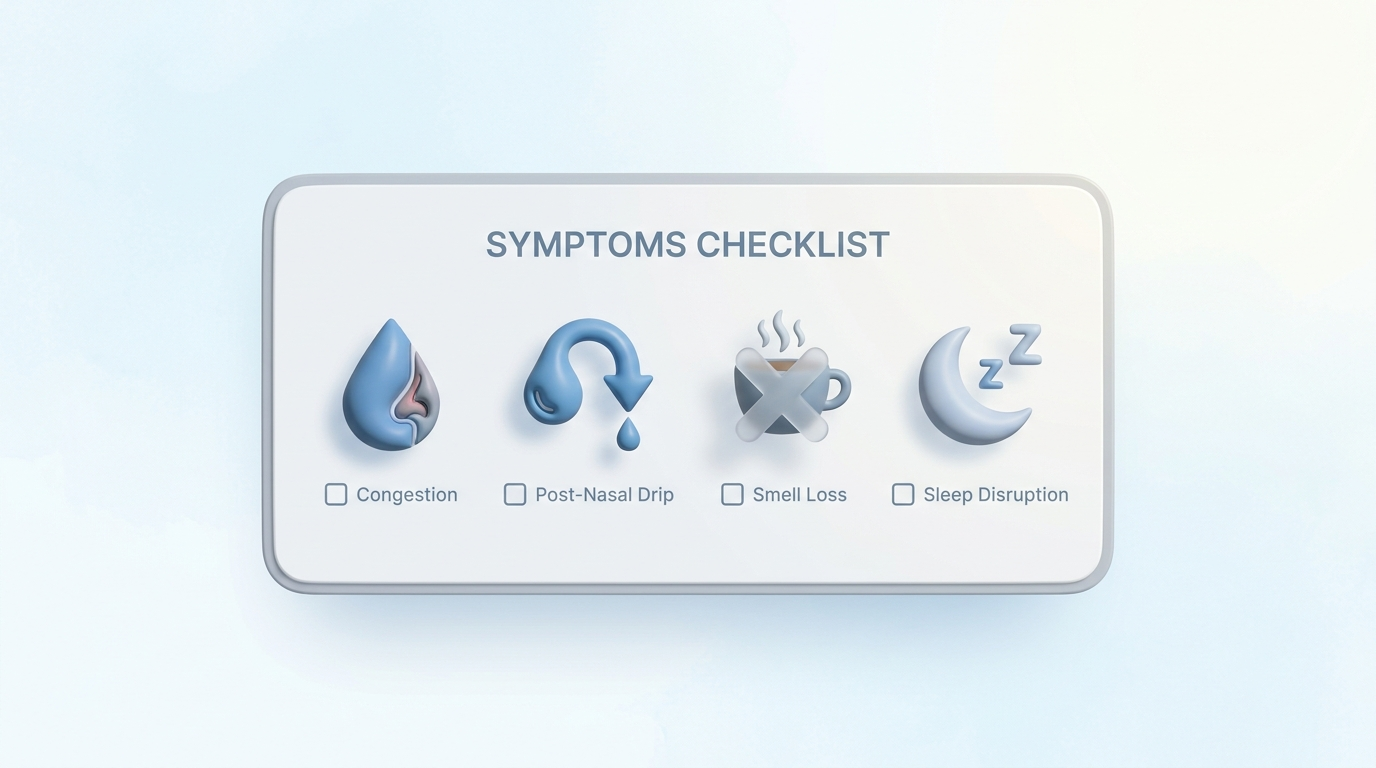
CRS looks more like ongoing inflammation and blockage than a short-lived cold. Common symptoms include:
- nasal congestion/obstruction
- thick nasal drainage or post-nasal drip
- reduced smell/taste
- facial pressure (often more “pressure/heaviness” than sharp pain)
A key clue is duration: symptoms lasting 12+ weeks suggest chronic rhinosinusitis rather than a brief infection.
A concrete example: if you’ve had “the same congestion” since early spring, rely on tissues daily, and can’t smell coffee like you used to, that pattern fits CRS more than a one-week cold.
Depression symptoms that may show up alongside sinus problems
Depression is more than “feeling down.” Symptoms can include:
- low mood most days; loss of interest/pleasure
- low energy, poor concentration (“brain fog”)
- sleep changes (insomnia or oversleeping)
- appetite/weight changes
- feelings of worthlessness or excessive guilt
Because symptom overlap is common (fatigue, sleep disruption, concentration issues), it’s easy for chronic sinus pain and depression to blur together—and for one to hide the other. If you catch yourself thinking, “I’m just tired because my sinuses are bad,” it can still be worth screening for depression so you’re not left untreated.
This list is not a diagnosis; overlapping symptoms are a reason to be evaluated for both issues.
Summary: If symptoms linger beyond 12 weeks—or mood symptoms ride along—get evaluated for both CRS and depression so nothing important is missed.
Causes — What Might Be Driving “Sinus Pain + Low Mood”
The common CRS drivers
CRS is usually driven by ongoing inflammation and may involve:
- chronic inflammation (with or without nasal polyps)
- allergic rhinitis or non-allergic rhinitis
- environmental irritants (smoke, pollutants, workplace exposures)
- structural contributors (like a deviated septum) when clinically relevant
When symptoms persist, it’s common to rotate through short-term fixes during flares—only to feel discouraged when the baseline never really improves.
The most overlooked issue: facial pain is often not sinus-related
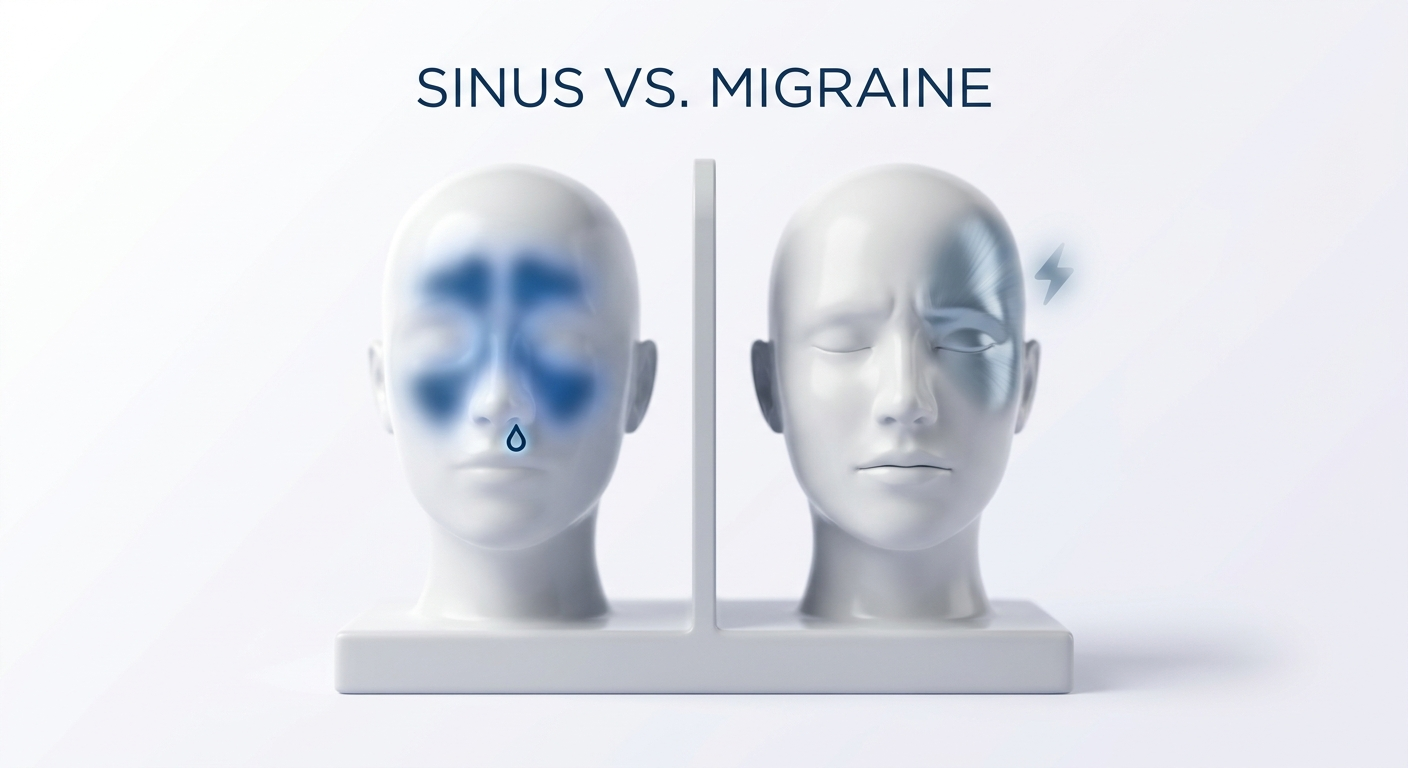
A major turning point for many people: facial pain is frequently labeled “sinus pain,” but common headache conditions—especially migraine—often explain the symptoms better. In a substantial share of patients labeled with “sinus pain,” ENT guidance emphasizes that when nasal endoscopy and sinus CT are negative, a sinus source becomes unlikely and migraine may be a more likely explanation. Treating “sinus pain” as sinusitis, when it’s actually a headache disorder, can prolong suffering and frustration.
Summary: Pinpointing the true source of facial pain—sinus inflammation vs. migraine—prevents months (or years) of ineffective care.
Step 1 to Breaking the Cycle — Confirm the Pain Source Before Escalating Treatment
Clues your pain may be sinus-related
Sinus-related pain/pressure is more likely when it occurs with a consistent CRS pattern, such as:
- congestion + thick drainage + smell loss
- symptoms lasting 12+ weeks
- flares that track with nasal blockage or infection-like episodes
A clinician might summarize it as: “We’re looking for facial pressure with objective signs of ongoing nasal/sinus inflammation—not pressure by itself.”
Clues your pain may be migraine/headache-related instead
Migraine can masquerade as “sinus headache.” Signs that point more toward migraine/headache include:
- throbbing or one-sided pain
- nausea, light sensitivity, sound sensitivity
- pain that occurs without congestion or thick drainage
- “sinus headache” that doesn’t improve with sinus-directed approaches
Only a qualified clinician can distinguish these causes—do not stop prescribed care based on this article alone. For a deeper dive, see migraine vs. sinus headache: https://sleepandsinuscenters.com/blog/migraine-vs-sinus-headache-key-differences-and-symptoms-explained
What an ENT evaluation may include
- detailed symptom history and exam
- nasal endoscopy (in-office visualization)
- CT scan when indicated (especially if diagnosis is uncertain or before procedural planning)
Summary: Confirm first, then treat—matching your plan to exam and testing results saves time, money, and energy.

Step 2 — Treat CRS Consistently (Not Just During Flares)
Foundational at-home care (often first-line)
Many CRS treatment plans start with consistent basics rather than “only when it’s bad”:
- saline irrigation on a regular schedule
- intranasal corticosteroid spray when appropriate—consistency tends to matter more than occasional use
Follow product labels and your clinician’s instructions for irrigation and sprays.
Clinician-guided medical treatments (as appropriate to the case)
Depending on symptoms, exam findings, and objective evidence of disease, clinician-guided options may include:
- antibiotics only when bacterial infection is considered likely (not automatically for every flare)
- oral steroids in selected cases, with a careful risk/benefit discussion
- treatments targeted to polyps or more severe inflammation when indicated
When procedures or surgery may be discussed
Procedures may be considered when there is confirmed objective sinus disease and appropriate medical therapy has been tried. The key principle is alignment: escalation makes the most sense when testing supports a sinus cause—particularly because migraine vs. sinus confusion is so common.
To learn more about options offered through Sleep and Sinus Centers of Georgia, see our chronic sinusitis treatment page: https://sleepandsinuscenters.com/chronic-sinusitis-treatment
Summary: Steady, evidence-based CRS care works best—especially when paired with treatment that targets the confirmed cause.
Step 3 — Screen and Treat Depression at the Same Time
Why you shouldn’t wait for “sinus cure” first
CRS treatment can improve quality of life, and some people notice mood improvement as symptoms become more manageable. But research suggests depression can persist and may require direct treatment even when sinus symptoms improve. That’s why a dual-track approach—treating CRS and depression together—is often more effective than treating only one side. Screening is not a label; it’s a measurement that guides next steps.
Evidence-based depression care options
- Psychological therapy: Cognitive Behavioral Therapy (CBT) and interpersonal therapy
- Guided self-help/behavioral activation: structured, manageable activities even when motivation is low
- Physical activity programs: gentle, consistent movement as tolerated
- Antidepressant medication: when clinically appropriate, with follow-up monitoring
This also supports people noticing sinusitis and anxiety patterns—anxiety can rise when symptoms feel unpredictable, sleep is disrupted, or pain becomes chronic.
Summary: Don’t wait—support mood and treat CRS in parallel so progress on one side isn’t held back by the other.
Lifestyle Tips That Support Both Sinus Health and Mental Health
Sleep strategies (because poor sleep fuels both pain and depression)
Sleep disruption often worsens both pain sensitivity and mood. Helpful themes to discuss with a clinician include:
- keeping a consistent schedule when possible
- addressing nighttime congestion in a safe, structured way (for example, timing rinses earlier in the evening)
If you’re awake at 2 a.m. thinking, “I’ll never feel normal again,” that’s a sign the cycle is active—sleep and mood support can be as important as nasal symptom control.
Reduce “inflammation multipliers”
Certain exposures can worsen nasal irritation and also disrupt mood/sleep:
- alcohol moderation (commonly affects sleep quality)
- smoke avoidance and reducing irritants at home/work
Build a “low-friction” routine for tough days
On low-energy days, simpler is better:
- the “5-minute rule”: choose one doable action (rinse, short walk, shower, light meal)
- track symptoms and mood together to spot patterns you can share at visits
This tracking can be especially useful when symptoms vary: “My pressure spikes after poor sleep,” or “My mood drops when congestion blocks my breathing at night.”
Summary: Small, consistent habits—especially for sleep—can ease both nasal symptoms and mood.
When to Seek Urgent Medical Help (Don’t Wait)
Urgent sinus-related red flags
Seek urgent care for:
- eye swelling/redness
- vision changes
- confusion
- stiff neck
- severe headache
Urgent mental health red flags
If there are suicidal thoughts, planning, or warning signs, seek immediate crisis support. In the U.S., call or text 988 (Suicide & Crisis Lifeline).
Summary: Know the red flags—urgent eye, vision, or neurological symptoms and any suicidal risk need immediate care.
FAQs
Can chronic sinusitis cause depression?
CRS is strongly associated with higher depression risk, but research doesn’t prove CRS directly causes depression in every case. Many factors—sleep, stress, pain burden, and reduced activity—likely contribute.
Will treating CRS cure my depression?
Treating CRS can improve quality of life and may improve mood for some people, but depression often benefits from parallel, evidence-based care.
How do I know if my “sinus pain” is actually migraine?
If endoscopy/CT are negative or symptoms fit migraine patterns, migraine becomes more likely. Only a clinician can make that distinction. Do not change or stop prescribed treatments without medical guidance. Learn more here: https://sleepandsinuscenters.com/blog/migraine-vs-sinus-headache-key-differences-and-symptoms-explained
What’s a practical starting plan if I feel stuck?
This is general education, not a personal treatment plan. A reasonable framework to discuss with your clinicians includes:
- confirming the diagnosis with an ENT evaluation when symptoms last 12+ weeks
- consistent saline and intranasal steroid use when appropriate
- depression screening and timely mental health support
- reviewing sleep, activity, irritant exposure, and alcohol patterns
Summary: Use FAQs as a conversation starter with your clinicians; next steps should always be individualized.

Conclusion — A Dual-Track Plan Works Best
When chronic sinus pain and depression show up together, the fastest path forward is often a dual-track plan: 1) confirm the pain source (sinus vs. migraine/headache), 2) treat CRS consistently with clinician guidance, 3) address depression at the same time with evidence-based support.
Plans should be individualized with a qualified clinician (ENT, primary care, and mental health). If symptoms have lasted 12+ weeks—or if it’s unclear whether symptoms are sinus-related—consider scheduling an evaluation with Sleep and Sinus Centers of Georgia. To get started, book an appointment: https://www.sleepandsinuscenters.com/
Summary: Confirm the cause, treat CRS steadily, and support mental health in parallel—you don’t have to wait to feel better.
Citations
- Schlosser RJ, et al. Burden of illness: A systematic review of depression in chronic rhinosinusitis. 2016. https://pmc.ncbi.nlm.nih.gov/articles/PMC4953344/
- Kim JH, et al. Association of Chronic Rhinosinusitis With Depression and Anxiety in a Nationwide Insurance Population. 2019. https://pmc.ncbi.nlm.nih.gov/articles/PMC6481428/
- Mayo Clinic. Chronic sinusitis—Symptoms and causes. 2023. https://www.mayoclinic.org/diseases-conditions/chronic-sinusitis/symptoms-causes/syc-20351661
- NICE. Depression in adults: treatment and management (NG222). 2022 (reviewed 2024). https://www.nice.org.uk/guidance/ng222/chapter/recommendations
- National Institute of Mental Health (NIMH). Depression. https://www.nimh.nih.gov/health/publications/depression
- National Institute of Mental Health (NIMH). Warning Signs of Suicide. Revised 2025. https://www.nimh.nih.gov/health/publications/warning-signs-of-suicide
- 988 Suicide & Crisis Lifeline. https://988lifeline.org/
Disclaimer
This article is for educational purposes only and is not medical advice. Please consult a qualified healthcare provider for diagnosis and treatment.
Don’t let allergies slow you down. Schedule a comprehensive ENT and allergy evaluation at Sleep and Sinus Centers of Georgia. We’re here to find your triggers and guide you toward lasting relief.