Can Sinus Problems Cause Tinnitus? ENT Insights on the Sinus–Tinnitus Connection
That ringing, buzzing, or whooshing in your ears can be unsettling—especially when it shows up during a sinus infection or allergy flare. It’s common to think, “My sinuses are acting up…so why are my ears ringing?” Many patients ask the same question: can sinus problems cause tinnitus?
In some cases, sinus and nasal inflammation may contribute to tinnitus, most often by affecting how the middle ear ventilates and equalizes pressure. This can trigger ear fullness, muffled hearing, popping, and sometimes tinnitus. A common mechanism is Eustachian tube dysfunction (ETD)—a frequent ENT issue that becomes more noticeable when your nose is congested. [1][4]
If it helps, picture this: your nose, the back of your nose (nasopharynx), and your ears aren’t separate “rooms.” They’re connected. When one area is swollen or blocked, the others can feel it.
For more detail on ETD, see our guide to Eustachian tube dysfunction symptoms and treatment: https://sleepandsinuscenters.com/blog/eustachian-tube-dysfunction-symptoms-causes-effective-treatment-options.
Quick Answer: Can Sinus Problems Cause Tinnitus?
The short explanation
Yes—sinus problems may contribute to tinnitus, most commonly by causing Eustachian tube dysfunction (ETD). When the Eustachian tube does not function normally, the middle ear may not maintain stable pressure. That pressure imbalance can lead to blocked-ear sensations, popping, muffled hearing, and sometimes ringing. [1]
A common real-life example: you get a bad cold, your nose is stuffed, and you notice your ears won’t “pop” when you swallow. A day later, you start hearing a faint hum or high-pitched ring—especially in quiet rooms.
Why this matters
In some cases, tinnitus related to congestion or ETD may improve when the underlying issue is treated. By contrast, tinnitus from inner-ear damage, medication effects, or certain neurologic/vascular conditions may not respond to congestion-focused care. Reviews note improvement in a subset of patients when ETD is effectively addressed. [3]

Understanding the “Sinus–Ear” Connection (ENT Anatomy in Plain English)
What the Eustachian tube does
- Equalize pressure between the middle ear and the outside world
- Help drain fluid from the middle ear
- Support normal hearing mechanics
Think of it like a tiny pressure-release valve. When it opens (often during swallowing or yawning), it helps keep the eardrum moving the way it should. When it doesn’t function well, pressure changes and/or fluid buildup can cause hearing fluctuation and sometimes tinnitus. [1]
If you’d like a deeper explanation, see our guide: https://sleepandsinuscenters.com/blog/eustachian-tube-dysfunction-symptoms-causes-effective-treatment-options.
How sinus inflammation affects the Eustachian tube
Sinusitis and nasal inflammation can cause swelling around the Eustachian tube opening in the back of the nose. That swelling can narrow the opening and make the tube less effective at pressure regulation—often felt as ear pressure, ear fullness, and “blocked” ears. [1]
Clinically, people describe it in very specific ways: “It feels like I’m underwater,” “My hearing fades in and out,” or “My ear crackles when I chew.”
How Sinus Problems Can Trigger or Worsen Tinnitus (Key Mechanisms)
Mechanism #1 — Eustachian tube dysfunction (most common ENT pathway)
- Pressure imbalance can change how the eardrum moves
- Fluid can accumulate behind the eardrum (middle-ear effusion), often causing muffled hearing
- The combination may be perceived as ringing, buzzing, or humming
A practical clue: ETD-related tinnitus often feels “mechanical”—it may fluctuate hour to hour, or change after a swallow, yawn, or gentle attempt to equalize pressure. [1]
Mechanism #2 — Nasal obstruction and “pressure effects”
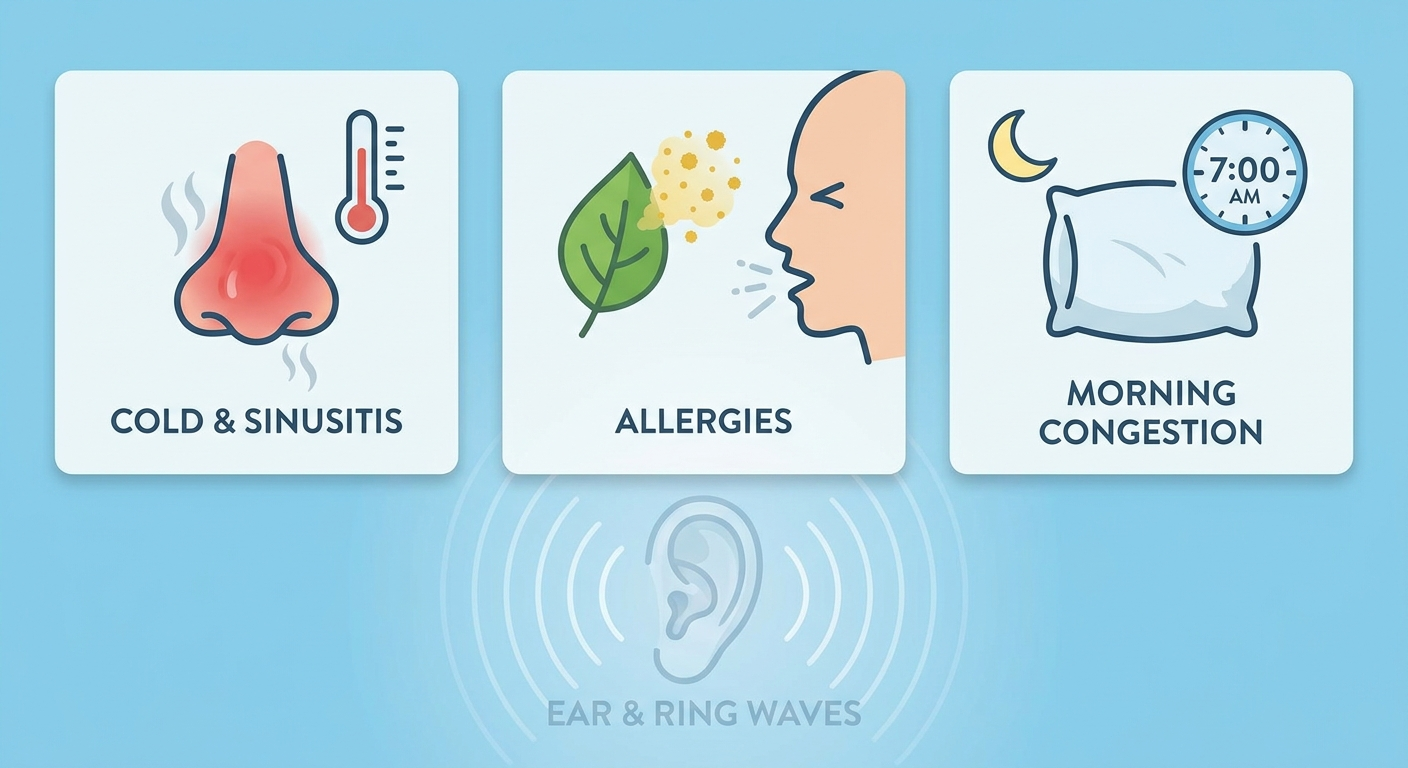
During a cold, allergies, or sinusitis, nasal blockage can be intense. Many people notice that when the nose is blocked, the ears feel blocked too—sometimes along with ringing. This symptom cluster often overlaps with ETD, even if patients mainly describe nasal and facial pressure associated with congestion. [1][4]
Another common scenario is after sleeping flat during an illness: congestion can feel worse in the morning, and the ear symptoms may be worse too—until you’re upright and the nose starts to drain.
Mechanism #3 — Structural blockage (deviated septum and airflow imbalance)
Not all obstruction is from infection or allergies. Some people have ongoing nasal blockage due to anatomy (like a deviated septum). Emerging research has found an association between nasal septal deviation and tinnitus in some patients—though association does not prove that deviation always causes tinnitus. [2]
Sinus Conditions Most Likely to Be Linked With Tinnitus
Acute sinusitis (short-term infection/inflammation)
Acute sinusitis often follows a cold and typically improves within days to a couple of weeks. When tinnitus appears during an acute illness, it often fades as congestion resolves and middle-ear pressure normalizes. [4]
If ringing continues well beyond the infection, it’s a sign the cause may not be purely congestion-related—or that ETD lingered after the sinus symptoms improved.
Chronic rhinosinusitis (symptoms lasting 12 weeks or longer)
With chronic rhinosinusitis, nasal inflammation can persist for months, which may keep ETD symptoms coming back—especially ear fullness, pressure, and intermittent ringing.
Some patients notice a cycle: a few “good” days, then symptoms flare again with weather changes, irritant exposure, or seasonal allergies layered on top. Learn more here: https://sleepandsinuscenters.com/chronic-sinusitis.
Allergic rhinitis (“nasal allergies”)
Allergies can cause ongoing or seasonal congestion and swelling in the nose and nasopharynx. That swelling can contribute to intermittent ETD—so allergy-related tinnitus may flare even without a true sinus infection. [1]
If you notice a pattern—ringing and ear pressure during pollen season, after yardwork, or around pets—this can be a helpful diagnostic clue.
Nasal obstruction from anatomy (deviated septum, turbinate hypertrophy)
If you’re chronically blocked on one side, your symptoms may include persistent pressure sensations and recurrent ET irritation. For some people, that ongoing nasal obstruction pattern lines up with research suggesting nasal structure can be a contributing factor (not a guarantee). [2]
Symptoms: When Tinnitus Might Be Coming From Sinus/ETD Issues
Tinnitus patterns that often fit ETD
- New or worse ringing during a cold, allergy flare, or sinus infection
- Ringing that changes with swallowing, yawning, or chewing
- Intermittent tinnitus that comes and goes with congestion
- Tinnitus with a blocked-ear feeling [1]
Some people also report that the tinnitus is more noticeable at night—not necessarily because it’s worse, but because the environment is quieter and congestion can feel more prominent when you lie down.
Ear symptoms that point toward ETD
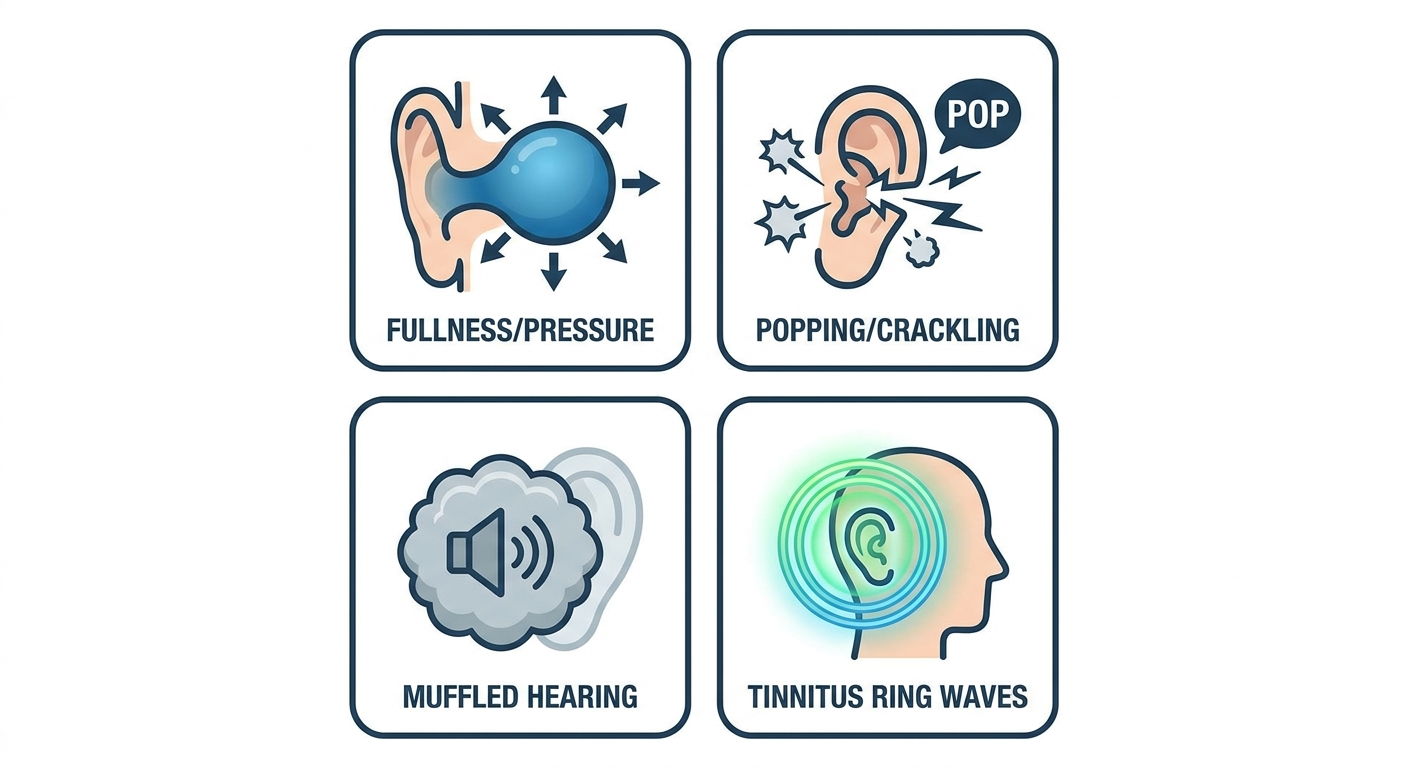
- Ear fullness/pressure
- Popping/crackling
- Muffled or fluctuating hearing
- Mild dizziness/unsteadiness (in some cases) [1]
Nasal/sinus symptoms that commonly travel with ETD
- Nasal blockage
- Thick drainage
- Facial pressure
- Reduced sense of smell [4]
Important Reality Check — Not All Tinnitus Is Caused by Sinus Problems
Even if your tinnitus started during congestion, an ENT evaluation may also consider other common causes such as:
- Noise-induced or age-related hearing loss
- Earwax impaction
- Medication-related side effects (ototoxicity)
- TMJ dysfunction
- Vascular causes (especially pulsatile tinnitus)
- Neurologic causes
When to Seek Urgent Care vs. Schedule an ENT Visit
Urgent “red flags”
Seek urgent evaluation if tinnitus occurs with:
- Sudden hearing loss
- Pulsatile tinnitus (sounds like a heartbeat)
- New neurologic symptoms (facial weakness, severe vertigo, one-sided numbness)
- Severe headache, high fever, or eye swelling/vision changes with sinus symptoms
Non-urgent but important ENT visit triggers
Consider scheduling an ENT visit if you have:
- Tinnitus lasting more than 2–4 weeks after a respiratory illness
- One-sided tinnitus or one-sided hearing changes
- Recurrent ear fullness/pressure with chronic nasal blockage
If you’re unsure how urgent it is, it’s reasonable to start with a non-urgent visit—especially if the symptom is persistent, distracting, or affecting sleep.

Diagnosis: What an ENT Evaluation Typically Includes
A thorough evaluation for sinusitis and tinnitus concerns may include:
- History: timing, triggers (allergies, colds, flights), noise exposure
- Physical exam: otoscopy (eardrum/fluid signs) and nasal exam (congestion, polyps, deviation)
- Hearing testing: audiogram to assess hearing patterns
- Middle-ear pressure testing: tympanometry to look for pressure/effusion consistent with ETD
- Imaging (selected cases): considered when symptoms suggest chronic rhinosinusitis, complications, or other red flags
One practical benefit of testing is clarity. If the audiogram and middle-ear measures suggest an ETD pattern, treatment can be more targeted—and reassurance is often easier when you have a concrete explanation.
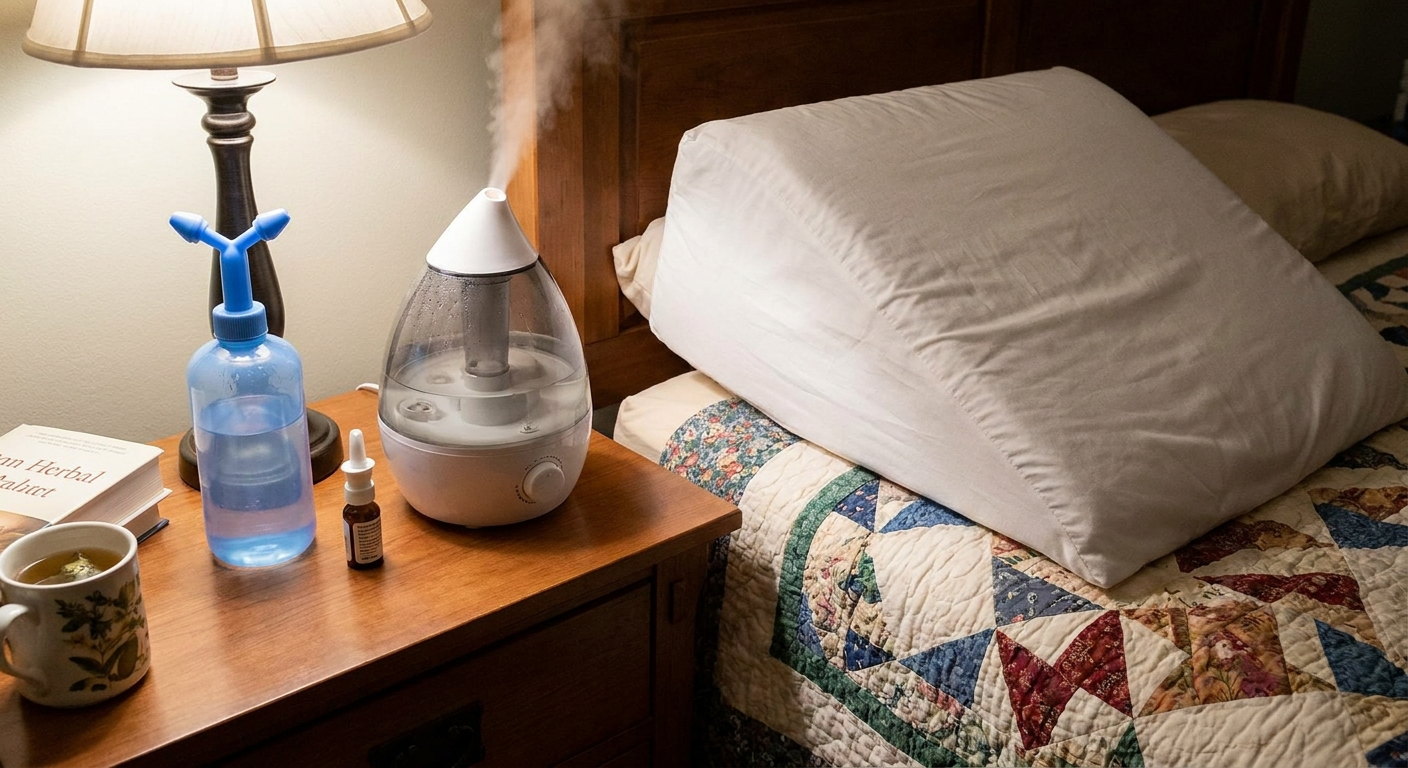
Treatments That May Help (Based on the Underlying Cause)
The overarching goal is to reduce inflammation/obstruction, support Eustachian tube function, and treat infection when appropriate.
At-home relief (safe first steps)
- Saline nasal irrigation (using sterile or distilled water, or previously boiled and cooled water)
- Humidification/steam for comfort (if tolerated)
- Hydration and sleep positioning to reduce congestion sensations [4]
Consistency matters. For example, some people try saline once, don’t love it, and stop—yet regular use during a flare may provide more noticeable relief.
Over-the-counter options (as appropriate)
Depending on symptoms, patients often discuss:
- Non-sedating antihistamines for allergies
- Intranasal corticosteroid sprays (most helpful with consistent use)
- Short-term decongestants (not appropriate for everyone)
Ask a clinician or pharmacist first if you have high blood pressure, glaucoma, prostate enlargement/urinary issues, are pregnant, or take interacting medications.
Prescription treatments your ENT may recommend
An ENT may consider:
- Stronger anti-inflammatory nasal regimens
- A targeted allergy plan
- Antibiotics only when bacterial sinusitis is suspected (to avoid overuse) [4]
The main point is precision: treat inflammation when inflammation is the driver, and reserve antibiotics for situations where they’re more likely to help.
ETD-directed treatments and procedures
When symptoms persist, ETD-focused care may include medical management and, in selected chronic cases, procedures such as balloon dilation of the Eustachian tube. Reviews suggest some patients experience improvements in hearing symptoms—and sometimes tinnitus—when ETD is effectively treated, though results vary. [3]
For broader education on options, see ENT care for tinnitus relief: https://sleepandsinuscenters.com/blog/ent-care-for-tinnitus-relief-effective-treatments-and-tips.
Chronic rhinosinusitis procedures (when indicated)
In selected cases, procedures such as balloon sinuplasty or other sinus interventions may be considered to improve drainage and reduce the overall inflammation burden—an important step when ongoing congestion may be fueling ETD-type ear symptoms. These options are not for everyone and are tailored to your exam, imaging, and response to medical therapy.
Lifestyle Tips to Reduce Sinus-Triggered Tinnitus Flares
- Allergy-control habits: track triggers, keep windows closed during high pollen, shower after outdoor exposure
- Pressure-change strategies: flying/diving while congested can worsen pressure symptoms; timing and prevention strategies can be worth discussing with an ENT
- Sleep and hydration: elevate your head slightly during bad congestion nights and stay hydrated to keep mucus thinner
If you’re a frequent flyer (or you travel for work), mention this to your ENT—recurrent pressure stress can amplify ETD symptoms when congestion is present.
FAQs (Patient-Friendly)
Will tinnitus go away after a sinus infection?
Often it improves as congestion and ETD resolve, but timelines vary. If ringing persists beyond the sinus flare, it’s worth evaluating other causes. [1][4]
Can allergies cause tinnitus even without a sinus infection?
Yes. Nasal inflammation alone can contribute to ETD symptoms, including ear fullness and intermittent ringing. [1]
Why do my ears feel full and ring when my nose is blocked?
When ETD is present, the middle ear may not equalize pressure well. That can create a blocked-ear sensation and sometimes tinnitus. [1]
If I treat ETD, will my tinnitus definitely stop?
Not guaranteed. Tinnitus can have multiple causes, but improvement is possible for some patients when ETD is the main driver. [3]
When should I worry about tinnitus being “something serious”?
Red flags include sudden hearing loss, pulsatile tinnitus, neurologic symptoms, or persistent one-sided tinnitus.
Key Takeaways + Next Steps
- Can sinus problems cause tinnitus? Sinus and nasal issues may contribute to tinnitus—most often through Eustachian tube dysfunction affecting middle-ear pressure. [1]
- Ongoing inflammation or nasal obstruction may contribute, and septal deviation has been associated with tinnitus in some research (association, not proof of causation). [2]
- Treating ETD and sinonasal disease may improve tinnitus in a subset of patients—making this a potentially modifiable ENT pathway. [3]
- Persistent, one-sided, or atypical tinnitus deserves a broader evaluation.
If your symptoms are persistent or recurrent—or if you have ear pressure plus ongoing congestion—an evaluation can help clarify whether ETD, sinonasal disease, or another cause is driving the tinnitus and what options may fit your situation. To book an appointment with Sleep and Sinus Centers of Georgia, visit https://www.sleepandsinuscenters.com/.
References
1. StatPearls. Eustachian Tube Dysfunction (2023). https://www.ncbi.nlm.nih.gov/books/NBK555908/
2. Yeo CD et al. Association between nasal septal deviation and tinnitus (2024). https://pmc.ncbi.nlm.nih.gov/articles/PMC11495798/
3. Kim HY et al. Eustachian Tube Dysfunction in Hearing Loss (2025). https://pmc.ncbi.nlm.nih.gov/articles/PMC12650131/
4. NHS. Sinusitis (sinus infection). https://www.nhs.uk/conditions/sinusitis-sinus-infection/
“This article is for educational purposes only and is not medical advice. Please consult a qualified healthcare provider for diagnosis and treatment.”
Don’t let allergies slow you down. Schedule a comprehensive ENT and allergy evaluation at Sleep and Sinus Centers of Georgia. We’re here to find your triggers and guide you toward lasting relief.