
Allergy and Anxiety: How Allergies Can Trigger Anxiety Symptoms
Introduction — When allergy symptoms feel like anxiety
If you live with allergies, you already know they can affect your nose, eyes, skin, and breathing. But many people notice something else during flares: a racing heart, restlessness, irritability, worry, or even panic-like sensations. When those feelings show up alongside congestion or itching, it’s easy to wonder if you’re “just anxious”—or if something else is going on.
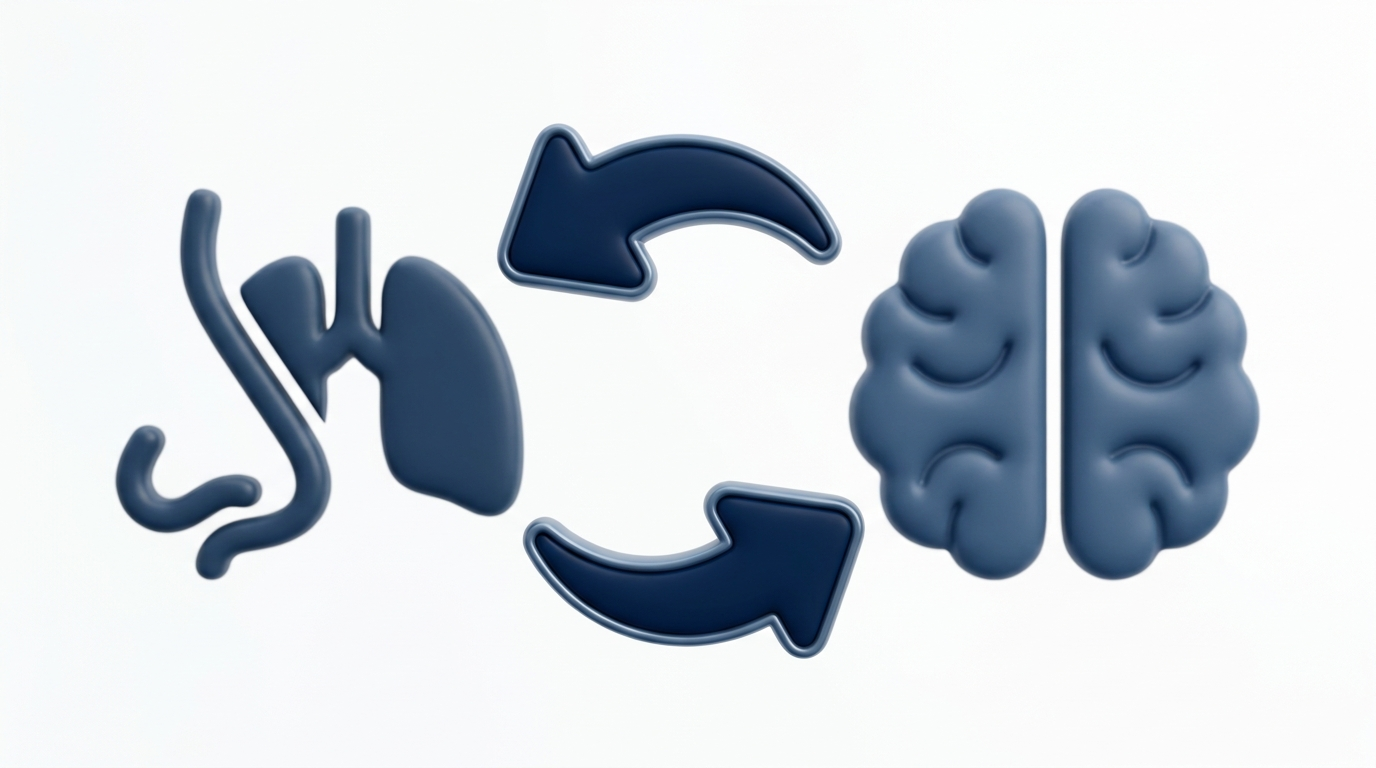
The connection between allergy and anxiety is real, increasingly studied, and often bidirectional: allergies can amplify anxious feelings, and stress can make allergy symptoms feel worse. Growing evidence suggests immune inflammation, sleep disruption, and “fight-or-flight” activation may all play a role in this cycle. [4]
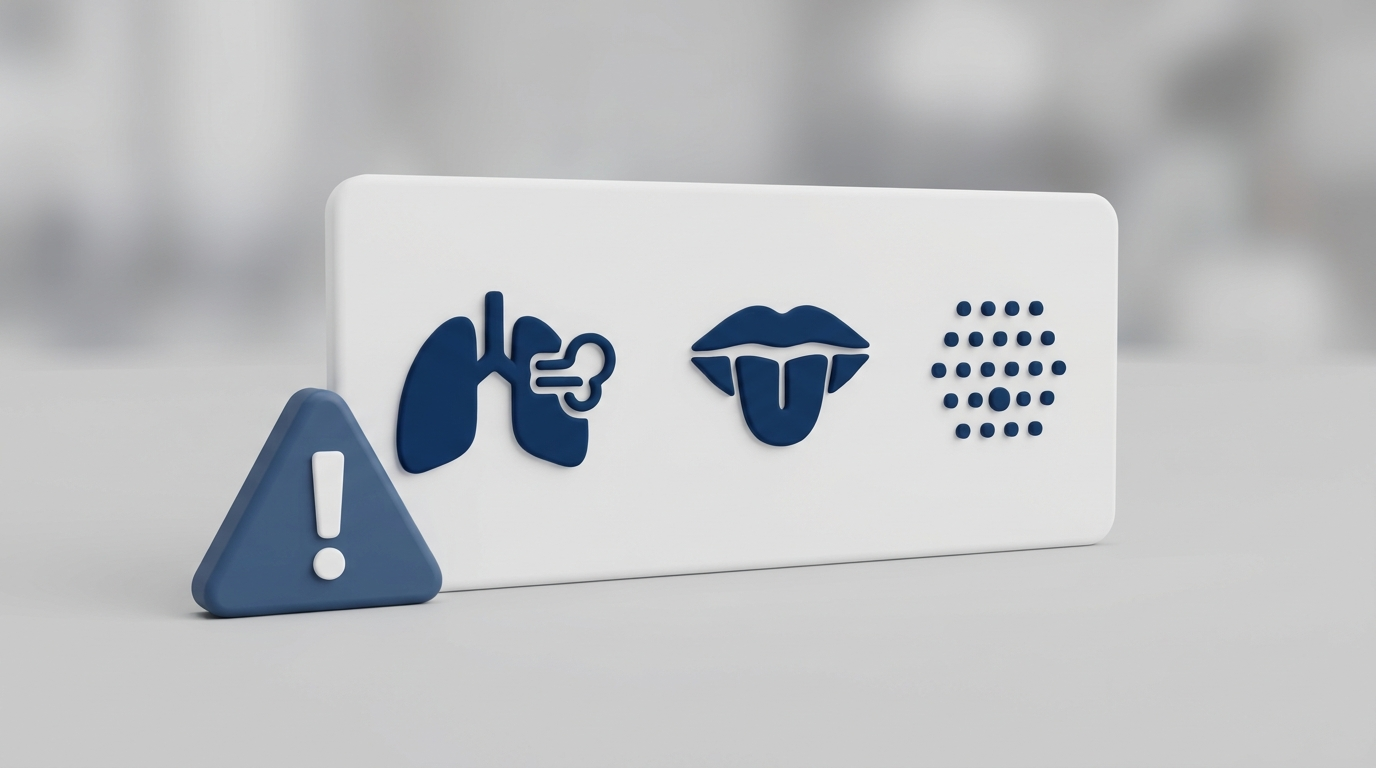
A quick safety note: if symptoms are severe—especially trouble breathing, wheezing, swelling of the lips/tongue/throat, or signs of a serious reaction—treat it as an emergency, not anxiety.
Medical disclaimer: This article is for education only and isn’t medical advice. If you’re unsure whether symptoms are anxiety, allergy, asthma, or something else, seek individualized care.
What counts as an “allergy” (and why it matters for mental health)
Common allergy types that may overlap with anxiety symptoms
- Seasonal allergic rhinitis (pollen)
- Perennial allergies (dust mites, pet dander, mold)
- Skin allergies (eczema, hives/urticaria)
- Food allergies, which often carry a higher emotional burden because the consequences can feel less predictable and more high-stakes in daily life [2][3]
A practical example: someone with spring pollen allergies might wake up congested, sleep poorly, feel “keyed up” all day, then interpret that jittery fatigue as a mental health issue—when part of it is the body running on inflammatory fumes and disrupted rest.
Note on terminology: phrases such as “food allergy anxiety in teens” describe patterns seen in research and clinical practice; they are not formal diagnoses.
Allergy vs. intolerance vs. sensitivity (quick clarity)
- Allergy: an immune response. In some cases it can be systemic and severe.
- Intolerance: not immune-mediated (for example, lactose intolerance).
- Sensitivity: a broad, non-specific term that can mean different things in different contexts.
Why it matters for mental health: when someone believes a reaction could become dangerous, “what-if” thinking can ramp up quickly. That’s one reason food allergy–related worry (in teens and adults) can feel uniquely intense. [3][5]
Bottom line: many allergic conditions can create sensations that resemble anxiety—especially when symptoms disrupt sleep and breathing.
The bidirectional loop — how allergies and anxiety can feed each other
How anxiety/stress can worsen allergy symptoms
Many people notice that stress worsens allergies—or at least makes symptoms feel louder and harder to tolerate. Stress can heighten body vigilance, making sensations like throat discomfort, itching, pressure, or shortness of breath feel more alarming. It can also influence immune signaling and flare patterns over time, contributing to a frustrating “flare-up cycle.” [4][6]
A helpful analogy: if allergies are the “spark,” stress can act like “wind,” making the same spark feel bigger and harder to contain.
How allergies can trigger anxiety symptoms (the other direction)
- Physical sensations (tight chest, throat discomfort, dizziness, fatigue) can be misread as danger, fueling a panic spiral.
- Fear of reactions—especially with food allergy—can shift daily decisions toward avoidance (skipping social events, avoiding restaurants, or constant checking and reassurance-seeking). Over time, that can grow into chronic worry. [3][5]
Many patients describe it like this: “I can’t tell if my body is warning me about a reaction or if I’m spiraling.” That uncertainty alone can be anxiety-producing—especially if you’ve had a scary reaction in the past.
Takeaway: stress can magnify allergy symptoms, and allergy flares can nudge the body and mind toward alarm—so addressing both sides often works best.
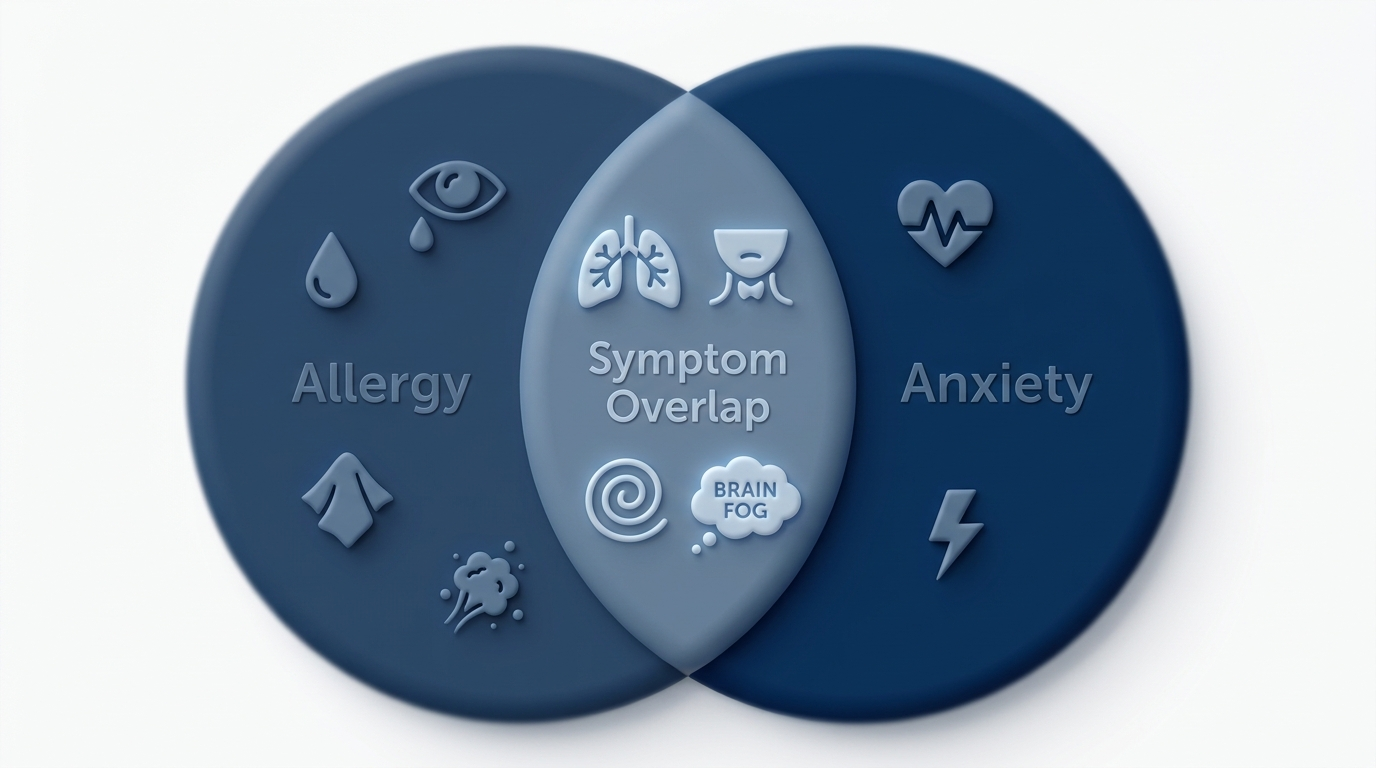
Symptoms — how to tell “anxiety symptoms,” “allergy symptoms,” and “overlap symptoms”
Allergy symptoms that can feel like anxiety
- Shortness of breath or chest tightness (especially with asthma or allergic airway inflammation)
- Throat tightness or a “lump in the throat” sensation
- Lightheadedness or dizziness
- Facial pressure/head pressure, fatigue, and a “wired but tired” feeling
On flare days, even “ordinary” symptoms can feel threatening because they’re disruptive and unpredictable. If you’ve ever had congestion plus a pounding heart after a poor night of sleep, you know how quickly the mind can jump to worst-case interpretations.
Anxiety symptoms that commonly show up during allergy flares
- Racing heart or palpitations
- Restlessness, irritability
- Trouble concentrating (“brain fog”)
- Sleep disruption, which can worsen anxiety the next day
A clinician might frame it this way: “When your body is uncomfortable, your brain tends to scan harder for danger.” That scanning can increase tension, amplify physical sensations, and make you feel more on edge.
Red flags — when to treat as a medical emergency (not anxiety)
Because serious allergic reactions can escalate quickly, it’s important to recognize red flags such as:
- Wheezing, significant trouble breathing, or repetitive coughing
- Swelling of lips/tongue/throat, or hives spreading rapidly
- Vomiting plus hives plus breathing symptoms after a possible food exposure
If someone has been prescribed emergency medication (like epinephrine), they should follow their individualized emergency plan and seek urgent/emergency care.
If new, severe, or rapidly worsening symptoms occur—especially after a known exposure—treat as an emergency.
Causes — the biology linking allergies to anxious feelings
So, can allergies cause anxiety—or at least anxiety-like symptoms? In many people, allergies don’t “create” an anxiety disorder, but they can contribute to anxious feelings through several biological pathways.
Inflammation and brain signaling (cytokines and mood)
Allergic disease involves immune activation and pro-inflammatory cytokines. Growing evidence suggests these signaling molecules may interact with the nervous system and influence how the body processes stress. This helps explain why inflammation and anxiety-like symptoms can overlap—especially when symptoms are persistent or sleep-disrupting. [4]
In everyday terms, inflammation can make the “volume” of discomfort louder—so sensations that might normally be tolerable (a mild throat tickle or a little chest tightness) can feel harder to ignore and easier to catastrophize.
Histamine’s role in the brain and anxiety-like symptoms
When people hear “histamine,” they often think of sneezing, itching, and hives. But there’s also a brain histamine system involved in arousal and wakefulness—functions closely tied to anxiety and sleep. Research in humans and animals continues to clarify how these pathways operate and how they might relate to mood and arousal. [1]
That doesn’t mean histamine automatically “equals anxiety.” It means that during allergic activation—especially if sleep is disrupted—your baseline arousal may run higher, which can feel like nervous energy.
The HPA axis (stress hormone system) and “fight-or-flight” overlap
The HPA axis is one of the body’s core stress-response systems. Allergic inflammation and poor sleep can nudge the body toward a higher-alert state, where sensations are more intense and stress hormones are more reactive. In plain language: your system can feel like it’s “on alert,” even when you’re not consciously worried. [4]
This is why some people say their anxiety “comes out of nowhere” during a flare. The trigger may be physiological first, psychological second.
Medication and stimulant effects (often overlooked)
Sometimes the missing link isn’t the allergy itself, but what’s used to cope with it. Certain decongestants—and, in some people, certain allergy medication combinations—may cause jitteriness, insomnia, or a faster heart rate. Add caffeine or poor sleep, and the result can feel a lot like anxiety.
If symptoms begin after a new product, it’s worth discussing options with a clinician rather than assuming “this is just my anxiety getting worse.”
Big picture: immune signals, histamine, stress hormones, sleep loss, and some medications can all raise arousal—making anxiety-like sensations more likely during flares.
Food allergies and anxiety — why the emotional burden is often higher
Food allergy can bring an extra layer of stress because eating is constant, social, and often outside the home.
Fear of the reaction vs. fear of social judgment (especially in teens)
Emerging research highlights that anxiety in teens with food allergy isn’t only about fear of a reaction. For some adolescents, a separate driver is social anxiety—worry about standing out, being judged, or seeming “difficult” when asking about ingredients or declining food. [2][5]
A real-life example: a teen may know how to read labels and carry emergency medication—but still dread speaking up at a friend’s house or on a school trip. The anxiety isn’t just medical; it’s social.
Safety behaviors that can unintentionally increase anxiety
Planning for safety is important. But when safety behaviors become extreme, they can unintentionally train the brain to expect danger everywhere. Examples include:
- Avoiding restaurants or parties entirely
- Over-checking labels repeatedly
- Constant reassurance-seeking
- Not carrying emergency medication due to embarrassment
A helpful goal is “safe and prepared,” without shrinking life down to only the lowest-risk situations. In anxiety treatment terms, that often means building confidence through structured practice—rather than relying on avoidance.
Parent stress matters (and can transfer to kids)
In food allergy households, parental stress can significantly shape family dynamics. Studies suggest parental anxiety and stress can predict children’s eating anxiety and emotional distress in these contexts. The key takeaway isn’t blame—it’s that stress patterns are learnable and treatable, and family support can meaningfully reduce day-to-day burden. [6][3]
Even small shifts can help: calmer mealtime routines, clear emergency plans, and consistent messaging like “We take this seriously, and we know what to do.”
For many families, addressing the social and emotional context of food allergy is as important as managing exposure risk.
Diagnosis — getting the right answers (medical + emotional)
Start with allergy clarity
Uncertainty fuels anxiety. Replacing “unknown threat” with a clearer trigger-and-treatment plan often helps people feel more grounded.
A clinician may use symptom history, trigger tracking, and—when appropriate—skin or blood testing. For food allergy, evaluation is especially important because risk varies widely and should be interpreted in context. [3]
A simple tracking tip: write down when symptoms happen, where you were, what you ate (if relevant), and what helped. Patterns often appear faster than people expect.
Screen for anxiety when:
- Worry feels constant or out of proportion to known risk
- Social withdrawal, school avoidance, or food refusal increases
- Panic attacks or health-anxiety spirals start to take over daily life
When to seek specialty care
- Allergy/ENT evaluation can be helpful for persistent congestion, recurrent sinus symptoms, suspected allergic triggers, or unclear reactions.
- Mental health support can be helpful for persistent panic, avoidance, intrusive “what if” thoughts, or significant social anxiety.
Clarity reduces fear: a concrete plan for triggers and treatment—plus screening for anxiety when needed—can calm the system.
Treatment — an integrated plan that addresses both allergies and anxiety
Because allergy and anxiety can reinforce each other, the best outcomes often come from addressing both sides of the loop. [4]
Allergy-focused treatments (reduce the body’s trigger load)
Common components of allergy care may include:
- Environmental control strategies (pollen, dust mites, pets, mold)
- Medications tailored to symptoms (for example, non-sedating antihistamines, nasal steroid sprays, eye drops, saline rinses when appropriate)
- Longer-term options like allergen immunotherapy for selected patients, aligned with guideline-based care [3]
One practical benefit of good allergy control: when baseline symptoms are quieter, it’s easier to notice change. Still, new, severe, or rapidly worsening symptoms should be evaluated promptly, regardless of what feels “normal” for you.
Anxiety-focused treatments (reduce the “alarm system”)
Evidence-based anxiety care often includes:
- Cognitive behavioral therapy (CBT) skills to challenge catastrophic interpretations of body sensations
- Exposure-based work (when appropriate) for avoided social or food-related situations
- Stress regulation tools and sleep-protection strategies, especially during high-allergy seasons
Some people also benefit from learning nasal breathing techniques as a calming skill—particularly when congestion isn’t severe.
Practical “bridge strategies” for flare days
Many people find it helpful to have a simple written plan that separates “common flare sensations” from “urgent red flags,” including:
- Known triggers and typical symptom patterns
- Which products are approved for them and when they’re usually used
- Clear emergency steps (including what to do if epinephrine is prescribed)
This kind of plan can reduce in-the-moment decision fatigue, which is often what turns symptoms into panic.
Coordinated care for teens with food allergy
For adolescents, coordinated planning can reduce both risk and social stress:
- Joint planning involving the teen, parents, allergist, and school
- Rehearsed self-advocacy scripts (restaurants, friends, coaches)
- Normalization of social anxiety as a treatable part of the experience [2][5]
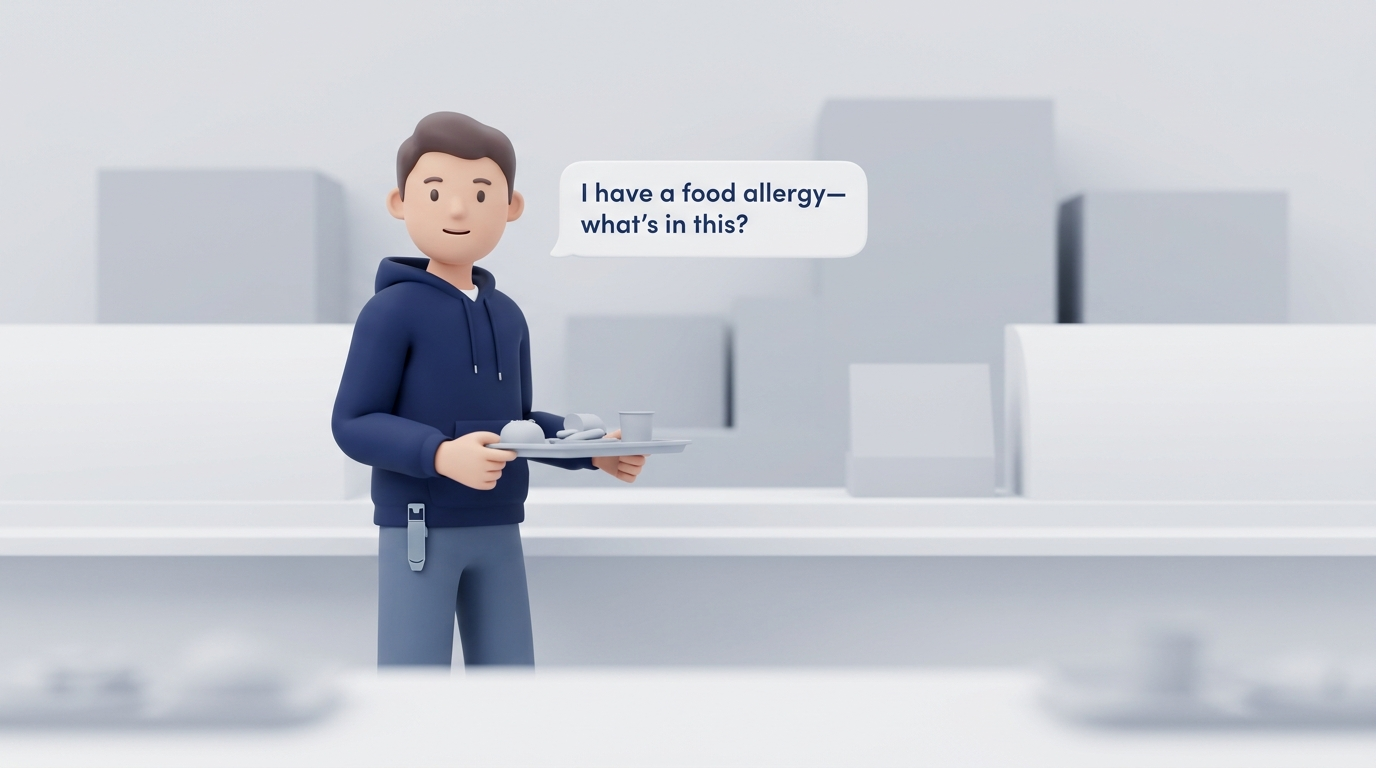
A small but meaningful shift is practicing one sentence teens can use automatically, like: “I have a food allergy—can you tell me what’s in this?” Rehearsal reduces the social “spotlight” feeling.
Treat the inflammation and tune the alarm system—together these steps can break the flare–anxiety cycle.
Lifestyle tips — lowering inflammation and worry day-to-day
Reduce triggers without shrinking your life
A sustainable approach is often “reduce exposure where practical,” while still participating in life. Planning ahead—rather than avoiding everything—can lower background stress.
For example, during peak pollen days, you might adjust outdoor timing and shower after being outside—without cancelling every plan for weeks.
Sleep protection during allergy season
Congestion can fragment sleep, and poor sleep can amplify anxious feelings the next day. Practical routines (like keeping allergens out of the bedroom and adjusting evening habits during peak pollen times) can help support more consistent rest.
If you notice a pattern of “bad sleep → more symptoms → more anxiety,” that’s not a personal failure. It’s a common loop—and it’s treatable.
Stress habits that support immune balance
Regular movement, short daily decompression practices, and predictable family routines can reduce baseline stress. For families managing food allergy, lowering household stress can be particularly important given the role of parental stress in kids’ emotional burden. [6]
Small daily habits that support sleep, movement, and predictability can lower both inflammation and worry.
FAQs (SEO-focused)
Can allergies directly cause anxiety?
They can contribute. Inflammation, histamine signaling, sleep disruption, and misinterpreting physical sensations may all increase anxiety-like symptoms in some people. [4][1]
Can antihistamines make anxiety worse?
For some individuals, certain products (or combinations with decongestants/caffeine) may cause jitteriness or insomnia, which can feel like anxiety. A clinician can help sort out options if this pattern shows up.
Why do teens with food allergies struggle socially?
Adolescents may experience a distinct fear of social judgment—separate from fear of the reaction itself—leading to avoidance or embarrassment about asking questions and carrying emergency medication. [2][5]
How do I know if it’s a panic attack or an allergic reaction?
There can be overlap, which is why a written emergency plan matters. Sudden, severe breathing symptoms; progressive swelling; widespread hives; or symptoms after a known exposure should be treated as urgent. This distinction should not be made alone if there is any uncertainty—err on the side of emergency care.
What kind of doctor should I see first?
If physical symptoms and triggers dominate, an allergy/ENT evaluation can help clarify what’s driving symptoms. If panic, avoidance, or constant worry dominates, mental health screening alongside medical evaluation can be useful. Integrated care is often most effective. [4]
When in doubt, prioritize safety and seek timely care.
Conclusion — treat the inflammation, treat the stress, and break the cycle
The relationship between allergy and anxiety is more than “all in your head.” Immune inflammation (including histamine and cytokines), disrupted sleep, medication effects, and stress biology can all push the body toward alarm—while anxiety and stress can intensify how allergy symptoms are experienced. [4]
When you address both sides—reducing allergic trigger load and strengthening stress/anxiety supports—many people find the cycle becomes easier to manage, with fewer flare-day spirals and more confidence day to day.
If you’d like help clarifying triggers, improving symptom control, or deciding whether testing or longer-term options like immunotherapy make sense, you can book an appointment with Sleep and Sinus Centers of Georgia: https://www.sleepandsinuscenters.com/
Related resources (from Sleep and Sinus Centers of Georgia)
What are allergies?: https://sleepandsinuscenters.com/what-are-allergies
Allergy testing overview: https://sleepandsinuscenters.com/allergy-testing
Immunotherapy for allergies: Is it worth it?: https://sleepandsinuscenters.com/blog/immunotherapy-for-allergies-is-it-worth-it
Nasal breathing benefits for anxiety relief: https://sleepandsinuscenters.com/blog/nasal-breathing-benefits-for-anxiety-relief-how-it-calms-your-mind-48bee
References
1. Haas HL, Sergeeva OA, Selbach O. Histamine in the nervous system. Physiological Reviews (2008). https://doi.org/10.1152/physrev.00043.2007
2. PubMed (PMID: 39473345). Food allergy–related anxiety insights (including adolescent dimensions). https://pubmed.ncbi.nlm.nih.gov/39473345/
3. J Allergy Clin Immunol: In Practice (2024). Clinical perspectives on allergy/anxiety comorbidity and management. https://www.jaci-inpractice.org/article/S2213-2198(24)00580-4/abstract
4. PMC Review. Allergy, inflammation, stress pathways (bidirectional mechanisms; cytokines/HPA axis concepts). https://pmc.ncbi.nlm.nih.gov/articles/PMC5666813/
5. HCPLive. Social anxiety and safety behaviors in teens with food allergy. https://www.hcplive.com/view/social-anxiety-may-influence-safety-behaviors-teens-food-allergy-melissa-engel-phd
6. Anxiety and Depression Association of America (ADAA). Anxiety education and support resources. https://adaa.org/
This article is for educational purposes only and is not medical advice. Please consult a qualified healthcare provider for diagnosis and treatment.
Don’t let allergies slow you down. Schedule a comprehensive ENT and allergy evaluation at Sleep and Sinus Centers of Georgia. We’re here to find your triggers and guide you toward lasting relief.