Allergy Testing: What to Expect and How to Understand Your Results
When symptoms keep coming back—congestion that never fully clears, “seasonal” flare-ups that feel year-round, unexplained rashes, or reactions to foods or products—it’s natural to want a clear answer. Allergy testing can be a powerful tool for identifying likely triggers, but it can also feel confusing at first because test results don’t automatically equal a diagnosis. Below is a patient-friendly guide to the most common test types (including the skin prick test, patch test, and allergy blood test [sIgE]), what happens at the appointment, and how to interpret results in a way that supports informed next steps.

What allergy testing can—and can’t—tell you
Allergy tests are designed to identify possible triggers your immune system reacts to. A key concept often gets missed:
- For skin prick and sIgE blood tests, a positive result usually means “sensitization,” not automatically a true clinical allergy. Your immune system has shown it can recognize an allergen—but that doesn’t always mean you’ll have symptoms with real-life exposure. Diagnosis typically requires connecting test results to your actual history and symptom patterns. (Mayo Clinic; AAAAI)
- Patch testing is designed to detect delayed (Type IV) contact allergies. Some reactions can be irritant (non-allergic), and your clinician will interpret whether a reaction appears allergic or irritant based on timing and skin findings.
A helpful analogy: think of testing like a smoke alarm. A smoke alarm can detect smoke (sensitization), but you still have to figure out whether there’s an actual fire in your home (clinical allergy) and where it’s coming from. The analogy is simplified—real allergy interpretation is more nuanced, and your symptom “story” completes the picture.
Testing suggests possibilities; your story identifies priorities.
Who this guide is for
This overview is especially helpful if you’re dealing with:
- Ongoing nasal or sinus symptoms (congestion, drainage, sneezing)
- Recurring “seasonal allergies” that aren’t improving
- Hives, itching, or eczema flare-ups
- Suspected food reactions
- Product-related rashes suggesting a need for patch testing
Symptoms that often lead to allergy testing
Many people pursue allergy testing because of:
- Sneezing, congestion, runny nose
- Itchy/watery eyes
- Postnasal drip, cough, throat clearing
- Sinus pressure (which can overlap with non-allergic conditions)
If your symptoms look allergy-like but don’t follow a clear pattern, your clinician may also consider non-allergic causes. For example, chronic rhinitis can mimic allergies—causing congestion and drainage even when testing is negative or symptoms don’t match exposures. You can read more here: https://sleepandsinuscenters.com/treating-chronic-rhinitis
If you suspect allergies but aren’t sure where to start, you can take our quick quiz: https://sleepandsinuscenters.com/test-your-allergy-symptoms
When symptoms don’t match a clear trigger, testing plus a careful history helps narrow the cause.

Causes and triggers: what clinicians are usually looking for
The most common allergy categories tested
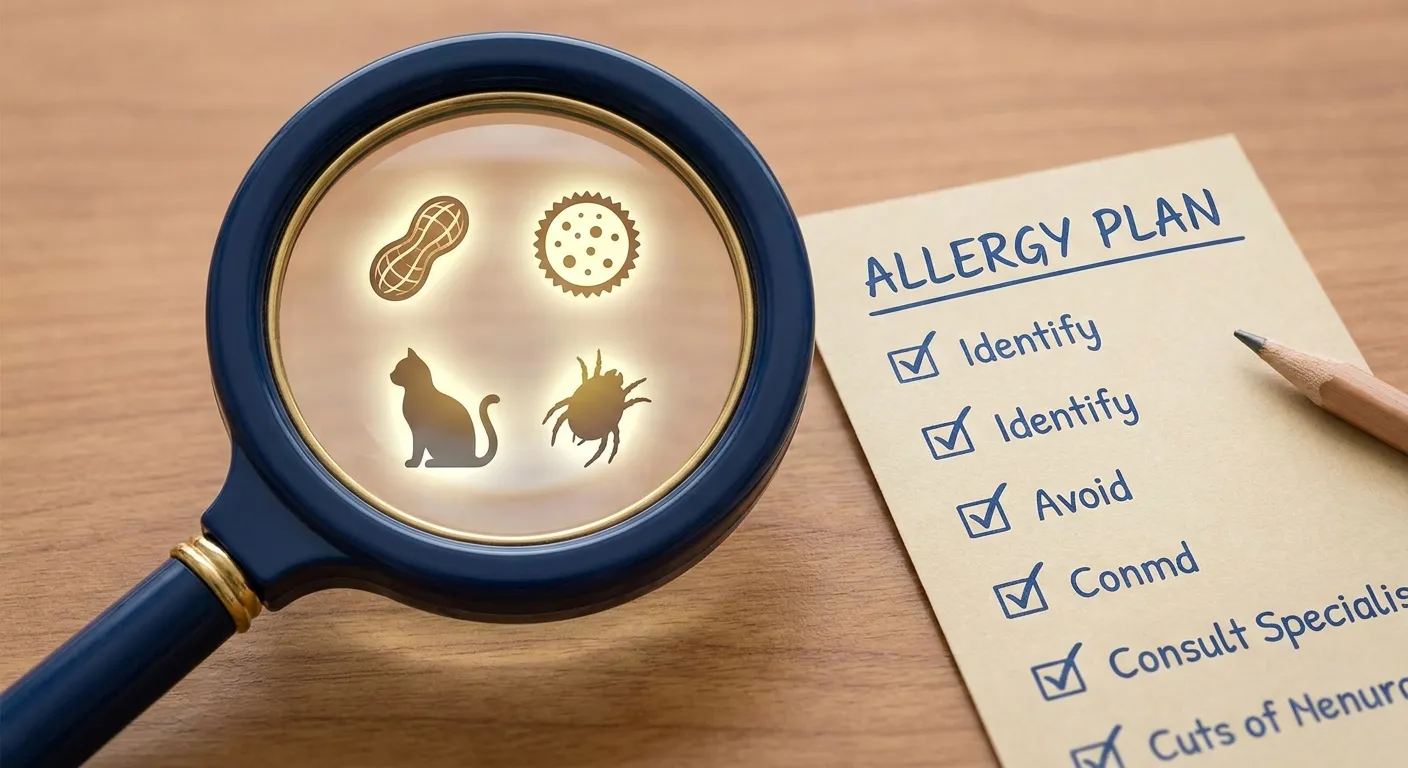
- Environmental (aeroallergens)
These include pollens, dust mites, molds, and pet dander—often the focus of environmental allergy testing. If pollen is a suspected trigger, tracking daily levels can help connect symptoms to exposures. A practical tool: https://sleepandsinuscenters.com/georgia-pollen-tracker
- Foods
Food allergy testing is typically guided by your history—especially whether symptoms occur minutes to a couple hours after eating (hives, swelling, vomiting, wheezing). Tests can be helpful, but interpretation is essential to avoid unnecessary restriction. A common scenario: someone tests positive to a food on a panel but eats it routinely without symptoms. That result may represent sensitization rather than a clinically meaningful allergy.
- Contact allergens
This category is tied to delayed rashes and eczema-like flares and is evaluated through patch testing. Common allergens include nickel, fragrances, preservatives, rubber accelerators, and certain topical medications or cosmetics.
Testing shows what’s possible; your day-to-day exposures help reveal what’s probable.
Why your history matters as much as the test
Testing choices and interpretation depend heavily on:
- Timing (minutes vs days)
- Reproducibility (does it happen every time?)
- Seasonality and location (home/work/travel)
- Specific exposures (pets, new products, renovation, humidity/mold)
Clinicians often summarize it this way: the test tells us what’s possible; your history tells us what’s probable. (ACAAI; AAAAI)
Pairing test results with your real-world patterns leads to better decisions.
Types of allergy testing: what to expect at the appointment
Step 1—Your pre-test evaluation (the part many people skip)
Before any testing, a clinician typically reviews:
- Symptom timeline and patterns
- Suspected triggers and environments
- Current medications (some medications, especially antihistamines, can affect skin test results)
- Skin conditions (eczema, dermatographism)
- Asthma history and current symptom control
This step helps determine whether a skin prick test, an allergy blood test (sIgE), or a patch test makes the most sense. (Mayo Clinic) If you’re scheduled for skin testing, follow your clinic’s preparation directions closely: https://sleepandsinuscenters.com/patient-resources/allergy-skin-testing-instructions
Good preparation and the right test choice improve accuracy and usefulness.

Skin prick testing (SPT): fast answers for immediate (Type I) reactions
What skin prick testing is used for
A skin prick test evaluates Type I (immediate) hypersensitivity, which is commonly involved in reactions to environmental allergens and some foods. (ACAAI; PubMed/PMC review)
What happens during a skin prick test
- The “prick” process (and what it feels like)
Small amounts of allergen extract are placed on the skin (often the forearm or back). The skin is gently pricked so the allergen can interact with immune cells near the surface. Many people describe it as mildly uncomfortable, followed by itchiness if a spot reacts—similar to a mosquito bite that gets puffy and itchy.
- How long it takes
Results are usually read within about 15–20 minutes.
- Safety considerations
Testing is done in a medical setting where you can be monitored. Serious reactions are uncommon, but clinics are prepared to respond if needed. (Mayo Clinic)
Understanding the results
- What a “wheal” is
A wheal is the raised, mosquito-bite-like bump that can form at a test site.
- Why wheal size matters
In general, larger wheal size may suggest greater sensitization, but it does not by itself predict how severe a reaction will be. (Mayo Clinic; London Allergy)
- Positive doesn’t always mean allergic
For skin prick tests (and sIgE blood tests), sensitization means the immune system reacts on testing; clinical allergy means real symptoms reliably happen with real-life exposure. (AAAAI; PubMed/PMC review)
Use SPT results to guide, not decide—your symptoms and exposures fill in the rest.

Allergy blood tests (specific IgE / sIgE): when skin testing isn’t ideal
What sIgE blood testing measures
An allergy blood test (sIgE) measures IgE antibodies in your blood to specific allergens, which also relates to Type I hypersensitivity. (ACAAI)
When a blood test may be preferred
- If you have extensive eczema or other skin conditions that could interfere with testing
- If you can’t stop certain medications that would interfere with skin testing
- If skin testing isn’t tolerated or isn’t practical
Pros and cons of blood testing
- Pros
No skin irritation from testing; helpful alternative when skin testing isn’t practical
- Cons
Results can take longer than same-day skin testing; a positive sIgE may reflect sensitization and should be interpreted alongside symptoms and exposure history (ACAAI; Mayo Clinic)
sIgE is a solid alternative when skin tests aren’t feasible—interpretation still hinges on your history.

Patch testing: identifying delayed (Type IV) contact allergies
What patch testing is for
A patch test evaluates Type IV delayed hypersensitivity, often responsible for allergic contact dermatitis (a rash from skin contact with an allergen). Some reactions can be irritant rather than allergic; your clinician will interpret the findings. (Cleveland Clinic; PubMed/PMC review)
What to expect during patch testing
- Patches applied and typically left in place about 48 hours
Small panels containing potential allergens are placed on your back and left on for about two days.
- Follow-up readings
Your clinician typically checks the skin after patch removal and again later, since reactions can take time to appear. Protocols may vary, but multiple readings are common. (Cleveland Clinic)
- What you’ll need to avoid
Because the patches must stay in place and results depend on skin appearance, patients are usually asked to avoid heavy sweating, getting the area wet, and applying certain products to the back during the testing window. (Cleveland Clinic)
Patch testing takes longer, but it’s the right tool for delayed contact rashes.
How to read your allergy test report (patient-friendly interpretation)
The most important concept: sensitization vs true allergy
- What “sensitization” means
Sensitization means your immune system has produced IgE to an allergen (or, in patch testing, shows a delayed skin response), but you may not have symptoms in daily life. (AAAAI; PubMed/PMC review)
- What makes it a “clinical allergy”
A clinician typically looks for a consistent pattern: exposure → symptoms, plus supportive test findings. The most useful report leads to an action plan like: “These 2–3 triggers best match your symptoms—here’s how we’ll manage them.”
Why false positives and false negatives happen
Results can be affected by:
- Cross-reactivity (similar proteins across pollens/foods)
- Low-level sensitization without symptoms
- Timing and technique
- Skin conditions or medications
What results mean for daily life
In many cases, it is best not to eliminate foods or make major environmental changes based on test results alone. Broad changes can be stressful and sometimes unnecessary. Often, the next step is a targeted plan based on symptoms, exposures, and your results. If you want to learn more about the “why” behind reactions, see: https://sleepandsinuscenters.com/what-are-allergies
Let results focus your plan—don’t let them overhaul your life without a clear reason.
After testing: treatment options based on results
Avoidance strategies (targeted, realistic changes)
- Environmental control tips
Depending on results, targeted steps may include managing dust exposure, using high-efficiency filtration, adjusting pollen exposure routines, addressing pet dander, or reducing indoor moisture/mold. Prioritize changes most likely to help based on your symptom pattern.
- Product swaps for contact allergens
For contact allergies, changes often involve choosing fragrance-free products, avoiding specific preservatives, or selecting nickel-free items—guided by your patch test results.
Medication options for symptom control
Your clinician may discuss symptom-relief options such as antihistamines, nasal steroid sprays, saline rinses, or eye drops—tailored to your symptom pattern and preferences.
Immunotherapy options when avoidance/meds aren’t enough
For persistent symptoms tied to environmental triggers, immunotherapy may be considered. If you’re comparing approaches, this guide may help: https://sleepandsinuscenters.com/allergy-drops-vs-allergy-shots
You can also learn more about evaluation options here: https://sleepandsinuscenters.com/allergy-testing
Build a stepwise plan—start with practical changes, add medicines as needed, and consider immunotherapy for lasting relief.
Lifestyle tips to get better symptom control while you wait for answers
Simple tracking that improves diagnosis
- Keep a symptom + exposure diary
Note where you were, what you ate, and what you were exposed to—it can clarify patterns when symptoms aren’t predictable.
- Note timing (minutes vs hours vs days)
Timing is often the clue that distinguishes immediate allergy from delayed contact reactions.
Home habits that reduce triggers
Many people find it helpful to change clothes after high-pollen outdoor time, keep bedroom surfaces easy to clean, and maintain reasonable indoor humidity.
When to seek urgent care
Trouble breathing, swelling of the lips or tongue, fainting, or widespread severe hives can be signs of a serious reaction that needs emergency evaluation. (Mayo Clinic; AAAAI)
Small daily habits and smart tracking can make a big difference while you finalize a plan.
Frequently Asked Questions About Allergy Testing
What should I stop before allergy testing?
Some medications, especially antihistamines, can affect skin test results. Clinics typically provide specific instructions based on the test type and your medication list. Prep details: https://sleepandsinuscenters.com/patient-resources/allergy-skin-testing-instructions
Does allergy testing hurt?
A skin prick test is usually a mild prick with possible itching. Patch testing is typically more uncomfortable because of the time commitment and potential itch, rather than pain.
How accurate is allergy testing?
It’s a helpful tool—but not definitive by itself. Accuracy improves when test results match real-world symptoms and exposures. (Mayo Clinic; AAAAI)
Why am I positive for something I don’t react to?
That’s often sensitization vs allergy in action: the test detects an immune response, but you may not have clinical symptoms. (PubMed/PMC review)
What does a bigger wheal mean?
In general, bigger wheal size suggests greater sensitization—but it still must be interpreted alongside your history and does not predict severity. (Mayo Clinic; London Allergy)
Skin test vs blood test—which is better?
It depends. Skin tests are fast and commonly used; blood tests can be useful when skin testing isn’t practical. (ACAAI)
What’s the difference between patch testing and skin prick testing?
Patch testing looks for delayed contact allergy (Type IV). Skin prick testing looks for immediate IgE-type allergy (Type I). Note that some patch test reactions can be irritant rather than allergic. (Cleveland Clinic; ACAAI)
The takeaway
Allergy testing is best viewed as a way to identify candidates for triggers—not a standalone verdict. The most useful results come from combining testing with your symptom story, timing, and real-world exposures.
Let testing inform your plan, but let your experience guide it.
What to do next
Plan to review your results with a qualified clinician and ask for a clear, step-by-step approach (trigger management, symptom control options, and follow-up if needed).
Ready to get clear answers? Book an appointment for allergy testing and a personalized results review here: https://www.sleepandsinuscenters.com/
This article is for educational purposes only and is not medical advice. Please consult a qualified healthcare provider for diagnosis and treatment.
Sources
1. Mayo Clinic. “Allergy tests.” (2024) https://www.mayoclinic.org/tests-procedures/allergy-tests/about/pac-20392895
2. AAAAI. “Allergy Testing.” https://www.aaaai.org/tools-for-the-public/conditions-library/allergies/allergy-testing
3. ACAAI. “What’s the difference between skin testing and blood tests for allergies?” https://acaai.org/resource/whats-the-difference-between-skin-testing-and-blood-tests-for-allergies/
4. Cleveland Clinic. “Patch Test.” (2025) https://my.clevelandclinic.org/health/diagnostics/patch-test
5. PubMed/PMC review (2021) on sensitization/interpretation: https://pmc.ncbi.nlm.nih.gov/articles/PMC8346756/
6. London Allergy. Understanding test results: https://www.londonallergy.com/knowledge/testing/understanding-test-results
Don’t let allergies slow you down. Schedule a comprehensive ENT and allergy evaluation at Sleep and Sinus Centers of Georgia. We’re here to find your triggers and guide you toward lasting relief.