Allergies and Dizziness: Causes, Symptoms, and Treatment Options
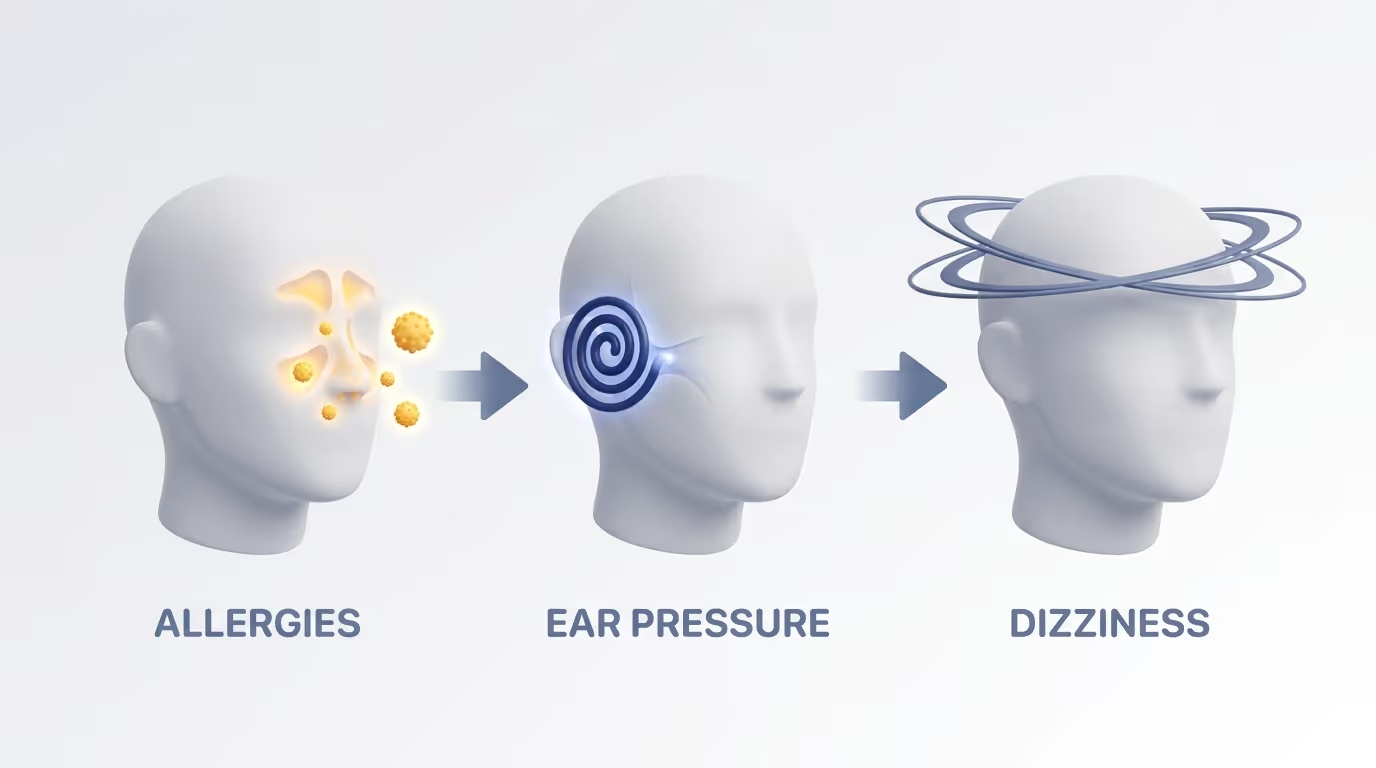
If you’ve ever noticed allergies and dizziness showing up together—especially during peak pollen season—you’re not imagining things. Allergies don’t just affect the nose; they may also involve the sinuses and the ears. Because the inner ear plays a major role in balance, allergy-related inflammation, congestion, and pressure changes can sometimes contribute to feeling unsteady, “foggy,” or even vertigo-like symptoms.
Dizziness has many possible causes (from dehydration to inner-ear conditions to medication effects). This guide focuses on the most common allergy-related pathways that may link allergy flares to balance symptoms—so you can recognize patterns and know when it’s time to get checked.
Sources: https://health.clevelandclinic.org/can-allergies-cause-dizziness, https://www.nationaldizzyandbalancecenter.com/can-allergies-cause-vertigo/

Dizziness vs. Vertigo vs. Lightheadedness (Why the Difference Matters)
The word “dizzy” gets used for several different sensations—and identifying which one you mean can help narrow down what’s going on.
What “dizziness” can feel like
- Off-balance or unsteady (like you’re walking on a boat)
- Lightheaded or floaty (like you might faint)
- “Room spinning” (this is vertigo)
A practical way to think about it: lightheadedness often feels more “whole-body” (energy, hydration, blood sugar), while vertigo tends to feel more “inner-ear,” like your environment is moving when it isn’t.
For a clearer breakdown, see our overview on the difference between dizziness vs. vertigo: https://sleepandsinuscenters.com/blog/what-is-dizziness-and-vertigo-understanding-the-difference
Why allergy dizziness is often “off-balance” (but can be vertigo)
When allergies contribute to congestion and pressure shifts in the ears and sinuses, the balance system may receive “mixed signals.” Many people feel more off-balance than truly spinning—though allergies may contribute to vertigo in some cases, particularly when the ears are involved.
One clinician-style way of describing it: “Patients often tell me it’s not a dramatic spin—it’s more like they’re walking on slightly uneven ground.”
Sources: https://www.nationaldizzyandbalancecenter.com/can-allergies-cause-vertigo/, https://health.clevelandclinic.org/can-allergies-cause-dizziness
Bottom line: Clarifying whether you feel lightheaded, off-balance, or truly spinning helps point to the most likely cause and next steps.

How Allergies May Lead to Dizziness (The Mechanisms)
If you’re asking, can allergies cause dizziness?—these are the most common ways it may happen.
Eustachian tube dysfunction (ETD): the most common ear-related link
The Eustachian tubes connect the middle ear to the back of the nose. Their job is to help equalize pressure and support normal ear function.
During allergy flares:
- Allergies may contribute to nasal inflammation and extra mucus
- Swelling can lead to partial Eustachian tube blockage
- Blockage can cause middle-ear pressure imbalance
- Pressure imbalance may translate to ear fullness, popping, muffled hearing, and sometimes an off-balance sensation
A helpful analogy: it can feel like the pressure changes during a flight or driving in the mountains—except instead of resolving quickly, the “equalizing” gets stuck because the tissues are inflamed.
Clues that point toward dizziness associated with Eustachian tube dysfunction include:
- Ear fullness or pressure
- Popping or crackling
- Muffled hearing
- Symptoms that fluctuate with congestion
For a deeper dive, see our guide to Eustachian tube dysfunction: https://sleepandsinuscenters.com/blog/eustachian-tube-dysfunction-symptoms-causes-effective-treatment-options
Sources: https://health.clevelandclinic.org/can-allergies-cause-dizziness, https://www.nationaldizzyandbalancecenter.com/can-allergies-cause-vertigo/
Allergic rhinitis and heavy congestion
Allergic rhinitis–related dizziness is reported more often when congestion is significant—think seasonal allergies with a blocked nose, persistent drainage, and that “stuffy head” feeling.
Some people notice they’re fine early in the day, but once congestion builds (after yard work, a windy day, or cleaning a dusty room), they start feeling off—not necessarily spinning, just less steady. Congestion can also worsen sleep, which may amplify imbalance or lightheadedness the next day.
Source: https://hackensackmeridianhealth.org/en/healthier-you/2020/06/03/can-allergies-cause-dizziness
Sinus pressure and facial pressure as secondary contributors
For some people, a heavy, foggy, or off-balance feeling shows up during significant sinus congestion. Facial pressure, head fullness, and inflammation may add to that unsteady feeling—especially when combined with poor sleep, mouth breathing, and fatigue.
This often sounds like: “My head feels heavy, my face feels pressured, and when I stand up or turn quickly, I feel a little unsteady.”
Source: https://www.afcurgentcare.com/elizabeth/blog/can-seasonal-allergies-cause-lightheadedness/
Medication side effects (especially older antihistamines)
Sometimes the dizziness isn’t from the allergy itself—it’s from the treatment. Dizziness as a side effect of antihistamines is more likely with first-generation (older, sedating) antihistamines, which can cause drowsiness and dizziness in some people.
If your dizziness started right after a medication change—especially a new nighttime allergy medicine—that timing is worth noting.
Source: https://health.clevelandclinic.org/can-allergies-cause-dizziness
Sleep, hydration, and feeling run down during flares
Poor sleep, fatigue, dehydration, and skipping meals can make lightheadedness more noticeable—especially during allergy flares when you’re already not feeling your best. In real life, it’s often a stack of small factors: congestion + poor sleep + less water + less food = dizziness that feels bigger than any one trigger alone.
Sources: https://www.afcurgentcare.com/elizabeth/blog/can-seasonal-allergies-cause-lightheadedness/, https://hackensackmeridianhealth.org/en/healthier-you/2020/06/03/can-allergies-cause-dizziness
Bottom line: Allergies may set the stage—through congestion and ear pressure changes—while sleep, hydration, and medication effects can amplify dizziness.
Symptoms — What Allergy-Related Dizziness May Look Like
Common dizziness patterns
Allergy-linked imbalance often:
- Gets worse on high pollen days or after specific exposures (pets, dust, mold)
- Appears alongside congestion or ear pressure
- Improves as allergy symptoms improve
This pattern—symptoms rising and falling together with allergies—can be an important clue.
Ear and nose symptoms that strengthen the allergy connection
You’re more likely to suspect an allergy/ENT connection if dizziness comes with:
- Nasal congestion, runny nose, sneezing
- Post-nasal drip or throat clearing
- Ear pressure/fullness, popping, muffled hearing (possible dizziness associated with Eustachian tube dysfunction)
- Sinus/facial pressure, headache
Symptoms that suggest you should consider other causes
Some symptoms may point away from allergies and toward other conditions that deserve timely evaluation:
- Spinning vertigo triggered by head position (possible BPPV)
- One-sided hearing loss or severe ringing
- Fainting, chest pain, shortness of breath
- Weakness, numbness, facial droop, slurred speech
Sources: https://health.clevelandclinic.org/can-allergies-cause-dizziness, https://www.nationaldizzyandbalancecenter.com/can-allergies-cause-vertigo/
Bottom line: Dizziness that tracks with allergy flares—especially with ear fullness or congestion—raises suspicion for an ENT/allergy link, but red-flag symptoms need urgent evaluation.

Common Causes & Triggers (What Sets It Off)
Seasonal allergies (tree/grass/weed pollen)
Seasonal pollen may lead to strong nasal swelling and congestion—two factors that can set the stage for ear pressure issues and balance symptoms.
Indoor allergies (dust mites, pet dander, mold)
Indoor allergens can contribute to chronic or recurring symptoms, especially if exposure is frequent (home, workplace, or both). If you feel worse in one specific environment (like your bedroom or office), that’s a useful clue to bring up.
Irritants that mimic/worsen allergies
Even when it’s not a true allergy, irritants can worsen inflammation and congestion, such as:
- Smoke
- Strong scents/fragrances
- Air pollution
- Rapid weather changes
Medication-related contributors
Dizziness can also be influenced by medication effects, such as:
- Sedating antihistamines (more likely to cause drowsiness/dizziness)
- Decongestants (may cause jitteriness, increased heart rate, or higher blood pressure in some people)
If dizziness is new or worsening after starting an over-the-counter product, it’s reasonable to discuss options with a clinician.
Source: https://health.clevelandclinic.org/can-allergies-cause-dizziness
Bottom line: Triggers often include pollen or indoor allergens, irritants, and certain medications—track what makes you worse.
When to Seek Medical Care (Red Flags)
Seek urgent/emergency care if dizziness comes with:
- Weakness/numbness, slurred speech, facial droop
- Severe headache (“worst ever”)
- Chest pain, shortness of breath, fainting
- Sudden hearing loss
Make an appointment soon if:
- Dizziness lasts more than 1–2 weeks along with allergy/ear symptoms
- You have recurrent vertigo episodes
- Ear fullness/pressure won’t equalize
Sources: https://health.clevelandclinic.org/can-allergies-cause-dizziness, https://www.nationaldizzyandbalancecenter.com/can-allergies-cause-vertigo/
Bottom line: Don’t wait on red flags—otherwise, schedule a visit if dizziness persists or keeps returning with allergy symptoms.
Diagnosis — How Clinicians Connect Dizziness to Allergies
History questions you may be asked
Common topics include:
- Timing with pollen seasons or exposures (pets, dust, mold)
- Ear symptoms (fullness, popping), sinus pressure
- A full medication list (OTC + prescriptions), especially if dizziness started after a change
Physical exam focus (ENT + balance-related)
A typical exam may look for:
- Nasal swelling, drainage, signs of rhinitis
- Ear findings that suggest pressure or fluid concerns
Testing that may be recommended
Depending on symptoms, clinicians may recommend:
- An allergy evaluation when triggers aren’t clear
- Hearing tests if ear symptoms are significant
- Balance/vestibular testing for persistent vertigo
If identifying triggers is the missing piece, we offer allergy testing to help guide a personalized plan: https://sleepandsinuscenters.com/allergy-testing
Sources: https://health.clevelandclinic.org/can-allergies-cause-dizziness, https://www.nationaldizzyandbalancecenter.com/can-allergies-cause-vertigo/
Bottom line: A careful history, ENT exam, and targeted testing help clarify whether allergies are the main driver or part of a bigger picture.
Treatment Options (Step-by-Step, Patient-Friendly)
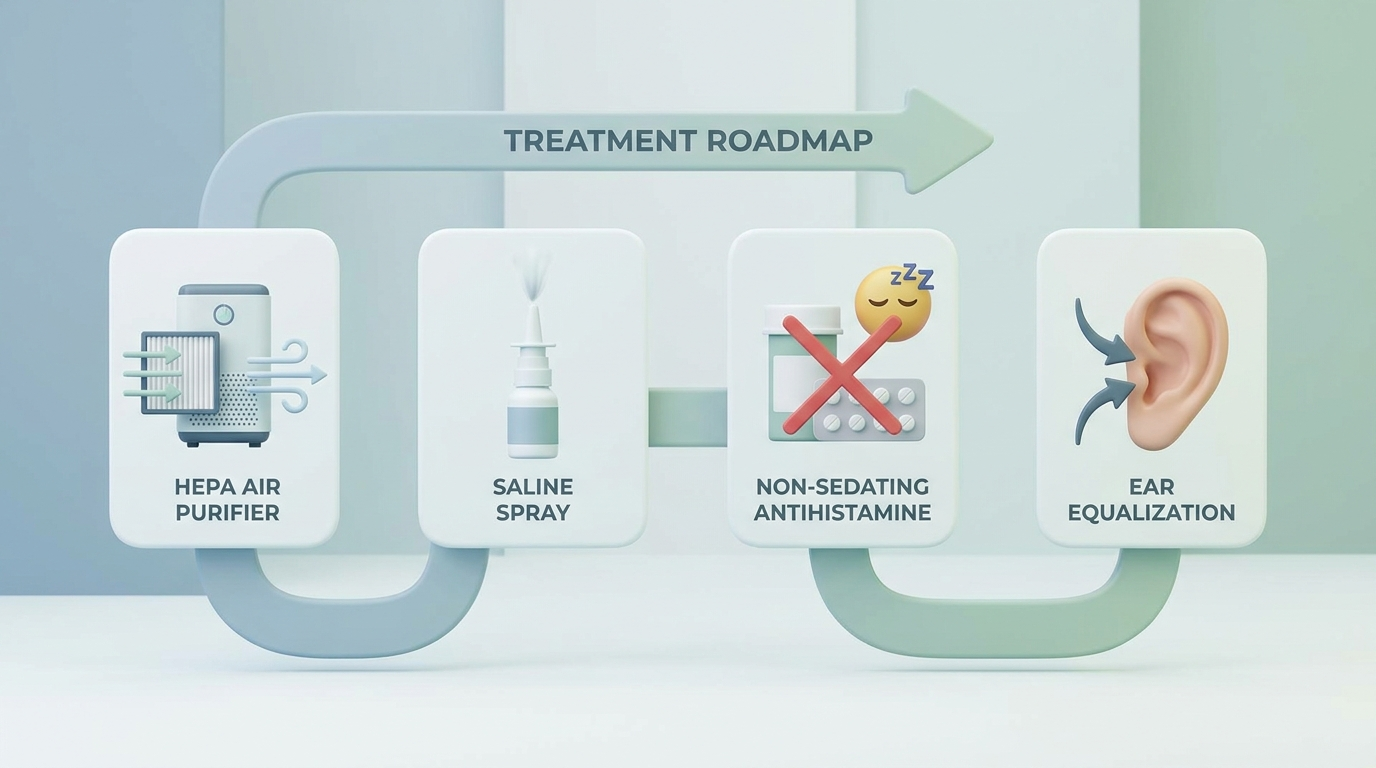
Educationally, treatment usually focuses on reducing inflammation and improving airflow/pressure balance—especially when allergies and dizziness appear linked.
Step 1 — Reduce allergen exposure (prevention-first)
Helpful strategies include:
- Track local pollen and limit open windows on high days
- Shower/change clothes after outdoor time
- Use HEPA filtration and dust mite covers
- Keep indoor humidity controlled to reduce mold and dust mite growth
Step 2 — Treat nasal inflammation to help ear pressure normalize
Reducing nasal swelling can support better Eustachian tube function. Options may include:
- Saline rinses or sprays to help clear mucus (good technique matters)
- Intranasal steroid sprays used consistently during allergy season when recommended
Consistency is key—many people use sprays only on “bad days,” but congestion/pressure often improves more when inflammation is controlled steadily.
Sources: https://health.clevelandclinic.org/can-allergies-cause-dizziness, https://hackensackmeridianhealth.org/en/healthier-you/2020/06/03/can-allergies-cause-dizziness
Step 3 — Choose allergy meds that are less likely to cause dizziness
If you suspect antihistamine-related dizziness, it may help to:
- Consider non-sedating options (clinician-guided)
- Avoid older sedating antihistamines if they consistently trigger dizziness or heavy drowsiness
Source: https://health.clevelandclinic.org/can-allergies-cause-dizziness
Step 4 — Address Eustachian tube dysfunction (ETD)
When dizziness is tied to ear pressure, the main goal is improving ventilation by controlling nasal swelling and congestion. Persistent symptoms may warrant an ENT evaluation to discuss additional options.
Sources: https://www.nationaldizzyandbalancecenter.com/can-allergies-cause-vertigo/, https://health.clevelandclinic.org/can-allergies-cause-dizziness
Step 5 — Vestibular rehab / physical therapy (when appropriate)
If imbalance persists—especially after repeated episodes—vestibular rehabilitation can sometimes help people regain stability and confidence with movement.
Source: https://twinboro.com/allergies-dizziness-how-physical-therapy-can-help-nj.html
Step 6 — Longer-term solutions for frequent allergy flares
If symptoms are frequent or trigger-driven, longer-term planning may include:
- Clarifying triggers through testing
- Discussing immunotherapy options when appropriate
Bottom line: Reduce exposure, calm nasal inflammation, choose meds thoughtfully, and address ETD—then consider vestibular rehab and long-term allergy plans if symptoms persist.

At-Home Lifestyle Tips for Managing Dizziness During Allergy Season
Quick safety checklist
- Sit or lie down when symptoms hit
- Avoid driving until you feel steady
- Use handrails on stairs and move slowly when changing positions
Support hydration and steady blood sugar
Lightheadedness can feel worse when you’re dehydrated or under-fueled. Regular water intake and consistent meals/snacks can be supportive.
Sleep and congestion positioning
Slight head elevation may reduce nighttime congestion for some people, which can help you feel more clear-headed in the morning.
Track patterns to bring to your appointment
A simple diary can help connect dots:
- Exposure (pollen, pets, cleaning, damp areas)
- Meds taken and timing
- Weather/pollen count
- Ear symptoms (fullness, popping)
Sources: https://www.afcurgentcare.com/elizabeth/blog/can-seasonal-allergies-cause-lightheadedness/, https://health.clevelandclinic.org/can-allergies-cause-dizziness
Bottom line: Prioritize safety, hydration, sleep, and tracking—small habits can reduce symptoms and clarify triggers.
FAQs
Can allergies cause vertigo or just lightheadedness?
Both are possible. Lightheadedness or an off-balance feeling is common with congestion and fatigue. Vertigo may be more likely when the ears are affected—especially with pressure imbalance or Eustachian tube dysfunction.
Sources: https://www.nationaldizzyandbalancecenter.com/can-allergies-cause-vertigo/, https://health.clevelandclinic.org/can-allergies-cause-dizziness
Why do my ears feel full when my allergies flare?
Allergy-related swelling and mucus can affect the Eustachian tubes, contributing to pressure changes and a sensation of fullness or popping.
Source: https://health.clevelandclinic.org/can-allergies-cause-dizziness
Can Benadryl (or other older antihistamines) make me dizzy?
Yes. First-generation antihistamines can cause drowsiness and dizziness in some people.
Source: https://health.clevelandclinic.org/can-allergies-cause-dizziness
How long does allergy-related dizziness last?
It often improves as congestion and inflammation improve. If symptoms persist or keep returning, an evaluation can help clarify whether allergies are the main driver or if something else is contributing.
Sources: https://hackensackmeridianhealth.org/en/healthier-you/2020/06/03/can-allergies-cause-dizziness, https://health.clevelandclinic.org/can-allergies-cause-dizziness
When should I see an ENT vs. an allergist?
In general:
- ENT: ear pressure, suspected ETD, recurrent sinus/ear issues, persistent dizziness
- Allergist: unclear triggers, frequent or ongoing allergic rhinitis, considering immunotherapy
Conclusion — The Takeaway and Next Steps
Allergies and dizziness may be connected—most commonly through nasal inflammation leading to Eustachian tube dysfunction and ear pressure changes, plus contributions from congestion, sleep disruption, and occasional medication side effects. The most helpful next step is often identifying patterns and triggers, then building a plan to steadily control inflammation and congestion.
If you’d like help pinpointing triggers and getting a personalized plan, consider booking an appointment with Sleep and Sinus Centers of Georgia: https://www.sleepandsinuscenters.com/, including allergy testing when appropriate: https://sleepandsinuscenters.com/allergy-testing
Bottom line: Track your patterns, calm inflammation, and get evaluated if symptoms persist or red flags appear—personalized care can make a big difference.
References
- https://health.clevelandclinic.org/can-allergies-cause-dizziness
- https://www.nationaldizzyandbalancecenter.com/can-allergies-cause-vertigo/
- https://hackensackmeridianhealth.org/en/healthier-you/2020/06/03/can-allergies-cause-dizziness
- https://www.afcurgentcare.com/elizabeth/blog/can-seasonal-allergies-cause-lightheadedness/
- https://twinboro.com/allergies-dizziness-how-physical-therapy-can-help-nj.html
Medical Disclaimer
This article is for general education and is not a substitute for personalized medical advice, diagnosis, or treatment. Seek urgent care for severe or sudden symptoms, or if you’re concerned you may be experiencing an emergency.
This article is for educational purposes only and is not medical advice. Please consult a qualified healthcare provider for diagnosis and treatment.
Don’t let allergies slow you down. Schedule a comprehensive ENT and allergy evaluation at Sleep and Sinus Centers of Georgia. We’re here to find your triggers and guide you toward lasting relief.