Why Does My Throat Hurt on One Side? ENT Causes and Treatments Explained
If your throat hurts on one side, it’s natural to wonder whether it’s “just a sore throat” or something more. The good news: many cases come from minor irritation (dry air, postnasal drip, voice strain) or a routine infection. Still, unilateral (one-sided) throat pain can be a clue that something is localized—for example, inflammation around one tonsil, a nearby lymph node reaction, or irritation from a local source. Positional factors may contribute to how irritation feels, although one-sided throat pain often has a more specific local cause.
For a broader overview, you can also read our related guide on sore throat on one side causes and treatments: https://sleepandsinuscenters.com/blog/sore-throat-on-one-side-causes-common-reasons-and-treatments
Quick answer: Is one-sided throat pain serious?
Often, a sore throat on one side is not serious and improves as the underlying irritation or infection clears. But one-sided symptoms are sometimes a clue that the problem is more concentrated in one area (for example, around one tonsil, one salivary/soft tissue region, or one side of the jaw).
Symptoms such as severe one-sided pain, swelling, muffled voice, trouble swallowing, fever, or drooling are warning signs that often warrant same-day medical evaluation, because they can be associated with urgent conditions. (Overview: Healthline)
If you’re unsure whether symptoms should be evaluated by an ENT or a same-day clinic, our guide may help: https://sleepandsinuscenters.com/blog/when-should-i-see-an-ent
Takeaway: Most one-sided sore throats are mild, but severe or rapidly worsening symptoms should be evaluated promptly.
Common symptoms that come with a sore throat on one side
Pain pattern clues (helps narrow the cause)
- Sharp vs. burning vs. scratchy: scratchy irritation often suggests dryness or postnasal drip; sharper pain may point to inflammation, a small ulcer, or a localized infection.
- Constant vs. episodic “electric shock” pain: brief, intense stabbing episodes can suggest a nerve pain condition (discussed below).
- Worse with swallowing/yawning/turning your head: can occur with infections, ulcers, jaw/TMJ strain, or structural causes.
A practical example: if you can “map” the pain to one tiny point every time you swallow, clinicians often look closely for a small sore/ulcer or a localized tonsil pillar irritation.
Symptoms that suggest an ENT infection
- Fever
- Pus/exudate on one tonsil
- Bad breath
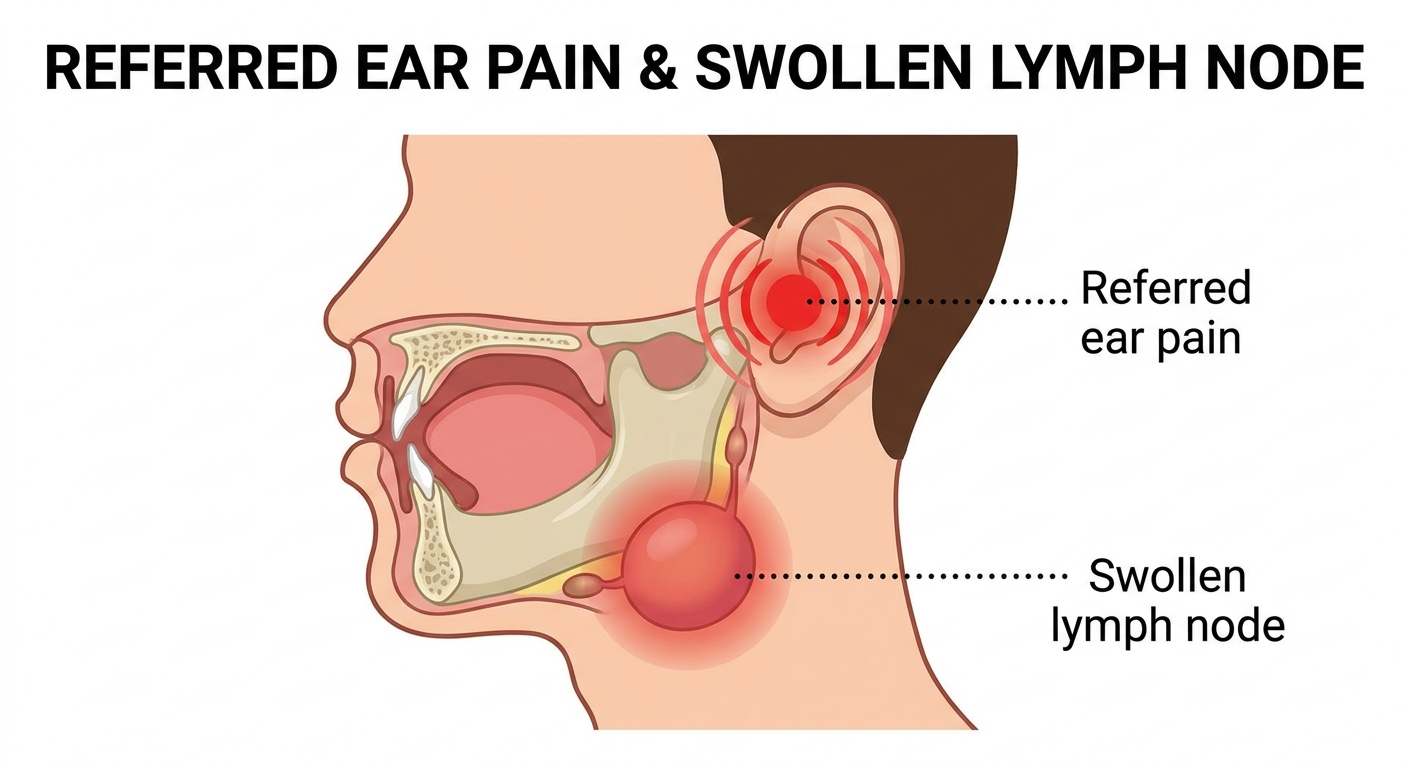
- Swollen/tender lymph node(s) on the same side
- Ear pain on the same side (often referred pain rather than an ear infection)
Many patients are surprised by the ear pain piece. It’s common to feel ear pain even when the ear exam is normal because throat and ear sensation share nerve pathways.
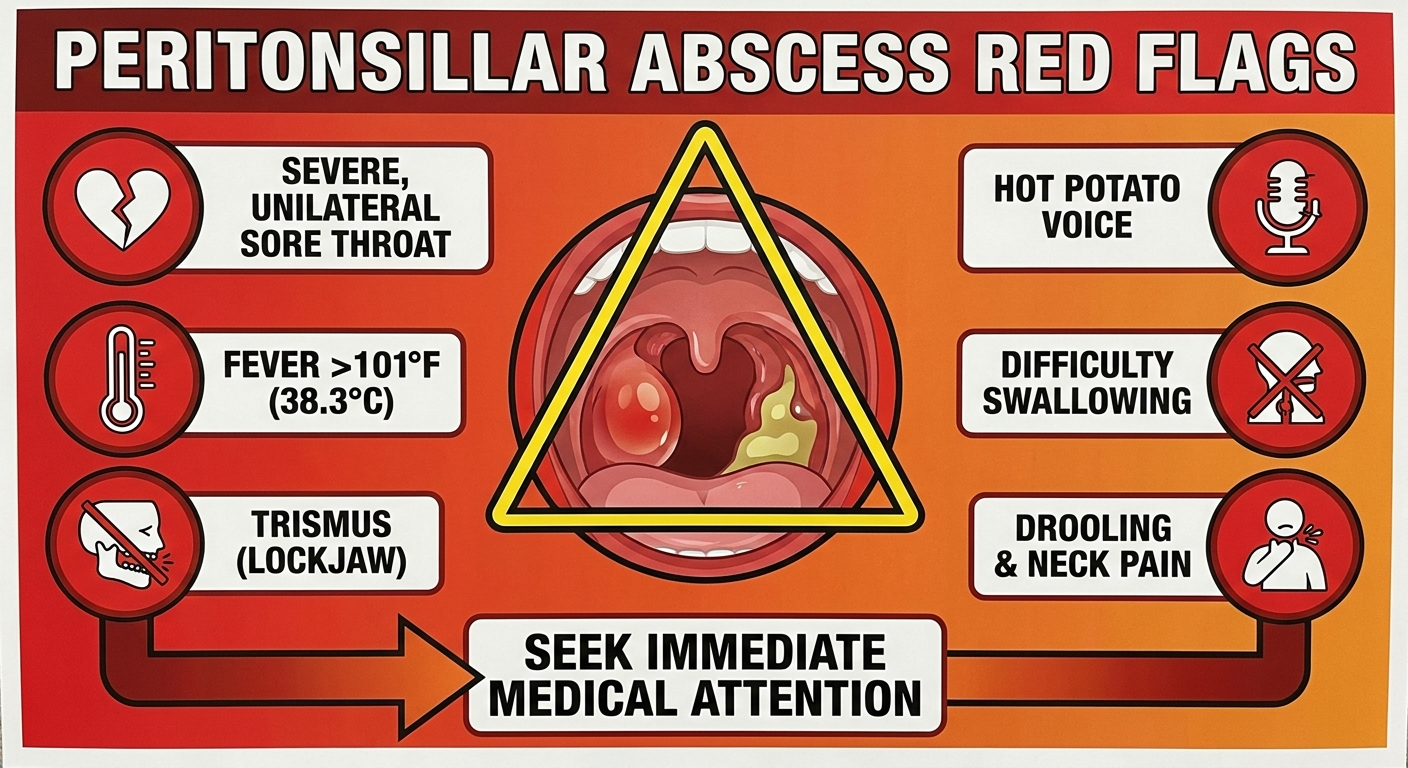
Symptoms that suggest a medical emergency (don’t “wait it out”)
Some symptom clusters are associated with potentially urgent ENT infections, including peritonsillar abscess:
- Trismus (difficulty opening the mouth)
- Muffled “hot potato” voice
- Drooling or inability to swallow liquids
- Breathing difficulty
- Rapidly worsening neck or throat swelling
These are classic “red flag” features described in peritonsillar abscess resources. (Reference: Cleveland Clinic – Peritonsillar Abscess)
Takeaway: If your one-sided throat pain comes with red flags like trismus, drooling, or breathing trouble, seek same-day care.
Why your throat hurts on one side: the most likely causes (ENT-focused)
1) Asymmetric tonsillitis / localized throat infection
Tonsillitis doesn’t always affect both sides evenly. One tonsil can become more inflamed, creating one-sided throat pain—sometimes with visible swelling or a “lopsided” look.
Common clues:
- Sore throat (often worse on one side)
- Fever
- Painful swallowing
- Tender neck lymph node(s)
- Tonsil swelling, sometimes with white patches
Strep vs. viral: Strep throat can cause pain that feels worse on one side, even though the infection may involve both sides. Testing helps determine whether antibiotics are appropriate (and helps you avoid antibiotics when they’re unlikely to help).
Takeaway: A quick strep test and exam often clarify whether antibiotics are needed or supportive care is best.
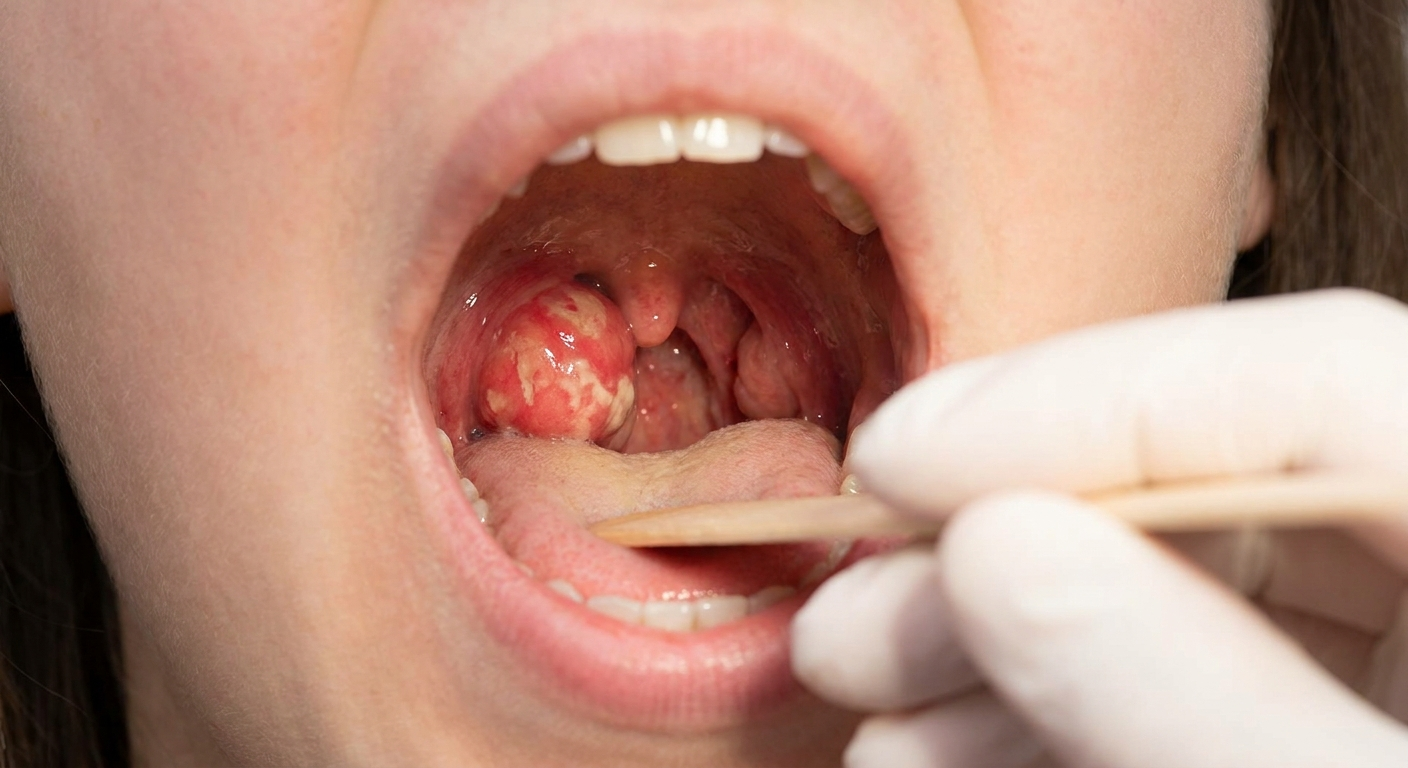
2) Peritonsillar abscess (Quinsy) — common severe unilateral cause
A peritonsillar abscess is a pocket of pus that forms near a tonsil, often as a complication of tonsillitis. It’s one of the more important reasons someone’s throat hurts on one side with severe symptoms.
Hallmark symptoms can include:
- Severe one-sided throat pain
- Trismus
- Muffled voice
- Drooling or significant difficulty swallowing
- Visible swelling near one tonsil (sometimes with uvula deviation)
Because abscesses can worsen and spread, they’re generally considered urgent. (Reference: Cleveland Clinic – Peritonsillar Abscess)
Takeaway: Severe, one-sided pain with trismus or drooling needs same-day medical evaluation.
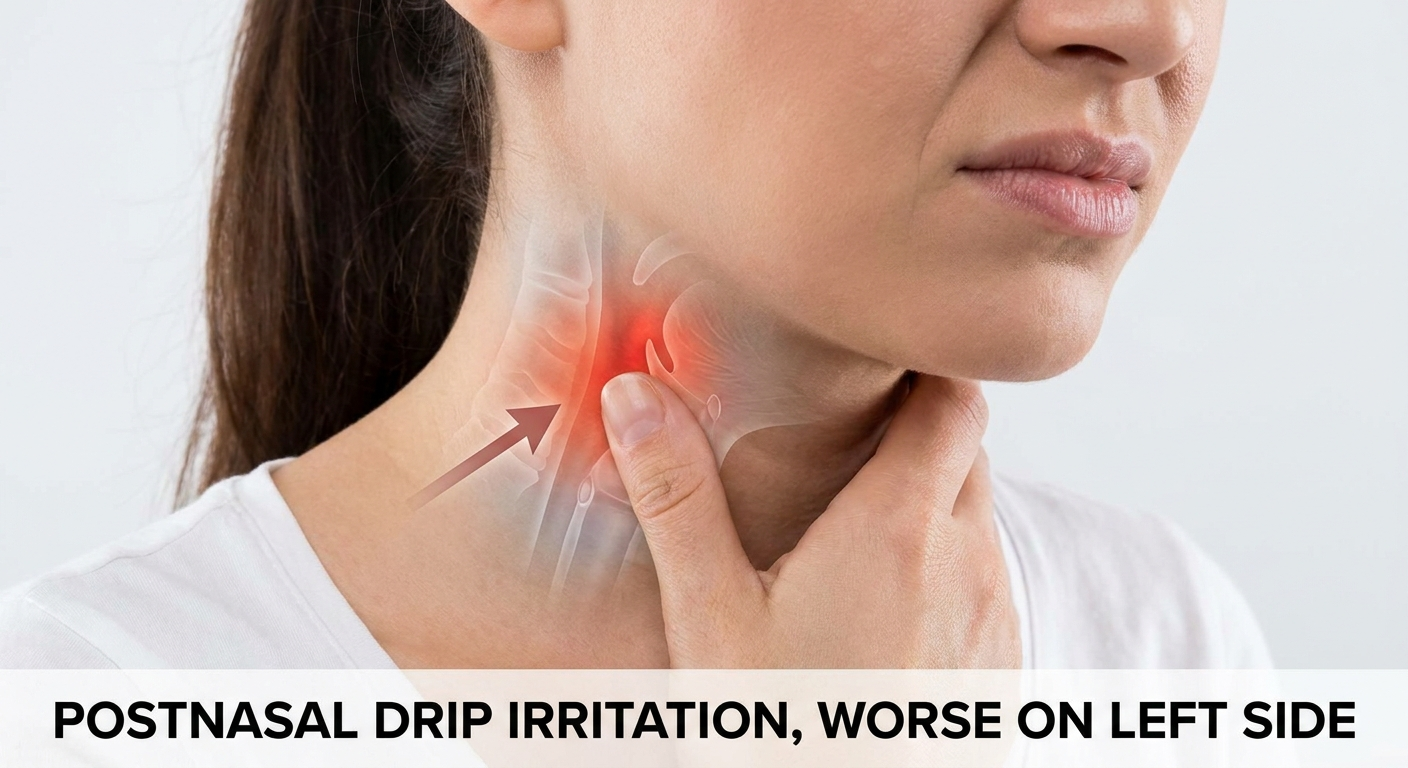
3) Postnasal drip irritation (sometimes feels worse on one side)
Postnasal drip occurs when mucus drains from the nose/sinuses down the throat. If mucus drainage or irritation feels more noticeable on one side, that side of the throat may seem more inflamed. People often notice it most first thing in the morning, when mucus has had hours to sit against the throat lining.
Clues:
- Frequent throat clearing
- Cough
- Worse in the morning
- Sensation of mucus in the back of the throat
Overview: Healthline. For recurring symptoms, this guide may help: https://sleepandsinuscenters.com/blog/chronic-post-nasal-drip-ent-treatments-that-work
Takeaway: Managing allergies, reflux, and nasal inflammation can reduce one-sided irritation from postnasal drip.
4) Swollen lymph node on one side (reactive lymphadenopathy)
Sometimes the “throat pain” is partly discomfort from a reactive lymph node in the neck—especially if swallowing or turning the head makes the area feel sore or “bruised.”
Common nearby triggers:
- Tonsillitis/pharyngitis
- Dental infection
- Skin infection or irritation in the scalp/neck area
If you’re noticing a persistent or enlarging node, this article explains common causes and when evaluation is considered: https://sleepandsinuscenters.com/blog/ent-help-for-swollen-lymph-nodes-in-the-neck
Takeaway: A tender, single lymph node often reflects a nearby infection and usually improves as the source clears.
5) Canker sore or localized mouth/throat ulcer
Small ulcers can form in easy-to-miss places—like the tonsil pillar or soft palate. When positioned “just right,” they can cause intense, pinpoint pain that feels deeper than you’d expect.
Clues:
- A very specific spot of pain
- Worse with acidic/spicy foods
- Sometimes visible with a light and mirror (not always)
Takeaway: One tiny ulcer can cause surprisingly sharp, one-sided pain—especially with swallowing or spicy foods.
Not always “the throat”: non-ENT sources of one-sided throat pain
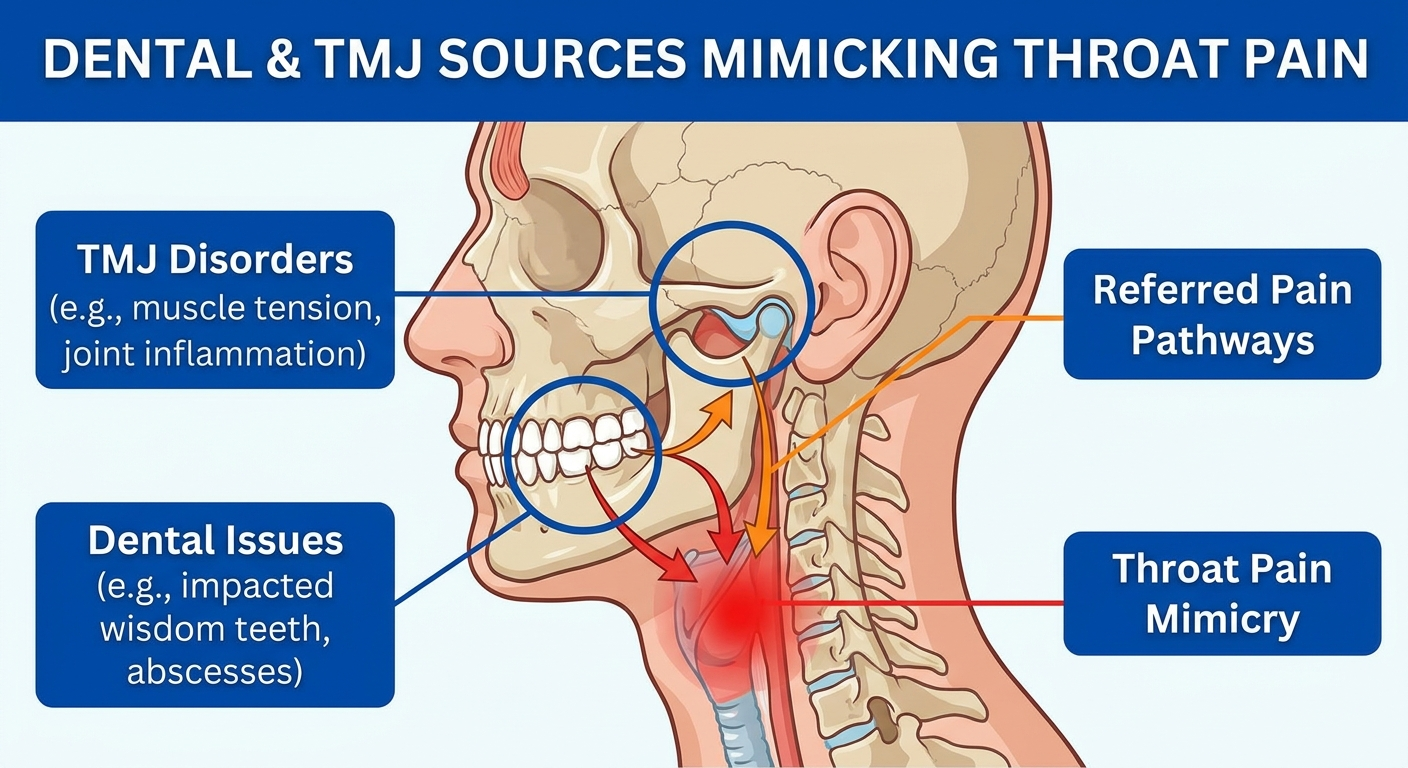
Dental abscess or tooth infection (referred pain)
Tooth and gum infections can refer pain to the throat, jaw, or ear. Sometimes the primary issue is dental even when the main complaint feels like a sore throat on one side.
Clues:
- Tooth sensitivity
- Gum swelling
- Bad taste
- Pain with chewing
TMJ or jaw muscle strain
Jaw clenching, grinding, or temporomandibular joint (TMJ) irritation can create pain that radiates to the ear and throat region—especially if one side of the jaw is doing more of the work.
Clues:
- Jaw clicking/popping
- Soreness near the ear
- Worse in the morning
Medication/irritant exposure and dryness
Dry air, vaping/smoking, alcohol-containing mouthwash, or heavy voice use can inflame the throat lining—sometimes more on one side depending on airflow, posture, or local irritation.
Takeaway: Dental, jaw, and irritation factors can mimic a “throat” problem and often improve once the true source is treated.
Less common—but important—ENT diagnoses to know
Glossopharyngeal neuralgia (GPN) — rare nerve pain
GPN is a rare condition that causes sudden, severe, brief stabbing pain in areas like the throat, tonsil region, tongue, or ear.
What makes it different:
- Pain comes in episodes (seconds to minutes)
- Often described as “electric shock” pain
- Triggers can include swallowing, talking, or coughing
(Reference: Cleveland Clinic – Glossopharyngeal Neuralgia)
Takeaway: Brief, shock-like, triggerable pain points clinicians toward a nerve-related cause like GPN.
Eagle Syndrome — structural cause (elongated styloid process)
Eagle Syndrome involves an elongated styloid process, a bony projection near the base of the skull, or a calcified ligament that can irritate nearby tissues.
Possible clues:
- Unilateral throat/neck/ear pain
- Sensation of “something stuck”
- Pain triggered by swallowing, yawning, or turning the head
Diagnosis often involves an exam plus imaging (commonly CT). (Reference: Cleveland Clinic – Eagle Syndrome)
Takeaway: Structural issues are uncommon but can explain persistent, side-specific pain with certain head or neck movements.
When to seek ENT evaluation for persistent symptoms
Most one-sided sore throats are not serious. Still, persistent unilateral symptoms sometimes warrant an ENT evaluation—especially if they last beyond a couple of weeks or occur with other concerning signs. Examples often cited for evaluation include: persistent hoarseness, a neck mass, unexplained weight loss, coughing up blood, or symptoms that don’t improve over 2–3 weeks. (Background: PubMed Central)
Takeaway: If one-sided symptoms don’t improve after 2–3 weeks—or come with other warning signs—an ENT exam is reasonable.
How an ENT figures out the cause (what to expect at your visit)
History questions that matter
An ENT visit usually starts with details like:
- When symptoms started and whether they’re worsening
- Fever, sick contacts, and recent infections
- Voice changes, swallowing difficulty, hydration
- Dental symptoms or jaw pain
- Whether the pain is truly one-sided and whether there’s trismus or ear pain
If it helps, bring a short “timeline” (Day 1 scratchy, Day 3 fever, Day 4 ear pain) so nothing gets missed.
Physical exam
Common elements include:
- Throat and tonsil exam
- Neck exam for lymph nodes
- Ear and nasal exam (because referred pain and postnasal drip are common)
Tests you might need (based on symptoms)
Depending on findings, testing may include:
- Rapid strep test and/or throat culture
- Mononucleosis testing (often considered with fatigue + swollen nodes)
- Flexible laryngoscopy for persistent symptoms or voice changes
- CT imaging if an abscess is suspected, or if structural causes are considered
(Abscess reference: Cleveland Clinic)
Takeaway: A focused history, exam, and selective testing usually pinpoint the cause and guide treatment.
Treatments (by cause)
Home care for mild one-sided throat pain (when no red flags)
For minor irritation, supportive options often discussed include hydration, warm salt-water gargles, humidification, and OTC pain relievers used as directed on the label. Avoiding smoke/vape exposure and very spicy/acidic foods may reduce irritation. (Overview: Healthline)
A simple rule of thumb: if you’re steadily improving day by day, home care is often reasonable—provided you don’t have red-flag symptoms.
Takeaway: Gradual daily improvement without red flags supports a home-care approach.
Treatments for tonsillitis / pharyngitis
- Viral causes: typically supportive care.
- Bacterial/strep: antibiotics may be used when testing indicates they’re appropriate; completing a prescribed course is usually emphasized to reduce complications and recurrence.
Takeaway: Testing helps separate viral from bacterial causes so treatment matches the diagnosis.
Peritonsillar abscess treatment (urgent)
Treatment commonly includes drainage (needle aspiration or incision and drainage), plus antibiotics and pain control. In select situations (such as recurrent abscess), tonsillectomy may be discussed. (Reference: Cleveland Clinic – Peritonsillar Abscess)
Takeaway: An abscess needs prompt drainage and antibiotics to prevent complications.
Postnasal drip treatments
Approaches often include saline rinses, allergy management, and evaluation for chronic sinusitis or reflux when symptoms persist. See more: https://sleepandsinuscenters.com/blog/chronic-post-nasal-drip-ent-treatments-that-work
Takeaway: Consistent nasal and allergy care can significantly reduce drip-related throat pain.
Dental abscess treatment (coordinate care)
Because dental infections can spread, evaluation by a dental professional is usually important. Treatment may include drainage procedures, dental repair (such as root canal), and sometimes antibiotics depending on severity and spread.
Takeaway: Treating the dental source resolves the referred throat pain.
Glossopharyngeal neuralgia treatment options
Management is typically guided by ENT/neurology and often starts with medications used for neuropathic pain; imaging may be used to look for structural compression, and procedures are considered in select cases. (Reference: Cleveland Clinic – GPN)
Takeaway: Targeted nerve-pain therapies can markedly reduce GPN flares.
Eagle Syndrome treatment options
Options can include pain management and, for appropriate candidates, surgical styloidectomy. (Reference: Cleveland Clinic – Eagle Syndrome)
Takeaway: When symptoms persist and imaging confirms Eagle Syndrome, surgery may be considered.
Lifestyle tips to prevent future flare-ups
Reduce infection risk
- Hand hygiene
- Avoid sharing drinks/utensils during illness
- Some clinicians advise replacing a toothbrush after strep, although recommendations may vary
Reduce irritation triggers
- Manage allergies and nasal symptoms
- Use a humidifier during dry months
- Stay hydrated
- Practice voice care if you speak or sing frequently
Mouth and dental health
- Regular dental cleanings
- Address tooth/gum pain early to reduce the chance of referred throat pain
Takeaway: Small daily habits—hydration, nasal care, and dental health—lower your risk of future one-sided throat pain.
FAQs
Why does it hurt to swallow on one side?
Pain with swallowing can happen when inflammation is localized—such as a tonsil infection, an ulcer, or postnasal drip irritation. More urgent causes (like peritonsillar abscess) are often associated with severe pain plus features like trismus, muffled voice, or drooling. (Reference: Cleveland Clinic – Quinsy)
Can a sore throat on one side be strep?
Yes. Strep throat can cause pain that feels worse on one side, even though the infection may involve both sides. Testing is the most reliable way to confirm.
When should I see an ENT vs urgent care?
In general, symptoms like breathing difficulty, drooling, severe swelling, muffled voice, or inability to open the mouth well are commonly treated as reasons for same-day evaluation. If symptoms are persistent (often beyond 1–2 weeks), recurring, or suggest less common causes (neuralgia, structural issues), an ENT evaluation may be appropriate. More guidance: https://sleepandsinuscenters.com/blog/when-should-i-see-an-ent
Why do I feel throat pain in my ear on the same side?
This is often referred pain—shared nerve pathways can make throat inflammation feel like ear pain. It’s common with tonsil infections and can also occur with glossopharyngeal neuralgia. (Reference: Cleveland Clinic – GPN)
How long should a one-sided sore throat last?
Mild irritation or viral symptoms often improve within several days. If your throat hurts on one side and symptoms are worsening, severe, or persistent beyond about 1–2 weeks, many clinicians recommend evaluation to confirm the cause.
When to get help (clear call-to-action)
Consider same-day medical evaluation if unilateral throat pain comes with:
- Trouble breathing or noisy breathing
- Drooling or inability to swallow liquids
- Muffled voice
- Inability to open the mouth well (trismus)
- Rapidly worsening swelling, high fever, or significant dehydration
If symptoms are lingering, recurring, or difficult to explain—especially when your throat hurts on one side repeatedly—Sleep and Sinus Centers of Georgia can help evaluate ENT-related causes and discuss next steps. To request an appointment, visit: https://www.sleepandsinuscenters.com/
Takeaway: Prompt care for red flags and persistent symptoms helps prevent complications and speeds recovery.
Citations
- Cleveland Clinic. Peritonsillar Abscess (Quinsy). https://my.clevelandclinic.org/health/diseases/22817-peritonsillar-abscess-quinsy
- Cleveland Clinic. Glossopharyngeal Neuralgia. https://my.clevelandclinic.org/health/diseases/15799-glossopharyngeal-neuralgia-gpn
- Cleveland Clinic. Eagle Syndrome. https://my.clevelandclinic.org/health/diseases/eagle-syndrome
- Healthline. Sore Throat on One Side. https://www.healthline.com/health/sore-throat-on-one-side
- PubMed Central (NIH). Differential considerations for unilateral throat pain (background). https://pmc.ncbi.nlm.nih.gov/articles/PMC4543270/
Medical disclaimer
Medical disclaimer: This article is for general education and is not a substitute for professional medical advice, diagnosis, or treatment. If you have severe symptoms (especially trouble breathing, drooling, or rapidly worsening swelling), seek emergency care immediately.
This article is for educational purposes only and is not medical advice. Please consult a qualified healthcare provider for diagnosis and treatment.
Don’t let allergies slow you down. Schedule a comprehensive ENT and allergy evaluation at Sleep and Sinus Centers of Georgia. We’re here to find your triggers and guide you toward lasting relief.