Signs Your Baby Has Environmental Allergies: Symptoms and What to Do
Babies are famous for sniffles—so it can be hard to tell what’s “normal,” what’s a passing virus, and what might be a reaction to something in the environment. One week it’s a runny nose, the next it’s watery eyes, and suddenly you’re wondering: Is this just daycare germs…or something else?
This guide breaks down common patterns of environmental allergies in babies, how they can look different from a cold, and practical, baby-safe ways to reduce triggers at home—without jumping straight to medications.
Quick take: Can babies really get environmental allergies?
Yes—environmental allergies can occur in babies. That said, true seasonal allergies (like classic spring pollen symptoms) are considered uncommon in infants under 1 year because it often takes time and repeated exposure for the immune system to become sensitized. In that younger age group, a cold or other viral illness is frequently the more likely explanation for congestion and sneezing. (Sources: Children’s Health; ACAAI)
A helpful way to think about it: allergies often behave like a repeatable reaction to a setting (home, daycare, Grandma’s house), while viruses behave more like a time-limited storm that passes on its own.
If you’d like a simple refresher on the basics, you can also read our overview of what allergies are: https://sleepandsinuscenters.com/what-are-allergies
Bottom line: In babies, repeated symptoms tied to the same place are more suggestive of allergy than a single short-lived cold.
What environmental allergies look like in babies (common symptom patterns)
Allergies tend to create repeatable, exposure-related symptoms, especially involving the nose and eyes. Because babies can’t describe itchiness or pressure, parents often notice patterns—what happens where and when—before they notice a signature symptom.
Nose symptoms (often the biggest clue)
Many parents first notice nasal symptoms that don’t quite fit a typical cold, such as:
• Repeated sneezing
• Stuffy or congested nose
• Clear, thin runny nose (watery discharge)
• Baby rubbing the nose upward (sometimes called an allergic salute)
• Sniffles that persist in the same environment (for example, mostly at daycare or mostly at one family member’s home)
A concrete example: if your baby seems fine on errands, but becomes congested and sneezy within an hour of arriving at a carpeted home with a pet, that same place, same symptoms pattern is meaningful.
Note: clear, watery drainage alone does not distinguish allergies from a cold—many viral colds start with clear mucus before it thickens over several days. (Sources: Children’s Health; UVA Children’s)
Eye symptoms (more allergy-leaning than cold)
Eye symptoms can point more strongly toward allergies than a cold—especially when they show up with ongoing sneezing and clear nasal drainage:
• Itchy, watery eyes in a baby: watering, irritation, and frequent rubbing
• Redness around the eyes
• Puffy-looking eyelids (sometimes)
Colds can cause watery eyes too, and babies may rub their eyes from irritants or even tear-duct issues. Itching and frequent rubbing can be more suggestive of allergy when paired with repeatable exposure and no fever. (Sources: Children’s Health; UVA Children’s)
Throat/chest and sleep-related symptoms that can show up
When the nose is congested, mucus can drip down the throat and affect sleep. Some babies may have:
• Postnasal drip
• Cough (often from throat irritation)
• Mouth breathing due to congestion
• Poor sleep, snoring, or restless nights
Because babies can’t tell you what they feel, sleep disruption and feeding difficulty sometimes become the most obvious day-to-day impact of ongoing nasal symptoms. Parents often describe it as: They can breathe, but they can’t stay comfortable long enough to sleep. (Sources: UVA Children’s; ACAAI)
Skin symptoms that may travel with allergies
Some babies who are prone to allergies may also be prone to skin symptoms, including:
• Eczema flare-ups
• General dryness or irritation
Skin symptoms don’t automatically mean environmental allergy, but they can be part of an overall allergy tendency in some children—especially when you’re also seeing recurring nose/eye symptoms. (Source: ACAAI)
Think patterns: recurring nose and eye symptoms without fever—especially in the same setting—are a common allergy footprint in babies.
Allergies vs. colds in infants: a parent-friendly checklist
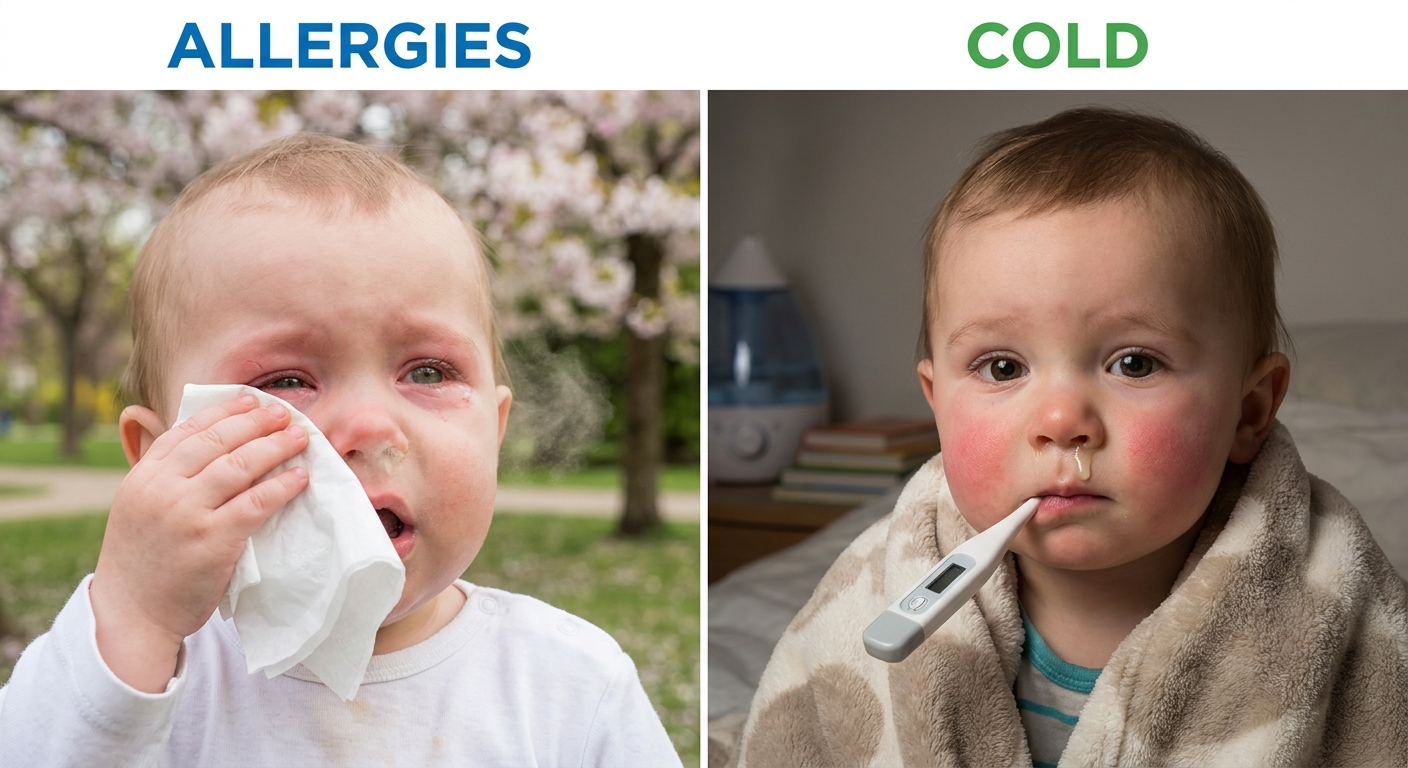
A common search is allergies vs. a cold in a baby—and for good reason. Many symptoms overlap, especially early on, and both can cause a runny nose and disrupted sleep. One practical approach is to ask two questions: (1) Is there fever or sick-all-over behavior? and (2) Do symptoms reliably follow certain exposures?
Signs it may be allergies
These patterns lean more toward allergies:
• Sneezing without fever (allergies typically don’t cause fever)
• Symptoms repeat in the same place (near a pet, at daycare, in a certain room)
• Clear runny nose plus itchy/watery eyes
• Symptoms last as long as exposure continues
(Source: Children’s Health) For a deeper comparison: https://sleepandsinuscenters.com/blog/allergies-vs-colds-in-toddlers-key-differences-and-symptoms-explained
Signs it may be a cold/viral illness
These patterns can fit a viral cold more than allergies:
• Fever and/or a more sick-all-over appearance
• Mucus that may thicken over time (viral symptoms often evolve over several days)
• Symptoms that often improve over about 7–10 days, though some viral illnesses last longer or stack back-to-back in daycare settings
(Source: Children’s Health) A typical cold story: day 1–2 sneezing and mild runny nose, day 3–5 thicker congestion and crankiness, then gradual improvement.
When it’s not simple (overlap is common)
It’s also possible for babies to catch a cold and be sensitive to irritants/allergens at the same time. Timing and exposures (where you were, what changed at home, whether symptoms improve away from a location) can help guide next steps and what to discuss with your pediatrician.
Viruses come and go; allergens tend to hang around—follow the pattern to guide next steps.
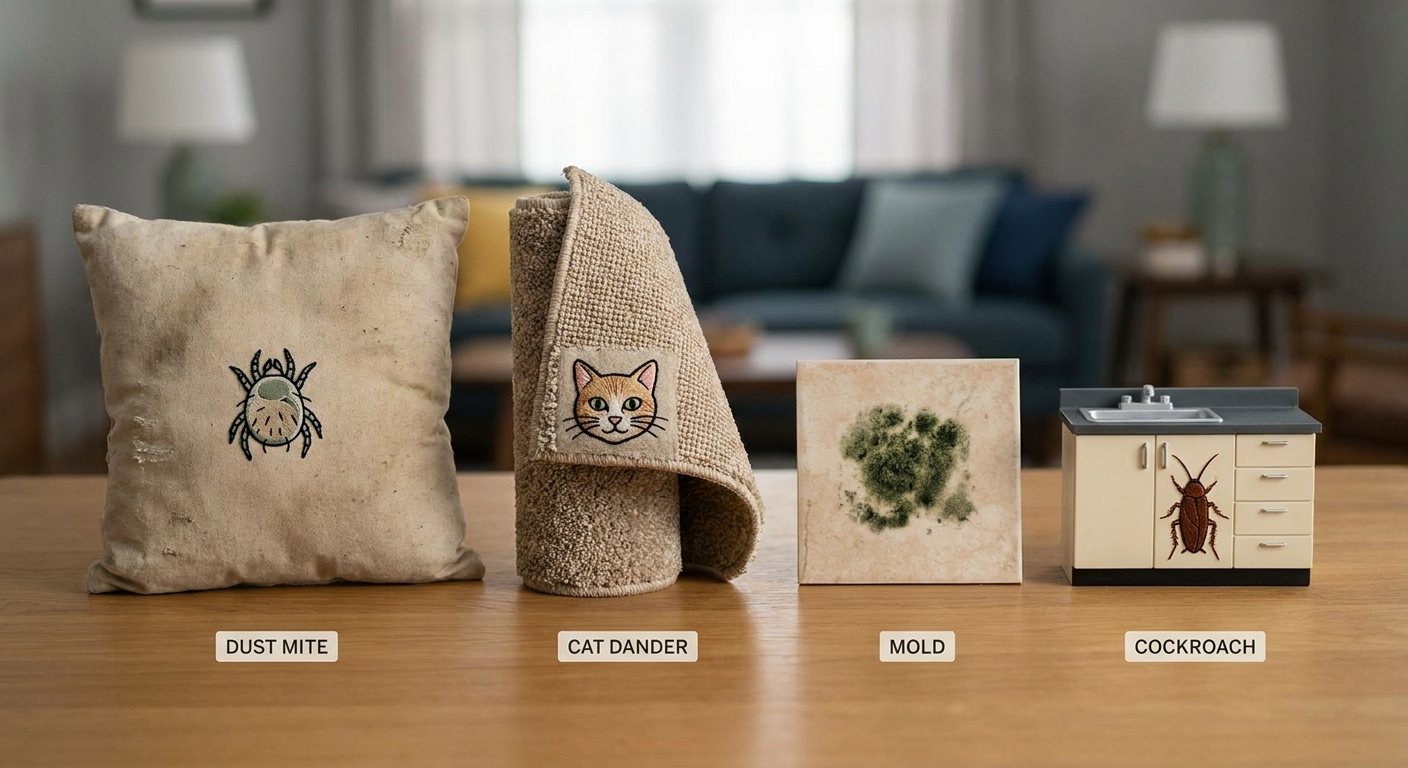
Common environmental allergy triggers (and where babies encounter them)
Indoor triggers (can cause symptoms year-round)
Indoor triggers are often the biggest drivers because infants spend so much time inside—sleeping, playing on floors, or being held on upholstered furniture.
• Dust mites (bedding, carpets, upholstered furniture)
Dust mite allergy symptoms in a baby often show up as chronic nasal congestion, sneezing, and watery runny nose—especially around sleep. (Sources: Mayo Clinic; AAAAI)
• Pet dander (cats/dogs; also carried on visitors’ clothing)
Pet dander allergy symptoms in a baby may look worse after close contact, in carpeted rooms, or in homes with pets. (Source: AAAAI)
• Mold (bathrooms, damp basements, under sinks, around window condensation, or in humidifiers if not cleaned)
Mold allergy symptoms in a baby can include congestion, sneezing, watery eyes, and cough in damp spaces. (Sources: AAAAI; UVA Children’s)
• Cockroach allergens (more common in some housing environments) (Source: AAAAI)
Outdoor triggers (more seasonal—but less common under age 1)
Outdoor pollen (trees/grass/weeds) is a common trigger in older kids, but classic seasonal patterns are less common in infants under 1. (Sources: ACAAI; Children’s Health) If your baby’s symptoms seem worse outdoors, remember that outdoor air can also carry irritants (like smoke or strong scents). Your pediatrician can help you sort out what’s most likely in your child’s case.
For babies, indoor triggers usually matter more than seasonal pollen—watch where symptoms start and stop.
What to do at home (safe, practical steps first)
When allergy-like symptoms keep recurring, home steps often start with pattern tracking and basic trigger reduction. Think of this as a low-risk experiment: make a small change, watch for a meaningful difference.

Step 1 — Track patterns for 7–14 days
Consider keeping a simple note on your phone with:
• Where baby spent time (home, daycare, relatives)
• Pet exposure (including visitors with pets at home)
• Musty smells, visible dampness, or recent leaks
• Cleaning days, vacuuming, dusting, filter changes
• Open windows vs. closed windows
• Time of year and weather changes
Even a short log can help you spot what lines up with symptoms—especially with environmental allergies in babies, where the pattern is often the clue.
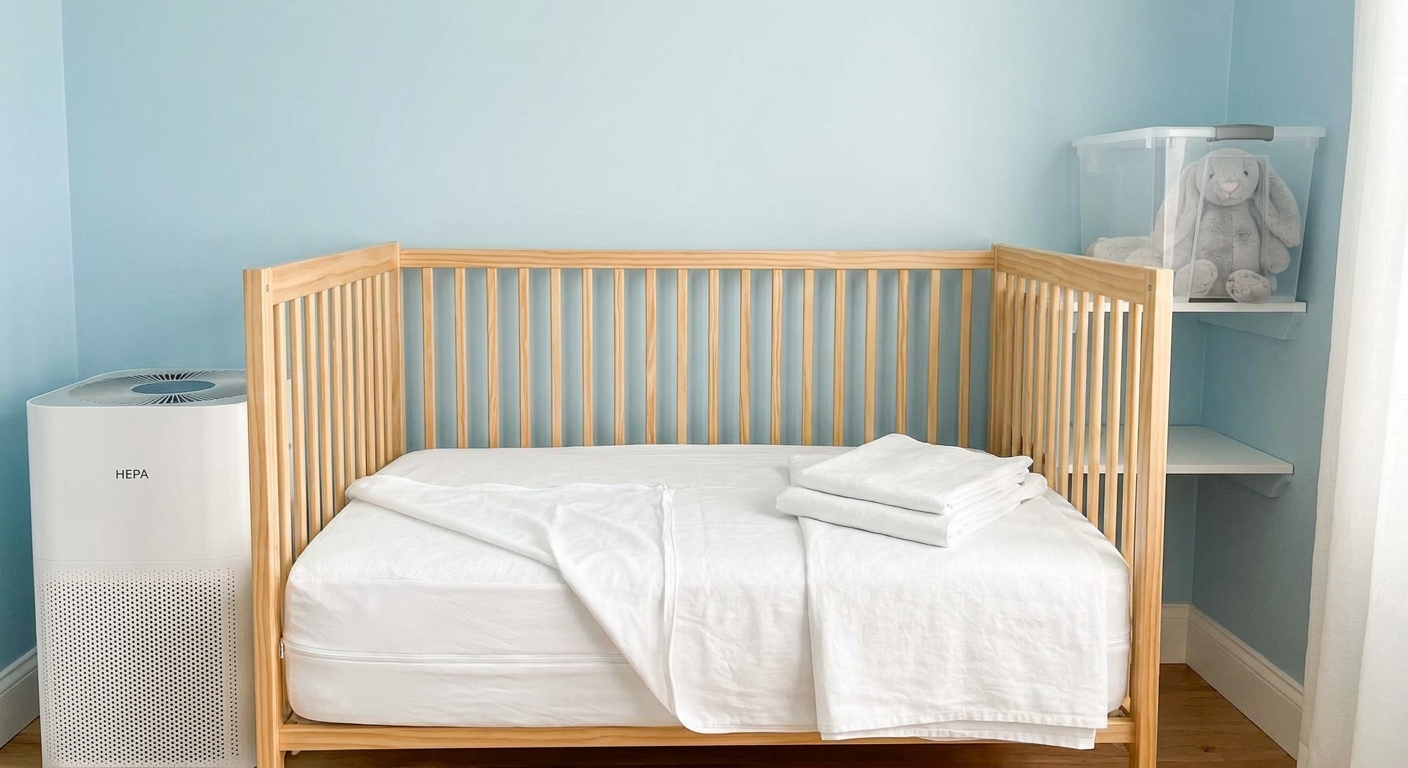
Step 2 — Reduce exposure (room-by-room tips)
Bedroom / sleep space
• Wash bedding regularly (hot water if the fabric allows)
• Reduce extra soft items where dust collects (stuffed animals, throw blankets) and wash them routinely
• If age-appropriate bedding is used, consider allergen-barrier covers for the crib mattress and pillows used by older children
• Always follow infant safe-sleep guidance: a firm, flat sleep surface with a fitted sheet and no loose items in the crib for young infants
Guide to dust-mite covers: https://sleepandsinuscenters.com/blog/dust-mite-covers-explained-ultimate-guide-to-allergy-protection (Sources: Mayo Clinic; AAAAI)
Air and surfaces
• Vacuum using HEPA filtration when possible; damp-dust hard surfaces
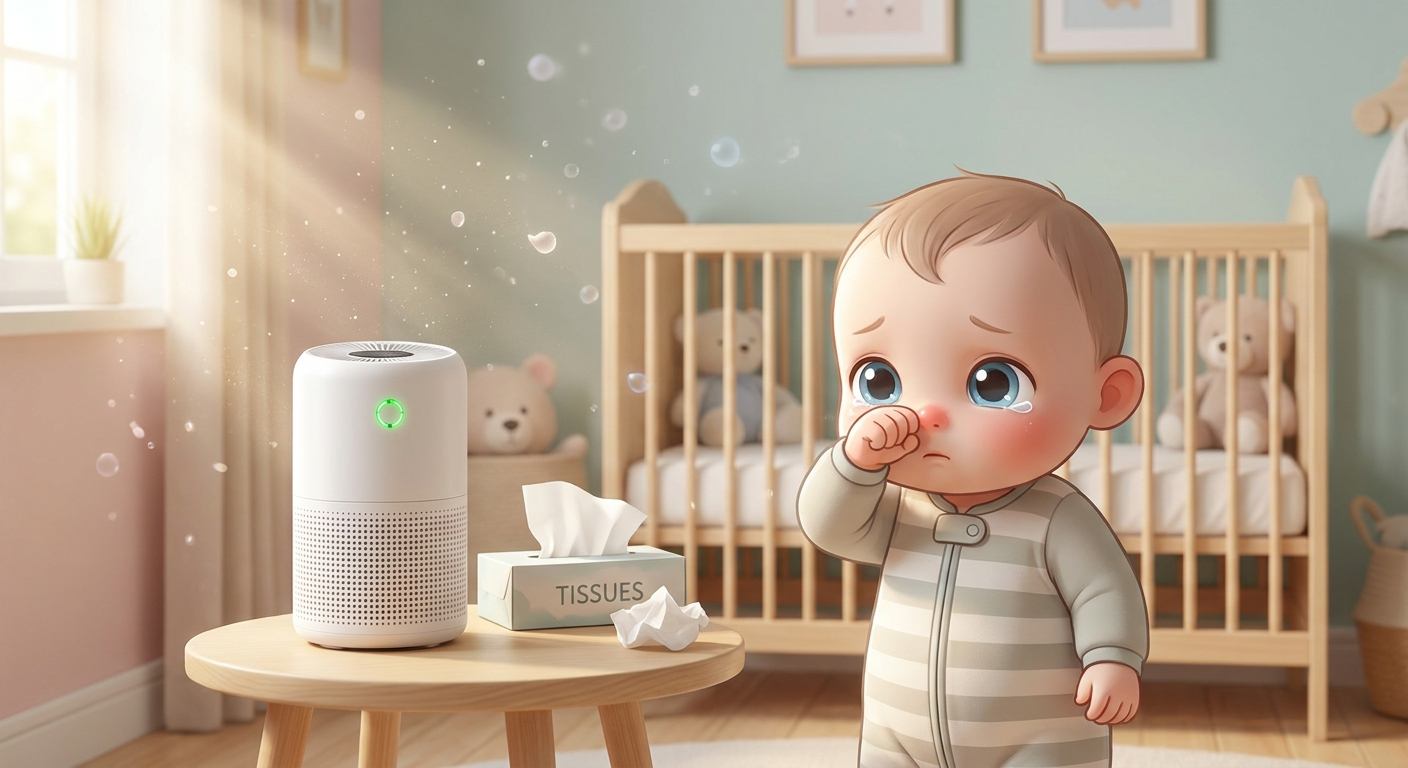
• Consider an appropriately sized HEPA air purifier in the sleep area as a supplement to—not a substitute for—regular cleaning
Pets
• If symptoms seem linked to pets, keep pets out of the baby’s sleeping area
• Reduce dander transfer with handwashing after pet contact and changing clothes when needed
Mold and moisture control
• Fix leaks promptly and address visible mold safely
• Run bathroom exhaust fans and manage condensation
• Aim indoor humidity around 30–50% to discourage mold and dust mites (Source: AAAAI)
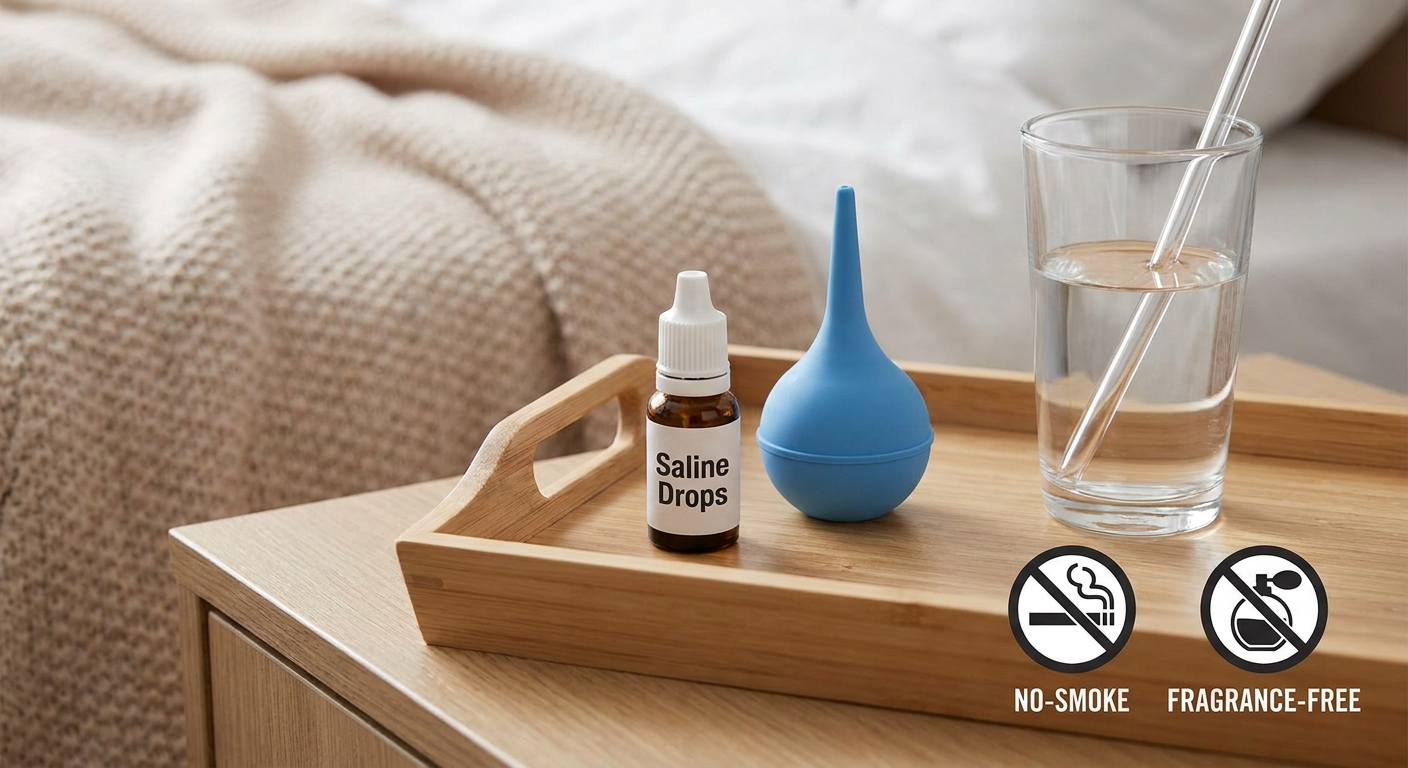
Step 3 — Comfort care that’s generally baby-safe (confirm with pediatrician)
Educational options families often discuss with their pediatrician include:
• Saline drops/spray and gentle suction for congestion
• Supporting hydration according to your baby’s age and feeding plan
• Avoiding smoke/vapes and strong fragrances (common irritants)
Medication note: Because infant medication safety is highly age- and history-dependent, it’s best not to start OTC antihistamines or decongestants for a baby without pediatric guidance.
Start with tracking and targeted home changes; small tweaks can make a big difference in a baby’s comfort.
When to call the pediatrician (and what they may evaluate)
Call soon (non-emergency) if you notice:
• Symptoms that persist or keep recurring with the same exposures
• Congestion that interferes with feeding or sleep
• A cough that won’t resolve, or any wheezing
• Eczema that’s worsening alongside nose/eye symptoms
Any first-time wheeze in an infant warrants same-day medical advice; if there is distress, color change, or poor feeding, seek urgent care. (Sources: ACAAI; UVA Children’s)
If you’re unsure, it’s reasonable to call and say: We’re seeing congestion and sneezing without fever, and it keeps happening in the same place—does this sound like allergy or infection?
What the pediatrician/ENT/allergist might do
Depending on symptoms and age, evaluation may include:
• A detailed history and physical exam (ears, nose, throat, chest)
• Discussion of home trigger control steps
• Consideration of referral for allergy evaluation/testing (often more informative as children get older, but individualized)
If your family is considering next steps, Sleep and Sinus Centers of Georgia shares information about allergy testing and what it can (and can’t) answer: https://sleepandsinuscenters.com/allergy-testing (Source: ACAAI)
When in doubt, call—infant breathing, feeding, and sleep are always worth timely guidance.
Emergency warning signs (when to seek immediate help)
Call emergency services now if your baby has:
• Sudden trouble breathing or swallowing
• Wheezing with distress, hoarseness, or stridor
• Swelling of the lips, tongue, mouth, or throat
• Widespread hives plus symptoms in another system (breathing issues, vomiting, unusual lethargy)
• Bluish/pale skin, unusual limpness, extreme sleepiness, or collapse
If epinephrine is prescribed and anaphylaxis is suspected, use it right away, then call emergency services. (Source: HealthyChildren.org / AAP)
If you see these red flags, go now—babies can worsen quickly.
Treatment options your clinician may discuss (what parents should know)
Avoidance and environmental control (often first-line)
For many families, especially when symptoms are linked to indoor triggers, the foundation is reducing exposures—particularly for dust mites, pets, mold, and irritants. This approach is something you can start today, and it’s useful whether the cause turns out to be allergies, irritants, or a mix. (Sources: AAAAI; Mayo Clinic)
Medication options (age-dependent; guided by pediatrician)
Depending on age, symptom severity, and whether lower-airway symptoms are present, a clinician may discuss:
• Supportive care such as saline and suction
• Age-appropriate allergy medications if indicated
• Further evaluation if wheezing or asthma-like symptoms are suspected
(Sources: ACAAI; UVA Children’s)
Your child’s plan should be individualized—avoid blanket fixes and follow your clinician’s guidance.
FAQs
Can my 6-month-old have seasonal allergies?
Seasonal allergies are considered unusual before age 1. If symptoms look seasonal, a cold is often more likely—but indoor triggers can still contribute. (Sources: Children’s Health; ACAAI)
Do allergies cause fever in babies?
Typically, allergies do not cause fever. Fever tends to point more toward infection. (Source: Children’s Health)
What’s the biggest indoor trigger for babies?
Dust mites are very common, especially in bedding and soft furnishings. (Sources: Mayo Clinic; AAAAI)
Could my baby be allergic to our pet?
It’s possible. Look for patterns like sneezing, congestion, and itchy, watery eyes in a baby that worsen after pet contact or in rooms where the pet spends time. (Sources: ACAAI; AAAAI)
When is wheezing a red flag?
Any wheezing or breathing difficulty in a baby deserves prompt medical guidance, and sudden distress is an emergency. (Sources: UVA Children’s; HealthyChildren.org / AAP)
Should we do allergy testing now?
It depends on age, severity, and symptom patterns. Some situations call for watchful waiting and trigger control first, while others may benefit from referral and testing. (Source: ACAAI)
Practical wrap-up + next step
The most common pattern with environmental allergies in babies is nose and eye symptoms without fever—think sneezing, congestion, clear runny nose, and watery/itchy eyes that persist with exposure or recur in the same setting.
If you’re seeing repeatable patterns, consider tracking triggers for a couple of weeks, reducing indoor allergens (especially in the sleep space), and looping in your pediatrician—particularly if sleep, feeding, or breathing seem affected.
If you’d like specialist support for persistent nasal congestion, snoring, or suspected allergy triggers, you can book an appointment with Sleep and Sinus Centers of Georgia: https://www.sleepandsinuscenters.com/
Watch the pattern, reduce likely triggers, and partner with your pediatrician for next steps.
This article is for educational purposes only and is not medical advice. Please consult a qualified healthcare provider for diagnosis and treatment.
Sources
• Children’s Health. Allergies vs. colds in children (2019). https://www.childrens.com/health-wellness/allergies-vs-colds-in-children
• Mayo Clinic. Dust mite allergy—Symptoms & causes (2025). https://www.mayoclinic.org/diseases-conditions/dust-mites/symptoms-causes/syc-20352173
• American College of Allergy, Asthma & Immunology (ACAAI). Children and Allergies. https://acaai.org/allergies/allergies-101/who-gets-allergies/children/
• American Academy of Allergy, Asthma & Immunology (AAAAI). Indoor Allergens. https://www.aaaai.org/tools-for-the-public/conditions-library/allergies/indoor-allergens-ttr
• UVA Children’s. Environmental Allergies. https://childrens.uvahealth.com/conditions/environmental-allergies
• HealthyChildren.org / American Academy of Pediatrics. Anaphylaxis in Infants & Children. https://healthychildren.org/English/health-issues/injuries-emergencies/Pages/Anaphylaxis.aspx
Don’t let allergies slow you down. Schedule a comprehensive ENT and allergy evaluation at Sleep and Sinus Centers of Georgia. We’re here to find your triggers and guide you toward lasting relief.