Vocal Cord Dysfunction vs Asthma: Key Differences, Symptoms, and Treatment
If you’re having breathing attacks and your inhaler doesn’t seem to help the way you expected, you’re not alone—and you’re not imagining it. Two common conditions can look very similar from the outside: asthma and vocal cord dysfunction.
Today, vocal cord dysfunction (VCD) is increasingly referred to as inducible laryngeal obstruction (ILO)—a term supported by major respiratory and laryngology organizations. The name change matters because mislabeling ILO as asthma can lead to unnecessary increases in inhaled or even oral steroids, without addressing the real problem.
This guide breaks down vocal cord dysfunction vs asthma in patient-friendly terms: how they differ, which symptoms point more toward one vs the other, how testing works (including laryngoscopy for VCD/ILO), and which treatments are most effective.
Introduction: Why VCD/ILO and Asthma Get Confused
Both asthma and ILO can cause:
- shortness of breath
- tightness in the chest or throat
- cough
- exercise-related symptoms
- “panic-like” sensations during an episode
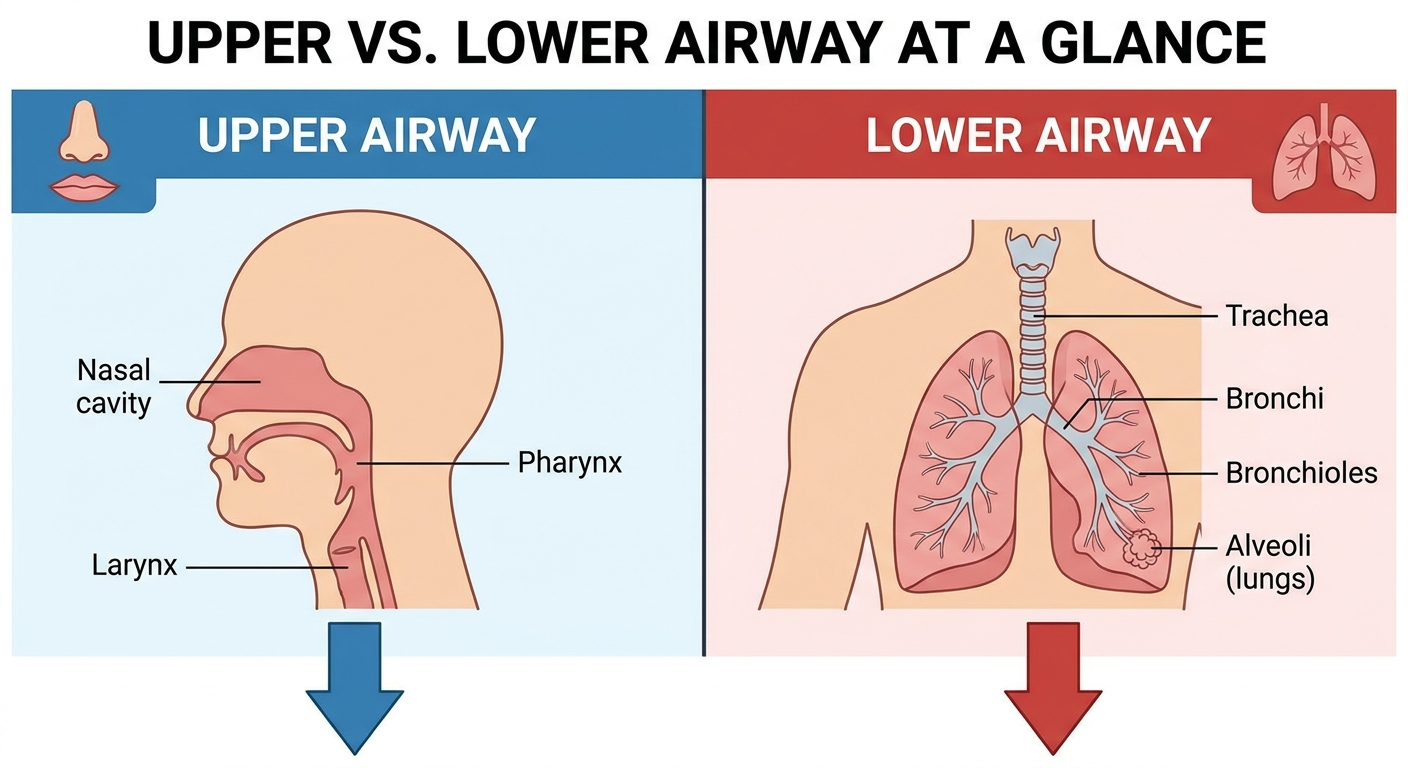
But they’re not the same condition. Asthma affects the lungs (lower airways), while ILO involves the voice box (upper airway). A helpful way to picture it: asthma is narrowing deeper in the “branches” of the lungs, while ILO is more like a temporary “pinch point” at the top of the airway (the larynx), closer to where your voice is made.
Because symptoms overlap, people are sometimes treated for years for asthma when the main issue is actually ILO—or they may have both. Many patients describe ILO episodes as, “It feels like my throat suddenly won’t let air in,” while asthma more often feels like, “I can’t get the air out.”
Vocal cord dysfunction vs asthma is a common comparison for one key reason: the treatments are very different, and getting the diagnosis right can prevent a lot of frustration.
Bottom line: overlapping symptoms are common, but the source of narrowing—and the right treatment—can be very different.
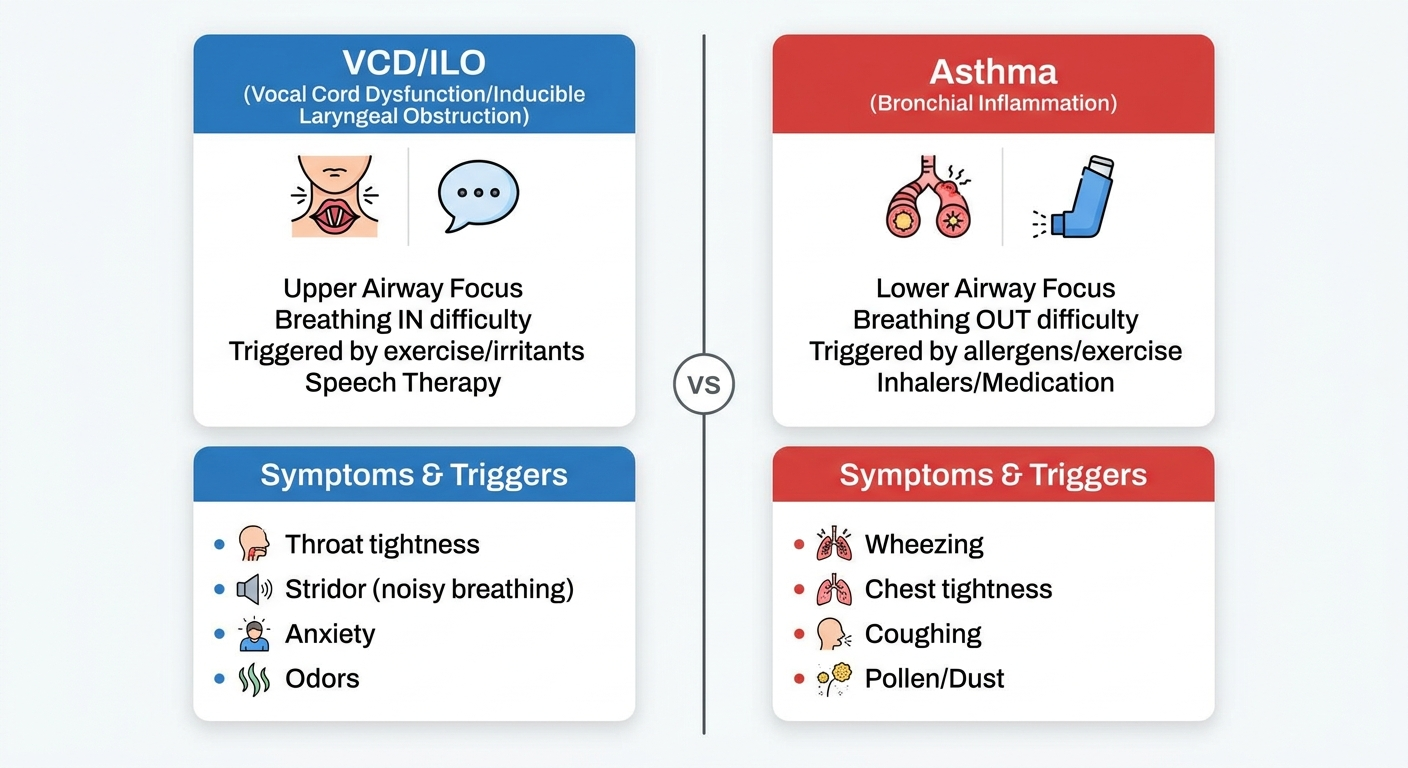
Quick Comparison: VCD/ILO vs Asthma (At-a-Glance)
Where the narrowing happens:
- VCD/ILO: Larynx (voice box) temporarily narrows (upper airway)
- Asthma: Bronchial tubes narrow/inflame (lower airways)
Breathing phase that feels worse:
- VCD/ILO: Often worse on inhalation
- Asthma: Often worse on exhalation
Typical sound:
- VCD/ILO: Noisy inhalation/stridor; sometimes voice changes
- Asthma: Wheezing, often more noticeable on exhale
Timing with exercise:
- VCD/ILO: Often peaks during exercise
- Asthma: Often worse after exercise
Response to rescue inhaler:
- VCD/ILO: Often limited or inconsistent
- Asthma: Often improves with bronchodilator (though not always)
Important: These patterns are helpful, but history alone can’t definitively diagnose ILO. Confirmation usually requires specialized testing.
What Is Vocal Cord Dysfunction (Inducible Laryngeal Obstruction)?
The basics (in plain language)
In ILO, the vocal cords (and nearby laryngeal structures) partially close when they should open, especially during breathing in. That can make airflow feel “blocked,” even though oxygen levels often remain normal.
ILO episodes are often episodic and temporary, which is one reason they can be so confusing—symptoms may be intense but then fade quickly. Some people notice a “flip-switch” pattern: they feel fine, symptoms surge within seconds to minutes, and then improve once the trigger stops or breathing control returns.
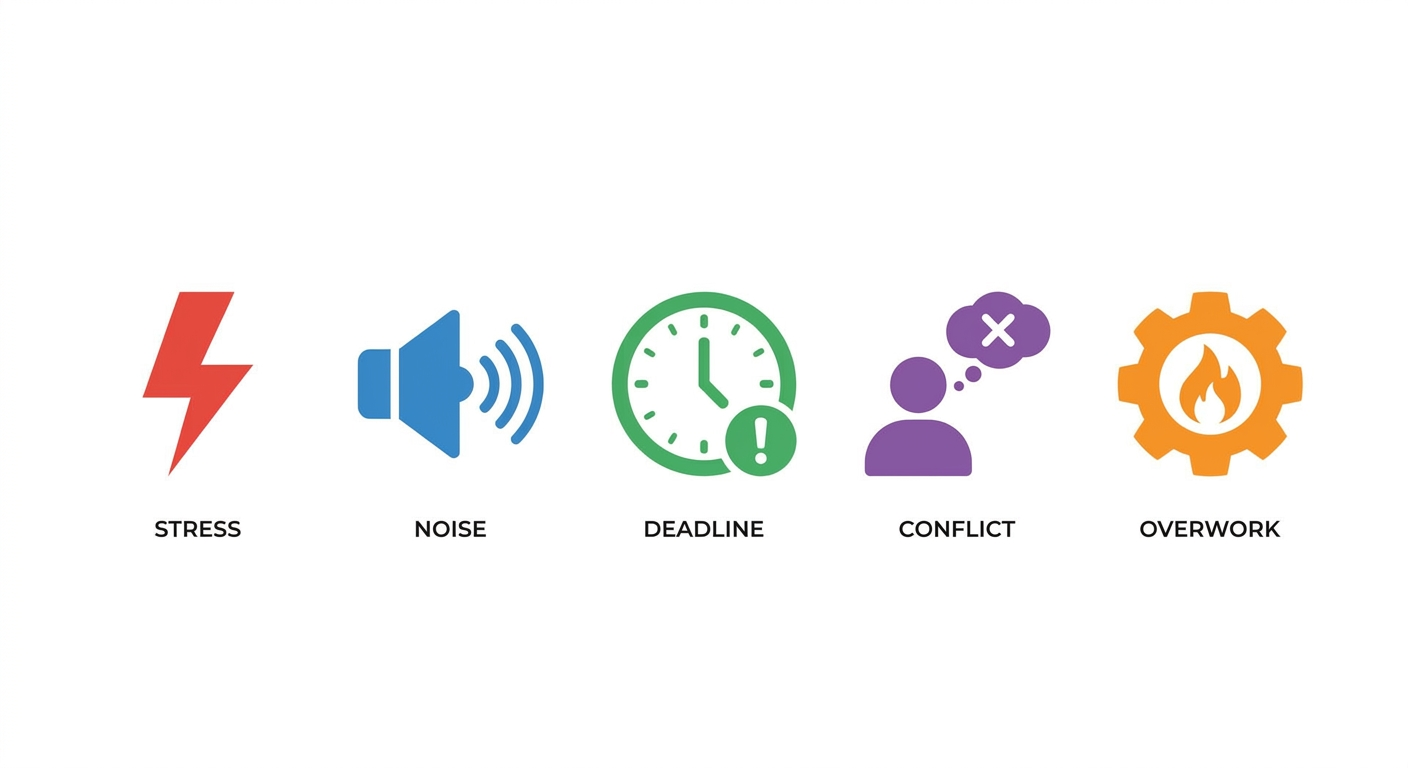
Common triggers for ILO
Many people notice ILO in specific situations, including:
- exercise (especially high-intensity workouts)
- irritants (smoke, strong odors, perfumes, cleaning chemicals, fumes)
- post-nasal drip, respiratory infections, cold air
- reflux/LPR (laryngopharyngeal reflux) as a contributing trigger in some people
Because triggers can overlap with asthma triggers, asthma vs VCD symptoms can be hard to separate without testing.
Think “throat-level pinch” that comes and goes, often with quick onset and quick relief once the trigger stops.
What Is Asthma?
The basics (in plain language)
Asthma is a chronic condition where the lower airways (bronchial tubes) become inflamed and overly sensitive. During flares, the airway muscles tighten and the lining can swell, making it harder to move air out—often causing cough, wheeze, and chest tightness.
Some people with asthma describe a slower “build” than ILO: symptoms may start mildly, then worsen over hours, persist overnight, or flare in the early morning. Others have exercise-related symptoms, viral-triggered flares, or symptoms that show up around allergens.
Common asthma triggers
Common triggers include:
- allergens (pollens, dust mites, animal dander)
- viral illnesses
- exercise
- smoke/irritants
- weather changes
Asthma lives in the lower airways and tends to respond to guideline-based controller therapy over time.
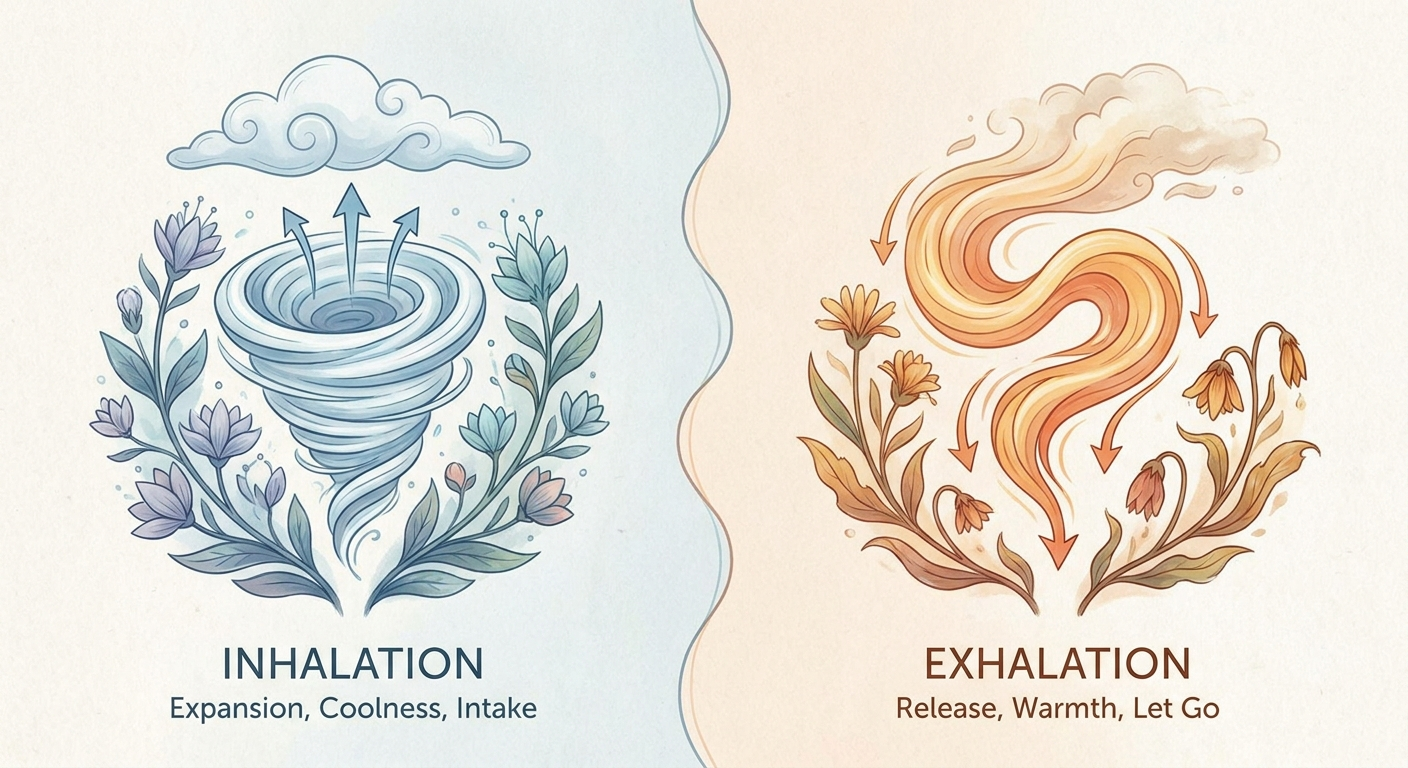
Symptoms: How They Feel (and What Points More Toward Each Condition)
Symptoms that more strongly suggest VCD/ILO
Common VCD/ILO symptoms include:
- breathing difficulty that feels worse breathing in (inspiratory difficulty)
- throat tightness or a choking sensation
- stridor (noisy breathing on inhale)
- voice changes during episodes (tight voice, hoarseness, difficulty getting words out)
- fast onset and fast resolution, sometimes within minutes
A common clue in stridor vs wheeze: stridor is typically higher-pitched and more noticeable during inhalation; wheeze is often heard more on exhalation and may sound “musical.” If you can, note whether the sound seems to come more from the throat (often ILO) or the chest (often asthma)—but remember, this is not definitive.
Symptoms that more strongly suggest asthma
Symptoms that point more toward asthma include:
- wheezing (often on exhale), cough, chest tightness
- symptoms that may last longer, recur overnight, or flare in early morning
- clear benefit from asthma medications when asthma is present (especially controller therapy over time)
One practical clue: if a rescue inhaler helps sometimes but not others, it can mean variable asthma control, inhaler technique issues, ILO, or both conditions together.

Exercise pattern clues (a very common question)
When comparing vocal cord dysfunction vs asthma during workouts, timing can help:
- Exercise-induced laryngeal obstruction (EILO): symptoms often crest during the workout (especially at peak intensity)
- Exercise-induced asthma/bronchoconstriction: symptoms often crest after stopping or during recovery
A common scenario is the athlete who feels “shut down” mid-interval, needs to stop quickly, and feels notably better once intensity drops—more consistent with EILO.
Red flags: when to seek urgent/emergency care
Breathing symptoms can become serious regardless of the cause. Seek urgent evaluation for:
- severe breathing distress, blue/gray lips, confusion, fainting
- chest pain or signs of a severe allergic reaction (swelling, hives, rapidly worsening symptoms)
- any episode that feels different from your usual pattern or is escalating
If you’re uncertain in the moment whether it’s asthma, ILO, or something else, it’s safest to treat it as an urgent breathing problem and get evaluated.
Noticing when symptoms start, which phase of breathing feels worst, and how quickly they resolve can offer useful clues—but testing confirms the diagnosis.
Causes & Risk Factors: Why Someone Develops ILO or Asthma
ILO risk factors and common associations
ILO is commonly seen in:
- athletes and people with high ventilatory demand
- individuals with frequent irritant exposure (Smoke, chemicals, fragrances)
- people with reflux, nasal/allergy problems, or post-nasal drip
Stress and anxiety can also worsen episodes. That doesn’t mean symptoms are “all in your head”—ILO is a real upper-airway narrowing event—but the nervous system can influence breathing patterns and laryngeal tension. Clinicians often frame this as a “protective reflex” that becomes overactive in certain situations.
Asthma risk factors
Asthma is more likely with:
- atopy (allergic tendencies) and family history
- environmental exposures (including occupational triggers)
- a history of eczema/allergic rhinitis in some people
Identifying and addressing your personal triggers often reduces the frequency and intensity of episodes.
Can You Have Both VCD/ILO and Asthma?
Yes. Coexistence is common enough that clinicians often consider both—especially when symptoms persist despite appropriate asthma care.
A key takeaway in vocal cord dysfunction vs asthma discussions: a poor response to asthma meds should prompt evaluation for ILO, but it does not automatically rule out asthma. Some people need treatment for both conditions—often with better results once each problem is addressed directly.
It’s common to need a two-pronged plan when asthma and ILO occur together.
Diagnosis: The Tests That Actually Differentiate ILO from Asthma
Why symptom history isn’t enough
Because asthma vs VCD symptoms overlap so much, symptom descriptions can point you in a direction, but they don’t confirm the diagnosis. That’s why objective testing matters—especially before repeatedly escalating medications.
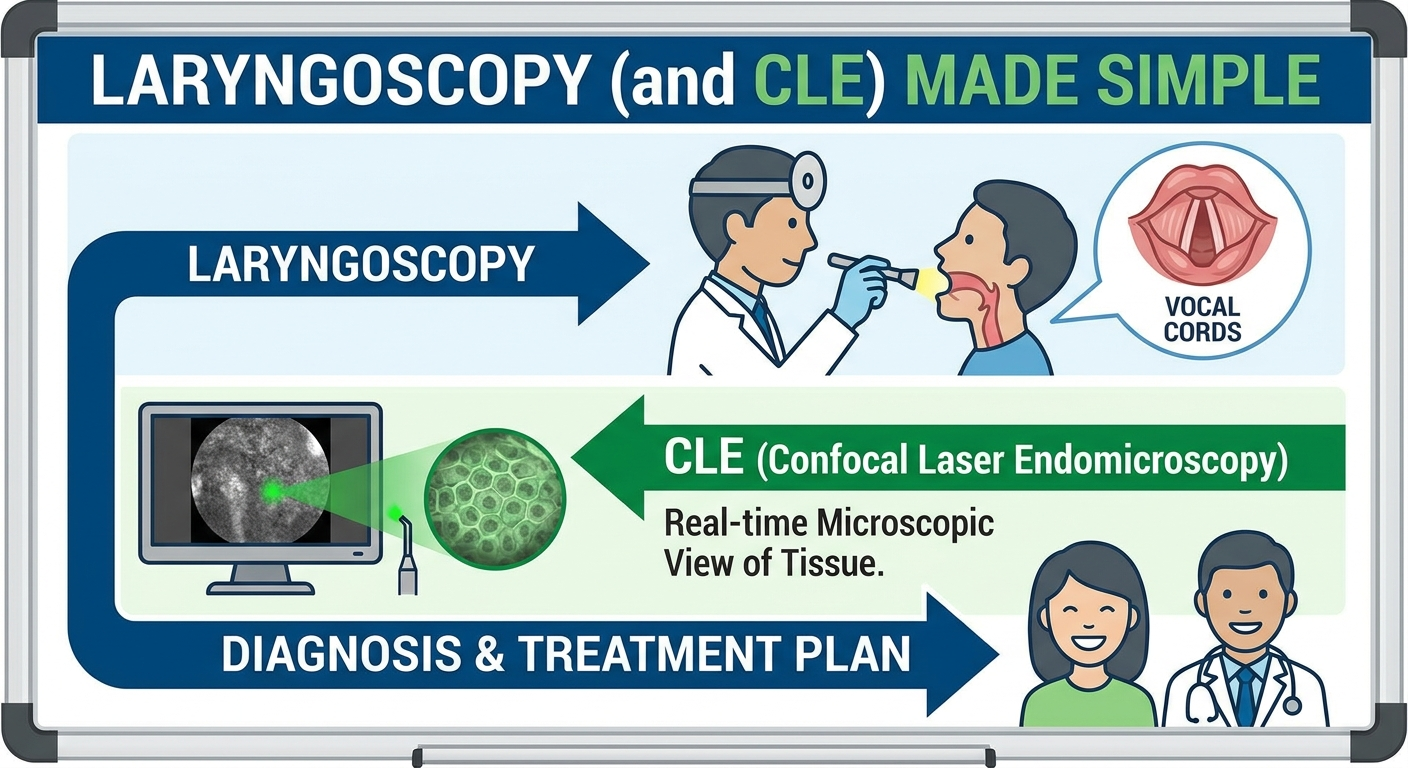
Gold standard for ILO: Laryngoscopy with provocation
The most definitive test for ILO is flexible laryngoscopy, ideally performed by an experienced clinician and during symptoms or with a trigger challenge that brings symptoms on.
Many people searching for “laryngoscopy for VCD” are looking for this exact concept: actually visualizing the larynx to see whether it narrows during breathing. Seeing the airway behavior in real time can turn a confusing story into a clear, treatable plan.
If symptoms happen mainly during exercise: Continuous laryngoscopy during exercise (CLE)
For suspected exercise-induced laryngeal obstruction, continuous laryngoscopy during exercise (CLE) can be especially helpful. It allows the care team to see what your larynx is doing while you’re actively exercising, which is often when symptoms are most reproducible.
Tests that help evaluate asthma (and other lung problems)
To evaluate asthma, clinicians may use:
- spirometry (before and after a bronchodilator)
- other tests depending on your history and symptoms
One nuance: spirometry and flow-volume loops can sometimes suggest upper-airway issues, but they cannot reliably confirm or exclude ILO on their own.
Objective testing prevents mislabeling and helps target therapy to the right part of the airway.
Treatment Differences: What Helps ILO vs What Helps Asthma
Core ILO treatments (first-line)
First-line treatment for ILO usually focuses on the upper airway, not the lungs. Common approaches include:
- speech-language therapy
- breathing retraining and laryngeal control techniques
The goal is to improve how the larynx behaves under stress or triggers—helping it stay open when you need airflow most. Many patients find it reassuring to hear that therapy is skill-based: you’re learning tools to interrupt the cycle of tightness and noisy inhalation.
Trigger management for ILO (often overlooked)
Supportive strategies may include addressing contributors such as:
- reflux/LPR (when present)
- nasal congestion and post-nasal drip
- irritant exposure (smoke, fragrances, fumes)
For patients exploring reflux-related triggers, you may find this helpful: https://sleepandsinuscenters.com/blog/lpr-vs-gerd-throat-symptoms-key-differences-and-treatment-guide
Asthma treatment (separate, evidence-based)
Asthma treatment may include:
- controller therapy when indicated (often inhaled corticosteroids for persistent asthma)
- a rescue inhaler for acute bronchospasm
- trigger control and an asthma action plan
If both conditions are present, they are treated as two conditions—one treatment doesn’t replace the other.
What to avoid: unnecessary steroid escalation
If “asthma” isn’t responding as expected, many guidelines emphasize reassessing the diagnosis rather than repeatedly escalating steroids without objective confirmation. That approach protects patients from side effects while improving the chances of finding the real driver of symptoms.
Treat the throat when it’s a throat problem; treat the lungs when it’s a lung problem—and sometimes both.
What to Do During an Episode (Educational steps often discussed with clinicians)
If you suspect ILO
Educational steps often discussed in therapy include:
- stopping or slowing activity
- moving away from obvious irritants
- using the specific breathing techniques taught during treatment to reduce laryngeal tightening
Because breathing episodes can be frightening—and sometimes serious—severe symptoms should be evaluated urgently.
If asthma is possible or you have a known asthma diagnosis
If asthma is part of your history, clinicians typically recommend following your personalized asthma action plan, including prescribed rescue medication. If symptoms are severe, rapidly worsening, or not responding as expected, urgent evaluation is important.
In-the-moment strategies are best learned and practiced with your clinical team.
Lifestyle Tips That May Reduce Flare-Ups (Supportive Care)
Exercise modifications (especially for athletes)
Some people benefit from:
- longer warm-ups and gradual intensity changes
- pacing strategies
- avoiding cold/dry air when possible
If exercise symptoms are prominent, it may be worth asking whether CLE testing could clarify what’s happening during exertion.
Reduce irritant exposure
Common irritants include:
- smoke and vaping
- fragrances
- strong cleaning chemicals
- workplace fumes
Address upper airway triggers
Ongoing throat symptoms can overlap with multiple conditions. If cough is part of your pattern, this may be useful: https://sleepandsinuscenters.com/blog/chronic-cough-and-its-impact-on-voice-health-key-effects-and-solutions
For people with seasonal or environmental triggers, evaluating allergic contributors can matter: https://sleepandsinuscenters.com/allergy-testing
Small, consistent adjustments can meaningfully reduce trigger exposure and symptom flares over time.
FAQs
How can I tell if it’s VCD/ILO or asthma?
Patterns help: ILO often feels worse on inhalation with throat tightness, stridor, and quick resolution; asthma often features cough and wheeze (often on exhale) and may last longer. But confirmation usually requires testing—especially laryngoscopy for VCD/ILO.
Why does my inhaler not help sometimes?
Possibilities include ILO, incorrect inhaler technique, uncontrolled asthma, or having both. If symptoms persist, it’s a sign that reassessment and objective testing could be helpful.
What doctor diagnoses ILO?
Diagnosis commonly involves an ENT/laryngology team and may also involve pulmonology or allergy specialists. Speech-language pathology is often central for therapy and breathing retraining.
Is ILO dangerous?
ILO is usually not life-threatening, but episodes can feel intense and frightening. Other dangerous conditions can look similar—seek urgent care for severe or atypical symptoms.
Can anxiety cause VCD/ILO?
Stress and anxiety can worsen episodes, but ILO is a real airway phenomenon. Treatment focuses on skills, breathing control, and trigger management—not dismissing symptoms.
What’s the best test for exercise breathing attacks?
For suspected exercise-induced laryngeal obstruction, continuous laryngoscopy during exercise (CLE) is one of the most informative tests because it evaluates the larynx during the actual trigger.
When to Seek Specialist Care (and What to Ask)
Consider a specialist evaluation if symptoms:
- happen mainly during exercise
- include stridor, voice change, or throat tightness
- start and stop rapidly
- don’t respond to appropriate asthma treatment
Helpful questions to ask:
- “Should I have laryngoscopy with provocation to evaluate for ILO?”
- “Do I need continuous laryngoscopy during exercise (CLE)?”
- “Do I have objective evidence of asthma on spirometry?”
Asking the right tests-focused questions can shorten the path to an accurate diagnosis.
Conclusion: Getting the Right Diagnosis Means Getting the Right Treatment
When it comes to vocal cord dysfunction vs asthma, the most important point is that they involve different parts of the airway and respond to different treatments—and they can occur together. If your symptoms don’t match your current diagnosis or your treatment isn’t working as expected, objective testing (including laryngoscopy when appropriate) can be the key step toward a clearer plan.
Call to action: If you’re dealing with recurring breathing episodes—especially exercise-related symptoms, throat tightness, or poor response to inhalers—you can book an appointment to discuss evaluation options at Sleep & Sinus Centers: https://www.sleepandsinuscenters.com/
Clear diagnosis leads to clear treatment—and better breathing.
References
European Respiratory Society (ERS) & European Laryngological Society (ELS). Official Joint Statement on Inducible Laryngeal Obstruction (ILO) (2017). https://publications.ersnet.org/content/erj/50/3/1602221
Journal of Allergy and Clinical Immunology (JACI). International Delphi Consensus Study on VCD/ILO Diagnosis (2023). https://www.jacionline.org/article/S0091-6749(23)00803-5/fulltext
UK Consensus Statement on ILO Diagnosis (2020). https://pmc.ncbi.nlm.nih.gov/articles/PMC7675451/
Pediatric Reports. Differentiating Vocal Cord Dysfunction from Asthma (2017). https://pmc.ncbi.nlm.nih.gov/articles/PMC5644529/
American Academy of Allergy, Asthma & Immunology (AAAAI). Vocal Cord Dysfunction (Symptoms, Diagnosis, Treatment & Management). https://www.aaaai.org/conditions-treatments/related-conditions/vocal-cord-dysfunction
This article is for educational purposes only and is not medical advice. Please consult a qualified healthcare provider for diagnosis and treatment.
If you have severe or rapidly worsening breathing symptoms, seek urgent/emergency care.
Don’t let allergies slow you down. Schedule a comprehensive ENT and allergy evaluation at Sleep and Sinus Centers of Georgia. We’re here to find your triggers and guide you toward lasting relief.