Treating Allergies to Improve Asthma: How Allergy Management Helps Asthma Control
If you’ve noticed your breathing gets worse during pollen season, after cleaning the bedroom, or around pets, there’s a good chance allergies are playing a role. For many people, treating allergies to improve asthma is one of the most practical ways to reduce flare-ups and gain steadier symptom control—especially when asthma symptoms are closely tied to specific allergens.
This article focuses on allergy-related asthma, how to recognize patterns, how allergy testing for asthma can help pinpoint triggers, and how a complete plan (not just allergy care alone) supports better breathing. Think of allergy management as lowering the “background irritation” in your airways—so your lungs have less reason to overreact.
Why Allergy Treatment Can Improve Asthma Control
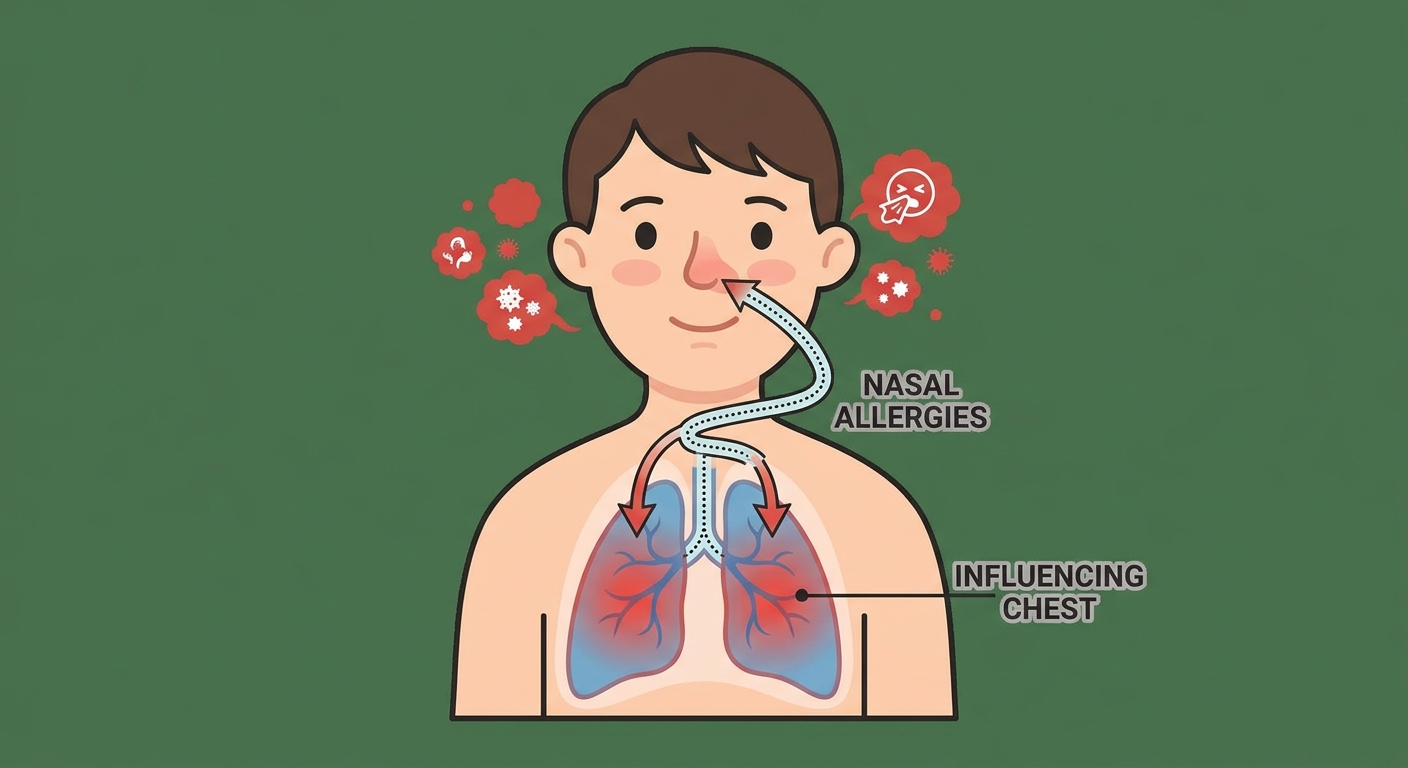
The allergy–asthma connection (what’s happening in the airways): Allergies aren’t “just” a nose-and-eyes issue. When you’re allergic to something like pollen or dust mites, your immune system can react by creating inflammation. In people with asthma, that immune response can also make the airways more reactive—meaning tighter, more inflamed, and more likely to spasm when exposed to triggers.
A helpful way to think about it: your lungs can become more sensitive when your immune system is reacting to allergens. It’s a bit like a smoke alarm that’s been turned up too high—small exposures can set off a bigger response than you’d expect. The American Academy of Allergy, Asthma & Immunology (AAAAI) identifies allergen exposure as a common trigger for asthma symptoms and flare-ups.
If you’d like a simple overview of the basics, Sleep and Sinus Centers of Georgia has a helpful explainer on how allergies work: https://sleepandsinuscenters.com/what-are-allergies
Who benefits most from allergy management? Allergy-focused care tends to help most when you notice patterns like:
• Seasonal asthma flare-ups (often spring and fall)
• Symptoms around pets, dust, or mold
• Co-existing allergic rhinitis (“hay fever”), including chronic congestion or sneezing
It’s also important to note: asthma can be triggered by non-allergic factors (like viral infections, smoke, strong odors, and exercise). This post is specifically about allergy-related asthma and how allergen management can support better control.
If your symptoms cluster around specific exposures—like pollen seasons, pet time, or a dusty bedroom—targeted allergy care may help steady your asthma.
Symptoms: When Allergies Might Be Worsening Your Asthma
Asthma symptoms that can spike with allergy exposure: When allergens are a trigger, asthma symptoms may intensify after exposure, including:
• Wheezing
• Shortness of breath
• Chest tightness
• Cough (often worse at night or early morning)
A common real-life example: you might feel fine during the day, then start coughing more at bedtime after being in a bedroom with dust mite exposure—or notice tightness after a windy outdoor day when pollen counts are higher.
Allergy symptoms that often travel with asthma:
• Sneezing, itchy nose, itchy/watery eyes
• Runny nose or nasal congestion
• Post-nasal drip / frequent throat clearing
• Fatigue (often from poor sleep due to congestion)
Some people are surprised by how much nasal symptoms affect the chest. But if you’re congested, sleeping poorly, or constantly clearing your throat, it can make asthma feel harder to control—even when you’re using inhalers correctly.
Clues it’s allergy-triggered (pattern recognition):
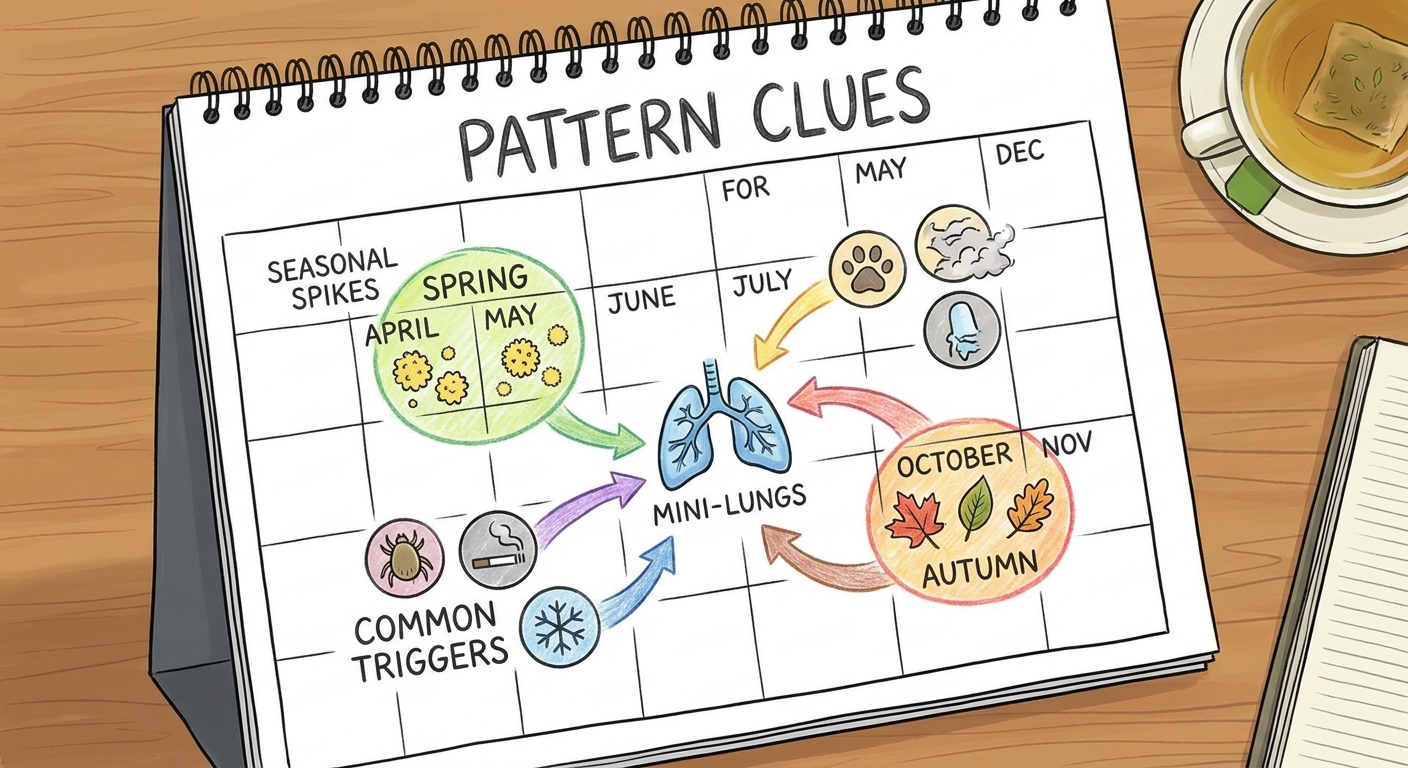
• Same time every year → often points to asthma triggered by pollen
• Worse after cleaning, making the bed, or spending time in the bedroom → may suggest asthma triggered by dust mites
• Worse in damp spaces (basement, bathroom) → may suggest mold sensitivity
If you’re not sure, it can help to keep a simple notes app log for 2–3 weeks: where you were, what you were doing (cleaning, yard work, visiting a home with pets), and what symptoms followed.
Allergy-driven asthma often reveals itself through patterns—watch for when, where, and after what activities your breathing worsens.
Causes & Common Allergy Triggers That Can Set Off Asthma
The most common allergens linked to asthma symptoms include:
• Pollen
• Mold
• House dust mites
• Animal dander
• Cockroach allergens (droppings/debris)
A key concept is: exposure + sensitivity = higher chance of symptoms. Not everyone reacts to the same allergen, and not every exposure causes a flare—but when a trigger is relevant for you, reducing it can help.
Why triggers vary by person:
• Sensitization differs (your immune system may “recognize” one allergen but not another)
• Dose and timing matter (high pollen days, heavy cleaning days, damp weather, etc.)
You can also have more than one relevant trigger. For example, someone might notice springtime pollen symptoms and year-round dust mite issues—leading to “always-something” congestion unless both are addressed.
Your trigger mix is personal—testing and pattern-tracking help you focus on what actually matters for your lungs.
Step 1 — Identify Your Triggers with Allergy Testing
Why testing helps asthma control: When people try treating allergies to improve asthma, the hardest part is often figuring out what’s actually driving symptoms. Testing can reduce guesswork by helping you focus on the triggers that matter most—so your avoidance steps and treatments are more targeted. Testing shows sensitization (an immune response to specific allergens); your clinician still has to match results with your history and exam to decide which allergens are truly relevant to your symptoms.
Common types of allergy testing:
• Skin testing (often used for environmental allergens)
• Blood testing (IgE)
The “best” option depends on your history, symptoms, and medications, so it’s something to decide with your healthcare team.
What to bring up at your appointment:
• When symptoms started and whether they’re seasonal
• Home/work exposures (pets, damp spaces, dust, visible mold)
• Current inhalers and allergy medications
• Any urgent care/ER visits or repeated flare-ups
Learn more about options at Sleep and Sinus Centers of Georgia: https://sleepandsinuscenters.com/allergy-testing
Testing clarifies sensitization; clinical interpretation turns results into a focused, actionable plan.

Step 2 — Reduce Exposure: Practical Allergy Avoidance Strategies (Lifestyle Tips)
Pollen (seasonal) tips:
• Track your area’s levels and plan ahead: https://sleepandsinuscenters.com/georgia-pollen-tracker
• Limit extended outdoor time on high days when possible
• Shower and change clothes after being outdoors
• Keep windows closed during peak pollen times; use HVAC/filters when available
A simple routine many people find helpful: “outside time → clothes in the hamper → quick shower.” It’s not about perfection—it’s about reducing how much pollen follows you into your bedroom and settles into fabrics.
Dust mite tips (especially for the bedroom):
• Wash bedding regularly (hot water if the fabric tolerates it)
• Use allergen-proof mattress and pillow covers
• Keep indoor humidity in check (dust mites thrive in higher humidity)
If your asthma is worse at night or first thing in the morning, the bedroom is an especially high-value place to start. For a room-by-room approach, see: https://sleepandsinuscenters.com/blog/top-dust-mite-hot-spots-in-bedrooms-how-to-identify-and-eliminate-them
Mold tips (home + bathroom + basement):
• Fix leaks quickly
• Ventilate bathrooms and damp spaces
• Consider a dehumidifier for basements or humid rooms
• Address visible mold safely; large areas may require professional remediation
A practical way to think about mold control is “moisture control.” If you can reduce dampness, you often reduce the conditions that allow mold to persist.
Pets & dander tips:
• Keep pets out of the bedroom if possible
• Use HEPA filtration and clean frequently
• Discuss practical options with your clinician based on your symptoms and testing
For many families, the bedroom boundary is the most impactful step because it creates one lower-exposure zone for sleep—when asthma symptoms and coughing tend to be most disruptive.
Cockroach allergen tips (integrated pest management):
• Seal food, reduce crumbs, and take out trash regularly
• Address water sources (like leaks)
• Use professional pest control when needed
AAAAI includes these allergens among common asthma triggers and emphasizes reducing exposure as part of management.
Perfect control isn’t required—small, targeted exposure reductions in the right places (often the bedroom) can pay off.

Step 3 — Treat the Allergies (Without Replacing Your Asthma Plan)
Allergy care often works best as an add-on that supports asthma stability—rather than a substitute for asthma medications or a structured plan. AAAAI emphasizes combining trigger management with appropriate asthma treatment.
Medication options for allergy symptoms (high-level, patient-friendly):
• Non-sedating antihistamines (often used for sneezing/itch)
• Nasal steroid sprays (for nasal inflammation and congestion)
• Saline rinses (supportive for mucus and irritants)
• Eye drops (when eye symptoms are prominent)
Because the right choice depends on your medical history and current medications, it’s best discussed with a clinician rather than self-adjusted—especially if asthma symptoms are active.
Why treating nasal allergies can help breathing overall: Nasal congestion can disrupt sleep, promote mouth-breathing, and worsen post-nasal drip—factors that can make cough and airway sensitivity feel worse. Many patients describe it as a loop: congestion leads to poor sleep, poor sleep makes symptoms feel heavier, and symptoms feel harder to recover from.
If chronic congestion is a theme for you, this resource may help: https://sleepandsinuscenters.com/treating-chronic-rhinitis
Treating nasal allergies can reduce airway “background noise,” helping your asthma plan work better.
Allergen Immunotherapy (Allergy Shots): When It May Help Asthma
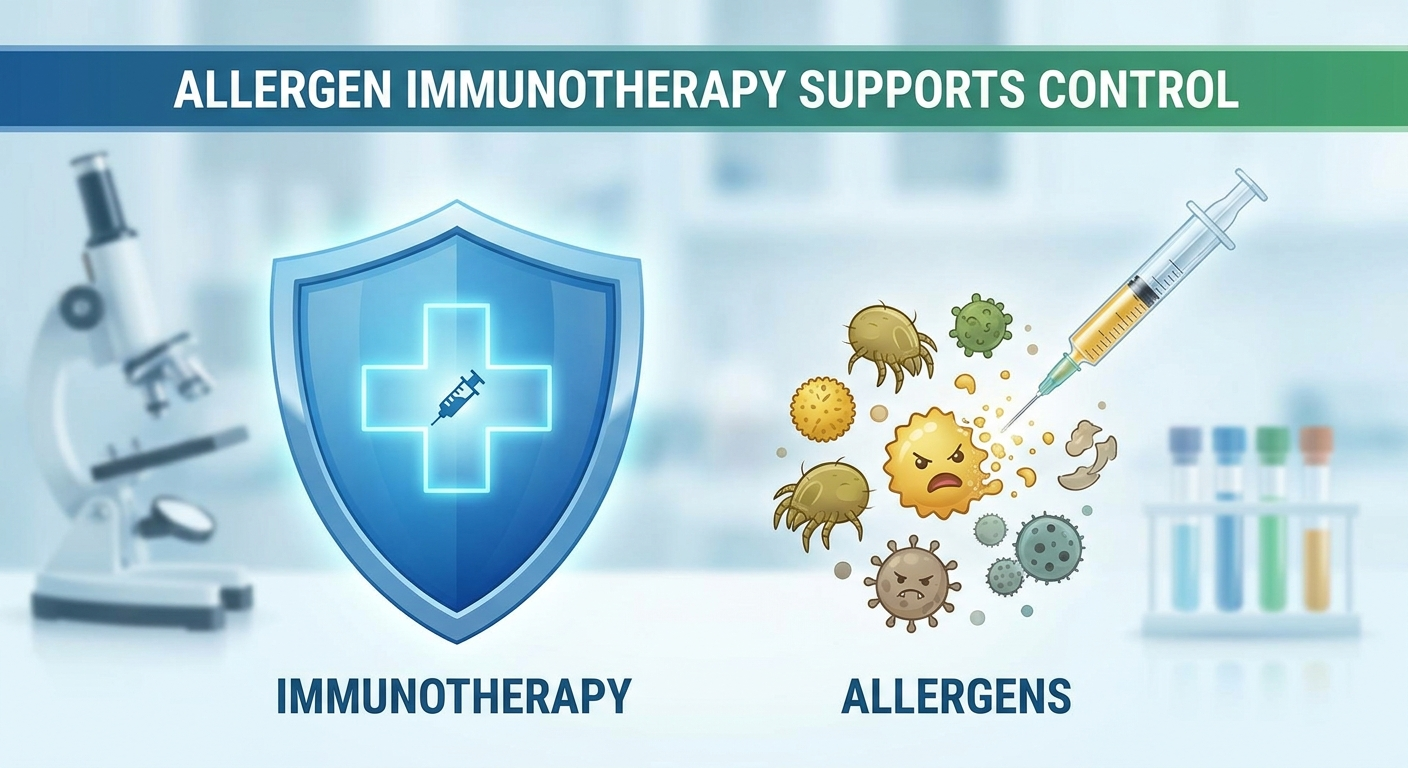
What allergen immunotherapy is (simple explanation): Allergen immunotherapy (often called allergy shots when asthma symptoms are allergy-driven) involves gradual exposure to specific allergens over time to help reduce sensitivity.
What the research/clinical guidance says about asthma benefit: For eligible patients with allergic triggers, immunotherapy may improve asthma symptoms overall and reduce flare-ups tied to allergens. This can be an important option when treating allergies to improve asthma isn’t fully achieved through avoidance steps and standard allergy medications alone.
Who may be a good candidate?
• Asthma symptoms are clearly linked to specific allergens
• Symptoms continue despite reasonable avoidance + medications
• You can commit to a longer-term treatment plan
For a practical overview, see what to expect with allergy shots: https://sleepandsinuscenters.com/blog/allergy-shots-timeline-what-to-expect-during-allergy-immunotherapy
Safety notes (important for trust): Immunotherapy isn’t right for everyone. It should be prescribed and supervised by a qualified clinician because allergic reactions can occur. In many cases, asthma needs to be reasonably controlled before starting.
If you’re comparing options, this breakdown may help: https://sleepandsinuscenters.com/allergy-drops-vs-allergy-shots
For the right patient, immunotherapy can lower sensitivity over time—but it complements, not replaces, your asthma plan.
Building a Complete Asthma Control Plan (Allergies Are One Piece)
The “4-part” asthma approach (easy framework):
1. Identify and reduce triggers
2. Use the right controller medicine(s) if prescribed
3. Keep quick-relief medicine available as directed
4. Follow an asthma action plan (clear steps for worsening symptoms)
If you don’t currently have an action plan, that’s a great thing to request. It turns “I’m not sure what to do” into clear, pre-decided steps.
Why “just treating allergies” isn’t enough for many people: Allergens are common asthma triggers, but they’re not the only ones. Exercise, respiratory infections, smoke, and strong odors can also cause symptoms. Because of that, treating allergies to improve asthma tends to work best when paired with a full asthma management strategy—and you shouldn’t change asthma medications without clinician guidance.
Allergy care works best as part of a full asthma plan that includes controllers, relievers, and an action plan.
When to See a Specialist (and What to Ask)
Signs you should schedule an evaluation:
• Frequent rescue inhaler use
• Nighttime symptoms
• Repeated flare-ups during allergy seasons
• Suspected indoor triggers (mold/dust/pets) that are hard to control
In plain terms: if you’re doing “all the right things” but still feel like symptoms keep breaking through, it’s time to get more targeted.
Questions to ask your clinician:
• Do my symptoms suggest allergy-related asthma?
• Which allergens should I be tested for?
• Would allergen immunotherapy help in my situation?
• Can we update my asthma action plan based on my triggers?
If symptoms keep breaking through, a targeted evaluation can clarify triggers and close the gaps in your plan.
FAQs: Treating Allergies to Improve Asthma
Q: Can allergies cause asthma flare-ups even if my asthma is usually mild?
A: Yes. If allergens are a trigger for you, exposure can increase airway inflammation and worsen symptoms—even when asthma is typically mild.
Q: What are the most common allergens linked to asthma?
A: Dust mites, animal dander, molds, pollen, and cockroach allergens are common triggers.
Q: Will allergy shots cure my asthma?
A: They are not considered a cure, but immunotherapy may improve overall control for eligible allergic patients and reduce allergy-driven flare-ups.
Q: If I treat my allergies, can I stop my inhaler?
A: Allergy treatment is usually meant to complement—not replace—your broader asthma plan. Medication changes should be made with clinician guidance.
Q: What’s the fastest way to reduce allergy-triggered symptoms at home?
A: Trigger-specific steps can help quickly (for example, bedroom dust-mite controls, humidity reduction, or pollen routines), but the most effective approach depends on which allergens you’re sensitive to.
Conclusion — Small Allergy Changes Can Mean Fewer Asthma Bad Days
Key takeaways (quick recap):
• If your asthma is allergy-related, allergen management can improve control.
• Testing can help pinpoint triggers like pollen, mold, dust mites, pets, and cockroach allergens—when interpreted alongside your clinical history.
• Immunotherapy may offer broader improvement for eligible patients.
• Best results come from pairing allergy care with a complete asthma plan and an asthma action plan.
Call to action: If you suspect allergies are driving flare-ups, consider scheduling an evaluation for allergy testing for asthma and a coordinated strategy. A targeted plan—built around your triggers—can make treating allergies to improve asthma much more achievable.
To get started, you can book an appointment through Sleep and Sinus Centers of Georgia and ask about testing, trigger control, and whether immunotherapy is a fit for your symptoms: https://www.sleepandsinuscenters.com/
Target the allergens that matter to you—and pair those steps with a strong asthma plan—for fewer bad breathing days.
Medical disclaimer
This article is for educational purposes only and is not medical advice. Please consult a qualified healthcare provider for diagnosis and treatment. Asthma can be serious. If you have severe breathing trouble, chest pain, bluish lips/face, or symptoms that worsen rapidly, seek emergency care immediately. For diagnosis and treatment decisions (including changes to inhalers or allergy medications), talk with a qualified clinician.
Citations
1. American Academy of Allergy, Asthma & Immunology (AAAAI) — Asthma (overview). https://www.aaaai.org/conditions-treatments/asthma (Accessed August 2026).
2. American Academy of Allergy, Asthma & Immunology (AAAAI) — Conditions Library: Asthma. https://www.aaaai.org/tools-for-the-public/conditions-library/asthma (Accessed August 2026).
Don’t let allergies slow you down. Schedule a comprehensive ENT and allergy evaluation at Sleep and Sinus Centers of Georgia. We’re here to find your triggers and guide you toward lasting relief.