Swimmer’s Ear vs. Middle Ear Infection: Key Differences and How to Tell Them Apart
A day at the pool can leave you with a sore, itchy ear that hurts when you tug on it. Picture finishing a long afternoon in the water only to feel that nagging itch later that evening. A lingering cold can leave a child—or an adult—with deep ear pressure, fever, and trouble sleeping. Both situations involve ear pain, yet they often stem from two different problems: swimmer’s ear versus a middle ear infection.
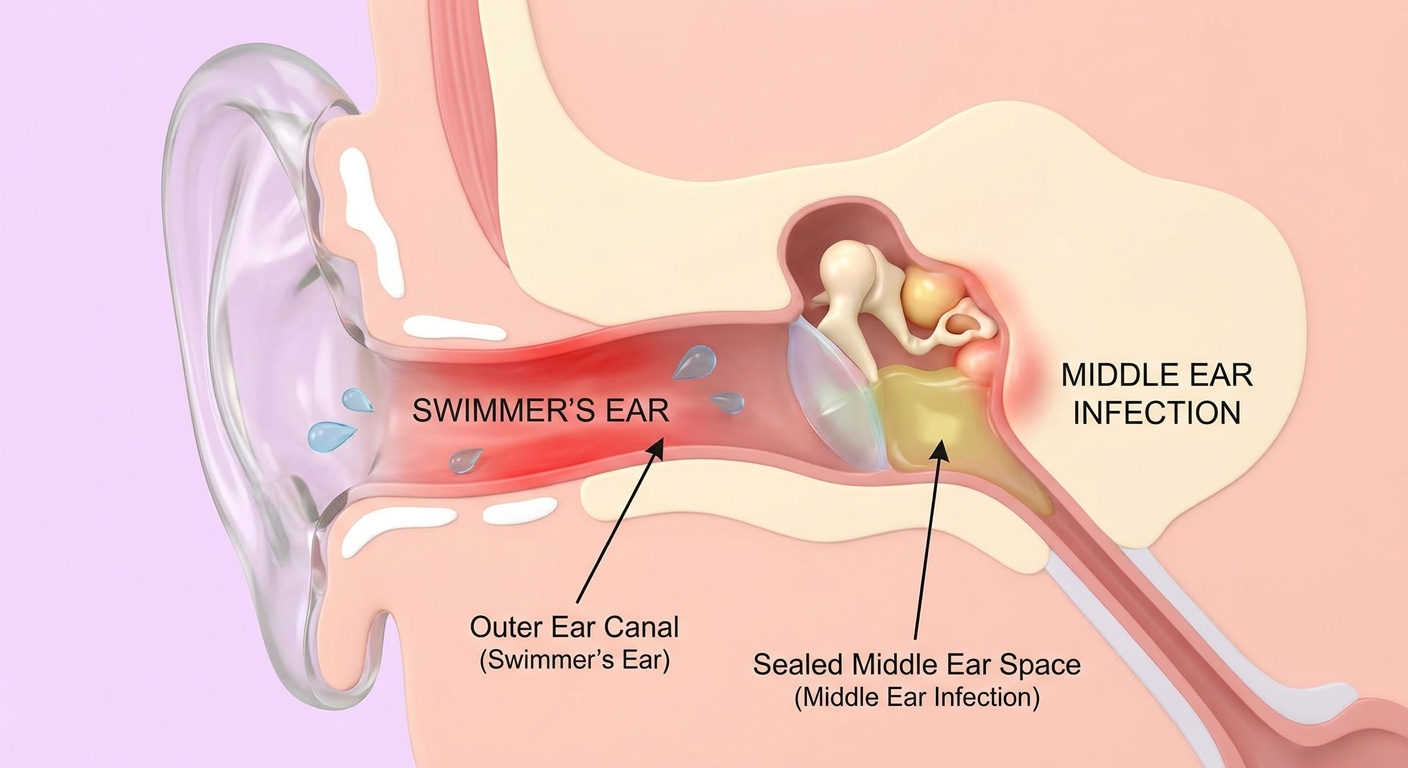
Understanding swimmer’s ear vs. middle ear infection helps you know what you might be dealing with, because the two conditions affect different parts of the ear and usually call for different care. Think of the ear as a two-part system: the outer canal is like an exposed hallway that water and debris can easily enter, while the middle ear is a sealed room behind a door (the eardrum) that can fill when its connecting tube gets clogged.
Swimmer’s ear (otitis externa) is an infection or inflammation of the outer ear canal—the tube that leads from the outside of the ear to the eardrum. A middle ear infection (acute otitis media) develops behind the eardrum. Distinguishing them matters because treatments are not interchangeable, and guessing can delay the right approach. A simple at-home clue is whether pain increases when the outer ear or tragus (the small flap in front of the ear canal) is gently pulled or pressed. Even so, an otoscopic exam by a clinician remains the most reliable way to confirm what is going on. Information here draws from CDC Ear Infection Basics (2024), Mayo Clinic, StatPearls/NCBI (2023), and healthdirect.
Knowing the location of the infection is the first step to proper care.
What Is Swimmer’s Ear (Otitis Externa)?
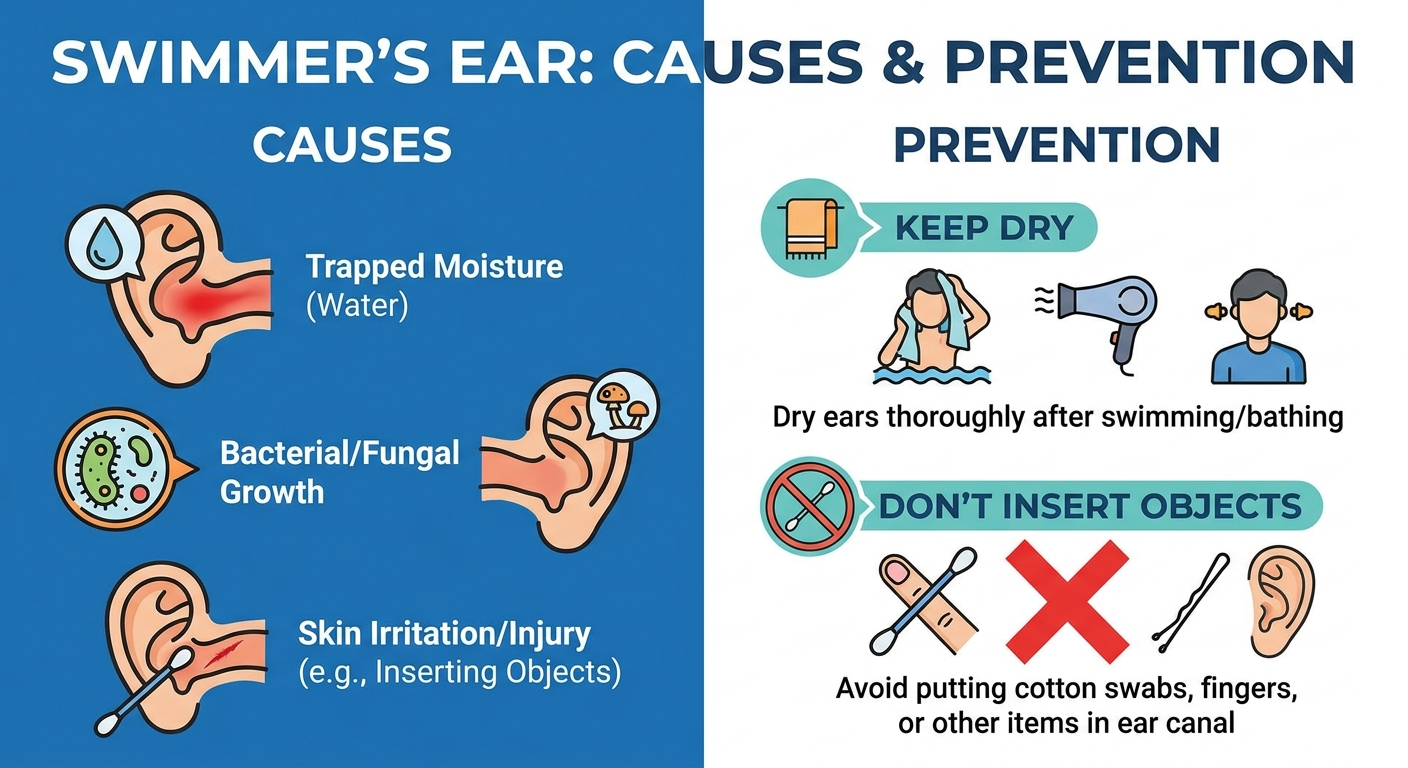
Swimmer’s ear is an infection of the skin lining the outer ear canal. Water that stays trapped, combined with a warm, moist environment, can allow bacteria or fungi to grow. Irritation from cotton swabs, earbuds, or certain skin conditions can also break down the canal’s natural defenses and invite infection. It is similar to leaving a damp washcloth in a closed bag—the moisture quickly encourages growth.
Swimmer’s ear typically stays in the outer canal.
Common Causes of Swimmer’s Ear
Retained water after swimming or showering is a frequent trigger, especially in humid conditions. Trauma from inserting objects such as cotton swabs or frequent earbud use can damage the delicate canal skin. Underlying eczema or similar skin issues may contribute as well. If water will not drain, practical steps for encouraging it to leave the ear can reduce one of the main risk factors; see guidance at https://sleepandsinuscenters.com/blog/how-to-get-water-out-of-your-ear-that-wont-drain-s-20260706191142. A frequent swimmer who also wears in-ear headphones, for instance, may notice symptoms after several days of combined exposure.
Avoiding moisture and trauma can prevent many cases.
Typical Symptoms of Swimmer’s Ear
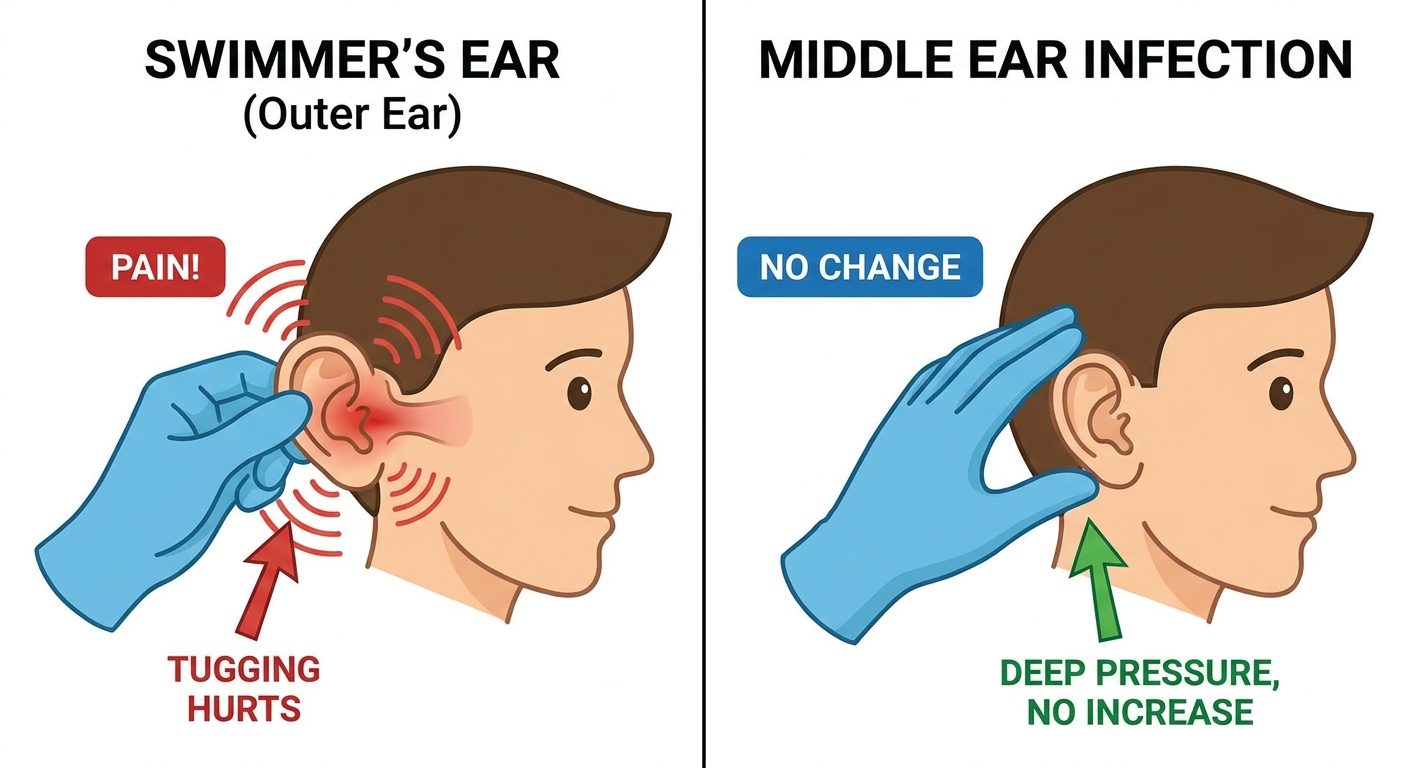
Pain often intensifies when the outer ear, earlobe, or tragus is moved or pressed. Itching, redness, and swelling of the canal are common. Some people notice a feeling of fullness or mild discharge. High fever and widespread illness are less typical. One patient might say, “It hurts the moment I tug on my ear,” which is a classic pointer.
Pain on tugging is a hallmark of outer ear involvement.
What Is a Middle Ear Infection (Acute Otitis Media)?
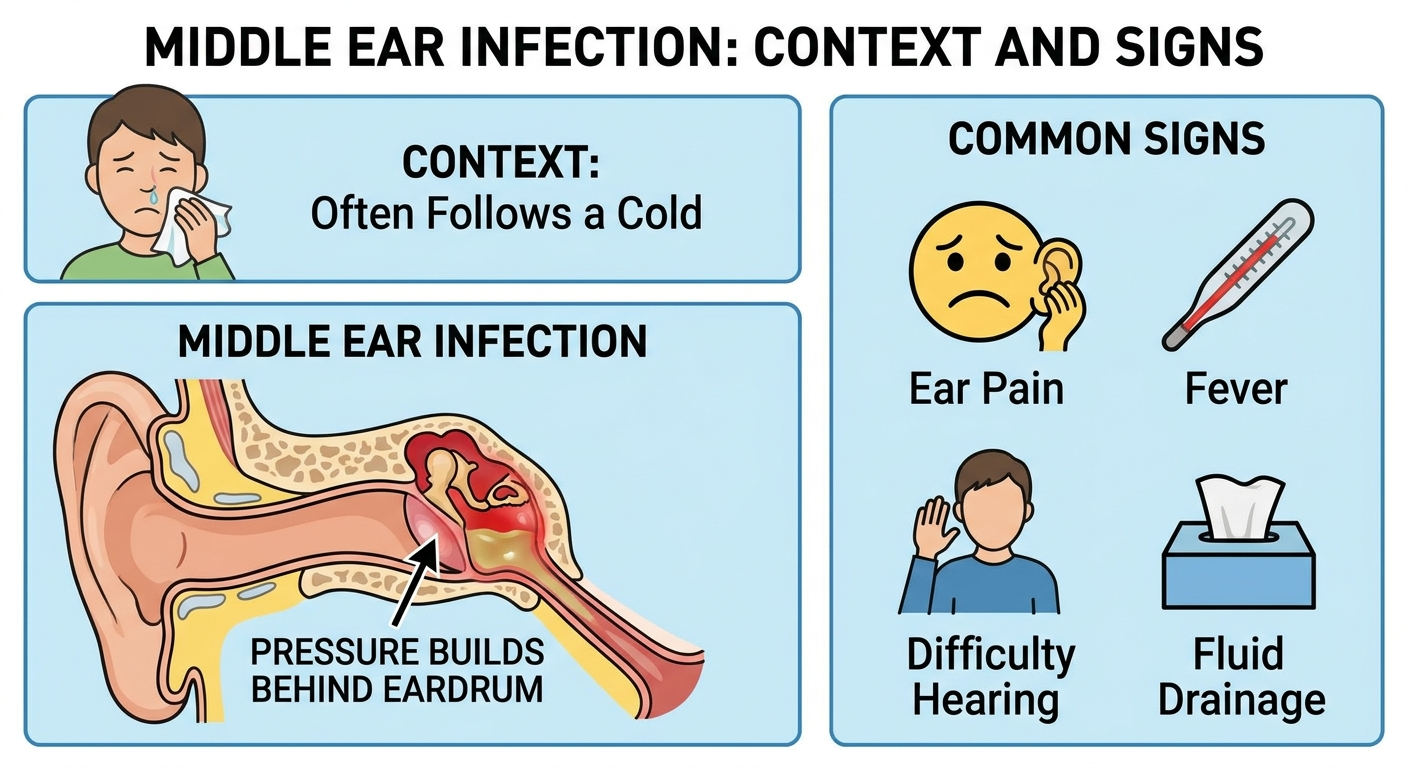
A middle ear infection involves inflammation or infection in the space behind the eardrum. It frequently follows a cold or other respiratory illness when fluid and germs become trapped because the Eustachian tube is not draining well. Young children are especially prone because their tubes are shorter and more horizontal. The middle ear behaves like a room whose drain pipe (the Eustachian tube) has become blocked after a storm.
This condition affects the space behind the eardrum.
Common Causes of Middle Ear Infections
Bacteria or viruses that linger after a cold, flu, or sinus issue can reach the middle ear. Eustachian-tube dysfunction, more common in kids, allergies, and sinus congestion all play roles. A toddler who had a runny nose last week and now wakes crying at night is a typical scenario.
Respiratory infections often precede middle ear problems.
Typical Symptoms of Middle Ear Infections
Ear pain or a sense of pressure is usual, yet it does not typically worsen with tugging on the outer ear. Fever, muffled hearing, and, in children, irritability or disrupted sleep often appear after a respiratory illness. Visible redness or swelling of the outer ear canal is uncommon.
Fever and recent illness point toward middle ear issues.
Key Differences: How to Tell Them Apart at Home (and Why You Still Need a Doctor)
A side-by-side look at swimmer’s ear vs. middle ear infection makes the contrast easier to see, though overlapping sensations of fullness or mild hearing change mean an in-office exam is still the safest confirmation.
Pain Trigger Test (the Quick Clue)
Pain that increases when the outer ear or tragus is pulled or pressed strongly suggests swimmer’s ear. A deeper ache or pressure that does not change with that movement leans more toward a middle-ear process. Try the gentle tug at home, but treat it only as a clue. Self-diagnosis based on this test alone is unreliable because symptoms can overlap and an otoscopic exam is required for confirmation.
Remember, this test is not a substitute for professional diagnosis.
Other Distinguishing Signs
Itching, canal swelling, outer-ear redness, and possible discharge favor swimmer’s ear. Fever, a recent cold, hearing difficulty, and child irritability more often accompany middle-ear infection. Both can produce a stuffed-ear feeling.
Who Gets Each Condition
Swimmer’s ear can affect anyone after water exposure or canal irritation. Middle-ear infections occur more often in young children following illness. Overlapping symptoms underscore why visual inspection of the canal and eardrum is valuable.
An exam is essential to confirm the exact location.

How Doctors Diagnose the Difference
An otoscopic exam is the gold-standard first step. The clinician looks at the ear-canal skin for swelling, redness, or debris typical of swimmer’s ear, versus the eardrum’s appearance (bulging, redness, or fluid) typical of middle-ear infection. Additional tests may be considered for young children or if complications are suspected.

Treatment: Why Getting the Right Diagnosis Matters
Because the two conditions occupy different locations, the usual approaches differ. Using the wrong type of medicine can delay relief.
Treatment for Uncomplicated Swimmer’s Ear
Prescription antibiotic or antifungal ear drops plus pain-relief measures are common. Keeping the ear dry during healing is important, with follow-up if improvement does not occur. Patients typically tilt the head for several minutes after placing drops so the medicine coats the canal.
Proper drops target the canal directly.
Treatment for Middle Ear Infections
Mild cases in older children and adults may be observed for two to three days with pain control. More severe, persistent, or very young-infant cases may involve oral antibiotics.
Observation or oral meds depend on severity and age.
When to Seek Medical Care Right Away
Consider prompt evaluation for severe or worsening pain, noticeable hearing loss, fever of 102.2°F (39°C) or higher, pus or fluid drainage, symptoms lasting more than two or three days, or any ear symptoms in an infant younger than six months. Scheduling: https://sleepandsinuscenters.com/appointments and comprehensive care info: https://sleepandsinuscenters.com/comprehensive-otolaryngology-care
Prompt care prevents complications.
Prevention and Everyday Tips
For swimmer’s ear, dry the ears after water exposure, avoid cotton swabs, and consider preventive drops after swimming (see tips: https://sleepandsinuscenters.com/blog/swimmers-ear-prevention-tips-for-effective-at-home-care). For middle-ear issues, manage colds and allergies and be aware of risk factors in children. Simple habits like using a humidifier when air is dry, never inserting objects into the ear canal, and addressing lingering respiratory symptoms support ear health. After swimming, tilting the head and gently pulling the earlobe can help remaining water escape.
Simple habits protect both outer and middle ear health.
Frequently Asked Questions
Can both occur at the same time? It is possible, though uncommon; an exam can clarify.
Is it safe to fly or swim with either? Flying with middle-ear fluid can increase pressure discomfort; swimming with an active outer-ear infection can worsen it. Ask a clinician for guidance.
Do over-the-counter drops work? Some drying or pain-relief products exist, but they do not replace a diagnosis or prescription drops when an infection is present.
How long until improvement is noticeable? Many people feel better within a few days of appropriate care, though timelines vary.
Should kids with recurrent middle-ear issues get tubes? Recurrent problems sometimes lead to a discussion of ear tubes; that decision requires a clinician’s review of the child’s history.
Professional advice is key for any ear concern.
Conclusion
The core distinction in swimmer’s ear vs. middle ear infection is location: the outer canal versus the space behind the eardrum. The tragus-pull test offers a quick clue, yet an otoscopic exam remains the reliable way to confirm the diagnosis and choose fitting care. If symptoms persist or red-flag signs appear, scheduling an appointment with Sleep and Sinus Centers of Georgia can provide that evaluation. Book an appointment today: https://www.sleepandsinuscenters.com/
Sources: Centers for Disease Control and Prevention, Ear Infection Basics (2024); NCBI Bookshelf/StatPearls, Otitis Externa (2023); Mayo Clinic, Ear infection (middle ear): Symptoms & causes; healthdirect, Swimmer’s ear (otitis externa).
This article is for educational purposes only and is not medical advice. Please consult a qualified healthcare provider for diagnosis and treatment.
Don’t let allergies slow you down. Schedule a comprehensive ENT and allergy evaluation at Sleep and Sinus Centers of Georgia. We’re here to find your triggers and guide you toward lasting relief.