Superior Semicircular Canal Dehiscence (SSCD): Symptoms, Causes, Diagnosis & Treatment
Hearing your own voice, heartbeat, or footsteps unusually loudly can be unsettling. Imagine sitting quietly yet sensing every swallow, joint crack, or pulse as if it were amplified through a megaphone. Add brief dizziness or a bouncing visual sensation after a sneeze, cough, or loud noise, and everyday life may feel unpredictable. These frustrations can point to a rare inner-ear condition known as superior semicircular canal dehiscence (SSCD), also called superior canal dehiscence syndrome (SCDS).
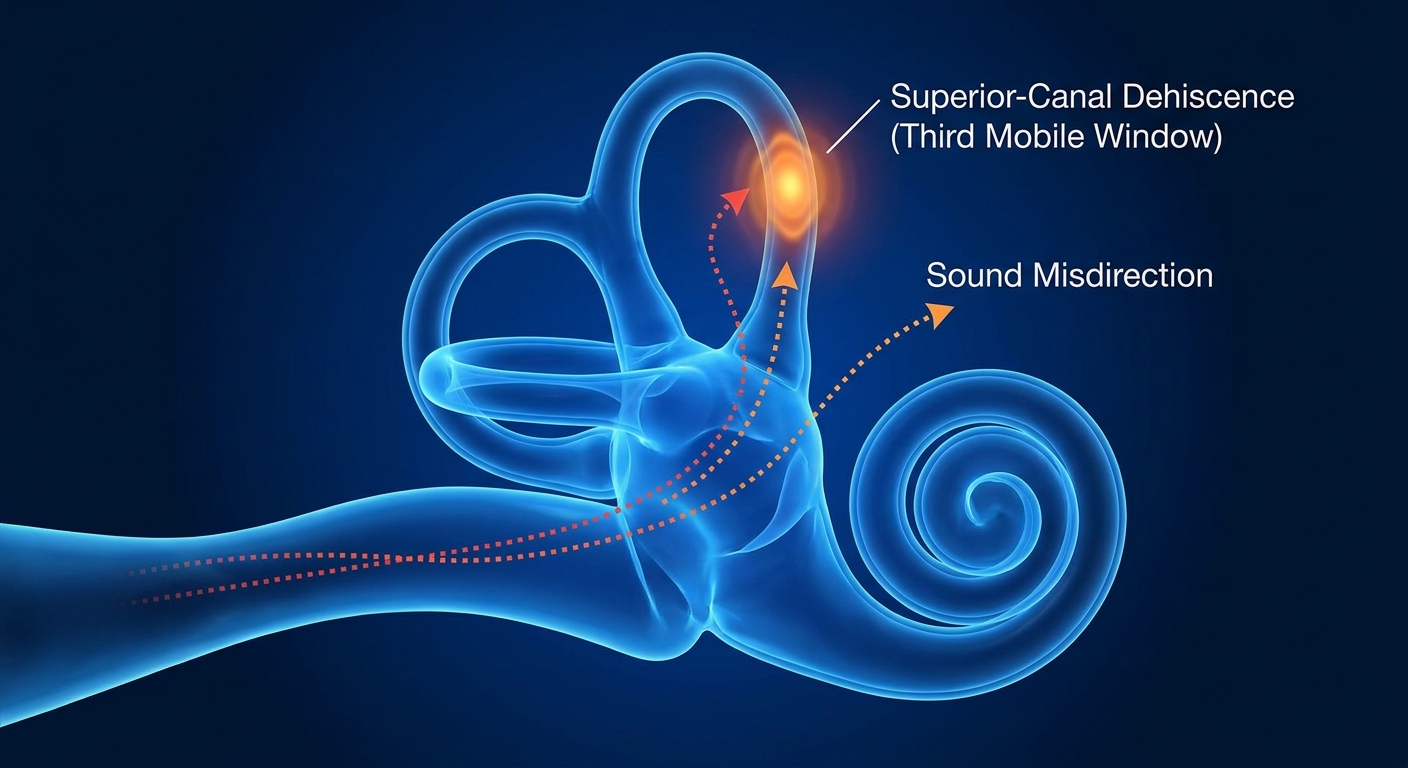
SSCD occurs when a thin or absent area of bone over the superior semicircular canal creates an extra opening, or “third mobile window,” in the inner ear. Sound and pressure then stimulate the balance system in abnormal ways. This post explains typical symptoms, why imaging alone is not enough for diagnosis, and the range of conservative and surgical options. Radiographic dehiscence appears in roughly 1–3 percent of people, yet many remain asymptomatic (Ward et al., 2021; Ward et al., 2017). If these issues disrupt daily activities, an evaluation with an ENT specialist experienced in inner-ear disorders can help clarify next steps.
Seeking timely specialist input can prevent unnecessary worry when everyday sounds or pressures start to feel overwhelming.
What Is Superior Semicircular Canal Dehiscence (SSCD)?
The inner ear contains three semicircular canals that detect head motion, much like tiny gyroscopes. Normally, two windows (the oval and round windows) allow sound energy to travel through the cochlea. In SSCD, a bony defect over the superior canal adds a third window.
The “Third Mobile Window” Explained: Think of the inner ear as a sealed fluid-filled system, similar to a well-tuned garden hose. An extra opening lets sound or pressure energy leak toward the balance organs instead of staying confined to hearing structures. This abnormal transmission can trigger vestibular responses even when the head is still—like unexpected sprays from a leaky hose disturbing nearby plants.
How It Affects Hearing and Balance: The extra window often produces bone-conduction hyperacusis, making internally generated sounds seem amplified, and can contribute to autophony. Pressure or sound waves may also stimulate the canal itself, producing brief vertigo or oscillopsia (Johns Hopkins Medicine; Diaz et al., 2017). Patients frequently notice that their own voice or footsteps drown out external conversation, turning simple activities into sources of distraction.
The extra opening in the inner ear is what sets SSCD apart from typical hearing or balance disorders.
SSCD Symptoms: What Patients Typically Experience
Symptoms vary widely. Some people notice only mild fullness; others find certain sounds or pressures intensely disruptive. Many radiographic findings never produce complaints.
Hearing-Related Symptoms
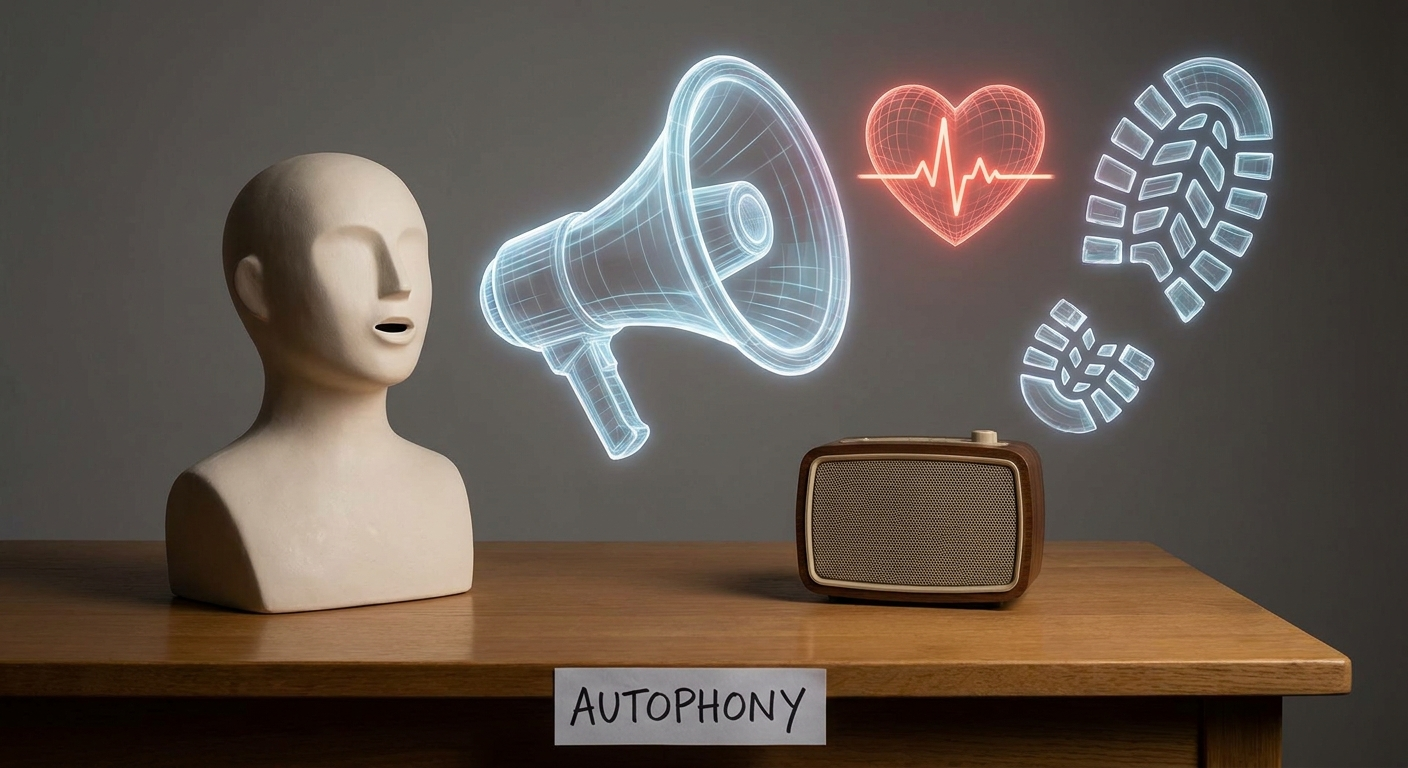
Common reports include autophony (hearing one’s own voice, chewing, footsteps, or heartbeat at an unusually loud volume), pulsatile tinnitus, and sensitivity to internal or external sounds. For example, the crunch of an apple or the rhythm of one’s heartbeat can become so prominent that it interferes with meals or quiet moments. Learn more about autophony in our related post: Autophony: Causes and Why You Hear Your Own Voice Loudly (https://sleepandsinuscenters.com/blog/autophony-causes-why-you-hear-your-own-voice-loudly).
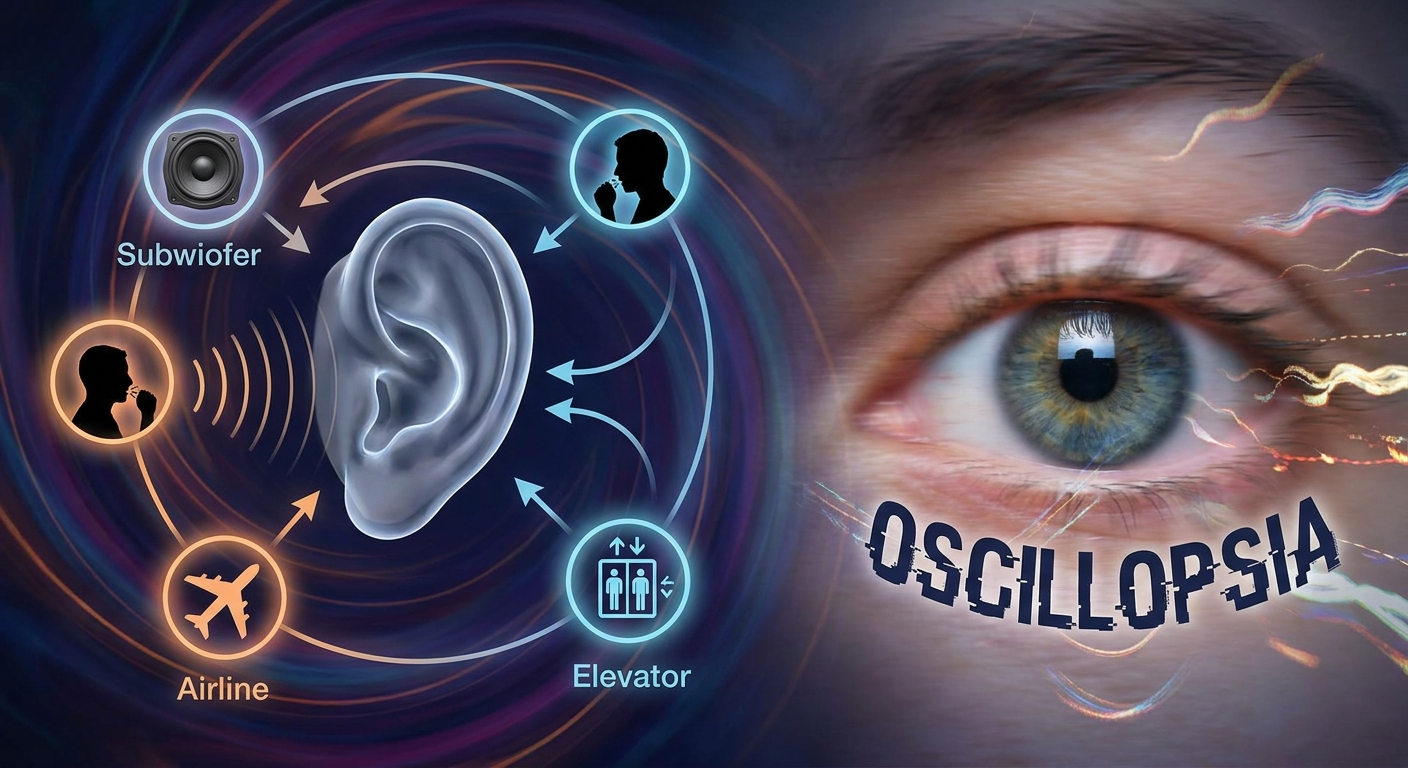
Balance and Visual Symptoms
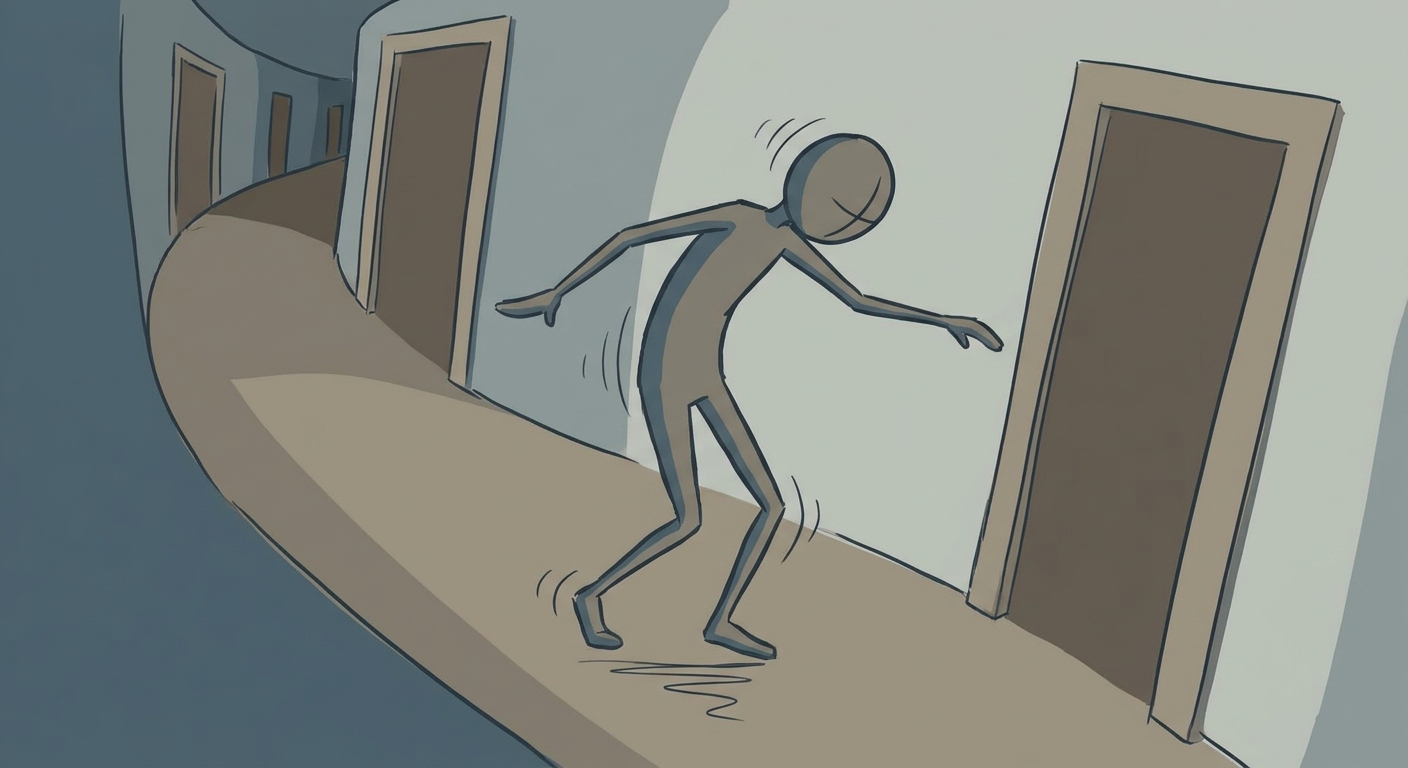
Sound- or pressure-induced vertigo and oscillopsia (a visual bouncing or blurring) may follow loud noises, coughing, sneezing, straining, or changes in altitude or atmospheric pressure. These episodes are typically brief—lasting only seconds—yet startling enough to make a person pause mid-stride, as if the world just skipped.
Other Common Complaints
Ear fullness and fatigue from managing symptoms also occur. Because the picture can overlap with other ear or sinus concerns, professional evaluation is important. Some describe a constant low-level awareness that saps energy over time.
When Symptoms Are Mild vs. Disruptive
Mild cases may be occasional and manageable with simple tweaks, such as skipping a loud concert. Disruptive cases interfere with conversation, work, exercise, or travel, sometimes prompting people to avoid social settings altogether. The Bárány Society consensus (Ward et al., 2021) and clinical reviews emphasize that CT findings alone do not confirm the syndrome; many people with dehiscence have no symptoms (Duke ENT).
Symptoms that disrupt daily life warrant a thorough evaluation rather than relying on imaging alone.
Causes and Risk Factors of SSCD
The Bony Defect: The covering bone over the superior semicircular canal is thin or absent. This thinning is often congenital and may become symptomatic only later in life, as the remaining bone continues to remodel.
Possible Triggers: Head trauma, aging-related bone changes, or increased intracranial pressure can unmask the defect. In some cases the cause remains idiopathic. A minor bump years earlier, for instance, might later coincide with noticeable symptoms once the covering has thinned further.
Why Not Everyone with Dehiscence Has Symptoms: Defect size, exact location, and coexisting inner-ear factors influence whether symptoms appear. SSCD is not typically caused by allergies or sinus infections, although those conditions can increase ear pressure and temporarily worsen sensations. Location matters: a tiny opening in one spot may stay silent while a similarly sized defect elsewhere produces classic complaints.
Identifying potential triggers can help patients manage or prevent symptom flare-ups.
How SSCD Is Diagnosed (CT Alone Is Not Enough)
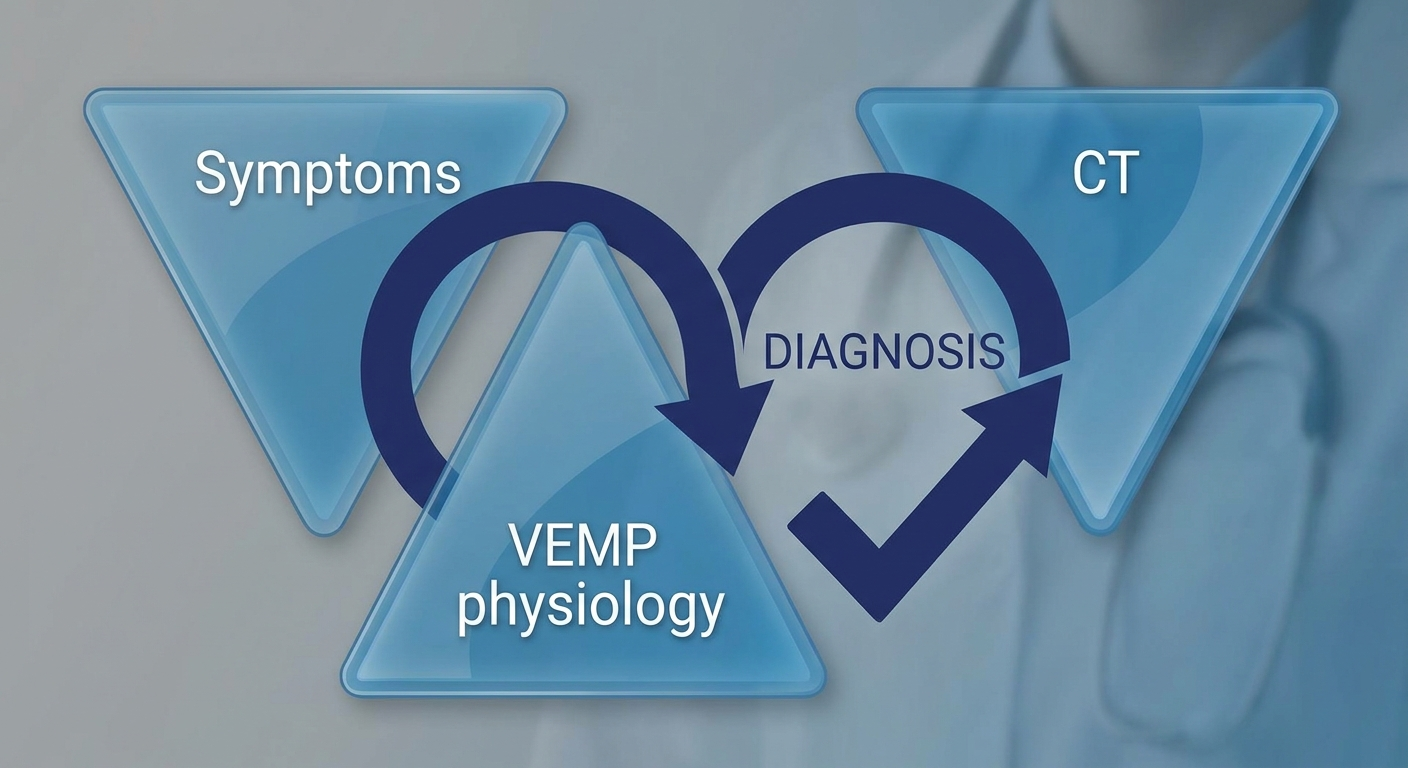
The Three-Part Consensus Criteria: The Bárány Society (Ward et al., 2021) requires compatible symptoms, physiologic testing that demonstrates abnormal third-window pressure transmission, and high-resolution temporal-bone CT showing dehiscence. All three categories must be present. Missing any one of them leaves the diagnosis incomplete.
Tests You May Undergo: Audiometry often reveals a low-frequency air-bone gap or conductive hearing loss, reflecting better bone than air conduction. Vestibular evoked myogenic potential (VEMP) testing and fistula tests can confirm abnormal pressure transmission through lowered thresholds or exaggerated responses.
Imaging Pitfalls: High-resolution CT can overcall dehiscence. Population studies show 1–3 percent radiographic prevalence, yet the symptomatic syndrome is far rarer (Ward et al., 2017). Correlation with symptoms and physiology is essential; a scan without matching tests and history is not enough.
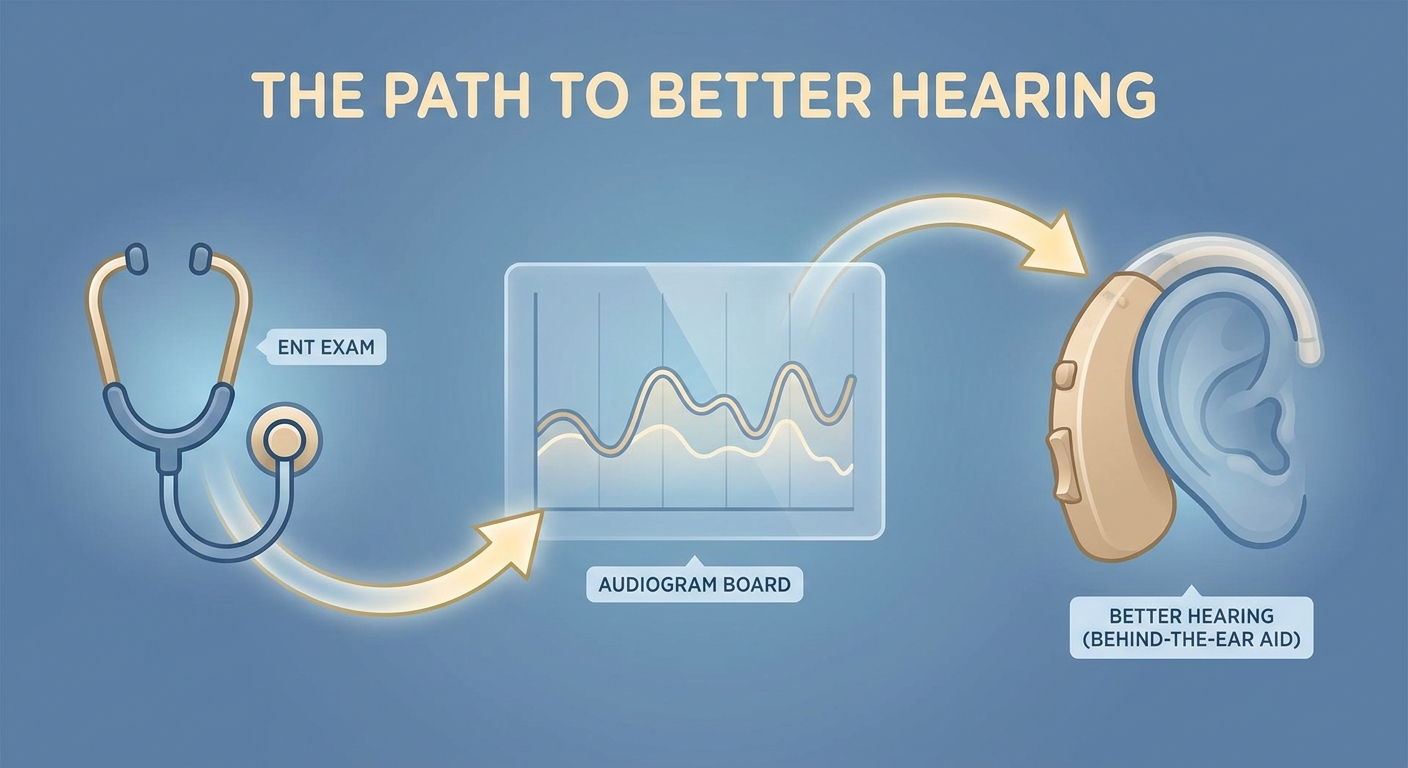
Why See a Specialist ENT? An otolaryngologist familiar with inner-ear disorders can coordinate the full work-up, distinguishing SSCD from overlapping conditions. Explore our comprehensive otolaryngology care pathway for diagnosis and treatment planning (https://sleepandsinuscenters.com/comprehensive-otolaryngology-care).
Consulting a specialist ensures all three diagnostic criteria are properly assessed.
SSCD Treatment Options: Conservative Care vs. Surgery
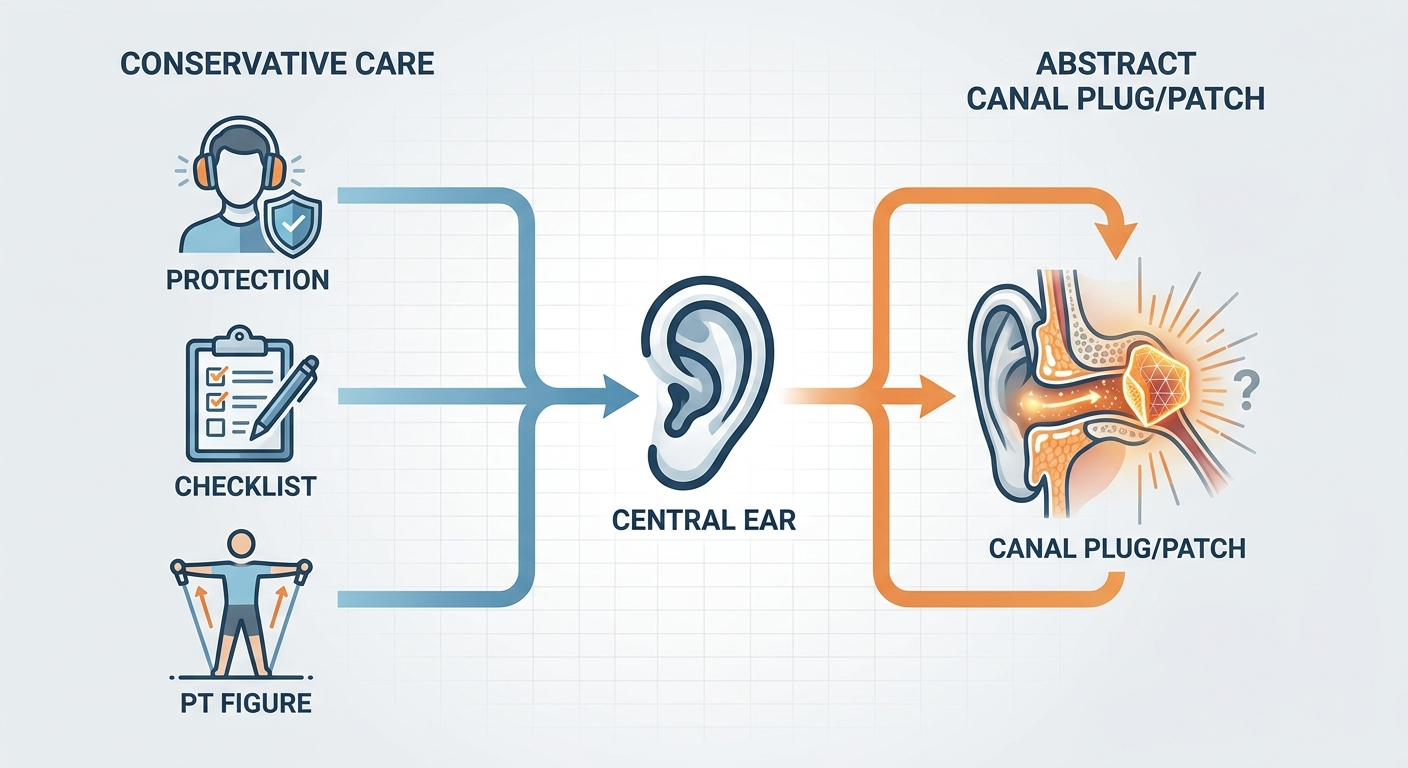
Management is individualized. Mild or infrequent symptoms are often observed.
Watchful Waiting and Lifestyle Adjustments for Mild Cases: Trigger avoidance—loud environments, heavy straining, rapid pressure changes—and, in some instances, vestibular physical therapy can reduce impact. Simple steps such as using ear protection at sporting events or easing constipation often bring noticeable relief.
When Surgery Is Considered: Surgery may be discussed when autophony, vertigo, or oscillopsia significantly disrupt quality of life—when, for instance, a cough reliably produces visual bouncing or one’s own voice makes phone calls exhausting.
Surgical Approaches: Canal plugging or resurfacing can be performed via middle-fossa or transmastoid routes. The choice depends on anatomy and surgeon experience (Diaz et al., 2017; Ward et al., 2017). Plugging seals the canal itself; resurfacing covers the opening with bone or grafting material.
Recovery, Risks, and Expected Outcomes: Many patients report substantial improvement. Hearing and vestibular risks exist and are reviewed in detail with the surgical team (Johns Hopkins/Duke). Temporary imbalance is common early on, and close follow-up monitors both hearing and balance as the inner ear adjusts.
The decision between conservative care and surgery depends on how much symptoms affect quality of life.
Living with SSCD: Practical Lifestyle Tips

Daily Strategies: Protect ears in noisy settings, manage constipation to avoid straining, and use gentle pressure-equalization techniques during altitude changes. Fiber-rich meals and staying hydrated, for example, reduce the need for forceful Valsalva maneuvers.
Work, Travel, and Exercise Modifications: Plan around known triggers and consider gradual return to activity after any procedure. A quiet workspace or remote-meeting option can help, as can choosing swimming over heavy lifting.
Tracking Symptoms and When to Follow Up: Note patterns of autophony, dizziness, or visual disturbance. A simple diary of triggers—certain sounds, weather shifts, or exertion—guides later discussions. Related vestibular information appears in our inner-ear balance disorders guide (https://sleepandsinuscenters.com/blog/inner-ear-balance-disorders-causes-symptoms-treatment-guide).
Tracking personal triggers empowers patients to live more comfortably with SSCD.
SSCD FAQs
What is the difference between SSCD and SCDS? SSCD describes the bony opening; SCDS (superior canal dehiscence syndrome) refers to the symptomatic clinical picture that meets consensus criteria. In other words, the anatomy can exist without the full syndrome.
Can SSCD go away on its own? The bony defect itself does not close spontaneously. Symptoms may remain stable or fluctuate, especially if triggers are avoided. Many people learn to live comfortably once they recognize and sidestep their personal precipitants.
Is SSCD related to sinus problems or allergies? It is not caused by sinus disease or allergies, though those conditions can alter ear pressure and temporarily intensify symptoms. Treating the sinus issue may therefore ease secondary discomfort without addressing the dehiscence itself.
How successful is surgery? Most selected patients experience meaningful reduction in autophony and sound- or pressure-induced symptoms, though individual results vary. Success hinges on careful patient selection and realistic expectations discussed beforehand.
Can I fly or scuba dive with SSCD? Pressure changes can provoke symptoms. Discussion with an ENT specialist experienced in inner-ear conditions is advisable before travel or diving; some patients use equalization techniques or choose to postpone certain activities.
Conclusion
Accurate identification of superior semicircular canal dehiscence (SSCD) rests on symptoms, physiologic tests, and imaging together—not CT findings alone. Treatment ranges from observation and lifestyle measures to canal plugging or resurfacing when symptoms are severe. You do not have to accept debilitating autophony or sound-triggered dizziness as inevitable.
Schedule an evaluation with an ENT specialist at Sleep and Sinus Centers of Georgia. Visit our appointments page (https://sleepandsinuscenters.com/appointments) to book an appointment today, or learn more about comprehensive otolaryngology care (https://sleepandsinuscenters.com/comprehensive-otolaryngology-care).
Taking that first step can restore predictability to daily life.
Related reading
Autophony: Causes and Why You Hear Your Own Voice Loudly (https://sleepandsinuscenters.com/blog/autophony-causes-why-you-hear-your-own-voice-loudly)
Inner-Ear Balance Disorders: Causes, Symptoms, Treatment Guide (https://sleepandsinuscenters.com/blog/inner-ear-balance-disorders-causes-symptoms-treatment-guide)
Comprehensive Otolaryngology Care (https://sleepandsinuscenters.com/comprehensive-otolaryngology-care)
Sources
Ward et al., Journal of Vestibular Research, 2021; Ward et al., 2017; Diaz et al., 2017; Johns Hopkins Medicine; Duke Department of Head and Neck Surgery, 2023.
This article is for educational purposes only and is not medical advice. Please consult a qualified healthcare provider for diagnosis and treatment.
Don’t let allergies slow you down. Schedule a comprehensive ENT and allergy evaluation at Sleep and Sinus Centers of Georgia. We’re here to find your triggers and guide you toward lasting relief.