Salivary Gland Damage From Radiation: Symptoms, Causes, and Treatment Options
Radiation therapy for head and neck cancers commonly damages the salivary glands. This reduces saliva production, leading to radiation-induced xerostomia or dry mouth after head and neck radiation. Patients often notice thick or sticky saliva, trouble chewing, swallowing, or speaking, altered taste, oral discomfort, and higher chances of cavities and infections. Some improvement in salivary function frequently occurs over 6 to 18 months, with a median around 12 months after intensity-modulated radiation therapy (IMRT), though effects can last or become permanent. Gland-sparing IMRT stands out as the strongest preventive step. This educational overview covers what happens, symptoms, causes, recovery, prevention, treatments, and practical strategies, drawing from sources including the National Cancer Institute (2024), ISOO/MASCC/ASCO Guideline (2021), Sroussi et al. (2017), Lin et al. ORARAD Study (2022), and Hong et al. (2024).
Think of saliva as the mouth’s built-in lubricant and cleanser, much like oil that keeps an engine running smoothly. When radiation disrupts that flow, everyday actions such as eating a sandwich or holding a conversation can suddenly feel effortful. Many patients describe the change as “my mouth never feels quite right anymore.”
Radiation's impact on saliva can turn routine moments into daily challenges.
What Happens to Salivary Glands During Head and Neck Radiation?
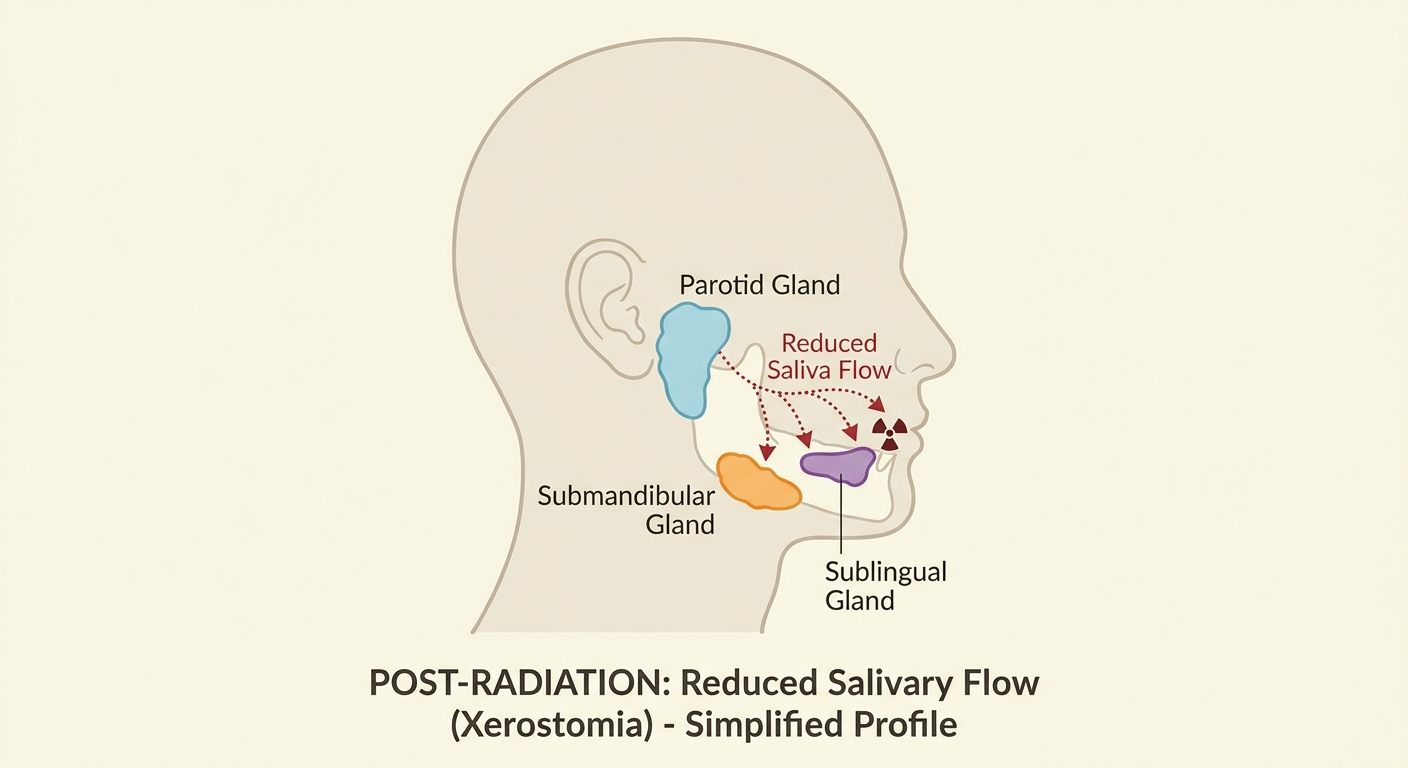
The major salivary glands (parotid, submandibular, and sublingual) plus countless minor glands throughout the mouth are highly sensitive to radiation. When these glands receive radiation, saliva volume drops and its quality changes. The result is dry mouth or thick, sticky saliva that no longer lubricates, cleans, or protects the mouth as it should. This salivary gland damage from radiation interferes with everyday oral functions and can persist after treatment ends.
Even a modest reduction can leave the lining of the mouth feeling parched, similar to the way dry air in winter makes lips crack.
Even small changes in saliva can leave the mouth feeling uncomfortably dry.
How Radiation Injures Major and Minor Salivary Glands
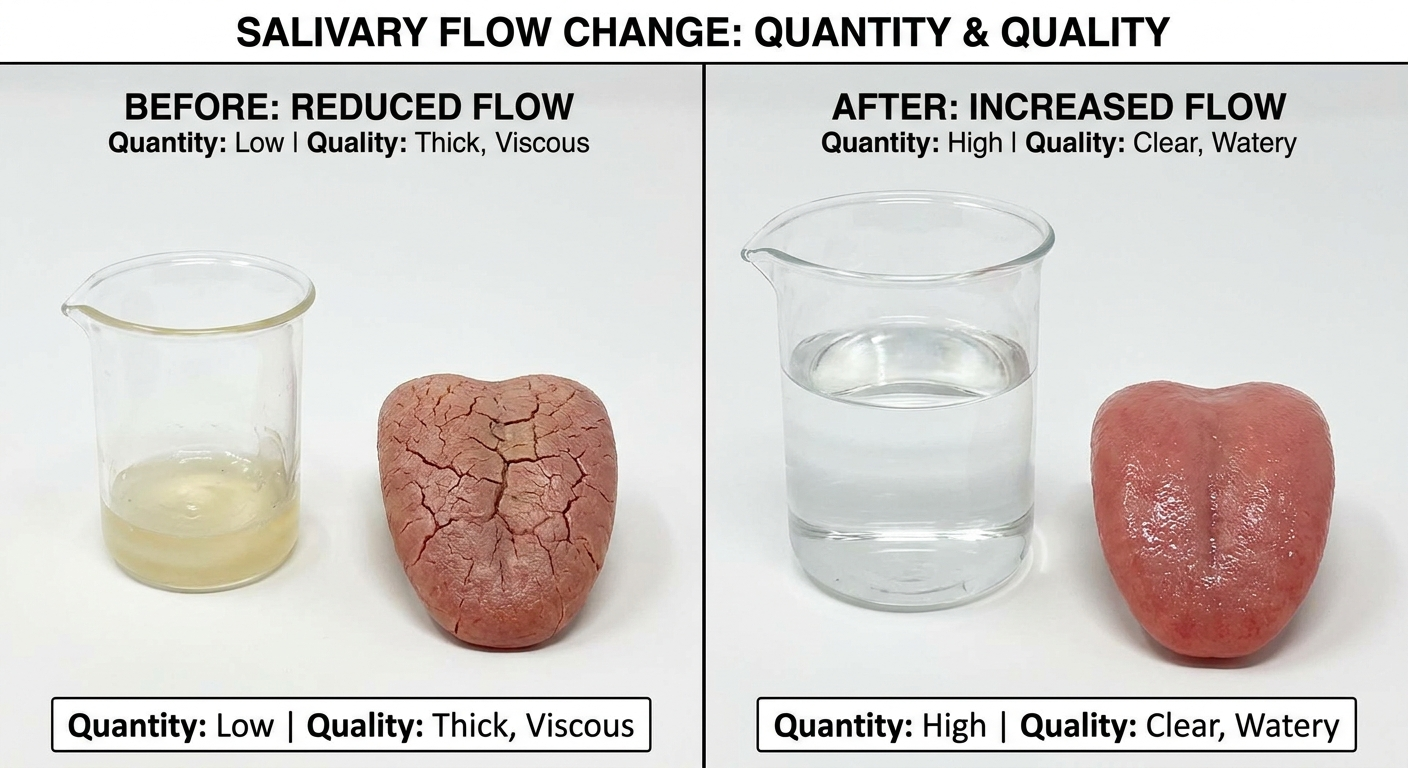
Radiation delivers direct cellular injury plus inflammation inside the glands. Acinar cells that produce saliva are especially vulnerable, leading to hypofunction (reduced output). Even contemporary techniques can affect glands depending on tumor location and the radiation dose delivered to nearby tissues. Minor glands lining the lips, cheeks, and palate often receive some dose as well, compounding dryness.
Imagine those acinar cells as tiny factories; radiation can shut down many of the production lines at once. The remaining output is often thicker and less effective at washing away food particles or neutralizing acids.
Radiation targets the cells that make saliva, reducing both quantity and quality.
Symptoms of Radiation-Induced Dry Mouth (Xerostomia)
Typical experiences include ongoing dryness, thick or sticky saliva, difficulty chewing or swallowing, changes in speech, taste alterations (dysgeusia), a burning or uncomfortable sensation in the mouth, frequent thirst, cracked lips, and oral infections such as candidiasis. Loss of saliva’s natural protective and buffering effects also raises the risk of dental caries substantially (NCI, 2024; Sroussi et al., 2017). Similar patterns of dryness appear in other settings; learn more in our discussion of dry mouth as you age: https://sleepandsinuscenters.com/blog/dry-mouth-as-you-age-ent-causes-symptoms-and-treat-20260716191202
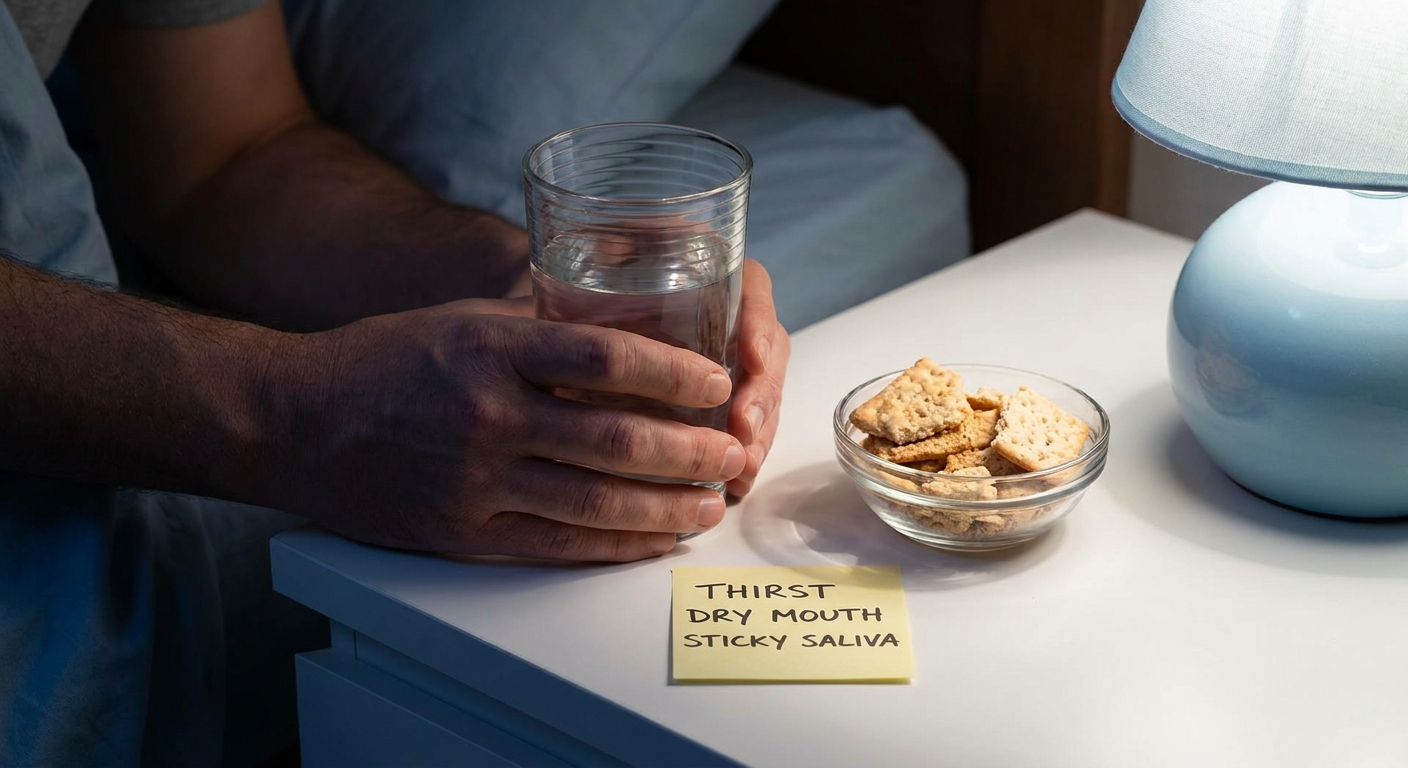
One clinician often hears, “I wake up several times a night just to sip water.” That night-time thirst is a common, if under-discussed, complaint.
Nighttime thirst and persistent dryness often signal the need for extra oral care.
Everyday Impacts on Eating, Speaking, Taste, and Comfort
Dry or spicy foods become hard to manage. Many people feel they must sip water constantly just to swallow or talk comfortably. Speech can sound different or feel effortful, sometimes causing social self-consciousness. Taste changes further reduce enjoyment of meals, and overall mouth comfort declines.
A simple cracker can turn into a choking hazard without enough moisture. Patients sometimes avoid restaurants or family dinners because they worry about speaking clearly or needing extra water at the table.
Meals and conversations may require extra planning when saliva is limited.
Increased Risks of Cavities, Infections, and Oral Complications
Without saliva’s cleansing and antimicrobial action, tooth decay can progress rapidly. Periodontal problems and mucosal infections become more common. Long-term oral protection therefore remains essential after treatment.
A filling that once lasted years may now fail in months if plaque and acids sit undisturbed on the teeth.
Protective dental habits become even more important after radiation.
Causes and Risk Factors for Salivary Gland Damage
The primary cause is radiation directed at the head and neck region. Higher total doses, larger treatment fields, and older conventional (non-IMRT) techniques increase the likelihood of salivary gland damage from radiation. Concurrent chemotherapy can intensify effects in some cases. Tumors located near the glands, such as many oropharyngeal cancers, place the salivary tissues in the radiation path and raise risk.
Location matters: a tumor on the tonsil, for example, often means the nearby parotid glands sit inside the treatment field.
Tumor location and radiation technique both influence the degree of gland injury.
Recovery Timeline After Radiation: What Patients Can Expect
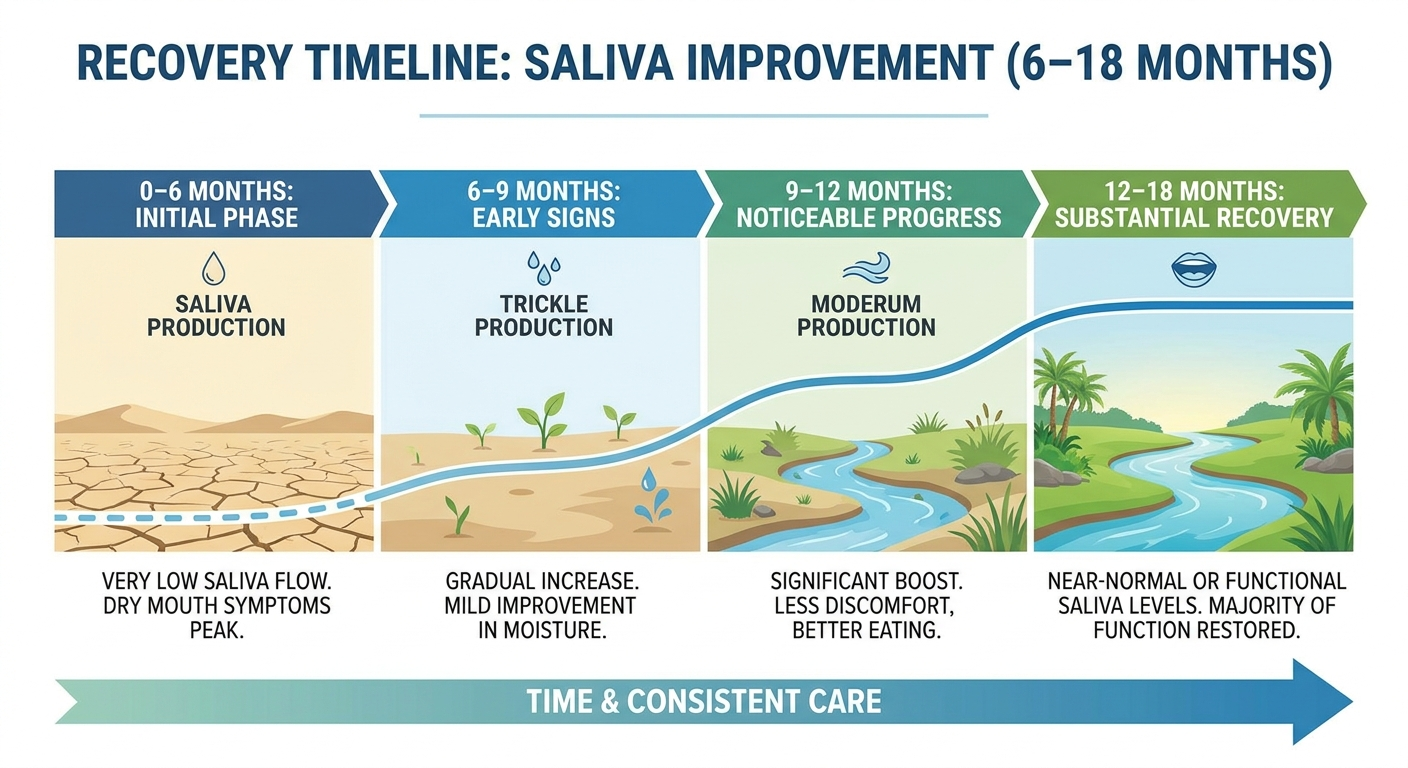
Salivary flow and symptoms frequently improve between 6 and 18 months after radiation, with studies reporting a median recovery time of about 12 months following IMRT. Further gradual gains can continue for years in some individuals. However, function often does not return fully to pretreatment levels, and a portion of patients experience long-lasting or permanent dryness (Lin et al., 2022; ISOO/MASCC/ASCO, 2021). Setting realistic expectations helps patients plan ongoing care.
Some people notice the first hints of improvement around the six-month mark, while others wait closer to a year and a half. Either way, the process is usually slow and incomplete.
Recovery is possible but often gradual and incomplete.
Prevention: Gland-Sparing Radiation Techniques
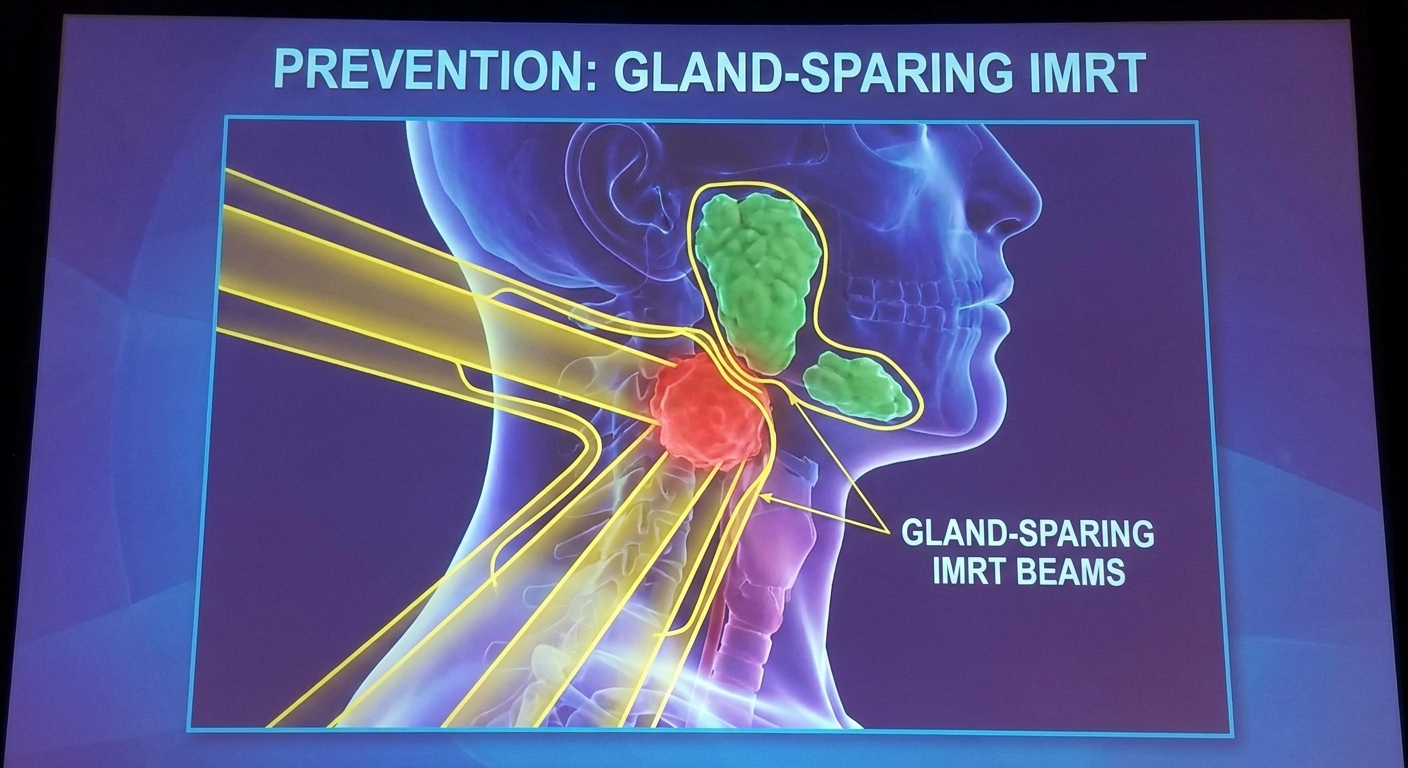
The most effective approach occurs before treatment begins. The ISOO/MASCC/ASCO guideline strongly recommends IMRT planned to spare both major and minor salivary glands whenever possible. Current evidence is insufficient to support routine use of pilocarpine or amifostine during modern radiation therapy (ISOO/MASCC/ASCO, 2021; Hong et al., 2024). Patients can discuss gland-sparing options with their radiation oncologist as part of treatment planning.
Asking “Can we spare as much of the salivary glands as possible?” during the planning visit is one of the most useful questions a patient can raise.
Early planning with gland-sparing IMRT offers the best chance of preserving saliva.
Treatment Options for Established Salivary Gland Damage
Once salivary gland damage from radiation has occurred, care centers on easing symptoms and preventing complications. Remaining gland function influences which options may help. Related approaches for persistent dryness appear in our overview of ENT interventions for chronic dry throat: https://sleepandsinuscenters.com/blog/ent-interventions-for-chronic-dry-throat
Saliva Substitutes, Hydration, and Stimulants
Over-the-counter saliva substitutes or mucosal lubricants, frequent sips of water, sugar-free gum or lozenges, and room humidification often provide noticeable comfort (NCI, 2024). These measures replace or stimulate what little saliva remains.
Using a substitute just before meals, for instance, can make chewing a sandwich far less of a struggle.
Simple hydrating products can ease daily eating and speaking.
Prescription Medications (Pilocarpine and Cevimeline)
Sialagogues such as pilocarpine or cevimeline may be considered after radiation when some residual gland function is present. Possible side effects include sweating, headache, nausea, dyspepsia, and increased urination. These agents are not recommended routinely during radiation when modern gland-sparing techniques are used (ISOO/MASCC/ASCO, 2021).
A trial period of a few weeks often reveals whether the extra saliva is worth the extra sweating.
Medications may help selected patients with remaining gland activity.
Essential Long-Term Dental and Oral Protection
Meticulous daily oral hygiene, frequent professional dental visits, and dentist-directed high-fluoride treatments or custom trays are critical. These steps help counteract the elevated risk of caries and infection (Sroussi et al., 2017).
Custom fluoride trays worn at night, for example, bathe the teeth in protective minerals while you sleep.
Consistent dental care is key to preventing rapid tooth decay.

Adjunctive Therapies with Lower-Quality Evidence
Acupuncture and transcutaneous electrostimulation have been explored and may benefit selected patients, though supporting evidence is of lower quality (ISOO/MASCC/ASCO, 2021).
Some patients find these extra sessions soothing even if the scientific support remains modest.
Additional therapies may offer comfort for some individuals.
Lifestyle Tips and Home Strategies for Managing Dry Mouth
Simple daily habits can ease discomfort: sip water often, limit caffeine, alcohol, tobacco, and very dry or spicy foods, run a humidifier (especially at night), chew sugar-free xylitol gum, and keep up excellent oral care. Ongoing partnership with a dentist and an ENT specialist supports monitoring and adjustments.
Keeping a water bottle within arm’s reach and choosing softer, moister foods can turn mealtime from a chore back into something enjoyable.
Small daily adjustments can make a noticeable difference in comfort.
Frequently Asked Questions About Radiation and Salivary Glands
Will my saliva return after radiation? — Some recovery commonly occurs between 6 and 18 months (median about 12 months after IMRT) and may continue longer, though it is often incomplete (Lin et al., 2022).
Is dry mouth after radiation permanent? — It can be long-lasting or permanent for some patients, while others experience meaningful improvement (ISOO/MASCC/ASCO, 2021).
What can I do during radiation to protect my glands? — The strongest supported step is gland-sparing IMRT planned in advance (ISOO/MASCC/ASCO, 2021; Hong et al., 2024).
Are there medications that really work? — After radiation, pilocarpine or cevimeline may help if residual function remains; they are not routinely used during modern radiation (ISOO/MASCC/ASCO, 2021).
How do I prevent cavities? — Consistent oral hygiene, regular dental care, and professionally guided high-fluoride products reduce risk (Sroussi et al., 2017; NCI, 2024).
Answers to common questions help set realistic expectations.
When to See an ENT Specialist for Persistent Dry Mouth
Persistent symptoms that affect quality of life, swallowing, nutrition, or dental health warrant evaluation. An ENT specialist can assess remaining gland function, exclude other contributing factors, and help coordinate care with oncology and dental teams. Learn about our comprehensive otolaryngology care: https://sleepandsinuscenters.com/comprehensive-otolaryngology-care or schedule an appointment: https://sleepandsinuscenters.com/appointments
If dryness still disrupts sleep, eating, or speaking months after treatment, it is time to book an appointment so a specialist can map out the next steps.
Specialist evaluation can guide next steps for lasting symptoms.
Final Thoughts
Radiation-induced salivary gland hypofunction is common yet often manageable through prevention with IMRT, supportive measures, and dedicated dental protection. Many patients see partial recovery, though results vary. Close collaboration among oncology, radiation, dental, and ENT teams supports the best possible comfort and oral health. For personalized assessment of ongoing dry mouth after head and neck radiation, consider consulting an ENT specialist at Sleep and Sinus Centers of Georgia. Visit https://www.sleepandsinuscenters.com/ to book an appointment today.
This article is for educational purposes only and is not medical advice. Please consult a qualified healthcare provider for diagnosis and treatment.
Don’t let allergies slow you down. Schedule a comprehensive ENT and allergy evaluation at Sleep and Sinus Centers of Georgia. We’re here to find your triggers and guide you toward lasting relief.