Normal Blood Oxygen Levels During Sleep: What’s Healthy and When to Worry
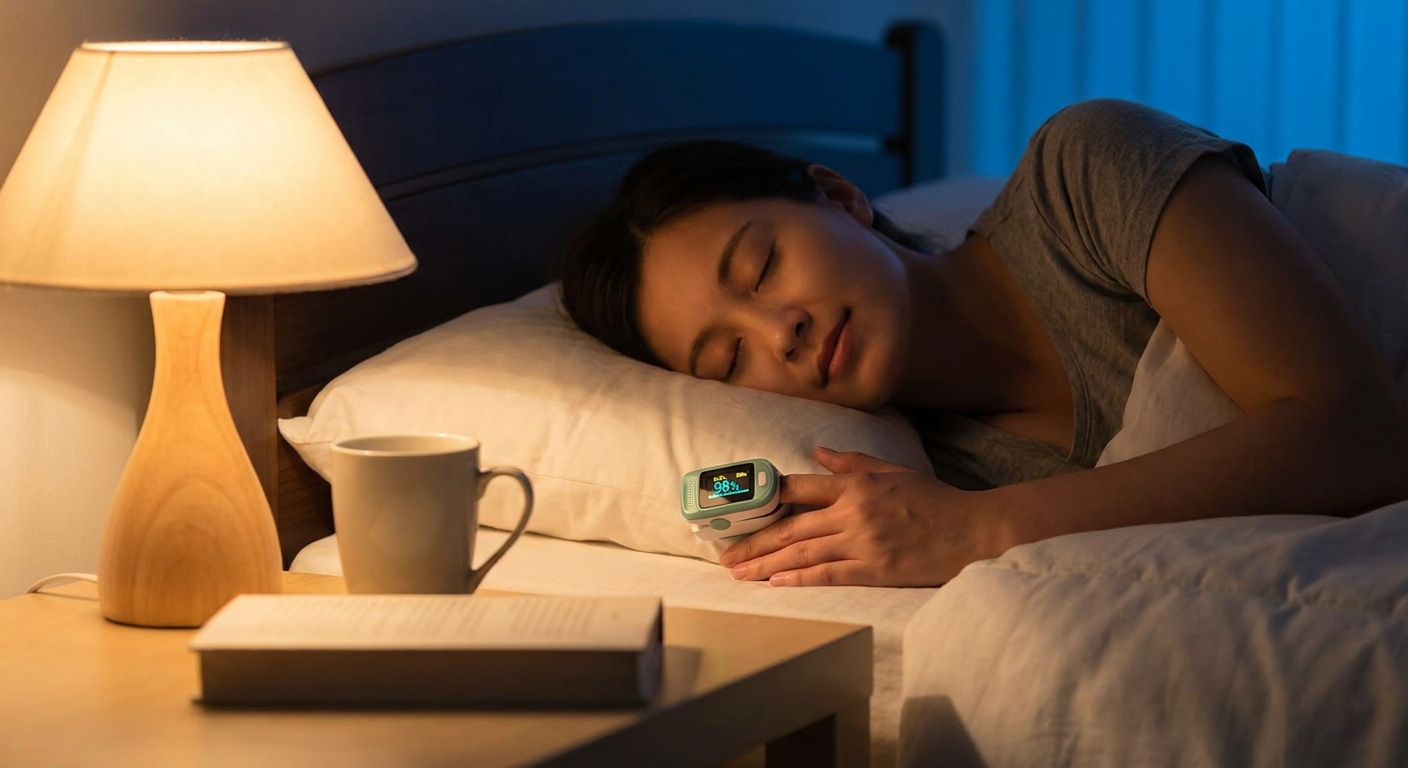
If you’ve ever checked an overnight pulse oximeter report (or a wearable sleep dashboard) and noticed your oxygen saturation dip, it can be unsettling. The good news: small fluctuations are common. The important part is learning what’s typical, what’s likely noise, and what patterns are worth a medical conversation.
Below is a patient-friendly guide to normal blood oxygen levels during sleep, why they can change overnight, and when repeated low readings deserve attention.
Quick Answer: What SpO₂ Is “Normal” During Sleep?
- Most healthy people: about 95%–100% during sleep (often a touch lower than daytime).
- Brief dips can be normal; one low reading isn’t a diagnosis.
- Repeated or sustained readings below 92% should be evaluated; readings at or below 88% are especially concerning and may require prompt care.
- Targets can vary by person based on altitude, chronic lung or heart conditions, skin pigmentation, and clinician guidance.
Source: Sleep Foundation (2025); MedlinePlus (2024)
https://www.sleepfoundation.org/physical-health/what-are-normal-oxygen-levels-during-sleep
https://medlineplus.gov/lab-tests/pulse-oximetry/
— In short: look for trends across nights, and remember that individual targets can differ. —
What Is SpO₂ (and Why It Can Change Overnight)?
SpO₂ explained in plain language: SpO₂ stands for peripheral capillary oxygen saturation. It’s a percentage estimate of how much oxygen your hemoglobin is carrying.
A helpful analogy: SpO₂ is like a fullness gauge for oxygen on your red blood cells. A single momentary blip can happen—what matters most is whether the gauge is repeatedly low or low for long stretches.
Why it matters: if oxygen saturation during sleep drops frequently or stays low, it can be associated with:
- more interrupted sleep (micro-awakenings)
- next-day fatigue or morning headaches
- stress on the heart and brain over time in some people
(SpO₂ is one piece of the puzzle—symptoms, health history, and proper testing also matter.)
Why SpO₂ is often a bit lower during sleep than awake: It’s common for oxygen saturation during sleep to run slightly lower than daytime because breathing patterns shift naturally overnight. Sleep stages matter, too. For example, muscle tone is lower in REM sleep, which can influence airflow in people who are prone to obstruction.
Source: Sleep Foundation (2025)
https://www.sleepfoundation.org/physical-health/what-are-normal-oxygen-levels-during-sleep
— Bottom line: brief, mild decreases during sleep can be normal, but persistent lows are different. —

Normal Oxygen Levels During Sleep (What Research Shows)
Typical sleep SpO₂ in healthy adults: For many healthy adults, normal SpO₂ while sleeping stays in the mid-to-high 90s, with small ups and downs across the night. That normal “wiggle” can be affected by sleep stage, sleeping position, and even how well the sensor is reading.
The “brief dip” concept (why one low number can be misleading): One reason overnight graphs can look scary is that they often highlight the lowest point—even if it lasted only seconds.
In Gries et al. (1996), researchers found in healthy subjects:
- Median sleep saturation: ~96.5%
- The level below which participants spent 10% of the night: ~94.7%
- Mean lowest reading: ~90.4%
That last number is key: it suggests an isolated “low” can appear even without a diagnosable problem. In practice, clinicians pay more attention to the pattern—how low, how often, and for how long—than a single minimum value. A brief nadir near 90% was observed in healthy subjects; that does not mean frequent or prolonged time at 90% is normal for you.
Source: Gries et al. (1996)
https://pubmed.ncbi.nlm.nih.gov/8989066/
— Takeaway: single nadirs can be deceptive; duration and frequency matter most. —

When to Worry About Low Oxygen Levels at Night (Clear Thresholds)
What counts as “borderline” vs “concerning”: While cutoffs can vary by individual context, many educational resources use these practical thresholds:
- Repeated or prolonged readings below 92% → a good reason to contact a clinician for evaluation.
- Readings at or below 88% → more urgent concern, especially if recurrent or sustained.
Your clinician may use different targets based on your health history, altitude, and overall goals of care.
If you’re seeing very low numbers, you may also find it helpful to read: oxygen level 81 while sleeping (what it can mean and what to discuss next):
https://sleepandsinuscenters.com/blog/oxygen-level-81-while-sleeping-what-to-do
Sources: Sleep Foundation (2025), MedlinePlus (2024)
https://www.sleepfoundation.org/physical-health/what-are-normal-oxygen-levels-during-sleep
https://medlineplus.gov/lab-tests/pulse-oximetry/
“Repeated” and “sustained” — what to track at home: If you’re using overnight pulse oximeter readings (or a wearable), it helps to track trends rather than single points. Useful questions include:
- Across how many nights does this happen? (one unusual night happens)
- How long are the dips? seconds vs. minutes
- How low does it go, and how often does it drop?
- Do dips cluster in certain situations (on your back, after alcohol, during congestion)?
Concrete example: someone might see a few dips on a night with congestion and mouth-breathing, then return to stable readings once they feel better. That pattern is different from night-after-night drops.
When to seek urgent/emergency care (symptom-based guidance): Numbers matter—but numbers plus symptoms matter more. Educational resources commonly list these as red flags that warrant urgent evaluation:
- severe shortness of breath
- chest pain/pressure
- confusion, fainting, or inability to stay awake
- bluish lips or face
- new or worsening symptoms in someone with known heart or lung disease
A simple way clinicians put it: “If the number worries you and you feel sick or unsafe, don’t wait—get urgent help.”
Sources: Sleep Foundation (2025), MedlinePlus (2024)
https://www.sleepfoundation.org/physical-health/what-are-normal-oxygen-levels-during-sleep
https://medlineplus.gov/lab-tests/pulse-oximetry/
— In essence: pair the numbers with how you feel, and loop in a clinician when patterns cross common thresholds. —
Symptoms That Can Go With Low Oxygen During Sleep
Nighttime symptoms:
- Loud snoring
- Gasping/choking sounds
- Witnessed pauses in breathing
- Restless sleep or frequent awakenings
- Night sweats
Daytime symptoms:
- Excessive sleepiness or “unrefreshing” sleep
- Morning headaches
- Brain fog or trouble concentrating
- Mood changes/irritability
- Dry mouth or sore throat on waking
Source (sleep apnea and oxygen drops): SleepApnea.org
https://www.sleepapnea.org/sleep-health/does-oxygen-level-drop-when-you-sleep/
— Practical point: snoring plus repeated oxygen dips and daytime sleepiness often warrants evaluation for sleep-disordered breathing. —
Common Causes of Low SpO₂ During Sleep
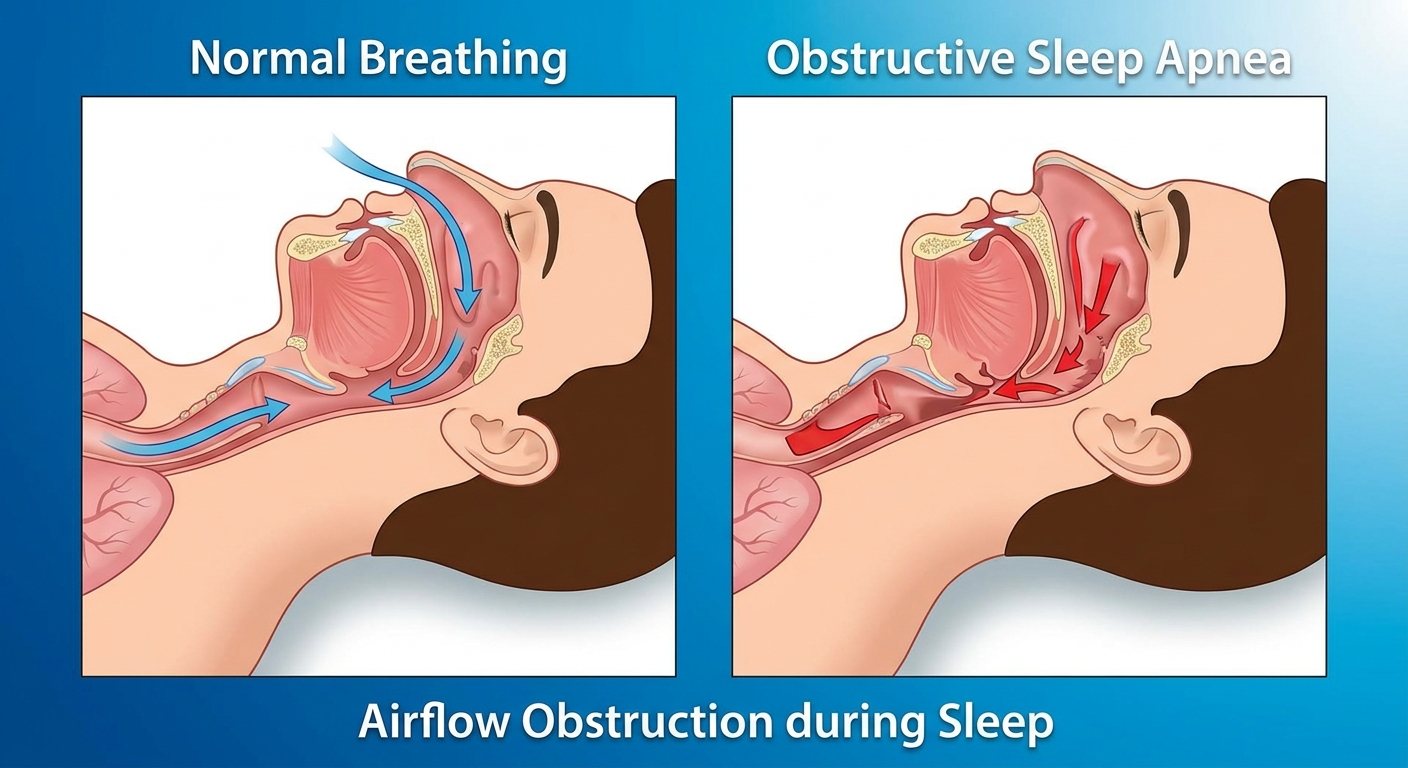
Obstructive Sleep Apnea (OSA): OSA is one of the most common reasons for recurring oxygen dips. When the upper airway narrows or collapses during sleep, airflow decreases and oxygen can drop—sometimes repeatedly through the night.
Dips may be more noticeable:
- in REM sleep (when muscle tone is lower)
- when sleeping on the back (gravity can worsen airway collapse)
Lung conditions: Chronic lung disease (like COPD) or temporary issues (like respiratory infections) can contribute to low oxygen levels at night. Asthma flares, pneumonia, or other inflammatory problems may also affect breathing quality during sleep.
Heart and circulation issues: Some heart conditions can affect how efficiently oxygen is delivered throughout the body, especially when combined with sleep-disordered breathing. This is broad and non-diagnostic, but it’s a reason recurring low readings should be reviewed in context.
Other contributors (non-disease and situational):
- High altitude (lower oxygen in the air)
- Alcohol/sedatives (can worsen breathing and airway muscle tone)
- Nasal congestion (can increase resistance and worsen sleep-disordered breathing in susceptible people)
Sources: Sleep Foundation (2025), SleepApnea.org
https://www.sleepfoundation.org/physical-health/what-are-normal-oxygen-levels-during-sleep
https://www.sleepapnea.org/sleep-health/does-oxygen-level-drop-when-you-sleep/
— Key idea: causes range from temporary congestion to conditions like OSA, so patterns deserve context and, at times, formal testing. —
How Accurate Are Home Pulse Oximeters and Wearables?
Why consumer readings can be wrong (even when you’re fine): Home devices can be helpful, but they’re not perfect. The FDA notes several factors that can skew pulse-ox results, including:
- poor circulation
- cold skin temperature
- motion (especially relevant during sleep)
- nail polish/artificial nails
- skin pigmentation considerations and device limitations
- tobacco use and other factors
Think of it like a camera: if the sensor is “shaky” (movement) or the lighting is off (cold hands/poor circulation), the picture can blur.
Source: FDA “Pulse Oximeter Basics” (2025)
https://www.fda.gov/consumers/consumer-updates/pulse-oximeter-basics
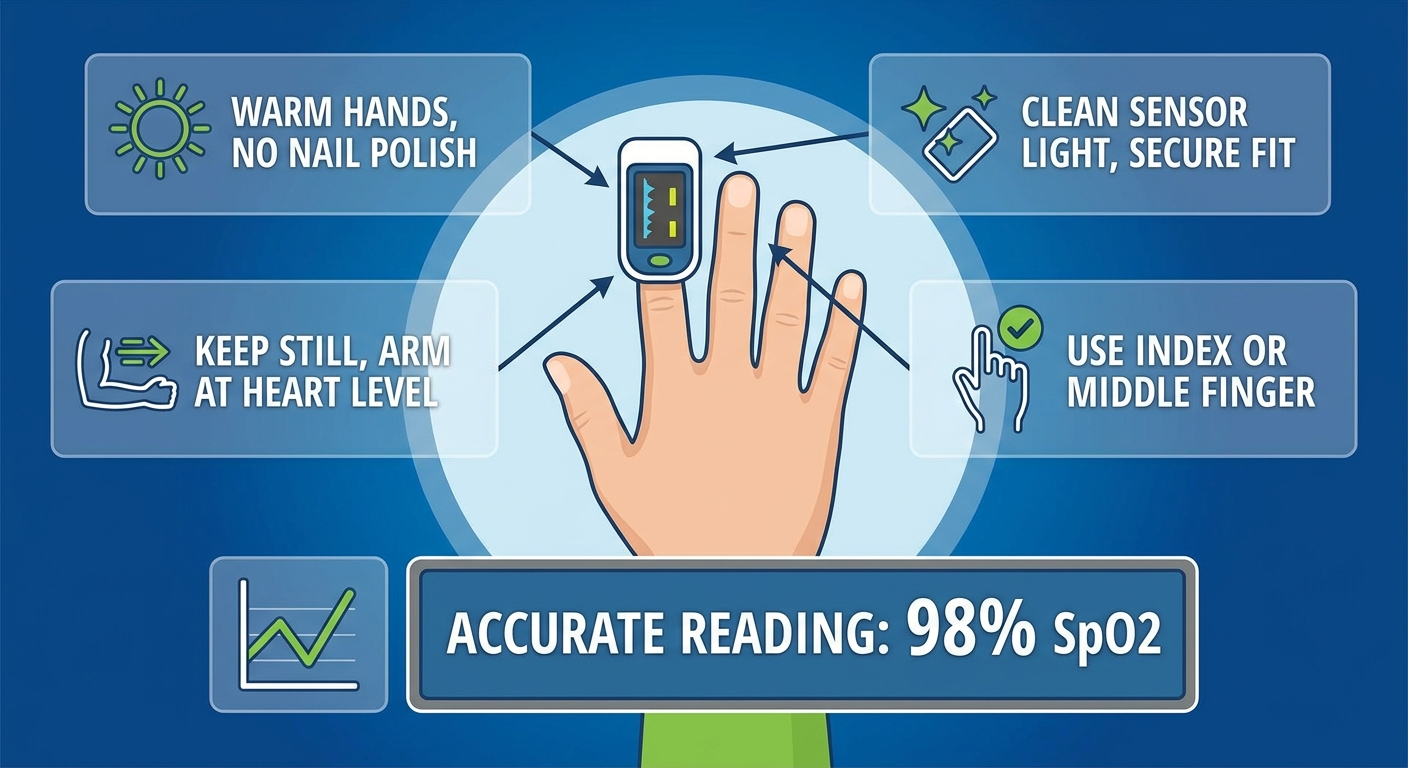
Tips to improve measurement quality at home: For cleaner data (especially if you’re comparing nights), it may help to:
- warm hands and remove nail polish
- ensure correct placement and a snug (not painful) fit
- minimize movement if using a fingertip device
- focus on overnight trends, not single spot checks
What home oximetry can and can’t tell you
Home tracking can:
- highlight patterns worth discussing (frequency and depth of dips)
- support symptom conversations (snoring + dips + sleepiness)
But it can’t:
- diagnose sleep apnea by itself
- determine the cause of low saturation without clinical evaluation/testing
Source: FDA (2025)
https://www.fda.gov/consumers/consumer-updates/pulse-oximeter-basics
— Short version: use home devices for pattern-spotting, not diagnosis, and refine technique to reduce false lows. —
What to Do If Your Sleep SpO₂ Is Low (Step-by-Step Plan)
Step 1 — Don’t panic over one reading: Because brief dips can occur even in healthy people (including the “lowest reading” findings in Gries et al.), one low point isn’t automatically abnormal—especially if the overall night is stable.
Source: Gries et al. (1996)
https://pubmed.ncbi.nlm.nih.gov/8989066/
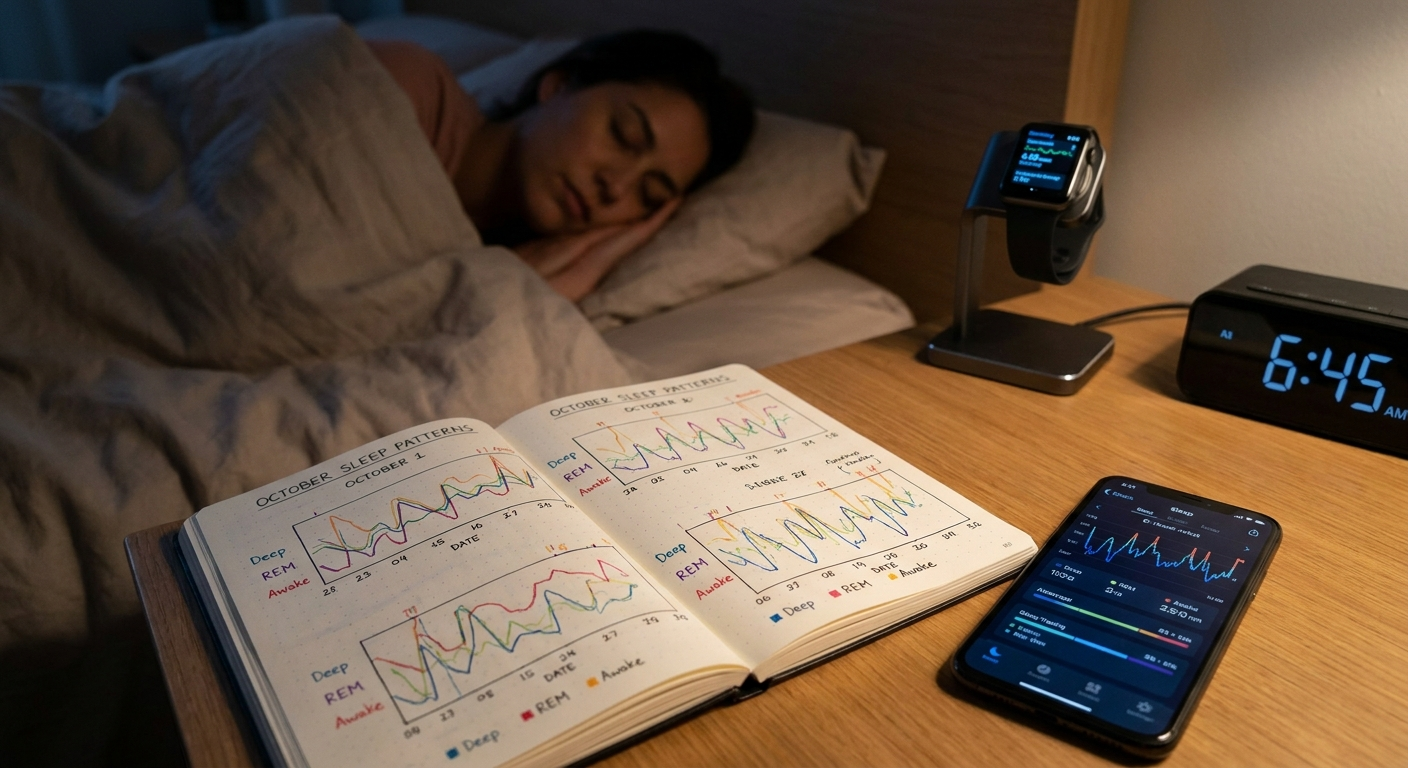
Step 2 — Look for patterns + symptoms: Consider a simple 3–7 night log:
- average SpO₂
- lowest SpO₂
- estimated time below 92% (if your device provides it)
- symptoms on waking (headache, dry mouth, unrestful sleep)
This turns “one scary number” into a clearer picture of your normal blood oxygen levels during sleep—and whether anything is trending in the wrong direction.
Step 3 — Contact a healthcare professional if thresholds are met: Educational guidance commonly suggests discussing:
- recurrent readings below 92%, or
- any sustained/recurring readings at or below 88%, especially with symptoms
If you have known heart or lung disease, earlier review is often prudent because context matters and targets may differ.
Sources: MedlinePlus (2024), Sleep Foundation (2025)
https://medlineplus.gov/lab-tests/pulse-oximetry/
https://www.sleepfoundation.org/physical-health/what-are-normal-oxygen-levels-during-sleep
Step 4 — Ask about appropriate testing: If patterns suggest sleep-disordered breathing, a clinician may discuss:
- a home sleep apnea test vs. an in-lab sleep study: https://sleepandsinuscenters.com/blog/home-sleep-apnea-test-accurate-at-home-screening-for-sleep-apnea
- metrics like the oxygen desaturation index (ODI) (how often oxygen drops during sleep and by how much): https://sleepandsinuscenters.com/blog/understanding-oxygen-desaturation-index-odi-key-insights-and-importance
These tools can help explain why your sleep oxygen levels keep falling into the 88–92% range—and whether it correlates with breathing events.
Sources: MedlinePlus (2024), Sleep Foundation (2025), FDA (2025)
https://medlineplus.gov/lab-tests/pulse-oximetry/
https://www.sleepfoundation.org/physical-health/what-are-normal-oxygen-levels-during-sleep
https://www.fda.gov/consumers/consumer-updates/pulse-oximeter-basics
— Practical takeaway: track a few nights, note symptoms, and involve a clinician if patterns cross common benchmarks or you feel unwell. —
Treatments (What Helps Depends on the Cause)
This section is general education—specific choices depend on diagnosis and medical history.
If sleep apnea is the cause, options a clinician may discuss include:
- CPAP/APAP therapy
- oral appliance therapy (for selected patients)
- positional therapy (encouraging side sleeping)
- in some cases, ENT procedures or other interventions
To understand severity terms you might see on a sleep report, read: AHI score explained
https://sleepandsinuscenters.com/blog/ahi-score-explained-understanding-your-sleep-apnea-severity
If lung disease is contributing, a care plan may focus on:
- optimizing prescribed inhalers/medications
- treating infection or inflammation when present
- supplemental oxygen only if prescribed (rather than self-treating)
If nasal obstruction is worsening breathing at night, supportive options can include:
- allergy/rhinitis management
- saline rinses
- clinician-guided nasal sprays
- ENT evaluation if obstruction is persistent or structural
Sources: Sleep Foundation (2025), MedlinePlus (2024)
https://www.sleepfoundation.org/physical-health/what-are-normal-oxygen-levels-during-sleep
https://medlineplus.gov/lab-tests/pulse-oximetry/
— Core message: treatment depends on the cause; testing and clinical guidance tailor the plan. —
Lifestyle Tips to Support Healthier Overnight Oxygen Levels
Sleep position and airway support: If snoring or suspected OSA is in the picture, side sleeping may reduce airway collapse for some people. In selected cases, elevating the head of the bed may also improve comfort and breathing.
Avoid common nighttime breathing disruptors: Alcohol close to bedtime and sedatives (unless managed/prescribed) can worsen airway muscle relaxation and breathing stability, which may contribute to more noticeable overnight dips.
Reduce congestion triggers. Basic steps may include:
- allergy-friendly bedroom setup
- consistent rinse routines if recommended by a clinician
- keeping humidity comfortable (avoiding overly dry air)
If applicable: weight management and exercise (supportive, not blame-focused): Body weight can influence airway size and OSA risk. When relevant, sustainable activity and health habits can be part of an overall plan—without turning sleep data into self-blame.
— Simple changes—especially position, congestion control, and alcohol timing—can meaningfully improve overnight breathing for some people. —
FAQs
What is a normal oxygen level while sleeping for adults?
For many healthy adults, normal blood oxygen levels during sleep are typically about 95%–100%, with small fluctuations. Research also shows occasional brief dips can happen, so trends matter more than one momentary low.
Sources: Sleep Foundation (2025); Gries et al. (1996)
https://www.sleepfoundation.org/physical-health/what-are-normal-oxygen-levels-during-sleep
https://pubmed.ncbi.nlm.nih.gov/8989066/
Is 90% oxygen saturation during sleep normal?
A brief drop near 90% can occur even in healthy people; Gries et al. found a mean lowest reading around 90.4% in healthy subjects. Persistent, frequent, or long-lasting dips are different and deserve evaluation in context.
Source: Gries et al. (1996)
https://pubmed.ncbi.nlm.nih.gov/8989066/
What does it mean if my oxygen drops to 88% while sleeping?
A reading at or below 88% is generally considered more concerning—especially if it’s recurrent or sustained—and is a strong reason to seek timely clinical review. Your clinician may individualize targets based on your health status and altitude.
Source: Sleep Foundation (2025)
https://www.sleepfoundation.org/physical-health/what-are-normal-oxygen-levels-during-sleep
Can an Apple Watch/Fitbit replace a pulse oximeter or sleep study?
Wearables can be useful for spotting trends, but consumer devices have limitations and aren’t definitive for diagnosis. The FDA outlines factors that can affect pulse-ox accuracy.
Source: FDA (2025)
https://www.fda.gov/consumers/consumer-updates/pulse-oximeter-basics
How can I tell if low oxygen is from sleep apnea?
Sleep apnea is often suggested by a combination of symptoms (snoring, gasping, daytime sleepiness) and a pattern of repeated drops overnight. Confirmation typically requires formal testing and metrics such as AHI/ODI.
Sources: SleepApnea.org; Sleep Foundation (2025)
https://www.sleepapnea.org/sleep-health/does-oxygen-level-drop-when-you-sleep/
https://www.sleepfoundation.org/physical-health/what-are-normal-oxygen-levels-during-sleep
When should I talk to an ENT or sleep specialist?
If you have loud snoring, witnessed pauses in breathing, recurring desaturations, or significant daytime sleepiness, an evaluation can help clarify the cause and next steps. If you’d like to discuss your symptoms and overnight trends with a clinician, you can book an appointment with Sleep and Sinus Centers of Georgia:
https://www.sleepandsinuscenters.com/
Conclusion: Focus on Trends, Not Fear—and Know the Thresholds
For most people, normal SpO₂ while sleeping stays around 95–100%, and small dips can happen. The key is the pattern: if you’re repeatedly seeing oxygen saturation during sleep below 92%, it’s worth a clinical conversation, and recurring or sustained lows at or below 88% deserve prompt attention. Use home devices to spot trends and support your symptom story—but rely on professional evaluation rather than self-diagnosis when numbers are persistently low.
— In brief: track patterns, note symptoms, and partner with a clinician when readings are repeatedly low. —
References
Gries et al. “Normal oxyhemoglobin saturation during sleep. How low does it go?” (1996) https://pubmed.ncbi.nlm.nih.gov/8989066/
FDA. “Pulse Oximeter Basics” (2025) https://www.fda.gov/consumers/consumer-updates/pulse-oximeter-basics
MedlinePlus. “Pulse Oximetry: Medical Test” (2024) https://medlineplus.gov/lab-tests/pulse-oximetry/
Sleep Foundation. “Normal Oxygen Levels While Sleeping” (2025) https://www.sleepfoundation.org/physical-health/what-are-normal-oxygen-levels-during-sleep
SleepApnea.org. “Does Oxygen Level Drop When You Sleep?” https://www.sleepapnea.org/sleep-health/does-oxygen-level-drop-when-you-sleep/
This article is for educational purposes only and is not medical advice. Please consult a qualified healthcare provider for diagnosis and treatment.
Don’t let allergies slow you down. Schedule a comprehensive ENT and allergy evaluation at Sleep and Sinus Centers of Georgia. We’re here to find your triggers and guide you toward lasting relief.