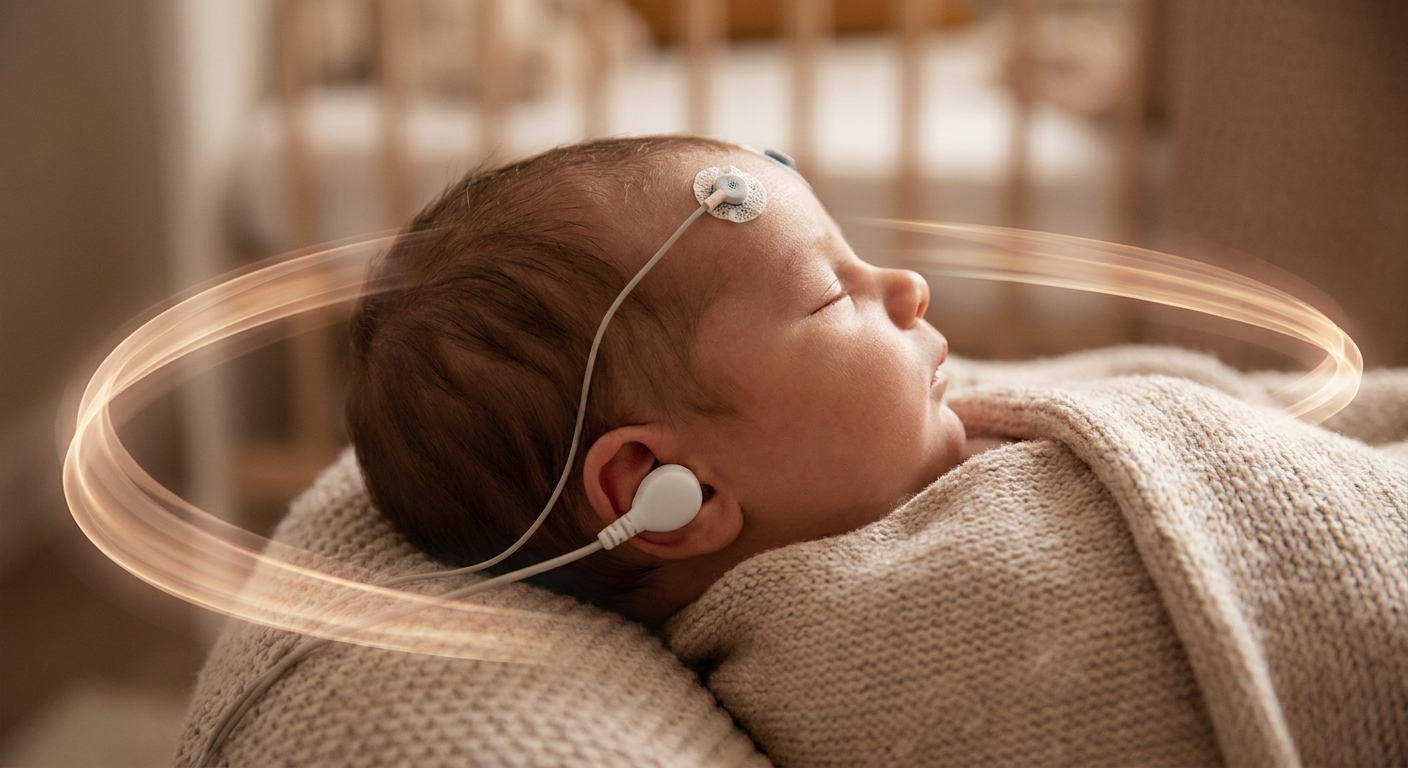
Newborn Hearing Screening Results: What They Mean for Your Baby
Waiting for newborn hearing screening results can feel surprisingly emotional—especially when you see words like “refer,” “did not pass,” or “fail.” If that happened to you, take a breath: newborn hearing screening is designed to quickly flag babies who need a closer look, and many “refer” results are linked to temporary, fixable factors.
Think of the screen like a smoke alarm. It’s built to be sensitive so it doesn’t miss something important. A “refer” doesn’t mean there’s definitely a fire—it means, “Let’s check again more carefully.”
Below is a parent-friendly guide to what the results mean, the difference between OAE and ABR, and the follow-up timeline that helps families move forward with confidence. (NIDCD, 2024; ASHA)
Quick takeaway for parents (the calm, clear summary)
A newborn hearing screen is an early check—not a diagnosis.
A newborn hearing screen is exactly that: a screening, not a final answer. It identifies whether a baby has a higher chance of hearing loss and needs follow-up testing—it does not confirm the type, cause, or permanence of hearing differences. (NIDCD, 2024; ASHA)
A helpful way to frame it: the screening asks, “Did we get clear, reliable responses today?” The diagnostic evaluation (if needed) answers, “What is your baby hearing, in each ear, and what support might help?”
Summary: It’s a screen, not a diagnosis.
“Pass” usually means both ears passed in the same session.
Most programs use “pass” to mean your baby passed in both ears during the same screening session. If one ear passes and the other doesn’t, the overall report is often “refer/did not pass” because follow-up is still needed. (NIDCD, 2024; ASHA)
Concrete example: your baby might “pass” the right ear but “refer” the left. That does not automatically mean your baby has one-sided hearing loss—it means the screening didn’t capture a clear response on the left ear that day.
“Refer” means your baby needs follow-up testing.
“Refer” can sound alarming, but it simply means the screen didn’t capture a clear response and another test is needed. Many babies refer for temporary reasons, but follow-up is important so nothing is missed. (NIDCD, 2024; EHDI-PALS)
What is newborn hearing screening (and why it’s done so early)?
Hearing matters from the start—babies learn through listening long before they can talk. Early hearing access supports early bonding, interaction, and speech/language development. That’s why most hospitals participate in universal newborn hearing screening programs and test hearing shortly after birth. (NIDCD, 2024)
Clinicians often describe this as “catching concerns early while the brain is building its listening-and-learning pathways.” Early identification helps families get clear answers sooner, instead of waiting until speech milestones are missed.
Public health programs also emphasize timely follow-up using the 1-3-6 hearing timeline (screen by 1 month, diagnose by 3 months, intervene by 6 months). (CDC, 2025)
Summary: Early checks lead to early support.
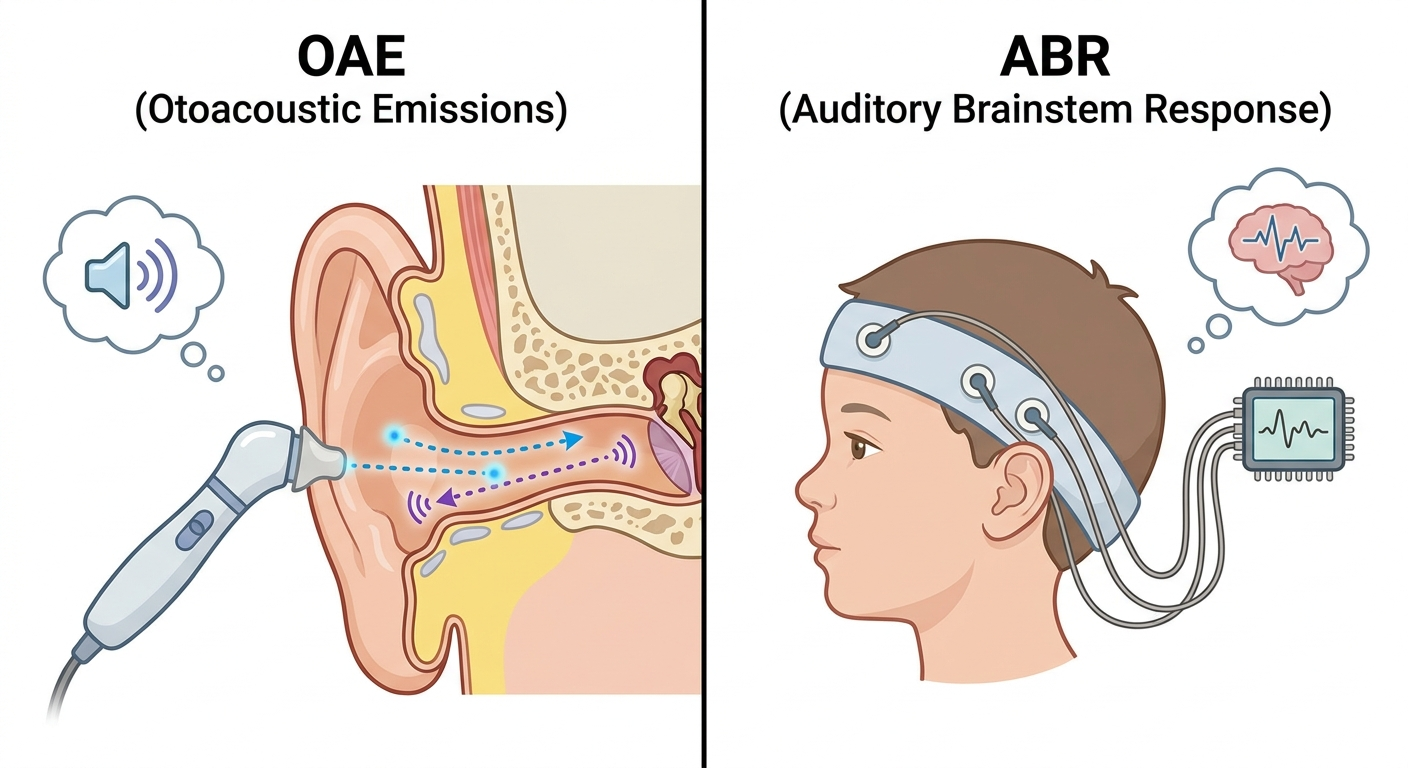
The two most common screening tests
Most newborn screening programs use one or both of these noninvasive tests—often while a baby is asleep:
OAE (Otoacoustic Emissions): Measures an “echo” produced by the inner ear (cochlea) in response to sound.
ABR (Auditory Brainstem Response): Measures how the hearing nerve and brainstem respond to sound.
Both are quick, gentle, and designed for newborns. (NIDCD, 2024; ASHA; EHDI-PALS)
Summary: Both tests are safe, quick, and newborn-friendly.
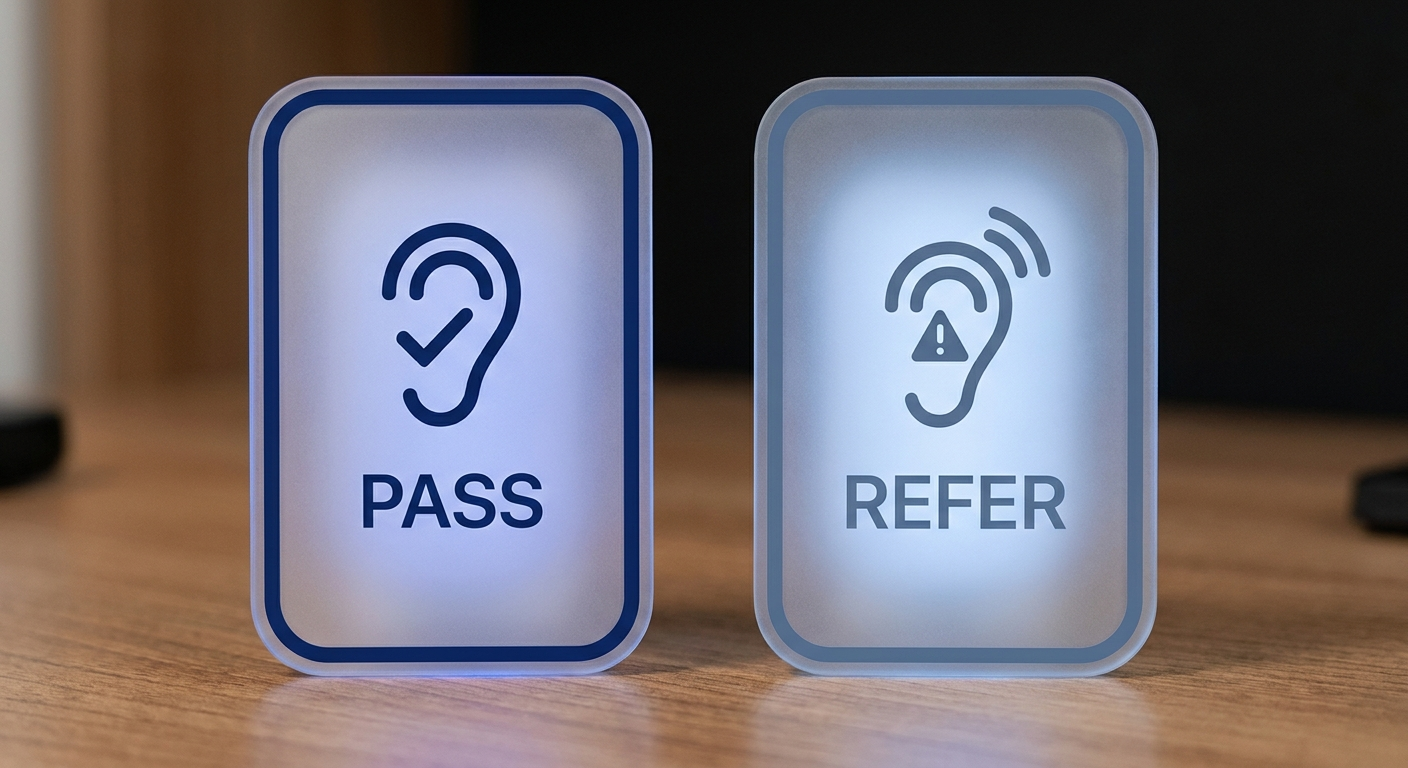
Understanding your baby’s results: “Pass” vs “Refer”
What a “Pass” result means
A “pass” typically means your baby’s screening showed typical responses in both ears at that time. Most families can feel reassured and move on to routine pediatric care.
One important nuance: a pass does not completely rule out mild hearing loss, progressive changes, or later-onset hearing loss. That’s why developmental monitoring still matters—especially if your child has risk factors or if your instincts tell you something feels “off.” (NIDCD, 2024)
What a “Refer / Fail / Did Not Pass” result means
A “refer” (sometimes labeled “fail” or “did not pass”) is not a diagnosis. It means the screening did not capture a clear enough response to confidently say “pass,” so more testing is needed.
In many programs, both ears are rescreened, even if only one ear referred, to ensure results are complete and consistent. (NIDCD, 2024; ASHA)
If the term “fail” is on the paperwork, it can feel harsh. In practice, it’s often the same administrative label for “we need another look.”
Summary: A pass reassures for today; a refer simply means “recheck to be sure.”
Common emotions and what to do right now
It’s normal to feel worried or blindsided—especially if everything else feels like it’s going smoothly. If possible, ask for:
- A printed or portal copy of the results
- Which test was used (OAE, ABR, or both)
- The next appointment date (rescreening or diagnostic testing) before you leave the hospital
Having a plan can make the waiting much easier—and helps you stay aligned with the 1-3-6 timeline. (CDC, 2025)
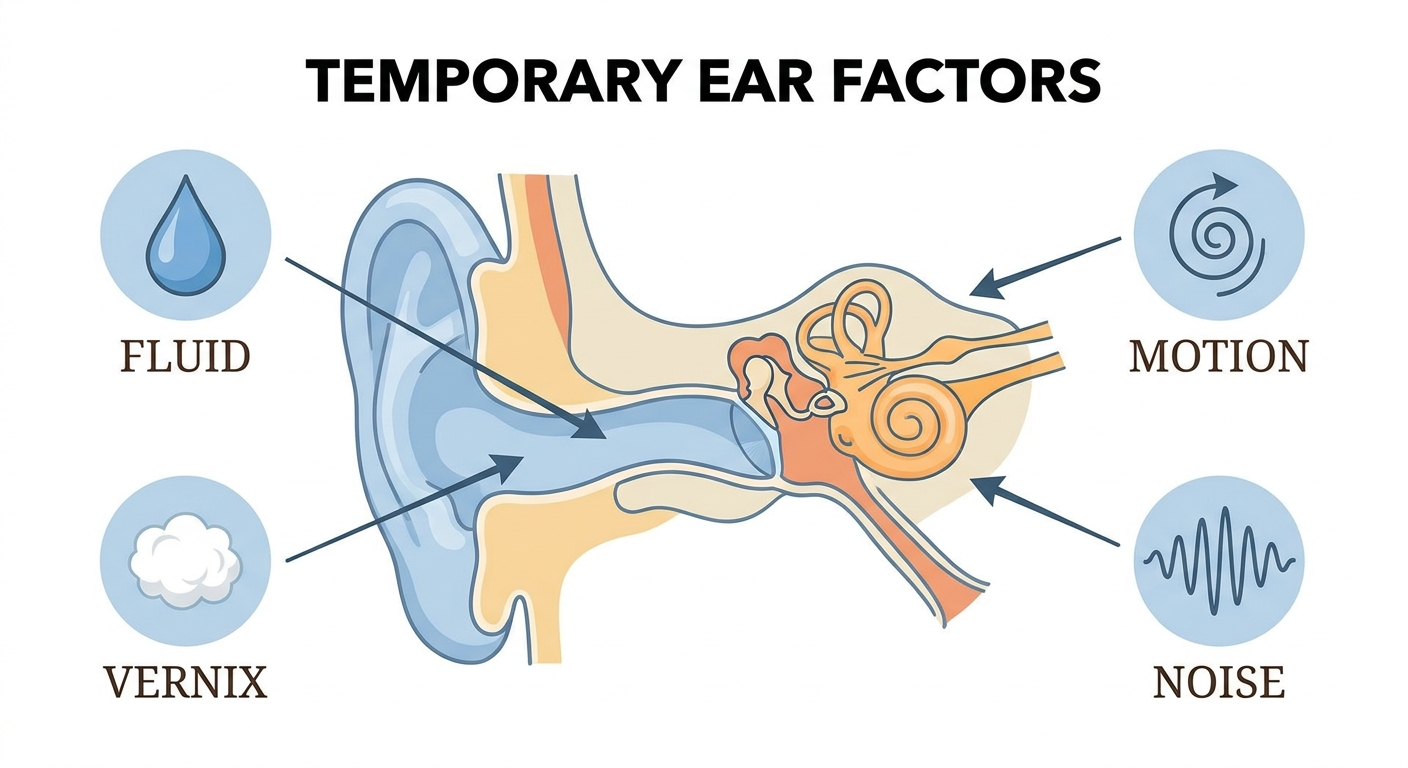
Why babies sometimes “refer” even without permanent hearing loss
A “refer” result can happen even when hearing is ultimately normal. Common temporary factors include:
- Ear canal debris (vernix)
- Middle-ear fluid (very common after birth)
- Baby movement or crying
- Background noise
- A probe that doesn’t fit perfectly during the test
These issues can make it harder for the screening equipment to detect a clear response—particularly for OAE. (NIDCD, 2024; ASHA)
If you want to understand how fluid can affect hearing over time, see: https://sleepandsinuscenters.com/blog/chronic-ear-fluid-and-hearing-loss-causes-symptoms-treatment
Can one ear be normal and the other not? Yes—unilateral hearing loss exists. However, the newborn screen alone can’t confirm whether a true one-sided hearing difference is present, which is why follow-up testing still matters.
A practical example: if your baby was restless during the left-ear portion of the test, the left ear might “refer” simply because the equipment couldn’t collect a clean recording.
Summary: Many “refers” are temporary—but only follow-up can confirm.
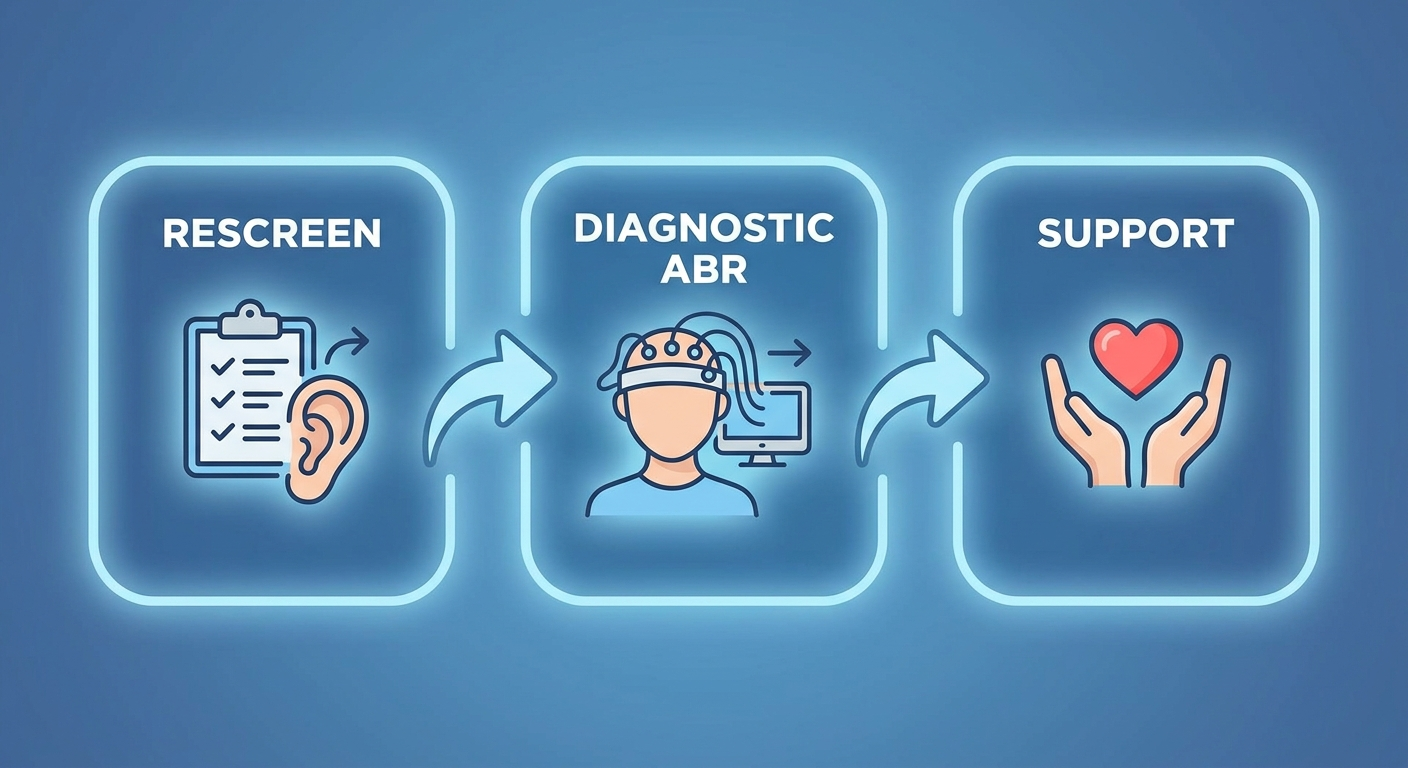
Next steps after a “Refer” result (a step-by-step plan)
Step 1 — Newborn hearing rescreening (what it is and when it happens)
A newborn hearing rescreening is a repeat screening test—often scheduled soon after discharge. It may use OAE, ABR, or both depending on the program and your baby’s original results. (NIDCD, 2024; EHDI-PALS)
To make rescreening easier (when possible):
- Aim for a sleepy, calm baby (feeding right before can help)
- Bring a swaddle and pacifier if you use them
- Arrive early to reduce stress and allow time for settling
If your baby is more awake, wiggly, or hungry than expected, it’s okay to ask whether waiting a few minutes to settle might improve the quality of the recording.
Step 2 — Diagnostic evaluation (what “diagnostic ABR” means)
If the rescreen still shows a concern, families are typically referred for a diagnostic evaluation, which is more detailed than screening. A diagnostic test can help determine:
- Whether hearing loss is present
- The degree of hearing loss
- The likely type of hearing loss (as appropriate)
A diagnostic ABR is different from a screening ABR—it collects more information to support a clear diagnosis. (NIDCD, 2024; ASHA)
If you later receive a hearing test report and want help understanding it, see: https://sleepandsinuscenters.com/blog/audiogram-basics-explained-a-patients-guide-to-hearing-tests
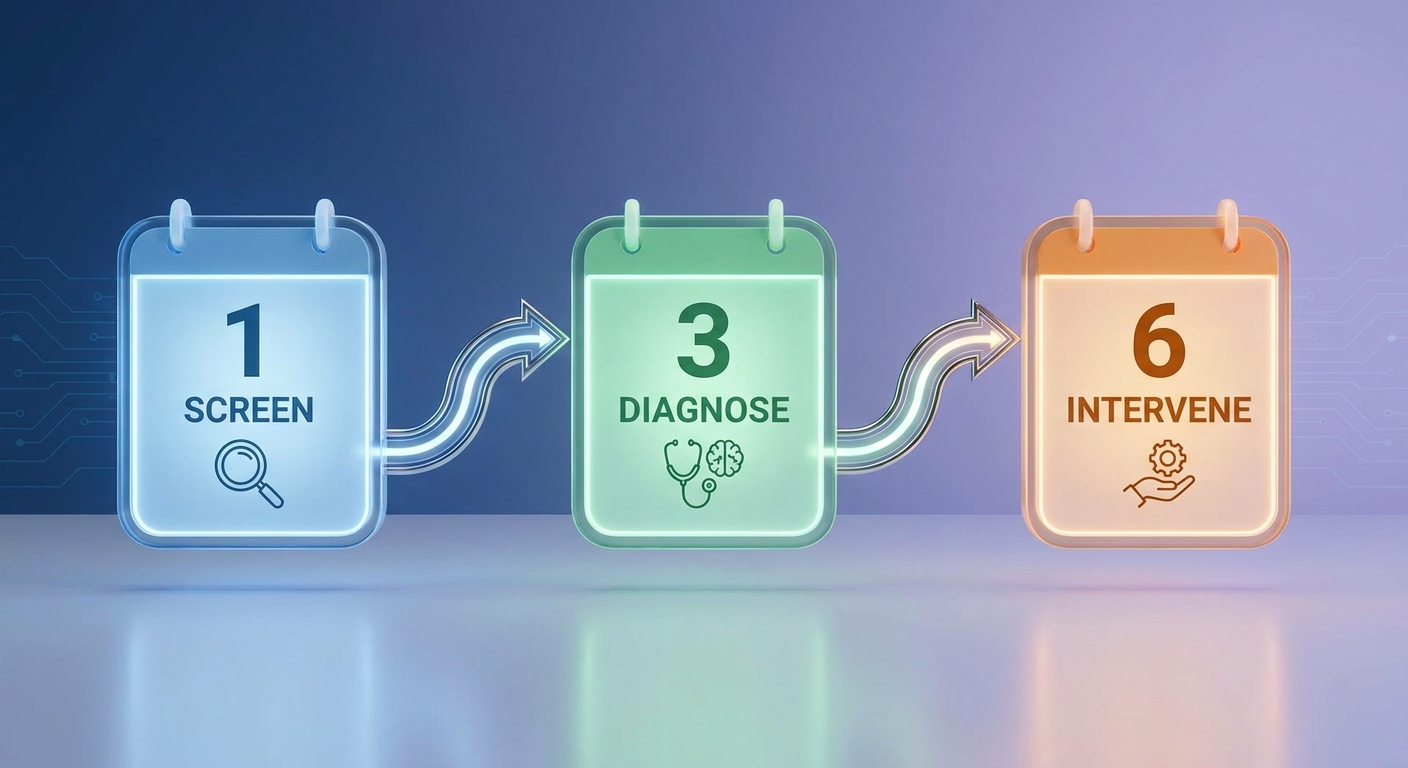
Step 3 — Don’t miss the “1-3-6” timeline
The recommended 1-3-6 hearing timeline is a widely used benchmark for best outcomes:
- Screening by 1 month
- Diagnosis by 3 months
- Early intervention by 6 months (if hearing loss is confirmed) (CDC, 2025; NIDCD, 2024)
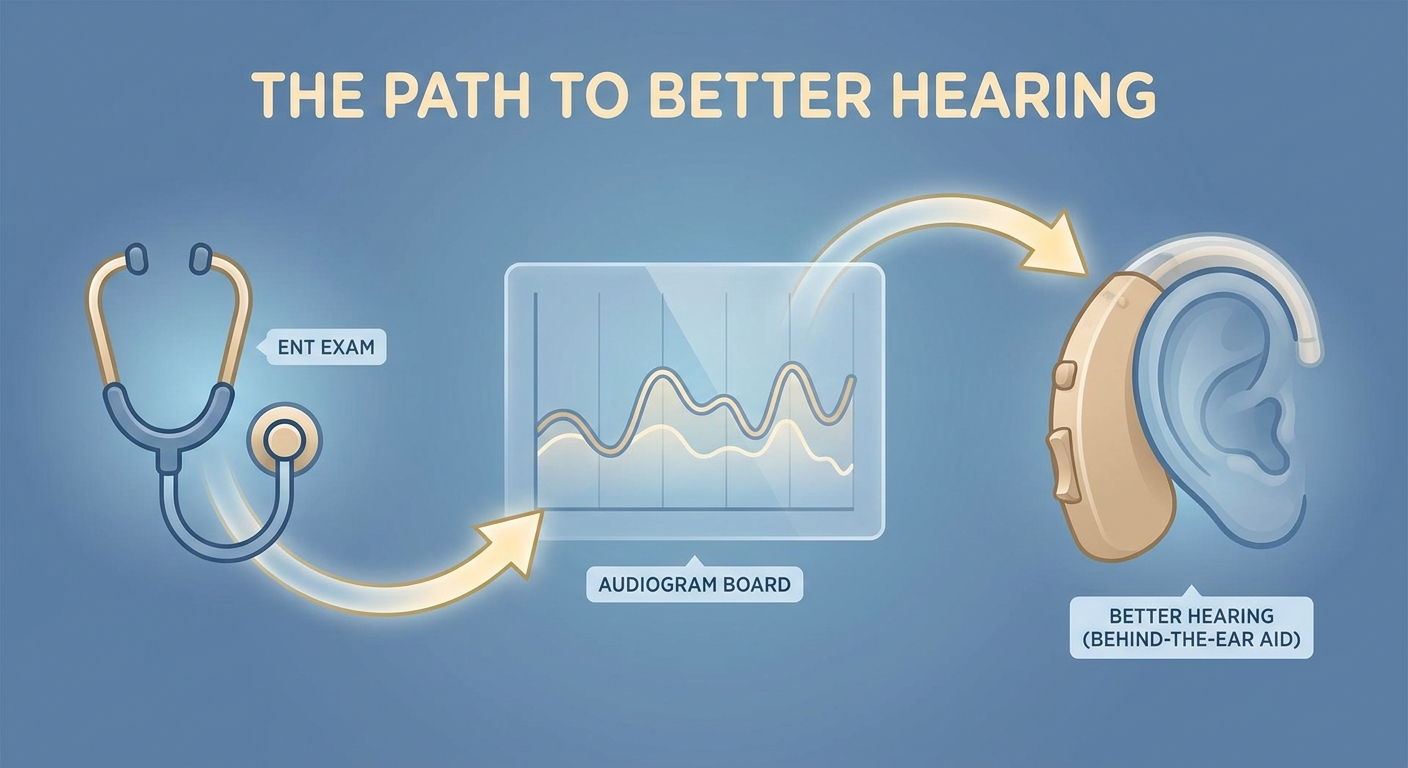
Even if you’re feeling overwhelmed, this timeline is useful because it turns a scary unknown into a simple roadmap: screen → confirm → support.
Summary: A simple, timely plan turns uncertainty into action.
If hearing loss is confirmed: what happens next?
Building your care team: Care often includes your baby’s pediatrician and a pediatric audiologist, and in some cases a pediatric ENT may be involved depending on the findings and medical history.
Many parents find it reassuring to hear a clinician say something like: “Our job now is to turn test results into a plan—so you’re not navigating this alone.”
Treatment and support options (depends on the diagnosis):
- Hearing technology (such as hearing aids and other devices when appropriate)
- Cochlear implants for some infants with more significant hearing loss (case-dependent)
- Early intervention services focused on language development and family-centered support (NIDCD, 2024; CDC, 2025)
When middle-ear fluid is part of the picture: Sometimes hearing is affected by persistent middle-ear fluid. Management may involve monitoring over time, repeat testing, and—when indicated—ENT evaluation. Decisions are individualized.
For related reading on communication development, see: https://sleepandsinuscenters.com/blog/speech-delay-and-hearing-checks-key-signs-and-early-intervention-tips
Summary: A diagnosis is a starting line for support—not a finish line.
Symptoms and signs to watch for (even if your baby “passed”)
Why ongoing monitoring matters after a pass: Even with reassuring newborn hearing screening results, some children can develop mild, progressive, or later-onset hearing loss. Monitoring milestones and sharing concerns early is important. (NIDCD, 2024)
A pass means “reassuring today,” not “guaranteed forever.” That’s why routine well-child visits and parent observations remain important parts of the safety net.
Early communication milestones parents can track:
- Startling or waking to sudden loud sounds (early weeks)
- Calming to familiar voices
- Turning toward sounds as babies grow
- Babbling and playful sound-making
Red flags—when to ask about evaluation sooner:
- Little or no response to sound over time
- Delayed babbling or speech development
- Any loss of previously observed sound responses (regression)
When in doubt, it’s reasonable to ask, “Can we recheck hearing?” You don’t need to wait until you’re 100% certain.
Summary: Trust your instincts and ask to recheck if something feels off.
Causes and risk factors for hearing loss in infants (simple overview)
Common categories (without getting overly technical):
- Genetic factors (with or without a family history)
- Pregnancy or birth factors (such as prematurity or certain infections—when discussed by a clinician)
- Illnesses or recurrent ear problems later in infancy
A “refer” result does not tell you the cause. Only follow-up testing can clarify what’s going on. (NIDCD, 2024)
Summary: Screening shows who needs a closer look—not why.
Lifestyle tips to make follow-up testing easier
Before the appointment:
- Feed your baby right before the test when possible
- Bring a swaddle, blanket, and any soothing items you use
- Keeping baby awake beforehand can make it easier for them to sleep during testing
During the appointment:
- Expect a quiet room and dim lighting
- Many babies sleep through the screening or diagnostic test
After the appointment:
- Ask for results in writing
- Confirm the plan: rescreening vs diagnostic testing, and the timeframe
If you’re unclear on the next step, ask: “What is the exact follow-up we’re scheduling, and when should it happen?”
Summary: A calm, sleepy baby helps the test help you.
FAQs
Is “refer” the same as failing the test?
“Refer” is often used instead of “fail.” Either way, the meaning is the same: the screen did not get a clear response, and follow-up testing is needed. (NIDCD, 2024)
Can fluid in the ears cause a refer result?
Yes. Middle-ear fluid can reduce measurable responses (especially on OAE), which can lead to a refer result. Follow-up is still important to confirm what’s temporary versus persistent. (NIDCD, 2024; ASHA)
If my baby passed, can they still have hearing loss later?
Yes. Some hearing loss can be mild, progressive, or appear later. Continue to monitor communication milestones and share concerns with your child’s clinician. (NIDCD, 2024)
What are OAE and ABR—and which one is better?
They measure different parts of hearing. OAE measures an inner-ear “echo,” while ABR measures the hearing nerve/brainstem response. Many programs use one or both depending on the baby and the setting. (NIDCD, 2024; ASHA)
What is the 1-3-6 rule?
The 1-3-6 hearing timeline recommends: screen by 1 month, diagnose by 3 months, and begin intervention by 6 months if needed. (CDC, 2025)
Conclusion: the most important step is timely follow-up
If you take only one thing away, let it be this: newborn hearing screening results are a starting point. Whether your baby received a pass or a refer, staying on schedule with follow-up testing is the best way to get clear answers and the right support. (CDC, 2025; NIDCD, 2024)
Summary: Timely follow-up turns uncertainty into clarity.
Medical note
This article is for educational purposes and is not a substitute for medical advice, diagnosis, or treatment. If you have concerns about your baby’s hearing or development, contact your child’s clinician or a pediatric audiologist.
This article is for educational purposes only and is not medical advice. Please consult a qualified healthcare provider for diagnosis and treatment.
If you’d like help coordinating next steps, Sleep and Sinus Centers of Georgia can help you navigate appropriate follow-up and testing options. To book an appointment, visit https://www.sleepandsinuscenters.com/appointments.
References
- National Institute on Deafness and Other Communication Disorders (NIDCD). “Your Baby’s Hearing Screening and Next Steps.” (2024). https://www.nidcd.nih.gov/health/your-babys-hearing-screening-and-next-steps
- Centers for Disease Control and Prevention (CDC). “EHDI 1-3-6 Benchmarks.” (2025). https://www.cdc.gov/hearing-loss-children/articles/baby-hearing-screening-infographic.html
- American Speech-Language-Hearing Association (ASHA). “Newborn Hearing Screening.” https://www.asha.org/practice-portal/professional-issues/newborn-hearing-screening/
- EHDI-PALS. “Newborn Hearing Screening.” https://www.ehdi-pals.org/FamilyResources/NewbornHearingScreening.aspx
Don’t let allergies slow you down. Schedule a comprehensive ENT and allergy evaluation at Sleep and Sinus Centers of Georgia. We’re here to find your triggers and guide you toward lasting relief.