Infected Septum: Symptoms, Causes, and Typical Treatment Options
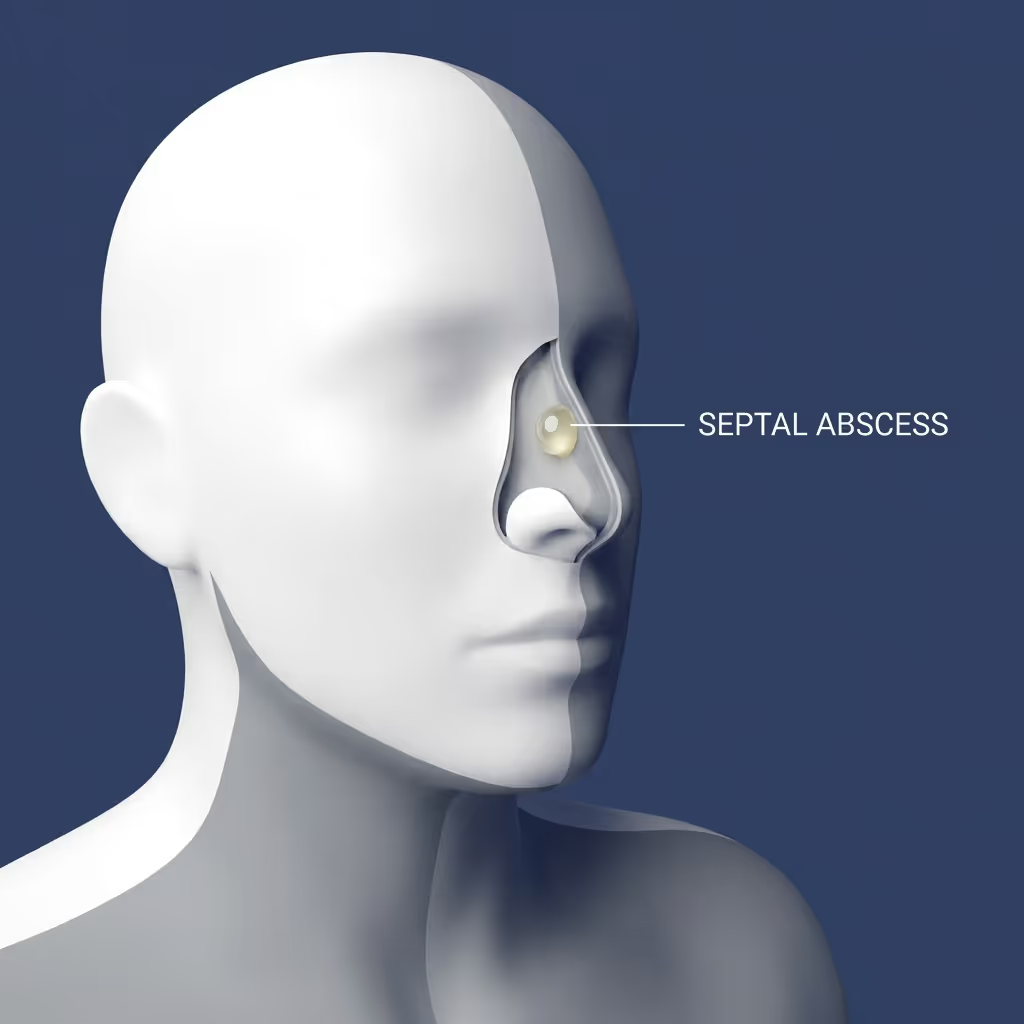
Many people search “infected septum” when they have worsening nasal blockage, pain, or swelling—especially after a hit to the nose. Sometimes the cause is minor irritation, a pimple-like infection near the nostril, or inflammation from dryness. But in other cases, “infected septum” is describing a nasal septal abscess, a condition that can damage nasal cartilage if it isn’t treated promptly. (Consultant360; EMRA)【https://www.consultant360.com/content/nasal-septal-abscess】【https://www.emra.org/emresident/article/spontaneous-nasal-septal-abscess】
Below is a patient-friendly guide to septum infection symptoms, common causes, why this can be urgent, and what typical treatment for an infected septum involves—so you can recognize when symptoms may be minor versus when prompt medical evaluation is important.
Medical disclaimer: This article is for general education and is not a substitute for medical care. If you think you may have a septal abscess or serious nasal infection, prompt evaluation is important.
Quick Take: When an “Infected Septum” Can Be Urgent
Some nasal symptoms can wait for a routine visit. Others generally warrant same-day evaluation (often in an ER or via urgent ENT evaluation, depending on what’s available locally and how severe symptoms are).
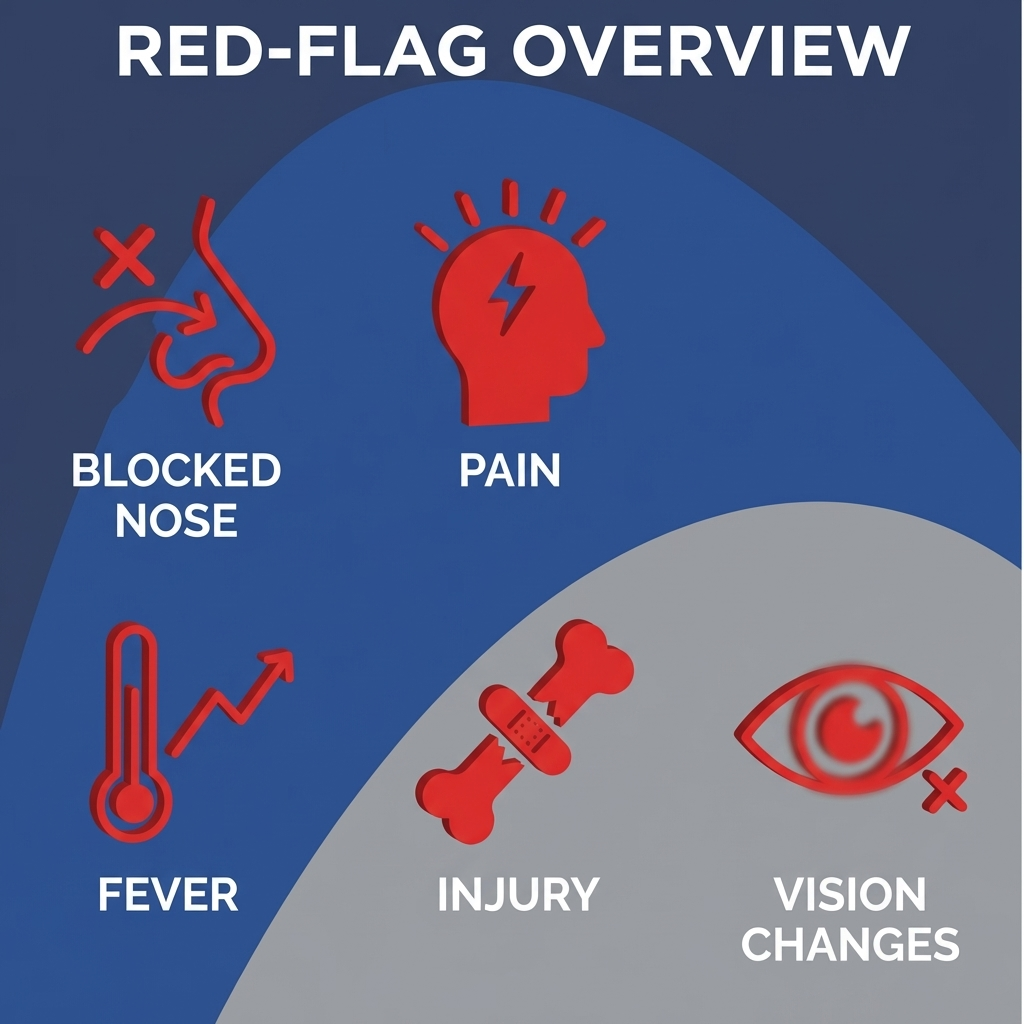
Red flags to take seriously include:
- Rapidly worsening nasal blockage on one or both sides
- Significant nasal pain or tenderness
- Swelling or redness of the nasal bridge (nasal dorsum)
- Fever or feeling generally ill
- Recent nasal injury (sports impact, fall, fight, car accident)
- Eye swelling, vision changes, severe headache, or confusion (possible spread beyond the nose)
These symptoms can indicate the need for prompt evaluation—especially after trauma.
Why the urgency? A true “infected septum” may be a nasal septal abscess—a pocket of pus between the septum’s lining and the cartilage/bone. This often requires urgent drainage plus antibiotics to reduce the risk of cartilage injury and deformity. (Consultant360; EMRA)【https://www.consultant360.com/content/nasal-septal-abscess】【https://www.emra.org/emresident/article/spontaneous-nasal-septal-abscess】
If symptoms began after an injury, it may also help to review guidance on when to see an ENT for a broken nose (and what to watch for). See: https://sleepandsinuscenters.com/blog/broken-nose-treatment-when-to-see-an-ent-specialist
For broader guidance on escalation, see: https://sleepandsinuscenters.com/blog/when-should-i-see-an-ent
If symptoms are severe or rapidly worsening—especially after injury—seek prompt, same-day medical evaluation.
What Is an “Infected Septum” (And What It Usually Means Clinically)?
Septum anatomy (simple explanation): The nasal septum is the “wall” between the nostrils. It’s made of cartilage in the front and bone in the back, covered by a thin lining (often called the mucoperichondrium). That lining helps supply the cartilage with nutrients. When that lining lifts off (from blood or pus underneath), the cartilage can be put at risk.
Septal hematoma vs septal abscess (why the distinction matters):
- Septal hematoma: a pocket of blood trapped under the septal lining after injury.
- Nasal septal abscess: an infected pocket of pus in the same space—sometimes developing when a hematoma becomes infected. (EMRA)【https://www.emra.org/emresident/article/spontaneous-nasal-septal-abscess】
This distinction matters because a nasal septal abscess is more likely to threaten the septal cartilage if it isn’t treated promptly. (EMRA)【https://www.emra.org/emresident/article/spontaneous-nasal-septal-abscess】
“Infected septum” can also mean other problems: People may actually be experiencing nasal vestibulitis (infection near the nostril opening), sinusitis, or irritation/infection related to a nasal piercing or localized skin infection. These can still be uncomfortable and sometimes require medical treatment, but they’re often less dangerous than a nasal septal abscess—one reason an exam is important.
Some people also confuse infection with structural blockage from a deviated septum. If congestion is chronic rather than rapidly worsening, this resource may help clarify the difference: https://sleepandsinuscenters.com/deviated-septum-relief
An “infected septum” often refers to a septal abscess, but other conditions can mimic it—an exam helps tell the difference.


Symptoms of an Infected Septum (Septal Abscess)
Most common symptoms patients notice:
- Progressive nasal obstruction that keeps getting worse over hours to days
- Nasal pain, often significant
- Swelling inside the nose, sometimes described as a “soft bulge” on one or both sides
- Redness and tenderness over the nasal bridge (dorsal swelling/erythema) (Consultant360; Abd Rahim et al., 2024)【https://www.consultant360.com/content/nasal-septal-abscess】【https://pmc.ncbi.nlm.nih.gov/articles/PMC11087671/】
People sometimes report that the blockage feels different than allergies—more like the nose is physically filled or pressured from within. A clinician might say, “This may be more than simple congestion.”
Possible systemic symptoms:
- Fever
- Malaise (feeling unwell)
These aren’t always present, so their absence doesn’t necessarily rule out a serious problem. (Abd Rahim et al., 2024)【https://pmc.ncbi.nlm.nih.gov/articles/PMC11087671/】
Symptoms that suggest complications (do not wait):
- Eye swelling or pain, double vision, decreased vision
- Severe headache, neck stiffness, confusion
- Increasing facial swelling
Reports describe rare intracranial complications from septal infections, highlighting why timely evaluation matters. (Sowerby et al., 2013)【https://pmc.ncbi.nlm.nih.gov/articles/PMC3612172/】
Rapidly worsening blockage, significant pain, or eye/neurologic symptoms are signals to seek same-day care.
Causes and Risk Factors
The most common cause: trauma. A frequent trigger is the risk of infection after nasal trauma (sports injuries, falls, accidental blows or fights, nasal fractures). A typical pathway is: trauma → septal hematoma → bacterial growth → nasal septal abscess. (Consultant360; EMRA)【https://www.consultant360.com/content/nasal-septal-abscess】【https://www.emra.org/emresident/article/spontaneous-nasal-septal-abscess】
Skin infections near the nose: Infections like a furuncle/boil near the nose can sometimes seed the septum and contribute to abscess formation. (Consultant360; Abd Rahim et al., 2024)【https://www.consultant360.com/content/nasal-septal-abscess】【https://pmc.ncbi.nlm.nih.gov/articles/PMC11087671/】
“Spontaneous” cases (no obvious injury): Less commonly, a nasal septal abscess can occur without clear trauma. (Abd Rahim et al., 2024; EMRA)【https://pmc.ncbi.nlm.nih.gov/articles/PMC11087671/】【https://www.emra.org/emresident/article/spontaneous-nasal-septal-abscess】
Higher-risk situations: diabetes, immune suppression, history of recurrent infections.
Trauma is the most common trigger, but skin infections, medical conditions, and even “spontaneous” cases can play a role.
Why Prompt Treatment Matters (Complications)
Cartilage damage and “saddle-nose” deformity: Septal cartilage depends on its lining for nourishment. Pressure from pus (or trapped blood) can reduce blood flow and contribute to cartilage ischemia and necrosis, raising the risk of a saddle-nose deformity. (EMRA; Ambrus, 1981)【https://www.emra.org/emresident/article/spontaneous-nasal-septal-abscess】【https://onlinelibrary.wiley.com/doi/pdf/10.1288/00005537-198104000-00010】
Septal perforation and chronic nasal issues: In advanced cases, injury to septal tissues can lead to septal perforation, which may cause chronic crusting, bleeding, or whistling.
Rare but serious spread beyond the nose: Though uncommon, spread to the orbit (eye area) or intracranially has been reported and can be life-threatening. (Sowerby et al., 2013)【https://pmc.ncbi.nlm.nih.gov/articles/PMC3612172/】
Early, appropriate treatment lowers the risk of cartilage injury, deformity, and rare spread of infection.
How Doctors Diagnose an Infected Septum
History + physical exam: Clinicians often focus on recent injury, rapidly worsening obstruction, and fever or systemic symptoms. On nasal exam, they look for bulging, tenderness, and fluctuance (a soft, “fluid-like” swelling) of the septum—like a water balloon rather than firm tissue.
Nasal endoscopy and imaging: A nasal endoscopy can help visualize internal swelling and drainage points. Imaging (often CT) may be used if the diagnosis is unclear or if complications are a concern. What to expect from endoscopy: https://sleepandsinuscenters.com/blog/what-is-nasal-endoscopy----and-is-it-painful
Cultures and labs: If drainage is obtained, it may be sent for culture to help guide antibiotic selection (varies by setting and severity).
A focused exam—often with endoscopy—helps confirm whether swelling is due to an abscess, hematoma, or another cause.
Typical Treatment Options (What Usually Works)
Key takeaway: When a nasal septal abscess is suspected, treatment commonly involves urgent drainage plus systemic antibiotics, rather than antibiotics alone. (Consultant360; EMRA; Ambrus, 1981)【https://www.consultant360.com/content/nasal-septal-abscess】【https://www.emra.org/emresident/article/spontaneous-nasal-septal-abscess】【https://onlinelibrary.wiley.com/doi/pdf/10.1288/00005537-198104000-00010】
Incision and drainage (I&D): Because an abscess is a closed pocket, antibiotics may not penetrate well without drainage. That’s why drainage is frequently the central step in treatment for an infected septum when the diagnosis is a septal abscess. (Consultant360; EMRA)【https://www.consultant360.com/content/nasal-septal-abscess】【https://www.emra.org/emresident/article/spontaneous-nasal-septal-abscess】
Antibiotics: Used to treat active infection, reduce risk of spread, and help protect cartilage and nearby structures. The exact plan depends on local resistance patterns, allergies, and severity.
Packing/splints and follow-up: Some cases require packing or splints to reduce the chance of re-accumulation. Close follow-up helps confirm healing and symptom improvement.
Pain control and supportive care: Supportive measures may reduce dryness and improve comfort, as recommended by a clinician.
When hospitalization is recommended: Significant systemic symptoms, immune compromise, concern for spread, need for IV antibiotics, or severe swelling.
Most septal abscesses need drainage plus antibiotics, followed by close follow-up to confirm healing.

Recovery Timeline: What to Expect After Treatment
The first 24–72 hours: After drainage, many people notice breathing improves relatively quickly, though swelling can take longer to fully settle. Worsening pain, swelling, or fever after treatment should be reassessed promptly.
A practical checkpoint: if you were told to expect gradual improvement but instead feel like symptoms are “re-filling” or escalating, contact your care team urgently.
The next 1–2 weeks: Follow-up visits are common. If packing or splints were used, they may be removed during follow-up. Antibiotics are typically continued for the prescribed course.
Long-term monitoring: If infection was advanced, clinicians may monitor for longer-term outcomes such as septal perforation or cosmetic change.
Most people improve within days of drainage, but follow-up is key to preventing recurrence or complications.
Prevention and Lifestyle Tips (Especially After Nasal Injury)
If you injured your nose: Timely evaluation can identify a septal hematoma before it progresses to a nasal septal abscess. If blockage worsens over several hours after a hit to the nose, clinicians may worry about a hematoma or abscess.
Reduce infection risk: Avoid irritating or injuring the nasal lining (for example, frequent picking), and address recurrent nasal sores early to reduce the chance of a deeper infection.
Safer hygiene habits: For dryness, some people tolerate saline mist or humidification; keep household humidifiers clean to reduce irritation triggers.
Early assessment after injury and gentle nasal care can reduce the risk of serious infection.
FAQs About Infected Septum
Can an infected septum heal on its own? If “infected septum” means a true septal abscess, published reviews emphasize that it commonly requires drainage plus antibiotics, and delays raise the risk of cartilage injury. (Consultant360; EMRA)【https://www.consultant360.com/content/nasal-septal-abscess】【https://www.emra.org/emresident/article/spontaneous-nasal-septal-abscess】
Is an infected septum the same as a sinus infection? Not usually. Sinus infections affect the sinus cavities, while a septal abscess involves the septum itself. Symptoms can overlap (congestion/pressure), but septal abscess often includes marked pain and septal swelling and can be more urgent.
What does a septal abscess feel like? Many people describe a blocked nose that keeps worsening, deep tenderness/pressure, and sometimes visible swelling or redness over the bridge of the nose.
What happens if it’s treated late? Delayed treatment is associated with higher risk of cartilage necrosis, deformity, septal perforation, and rare serious spread. (Abd Rahim et al., 2024; Sowerby et al., 2013)【https://pmc.ncbi.nlm.nih.gov/articles/PMC11087671/】【https://pmc.ncbi.nlm.nih.gov/articles/PMC3612172/】
When should I see an ENT vs go to the ER? Red-flag symptoms (rapidly worsening obstruction, severe pain, fever, bridge swelling/redness, eye symptoms, severe headache, confusion, or recent trauma) are reasons people often seek same-day evaluation, whether through an ER or urgent ENT pathway—depending on availability and severity.
If you’re unsure where to go, same-day evaluation in an ER or urgent ENT setting is often appropriate for severe or rapidly worsening symptoms.

When to Contact Sleep & Sinus Centers of Georgia
If you’re concerned about an infected septum—especially after nasal injury or with rapidly worsening blockage and pain—Sleep & Sinus Centers of Georgia can help evaluate symptoms and guide next steps. Same-day evaluation may be appropriate for issues like:
- Recent nasal trauma with blockage and significant pain
- Rapidly worsening obstruction
- Fever or visible swelling of the nasal bridge or inside the nose
To book an appointment, visit https://www.sleepandsinuscenters.com/ and request a visit. If you have severe symptoms (like high fever, eye swelling, vision changes, severe headache, confusion, or rapidly worsening swelling), seek emergency care.
If symptoms are escalating, don’t delay—urgent evaluation can protect the nasal cartilage and reduce complications.
References
- Abd Rahim NN et al. Spontaneous Nasal Septal Abscess (2024)【https://pmc.ncbi.nlm.nih.gov/articles/PMC11087671/】
- EMRA Clinical Pearl (2020). Spontaneous Nasal Septal Abscess【https://www.emra.org/emresident/article/spontaneous-nasal-septal-abscess】
- Consultant360 Clinical Review. Nasal Septal Abscess【https://www.consultant360.com/content/nasal-septal-abscess】
- Sowerby LJ et al. (2013). Intracranial abscess as a complication of nasal septal…【https://pmc.ncbi.nlm.nih.gov/articles/PMC3612172/】
- Ambrus PS (1981). Management of Nasal Septal Abscess【https://onlinelibrary.wiley.com/doi/pdf/10.1288/00005537-198104000-00010】
This article is for educational purposes only and is not medical advice. Please consult a qualified healthcare provider for diagnosis and treatment.
Don’t let allergies slow you down. Schedule a comprehensive ENT and allergy evaluation at Sleep and Sinus Centers of Georgia. We’re here to find your triggers and guide you toward lasting relief.