Hypothyroidism and Snoring: Causes, Symptoms, and Treatment Options
Snoring is incredibly common—but when it shows up alongside fatigue, weight changes, or a known thyroid condition, it’s natural to wonder about hypothyroidism and snoring and whether there’s a deeper sleep-breathing issue underneath. The key connection usually isn’t that hypothyroidism directly causes snoring—it’s that hypothyroidism is linked with a higher risk of obstructive sleep apnea (OSA), and snoring is one of the most recognizable symptoms of OSA.
A helpful way to think about it: snoring is often the noise of airflow squeezing through a narrowed airway, while OSA is the problem of repeated airway collapse that can interrupt breathing. You can have snoring without OSA, and you can have OSA even if snoring isn’t dramatic—so symptoms and testing matter.
Below is an educational guide to what the research suggests, what symptoms to watch for, and what testing and treatment pathways may look like.
Quick Take—Is Snoring a Symptom of Hypothyroidism?
- Snoring is common, but it is not diagnostic of hypothyroidism or sleep apnea on its own.
- The most important link: hypothyroidism is associated with a higher likelihood of an OSA diagnosis, and snoring is a hallmark symptom of OSA. In U.S. population data (NHANES), adults with hypothyroidism had higher odds of a sleep-apnea diagnosis even after adjusting for BMI and other factors (1).
- Practical takeaway: If snoring is loud, frequent, or paired with breathing symptoms (gasping, pauses), it’s worth discussing a sleep evaluation.
A real-life example: someone starts levothyroxine, their lab numbers improve, but their partner still hears loud snoring and occasional breath-holding. That doesn’t mean the thyroid medication failed—it may mean there’s OSA alongside hypothyroidism, and it needs its own evaluation. Bottom line: Don’t assume snoring is just the thyroid—consider OSA when symptoms point that way.
How Hypothyroidism Can Contribute to Snoring (The Connection)
Hypothyroidism may nudge the airway toward narrowing via weight changes, fluid shifts, and reduced upper-airway muscle tone. Not everyone is affected the same way, which is why symptoms and testing guide next steps.
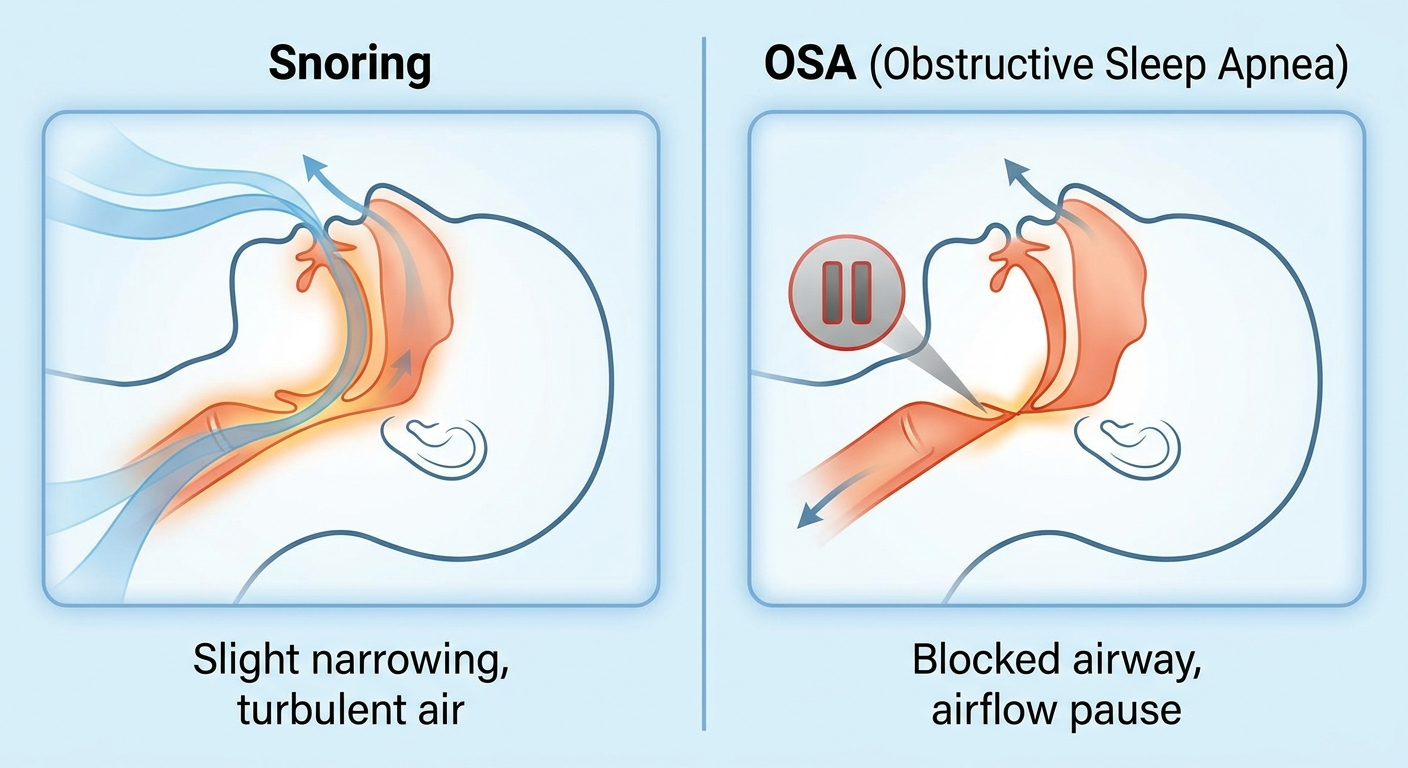
Snoring vs. Obstructive Sleep Apnea—Why the Difference Matters
- Simple (primary) snoring: noisy breathing during sleep without repeated airway collapse.
- Obstructive sleep apnea (OSA): repeated airway blockage during sleep that can cause oxygen drops and sleep fragmentation, with potential downstream health effects.
Snoring alone can’t reliably distinguish between simple snoring and OSA, which is why formal evaluation and testing are often needed when symptoms suggest apnea (5). Common clues include waking unrefreshed, morning headaches, or a bed partner noticing quiet pauses followed by a gasp. Key idea: Snoring is a clue—testing clarifies whether OSA is present.
Research Snapshot—How Common Is OSA in Hypothyroidism?
- A U.S. NHANES analysis found 1.88x higher odds of a sleep-apnea diagnosis in adults with hypothyroidism, even after adjusting for BMI and other variables (1).
- In a clinical study of 100 people with hypothyroidism who underwent in-lab polysomnography, 74% had OSA, and 40.5% of those had severe OSA (2). Important context: this was a high-risk clinical sample referred for testing; rates in unselected people are lower.
These numbers don’t mean most people with hypothyroidism have sleep apnea. They do suggest that when hypothyroidism and snoring show up together—especially with daytime sleepiness—it’s reasonable to move OSA higher on the checklist rather than assuming the thyroid explains everything. Practical takeaway: hypothyroidism raises OSA risk enough that persistent snoring and sleepiness deserve a closer look.
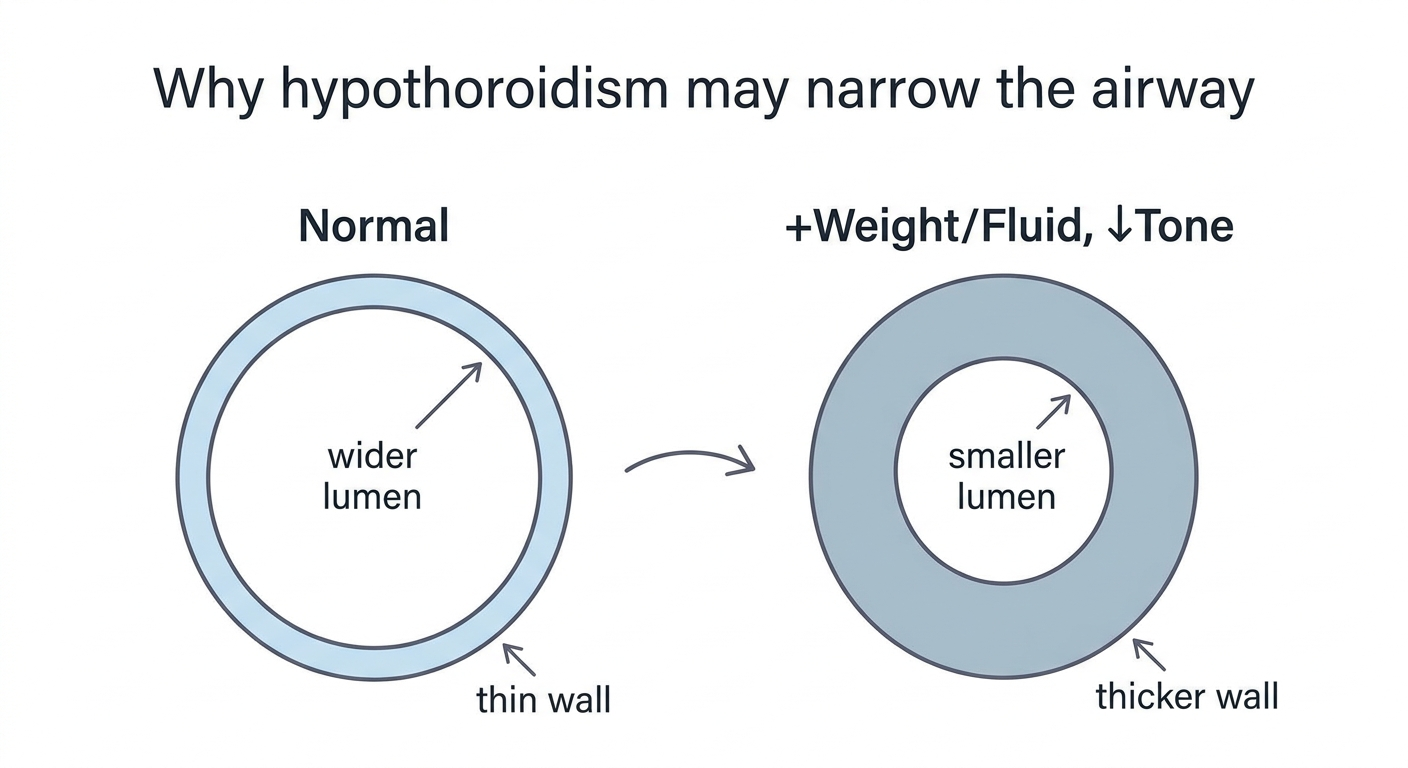
Why Hypothyroidism May Worsen Airway Obstruction at Night
- Weight gain and fluid retention can reduce airway space, making vibration (snoring) and collapse (OSA) more likely.
- Upper-airway tissue changes and reduced muscle tone may also contribute in some individuals (3,4).
Think of the upper airway like a soft, flexible tube. If surrounding tissues are a bit fuller and the scaffolding (muscle tone) is reduced during sleep, the airway is more prone to narrowing—especially when lying on your back.
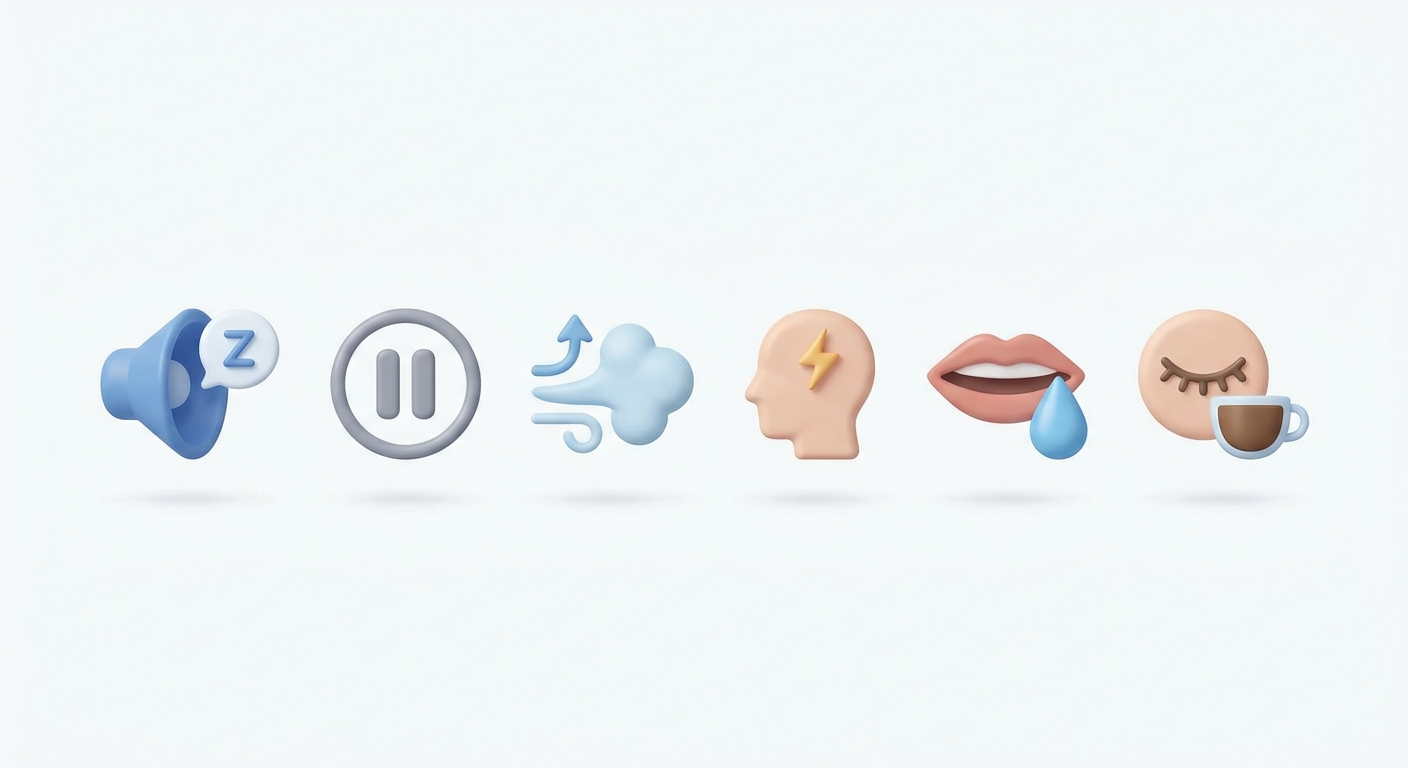
Symptoms to Watch For
Snoring-related signs that suggest possible OSA:
- Loud, habitual snoring (especially nightly)
- Witnessed pauses in breathing
- Gasping or choking during sleep
- Waking with a dry mouth or morning headaches
- Restless sleep or frequent awakenings
A concrete clue: if a bed partner says the snoring has a pattern of loud, then quiet, then a snort or gasp, that’s more concerning than steady, mild snoring.
Hypothyroidism symptoms that often overlap with sleep apnea:
- Daytime fatigue and sleepiness
- Brain fog, memory issues, or mood changes
- Weight gain
- Low energy or reduced exercise tolerance (3)
If thyroid labs look better but fatigue and snoring persist, consider OSA.
When to Seek Help Urgently vs. Soon
Seek urgent or emergency care for severe shortness of breath, chest pain, fainting, new confusion, or other alarming symptoms. Schedule a sleep evaluation soon when there is loud snoring plus witnessed apneas or gasping and significant daytime sleepiness. If you’re nodding off while driving, don’t drive until evaluated and seek prompt care.
Causes—What Else Can Be Driving Snoring If You Have Hypothyroidism?
Common non-thyroid contributors include nasal congestion or blockage (allergies, deviated septum, chronic rhinitis), alcohol or sedatives near bedtime, sleeping on your back, smoking, and enlarged tonsils or tongue-base crowding. Often, multiple small factors add up to bigger snoring.
Why Snoring Sometimes Persists Even After Thyroid Treatment
Treating hypothyroidism is essential for overall health, but it doesn’t reliably eliminate OSA. Reviews and earlier studies show that apnea can persist even after thyroid levels normalize—meaning snoring or breathing symptoms may continue and still need a sleep-specific workup and treatment (3,4). Evidence is mixed; improvement is possible for some, but persistence is common enough that sleep evaluation should not wait on thyroid normalization alone when OSA symptoms are present.
Diagnosis—How to Tell Whether It’s OSA or Simple Snoring
Start with a clinical check-in. Expect a review of snoring pattern, witnessed apneas or gasps, morning headaches, dry mouth, nighttime awakenings, daytime sleepiness and concentration, weight changes, and current thyroid status (often including TSH and T4 results). Bring specifics; concrete examples help decide whether testing is warranted and which test fits best.
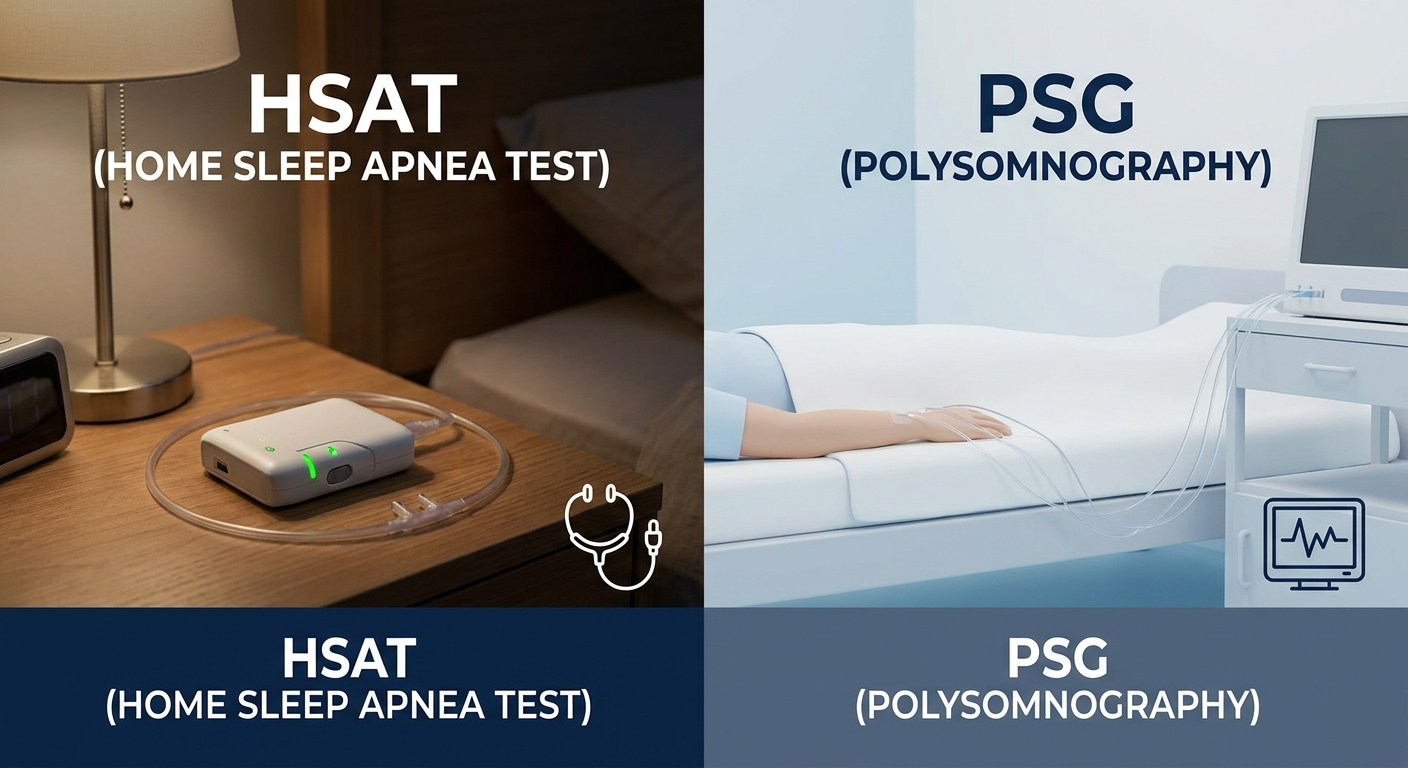
Sleep Testing Options (What Patients Can Expect)
In-lab polysomnography (PSG) is the most comprehensive study, measuring multiple signals overnight. Home sleep apnea testing (HSAT) is a simplified at-home test that may be appropriate for many adults with suspected OSA, consistent with professional guidance on diagnostic testing (5). For background on HSAT, see: https://sleepandsinuscenters.com/blog/home-sleep-apnea-test-accurate-at-home-screening-for-sleep-apnea
A useful analogy: HSAT is like a focused screening camera aimed at breathing and oxygen, while an in-lab PSG is a fuller production crew measuring a wider range of sleep signals. The right test balances thoroughness with practicality based on your symptoms.
Key Metric Patients Hear About: AHI
The Apnea-Hypopnea Index (AHI) is the number of apneas and hypopneas per hour of sleep.
- Mild: 5–14 events per hour
- Moderate: 15–29 events per hour
- Severe: 30 or more events per hour
For a walkthrough of results and AHI, see: https://sleepandsinuscenters.com/blog/ahi-score-explained-understanding-your-sleep-apnea-severity
Treatment Options (Snoring + Hypothyroidism + Suspected or Confirmed OSA)
Treat the thyroid as a foundational step. Levothyroxine is commonly used to restore normal thyroid levels. Some older work reported large improvements in breathing events after thyroxine replacement (4), while other studies found persistent apnea despite normalized thyroid levels (3). Thyroid care is essential, but it is not a substitute for OSA evaluation or treatment when symptoms persist.
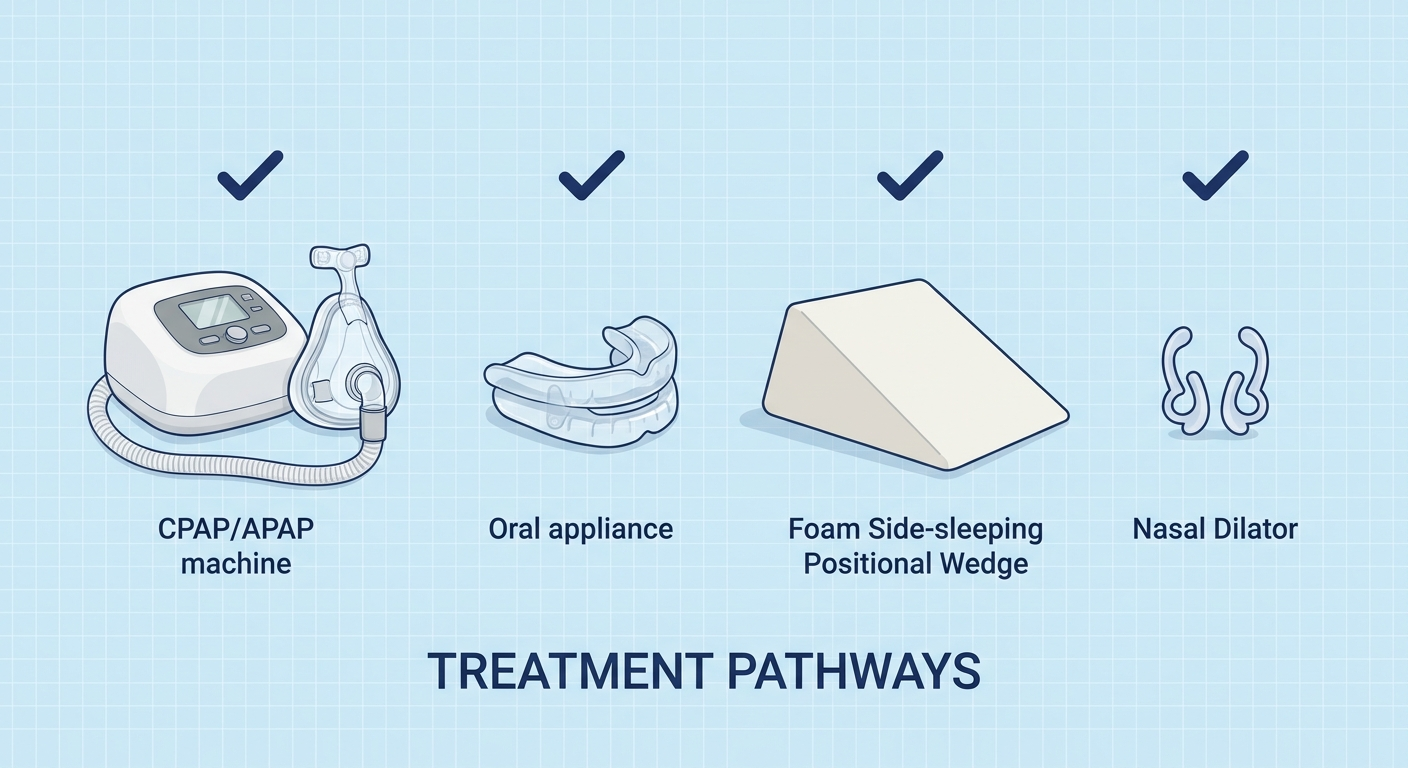
If OSA Is Diagnosed: Evidence-Based OSA Treatments
- CPAP or auto-adjusting positive airway pressure (often first-line)
- Oral appliance therapy (typically for selected mild to moderate cases)
- Positional therapy (when apnea is position-dependent)
- Surgery or implants (for selected anatomy or when other treatments aren’t tolerated)
The right option depends on severity, symptoms, anatomy, and comfort. Many patients do best when therapy is framed as finding the right fit.
If It’s Primary Snoring (No OSA): Snoring-Focused Options
Address nasal obstruction (allergy care, nasal dilators, or an ENT evaluation when appropriate), consider an oral appliance aimed at reducing snoring, and use weight management and sleep-position changes when relevant. Matching treatment to the main driver works best.
Lifestyle Tips That Can Reduce Snoring (And Support Thyroid or OSA Care)
Nighttime habits: side-sleeping strategies, avoid alcohol within 3–4 hours of bedtime, and review sedating medications with a clinician. Change one variable at a time so you can tell what helped.
Weight and metabolic health: because weight can affect airway size and collapsibility, even modest changes may influence snoring and OSA severity for some people.
Nasal breathing support: saline rinses, allergy management, and addressing chronic nasal blockage can improve comfort and reduce snoring, and can make PAP therapy easier to tolerate.
FAQs
Can hypothyroidism directly cause snoring? Hypothyroidism may contribute to snoring in some people, but the stronger link is that hypothyroidism is associated with higher OSA risk, and snoring is a common OSA symptom (1,3).
Will levothyroxine stop my snoring? It may help some individuals, but OSA can persist even after thyroid levels normalize (3,4). If snoring and breathing symptoms continue, a sleep evaluation may still be important.
Should everyone with hypothyroidism get tested for sleep apnea? Not necessarily. Testing is most strongly considered when symptoms suggest OSA—such as loud habitual snoring, witnessed apneas, gasping or choking, or significant daytime sleepiness—consistent with diagnostic-testing guidance (5).
What symptoms are most concerning for sleep apnea? Breathing pauses, choking or gasping, excessive daytime sleepiness, and sometimes difficult-to-control high blood pressure can all raise concern for OSA.
Can you have sleep apnea even if you aren’t overweight? Yes. Weight is a risk factor, but it’s not required. Anatomy, airway muscle tone, nasal obstruction, and other factors can also play roles. Symptoms and testing matter more than any single risk factor.
When to Book an Evaluation
Consider scheduling a sleep evaluation if you have loud snoring plus witnessed pauses or gasping, daytime sleepiness that affects driving, work, or focus, or symptoms that persist despite thyroid treatment. Appointments: https://sleepandsinuscenters.com/appointments (main site: https://www.sleepandsinuscenters.com/). If sleepiness is making you nod off while driving, don’t drive until you’re evaluated.
Citations / Sources
1. Journal of Clinical Endocrinology & Metabolism (2019). Hypothyroidism and Its Association With Sleep Apnea Among Adults in the United States: NHANES 2007–2008. https://academic.oup.com/jcem/article/104/11/4990/5531557
2. Pancholi et al. (2022). Obstructive Sleep Apnea in Hypothyroidism. https://pmc.ncbi.nlm.nih.gov/articles/PMC9850883/
3. Grunstein et al. (1988). Sleep apnea and hypothyroidism: mechanisms and management. https://pubmed.ncbi.nlm.nih.gov/3057899/
4. Rajagopal et al. (1984). Obstructive sleep apnea in hypothyroidism. https://pubmed.ncbi.nlm.nih.gov/6476635/
5. American Academy of Sleep Medicine (2017). Adult OSA diagnostic-testing guideline summary. https://aasm.org/aasm-publishes-new-guideline-for-diagnostic-testing-for-adult-sleep-apnea/
This article is for educational purposes only and is not medical advice. Please consult a qualified healthcare provider for diagnosis and treatment.
Don’t let allergies slow you down. Schedule a comprehensive ENT and allergy evaluation at Sleep and Sinus Centers of Georgia. We’re here to find your triggers and guide you toward lasting relief.