Hypervigilance to Body Sounds: How Tinnitus Triggers Anxiety
You notice a faint ringing or buzzing that was not there yesterday. At first it is barely there. You check it. Then you check it again, perhaps by covering one ear or stepping into a quieter room. The sound feels louder and more threatening with each listen. Many people with tinnitus describe this exact moment as the start of tinnitus anxiety.
Tinnitus is the perception of sound—ringing, buzzing, hissing, or similar—without an external source. You hear it in one or both ears or in your head. Most tinnitus is not a sign of danger, yet it can become distressing when your brain treats it as important. Hypervigilance is extra, ongoing attention to body sounds. It turns a noticeable noise into a persistent “threat signal,” rather like a smoke alarm that keeps sounding for cooking fumes long after the pan is off the stove.
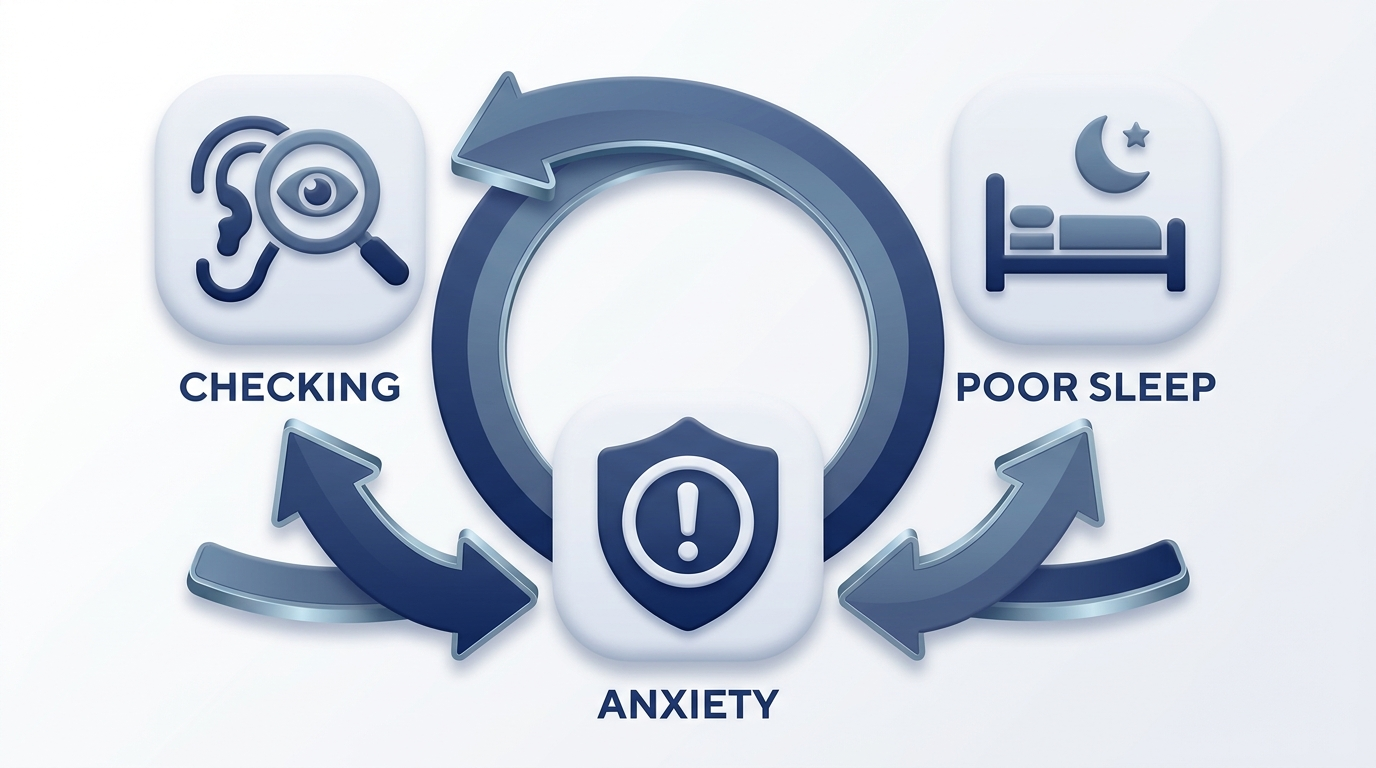
This creates a tinnitus hypervigilance cycle in which checking, worry, and poor sleep make the sound feel worse even when its actual loudness has not changed. Distress often matters more than volume. Help exists. Approaches such as cognitive behavioural therapy (CBT), sound enrichment, and sleep-focused care can interrupt the cycle. Persistent or bothersome tinnitus still needs proper assessment so hearing, sleep, and related factors can be reviewed together.
Understanding Tinnitus and Hypervigilance to Internal Sounds
What Tinnitus Actually Is
Tinnitus is not an outside noise. It can be constant or come and go. Pitch and character vary from person to person. In most cases it is not medically dangerous. Problems arise when the brain flags the sound as important and keeps monitoring it. That monitoring blocks the natural process of habituation—simply getting used to the sound so it fades into the background, the way you eventually stop noticing a refrigerator hum or distant traffic.
Sometimes tinnitus overlaps with other conditions such as sinus issues that affect ear pressure or congestion. You can read more about that connection in our overview of sinus problems and tinnitus: https://sleepandsinuscenters.com/blog/can-sinus-problems-cause-tinnitus-ent-insights-on-20260701191046
What Hypervigilance Looks Like in Everyday Life
You start listening for the sound. You “check in” to see whether it is still there or has changed. Anxiety rises the moment you notice it. This extra attention interferes with habituation. A common example is bedtime: the house falls silent, the ringing seems to fill the room, you listen harder, and sleep slips away. Anxiety and broken sleep then make the tinnitus more noticeable, even if the underlying loudness stays the same. The result is a feedback loop that keeps the sound in the spotlight.
Recognising hypervigilance as extra attention rather than increased loudness can reduce its power.
The Feedback Loop: How Tinnitus Triggers Anxiety (and Vice Versa)
Attention and Distress Matter More Than Loudness
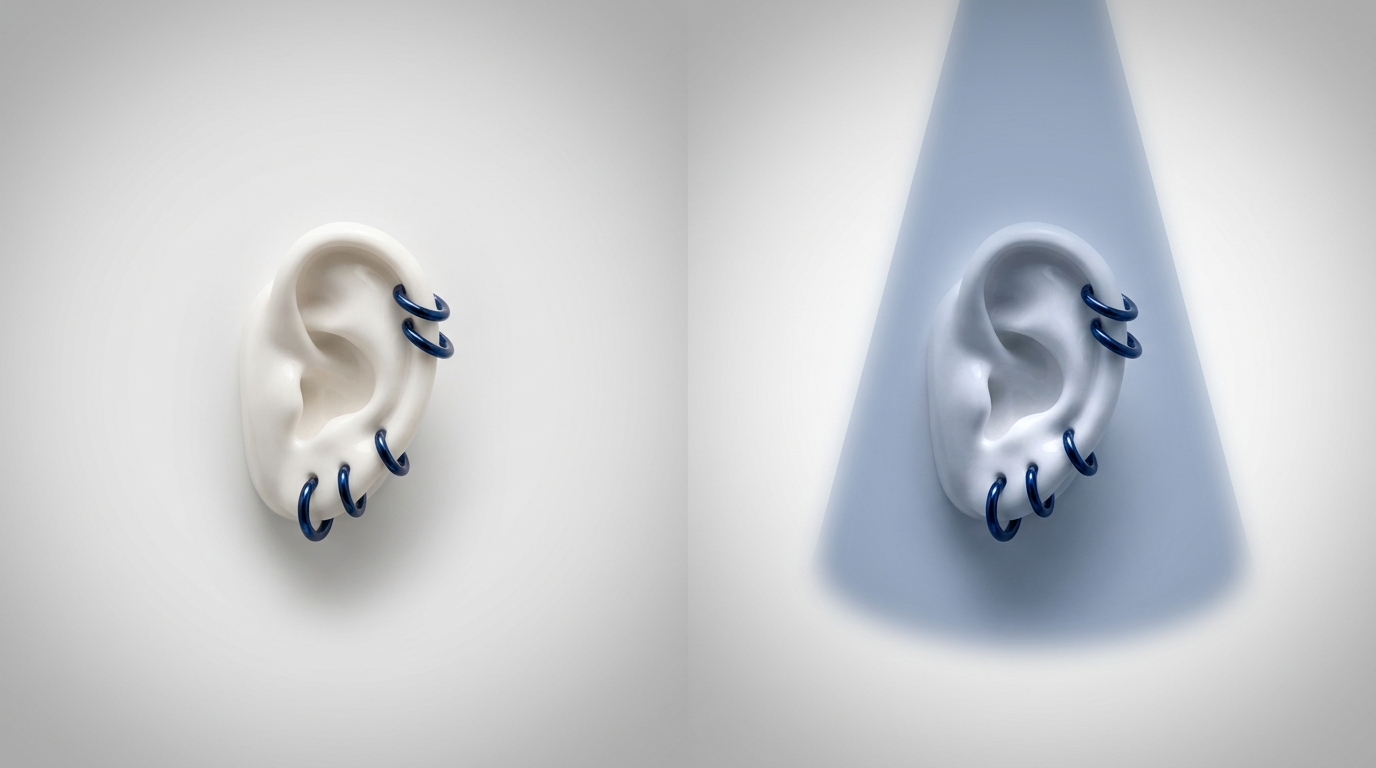
Research shows that how you attend to tinnitus is often more important than how loud it measures. In one study, people with tinnitus performed more slowly on a vigilance task. Poorer attention was linked to tinnitus-related distress rather than to measured loudness (Leong et al., Scientific Reports, 2020). The brain’s repeated “checking” behaviour keeps the sound centre-stage, similar to refreshing an email inbox every few minutes and then feeling more anxious about messages that still have not arrived.
The Bidirectional Relationship
Tinnitus-related emotional vigilance can trigger anxiety. Anxiety produces hyperarousal, rumination, and sleep disruption. Poor sleep then increases tinnitus awareness. A 2025 meta-analysis of 22 studies found associations with anxiety (odds ratio 1.63, 95% CI 1.34–1.98) and insomnia (odds ratio 3.07, 95% CI 2.36–3.98). These findings show correlation, not proof that one always causes the other (Jiang et al., American Journal of Otolaryngology, 2025). The tinnitus hypervigilance cycle can still feel very real in daily life—a classic vicious circle.
The cycle of attention, anxiety and sleep loss often matters more than the sound itself.
Common Symptoms of Tinnitus Hypervigilance and Related Anxiety
You might notice:
Constant checking or “listening in” for the sound
Increased anxiety, irritability, or feeling on edge
Difficulty concentrating or falling asleep
The sensation that tinnitus is louder in quiet rooms or at night
Fatigue from being constantly on alert
These symptoms usually reflect distress and attention rather than a change in the acoustic intensity of the tinnitus itself. As one patient described it, “The ringing didn’t get louder; I just couldn’t stop paying attention to it.”
These signs point to distress, not necessarily a louder tinnitus signal.
How Anxiety, Hyperarousal, and Poor Sleep Intensify Tinnitus Awareness
Anxiety and sleep loss heighten the brain’s threat-detection system. Internal sounds become more salient, the way a dripping tap sounds thunderous when you are trying to sleep. This does not raise the actual loudness of the tinnitus signal, but it does raise how bothersome the sound feels. Sleep-focused care therefore plays an important role in reducing hypervigilance tinnitus.
Addressing sleep and arousal can lower tinnitus awareness without changing the sound.
Breaking the Cycle: Treatments That Target Distress (Not Just the Sound)
The goal is not always to silence the sound. It is to reduce the threat interpretation, the checking, and the sleep disruption that keep the cycle going. You can learn about a range of options in our guide to ENT care for tinnitus relief: https://sleepandsinuscenters.com/blog/ent-care-for-tinnitus-relief-effective-treatments-and-tips
Cognitive Behavioural Therapy (CBT) for Tinnitus
CBT and related psychological approaches target threat thoughts, attentional fixation, and anxiety rather than trying to eliminate the sound. Evidence shows improvement in tinnitus-related distress and quality of life. Effects on loudness itself are limited or uncertain (Cochrane review, Cognitive behavioural therapy for adults with tinnitus, 2020). For more on evidence-based approaches, see our article on tinnitus treatment that actually works: https://sleepandsinuscenters.com/blog/evidence-based-tinnitus-treatment-that-actually-wo-20260318111239
Tinnitus Counselling, Sound Enrichment, and Hearing Aids
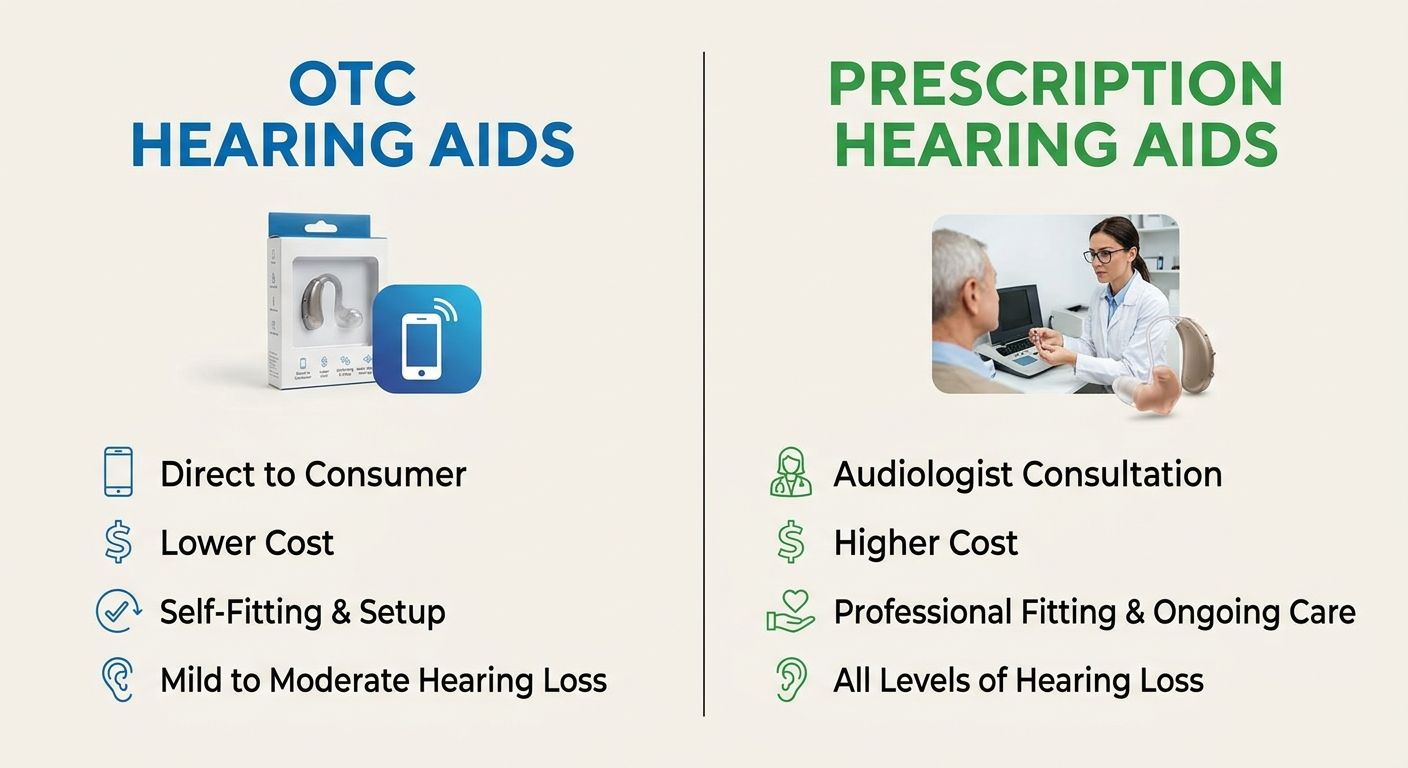
Counselling helps reframe the sound as non-threatening. Sound enrichment—low-level background noise such as a fan, gentle rain, or a white-noise app—reduces the contrast that makes tinnitus stand out, especially in quiet rooms. Hearing aids can help when hearing loss is also present, because they restore some of the missing external sound.
Relaxation Techniques and Sleep-Focused Care
Relaxation lowers hyperarousal. Consistent sleep routines and, when needed, CBT for insomnia can interrupt the rumination–sleep-disruption loop that keeps tinnitus in the foreground. Even brief breathing exercises used the moment you catch yourself checking can help break the loop.
Targeting the distress and checking behaviours helps interrupt the hypervigilance cycle.
When Persistent or Distressing Tinnitus Needs Clinical Assessment
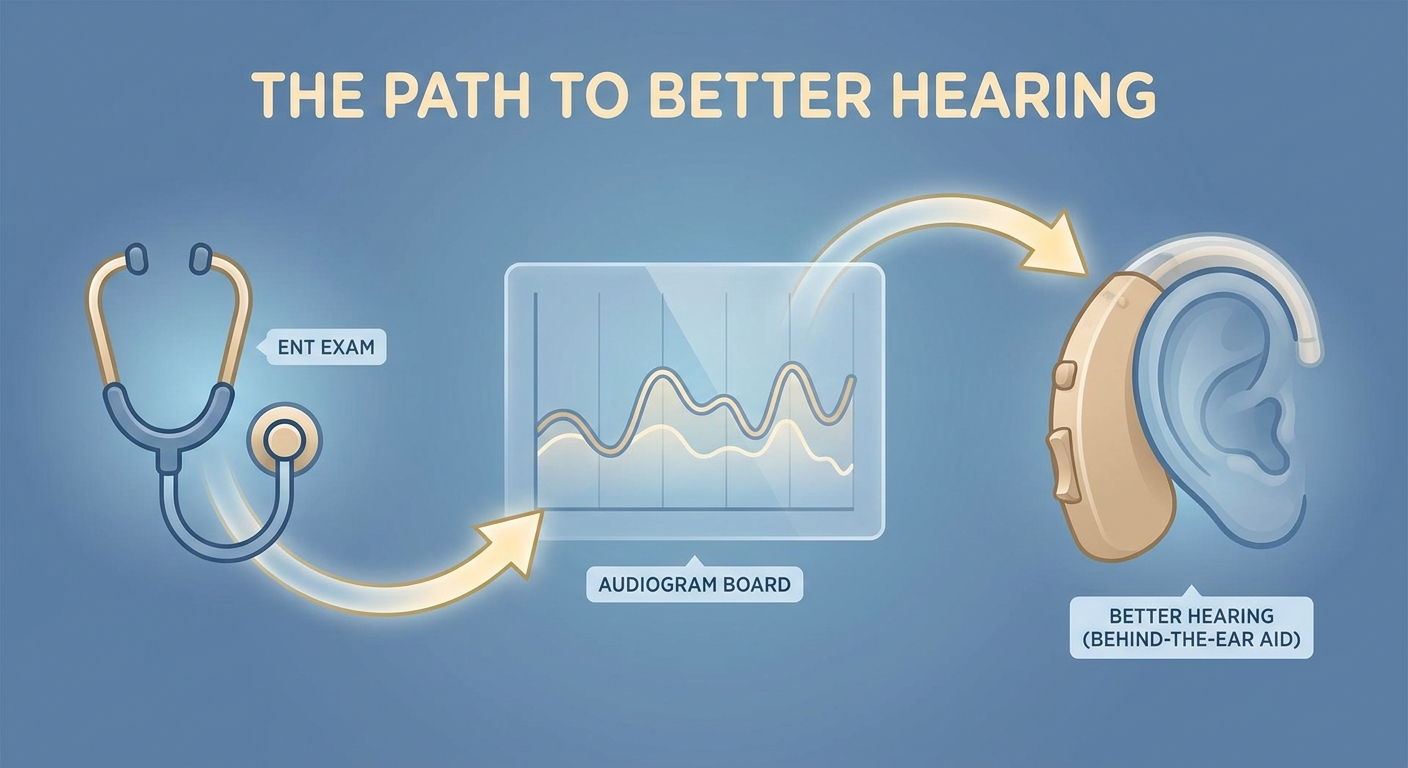
Persistent or bothersome tinnitus should be evaluated, including hearing status and mental-health factors (NICE guideline NG155, 2020; NHS Tinnitus). Early assessment helps rule out treatable contributors and supports a plan that addresses sleep and distress together.
Urgent and Emergency Red Flags
Pulse-synchronous (heartbeat-like) tinnitus needs urgent medical review.
Sudden hearing loss, facial weakness, vertigo, or tinnitus after a head injury requires emergency assessment.
Timely assessment ensures treatable issues are not overlooked.
Practical Lifestyle Tips to Reduce Hypervigilance
These ideas are educational, not a substitute for personalised care:
Use gentle sound enrichment at night instead of complete silence.
Practise short breathing or relaxation exercises when you catch yourself checking.
Keep a consistent bedtime routine to protect sleep.
Limit caffeine and late-night screens if they worsen anxiety or insomnia.
Avoid repeatedly testing or measuring the tinnitus.
Small, realistic steps often work better than trying to force the sound away. Progress usually feels like turning down a dimmer switch rather than flipping an off button.
Small consistent changes often ease hypervigilance more effectively than trying to silence the sound.
Frequently Asked Questions
Does tinnitus get louder because of anxiety?
Distress and awareness usually increase. The underlying loudness of the tinnitus often stays the same.
Can CBT make the ringing go away?
CBT typically reduces how much the sound bothers you rather than removing it completely.
Should I get a hearing test?
Yes, especially if tinnitus is persistent. Hearing status is an important part of assessment.
When is tinnitus an emergency?
Seek emergency care for sudden hearing loss, facial weakness, vertigo, pulsatile tinnitus, or tinnitus after head injury.
Conclusion
Hypervigilance turns a noticeable internal sound into a threat. The tinnitus hypervigilance cycle of checking, anxiety, and poor sleep can be interrupted with CBT, sound enrichment, relaxation, and sleep care. Loudness itself is often less important than the distress it causes. Persistent or distressing tinnitus deserves a full evaluation so hearing, sleep, and related factors can be addressed together.
If tinnitus anxiety is affecting your days or nights, the team at Sleep and Sinus Centers of Georgia can help you take the next step. Book an ENT evaluation: https://sleepandsinuscenters.com/appointments. Visit https://www.sleepandsinuscenters.com/ to schedule an appointment.
Sources
NICE guideline NG155 (2020); NHS Tinnitus; Cochrane CD012614 (2020); Leong et al., Scientific Reports, 2020; Jiang et al., American Journal of Otolaryngology, 2025.
This article is for educational purposes only and is not medical advice. Please consult a qualified healthcare provider for diagnosis and treatment.
Don’t let allergies slow you down. Schedule a comprehensive ENT and allergy evaluation at Sleep and Sinus Centers of Georgia. We’re here to find your triggers and guide you toward lasting relief.