Hearing Loss and School Performance: How Hearing Impairment Affects Academic Success
Your child is bright, curious, and full of energy at home. They follow stories, laugh at jokes, and answer questions in a quiet kitchen. At school, though, the teacher mentions that they seem inattentive, miss directions, or “don’t listen.” Many families hear some version of that story. What looks like a behavior issue—or even a lack of effort—can sometimes be a hearing issue.
Even mild or one-sided hearing loss can affect language, reading, and the support a child needs in class. A living room is not a classroom. Voices overlap, chairs scrape, vents hum, and the teacher moves while talking. A child who hears well enough at dinner can still miss key words when those extra barriers pile up.
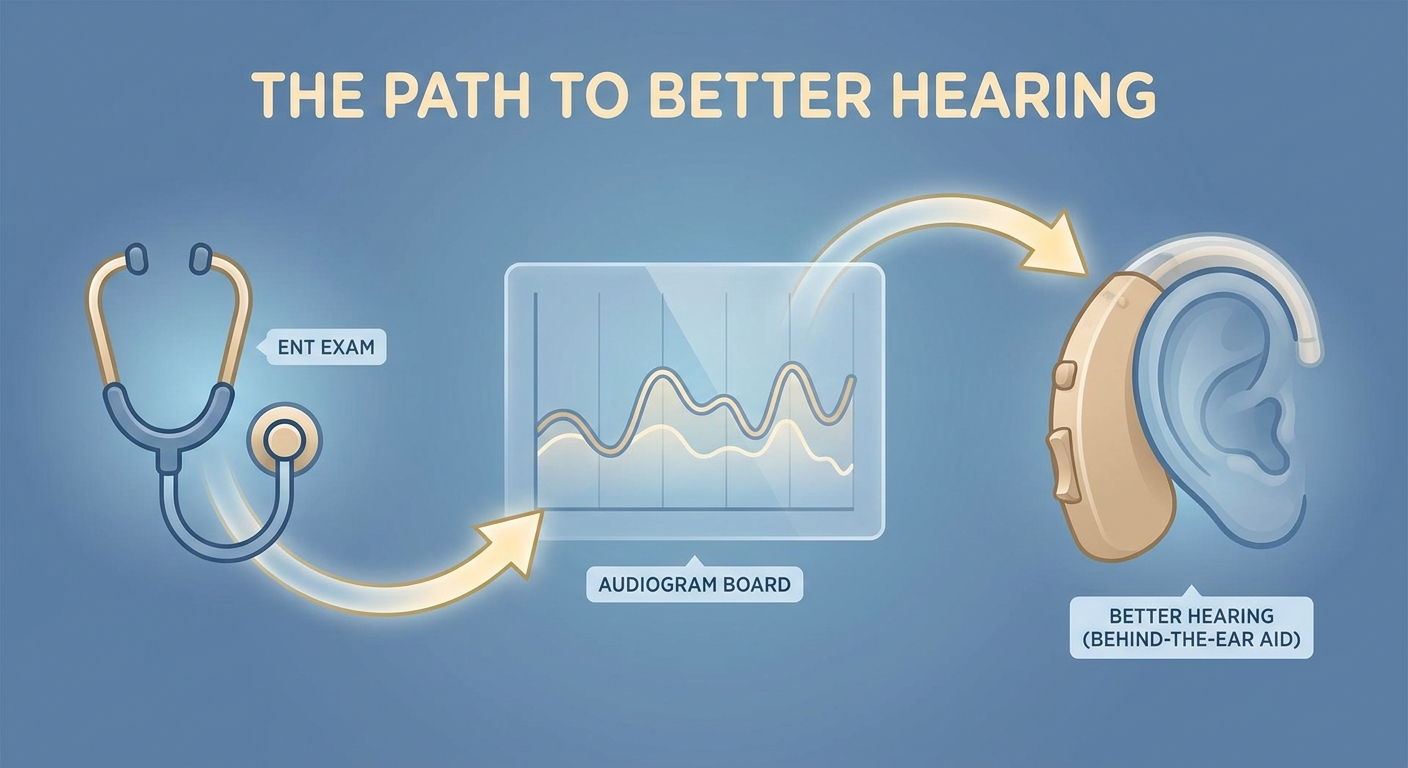
Research on hearing loss and school performance shows that these gaps are real, even when hearing looks “almost normal.” This post walks through the evidence, everyday classroom barriers, early identification, and practical supports. An accurate picture usually starts with a pediatric ENT evaluation and a complete hearing evaluation (https://sleepandsinuscenters.com/blog/audiogram-basics-explained-a-patients-guide-to-hearing-tests).
Takeaway: If school listening or language feels off, hearing is worth checking—not assuming.
Types of Childhood Hearing Loss That Affect School
Not all childhood hearing impairment looks the same. Some children have hearing loss in both ears (bilateral). Others have it in only one ear (unilateral). Mild losses are easy to miss because a child may still respond to their name, enjoy music, or chat well in a quiet room.
Mild bilateral and unilateral hearing loss (often overlooked): Sound has to travel clearly enough for the brain to build language, follow speech in noise, and keep up with fast classroom talk. Two ears work as a team: they help the brain locate who is speaking and pull a teacher’s voice out of background noise. A “good ear” helps, but it does not always replace two working ears. Distance from the teacher and poor room acoustics make that even harder. Outcomes vary by child, severity, age of identification, and access to help.
Picture trying to follow a conversation at a crowded restaurant while catching only every other word. That is closer to a typical classroom than a sound booth. A common pediatric cause of fluctuating or overlooked hearing problems is middle-ear fluid after colds or infections. Learn more about chronic ear fluid and hearing loss: https://sleepandsinuscenters.com/blog/chronic-ear-fluid-and-hearing-loss-causes-symptoms-treatment
Takeaway: Mild or one-sided loss can still change how a child hears the classroom, even if conversation at home seems fine.

How Hearing Loss Impacts Academic Achievement (What the Research Shows)
Parents often ask whether a “small” hearing difference could really show up in grades. Studies of how hearing loss affects school performance consistently find language and academic challenges, especially when support is delayed.
Overall school performance and test scores: A 2025 systematic review of nine studies looked at children with unilateral or mild bilateral hearing loss. Across academic measures, 51 of 57 effect sizes were negative, and 27 were considered substantially important (Collier, 2025). In plain language: most measured outcomes leaned in the wrong direction, and nearly half of those differences were large enough to matter in real school life—not just on a spreadsheet.
Language skills show the strongest, most consistent effect: Oral language was the clearest area of concern. All unilateral-hearing-loss measures and 67% of mild-bilateral measures showed substantially important negative effects on oral language. Reading was negative for most measures. Math and writing evidence was more limited (Collier, 2025). That pattern makes sense: classroom learning rides on spoken language first. If a child misses word endings, prepositions, or fast explanations, later reading and content learning have a weaker foundation.
Unilateral hearing loss compared with siblings: Research comparing children ages 6–12 with unilateral hearing loss to their normal-hearing siblings found lower language and verbal-IQ scores. Those children needed individualized education plans (IEPs) at three times the rate and speech therapy at twice the rate. Educational concerns did not simply resolve over time (Lieu et al., 2013). Families sometimes hope a child will “grow into” the difference. This sibling comparison suggests extra support is often needed, not just extra time.
These gaps can appear even when hearing loss looks mild. Challenges with school performance related to hearing loss are not limited to profound deafness.
Takeaway: Language and reading are the academic areas most consistently linked to mild or unilateral hearing loss—and extra support is often needed.

Why Early Identification and Intervention Matter for School Readiness
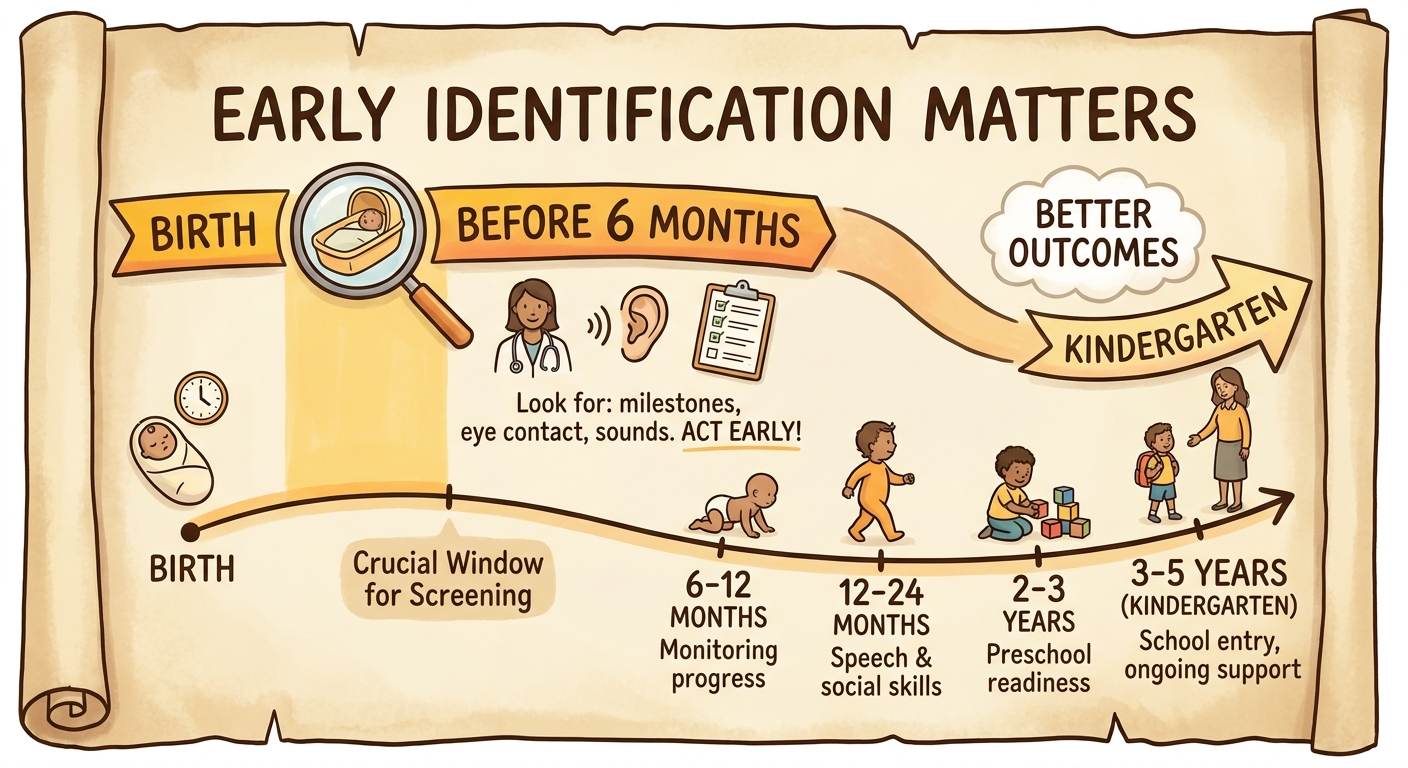
Timing matters. The earlier a child has consistent access to sound and communication support, the more ready they often are for kindergarten routines, vocabulary, and following directions. The brain is especially busy wiring language in the first years of life; waiting can mean playing catch-up later.
Intervention before 6 months of age: Among more than 1,700 deaf or hard-of-hearing children in Ohio, help before 6 months of age was linked to greater kindergarten readiness, regardless of hearing-loss severity, race, or gender, according to one large cohort study (Meinzen-Derr et al., 2020). Newborn screening is the starting point—but follow-up and ongoing monitoring are just as important. Hearing can change with ear fluid, illness, or later-onset loss. A “pass” at birth does not freeze hearing for life.
Speech and language delays are a common reason families seek answers. For signs to watch and why hearing checks belong in that conversation, see our guide to speech delay and hearing checks: https://sleepandsinuscenters.com/blog/speech-delay-and-hearing-checks-key-signs-and-early-intervention-tips
Takeaway: Early identification plus follow-up supports school readiness—even when the hearing loss is not severe.
Classroom Challenges That Make Learning Harder
A typical classroom is not a quiet sound booth. Children with hearing impairment may miss or misunderstand speech, especially from the back of the room or when several people talk. Background noise (HVAC, chairs, hallway chatter) blurs consonants—the small sounds that distinguish “cat” from “cap” or “fifteen” from “fifty.” Listening all day is tiring. Taking notes while watching the teacher splits attention between eyes and ears.
Those barriers add up to lower participation and extra effort to keep up. A child may look “zoned out” after lunch not because they stopped caring, but because listening effort has already used a large share of their energy. Resources from the Laurent Clerc National Deaf Education Center and the National Deaf Center (2022) emphasize that access—not just “trying harder”—is what reduces those daily costs.
Takeaway: Noise, distance, fatigue, and split visual attention can hide a hearing problem as “inattention.”

Signs and Symptoms Parents and Teachers Should Watch For
Issues with school performance related to hearing loss often show up first as language or behavior clues rather than an obvious “I can’t hear.”
Academic and language red flags: Watch for delayed speech, trouble following multi-step directions, falling behind in reading, or frequent “huh?” and “what?” A child may seem fine one-on-one but lost in group discussion. They might copy a neighbor’s paper not to cheat, but because they missed the spoken instruction.
Behavioral clues: Inattention, exhaustion after school, sitting close to the teacher, turning one ear toward speakers, or preferring quiet, one-on-one settings can all be clues. “She hears when she wants to” is a common remark; often the child hears when the room is quiet and the speaker is close. These signs overlap with many other issues, so they are not a diagnosis. A hearing test is a useful next step. An audiogram explains what those results mean in everyday terms: https://sleepandsinuscenters.com/blog/audiogram-basics-explained-a-patients-guide-to-hearing-tests and recurrent fluid or infections deserve attention as a treatable pediatric cause: https://sleepandsinuscenters.com/blog/chronic-ear-fluid-and-hearing-loss-causes-symptoms-treatment
Takeaway: Language delay, missed directions, and after-school fatigue are reasons to check hearing—not reasons to wait and see.

Treatments, Supports, and Classroom Accommodations That Help
Help is usually a combination of medical care, educational planning, and simple classroom access—not a single device or one meeting.
Medical and audiologic care: An ENT exam can look for treatable causes such as ear fluid or infections and determine whether hearing aids or other assistive devices are appropriate. Care is individualized; what helps one child may not be the full plan for another.
Educational planning: Some children benefit from an IEP or speech-language therapy. Families can ask how the school will measure access to instruction, not only whether a child “seems to hear.”
Everyday classroom strategies: Recommended supports include visual materials, face-to-face communication, repetition and paraphrasing, amplification or FM/assistive listening systems, captioning, interpreting, and note-taking support (Laurent Clerc National Deaf Education Center; National Deaf Center, 2022). Preferential seating helps, but it is rarely enough by itself if the room is noisy or the teacher turns toward the board.
At home, reduce background noise during homework, do a brief after-school check-in about what was hard to hear, and stay in regular contact with teachers.
Takeaway: Pair medical evaluation with classroom access—visuals, clearer speech, and listening technology when appropriate.
FAQs About Hearing Loss and School Performance
Q: Can mild or one-sided hearing loss really affect grades?
A: Yes. Studies on hearing loss and school performance show consistent associations with oral language and several academic measures, even for mild or unilateral loss (Collier, 2025; Lieu et al., 2013).
Q: Will my child “catch up” without extra help?
A: Not always. In unilateral hearing loss, educational concerns often persisted over time, and support needs were higher than for siblings (Lieu et al., 2013).
Q: How soon should we act?
A: Earlier is better. Intervention before 6 months has been linked to greater kindergarten readiness (Meinzen-Derr et al., 2020). Later identification still matters—support can start at any age.
Q: What should I ask the school?
A: Ask about communication access, whether an IEP or other plan is appropriate, classroom noise, seating, and technology such as assistive listening systems, captioning, or note-taking support.
Q: When should we see an ENT?
A: Consider an evaluation after a failed screening, recurrent ear issues, speech delay, or school concerns about listening and learning. This is educational information, not a diagnosis or treatment plan.
Takeaway: Mild loss can still affect learning; support and timely evaluation make a difference.
Conclusion and Next Steps
Childhood hearing loss—including mild and unilateral loss—is linked to language and academic challenges. Gaps in school performance related to hearing loss are most consistent in oral language and reading, and children may need more educational and speech-language support than peers. Early identification, consistent access to sound, and classroom accommodations improve the odds of school success. Outcomes still vary, so an individualized plan is essential.
If you have concerns about listening, speech, or school progress, the team at Sleep and Sinus Centers of Georgia can help with pediatric ENT and hearing evaluation as part of comprehensive otolaryngology care: https://sleepandsinuscenters.com/comprehensive-otolaryngology-care. Schedule an appointment: https://sleepandsinuscenters.com/appointments or visit https://www.sleepandsinuscenters.com/ to book. Share this post with teachers so home and school can watch for the same signs and build the same supports.
This article is for educational purposes only and is not medical advice. Please consult a qualified healthcare provider for diagnosis and treatment.
Don’t let allergies slow you down. Schedule a comprehensive ENT and allergy evaluation at Sleep and Sinus Centers of Georgia. We’re here to find your triggers and guide you toward lasting relief.